Some updates on God (and related matters)

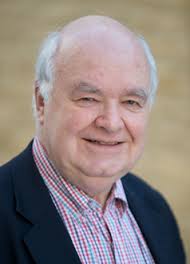
imagesJohn Lennox – mathematician and Christian apologist – is in town again, and giving talks at UCT, Stellenbosch and in Johannesburg. I’ve twice had the pleasure (or at least, experience) of chatting to him at length regarding his views on whether there is a necessary connection between religion and morality, and there’s no question that he’s a very smart and sincere man.

But he’s also wrong.

I’ve written many posts over the years dealing with meta-ethics and morality, and have debated a few Christian apologists on these topics over the years. There’s little point in doing so with the hope of changing their minds (and vice versa), but these conversations can still be very valuable to an audience, in that listeners or readers could certainly benefit from hearing how much moral behaviour we find in non-human animals, or about the clear lack of correlation between religious belief and “good” moral choices.

If you’re in Johannesburg this Thursday night (September 18), you might be interested to attend a debate between Lennox and Eusebius McKaiser on exactly this topic. It takes place at 7pm in the Great Hall of Wits University, and I’m looking forward to hearing what Eusebius has to say on the topic.

Eusebius is unlikely to say much that I’ll want to disagree with on this topic, but I do want to use the debate as a segue to briefly return to a topic he and I do disagree on, namely the question of whether we should call ourselves atheists or agnostics.

I’ve written about this at length too, so I’ll just summarise the disagreement here. All knowledge – excepting technical points like Descartes’ cogito – does not entail certainty. We can be overwhelmingly convinced of the truth or falsity of any given proposition, and for the sake of communicative efficiency, we call those propositions “true” or “false”.

Furthermore, we’ll in all likelihood often right to call many of those propositions true or false. In other words, they correspond to the way the world actually is.

What does it mean to say that you’re an atheist, as opposed to an agnostic? Here’s the problem: it can mean at least three things. First, you could mean that you’re sure that there is no God – that “God exists” is a false proposition. Second, you could mean that you are sure that there are no gods at all, or in general – that all god claims are false. Or third, you could be saying that you regard it as overwhelmingly likely that one of the two formulations above are correct, without claiming certainty.

The third formulation is consistent with the way in which I treat all other propositions, and I see no reason to treat propositions relating to God(s) differently. I don’t claim certainty for any other propositions, and wouldn’t want to claim one here, even if the chances of God(s) existing are vanishingly small.

Does that, then, make me an agnostic, as opposed to an atheist? Eusebius says yes, it does, and that it’s a more epistemically responsible choice to call myself an agnostic. And here’s where he’s not so much wrong, but perhaps reaching a slightly hasty and unsubtle conclusion.

We don’t need a qualifier like agnostic (in the sense that it qualifies that you’re not certain) when we speak about propositions like grass being green, or smoking causing cancer. Everyone from one interpretive community – the philosophically inclined one – will fill in the epistemic doubt for themselves, and know that you’re not making an absolute claim.

However, everyone from a different interpretive community – those who regard truth claims as being absolute – will simply assume you’re using language in the conventional sense (and to be honest, how most of us use it, most of the time), and that you are making a claim of absolute certainty.

And this, in turn, opens up the possibility of using these words – just like we use most words – to signal a certain stance or attitude towards the proposition in question, cognisant of who the audience is. If Eusebius and I are talking, we could both say we are atheists, and neither of us will assume the other is claiming certainty. Likewise, we could both say we are agnostics, and neither of us will assume that the other is in doubt about the overwhelming likelihood that we are correct in saying God(s) don’t exist.

But when talking to other people, especially ones we don’t know, we can be fairly confident that the common understanding of “agnostic” is “we’re not sure” – in other words, it signals that it’s an open question to us as to whether God(s) exist or not. And while it’s an open question in a strictly logical sense, it’s not an open question in any practically relevant sense, just like it’s not an open question whether grass is green or not.

So, using the word “atheist” – in situations where we don’t have the time to explain all this – might well both capture our position more accurately (in the mind of the audience), as well as serve a useful political function in reinforcing the notion that the proposition in question (that God exists) is one that we consider overwhelmingly likely to be false.

Having said that, I’ve come to prefer “agnostic atheist”, in that it seems a “best of both worlds” response, as well as one that tends to open up an interesting conversation, thanks both to not appearing to be dogmatic, and because it tends to discourage a dogmatic response (except in the case of some atheists, who think it a cop-out).

Before moving on to a different topic, I’d encourage you to take a look at Eusebius’s column this week. I agree with most of it, but would again want to disagree on some elements of politics and strategy, especially with regard to his example of Richard Dawkins, who has progressed from being a useful lightning rod to becoming somewhat of a troll.

In relation to the column, all I’ll say here – before this becomes far too long – is that while it’s of course true that the concept of God shouldn’t be treated with kid gloves, that logical point can be used as an excuse to be quite the bully (I don’t think Eusebius and I disagree on this point, though).

Moving on:

You might remember Andrew Selley, the chairperson of the Christian advocacy group FOR-SA, for his valiant (sarcasm font) efforts to secure parents the right to beat their children, because that’s apparently what Jesus would have wanted. He has written a more recent post arguing that the OGOD case against 6 schools entails “The Court … being asked to order that Christianity be removed and banned from the schools.”

That’s simply untrue – the point of the lawsuit is equality of representation, and obeying existing regulations that require schools to be essentially secular. He goes on to argue that the schools are welcoming to other faiths, but as I’ve said in the past, paying lip-service to inclusivity does not amount to inclusivity in practice. If a school advertises themselves as having a Christian character, that immediately a) decreases the likelihood of other faiths (and nonbelievers) getting a welcoming reception, and b) increases the likelihood that the school will remain Christian, because those of other faiths (and nonbelievers) will be less likely to apply to that school.

Lastly, I’m pleased to see the launch of an “Open Mosque” in Cape Town, where women will be treated equally, and where homophobia will not be tolerated. It should be noted that Sataar Parker, spokesperson for Cape Town’s biggest mosque, Masjid Ul Quds in Athlone, says this is “nothing new”, with their mosque having been “open” in these senses for 25 years. Whether that’s true or not I don’t know, but if it is, we can simply celebrate their now being two such mosques available to Cape Town Muslims.

 

Man is free to reign as god!

downloadEven though Ivo Vegter might be slightly less than gruntled to be spoken of alongside Error Naidoo, the homophobic and very paranoid man of God, the title of this post (from Naidoo’s latest rant) happens to fit them both.

It fits Naidoo simply because it’s his line, verbatim, and follows his taking note of the “athiest groups [that] are growing bolder and more aggressive in their diabolical quest to eradicate Christianity from public life in South Africa”, in this case by trying to ensure that publicly-funded schools are secular.

It fits Vegter more loosely, mostly a) because it sounds like something Ayn Rand might have said; b) Vegter is an unapologetic libertarian; and c), because his most recent Daily Maverick column, on regulating complementary and alternative medicines (CAMs), rejects State oversight of CAMs in favour of people deciding for themselves which risks they would like to take and which not when it comes to their healthcare.

The above summary (in its brevity, rather than due to misrepresentation) doesn’t do his argument justice, so please do read his column. The one note that is essential for accuracy, though, is that he is open to other regulatory bodies stepping in, perhaps a “private, voluntary and competitive” scheme.

As is typical for Vegter, his argument is consistent and well laid-out, so even if you disagree with him, you’ll find much to ponder when reading the column.

As I noted in a comment to that column, my concern is that his perspective is either insufficiently agent-neutral, in that it privileges those of us who are more able to make informed healthcare choices, or that it indicates a moral stance I don’t support – namely that those who make poor healthcare choices will eventually learn to make better choices, but via their mistakes (which might well involve suffering, and death).

A private, voluntary and competitive regulator doesn’t reassure my concerns on the agent-neutrality point, in that if it’s voluntary, you need to know about it and sign up to it, which immediately leaves some folk out of the safety net, and allows for producers to opt-out also.

It also opens the door for competing regulatory bodies – and yes, while the market might eventually result in one being trusted above all others, the interregnum before that happens exposes people to risk. And at the end of the day, nobody is going to do this for free, so it’s not obvious that it will make medicines more affordable than a State-subsidised regulatory process does.

Private regulators cropping up to ensure that your food is Halal or Kosher are not good analogies, to my mind – nobody dies if they accidentally eat some pork. There’s more at stake with medicine, so our standards need to be higher. For me that means a central regulatory body, where the interesting questions become whether it’s good at its job, and if not, how to make it better.

Except, of course, if you think that people don’t need that sort of nannying, and that we will learn who to trust (in terms of medical providers) through taking bad or ineffective medicine, and suffering the consequences of our mistakes. Some of us will avoid misfortune through hearing through word of mouth, radio, newspaper and the like of what to avoid, but others- especially rural poor, with educational disadvantages – would be particularly vulnerable to snake-oil salespeople who care only for profit, not others’ health.

In cases like these, some easily-identifiable and consistent stamp of authority, that a central regulator provides, seems a useful thing to have. Rejecting such a body seems to involve an idealism about the market, and about human capacity for avoiding tragic errors, that aren’t borne out in history. Hence Vegter’s argument, while logical, involves a moral commitment that I shy away from.

But it’s still a far better column than Leon Louw’s, who seems to want the pseudoscientific stuff to stand on equal footing with medicine, and I do commend it to you.

Briefly, on to Error Naidoo, who is most agitated about OGODs lawsuit against 6 schools that speak of having a “Christian character”, hold regular Christian prayers and so forth. As I’ve written in the past, this might contravene existing policy, and more to the point, paying lip-service to secularism in schools can still leave many children ostracised (and indoctrinated).

Naidoo is in “good” company here, as Afriforum have offered to help cover court costs for the schools that are the subject of this lawsuit. I feel for all my sensible Christian friends, who must be cringing at the thought of white racists rushing to defend the Christian values of the schools in question. Anyway, here’s Naidoo, unplugged, unedited, and perhaps a little unhinged.

The obvious objective of the athiest group, “Organisasie vir Godsdienste-Onderrig en Demokrasie” is to eradicate all Christian activity at state run schools. Humanists want education all for themselves.

Although a small minority, athiest groups are growing bolder and more aggressive in their diabolical quest to eradicate Christianity from public life in South Africa. Man is then free to reign as god.

What you may not realise is that secular humanism is a religion! And what athiests are actually advocating is replacing Christianity with the godless and bankrupt ideology of secular humanism as the most dominant religion in SA. Incidentally, They already control politics, the media and academia.

A culture war is currently raging in SA society. Two conflicting worldviews are engaged in a life or death struggle for the hearts and minds of people. Victory is assured for the courageous and the committed.

On one side of the battlefield are advocates of the Biblical Christian Worldview with its message of service and submission to an all powerful God. On the other side are the secular humanists whose ultimate goal is to abolish all acknowledgement & recognition of God from the national psyche.

Significantly, apathy and disunity in the Christian Church has emboldened atheist groups, sexual rights activists and other anti-family radicals in South Africa. The Church’s silence amplifies their voice.

Somebody desperately needs to sound the alarm in the Christian Church in SA. The enemy is united, committed and well-resourced. And they have a cunning plan to control and dominate society.

#WHC2014 – the IHEU World Humanist Congress, 2014

iheu-logo-2013Attending the previous World Humanist Congress in Oslo, weeks after the Breivik killings, gave me the sense that of all the events organised in the loose (and contested) collection of areas captured by terms like humanism, atheism, skepticism and so forth, humanist gatherings might well be my preferred option.

This is not to say that I haven’t greatly enjoyed many atheist conferences, and many skeptic conferences. However, both of those suffer from a tendency on the part of some of the audience, and frequently also speakers, to focus on how right they are, and how wrong someone else is.

There’s no getting around the fact that it is a problem to be wrong, especially when your false beliefs can harm others. But I’ve grown weary of the smugness that can accompany pointing out those false beliefs, and the occasional blindness to our own false beliefs that this smugness can contribute to.

The humanist gatherings, by contrast – well, at least the two World Humanist Congresses I’ve been to – have by and large dealt with positive accounts of how people are changing the bits of the world that surround them, and helping others do the same, rather than with negative sentiment around people who are getting in our way.

It’s thus a pity – and perhaps a little unsurprising – that the lowlights of WHC2014 were two more “atheisty” contributions, namely those of Richard Dawkins and David Silverman. It’s not entirely Dawkins fault that his discussion with Samira Ahmed ended up devoting significant time to his Twitter trolling, seeing as it was a current issue (when is it not, with Dawkins), but it did result in another opportunity for him to sneer at his critics while casually dismissing their criticisms, which didn’t quite fit the sentiment of the rest of the congress.

Silverman was in discussion with PZ Myers, and it ended up being one of those very rare occasions where Myers ends up looking like a moderate, sensible fellow. Silverman was arguing that we all need to be “firebrand” atheists, and he pointed at things like mentions of the word “atheism” in popular media as evidence of the success of their (American Atheists, I mean) firebrand-y campaigns.

Well, a little sentiment analysis is perhaps necessary here. It’s no good if media outlets are saying “atheists keep getting more and more obnoxious” – you don’t get to count that as a success story. Second, I really don’t think “atheists” are the group we need to develop more of, because – in my experience, at least – they seem the most interested in being right, and least interested in helping others develop the resources for bettering their lives.

As I’ve said many a time, atheism is for me a by-product of rational, critical thinking. People will get to start doubting the existence of god(s), or treating the question of god(s) as irrelevant to policy/law, once you convince them of the values of concepts like secularism and liberalism.

And they are arguably more likely to listen to your attempts to persuade them of that if you aren’t telling them how stupid they are.

Which is why many of my favourite sessions involved people unpicking the nuances of topics and ideas that are so prone to hyperbole and prejudice, like Islam and Islamophobia. It was great to meet and spend good time in discussion with Kenan Malik, who is a wonderful example of someone who spends the necessary time to bring clarity to the surface of complex debates.

South African readers would know how obsessed our country is with race, and I’d encourage them to read his Strange Fruit: Why Both Sides are Wrong in the Race Debate for both a fascinating history of racial thinking, but also for some provocative ideas on how to move forward in the race debate. Those interested in morality will appreciate The Quest for a Moral Compass: A Global History of Ethics, in which Malik provides an overview of the history of moral thought – it’s comprehensive, to put it lightly.

Anyway – he was in discussion with Alom Shaha (another whom it was great to finally meet, after years of “knowing” each other), Maryam Namazie, Maajid Nawaz, and Jim Al-Khalili, in a session that I’d strongly encourage you to keep an eye out for, once videos start appearing.

In summary, much of this conversation did a great job of illustrating the occasional myopia of secular liberalism, where our eagerness to undermine the worst sort of abuses of authority (for example, Isis) can lead us to false representations of entire (but heterogenous) categories of people, like “Muslims”.

There was much besides this to commend to you, but I’ll close with thanks to Andrew Copson, the British Humanist Association and the IHEU for arranging such a stimulating event. It was great to see so many old friends there, and to make many new ones, and I look forward to hopefully seeing you all again in Brazil for the 2017 World Humanist Congress.

#Blackface, white noise

Blackface-Sheep-ScotlandSo you might have heard about two female students in Pretoria who recently painted their faces black, dressed up as domestic workers, and padded their behinds with pillows, just in case it wasn’t clear to anyone that they were trying to look like a certain stereotype of a black woman.

Thanks to the provocations of inane commentary on social media, a whole bunch of big names in atheism, humanism and the like now have too, and they’re consistently as bewildered as I am that people want to try and justify this idiocy.

They’re hearing about it because I’m at the World Humanist Congress in Oxford, and whenever someone asks me about South Africa, I’m currently telling them about this incident and what some responses to it tells us about how clueless some South Africans seem to be about race, and how simplistic views on free speech can end up (even if unintentionally) supporting racist attitudes.

The easy thing (for me) about the blackface case is this: I don’t think it should be illegal to be an idiot of this sort. I’m even reluctant to agree that “hate speech” is an easy enough category to recognise, and that – even if it can be recognised – that it should be illegal. This is because I’m broadly in support of J.S. Mill’s famous defence of free speech, and think that hearing hurtful things is often part of the price that individuals have to pay for society to flourish.

That’s no comfort to the person hearing the hurtful things, I know – and I also know that middle-class white males like me are seldom, if ever, the ones hearing the hurtful things. Which is why I want to remind those of you who think that “free speech” is sufficient to excuse, if not condone, the blackface incident of Isiah Berlin’s essay entitled “Two concepts of liberty”, with its reminder that negative liberties – in short, free speech as in your right to be free from my stopping you from speaking – should be contemplated alongside positive liberties.

Again, in summary, positive liberties amount to enabling conditions for being free at all – we can imagine having opportunities to speak: access to media, education, the requisite cultural capital and confidence, the absence of the fear of being mocked or derided for what one might have to say, or for how you’re dressed, or your skin colour, sex, sexual orientation and/or preferences, etc.

In other words, positive liberties amount to a bunch of the things that structural racism has compromised for the vast majority of the South African population (black South Africans), and enhanced for a small proportion of us, the white South Africans.

When someone suggests that white students wearing blackface does not impinge on anyone’s liberty, they aren’t taking the positive liberty aspect into account. They are instead relying on an understanding of rights that is technical, rather than one involving substantive rights.

Because even though we’d (well, at least I’d) like to live on a planet where we don’t have any uncontrolled or instinctive reactions to people based on arbitrary characteristics like race, we don’t live in that world yet – and black South Africans (not only South Africans – black humans) are victims of more discrimination than white ones are.

When you make a “joke” that references that discrimination, it’s likely to hurt. If you point out that “you should just get over it”, that’s likely to hurt too, because it’s callous, and because it ignores how difficult it is to just “get over” hurtful things. We all know this at least on some level, whether it’s the minor sort – perhaps being betrayed by a trusted friend – or something more significant like, say, generations of oppression alongside still living in a world that seems to ignore that oppression.

Freedom of speech isn’t the only thing that matters. It matters enough that I don’t want to ban your offensive speech – enough that I think it would be a very bad idea to do so. But it doesn’t matter enough that we can use it as a way to excuse that fact that some behaviour is inexcusable, even if it is legal.

Whether or not the women in question knew how offensive their actions were, this is no time to be making excuses for them.

Has #trolleyology gone off the rails?

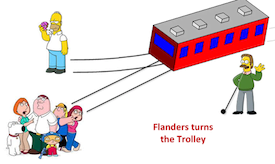
6a00d8342025e153ef01538e3a45b7970b-600wiI first heard about “the trolley problem” as an undergraduate philosophy student in 1991, as one of the countless thought-experiments moral philosophy uses to probe our intuitions regarding right and wrong, and whether we are consistent in our judgements of what is right/wrong. The problem, for those of you who don’t know it, is presented by its creator (Philippa Foot) as follows:

Suppose that a judge or magistrate is faced with rioters demanding that a culprit be found guilty for a certain crime and threatening otherwise to take their own bloody revenge on a particular section of the community. The real culprit being unknown, the judge sees himself as able to prevent the bloodshed only by framing some innocent person and having him executed.

Beside this example is placed another in which a pilot whose aeroplane is about to crash is deciding whether to steer from a more to a less inhabited area. To make the parallel as close as possible it may rather be supposed that he is the driver of a runaway tram which he can only steer from one narrow track on to another; five men are working on one track and one man on the other; anyone on the track he enters is bound to be killed. In the case of the riots the mob have five hostages, so that in both examples the exchange is supposed to be one man’s life for the lives of five.

Suarez, and inconsistent vs disproportionate responses

Those of you who watch football might have heard of Luis Suarez, and in particular of his habit (if three instances counts as a habit) of occasionally biting opponents in the heat of battle. I want to briefly offer a distinction for your consideration, because – as is so often the case on social media – the reactions to his most recent offence have tended towards the hysterical.

The most recent offence occurred in a World Cup game where Uruguay beat (and in consequence, eliminated) Italy. Suarez. The video below clearly shows Suarez lining himself up for a chomp at Chiellini’s shoulder, and Fifa are currently discussing how long Suarez should be banned for (6000 has the scoop on that, by the way).

There’s no question that Suarez deserves sanctions of some sort. And this is where the distinction comes in: one can – and should – separate the issue of what a proportionate punishment would be from the issue of whether we’re treating this case as we treat similar (or worse) offences.

Just like in the last World Cup, when Suarez handballed against Ghana, some folk seem to want him hung, drawn and quartered. The reaction was disproportionate then, especially in South Africa, perhaps thanks to our bizarre adoption of Ghana as our surrogate team. Suarez is a nasty piece of work, as far as I can tell – there’s the three instances of biting, the racism, and the fact that he’s rather good yet plays for Liverpool.

But despite this, we shouldn’t let the fact that biting someone seems particularly strange – animalistic – obscure the fact that biting someone is a far less serious offence than repeated violent play, of the sort that can break legs and end careers. Our reactions to Suarez are inconsistent with our reactions to other serial offenders, who offend in ways other than biting.

Take Pepe as example, with reference to the video below:

https://www.youtube.com/watch?v=CFSMICJxZ-Y

Pepe attracts cards fairly frequently – 42 yellow cards and 5 red cards over the years 2008 to 2012 – as one might expect after watching that clip. Yet while the intensity and regularity of his violence attract comment from football fans along the lines of “he’s a dirty bastard” or what have you, I don’t see many people calling for a lifetime ban or many months of suspension.

But tell me: would you rather play against Suarez, with the possibility that he might take a bite of your arm or shoulder, or against Pepe, who might kick you in the head while you’re lying on the turf? As disreputable as Suarez might be – and this fantastic ESPN profile is worth a read, to see his history in this regard, as well as the lengths people go to to defend him – his offences are more notable for their sheer oddity than for their brutality, and we should keep this in mind when calling for his head.

The United Nations: perhaps irrelevant, but now also offensive

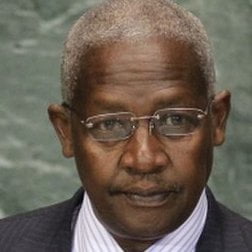
Foreign minister KutesaAlthough some of you might always have considered the United Nations an irrelevance, it would be an unfair critic who claimed that they do no good at all – their World Food Programme, for example, claims to provide food to 90 million people per year.

But they have their critics, ranging from those upset by the UN’s failure to endorse the 2003 invasion of Iraq, to claims that the arrival of UN peacekeeping troops tends to reliably correlate with an increase in child prostitution. As with any large political organisation, criticism can be partisan and ideologically-motivated, often forgetting that realpolitik comes with compromise.

Women are hard to animate, but they’re still a nice gift!

You’ve no doubt seen plenty of social media commentary on Ubisoft’s decision to drop the playable female character from the new Assassin’s Creed title, saying that keeping such a character would involve “double the animations, double the voices, double the visual assets… really a lot of extra production work”.

As is often the case, the blogosphere and Twitter could be accused of not allowing for the possibility that there’s any reasonable justification for Ubisoft’s decision, judging from the temper of the posts and tweets I’ve seen, few of which express any sympathy for the company (leaving aside the obviously sexist comments from people saying that “women can’t be assassins” and the like).

Chief Justice Mogoeng, religion and the law

In September of 2011, I was one of those to express concerns regarding Mogoeng Mogoeng’s suitability for the position of Chief Justice. At the time, I noted that “there is a distinct danger that he would be unable to separate his faith from his duties as a jurist”, and also remarked on how his appointment would occur in a context of apparent tolerance for homophobia on the part of the President himself, as well as in the appointment of someone like Jon Qwelane as ambassador to Uganda.

However, there has been no reason (that I’m aware of, at least) to fear that the worst has in fact come to pass. Morally conservative he may be, and also homophobic, but I’ve seen nothing to indicate that Mogoeng has been anything other than the loyal servant of the Constitution that he swore to be when appointed.

On Elliot Rodger, #YesAllWomen and #NotAllMen

As news of Elliot Rodger having killed 6 people, then himself, spread across the Internet this past weekend, the Twitter hashtag #YesAllWomen started to trend. On the surface, the reason for the widespread uptake of this hashtag is easy to comprehend, given that Rodger had announced his intention to

“enter the hottest sorority house of [the University of California–Santa Barbara], and … slaughter every single spoiled, stuck-up blond slut I see inside there.”  To “all those girls I’ve desired so much,” he says, “you will finally see that I am the superior one, the true alpha male.”

elliot-rodger-fusillade-santa-barbara-islaTo those women (and men) who were using the hashtag sincerely (as usual, there was some satire, some trolling, etc.), Rodger’s actions and the apparent motivation for them provided a useful opportunity to note that sexism and misogyny – whether of the extreme sort that leads to things like beating and rape, or the more widespread sort that is documented on sites like Everyday Sexism – is something that is far too common.

It doesn’t matter that you might be able to cite an instance, or a handful of instances, of a woman who doesn’t appear to be the target of sexist attitudes. It also doesn’t matter that you might be able to cite an instance, or a handful of instances, of men who are the target of sexist attitudes.

Of course it’s true that men are also discriminated against. That is a problem, and one that isn’t given its due attention. But it’s a separate problem, and one that doesn’t diminish the fact that women are, in general, discriminated against more pervasively and acutely than men are.

As with race – particularly in a country like South Africa, but also more generally – a history of discrimination doesn’t get obliterated when legal equality arrives. Social attitudes are sometimes slower to change than jurisprudence is, meaning that you have a larger and more receptive audience for misogynous sexism than you do for misandrous sexism. This could manifest in advertising that objectifies women, or in unequal pay, or in the possibility that you get promoted more slowly as a woman than you would as a man.

Exceptions to this pattern say little about whether the rule is still accurate, until we reach a point where the exceptions start becoming, well, unexceptional. Nevertheless, it should be permissible to question whether this case – Elliot Rodger – is one of somebody acting out of a misogynistic mindset. It might be, for example, that he was simply disturbed in some more general fashion, and that the sexism aspect is a distraction from that more general motivation.

As is typical, a case like this turns the majority of columnists, tweeters and bloggers into psychologists, all offering their non-expert diagnoses of what Roger’s problem was. I’ll try to resist that, because I think it’s irrelevant to the message and the motivation of #YesAllWomen, and also irrelevant to how a competing hashtag #NotAllMen, missed the point about the role a hashtag like #YesAllWomen can play in raising awareness of a genuine social problem, as well as reinforcing solidarity amongst those who experience the discrimination the hashtag catalogued.

An exact diagnosis of Rodger is irrelevant because it’s a pretty safe bet that that misogyny was a large part of his motive, both because it’s a regular feature of his manifesto (which, incidentally, also offers an explanation of why he killed men as well as women. He hated them because they were more successful at attracting women than he was, and this seems to amplify, rather than detract from, a characterisation in which women are objects of conquest), and because of the everyday sexism that I’d suggest any honest observer would agree is real.

#YesAllWomen was noting, and bemoaning, this most recent and tragic expression of these sorts of attitudes. Twitter is a place where we broadcast in 140 characters or less, and a place where rhetoric counts greatly in terms of political effect. #TheVastMajorityOfWomen dilutes the message, regardless of whether it’s more accurate or not (I don’t think it’s more accurate, myself.) The hashtag was a rallying cry that summarised something that is indisputably real, regardless of whether there are details to be nitpicked over or not.

Also, it was a political moment. To accuse those who deployed the hashtag of opportunism or grandstanding misses the point that it wouldn’t matter if it happened to be the case, after detailed analysis, that the Rodger case was not a perfect fit for this broader protest. Yes, all women (leaving aside the nitpicking, as I say above) experience the effects of a patriarchal attitudes, and those attitudes can sometimes lead to tragedy just like this – regardless of whether this (Rodger) is the best way of making that point.

So, it’s in this context that the #NotAllMen hashtag lands, with (some) men rushing to defend themselves against the notion that they are responsible for the sexism that women are subjected to. But unless someone had said that you – Jacques Rousseau, or Keyser Soze, or whomever – are responsible for this sexism, #YesAllWomen isn’t aimed at you, and there’s no need to defend yourself. There’s no reason to take it personally, except as an opportunity for a self-assessment regarding whether you might in fact be complicit, and to what extent. Your actions thereafter, if any, should follow from that self-assessment.

Any sensible person already knows that #NotAllMen are like Rodger, or a diluted version of him. Objecting in the general sense that #NotAllMen does can only serve to give the impression of disagreement with the general point that sexism against women is prevalent, and that this sexism can be part of the reason that men like Rodger end up doing what he did.

It is a pity that conversations about discrimination need to start with qualifications and mea culpas – I would prefer to operate in a world in which any idea can be discussed without running the risk of being misinterpreted through assumptions of bad faith and so forth. But that’s not how politics works – discussions like these happen in a context, where the reception of a message is influenced by that context.

Regardless of what you might be intending to indicate by using #NotAllMen, you’re either saying something so obvious that it perhaps doesn’t need to be said, or saying something that takes attention away from a far more important issue – the issue captured by #YesAllWomen. The hashtag bemoans a real social malady, and our responses should take care to acknowledge that, rather than use it as an opportunity for nitpicking.