The tragedy of absurdity – on Holmes and the Batman shootings

As submitted to Daily Maverick
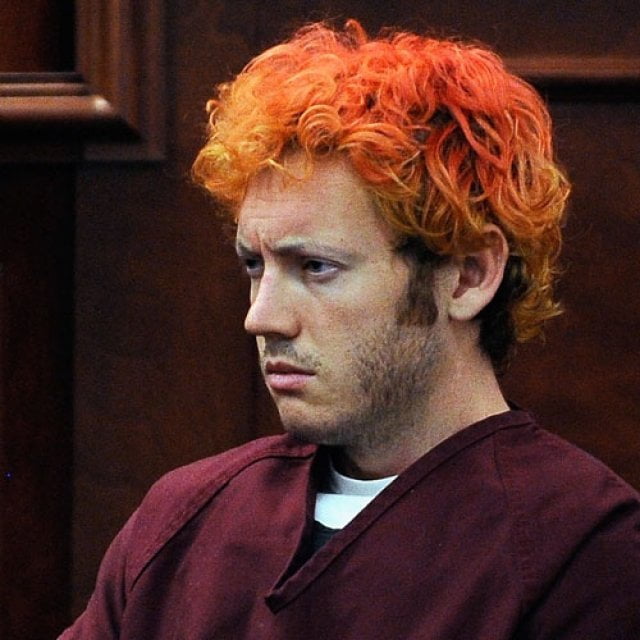
Last week’s shootings in Aurora, Colorado brought to mind the power of absurdity. Amid all the speculation regarding what motivated James Holmes to open fire on a crowd of moviegoers – killing 12 and injuring dozens – we can safely assume that there at least was a motivation or a reason. But it might not be something we can relate to, and in at least one sense, it will be absurd.

Much of the speculation as to Holmes’s potential motive is of course also absurd: from pastor Rick Warren’s claim (edit: he claims misinterpretation) that the teaching of evolution is somehow to blame, to the equally idiotic assertion that the killings are the result of the teachings of Christianity. Most if not all armchair psychologising about cases like this is little more than an opportunity for people on the sidelines to air their fears or prejudices.

Without speculating on his motives, then, we can still say that some set of deliberations led him to plan and execute this attack. And the narrative underpinning those deliberations would have been absurd, because whatever he thought the act would demonstrate, or whomever he thought it would punish, it would inevitably fall short of succeeding in its goals.

To wit: If he intended to kill people of a certain demographic or class, the quality of his targeting was clearly absurd, in that the victims were essentially chosen at random. If he meant to send a message, we’ve not yet been given to clue as to what it is, nor are we inclined to being persuaded by messages delivered in such a fashion.

The only long-term effect on the world from actions such as these is to inconvenience future cinemagoers, who will most likely soon have to pass through security checkpoints to get into the theatre. Minds won’t be changed, whether that of a lover or a god you intended to impress, or those of a set of politicians or bankers you wanted to chastise. In all these cases, the act and the motivation for it will be absurd.

And of course, a heavy price is paid for such a vanishingly small or nonexistent reward. This is the power of absurdity – we define the groups or ideologies we belong to abstractly, to the extent that our political or religious identities become unfalsifiable or irrefutable. Sometimes, we kill, fight and die for ideas, even those that we think will only manifest in an afterlife.

More broadly, communal commitment to the same set of beliefs, whether absurd or not, deepens trust and galvanises group solidarity. We demonstrate our commitment in our actions; and the more elaborate and apparently heartfelt those actions are the more convincing and persuasive they appear to an audience. This can in turn grow the audience or the community, in that they are attracted to the sincerity and solidarity they observe.

When the Pope washes the feet of worshippers, for example, the gesture is costly because it sacrifices power and ego. It’s intended to be a hard-to-fake symbol of commitment to higher powers, or to a shared set of beliefs – this is part of what makes those commitments or beliefs more likely to be adopted by an audience.

Holmes’s gesture was more costly. Clearly so in the case of those who were injured or lost their lives, as well as their families and friends, but also for Holmes himself, who faces certain loss of freedom in one form or another and even potential loss of life (capital punishment is legal in Colorado, even though the last death sentence was handed down in 1987, and then finally executed in 1997). It’s tempting, therefore, to speculate as to some grand motive, because the motive needs to be grand enough to allow us to reconcile these costs.

But perhaps the speculation is always more for our own comfort than anything else, given that you can’t explain the absurd. That is partly the point of these gestures and narratives – they are designed to be un-interpretable and outlandish, because that’s how they perform the task of separating “us” from “them”. We distinguish between cultures not only on the grounds of things like language, but also through ritual, and if the rituals are too easy to fake they become less useful tools for doing so.

To some extent, we now have what one might call universal religions or cultures – things like democracy, human rights and so forth – and various commitment devices that indicate our membership of these religions or cultures. As with all religions, costly gestures indicate greater commitment. If it is inconvenient for you to cast your vote, yet you still do so, you’ll appear to care more for democracy than someone who can’t be bothered to vote. If you spend 27 years in prison, you’ll appear to care even more.

We can’t yet know what religion, culture, or identity Holmes was demonstrating commitment to, and perhaps we never will. Perhaps he was doing nothing of the sort, and we’ll later discover that this (ex) PhD student in neuroscience should himself be a case-study of a certain sort of brain abnormality which predicts this behaviour better than any speculations as to his hypothetical beliefs could do.

Or, more worryingly for those who’d like to take comfort in a narrative – any narrative – that might bring something resembling sense to this tragedy, events like this could simply be a reminder that those universal religions many of us take for granted aren’t yet as firmly rooted in modern cultures as we’d like to believe, and that there’s still plenty of work to be done.
Mandela Day and sustainable charity

As submitted to Daily Maverick

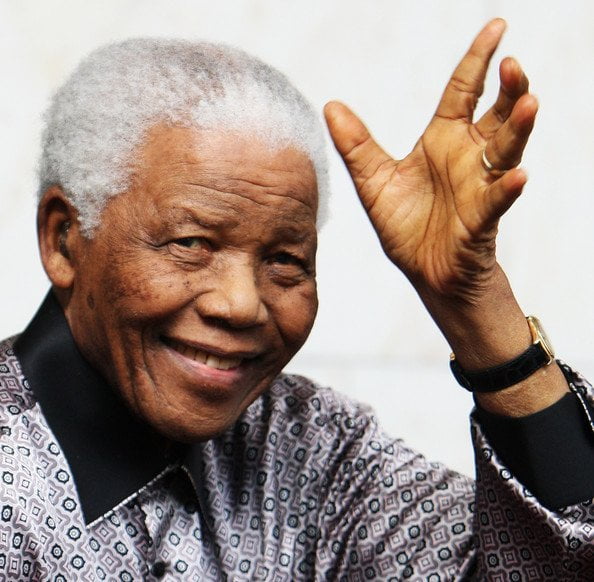
In November 2009, the United Nations General Assembly declared that 18 July should be commemorated as “Nelson Mandela International Day”, in recognition of his “struggle for democracy internationally and the promotion of a culture of peace”.

Though there are corners of the Internet that might dispute whether the honour is deserved, I’d imagine that most South Africans find it unimaginable that we’d be where we are today without his leadership.

Sadly, it’s nearly as easy to imagine Mandela himself looking on in dismay at where we are in 2012, and at the quality and character of those who now lead the democracy he helped to birth. And even though nation-building exercises like Mandela Day can frequently appear to be little more than an excuse for some warm and fuzzy sentimentality, my hope is that this year – and today, July 18 – can remind us that 67 minutes of our time, on one day of the year, will probably make no difference at all.

It’s perhaps not meant to make a difference in any case – at least not in isolation, and not because of any particular activity you might perform during the 67 minutes that we’re being encouraged to donate, in honour of Mandela’s 67 years of service to South Africa. The 67 minutes spent assisting some charity or another will be appreciated, but are unlikely to make a lasting difference unless we use the day as motivation to become more engaged in general.

The Nelson Mandela Centre reminds us that the campaign calls on us to “make every day a Mandela Day” rather than engaging in a box-ticking exercise on one day of the year, then thinking that you’ve done your bit. The latter sort of engagement is good for sentiment, and for giving middle-class folks an anecdote to tell over dinner, but not for much else.

The sort of sentimentalism that can result from encouraging (and engaging in) drive-by charity has more fundamental consequences than simply allowing us to imagine ourselves as humanitarians or philanthropists for a day. It might serve as a general mechanism for deferring responsibility for improving your environment, while being able to claim that it’s others that are negligent. What did they do on Mandela Day, after all?

It sometimes seems that we’re a nation of sentimentalists, who have learnt to wring our hands while (much of the time) also sitting on them. Furthermore, if Mazar and Zhong are correct, our occasional “virtuous acts can license subsequent asocial and unethical behaviours” due to the fact that we feel like we’ve paid our social dues and can now spend our credit selfishly.

Not that I’m intending to argue that you need to do something on Mandela Day, or any other day. The point is rather that if you do care, and want to do something inspired by Mandela or Mandela Day, it should perhaps be on your own initiative rather than prompted by Primedia or by our nostalgic memories of queuing to vote in 1994.

Any day can effectively be a Mandela Day, and that day can also simply be known as “Tuesday”, “Thursday” or “today”. I’m not disputing the symbolic value of standing together in an attempt to make a difference or show solidarity. However, symbols need to represent something to retain that value or force, and increasingly the representation seems to be entirely self-referential. We engage in symbolic gestures such as lighting a candle for Mandela (on the assigned “day”, of course), and then tomorrow, we go back to race-baiting in online newspaper comment threads. But long as your Facebook status mentions that candle, everyone will know that you’re Proudly South African.

There’s a simple thing that we can all try to do which costs no money and only a marginal increase (if any) in the investment of time. Many of the things that worked about the years after 1994 revolved around listening to and attempting to understand each other. I know that it’s less easy to build an advertising campaign around the subtleties of communication than around car headlights. But we didn’t need an advertising campaign then – let’s try to avoid assuming that we need one now.

Tony Nicklinson and assisted dying

Originally published in the Daily Maverick

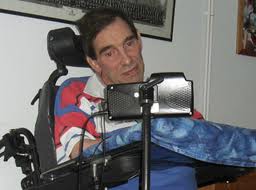
Tony Nicklinson’s mind is trapped in a body that is useless to him. He has been unable to speak or walk for seven years – the voluntary muscles in his body are paralysed, with the exception of his eyes and a few facial muscles. His eyes are what he uses for communicating with his wife and family, as well as with the rest of the world via Twitter, slowly blinking to select letters and words using an alphabet board.

Nicklinson has what is known as “locked-in syndrome”, perhaps the most famous victim of which was Parisian journalist Jean-Dominique Bauby, author of “The Diving Bell and the Butterfly”. Recovery is extremely rare and can only occur spontaneously, as there is no cure for this condition. Two years after the 2005 stroke that left him in this condition, Nicklinson expressed the wish to be allowed to die. In 2012, the British High Court is deciding whether to grant him that wish.

While I take the point, made in a comment to my earlier column dealing with euthanasia and the Sean Davison case, that those who are suffering might not be the best judges of when life should end, some cases seem clear. Nicklinson has never wavered in his desire to die, and his family are fully in support of his freedom to choose when this should happen. The law, however, differs.

Assisted suicide is illegal in Britain, as it is in South Africa. So Nicklinson’s only option is to refuse food, starving himself to death. Pets are typically treated more humanely than this, and Nicklinson would also be justifiably appalled by this option, given the suffering it would cause his family. He therefore wants a doctor’s help in ending this life that neither he, nor anyone who knows him, wants to perpetuate.

Some sanctimonious folks on Twitter disagreed, telling him that “every life is a celebration. If not for yourself, do it for your children” and that “everything happens for a reason”. Well, no, many things don’t happen for any reason. But that doesn’t mean that we can’t generate some reason or motivation out of them. And here Nicklinson’s High Court case is happening for the reason of allowing for a re-examination of the law, in Britain and elsewhere.

The existing acceptance and decriminalisation – even if not legality – of passive euthanasia is of no use here. Nicklinson’s condition is not life-threatening, and the interventions he currently needs to survive are similar to those of every infant. Parents change nappies, and Jane Nicklinson presses a button to activate an electric hoist over her husband’s bed, which transports him to a toilet. Like those infants, Nicklinson also needs to be fed. And he may well live on for years in this condition, and needing these forms of assistance.

So, he needs help to die. The specific remedies he’s requesting the High Court to consider are firstly that, in the particular circumstances of his case and any other case where an application has been granted by a court in advance, a doctor would be permitted to assist someone to die. Second, he hopes that the court will rule that the current laws on euthanasia are incompatible with his right to autonomy and dignity.

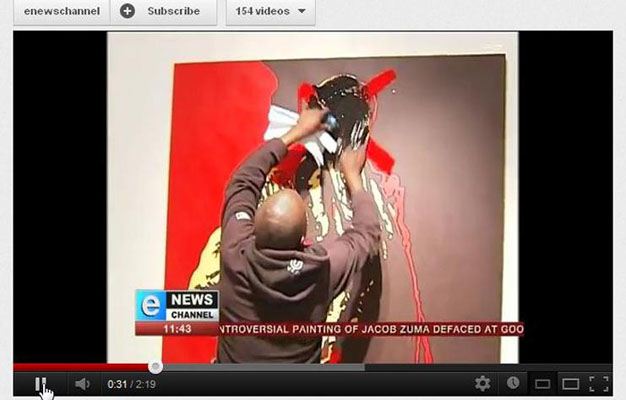
I’d imagine that Dignity SA – the organisation launched locally by Sean Davison to campaign for the legality of assisted dying – would find both of these requests eminently reasonable and applicable in the South African context. If a satirical painting of Jacob Zuma violates his Constitutional right to dignity, I’d imagine that being forced to remain alive in such a compromised state should just about manage to meet even Mac Maharaj’s standards for violation of dignity.

As for the physicians, of course none of them should be forced to end their patients’ lives. But while it might never be an easy task, I don’t doubt that some – perhaps many – of them would agree that preserving life merely for the sake of doing so isn’t always compatible with non-maleficence, one of the fundamental principles of medical ethics. Harm can be caused by the perpetuation of suffering, and the ethical choice can sometimes be to end that suffering.

Paul Bowen, Nicklinson’s advocate, makes the point that making application for permission to end a life in advance “would provide the strongest possible safeguard against abuse”, and “would also provide a safeguard against the concern, often expressed by disabled opponents of legalisation, that a change in the law would lead to a change in people’s attitudes to disabled people, who they predict would come under subtle pressure to seek an assisted death through fear of being a ‘burden’.”

Furthermore, one could argue that allowing for active euthanasia in these limited instances could well lead to a decrease in suicides, with the counter-intuitive result that allowing for ending lives could extend life overall. This is because people can only commit suicide when they still feel capable of doing so, whereas if they knew that euthanasia was an option, they might arrange for the advance directive, and then trust their families and doctors to enforce it once they no longer could.

Nicklinson doesn’t want to die just yet – he’d first like to finish writing his memoirs. And he’s not requesting a law that might permit doctors, or the families of those with serious medical conditions, to make life-or-death decisions for exploitative or otherwise immoral reasons. He’s simply asking to be relieved of his suffering. The law can make distinctions in cases like these, even if it’s true that abuses can result from the general permissibility of active euthanasia.

Hopefully, the British High Court will recognise that they are able to make these distinctions. And, hopefully, the “End of Life Decisions Act” – a draft bill drawn up by the South African Law Commission in 1997 – will one day soon receive a mention in the South African Parliament, and thereby start the process towards allowing us the freedom to pursue the same choice Tony Nicklinson is seeking permission to make.

The Cologne ruling on religious circumcision

Originally published in Daily Maverick

In June this year, a court in the German city of Cologne heard a case involving a four-year-old child from a Muslim family who was admitted to hospital with bleeding following a circumcision. The doctor who performed the circumcision did so at the request of the boy’s parents, and was acquitted of the charge of grievous bodily harm for this reason.

While this particular doctor was acquitted, the court made the general observation that circumcision violated a child’s “fundamental right to bodily integrity”, and that this right outweighed the rights of parents. While leaving room for circumcision to be permissible on medical grounds, the court, in other words, ruled that ritual circumcision amounts to impermissible bodily harm and also constituted a violation of the rights of children.

Contrary to the predictable cries of anti-Semitism that have resulted (and how convenient it is for critics that a German court made the ruling), this is a victory for freedom of religion. Yes, one element of one ritual is outlawed, namely that parents can no longer choose to cut flesh from the penis of their non-consenting child. But why should they ever have had that “right”?

The argument that religion, custom and culture – in and of themselves – are insufficient justification for a practice applies across the board, not simply to examples of such practices that are more anachronistic, bizarre or unfashionable than the ones that happen to still be mainstream in modern societies. We wouldn’t endorse foot-binding on grounds of culture, and we certainly don’t endorse female genital cutting.

Foot-binding would of course not be possible at a later age, or it would at least be far less effective. But you can be circumcised at any age, once you determine that you independently desire to identify with a certain culture or religion. That should be a choice, and not the choice of the parents – this is surely what freedom of religion means. An infant might have Muslim or Jewish parents, but we should wait to hear from the child itself before performing irreversible surgery on them.

Informed consent is a fundamental principle of modern medicine. Exceptions do of course exist, such as when consent cannot be given for whatever reason, and an intervention is held to have significant benefits for the patient. But it’s only contingently the case that we happen to accept male circumcision as exempt from this principle – it has a weight of history and privilege (the privilege that is accorded to religion generally) behind it.

If we were to instead engage in the thought experiment of enquiring whether – in the absence of that history and privilege – male circumcision would be considered permissible, the conversation would revolve around costs and benefits, and whether any benefits could be accrued at lower costs.

In the case of female genital mutilation, the answer is clear – the costs far outweigh very dubious benefits. In general, it’s therefore not very useful or justified to compare that practice with male circumcision (except as examples of cultural artefacts, as I do above. Or, if we were to follow the Jewish scholar Maimonides, we might think them comparable in that both are aimed at a “decrease in sexual intercourse and a weakening of the organ in question, so that this activity be diminished and the organ be in as quiet a state as possible”).

For male circumcision, the fact that it comes at a small physical cost (relative to most instances of female circumcision) is presented as part of the justification for why it should be permissible. But any cost is too great, if it doesn’t come with benefits that can’t be accrued more cheaply. What we should not do is make the mistake of asking adult circumcised men whether they think harm was done to them. They’re not in a position to entertain any counterfactuals – both in terms of their physical state, and also because the majority of them would have grown up in a culture where male genital cutting was acceptable. It would be unsurprising that they found it unproblematic, as it would be just as normal as being uncircumcised would be to other men.

The point is that by that time, the opportunity for choice has passed. A non-religious child has had non-essential surgery performed on it by a religious parent, on the assumption that the child will eventually choose to belong to that religion. And of course, they are more likely to make that choice after having (non-volitionally) embraced the commitment-device of circumcision.

How much stronger would their commitment be, one wonders, if they instead choose to get circumcised as a teen or adult? If circumcision involves a sacred covenant with God, that covenant seems strengthened through being voluntary – and parents should not be free to make that covenant on behalf of their infant in cases where doing so involves cutting the infant’s flesh.

Religious parents in the 21st century are surely aware of these concerns, and do appear to struggle to justify what is at least a prima facie rights violation. So, they sometimes turn to information that wouldn’t have been available to Maimonides – the purported health benefits of circumcision. While it’s repeated so frequently as to seem axiomatic, the evidence that circumcision reduces HIV infection is not as clear-cut (pdf) as many think it is.

Likewise, the claim that circumcision reduces cervical cancer is also more suspect than many realise, as the reported headline findings give little indication as to the dearth of quality data underlying those findings. The key trial held to justify that conclusion is a meta-analysis of 7 different studies in 5 countries, where none of the individual studies found any correlation between circumcision and cervical cancer.

That’s not necessarily a problem, as meta-analyses can sometimes reveal data that isn’t clear in individual trials. In this case, though, the meta-analysis only revealed a correlation with human papillomavirus (HPV), a factor in the development of around 90% of cases of cervical cancer. But while HPV is almost always a factor in cervical cancer, it doesn’t necessarily lead to cervical cancer.

You can of course show that it tends to do so, but note that we’re talking about two degrees of separation from circumcision here, so establishing a sufficiently strong correlation (to even suspect that there might be causation) between circumcision and cervical cancer would require a mountain of data. Instead, what we have in this meta-analysis  is a relatively small sample (for the control group), a suspect methodology, and virtually no controlling for other cervical cancer risk-factors, such as smoking or poverty.

In other words, the evidence of benefits from circumcision is not entirely clear. And against these possible benefits, we also need to weigh costs – for example, the cost of reduced penile sensitivity. Or, perhaps the cost of increased rather than decreased HIV infection, seeing as the South African National Communication Survey on HIV/AIDS in 2009 found that 15% of adults thought that circumcision eliminated the need to use condoms.

I don’t necessarily think that all ethical dilemmas can be resolved by empirical evidence, even if many of them can be. But even if circumcision does come with the benefits of reducing HIV infection or instances of cervical cancer, there’s no obstacle to men of a sexually-active age choosing to be circumcised. If the data were clear I’d happily endorse their doing so, because it’s sensible to reduce risk where possible, and where the reduction comes at an acceptable cost.

But it should be a choice. And while surgical interventions can sometimes be approved by someone other than the patient, this should never be the case for non-essential surgery. So to my mind, the Cologne court made what is unquestionably the correct decision on health grounds, and one which also happens to protect freedom of religion. That is, the freedom of the infant to later choose a religion, or to choose to not have one.

Also worth reading:
Religion is no excuse for mutilating your baby’s penis, by Brian D. Earp

And here’s a lunatic rant from Brendan O’Neill:
The rebranding of circumcision as ‘child abuse’ echoes the ugly anti-Semitism of medieval Europe

Religious Public Holidays in a “secular” state

Originally published in the Daily Maverick

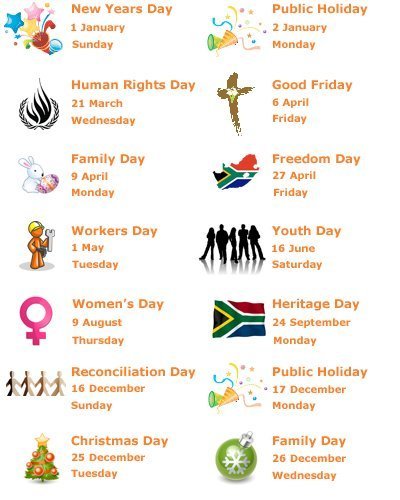
The commission with the improbably long name (more formally known as the Commission for the Promotion and Protection of the Rights of Cultural, Religious and Linguistic Communities, or CRL) is currently holding public hearings on South Africa’s calendar. Following the receipt of four complaints from members of the public, the CRL has set out to determine the extent to which religious bias informs which Public Holidays we get to enjoy, and which we don’t.

On the one hand, the debate seems easy to resolve. We’re not officially a Christian country, so on the face of it, having Good Friday and Christmas Day as 2 of the 12 Public Holidays is surely discriminatory, in that it privileges one religion over others. If you include Family Day – surely Easter Monday in all but name – a full quarter of the holidays are Christian, and none represent other faiths.

If this discrimination is thought unmerited or wrongful, we’d have two options. We could try to represent all faiths, or we could resolve to represent none. Then, it is of course also possible to argue that the discrimination is warranted, seeing as roughly three-quarters of South Africans claim to be Christian.

You might not expect to hear this from an atheist, but I’m rather sympathetic to the claim that it’s not unfairly discriminatory to allocate 2 of the 12 public holidays to the Christian faith. Religion, per se, does not justify public holidays, even if your religion regards certain days as holy. But sometimes tradition, history or heritage does seem to do so, when it can plausibly be argued to represent a significant majority of a population.

In the case of South Africa, three-quarters of the country appear to self-identify as Christian, and therefore three quarters of the country happen to regard the same days as holy. Seeing as many of them won’t be showing up for work on those days in any event, it seems to make perfect economic and moral sense to recognise that day as special. For most of the country, in other words, it is indeed special.

Not recognising those days as special could simply mean that additional (non-official) public holidays would result. If these two (perhaps 3) days are indeed the most holy days in the year for Christians, a possible alternative is of course to let people choose to take these days as part of 12 holiday days everyone is entitled to, on days of their choosing. But why create the logistical nightmare of forcing this large community to co-ordinate their holidays in this way?

Second, if all holidays are a matter of choice, it’s not only the co-ordination of them between family, friends and communities that’s an issue – we might also suspect that some people would end up getting no public holidays at all. It’s one thing for an employer to pressure someone to work on an official Public Holiday – easier still would be for an employer to keep refusing to allow someone to take any self-designated day off. Having 12 pre-identified days makes everyone’s planning easier, and makes it more difficult for employers to exploit their staff.

So however we resolve the public holiday debate, giving everyone 12 days off – on days of their own choosing – seems the worst possible choice we could make. Our alternatives, as mentioned above, are to include all religions or to include none. Including all of them is clearly out of the question, unless by “all” we mean some limited set, rather than all. Deciding on who gets to be included in that limited set would require some discrimination, though, and seems to get us back to square one – who gets to decide which religions are privileged, and why?

If, as suggested above, making these decisions is premised on popularity, then we should bear in mind that we might sometimes need to revise which public holidays are celebrated and which not. If South Africa eventually becomes a majority Muslim or Jewish country, for example, the holidays should change accordingly. This is perhaps the main issue: such a revision will be unpopular and divisive, and therefore unlikely to occur.

So we might want to consider the discrimination to be unjustified, and resolve that public holidays need to be entirely detached from religious holy days. Then, the days would never need changing and would be selected on a more principled basis. They could be arranged in such a way that the impact on the work week – and the economy – is minimised. Public holidays in the middle of the week invariably result in absenteeism on adjacent days, and this problem could be resolved by stipulating holidays on “the third Monday of June”, for example, rather than on a fixed date.

As indicated earlier, though, arguments that the current arrangements are discriminatory (coming from both other faiths and nonbelievers) seem to my mind overstated. Discrimination is not always wrong, though it’s easy to understand a non-Christian religious person feeling more aggrieved in this case, seeing as to all intents and purposes, having two Christian days recognised where no other faith has a day does appear to present Christianity as the de facto national religion.

Debating this issue on the grounds of discrimination seems to result in more heat than light. We’re becoming a nation of complainers, always on the lookout for who is abusing our dignity or denying some putative right. If there is a slight to other faiths and no faith here, it’s a minor one. But if we are to consider whether the current public holidays are the right ones, there are serious issues to debate – most importantly how we can derive maximum public benefit at lowest cost to the economy. Let’s hope the Commission takes the opportunity to consider those issues, rather than being exclusively concerned with religious (and non-religious) sensitivities.

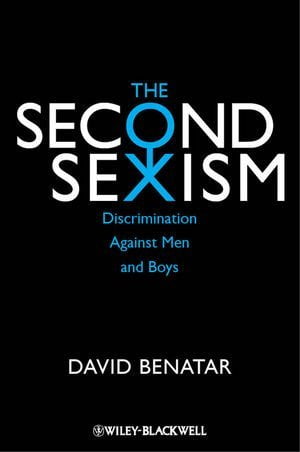
The Second Sexism

Originally published in Daily Maverick

Focusing on one manifestation of an issue can sometimes obscure other manifestations. Or, it could even obscure the fact that what we’re dealing with is a systemic issue or even problem, with multiple manifestations. To (briefly) return to a theme we’re all sick of, treating certain cultural beliefs related to respect as normative in the case of The Spear is one thing, but if someone were to claim that the same cultural norms justified abolishing equal suffrage, we’d be less sympathetic.

Arguments that use some established norm or cultural preference to motivate for a certain conclusion are open to these charges of inconsistency – both in terms of when the arguments are leveled, and in how we respond to them. Political correctness and the expectation that we respect the views of others tend to censor us – at least until the stakes seem high enough that silence is no longer appropriate.

Little evidence of integrity at the Film and Publications Board

As submitted to the Daily Maverick

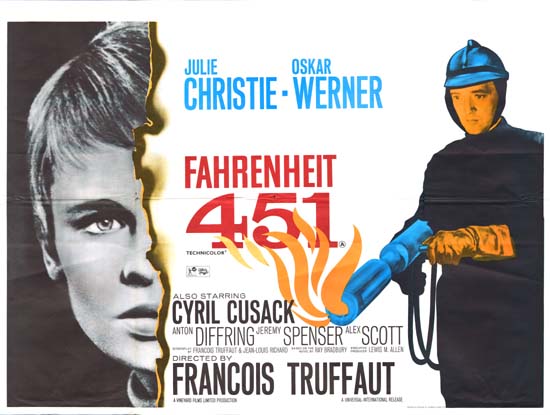
When the Minister of Higher Education calls for a painting to be “destroyed for good”, it’s difficult to not be reminded of Ray Bradbury’s “Fahrenheit 451”. In case you’re unfamiliar with the book, the title describes the temperature at which paper auto-ignites, and the plot addresses the burning of books as a method for suppressing dissenting ideas.

Framed as a method of thought-control, the destruction or censorship of paintings and books should horrify all of us who hope to live in a free society. So instead of framing it in those terms, why not instead make a case based on “protecting the children”? After all, who but a moral monster would be opposed to protecting children?

This is not yet another column about Zuma’s Spear, but rather an attempt to highlight the creeping threat to liberty exemplified in Nzimande’s statement about The Spear, as well as the Film and Publication Board’s (FPB) decision to classify (images of) the painting as 16N. That the former hasn’t attracted significant outrage is a surprise, because even though Nzimande might well have been speaking as the leader of the Communist Party, he also happens to be the man who oversees the country’s higher education system.

As one of the thousands of academics whose professional lives are influenced by this man’s judgement, I have cause to be concerned about a statement like this. As do all of us, not simply through being invested in the country’s future, but because it’s a stark distillation of the level of cynical manipulation of voters that some in the ruling party are willing to deploy. It’s not simply inappropriate for a Minister of Education to call for the destruction of artworks – it’s a complete abrogation of his responsibilities.

But seeing as those he reports to happen to be sympathetic to that view, we should of course expect no censure, apology or retraction. Meanwhile, if the FPB could have their way, images of Murray’s painting would be scrubbed from the Internet lest some under-16 (or sensitive adult) happens to come across it. The danger is of course real, in the sense that a Google search for “South African art” might well highlight the offensive image in question.

The FPB will be engaging with Internet service providers and search engines to “enforce this decision going forward”, which could well mean the dusting off of the Internet and Cell Phone Pornography Bill, Malusi Gigaba’s plan to enforce the moral standards of a few right-wing Christian organisations on all of us. One of the organisations consulted in the drafting of that Bill was the Family Policy Institute (FPI), headed by Errol Naidoo.

You might remember Naidoo from his call to boycott Woolworths for their decision to take Christian magazines off their newsstands (the profitability of a private company obviously being subservient to Naidoo’s interpretation of God’s wishes). Or, perhaps you’d recall his involvement in blocking both Multichoice and TopTV from screening adult content.

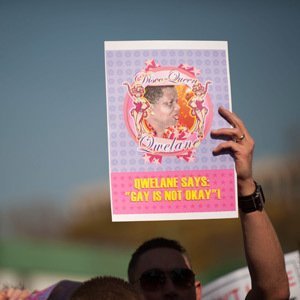
But in case all of those campaigns happen to coincide with your preferences, we’re also talking about the person who called the Civil Unions Act a “grossly negligent act of Parliament”, and whose monthly newsletters rarely fail to mention the immoral and unnatural scourge of homosexuality, and the complicity of the “liberal media” in obscuring the imminent downfall of civilization that will be precipitated by consenting adults in their bedrooms.

The reason Naidoo and the FPI are relevant to the discussion around the FPB’s decision to classify The Spear is that the FPB statement laments the “suggestions made that have sought to question the integrity and independence of the FPB”. I’d hope that in this instance, integrity would include being guided by the spirit and letter of the Bill of Rights in matters such as freedom of sexual preference and orientation.

But this hope seems somewhat unfounded when you look at the FPB’s website. On their home page, you’ll find a sidebar element headed “Useful Links” – but you’ll only find one link there, and that link is to the Family Policy Institute. In case my objection is not entirely clear, I’m not making the claim that religion (or Christianity in particular) can have nothing useful to say in matters of morality or in decisions regarding what children should be exposed to.

The claim is instead that the FBP is endorsing an organisation, and a man, who is a proud homophobe, and who has repeatedly demonstrated that his views on sexuality in general seem to be plucked straight from the pages of Leviticus. To describe this link as “useful” seems somewhat at odds with integrity, at least as I understand it.

Perhaps there’s a more innocent explanation, namely that the FPB has no idea who or what they are endorsing. If this is the case, we have no less cause to question their competence in effectively performing the task of deciding what to classify and how to do so. Incompetence – at least from the perspective of those who wish to view artworks or movies – is hardly more reassuring than significant lapses in judgement.

So it’s not just that the FPB have made a ruling that’s likely to survive even internal appeal processes, never mind court challenges. The issue is also that the chilling of free speech or artistic expression can happen by degrees, and can be disguised by the motivation of “protecting the children”. Because, framed in those terms, who would dare complain? If you do complain – at least once protecting the children is understood in the terms of folk like Naidoo – you might as well confess to being a paedophile.

The creeping nannyism of South African smoking regulations

Originally published in the Daily Maverick
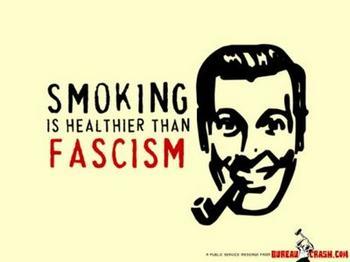
South Africa has some of the most stringent restrictions on the sale, advertising and consumption of tobacco in the developed world. In general, this is a good thing. It seems to me entirely appropriate for harmful substances to be reasonably difficult to get hold of, and that they shouldn’t be made to appear attractive to prospective users.

Zuma’s Spear and egalitarian anti-racism

As submitted to Daily Maverick

On Sunday, Zama Ndlovu (@jozigoddess) tweeted “I do hope someone will write something about how whiteness should look at that piece of ‘art’. To be fair and stuff.” I’d hope that nobody does, just as nobody should write about how “blackness” should look at Brett Murray’s “The Spear”. Because both approaches would be prescriptive in dictating that it’s race which should determine one’s attitude to dignity, and which sorts of harms should be taken seriously by our courts.

It’s too late, of course – many pieces were published over the weekend by writers of various races, with some of the writers explicitly foregrounding their blackness or the putative blackness of their analysis. More important, perhaps, is that they foregrounded the whiteness of the artist – and the whiteness of thinking that it’s permissible to depict Jacob Zuma with his penis hanging out of his trousers.

This is the crux of the controversy. Not only freedom of artistic expression competing with a Constitutional right to dignity, but the clash of cultural norms that Murray’s painting has highlighted. As with Yiull Damaso’s painting of Mandela’s autopsy, those who think it inappropriate to depict Zuma’s penis talk about disrespect, and appeal to the communitarian perspective that holds that we are responsible for upholding each others’ dignity. Those who think the painting permissible tend towards the more liberal perspective, arguing that we don’t have the right to not be offended.

These responses are not reliably correlated with race – black columnists have been among those arguing that Zuma has presented himself as a philanderer, and therefore that he shouldn’t be surprised if we end up perceiving and depicting him as one. But I haven’t seen a white columnist arguing that The Spear is insensitive enough to merit an urgent interdict for its removal from the Goodman Gallery and the City Press.

The absence of this sort of critique from white writers feeds into the narrative of racism, whereby Murray’s painting becomes emblematic of a colonial gaze, where black men are savages, ruled by their passions rather than by intellect. That sort of reaction, though, is sometimes self-serving and inconsistent. I can’t dispute that it’s sometimes a justified reaction – there are surely instances of artists and writers who have the view that whiteness has some sort of monopoly on sophistication, with blackness representing some form of primitivism.

But the demand for us to respect cultural preference in these matters is self-serving in the sense that it forestalls any possible debate or reflection on the merits of the artwork. Not the merits in terms of quality and originality, which are a separate matter, but the merits in terms of the discomfort and self-reflection the artwork could inspire. The easiest way to justify poor arguments or mistaken ideas is to refuse to discuss them – and if it is a mistaken idea that presidents, parents, or people in general merit protection from these sorts of insults, playing the race card or the culture card serves to rule that discussion out of order.

Then, the reaction is inconsistent because it frequently expresses a prejudice of its own. Instead of defending the dignity of anyone, from an egalitarian anti-racist or anti-sexist perspective, we mostly hear silence when a Jackson Mthembu or Marius Fransman says abusive things about Helen Zille or Lindiwe Mazibuko. Or, for that matter, when Mazibuko is called a “housenigger”, or Zille is threatened with rape on Twitter – both of which occurred last week (but not for the first time) in social media chatter during the march on Cosatu House.

Is this because they can deal with it, where Zuma cannot? Or because they’ve earned it, where he has not? An answer to either question will expose deep prejudice on the part of those who think these things – so, better not to think about it. Or is it simply the case that because Zille and Mazibuko aren’t of a communitarian mindset themselves, this cultural norm of defending each other against insult doesn’t apply in their favour?

If the latter is the unconscious motivation for this inconsistency in what results in outrage and what doesn’t, we can ask a follow-up question: exactly which categories of human does identity politics grant special protection to, and on what grounds is this discrimination justified? I’m not talking about recognising that certain groups of people might have certain sorts of sensitivities – that they do, and sometimes for very good reason – but rather about whether we’re comfortable with certain sensitivities receiving preferential treatment in law or public opinion.

I don’t know how whiteness should look at Murray’s painting. But I do know that I could imagine a person being offended by a similar portrayal of their father. And I do know that a black person might not object in the slightest to Zuma being disrespected by this painting, because of the belief that Zuma has done little to merit that level of respect. Among this range of responses, though, it’s unclear whether we’re acting out of principle, out of prejudice, or out of reaction to prejudice – whether perceived or actual.

Zuma can by all means test, in court, whether Murray’s aesthetics and cultural norms should bow to his. For Zuma to win, though, would require demonstrating that his dignity has actually been impaired, and not just that his feelings were hurt. And I don’t know about you, but I already had the impression that Zuma was a rather sexual creature. Not because of some identity politics claptrap, but simply because he has “four wives, two exes and 22 children by ten different women”, as The Economist succinctly put it.

As for the painting itself, of course it’s disrespectful – I’d imagine that’s the point of the painting. You might think the painting in unacceptably bad taste, but your aesthetic preferences and cultural norms are of no more consequence than anyone else’s – at least in theory. In this case, where the ANC has joined Zuma’s case as second applicant, it seems that theory will soon (and, again) be tested – leaving us with one more reason to respect them both less.

Freedom of (hate) speech

As published in Daily Maverick

George Orwell’s novel Nineteen Eighty-Four introduced the fictional language of Newspeak, promoted by the state in order to make “thoughtcrime” impossible. Newspeak was intended to do so by eliminating words describing freedom or rebellion. If you can’t speak a word, the thinking went, you’d eventually not be able to imagine the concept that word might denote.