The privilege of avoiding arguments?

Originally published in Daily Maverick

One of the chapters in Bertrand Russell’s “Unpopular Essays” (1950) is “The Superior Virtue of the Oppressed”. In the essay, Russell criticises the tendency of those who marched with him in support of various social justice issues to not simply stand against oppression, but also to insist that the oppressed are somehow epistemically privileged. They were wiser, more experienced, perhaps even more objective than those who were not oppressed. An uncharitable reading (Russell’s) would be that it’s actually good for you to be oppressed.

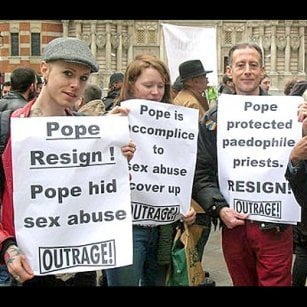
Paedophilia is not (yet) child abuse

Originally published in Daily Maverick

When you hear reports concerning an “alleged paedophile” like Johannes Kleinhans, due back in court this week, it’s difficult to think of his possible crime as anything other than sexual abuse of a minor. But that’s not what paedophilia means. Furthermore, our instinctive horror at the possibility of children being sexually abused might sometimes be counterproductive, in that it leads us to scare potential abusers away from treatment.

Some think that “treatment” for paedophiles is impossible, and that they should simply be locked away for good. Still others think that locking them up is not enough, or that the prison time should come with a guarantee of experiencing some sexual abuse yourself. “Papa wag vir you” (Daddy is waiting for you) is one of the more polite comments to one report on a US Peace Corps volunteer, facing imprisonment for sexually abusing five KwaZulu-Natal girls.

These responses are understandable. I cannot imagine the terror that parents might feel when thinking about these threats to their children – or even the legislative responses to those threats, like when you find out that South Africa’s sexual offenders register lists only 40 names (thought to be a small fraction of the true number).

All paedophiles are attracted to young children, often sexually, but not all those who sexually abuse children are paedophiles, and not all paedophiles are child molesters. Paedophilia describes what you’re attracted to – not what you do with that attraction. For a celibate male priest, a hetero- or homosexual orientation  could be a problem, regardless of whether he’s attracted to adults or not. He remains celibate, though, until the attractions are acted on.

Of course these things are not the same in terms of the extent of damage that can be caused to the victims of sexual assault. Children are easier to victimise than adults are, regardless of your view on whether long-term trauma is more or less likely at any given age.

Nevertheless, it’s the sexual abuse of children that we want to criminalise, not  the fact that someone was unfortunate enough to be born with sexual desires they are unable to pursue  (or can only pursue  under threat of severe consequences). I’m not comparing adult sexual abuse to child sexual abuse, except to say that what sort of target an abuser would pick – if they were to abuse someone – is a separate matter from whether they are an abuser or not.

So, a paedophile is a potential abuser of children. It’s not a crime to be a potential anything, though – if it were, few of us would escape imprisonment thanks to our constant potential to break laws, whether the more trivial speeding while driving to the less trivial theft or murder. We don’t do these things for various reasons, including fear of punishment – but also because we don’t want to do them. We might not even want to have the desires we do.

This is the case for many paedophiles, such as Spencer Kaplan or the man who wrote to sex-advice columnist Dan Savage to say that he “walk[s] around every awful day of [his] life knowing that there is no one out there for me” – in other words, that his life can never contain any sexually fulfilling interactions with other humans, because he’s attracted to the wrong sort of humans. I remember listening to another paedophile (but this time, someone who was himself still in adolescence) calling in to Savage’s show, expressing bewilderment at what he should do. He knew his urges were wrong, and he knew that he shouldn’t act on them. He just didn’t know how he could be helped to live with this self-denial for the rest of his life.

We need to help potential child abusers to not become actual child abusers. And speaking of paedophiles as if they are already abusers isn’t helpful because it shames them, and because it runs the risk of driving underground exactly the sort of people we want in plain sight – and in treatment.

In the US, an organisation called B4U-ACT offers counselling for those they call minor-attracted people, and similar support mechanisms exist in Canada, Germany and elsewhere. In Greece, paedophilia is regarded as a disability (edit on 16 April 2022: this was only a proposal, which was in the end not adopted), with social support grants available to those who are willing to present themselves for diagnosis. But who would do such a thing as present with paedophilia, when everyone understands that to mean you rape children?

Dehumanising people can’t be a productive strategy for getting them to treat others as human, rather than as objects for sexual abuse. Some of the articles linked to above contain examples of sufficient verbal abuse, or a complete lack of sympathy, that we shouldn’t be surprised when potential offenders want nothing to do with treatment. We’re telling them we don’t care.

Yet, we remain surprised to hear of cases where some “monster”, “lacking all humanity”, and so forth, has committed some horrible crime. There’s no question that the sexual abuse of children is a horrible crime, and that we should do all we can to make sure it never happens. But making sure that it never happens might well include our own obligation to avoid the lesser crime of refusing someone the treatment they need, and that might protect your – or someone else’s – child.

More on dealing with trolls

As submitted to Daily Maverick

(Note to pedants: I realise that the previous post – and this one – uses the word “troll” atypically. This is both because I think the definition could usefully be broadened, and because it’s a useful, evocative word).

If you don’t believe that hostility (or sometimes, something more accurately describable as abuse) on Internet comment threads is a problem, then this post will be of no or little interest to you. I say this to let you know that you should cease reading, rather than skipping to the end to leave a hostile comment. You always have that option, even though people seem more and more reluctant to exercise it.

But if you do think this a topic worth discussing, you’d most likely recall that last week I discussed what appears to be a marked decrease in civility on the Internet. What used to be localised has arguably been generalised, and we’ve now got a significant chance of encountering a troll in the comments thread of Daily Maverick, never mind their ancestral homes of News24 and PoliticsWeb.

One thing that we can all do about this is to temper how we respond to provocation, whether perceived or otherwise. This is part of the remedy for situations in which we might be perceived to ourselves be the troll, or perhaps where we provide one of them with a useful provocation. The advice to not feed trolls remains sound, but it perhaps doesn’t go far enough.

This is because what I’ve always understood as not feeding a troll is simply not responding to their provocations. While mocking someone who seems deserving can provide pleasure – both to other commentators and to spectators – it’s mostly just a way of feeling superior. It usually won’t change anyone’s mind, and serves simply to affirm a group identity as one of the smart, sophisticated set (or so you might think of yourself), rather than the sort of person represented by the ingrate you’re now making fun of.

In other words, directing your scathing wit at a troll might be encouraging another sort of negative aspect of character, while doing nothing to modify the target’s behaviour – except for encouraging him (sadly, it usually is a him) to try harder. It’s perhaps these sorts of considerations, among others, that led Jean Kazez, a philosopher at Southern Methodist University in Dallas, to offer what I thought to be three quite useful prescriptions.

The first prescription she offers has already been addressed, above and last week, and calls for some reflection on appropriate uses of our time and energy – particularly for those of us who do act like trolls online. The second and third, however, call for a complete disassociation from those who do, rather than the more typical exhortation to not encourage them.

Kazez suggests that we should cease any participation in fora where significant bullying takes place, and also cease from interacting with people who do participate in those fora. In summary, both those who bully and those who enable the bullies need to discover that they will lose their “seat at the table” of adult debate.

In a local context, perhaps this could mean never even attempting to engage in a comment thread on certain sites, or promptly removing oneself once certain commentators arrive to hijack the discussion. If the chances are high enough (and sometimes they seem certain) that the usual race-baiting will ensue, what’s the point of yet another attempt to call for a nuanced consideration of how (for example) neo-liberalism is being used as a catch-all term meaning “an economic stance that I don’t agree with”, and is therefore not a useful contribution?

My primary concerns around the advice to disengage involve the potentially instructive role that more sober comments can play. Even if it’s true that engagement typically encourages, because trolls love being given attention, there are nevertheless some fence-sitters lurking who are potentially receptive to productive disagreement.

Withdrawing entirely from debate costs us those opportunities. Limiting or ceasing interaction with those who do participate is even more radical, and involves forsaking the opportunity to set an example, persuade or encourage others to be more reasonable. But perhaps this is the point – we are still too optimistic about how often such opportunities arise, and about how often there’s any reward from taking them.

As someone who has by now spent more than two decades at a university, it’s perhaps easy to accuse me of naiveté here – maybe this is just how people talk in the “real” world, and it’s the Socratic dialogue that was always the fantasy. If it is civilised conversation you want, in other words, have it with carefully selected friends or in a filter bubble you’ve created for that purpose.

Outside of those environments – which bring with them a limitation on our own capacity to learn from difference, and from debate – it sadly seems true that most of the time, our engagements with abusive elements of the Internet are doing nothing to stem the tide of anger and misunderstanding. In the meanwhile, though, they do give the trolls something else to scream about.

On dealing with trolls

As submitted to Daily Maverick

One of the things that the Internet has been good for is broadening the range of perspectives in any given conversation. Of course certain barriers need to be overcome: to participate, you need an Internet connection and a suitable gadget. Nevertheless, conversations have been democratised, thanks at least in part to being able to more easily discover who is interested in talking about the same things as you, and the fact that it’s relatively inexpensive to join in.

However, the filter-bubble remains a problem. Not only do the personalisation features of search engines like Google give you results that reinforce existing prejudices; we also like it that way – it’s called confirmation bias, and too few of us take active steps to combat its negative implications (if we’re even aware of the potential need to do so). There’s another concern though, one that I’ve mentioned in the past but would like to explore a little further today: the question of online abuse and the extent to which it might cause some voices to withdraw from the conversation entirely.

An example from a few minutes ago will serve to illustrate: “screw u, u doos, first of 90% of big business in S.A is owned by whites and top man is white, so cry me a river!!!” is what someone just told me on Twitter after I repeated an overheard joke about members of the UCT Senate’s prospects of employability at Woolworths.

Now, seeing as some folk have been calling me a racist for a few weeks now, thanks to my defending  Woolworths and SAA’s affirmative action policies, we can be sure that the grammar-impaired person who tweeted that at me is clearly unaware of this context. That’s fine – I’d expect most people to be. However, just in case there is some context, one might think a little tempering of the hostility is merited when (over)hearing something that offends you.

Not so for this person, it seems, and increasingly not so for those who comment in these pages and elsewhere. And then there’s the next layer of trouble, which is where the filter-bubble ends up resulting in a congregation of these hair-trigger folks into one “room”, as it were. At some point, all possibility for debate ceases to exist because of the mutually-assured idiocy of a collection of angry people, each paying less attention than the next.

Because there seems to be no chance of changing anyone’s mind, some of those who might otherwise try to do so eventually resort to measures like turning off comment functionality, stop engaging in comment threads, and eventually – stop engaging with certain pockets of the Internet at all. This has two consequences: the collection of trolls and angry folk are made more homogenous, and thus apparently stronger, and likewise, the collection of those who consider themselves “virtuous” is furnished with another example of why they are special, and right – and their homogeneity increases too.

So, one day we’ll end up with half the Internet grunting angrily at each other, while the other half recites passages from Plato. Unless we find some way to arrest this escalation of hostilities, or unless I’m wrong about the trend (and I hope I am). In a future column I hope to explore potential legal remedies for online bullying, such as those currently being considered in New Zealand and elsewhere. But because less regulation is always preferable to more, we should also consider what each of us could or should do, simply in our capacity as members of the Internet community.

First, I’d argue that we can sometimes be accused of placing too little or too much emphasis on history, and not enough on our own conduct. Too little, in the sense of the tweet I quote above where zero effort was made to see if an interpretation is the correct one. And then too much, in the sense that we sometimes expect new entrants to a conversation to know minute and technical historical details of that conversation – and then abuse them when they get a detail wrong. There’s sometimes too little patience for any kind of induction period, and so-called “newbies” need the thickest skins of all.

To remedy this problem, I offer one suggestion: that when a debate gets heated, we should try to remember that no matter what’s come before, we’re constantly at a new decision-point, where we – and only we – are responsible for what we say in response to something we find provocative. Sure, someone else has committed a wrong, and we can be inflamed by that. But essentially juvenile questions of “who started it”, while diverting, seldom help illuminate the question of how it can be ended. In other words, I’m suggesting that we learn (or remember) some manners.

Democracy doesn’t magic us into equality

As submitted to Daily Maverick

When you call for a boycott of Woolworth or SAA it’s not in my name, Solidarity. Not in those terms, where you misinterpret legislation, or at the very least stick your fingers in your ears and stamp your feet when you’re offered alternative interpretations. And not in the indignant tones of a group that wants to claim disadvantage in a country where the 10% of us who are white still seem to control just about everything except for the government.

I get that you are frustrated – judging from the comments on some recent Daily Maverick columns, many white folk are at least frustrated, if not angry. It’s even fair to say that you might have a point, because if it’s true that BBBEE is handicapping business and holding back otherwise qualified white employment candidates while only benefiting black tenderpreneurs, then BBEEE is broken. An unemployed black person might even be quick to agree with you, if it was that obviously broken.

Another way in which you certainly have a point is that we shouldn’t be reserving jobs, or positions at universities, according to race. As I argued last year during the crisis-talks around who was allowed to call themselves “African”, Patrice Motsepe and Anton Rupert have far more in common than Steve Hofmeyr and I do. Both black and white refer to something meaningless, or are shorthand for something else that is deeply meaningful.

That meaningful thing is privilege and power, and whether one has it or not. It is whose numbers you have on your cellphone, and whose you do not. It is how many books you read as a child, and therefore how ready you were for school and maybe university, and it is about whether your parents had time to spend weekends with you instead of go to work – or even sometimes about whether you knew your parents at all. It is about all these things, and many more that I can’t imagine.

That meaningful thing tends to correlate with race. We can perhaps summarise it by using the descriptor of “class”, even though that would need further definition. And no, melanin levels play no direct causal role in assigning you to a class. But they have played an indirect one for centuries, thanks to those of us with a lighter skin using race as a proxy for identifying those who stand ready to be exploited.

Not willing, of course, but ready. Sometimes ready thanks to not knowing any better, or through trusting the wrong people. Eventually, as you all know, the exploitation was codified in law, and it was ensured that the vast majority of our population would have less access to the privileges of good educations, safe neighbourhoods, running water and the like.

Those laws changed one generation ago. So it is true that many entering the job market today grew up in a racially neutral democracy. But very few of those job-seekers have parents who can advise on appropriate water-cooler conversation, or on which tie goes best with that suit, or on what to do when you’re the subject of sexist jokes in the workplace.

1994 – or whatever date you choose to identify the start of freedom – did not constitute an act of magic, despite the exuberant rhetoric we so long to believe in. Disadvantage can at some point in history be considered self-inflicted, or an instance of bad luck that has no systemic cause such as racial prejudice. But we’re not there yet, because it remains unreasonable to question the fact that a white kid – in general – enjoys advantages that a black kid does not.

Ideally, this conversation shouldn’t be about race. It should be about identifying which South Africans are underprivileged due to some or other injustice, and then providing redress where possible. If we could find a better way of detecting this lack of privilege than race we should use it, or at least open the discussion about using it – affirmative action based on something as meaningless as skin colour does need a sunset clause, or some sort of trigger condition for its demise.

And yes, it is also true that there are poor white folk, some very rich black folk, and therefore easy examples of inefficiencies and injustice you could point to as being caused by affirmative action. But when you do so, you sound like a racist. Because those exceptional cases don’t alter the fact that cultural capital – Pierre Bourdieu’s term for the knowledge, access and other advantages that allow white people, in general, to still enjoy a higher status in society – is not built over a single generation.

So by all means, Solidarity, question whether we should substitute class for race and explain to us how we should do so. Introduce the idea of a sunset clause – it would be improper for you to be accused of racism simply for doing that. As far as I’m concerned, you could even ask whether it’s appropriate for a job to be targeted at a certain race group, if it’s true that doing so would constitute unfair discrimination.

But as I tried to point out in my column on SAA’s cadet scheme, when one race – or one class – is under-represented in certain job categories, it’s pretty easy to guess what race and class they are, and why they are under-represented. And it’s perfectly justifiable to try to find qualified candidates from that group, before expanding your search to include looking for more people of the sort you already have.

We should all hope to one day not need affirmative action of any sort. But if you claim we don’t need it now, simply because no child was born into a South Africa where they were deprived of a vote thanks to their skin colour, you’re really missing the point that you can’t simply vote your way into a better life for all. Securing a better life involves education, employment and a host of other goods – all of which remain easier to access if your skin happens to be pale.

SAA and justified racial discrimination

As submitted to Daily Maverick

As much as I’d eventually like to live in a world where the most meritorious person is employed or admitted to university, it’s perhaps impossible to ever get there. Factors other than merit will always influence selection, some of which are within our control and some of which are not. Because of the ones that are not, a fundamentalist rather than pragmatic insistence on merit cannot help but reinforce existing advantages – and disadvantages – resulting from various historical prejudices.

Why it’s impossible and not simply difficult is because a selection is always being made from the candidates who make themselves available. And that pool is determined by who has knowledge of the opportunity in question, the means to respond to the job advertisement or placement opportunity, and of course sufficient competency to be considered. You’re choosing from that pool, and the best person for the job might never know the job exists, never mind be in a position to apply for it.

However, some of the factors influencing the composition of that pool are morally less significant than others. It’s not your job (as a potential employer) to address a cultural stereotype dictating that nurses should be female, because that stereotype isn’t premised on generations of prejudice against male nurses. Instead, it’s likely to be premised on prejudice in favour of male doctors, whereby one leaves the (lesser) job to the (less capable) sex, and also on gender stereotypes around women being more caring than men, and thus, better nurses.

Those prejudices and stereotypes will continue to diminish over time, though it might always be the case that certain groups of people, however defined, will prefer one sort of activity or employment over another. But if you care about getting the best people to work for you or fill your classrooms, you have to be concerned about obvious, and substantial, skews in the applicant pool.

This is precisely why affirmative action is sometimes merited. Where generations of prejudice have made it the case that certain sectors of the population don’t consider certain options viable – or worse, have been systematically deprived of opportunities to exploit those options – we shouldn’t fool ourselves that we’re hiring on merit. At best, we’re hiring the most meritorious amongst the pool of the most privileged. Those actually most meritorious, given sufficient opportunity, might not be part of your selection pool at all.

Some of the reaction to South African Airways’ (SAA) decision to restrict its cadet programme to black and/or female South Africans seemed to come from the fundamentalist school of meritocracy. The trade union Solidarity have always struck me as race-baiting ambulance-chasers, always first on the scene to complain about some perceived slight to a usually white victim. So it was little surprise to see them launching a public campaign against SAA.

But then we also had the Democratic Alliance (DA), whose spokeswoman on public enterprises, Natasha Michael, remarked that selecting on grounds of gender and race “is to take our reconciliation project backwards”. The Freedom Front Plus were also upset, saying that “this action [is] one of the most glaring examples of blatant racial discrimination by any government institution to date”.

SAA have subsequently changed their minds, and now permit anyone to apply for the cadet programme. It’s important to note that SAA never intended to only hire black or female pilots – their existing recruitment and hiring strategies were not being altered in any way. The cadet programme, closed since 2006, was being re-launched in a context where 85% of SAA’s pilots are white men – in a country where white men amount to less than 5% of the population. If you’re looking for the best pilots, it makes little sense to only look in a pool that small – and if you’ve got reason to think that the other 95% need an incentive to consider becoming a pilot, a subsidised cadet scheme seems a good start.

Sure, SAA could have handled it better, by indicating that they would give preference to black and female applications (rather than simply reject white male applications immediately on submission, as was the case on the scheme’s launch). Now, they claim to have done away with any form of quota, although it’s more likely to be the case that they will continue to prioritise certain applications, only out of sight.

If one pays a little attention to the reaction of the (almost exclusively white) commentators on the initial reports regarding the cadet programme, it’s clear that merit was the last thing on most of the complainant’s minds. Unbridled racism is the order of the day, where it is assumed that white pilots are certain to be more competent, and that Solidarity (and the DA, of course) has saved us all from falling out of the sky.

Some are still calling for boycotts of SAA. The Dutch non-attached member of the European Parliament, Lucas Hartong, wants SAA’s landing rights revoked in Europe as punishment for even considering quotas in their cadet programme. For those who don’t know who Hartong is, he’s the man who says things like: “the ANC should rather concentrate on hunting down and prosecuting the black-racist radicals who are murdering the Boer farmers on their own land in the so-called ‘farm-murders’”.

Just the sort of man you can trust to offer informed comment on matters of social justice and racial equality, then. The problem is that this is what opposition to redress – even of this quite innocuous sort – looks like to many South Africans, and this is the sort of reaction it inspires. And sorry, friends in certain sectors of politics, but it’s also what the DA can sometimes look like, when it forgets that even if merit is the most important thing, finding it might mean looking in places you hadn’t looked in before – like the other 95% of the population.

South Africa: Why do you make me hate you?

Originally published in Daily Maverick

On August 1, when Ferial Haffajee delivered the TB Davie Memorial Lecture at the University of Cape Town, I found it difficult to share the curiously optimistic tone of much of her presentation. Her talk was ostensibly on Zuma’s Spear – in my mind, one of the more depressing moments in a thoroughly unpleasant year for anyone who hopes for the Rainbow Nation rhetoric to one day mean something concrete or worthwhile.

The talk opened with pictures of medal winners at the London Olympics, and also contained various other examples of South Africans doing things that could also make one proud, assuming of course that “being South African” means anything to you. And why should it? Because when we get to the end of year news roundups, there will be far more there to make you angry than to make you proud.

Textbooks in Limpopo were dumped. Children are being taught under trees while government officials tie up deals for R2bn presidential business jets. As you know, I could go on – we all could, such is the plethora of bad-news stories us South Africans know all too well. And then, last week, dozens of striking miners were shot and killed by police at Marikana.

The temporary balm of an Olympic gold medal or three is meaningless now, just as that Rugby World Cup victory 1995 became meaningless, and just as those queues around polling stations in 1994 have become meaningless in light of a government who shows little evidence of any concern for anything but their own status.

But the first democratic elections at least retained meaning for a few years. By the time we got to the World Cup victory, meaning was perhaps preserved for a few months. Now, we’re down to weeks or even days before a nation-building event like the success of our Olympians is overshadowed by something far more representative of our nation than sporting excellence is.

Or maybe more representative than any sort of excellence, excepting perhaps excelling at things like hate, misunderstanding, selfishness and short-term thinking. The South Africa in which we’re ranked first in test cricket is not the one that most South Africans live in, nor a source of inspiration to someone who feels lucky to earn R5000 per month.

Perversely, it’s no doubt true for many that they would consider themselves lucky to earn even that small amount, and to be able to send half of it on to family even more desperate than they are. I remember a line from a Charles Bukowski reading – “one learns survival by surviving”. And such is the strength of this instinct to survive – and the cultural programming of considering it a good in itself to be alive, regardless of circumstance – that people keep on doing it, even though the life in question is probably never going to become more worth living.

A politician visiting Marikana can’t say things like this, of course. And while I realise that there’s standard diplomatic formulations for cases like there, I’d also like to think that a presidential spokesperson won’t take the opportunity to remind us of how busy and important Zuma is, in telling us he’s deigned to cut a trip short because he “is concerned about the violent nature of the protest” and is “sympathetic to calls for a commission of inquiry”. Just get there, preferably before the rabble-rousers like Malema do.

And perhaps, advise your ministers to exercise caution when speaking to the media. After all, it’s not ideal to hear the Minister of Mineral Resource, Susan Shabangu, observing that these deaths are “unfortunate for the [mining] industry”, especially in light of platinum prices.  Or better yet, consider appointing ministers who don’t need to be given advice like this in the first instance.

Besides anger and sadness, another reasonable reaction to a tragedy is perhaps to ask this question: when should South Africans begin entertaining the possibility that we have an illegitimate government? Not because they can magically fix poverty, but because some in government seem intent on breaking the things that could, like education. Education – one of the things that can help angry miners learn that it’s not true that a Sangoma can make you bulletproof.

And when they do break these things, they always keep their jobs, just as they do when they steal public money – so long as they support the right ANC faction, of course. So no, I can’t share the optimistic tone of Ferial Haffajee’s lecture. Today, I could say that I hate this country. In fact, I hate it enough to stay and to try to help break it, hopefully so that we can then start to rebuild it into something worth being proud of.

Jerm’s cartoon, reproduced below with his permission, was one of the motivating factors in writing this column.

South African religiosity in decline? Not likely.

Previously published in the Daily Maverick

Wanting to believe something to be true has no effect on whether it is, or becomes true. We all know this, at least in the abstract (except for Rhonda Byrne and her readers). Nevertheless, in the race to be the first to compress some insight or factoid into a 140 character tweet or a provocative headline, confirmation bias can take over. Instead of suspending judgement until we know all the facts, we sometimes ignore our doubts and regard incomplete, misleading or even false information as persuasive.

Scientific literacy is the biggest loser here, because in the struggle to make sense of things, we forget that our beliefs become better justified through surviving our attempts at falsifying them – not when we confirm them, or think that we’ve done so thanks to unreliable information. A trivial example of this can be found in many of the 330 (at the time of writing) comments to the News24 article describing the results of a recent survey on religious belief.

According to the article, the Win-Gallup International Religiosity and Atheism Index found that the percentage of South African people who consider themselves religious has dropped from 83% in 2005 to 64% in 2012. Now, all the local media houses that covered this simply reproduced the South African Press Association (Sapa) newsfeed, so there isn’t a science journalist or editor that I can call to ask why nobody did any rudimentary fact-checking before reproducing this and other claims.

Because spending merely a couple of minutes on the survey data (pdf) reveals that – by contrast to the claim offered on page six that “in each country a national probability sample of around 1000 men and women” were surveyed, the country-by-country breakdown on page 15 tells us that only 200 South Africans were surveyed.

Assuming that this sample was a representative one, the margin of error now becomes something closer to 7% rather than the 3-5% claimed by Win-Gallup. And if a similarly low number of South Africans were surveyed in 2005 (that data is not publicly available), a pessimistic reading of the data results in a shift from 76% to 73% in the number of people who consider themselves religious.

Alternatively, if the sample was drawn entirely from a certain Province or biased in some other fashion, the results from 200 interviews become virtually meaningless. Unfortunately, although the MD of the Gauteng-based Topline Research Solutions (who are listed as having conducted the survey work in South Africa) responded to my email enquiry, he referred questions regarding the sampling methodology to Gallup’s “Group Head for Opinion Research” – based in Pakistan.

Emails to the other two Topline staffers listed on the Gallup poll bounced with a “user unknown” error – even though one of the two is still listed as being the Sales and Marketing Manager on their website. Make of this what you will, but I can’t say that I’m left feeling confident that the South African sample exists at all, never mind being representative.

There are other reasons to immediately be suspicious of this data. The 2001 census counted 79.77% of South Africans as being Christian, never mind the more general “religious”. The 2011 census data won’t provide any update on this percentage, seeing as the question on religion was dropped, but a drop from 84% (all except the non-religious and “undetermined” in the 2001 census) to 64% seems highly implausible, judging by the frequency with which religious sentiments are uttered and endorsed in popular discussion.

Implausible doesn’t mean untrue, of course – it might well be that the numbers have shifted as described in the survey. But if they have, South Africa would be less religious than the United Kingdom is, at least according to their 2011 census which had the non-religious accounting for 33% of their population. And if you believe that we’re more godless than the UK, your name is probably Errol Naidoo.

Then, the language of the (single) question in the Win-Gallup poll doesn’t allow for quality data. Respondents were asked the following question: “Irrespective of whether you attend a place of worship or not, would you say you are a religious person, not a religious person or a convinced atheist?”

“Religious person” is somewhat ambiguous, as it could imply something formal, whether or not the responded attends a place of worship. If I were one of those New Ager-types who thought I had a personal relationship with something ineffable, whether god or angel, I might say that I’m not religious, while any sane onlooker would assert that I most certainly am. Being “religious” is a label of identity, and is chosen or rejected for a range of idiosyncratic reasons, making this question very difficult to answer or interpret.

Likewise, I’m not even sure that I’d call myself a “convinced atheist”, because while the existence of god(s) might well be the thing that I doubt most, if being “convinced” requires being certain, I’d have to tick the “not a religious person” box. And again, all who know me would most likely have predicted a different selection.

A finer-grained account of what being “religious” means to those who describe themselves as such is a different matter, because it can inform strategy whether you’re on the religious or the non-religious side of the debate. The data from the Win-Gallup poll, on the other hand, simply feeds into our confirmation bias. It allows for the religious to lament and the irreligious to gloat, neither for any good or principled reason.

And speaking of principle and good reason, a concluding note on those non-existent science journalists: we might never again see such a job description, except for the few who still survive at a handful of newspapers. But this isn’t an excuse to simply recycle wire copy, whether you’re a newspaper or a member of the public. The fact that experts are no longer doing the filtering for us means we need to pay more attention – not simply become more gullible.

Voracious and mostly dumb: Lehrer, Daly and the Internet audience

First published on The Daily Maverick

It’s somewhat of a cottage industry to point out yet another way in which something new in the world will transform our lives. Whether it be social structures, economic systems or modes of communication that are changing, it’s the stuff of pop-psychology, -science or -economics to point out what it is that we need to adapt to, and to make suggestions for how we should do so.

Some people make a living from making these suggestions. Or did make a living, until being discovered fabricating Bob Dylan quotes as Jonah Lehrer recently was. (If we’re lucky, a similar fate might soon befall Malcolm Gladwell, sparing us from “Slurp: What kitten’s tongues teach us about derivatives”.

Yes, of course I’m jealous. And also sympathetic, in the case of Lehrer, because it seems likely that he didn’t so much intend to deceive as simply to entertain. This isn’t to excuse him, because clear distinctions can be drawn between cleaning up quotations and simply making them up. The latter remains, and should remain, unacceptable in anything purporting to be non-fiction.

But one of the things that has transformed and requires adaptation is the relationship between writers and readers, on at least two fronts. Even in the market for pabulum, where the likes of Lehrer and Gladwell often trade, the attention economy conduces to style becoming as important as substance if you’re looking to sell your books.

In the latter decades of last century, you could perhaps count the popular science writers worth reading on ten fingers, and “popular” was still compatible with “rather challenging”, at least for laypersons. Now the bookshelves seem packed – frequently with books from the discipline dubbed “neuroscientism”, in which Gladwell and Lehrer arguably both work. To have your books sell, rather than a competitor’s, you need to become a brand.

The need to become a brand is not new. Perhaps, though, what it means to be a brand these days is new, because brands appear to no longer be built on who has the best ideas, but rather on ideas that spark the imagination and can be captured in headlines and slogans. The aversion to complexity that many of us in the audience seem to have incentivises the sort of shortcut-taking that Lehrer is guilty of.

The changing expectations we have for what our “experts” should deliver, and how they might adjust their output in response to those expectations, was one sort of adaptation that was widely discussed over the past week, mostly in response to the Lehrer case. A second sort of adaptation can be found in (and is necessitated by) the fact that many of us seem to have forgotten what free speech is for.

As I argued in last week’s column, we can be wrong about what we believe to be true. Our prejudices and biases might stop us from realising that we’re wrong, and worse still, they might cause us to silence those who disagree with us. So, free speech is largely good for protecting vulnerable (but often valuable) speech acts.

What it’s not for is claiming protection from ridicule or criticism for saying stupid, bigoted or hateful things. So, just in case anyone missed or misunderstood last week’s column, in it I argue that Americans have just as much right to ridicule Chick-fil-A’s president as he does to express his homophobia, because the morality of both of these actions is a separate issue from their permissibility.

This background is relevant to the second adaptation because of the size of the market for opinion – both the producers of it and those who respond to it, increasingly on platforms like Twitter. I’ve previously asked the question of whether comment facilities on the Internet help to turn decent folk into raving loons (temporarily, one hopes), so won’t revisit that territory here. Instead, the question I’d like to raise is what we’re supposed to do about it.

To put it simply, as an audience grows, so too does the number of trolls. As any of you reading this will know, the troll is frequently louder and more persistent than any other contributor to debate. A common refrain on comment threads has for years been “don’t feed the trolls” – in other words, ignore them and hopefully they’ll get bored and go somewhere else.

But this attitude is starting to seem somewhat naïve. Not only because groups like 4Chan and LulzSec have been known to express their views through damaging hacks, but also because the idea of what free speech is good for is perverted when we start using it to justify the level of abuse that Olympic swimmer Tom Daley was recently subjected to.

In his explanation of why Rileyy_69 (the Twitter user who taunted Daley) is no free speech hero, Graham Linehan makes a number of good points. These two paragraphs are particularly worth reading, and clearly illustrate why we somehow need to adapt our norms – and even perhaps our laws – to accommodate the different ways in which people can and do engage in a world of electronic media.

Being able to locate someone–even on the other side of the world–who has suffered a bereavement, and whisper in their ear words calculated to break their heart, is a new chapter in our development, and I think we can all agree that the arrival of hyper-empowered bullies is far from being the most positive aspect of our current connectivity.

And “don’t feed the trolls” won’t cut it as a solution. That’s just victim-blaming. Often it comes from people who have never had to deal with the level of abuse that many in the public eye receive, and never will. New rule: If you don’t experience it every day, you don’t get to tell anyone who does to suck it up.

There are many more adaptations than just these two that might be necessary, and the two I discuss here might not even be at the top of the list. The Lehrer case is arguably an example of what one might call the “shortcut culture”; and Rileyy_69 an example of what can happen in a world where everyone seems to think they’re entitled to just any opinion, and who have lost the internal censor which might otherwise have told them that a given opinion was not worth sharing.

Linehan says, “the question of how we protect free speech is no less important than the question of how we deal with abusive behaviour online”. While that might be putting the case too strongly, the latter is certainly an important question. It is also a complex one, and this is where the two adaptations intersect. Complex questions require careful deliberation, but fabricated Dylan quotes might sell more books.

When fried chickens become homophobic

As submitted to Daily Maverick

You’ve probably heard about the Washington, DC. chain of dry-cleaners who have been barred from opening a store on Dupont Circle after their CEO admitted that she favoured a qualified franchise. In an interview with the Washington Post last week, Kate Parker of GreenClean was reported as saying that “anyone should be allowed to vote, so long as their families have been in the US for at least 3 generations”.

You haven’t? Well, neither had I until I made it up a few minutes ago. But the story that has received a significant amount of coverage are the calls for boycotts and attempts to block the expansion of American fast food chain Chick-fil-A, after their president Dan Cathy was quoted as saying “We are very much supportive of the family – the biblical definition of the family unit. We are a family-owned business, a family-led business, and we are married to our first wives. We give God thanks for that.”

Conservative activists (including ex-presidential no-hopers Rick Santorum and Sarah Palin) have rallied to Cathy’s defence, while defenders of gay rights and marriage equality have been quick to denounce the company for offences including not only offensive remarks such as those quoted above, but also their financial support for anti-gay organisations and therapy groups that aim to “cure” gays.

But while companies that are anti-immigration attract only very occasional and fairly disorganised backlash, Chick-fil-A is experiencing a nationwide campaign calling not only for boycotts of their franchises, but also statements from lawmakers including Chicago Mayor Rahm Emanuel indicating support for Joe Moreno, the Chicago alderman who blocked Chick-fil-A’s expansion in that city following Cathy’s homophobic comments.

It’s been said before, but bears repeating: the only way free speech arguments can ever be taken seriously is if we apply them consistently, and especially to speech that offends us. If free speech is only about forcing people to listen to what you have to say, you’re missing the point. That sort of “free speech” typically only entrenches the privilege of those who already have something to say, and a platform from which to say it.

Meanwhile, the very views that are marginal and unpopular might be worth hearing, and protecting. Sometimes, because we learn that we are wrong through being exposed to them, and sometimes because we learn why we can consider ourselves right through hearing how weak the opposition’s point of view really is. But if we don’t allow for the possibility that we are offended, we can’t describe ourselves as campaigners for free speech.

Emanuel said that “Chick-fil-A’s values are not Chicago values. They’re not respectful of our residents, our neighbors and our family members. And if you’re gonna be part of the Chicago community, you should reflect Chicago values”. If it’s freedom that’s at issue – whether in the form of gay rights or freedom of speech – the question of whether Emanuel’s comment is as offensive as Cathy’s is not a trivial one, because Emanuel is giving a moral principle the same status as a legal one.

It matters not that I – and ideally all of you – share a commitment to the moral principle at issue, namely that heterosexuals don’t have a monopoly on “family”. What matters is that having the sorts of views that a Mogoeng Mogoeng or Jacob Zuma have can be condemned through the use of one’s own right to free speech, rather than effectively stripping that right from others by threatening to (illegally) discriminate against them in terms of where and how they can trade.

Following an outcry from liberal commentators in the US, both Emanuel and Boston Mayor Tom Menino have subsequently admitted that any such restraint on Chick-fil-A’s operations would violate the chain’s rights. If Chick-fil-A could be shown to discriminate against gay employees in terms of who they hire or what they pay, or perhaps in their treatment of gay customers, legal action is both permissible and proper. In the absence of that, much of the outrage has rested on a confused conflation of morality and legality.

Part of speech being free is that we can be outraged, whether for good reason or not. In this particular case, even the question of whether the outrage is merited is an open one. While there’s no question in my mind that homophobia is a bad thing, it isn’t clear that it’s a failing that trumps all other potential failings.

We know this one thing about Chick-fil-A and their values, and what we know obviously can’t be measured up against the attitudes of any other fast food chain, where presidents might hold more odious views and simply choose not to air them.

Then, we also know other things about Chick-fil-A, for example that the roughly $2 million they donated to anti-gay causes over each of the last two years is trivial in light of both their $4 billion annual sales, and also that they donate substantial amounts to non-homophobic organisations also (and, as a result of the same conservative Christian principles that motivate their homophobia).

Calling for a boycott might sometimes be exactly the right thing to do, although it remains unclear that we should feel compelled to mix every aspect of our lives (including our fast food choices) with moral debate. But seemingly knee-jerk moral outrage is something to be treated with suspicion, whether or not it happens to agree with your viewpoint. This is perhaps especially true if it’s a bandwagon that you can’t avoid joining, for fear of being labelled a homophobe.