Originally published in The Daily Maverick
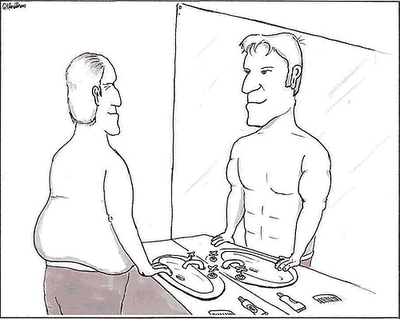
One of the great misfortunes of our age is perhaps that we are all special. Or at least, that we are all considered to be special by others, and that we tend to believe them. By special, I mean important, significant, or worth taking seriously as individuals with distinct interests, rights, characteristics and so forth.
This sanctity of the individual is of course a different matter to the status of ideas or arguments, which can be worth taking seriously (or not) on their own merits, independently of the character or reputation of the person expressing those ideas. The problem, however, is that the alleged sanctity of the individual tends to reinforce the status of her ideas, making us more reluctant than we should be to criticise her strongly-held beliefs – or, of course, our own.
As recently as the 1970’s, when I started becoming conscious, things were not this way. Of course, your parents, other family and friends may have thought you were special. Since then, however, rhetoric around notions such as human rights – as well as the scourge of identity politics – has resulted in individuals having far less humility than they perhaps should, especially when it comes to their feelings of entitlement to be taken seriously.
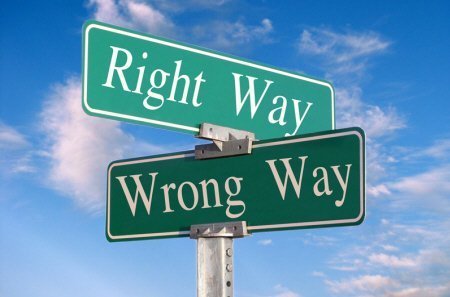
 One key manifestation of this is the confidence we exhibit in our own moral judgements. We might have a strong conviction that the races and genders are equal, or that homophobia is an unacceptable form of prejudice. Or, we might have the opposite conviction. But either way, we believe whatever we do emphatically, even dogmatically, while at the same time somehow respecting that others have the right to believe the opposite.
Something is obviously amiss with this state of affairs. If we are convinced that we are right, we should be equally convinced that others are wrong. And if we are talking about a principle or idea that is believed to affect human welfare, one would think that we’d also feel an obligation to persuade others that they are wrong, and that they should instead adopt our point of view. Unfortunately, the strength of our convictions is not always backed up by equally strong justification, and we thus find ourselves unable to do the work of persuading others to change their minds.
Think back to the last time you were party to an argument around a moral issue. In the majority of cases, we can confidently predict that the bulk of the exchange consisted in the parties involved simply stating their positions, where those positions usually fit quite neatly into one of the established and socially legitimised frames. So, I might say I’m a libertarian, explain what I mean by that, and show how that position leads me to a certain conclusion on the topic at hand.
You might say in response that some measure of paternalism is merited, seeing as we have such a poor track-record of making rational choices regarding our welfare. And then you might explain how your position justifies some particular limitation of freedom, such as making me wear a seatbelt while driving. But these exchanges are typically characterised by only this superficial level of intellectual exchange – they rarely challenge us to question the frameworks themselves.
This is perhaps because we trust that our interlocutor has arrived at their theoretical commitments via hours of reading and deliberation. But is this ever true, except for those of us secluded in ivory towers of one form or another? Is it not instead the case that we’re oftentimes simply making it up, or at most relying on some formative exposure to one point of view or another, which we haven’t bothered to interrogate since it played the role of shaping our worldviews?
The background problem here is that most of us rely on what could be called a “folk theory” or moral law. Just like folk psychology, where (for example) our common-sense intuitions around the pains and pleasures we feel are radically over- and misinterpreted to result in a completely misleading view of the self and its relation to the external world, we seem to believe that we have some innate ability to discern right from wrong. What we forget in the act of making these judgements is that much of this is learned behaviour, and that our lessons may have been provided by incompetent teachers.
Of course, not all of morality consists in learned behaviours. Some evidence of reciprocal altruism has been found in 8 month-old infants as well as in other primates, suggesting that at least some of our moral instincts may develop largely independently of the social mechanisms we happen to be exposed to. Notions such as fairness and justice appear to be well understood in the absence of language, and have even been observed in the behaviour of domestic dogs.
Much of our more complex moral framework does however emerge from a process of learning, whether that learning is through social osmosis or something like studying moral philosophy. And for many of us, that learning commits us to one of two positions: moral absolutism or moral relativism. Unfortunately, neither of these positions is well-suited to moral debate, or to changing the minds of others.
Absolutism in a moral sense does not mean that you need to be certain of the correct answer to any particular moral dilemma, nor that all moral dilemmas have a certain answer. It does however mean that certain actions are absolutely right or wrong. The absolutist would typically justify their judgements as to which actions can be known to be right or wrong through appeal to deontological frameworks, such as that of Immanuel Kant, or through religious moral codes. The immediate reason why absolutism could handicap moral debate is because the foundational principles (a commitment to reason for Kant, a belief in a particular deity for religion) are difficult to reach agreement on.
Relativism, on the other hand, makes the claim that because we can’t agree on any objective basis for moral judgements, there cannot be any objective truths in morality, and that we should therefore reconcile ourselves to the fact that terms such as “right” and “wrong” are relative to culture. At its extremes, this sort of reasoning can also be used to justify egoism, whereby the meaning of right and wrong are determined solely by the agent herself.
Relativism offers a clear handicap to moral debate, in that the idea of debate presupposes that some sort of resolution is possible. If all moral dilemmas are resolved by simply fact-checking what a particular culture (or person) happens to believe, we’d have little reason to engage with those dilemmas, as the conversations involved would be short and uninteresting.
Our educations into one of these unhelpful frameworks for debate – as well as our convictions with regard to the privileged status of our own judgements – tends to handicap our ability to reach principled agreement on moral debates. What are our alternatives, and what is the full case for rejecting absolutism and/or relativism? If you believe these to be important questions, come back next week for a continuation of this attempt to sketch some possible answers.

 One key manifestation of this is the confidence we exhibit in our own moral judgements. We might have a strong conviction that the races and genders are equal, or that homophobia is an unacceptable form of prejudice. Or, we might have the opposite conviction. But either way, we believe whatever we do emphatically, even dogmatically, while at the same time somehow respecting that others have the right to believe the opposite.
 The recent demonstration of homophobic intolerance at the University of Cape Town shows us – once again – that education is no obstacle to ignorance and bigotry. For those of you who are unfamiliar with the details, the story is this: Last week, the student organisation RainbowUCT (in association with UCT management) convened Pink Week, intended to celebrate and promote sexual diversity.