Attention, white people in South Africa!

The dulcet tones of Steve Hofmeyr seem to have convinced some of you that there is some sort of impending genocide, and that it’s going to be played out using airline pilots and “cashiers of colour” at Woolworths (that’s your preferred polite phrasing, isn’t it?). And in the pressure-chamber of the shouting we love to do in each others’ general direction, especially on the Internet, Woolworths and SAA are now “racist” for trying to give previously disadvantaged folk a head start in the employment queue.

But my previous sentence contained a falsity, in that we’re not talking about “previously disadvantaged” people at all. We’re talking about currently disadvantaged people, in that it will take more than just a generation of people being able to vote to result in equality of a substantive sort – the sort that gives you the same sort of choices as someone who grew up, and whose grandparents grew up, on top of the social heap. I’ll say more about this in next week’s Daily Maverick column.

Here, just a short note to say that much of the opposition to affirmative action rests on a false dichotomy. It is of course wrong to ‘blame’ white people (except for some, of course – I’m happy to blame PW Botha, FW de Klerk, etc.) for continuing inequality premised on race. It’s wrong to set out to make white folk, in general, ashamed of being white. But those are very different to recognising that there are still significant inherent privileges to being white, and (as a white person) not getting defensive when those are pointed out. In other words, it’s not as simple as option A) everything is equal and hunky-dory or B) we have reverse-racism. We do have racial discrimination, yes, any many people (including many whites, like me) think it entirely justified.

At some point it will (hopefully) no longer be justified, and it’s certainly a worry that politicians won’t have the courage to recognise when that point arrives. But we’re not there yet. And yes, it should be legitimate to ask questions about how we are going about the process of trying to get to socio-economic equality. We can debate the manner in which affirmative action is implemented (class versus race, for example), and we can debate sunset clauses. But when we do so, it can’t be in the self-righteous and indignant tones of someone who denies that your position on the social and economic heap is still strongly correlated with the arbitrary characteristic of your skin colour. When you speak like that, denying this reality, you sound like a racist – and you probably are one, whether or not you know it.

(And by the way, that’s not clever.)

SAA and justified racial discrimination

As submitted to Daily Maverick

As much as I’d eventually like to live in a world where the most meritorious person is employed or admitted to university, it’s perhaps impossible to ever get there. Factors other than merit will always influence selection, some of which are within our control and some of which are not. Because of the ones that are not, a fundamentalist rather than pragmatic insistence on merit cannot help but reinforce existing advantages – and disadvantages – resulting from various historical prejudices.

Why it’s impossible and not simply difficult is because a selection is always being made from the candidates who make themselves available. And that pool is determined by who has knowledge of the opportunity in question, the means to respond to the job advertisement or placement opportunity, and of course sufficient competency to be considered. You’re choosing from that pool, and the best person for the job might never know the job exists, never mind be in a position to apply for it.

However, some of the factors influencing the composition of that pool are morally less significant than others. It’s not your job (as a potential employer) to address a cultural stereotype dictating that nurses should be female, because that stereotype isn’t premised on generations of prejudice against male nurses. Instead, it’s likely to be premised on prejudice in favour of male doctors, whereby one leaves the (lesser) job to the (less capable) sex, and also on gender stereotypes around women being more caring than men, and thus, better nurses.

Those prejudices and stereotypes will continue to diminish over time, though it might always be the case that certain groups of people, however defined, will prefer one sort of activity or employment over another. But if you care about getting the best people to work for you or fill your classrooms, you have to be concerned about obvious, and substantial, skews in the applicant pool.

This is precisely why affirmative action is sometimes merited. Where generations of prejudice have made it the case that certain sectors of the population don’t consider certain options viable – or worse, have been systematically deprived of opportunities to exploit those options – we shouldn’t fool ourselves that we’re hiring on merit. At best, we’re hiring the most meritorious amongst the pool of the most privileged. Those actually most meritorious, given sufficient opportunity, might not be part of your selection pool at all.

Some of the reaction to South African Airways’ (SAA) decision to restrict its cadet programme to black and/or female South Africans seemed to come from the fundamentalist school of meritocracy. The trade union Solidarity have always struck me as race-baiting ambulance-chasers, always first on the scene to complain about some perceived slight to a usually white victim. So it was little surprise to see them launching a public campaign against SAA.

But then we also had the Democratic Alliance (DA), whose spokeswoman on public enterprises, Natasha Michael, remarked that selecting on grounds of gender and race “is to take our reconciliation project backwards”. The Freedom Front Plus were also upset, saying that “this action [is] one of the most glaring examples of blatant racial discrimination by any government institution to date”.

SAA have subsequently changed their minds, and now permit anyone to apply for the cadet programme. It’s important to note that SAA never intended to only hire black or female pilots – their existing recruitment and hiring strategies were not being altered in any way. The cadet programme, closed since 2006, was being re-launched in a context where 85% of SAA’s pilots are white men – in a country where white men amount to less than 5% of the population. If you’re looking for the best pilots, it makes little sense to only look in a pool that small – and if you’ve got reason to think that the other 95% need an incentive to consider becoming a pilot, a subsidised cadet scheme seems a good start.

Sure, SAA could have handled it better, by indicating that they would give preference to black and female applications (rather than simply reject white male applications immediately on submission, as was the case on the scheme’s launch). Now, they claim to have done away with any form of quota, although it’s more likely to be the case that they will continue to prioritise certain applications, only out of sight.

If one pays a little attention to the reaction of the (almost exclusively white) commentators on the initial reports regarding the cadet programme, it’s clear that merit was the last thing on most of the complainant’s minds. Unbridled racism is the order of the day, where it is assumed that white pilots are certain to be more competent, and that Solidarity (and the DA, of course) has saved us all from falling out of the sky.

Some are still calling for boycotts of SAA. The Dutch non-attached member of the European Parliament, Lucas Hartong, wants SAA’s landing rights revoked in Europe as punishment for even considering quotas in their cadet programme. For those who don’t know who Hartong is, he’s the man who says things like: “the ANC should rather concentrate on hunting down and prosecuting the black-racist radicals who are murdering the Boer farmers on their own land in the so-called ‘farm-murders’”.

Just the sort of man you can trust to offer informed comment on matters of social justice and racial equality, then. The problem is that this is what opposition to redress – even of this quite innocuous sort – looks like to many South Africans, and this is the sort of reaction it inspires. And sorry, friends in certain sectors of politics, but it’s also what the DA can sometimes look like, when it forgets that even if merit is the most important thing, finding it might mean looking in places you hadn’t looked in before – like the other 95% of the population.

South Africa: Why do you make me hate you?

Originally published in Daily Maverick

On August 1, when Ferial Haffajee delivered the TB Davie Memorial Lecture at the University of Cape Town, I found it difficult to share the curiously optimistic tone of much of her presentation. Her talk was ostensibly on Zuma’s Spear – in my mind, one of the more depressing moments in a thoroughly unpleasant year for anyone who hopes for the Rainbow Nation rhetoric to one day mean something concrete or worthwhile.

The talk opened with pictures of medal winners at the London Olympics, and also contained various other examples of South Africans doing things that could also make one proud, assuming of course that “being South African” means anything to you. And why should it? Because when we get to the end of year news roundups, there will be far more there to make you angry than to make you proud.

Textbooks in Limpopo were dumped. Children are being taught under trees while government officials tie up deals for R2bn presidential business jets. As you know, I could go on – we all could, such is the plethora of bad-news stories us South Africans know all too well. And then, last week, dozens of striking miners were shot and killed by police at Marikana.

The temporary balm of an Olympic gold medal or three is meaningless now, just as that Rugby World Cup victory 1995 became meaningless, and just as those queues around polling stations in 1994 have become meaningless in light of a government who shows little evidence of any concern for anything but their own status.

But the first democratic elections at least retained meaning for a few years. By the time we got to the World Cup victory, meaning was perhaps preserved for a few months. Now, we’re down to weeks or even days before a nation-building event like the success of our Olympians is overshadowed by something far more representative of our nation than sporting excellence is.

Or maybe more representative than any sort of excellence, excepting perhaps excelling at things like hate, misunderstanding, selfishness and short-term thinking. The South Africa in which we’re ranked first in test cricket is not the one that most South Africans live in, nor a source of inspiration to someone who feels lucky to earn R5000 per month.

Perversely, it’s no doubt true for many that they would consider themselves lucky to earn even that small amount, and to be able to send half of it on to family even more desperate than they are. I remember a line from a Charles Bukowski reading – “one learns survival by surviving”. And such is the strength of this instinct to survive – and the cultural programming of considering it a good in itself to be alive, regardless of circumstance – that people keep on doing it, even though the life in question is probably never going to become more worth living.

A politician visiting Marikana can’t say things like this, of course. And while I realise that there’s standard diplomatic formulations for cases like there, I’d also like to think that a presidential spokesperson won’t take the opportunity to remind us of how busy and important Zuma is, in telling us he’s deigned to cut a trip short because he “is concerned about the violent nature of the protest” and is “sympathetic to calls for a commission of inquiry”. Just get there, preferably before the rabble-rousers like Malema do.

And perhaps, advise your ministers to exercise caution when speaking to the media. After all, it’s not ideal to hear the Minister of Mineral Resource, Susan Shabangu, observing that these deaths are “unfortunate for the [mining] industry”, especially in light of platinum prices.  Or better yet, consider appointing ministers who don’t need to be given advice like this in the first instance.

Besides anger and sadness, another reasonable reaction to a tragedy is perhaps to ask this question: when should South Africans begin entertaining the possibility that we have an illegitimate government? Not because they can magically fix poverty, but because some in government seem intent on breaking the things that could, like education. Education – one of the things that can help angry miners learn that it’s not true that a Sangoma can make you bulletproof.

And when they do break these things, they always keep their jobs, just as they do when they steal public money – so long as they support the right ANC faction, of course. So no, I can’t share the optimistic tone of Ferial Haffajee’s lecture. Today, I could say that I hate this country. In fact, I hate it enough to stay and to try to help break it, hopefully so that we can then start to rebuild it into something worth being proud of.

Jerm’s cartoon, reproduced below with his permission, was one of the motivating factors in writing this column.

Atheism + some mission-creep and potential confusion

So, the battle lines are now being drawn – at least according to some. Yesterday, Richard Carrier posted this:

In the meantime, I call everyone now to pick sides (not in comments here, but publicly, via Facebook or other social media): are you with us, or with them; are you now a part of the Atheism+ movement, or are you going to stick with Atheism Less? Then at least we’ll know who to work with. And who to avoid.

There’s much more to his post, and much of it is very good, very thoughtful and not at all disagreeable to me. So I’d encourage you to read it, and not to read this post as a rejection of what Carrier said. But I do want to reject his conclusion, and try to explain why it’s important that we all should reject it. The reason for this rejection is not simply the logical fallacy it seems to contain – namely asking us to embrace a false dichotomy – but more because it’s premature to ask for us to choose between poorly-defined (and potentially undefinable) alternatives.

But first, a backwards step, seeing as many of you might not know what I’m talking about. On August 18, Jen McCreight published a post that called for a new wave of atheism. Three posts since that one have sought to define what Atheism+ is (or should be), and have repeatedly emphasised the communitarian aspect of this definitional process – we are all encouraged to chip in with our ideas and suggestions. There’s plenty to love about all those posts, and I heartily endorse the sentiment of Atheism+.

What is that sentiment? As the name implies, it’s atheism, plus a focus on other things. To quote McCreight’s second post in the series:

We are…
Atheists plus we care about social justice,
Atheists plus we support women’s rights,
Atheists plus we protest racism,
Atheists plus we fight homophobia and transphobia,
Atheists plus we use critical thinking and skepticism.

That’s a good list, as I’d imagine that most readers of this blog would agree. But we wouldn’t necessarily agree on how to care, support or protest those things. We wouldn’t even agree on how to define the things we’re supposed to care about, protest or support. We’d agree about being decent people, in other words, but not necessarily agree on how to do that. And while reaching agreement on how to do that might be an important task, it’s not clear that it’s atheism’s task. To put it more clearly, I’m not sure that all of those (and other) worthy goals can best be accomplished under the banner of “atheism”. Especially not on Carrier’s terms, because – as someone who cares about social justice, for example, I’ll be damned if I’ll let him tell me that I can’t collaborate with a Methodist (not an A+ person, so someone “to avoid”) to address some issue of gender discrimination in a community.

Carrier might of course simply be indulging in a little hyperbole, which is understandable given the battle-ground I recently alluded to. I doubt that he’d have a problem with my collaborating with a Methodist – he’s rather asking us to take a stand against people who are unsympathetic to those goals. Certainly, at least those people described by Jean Kazez as

people who are seized by a desire to attack women when there’s the least hint of a question about male behavior at blogs and conferences. The notion of codes being imposed on their behavior sends them into a rage. These are the people whose existence you have to find surprising … and very disturbing. At the very least, they’re seriously lacking in empathy. Some of them even seem to feel an awful lot of hatred. I don’t know how numerous they are, but too numerous–and their ranks seem to be growing too.

But others also, like the “subtle trolls” I spoke about in my previous post on this topic area. And, those who enable or support the people Kazez describes above, or those who don’t denounce them. There’s a range of people who could be included in those who should be ostracised. But the problem is that it’s not always easy to identify them. One commenter on Stephanie Zvan’s site seems convinced that I’m one of the enemy camp, and I’m of course certain that I’m not. How will these decisions be made? A tribunal, or a democratic vote perhaps? And how does one repent after being exiled, and who gets to do the forgiving?

That’s somewhat facetious, I know. But the terms that this debate is quickly taking on lends itself to that. People are working towards what will quickly become an orthodoxy, and it’s going to happen too rapidly to be carefully thought out. Or, it’s simply going to be forgotten in a few months, as Notung argues here. As mentioned above, I’d have to agree with the 3rd point he makes – that it’s unclear exactly which issues should follow the ‘plus’. As for then deciding how to define those issues, I don’t think we can be complacent or confident (as some commenters at McCreight’s posts seem) about how difficult that might prove to be.

For social justice projects or strategy, we’d need to agree on an economic policy. As polarised as this issue is in an election year in the US, just after/during a global financial meltdown, while #Occupy rhetoric is still fresh in our minds… what chance is there of agreement on this? If we’re going to include a concern for the environment, can we simply throw climate sceptics out of our “circle of trust”, or do they get a chance to make their arguments? For feminism, what about people like me, who support it only as a contingent, necessary evil, because I hope to one day live in a world where race, gender, sex and so forth make absolutely no difference, so am loath to emphasise any such features, even in the short term?

My concern, in short, is that if we’re going to reach agreement on any of these issues, we might only get there through ruling certain question as out of bounds – perhaps even bullying them off the table, a phrase I think I owe to Jean Kazez. And if we’re forced to choose sides, a consequence might well be that all we succeed in doing is to institutionalise the current disagreements in the freethought community, rather than to get closer to solving them. In the meanwhile, there are groups already in existence that support those “plus” goals, or at least most of them, and who can probably be persuaded to support a larger list if a case was made.

I think, for example, of the International Humanist and Ethical Union, or the Council for Secular Humanism. They’ve been working hard for quite some time on a closely overlapping set of goals to those of the “Atheism +” movement. The question I’d urge the A+ supporters to consider is whether they’re not reinventing the wheel to some extent here, and also making life significantly more difficult for organisations like these – who often already struggle for support and funding. Just the sort of organisations, then, which could do with the ideas, energy and insight of all those who are currently enthusiastically talking about starting something new.

(Reposted): Being Right Doesn’t Guarantee That You’re Not Wrong

Martin Pribble recently asked if I’d be willing to write a guest post for his site. I was, did, and have archived it below. Also of potential interest are two posts in reaction, first from Ophelia Benson, then from Stephanie Zvahn (thanks, both). Many of the comments on those posts are useful in helping to develop further thoughts on this, so thanks to many who weighed in. No thanks for comments like this, which seem generated by one of those PoMo paragraph generators. Sokal would be proud.

_______________________

It’s not always necessary to be polite. Sometimes, being abrasive or rejecting diplomatic niceties is exactly what’s needed to get a point across. And sometimes, getting a point across is preferable to pleasing the crowd, a subset of the crowd, or even the person you’re talking to. For every person who has been disabused of some fanciful metaphysics by a self-styled “friendly” atheist like Hemant Mehta, you’re likely to find one that’s been persuaded by a firebrand like PZ Myers.

Different approaches work on different audiences. And as so many of us have pointed out over and over again, atheism is not a religion, a cult, an organisation. We’re united in our disbelief in god(s), not in our politics or strategies. So whatever approach one of us takes – no matter how large their blog or Twitter following – it’s a mistake to think that they define atheism, whether old, new, Gnu or one that eschews these categories altogether.

But we (and there, the dangers begin to lurk, as soon as I speak of a “we”) pride ourselves on not believing in the same highly implausible proposition (that gods exist). This means, at the very least, that we share some minimal commitment to reason, in that we want to be guided by the evidence rather than superstition or dogma. And if that is the case, it doesn’t seem much of a stretch to suggest that we should apply the same critical mindset to propositions beyond merely the god hypothesis.

So, when we speak of social justice, equality, freedom of speech and so forth, it’s reasonable to expect some similarity in approach, even if not in conclusions reached. To put it plainly, an approach in which we listen to the evidence, in other words to each other, without pre-judging what someone is going to say, what they believe, or what ideological faction they belong to. Their arguments are assessed on their merits, rather than via knowing which websites they frequently comment on.

Nobody can deny that some participants in these conversations are not honest brokers. Some are simply unreconstructed trolls, others trolls of the sly sort, mimicking critical reflection while subtly distracting – and detracting – from the real issues that others are trying to address. Another set of “others” aren’t trolls at all – and it seems to me that the community of sceptical and/or atheist activists and bloggers sometimes have a difficult time of it in distinguishing between these sorts of contributor to the debate.

The trend on the Internet generally – at least according to my anecdata – is for increasing hyperbole and hysteria, perhaps especially so when we can comment anonymously, with no fear of reputational harm. Those who shout the loudest think that they can win, or end up thinking that they’ve won once they have drowned out the opposing view. And even though our community might (hopefully) be more rational than any randomly selected group, we’re not immune to the same trend.

On emotive issues, this can be particularly worrisome, and is also more likely to happen – simply because the stakes are higher. And here’s the thing: I think we forget that a concern for tone does not automatically mean that you are a tone-troll (broadly, someone who is attempting to shut down legitimate criticism on the grounds that it’s expressed in a rude or hostile fashion).

To put it another way: you can grant that Francis Collins (for example) has some pretty confused ideas about which propositions gain epistemic weight via waterfall observations, yet still think that it’s a bad idea to call him some abusive name. You might think it’s a bad idea because you think it rude, or you might think that (on balance) he does more good than harm for science, so let’s not alienate people who we might reach through discussing him politely.

When the space for saying that (“that” being something like “Collins is wrong, but it’s not helpful to call him a moron”) disappears, we’re not having a rational conversation anymore. Yes, I did use the phrase “not helpful” – sorry, but it fits. And what it means is “not helpful to a certain strategic goal”. You might not share that goal, or you might share it, but think it should be achieved through different means. All of which are questions that we can discuss, if we’re still listening to each other.

We’re not, though – at least not consistently. And right now, the debate on misogyny in the sceptical community has escalated to such an extent that there’s a lot that can’t be heard over the screaming. Yes, there is certainly plenty that doesn’t need to be heard because it genuinely is sexist, or excuses sexism. But simply labelling someone a “rape apologist”, for example, doesn’t magically transform someone into actually being a rape apologist.

A problem here is that we could mean different things by a phrase like “rape apologist”. Coming from a position of privilege, most men might well be unaware of how that privilege biases them against seeing various threats, insults or instances of being demeaned or trivialised that women experience. This blindness might make them too tolerant (in other words, at all tolerant) of sexist language, or stereotypes around what it means when a woman dresses in a particular way.

To be clear, this blindness is bad, and needs correction. It’s certainly bad if we create, endorse, or fail to combat a climate of hostility to any poorly defined (and heterogeneous) group like “women”. And the fact that some women believe that such a climate currently exists is a problem in itself, whether or not you’re complicit in creating that climate. In fact, it’s a problem whether or not such hostility even exists – unless you want to claim it’s a complete fabrication, the perception most likely finds inspiration in some forms of behaviour or speech that we could modify at little or no cost.

Furthermore (and obviously, one would hope), rape jokes and stereotypes about women (or about any hypothetical “group”) are bad things. But there’s still a significant difference of degree between a man who says that a woman who was raped was “asking for it” and someone who asks the question whether, empirically, there is any correlation between what women wear and whether that correlates with sexual violence in any way. That difference rests in part with their attitudes, and in part with how easy it might be to change their views.

The former sort of man can perhaps never be persuaded that he has Neanderthal attitudes. The latter one could perhaps be persuaded that that’s the wrong question to ask. But once he’s driven out of a comment thread by name-calling, we lose our chance to persuade. And this is a key thing: it’s not PZ (or whoever’s) job to control the people who comment on their posts. But we all need to be aware that we set the tone at our websites not only by what we write, but also by how we respond to those who leave comments.

So if someone doesn’t give someone else a chance to explain what might be an honest mistake, rather than an attempt at trolling or rape apologetics, before descending on them with abuse, that abusive reaction is also antithetical to the skeptical cause, and should also be called out by the blog owner or other commenters. If it’s not called out, we quickly become gangs who have chosen a side, and chosen our authorities or leaders, and who then defend our turf by whatever means necessary – whether principled or not.

This tribalism, and defending of a cause, comes naturally to most of us. What also comes naturally is to double-down when challenged, especially when others question your integrity or motives. This complicates the reactions that people have to being called out for language that appears – or is – sexist or insensitive to the pervasive misogyny debate. Being defensive in light of such accusations is normal, and it’s perhaps uncharitable to use this defensiveness as further evidence of the commenter’s ignorance, prejudice or malice.

Here in South Africa everyone will know what I’m talking about if I were to use the phrase “playing the race card”, and hopefully you do too. In case you don’t, it refers to a tactic that’s sadly common here, and is used for avoiding uncomfortable discussions and not allowing any facts to interfere with your prejudices. If a white man such as myself says something about South African culture or politics, it is often dismissed simply on the grounds that I can’t understand what it’s like to be black.

What this crude form of identity politics misses is that blackness or whiteness or whatever-ness is only one feature of identity. Sometimes a powerful one, to be sure, but nevertheless, I might have far more features in common with a randomly selected black South African than she does with another randomly selected black South African. The same principle applies with gender, and just as we shouldn’t use the race card, but instead look at the arguments and evidence, we should avoid using the gender card.

Yet, we have to make distinctions between well-meaning interlocutors and trolls, and we all want to keep our websites and blogs free of trollish pestilence. So patience cannot be infinite. But when the current tensions started escalating to the point of an apparent civil war, it started to appear as if – increasingly – some members of this community started making judgements before hearing any arguments.

If all we want is to feel self-righteous, and right, that’s fine. It is indeed good to know who the enemy is. But it’s also good to change the enemy’s mind, where possible, and it’s good to discover that someone you thought of as an enemy is actually simply a confused friend. Let’s be wary of making the latter two sorts of interaction impossible.

P.S. I apologise for the generality in this post. It’s a difficult thing to write about, for various reasons, and that accounts for the evasiveness. First, the vociferous responses to interventions in this area do play a censoring role (or did, in this post). Second, I have friends and “friends” (in the Facebook/Twitter sense) on both sides of the civil war, which serves an inhibiting role. Third, and most important, specifics might detract from the general and primary point I’m trying to make – that we should be careful to keep listening to each other, because the thing we (as skeptics) are arguably best at is remembering  that we can be wrong, and recognising when that’s the case.

An unstoppable tide of trolls

If you’re even occasionally dipping in to the skeptic/atheist/whatever blogosphere, you’d no doubt know that there’s plenty of lines in the sand being drawn. Much of it is rather embarrassing, in that some folk seem so desperate to cast their vote in favour of one camp or another that any pretence of looking at evidence, and making careful judgement, is completely out of the question. Because this round of infighting dates back to Elevatorgate (arguably before, in that elements of previous internal conflicts have also resurfaced), I’m not going to even try to get you up to speed if you haven’t been keeping up.

Here are some examples, though. After the Lehrer resignation, Sam Harris decided to give away free copies of Lying, seeing as that book expressed much of what he’d have otherwise liked to say. PZ Myers announced this on his blog. If you look at the comments on PZ’s blog, it’s only from comment 31 onwards that anyone tries to avoid caricature of Harris’s arguments (on issues unrelated to Lying, note – the fact that he said or didn’t say various things about torture and profiling are treated as relevant to lying).

Russell Blackford then tries to express a few thoughts in defence of Harris, which make it back to PZ’s post in the comments. The comment deals with appropriate and inappropriate uses of the word “racist”, and – whether wrong or right – is expressed in a measured tone. But the immediate response to the comment is: “Incidentally, citing the misogynist shitbag Russell Blackford isn’t going to impress many people here.” There’s a history there too, of course, which you can find out about if you choose to. The only reason I mention it here is to draw attention to the fact that commenter A, who linked to Russell’s post, might have had no idea what commenter B was referring to. Commenter A can’t be assumed to be a veteran of these “debates”, and was perhaps referring to Russell’s post in isolation.

But now, of course, commenter A might never read or comment on Pharyngula (PZ site’s) again. Or, s/he might forever be known as being part of camp X or faction Y. Perhaps, s/he is now a “rape apologist”, and will get shouted down the next time they try to say anything (if they ever do) on any site that is on PZ’s side of these squabbles. In other words, commenter A has perhaps been exiled from a certain community, on the basis of no good reason at all.

I’ll be saying more about tone and the slur of “tone-trolling” in a guest post at Martin’s place (on August 13), so won’t get into that much today either. Suffice it to say that when abuse and insult take the place of debate, nobody wins. I’ve dared to comment on Pharyngula three times, and twice been shouted down for reasons I couldn’t fully comprehend. That’s fine – perhaps I was being dim on those days. But sometimes you’d like to know why, and the problem is that a mob quickly forms, and it seems pointless to try and engage unless you’re already an insider. Clubs, cliques or orthodoxy are inimical to skepticism, and there’s certainly the feel of one there, and on other sites.

Sam Harris pointed this out last night, and PZ has subsequently responded. The comments are again what you’d expect, or have come to expect – you either mock Sam Harris, or you ask a question that’s critical of Harris-mockery. And then you get mocked. Those are by and large the only two options, and as far as I can tell, there’s little room for debate. If you instead want to read a comment thread that encourages debate, go back to the Blackford post in defence of Harris – there’s plenty of deliberate reasoning there, and also telling of people that they aren’t contributing usefully when they resort to insult. Now, both Blackford and Stangroom are philosophers, as am I, so of course I could be expected to have a bias in favour of a certain kind of discussion. The thing is, I’d think – and hope – that all of us in the skeptical community have a bias in favour of communication, and against caricature.

There was a post on Pharyngula a couple of days ago, billed as an open thread wherein people could speak openly to PZ, and make suggestions as to possible changes to the site, comment policies, and so forth. The thread was always going to be deleted after 24 hours (I think it was 24 hours). There were many thoughtful posts there, and one that I wanted to capture  for posterity is at the bottom of this post. You can guess for yourselves what happened to this commenter for daring to question the right of the horde to be abusive. And the thing is – why would the horde not feel they have the right (obligation?) to be abusive when a) PZ very seldom tells them to stop and b) sometimes creates threads where that sort of thing is encouraged.

My column in Daily Maverick today addresses some of these issues, in that it raises the question of how we can adapt to a word in which the immediacy of online communication amplifies the inanity, and makes it that much easier for a like-minded collective to protect their prejudices against any form of challenge. Besides the (very real) issues that have been rending the community (mostly around misogyny), it remains true that there are many thoughtful people on both “sides”, and there is still value in listening to each other. Instead, I suspect that more and more, people will feel compelled to pick sides, and also to stop listening – perhaps in part through measures like eliminating comments altogether.

I’m not ready to do that yet myself, though certainly understand the impulse. Instead, I mostly choose to not respond. But there’s very little reward in that option, both in that I still feel the frustration when an idiotic comment lands, and also because the dialogue can sometimes be very rewarding. Our online engagements with each other are unfortunately tending, at least as far as I can tell, to a victory for those who drown the others out by shouting. They get to stay prejudiced, self-righteous and so forth. And sometimes, perhaps, so do we.

Edit: I wrote a guest post for Martin Pribble’s site, dealing with related themes – read it here if interested.

When fried chickens become homophobic

As submitted to Daily Maverick

You’ve probably heard about the Washington, DC. chain of dry-cleaners who have been barred from opening a store on Dupont Circle after their CEO admitted that she favoured a qualified franchise. In an interview with the Washington Post last week, Kate Parker of GreenClean was reported as saying that “anyone should be allowed to vote, so long as their families have been in the US for at least 3 generations”.

You haven’t? Well, neither had I until I made it up a few minutes ago. But the story that has received a significant amount of coverage are the calls for boycotts and attempts to block the expansion of American fast food chain Chick-fil-A, after their president Dan Cathy was quoted as saying “We are very much supportive of the family – the biblical definition of the family unit. We are a family-owned business, a family-led business, and we are married to our first wives. We give God thanks for that.”

Conservative activists (including ex-presidential no-hopers Rick Santorum and Sarah Palin) have rallied to Cathy’s defence, while defenders of gay rights and marriage equality have been quick to denounce the company for offences including not only offensive remarks such as those quoted above, but also their financial support for anti-gay organisations and therapy groups that aim to “cure” gays.

But while companies that are anti-immigration attract only very occasional and fairly disorganised backlash, Chick-fil-A is experiencing a nationwide campaign calling not only for boycotts of their franchises, but also statements from lawmakers including Chicago Mayor Rahm Emanuel indicating support for Joe Moreno, the Chicago alderman who blocked Chick-fil-A’s expansion in that city following Cathy’s homophobic comments.

It’s been said before, but bears repeating: the only way free speech arguments can ever be taken seriously is if we apply them consistently, and especially to speech that offends us. If free speech is only about forcing people to listen to what you have to say, you’re missing the point. That sort of “free speech” typically only entrenches the privilege of those who already have something to say, and a platform from which to say it.

Meanwhile, the very views that are marginal and unpopular might be worth hearing, and protecting. Sometimes, because we learn that we are wrong through being exposed to them, and sometimes because we learn why we can consider ourselves right through hearing how weak the opposition’s point of view really is. But if we don’t allow for the possibility that we are offended, we can’t describe ourselves as campaigners for free speech.

Emanuel said that “Chick-fil-A’s values are not Chicago values. They’re not respectful of our residents, our neighbors and our family members. And if you’re gonna be part of the Chicago community, you should reflect Chicago values”. If it’s freedom that’s at issue – whether in the form of gay rights or freedom of speech – the question of whether Emanuel’s comment is as offensive as Cathy’s is not a trivial one, because Emanuel is giving a moral principle the same status as a legal one.

It matters not that I – and ideally all of you – share a commitment to the moral principle at issue, namely that heterosexuals don’t have a monopoly on “family”. What matters is that having the sorts of views that a Mogoeng Mogoeng or Jacob Zuma have can be condemned through the use of one’s own right to free speech, rather than effectively stripping that right from others by threatening to (illegally) discriminate against them in terms of where and how they can trade.

Following an outcry from liberal commentators in the US, both Emanuel and Boston Mayor Tom Menino have subsequently admitted that any such restraint on Chick-fil-A’s operations would violate the chain’s rights. If Chick-fil-A could be shown to discriminate against gay employees in terms of who they hire or what they pay, or perhaps in their treatment of gay customers, legal action is both permissible and proper. In the absence of that, much of the outrage has rested on a confused conflation of morality and legality.

Part of speech being free is that we can be outraged, whether for good reason or not. In this particular case, even the question of whether the outrage is merited is an open one. While there’s no question in my mind that homophobia is a bad thing, it isn’t clear that it’s a failing that trumps all other potential failings.

We know this one thing about Chick-fil-A and their values, and what we know obviously can’t be measured up against the attitudes of any other fast food chain, where presidents might hold more odious views and simply choose not to air them.

Then, we also know other things about Chick-fil-A, for example that the roughly $2 million they donated to anti-gay causes over each of the last two years is trivial in light of both their $4 billion annual sales, and also that they donate substantial amounts to non-homophobic organisations also (and, as a result of the same conservative Christian principles that motivate their homophobia).

Calling for a boycott might sometimes be exactly the right thing to do, although it remains unclear that we should feel compelled to mix every aspect of our lives (including our fast food choices) with moral debate. But seemingly knee-jerk moral outrage is something to be treated with suspicion, whether or not it happens to agree with your viewpoint. This is perhaps especially true if it’s a bandwagon that you can’t avoid joining, for fear of being labelled a homophobe.

The disappeared ANCWL post on Zapiro

Earlier today, the ANC Women’s League released a rant about the latest Zapiro cartoon, which I won’t reproduce here for fear of being shot. But the rant has now disappeared from their website, although you can read Jackson Mthembu’s (typically reflective) opinion if you like. I happened to have a browser page open to the rant, so it’s posted below. I took the liberty of making a couple of corrections to it.

ANCWL condemns latest Zapiro excuse for satire

6 July 2012

The ANCWL condemns in the strongest possible terms the disgusting and completely distasteful depiction of the President in the latest Zapiro cartoon. David Jonathan Shapiro has taken his attempts at satire too far. He clearly does not understand the reasons for the public outcry over “The Spear” and why it was hurtful to so many people. The cartoon is an insult to those who suffered under the indignity of Aapartheid and a slap in the face to real efforts for advancing the social cohesion of our fragile society. Shapiro is showing his disregard for the healing process which is currently underway in South Africa after the divisive era before democracy.

The furore created by “The Spear” is a clear indication that we still have a long way to go. The Zapiro cartoons rely on their shock value to make an impact, but by calling the President of this great nation a “dick” is unacceptable and the WL would like to know who the we he is referring to in the cartoon actually is, as the majority of the population who voted for the PresidentANC clearly did not think this of Zuma. This cartoon is a clear attempt to fuel divisions in our society and should be condemned by all proud South Africans, regardless of race or political affiliation.

The right to freedom of expression is a right enshrined in the Cconstitution, a constitution pioneered by the Multi-party Negotiating Process and Constitutional AssemblyANC, however this right is not absolute and one must always remember a founding principale of our constitution is the right to human dignity, which was denied to so many during apartheid. The cartoon like the painting before it, is a violation of the President`s right to dignity and an insult to the people of South Africa. It serves no public interest whatsoever and was clearly just an attempt to insult and defame the President further.

Zapiro has gone from being a sometimes controversial, yet relevant satirist to a sensationalist arbiter of attentionseeking properagandaer released purely for its shock appeal, and serves absolutely no purpose in society. DavidJonathan Shapiro has declared a hatred for South Africans with this insult to the President, of not only the ANC but the entire country. This disturbing cartoon was released the day the President will be addressing a massive delegation of women from across all sectors of society who are deeply disgusted by this terrible portrayal of our country’ies President.

Issued By:
Troy Martens (on behalf of the ANCWL)
ANC Women`s League National Spokeswoman

Contact: 078 120 9880
e-mail: troymartens@gmail.com

Troy Martens
ANC Women`s League National Spokesperson
078 120 9880
011 376 1055
troymartens@gmail.com

P.S. A (somewhat) corrected version of the statement has now been released. ANCWL CONDEMNS LASTEST ZAPIRO EXCUSE FOR SATIRE

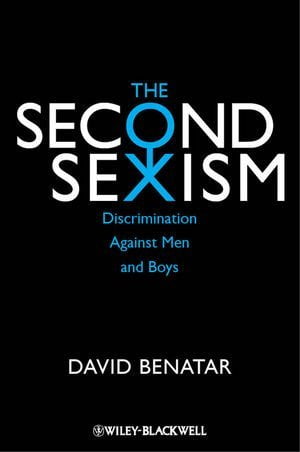
The Second Sexism

Originally published in Daily Maverick

Focusing on one manifestation of an issue can sometimes obscure other manifestations. Or, it could even obscure the fact that what we’re dealing with is a systemic issue or even problem, with multiple manifestations. To (briefly) return to a theme we’re all sick of, treating certain cultural beliefs related to respect as normative in the case of The Spear is one thing, but if someone were to claim that the same cultural norms justified abolishing equal suffrage, we’d be less sympathetic.

Arguments that use some established norm or cultural preference to motivate for a certain conclusion are open to these charges of inconsistency – both in terms of when the arguments are leveled, and in how we respond to them. Political correctness and the expectation that we respect the views of others tend to censor us – at least until the stakes seem high enough that silence is no longer appropriate.

Little evidence of integrity at the Film and Publications Board

As submitted to the Daily Maverick

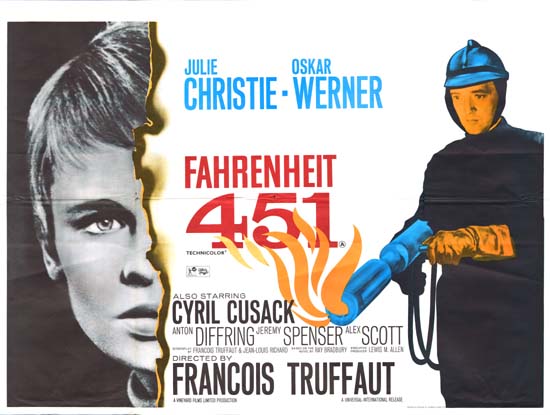
When the Minister of Higher Education calls for a painting to be “destroyed for good”, it’s difficult to not be reminded of Ray Bradbury’s “Fahrenheit 451”. In case you’re unfamiliar with the book, the title describes the temperature at which paper auto-ignites, and the plot addresses the burning of books as a method for suppressing dissenting ideas.

Framed as a method of thought-control, the destruction or censorship of paintings and books should horrify all of us who hope to live in a free society. So instead of framing it in those terms, why not instead make a case based on “protecting the children”? After all, who but a moral monster would be opposed to protecting children?

This is not yet another column about Zuma’s Spear, but rather an attempt to highlight the creeping threat to liberty exemplified in Nzimande’s statement about The Spear, as well as the Film and Publication Board’s (FPB) decision to classify (images of) the painting as 16N. That the former hasn’t attracted significant outrage is a surprise, because even though Nzimande might well have been speaking as the leader of the Communist Party, he also happens to be the man who oversees the country’s higher education system.

As one of the thousands of academics whose professional lives are influenced by this man’s judgement, I have cause to be concerned about a statement like this. As do all of us, not simply through being invested in the country’s future, but because it’s a stark distillation of the level of cynical manipulation of voters that some in the ruling party are willing to deploy. It’s not simply inappropriate for a Minister of Education to call for the destruction of artworks – it’s a complete abrogation of his responsibilities.

But seeing as those he reports to happen to be sympathetic to that view, we should of course expect no censure, apology or retraction. Meanwhile, if the FPB could have their way, images of Murray’s painting would be scrubbed from the Internet lest some under-16 (or sensitive adult) happens to come across it. The danger is of course real, in the sense that a Google search for “South African art” might well highlight the offensive image in question.

The FPB will be engaging with Internet service providers and search engines to “enforce this decision going forward”, which could well mean the dusting off of the Internet and Cell Phone Pornography Bill, Malusi Gigaba’s plan to enforce the moral standards of a few right-wing Christian organisations on all of us. One of the organisations consulted in the drafting of that Bill was the Family Policy Institute (FPI), headed by Errol Naidoo.

You might remember Naidoo from his call to boycott Woolworths for their decision to take Christian magazines off their newsstands (the profitability of a private company obviously being subservient to Naidoo’s interpretation of God’s wishes). Or, perhaps you’d recall his involvement in blocking both Multichoice and TopTV from screening adult content.

But in case all of those campaigns happen to coincide with your preferences, we’re also talking about the person who called the Civil Unions Act a “grossly negligent act of Parliament”, and whose monthly newsletters rarely fail to mention the immoral and unnatural scourge of homosexuality, and the complicity of the “liberal media” in obscuring the imminent downfall of civilization that will be precipitated by consenting adults in their bedrooms.

The reason Naidoo and the FPI are relevant to the discussion around the FPB’s decision to classify The Spear is that the FPB statement laments the “suggestions made that have sought to question the integrity and independence of the FPB”. I’d hope that in this instance, integrity would include being guided by the spirit and letter of the Bill of Rights in matters such as freedom of sexual preference and orientation.

But this hope seems somewhat unfounded when you look at the FPB’s website. On their home page, you’ll find a sidebar element headed “Useful Links” – but you’ll only find one link there, and that link is to the Family Policy Institute. In case my objection is not entirely clear, I’m not making the claim that religion (or Christianity in particular) can have nothing useful to say in matters of morality or in decisions regarding what children should be exposed to.

The claim is instead that the FBP is endorsing an organisation, and a man, who is a proud homophobe, and who has repeatedly demonstrated that his views on sexuality in general seem to be plucked straight from the pages of Leviticus. To describe this link as “useful” seems somewhat at odds with integrity, at least as I understand it.

Perhaps there’s a more innocent explanation, namely that the FPB has no idea who or what they are endorsing. If this is the case, we have no less cause to question their competence in effectively performing the task of deciding what to classify and how to do so. Incompetence – at least from the perspective of those who wish to view artworks or movies – is hardly more reassuring than significant lapses in judgement.

So it’s not just that the FPB have made a ruling that’s likely to survive even internal appeal processes, never mind court challenges. The issue is also that the chilling of free speech or artistic expression can happen by degrees, and can be disguised by the motivation of “protecting the children”. Because, framed in those terms, who would dare complain? If you do complain – at least once protecting the children is understood in the terms of folk like Naidoo – you might as well confess to being a paedophile.