Burn the witch!

Originally published in the Daily Maverick.

witch1Gauteng education MEC Barbara Creecy recently did a superb job of name-checking existing policy while simultaneously ignoring it. On March 18, a new element of the Department of Education’s partnership with faith-based organisations (FBO) was announced: the development of an “Anti-Harmful Religious Practices strategy”.

The policy I refer to is the National Policy on Religion Education, a mostly superb document that appears to be routinely ignored, judging from the dozens of emails I’ve received from parents across the country, whose children are pressured to participate in religious (usually Christian) activities at public schools.

Kader Asmal’s foreword to that policy reminds public schools that they are obliged to be “neither negative nor hostile towards any religion or faith and … not discriminate against anyone”, and calls for “a profound appreciation of spirituality and religion in its many manifestations, …  but does not impose these”.

What, then, is an MEC for education doing endorsing a FBO initiative to “guide and protect learners from spiritual attacks”, making specific reference to the “harmful aspects of the occult and Satanism”? Three fundamental blunders are evident here, two of which constitute violations of the policy. The third is simple mindless populism, which no policy currently prohibits.

First, if we’re going to address the harmful aspects of religion – an initiative I’d wholeheartedly endorse – we shouldn’t do so by rigging the game in favour of one religion or a handful of religions over others. Regardless of the fact that South Africa is estimated to contain a (significant) majority of Christians, freedom of religion means that we should treat them all with an equally critical mindset, at least as far as government is concerned.

So, if we are to look at the harmful aspects of religion, it would be incumbent on us to consider not only possibly harms emanating from “the occult”, but also possible harms emanating from the two religions Creecy is partnering with.  Some Muslims might, after all, interpret An-Nisa, verse 34 to legitimise domestic violence: “As to those women on whose part ye fear disloyalty and ill-conduct, admonish them (first), (Next), refuse to share their beds, (And last) beat them (lightly); but if they return to obedience, seek not against them Means (of annoyance): For Allah is Most High, great (above you all).”

As for the Christian FBO’s, we can easily find examples of scriptures encouraging slavery or homophobia, the latter of which is a clear – and prevalent – example of a harm emanating from religion. I’d hope that the focus on Satanism and the occult doesn’t prevent Creecy and her FBO’s from reminding pupils to avoid those evils too. If your response to this is that the more mainstream religions are somehow different, you’re falling prey to the same mindless populist impulse Creecy is, as I’ll get to in a moment.

A broader inconsistency in how these harms (or alleged harms, in some cases) are being addressed is the legitimising of the concept of “spiritual attacks” at all. There are those of us who think the mere idea of a spiritual dimension to life (by which I mean a non-physical element to personal identity, rather than anything to do with meaning, wonder, transcendence and so forth) potentially harmful.

This is because of at least two reasons: first in giving young folk a very early and very seductive introduction to magic; and second in giving humans in general an excuse to treat each other and themselves less well than they could otherwise do. In believing that this mortal life is the only time I have, I feel motivated to make the most of it, and that certainly can’t include pleasing metaphysical creatures, seeing as there are more than enough creatures around me whose lives I can impact for better or worse.

These sorts of issues involve debating what the various religions believe, not only around aspects such as souls, but also in terms of their attitudes towards gender equality, sexual orientation and the like. This brings me to the second apparent violation of the policy – evident in the fact that neither is it the case that any representatives of Satanism or “the occult” were ever consulted, and nor is it the case that they form part of the FBO grouping tasked with developing a strategy that “should be aligned with department’s Education Religion Policy in Public Schools”.

I agree with Creecy that it should be aligned, which is why it’s peculiar for the representation she’s implicitly endorsed to have picked sides in favour of the mainstream religions, and specifically excluded the religions identified as presenting the largest threats to spiritual and other welfare.

Not being given the chance to defend yourself, while simultaneously being singled out as a threat, hardly seems in accord with the National Policy’s instruction that the state “must maintain parity of esteem with respect to religion, religious or secular beliefs in all of its public institutions, including its public schools”. Trash-talking someone, or in this case some religious beliefs, without giving them a chance to defend themselves provides evidence of something quite contrary to “parity of esteem”.

And third, Creecy and the FBO’s are talking trash. Some occult practitioners (and here I include those who speak to gods in prayer) engage in harmful behaviour, but it is untrue and unfair for us to generalise from a small sample, picked mostly in an effort to justify our prejudices, and to conclude that the entire religion was harmful.

If I were to assert that Christians are homophobes or that Muslims are misogynists by reference to various scriptures, I’d expect responses of the sort that claim texts are being misinterpreted, or that things have changed, or that “we’re not all like that”. This is because some folk pick one (plausible) interpretation and others pick another (plausible) interpretation of a text.

Well, let’s extend the same courtesy to other religions as you’d like extended to your own. The next time you hear about Kobus Jonker being hauled out to nod knowingly at a pentagram and a headless rabbit, perhaps try to remember rule 10 of the Satanic version of the 10 Commandments, which reads “Do not kill non-human animals unless you are attacked or for your food”.

The caricatures that atheists like myself are sometimes guilty of when it comes to the mainstream religions should not serve as an excuse for those mainstream religions to caricature the marginal ones. Instructions against things like rape and murder are prominent in the Satanic Bible, and just as Christians feel justified in disowning Pat Robertson or Errol Naidoo, we should grant Satanists the same privilege.

I’m not disputing that religion can cause harm, and more importantly in this context, that religions like Satanism can (indirectly) cause severe harms, through confused or alienated schoolchildren like Morne Harmse picking up on them as a vehicle for rebellion. So an anti-harmful strategy for religion is to my mind a sensible thing.

But in developing such a strategy, there’s no need to add to the harms by misrepresenting other religions, just because that fits into the caricature confirming the biases of the mainstream ones, and more notably, the biases towards the mainstream ones.

And, when we speak of spiritual harms – especially when we speak as government officials – we need to also keep in mind those of us who think it is the mere idea of spirits that gets this trouble started in the first place.

Do you know what’s good for you?

Originally published in Daily Maverick

The sorts of people who complain about a nanny state are often the same sorts of people who know what they want, and have at least a rough idea of how to get it. By contrast, being denied a choice is less notable if it occurs in a context in which you don’t make many choices in any case.

Put another way – politically liberal folk who complain about state intrusion on their choices can be accused of an undue focus on “middle class problems”. When you have choices, it’s annoying to have them restricted. Unfortunately, this can manifest in both positive and negative ways, because for every liberal who wants to minimise state intrusion on private choice, there’s a hippie who doesn’t think they should vaccinate their kids.

The overlap here is with regard to our belief that we are being best placed to make decisions for ourselves and our families, and also sometimes our conviction that our model is the appropriate one for states to adopt.

Because I know what’s best for myself (or so I claim), I should be allowed to do it. And, if there are others out there who don’t know what’s best for themselves, they will over time – even perhaps generations – discover what they want and how to get it. The state’s role is to not get in the way of that self-actualisation.

Some take these arguments further than others. Some libertarians might argue that even prescriptions for medication are an undue restriction on my free choices. If I have consulted Doctor Google, and take responsibility for my choices, why may I not purchase medication without paying a 3rd-party R350 for a permission slip to do so?

I’ll leave the libertarian arguments to Ivo Vegter. For my part, I’m happy to identify as a liberal, but even that more moderate position is becoming increasingly difficult to justify in light of its idealistic underpinnings. I can recall having these debates in tutorial rooms in the early 90’s, where we wondered whether John Stuart Mill’s harm principle could be justified with reference to typical humans, instead of the very atypical sort of human represented by Mill.

Today, behavioural economics motivates for a far more pessimistic attitude towards self-awareness and rational choice for even those middle classes – never mind those for whom simply having choices is a luxury.

For those of you who don’t know it, the harm principle is summarised in this passage from On Liberty:

the only purpose for which power can be rightfully exercised over any member of a civilized community, against his will, is to prevent harm to others. His own good, either physical or mental, is not a sufficient warrant. He cannot rightfully be compelled to do or forbear because it will be better for him to do so, because it will make him happier, because, in the opinion of others, to do so would be wise, or even right.

For Mill, this made sense because we know our own desires and needs better than anyone else does. If others – like the state – were to estimate what those needs might be, they would have to do so by considering the average person’s interests. And of course, none of us think of ourselves as average (even though, as a matter of logic, most of us would have to be). So, to cut a very long and very interesting story short, we should be left alone to make our own mistakes, except in cases where we might cause harm to others.

This is good and well if some of us occasionally smoke ourselves to death or have motorbike accidents without wearing helmets. If reasonable precautions against harms to others are taken while smoking, your only interest in someone else’s smoking is the potential increased costs of your own medical treatment. Similarly with the wearing of a helmet, in that your only interest should be whether accidents without helmet cost more – and how those costs are covered – than accidents with helmets.

But what if we aren’t rational choosers? Or rather – seeing as we already know that we’re not – what if our irrationality is so profound that we typically make sub-optimal choices, or at least make sub-optimal choices reliably enough that something could be done about it?

The reason that this isn’t a traitorous question for a liberal to ask is because when we think of our liberty, there is perhaps a danger of thinking about being impeded in the pursuit of a particular choice, rather than thinking about how we maximise our liberty on aggregate, throughout the course of our lives.

As I mentioned in a previous column on the Western Cape’s “Get Tested” lottery incentive for HIV/AIDS testing, we are all prone to hyperbolic discounting (in short, underestimating the value of later rewards in favour of sooner ones), and interventions which involve telling people – albeit subtly – what’s good for them can have very positive results, as for example in the J-PAL immunisation intervention in rural India.

Imagine that the liberty of your current self is impeded through some government agency making it difficult for you to do something. Or rather don’t imagine, but remember the last time you needed to get a medical prescription. One way of perceiving these events is as violations of your current liberty. Another interpretation is however also possible, in which your future self might be rather grateful that your choices were restricted, seeing as she now gets to enjoy the liberties made possible (in an extreme version of the thought experiment) through still being alive.

There’s no doubt in my mind that a fully competent person should be free to make self-harming choices. The question, though, is whether we are as competent as we think, for the reasons I’ve hinted at above (more fully explored in this book review by Cass Sunstein). Or more important, perhaps, the question of whether we are competent enough, regardless of how competent we think we are.

If we are not competent enough, the focus moves to what we should do about it. One option is to allow for social engineering through natural selection, whereby we make our mistakes and live with the consequences of those mistakes. But even though liberals and libertarians haven’t historically been too concerned with political correctness, embracing this view might be a challenge in that it’s likely to be the poor and the uneducated that suffer most, simply through not having the luxury of the choices many of us take for granted.

And if we don’t go that route, consistency problems soon arise, in that there’s a small step between nudges, or “choice architecture”, and banning certain choices entirely. The Conly book, reviewed in the link above, argues for a strictly utilitarian calculation of which choices should be permitted and which not, with a strong bias towards freedom.

The mechanics of and legislation underpinning those calculations is clearly a source for concern, in that we might justifiably be afraid of a state encroaching ever further on our freedom. At the same time, though, as Sunstein points out: “when people are imposing serious risks on themselves, it is not enough to celebrate freedom of choice and ignore the consequences.”

Liberalism, the Democratic Alliance and identity

Mmusi-MaimaneThere’s perhaps an argument for saying this about any election, but to my mind, the upcoming national elections in 2014 will be South Africa’s most interesting since our first (democratic) election in 1994. Various factors align to make it so – the ANC’s corrupt leadership, and President Zuma’s apparent inability or unwillingness to do anything but enrich himself; the untested effects of Ramaphosa’s re-emergence as a political force; the reaction of a nation to scandals (Limpopo textbooks) and murderous police (Marikana); and whether these (and other) factors will lead to mass apathy and a low voter turnout, or to more votes being cast for the official opposition.

And that’s where another complication can be introduced – one that I intend to be the topic of this post – namely the identity of the Democratic Alliance, and whether liberalism can accommodate concepts like ubuntu, or be sympathetic to “African-ness” (whatever either of those terms might mean). In her Sunday column for the City Press, Carien du Plessis asked:

Rather than splitting hairs on whether its leaders are true blue liberals or not, the party would do well to think about how its version of liberalism could include rather than reject Africanness and concepts that are a hot sell among a South African electorate craving some feel-good ubuntu.

Otherwise the DA could be wandering in an elitist wilderness forever.

The “splitting hairs” she refers to is contained in a sequence of op-ed’s and blog posts by Mmusi Maimane (DA national spokesperson), Gareth van Onselen (previously communications head at the DA, then executive director for innovation and projects, and now resigned from party leadership) and Gavin Davis (current communications director for the DA, but writing in his personal capacity). If you want to read them, go here, here and here.

I don’t think it’s splitting hairs to contest whether or not leaders are true blue liberals, if we believe that there’s something important about being one, and can agree on what liberalism is. Van Onselen has strong views on what liberalism is, and on how the DA should compete for the flourishing of liberal ideas in South African politics. Du Plessis, in saying that the party should think about how it could include African-ness and ubuntu, is making the implicit claim that liberalism can include those concepts. Well, the DA’s “version” of liberalism can, at least – and it’s exactly what this version should be that van Onselen is concerned with, arguing that these are essentially illiberal ideas.

So, I think a legitimate case can be made that if we were to foreground (or “include”, however we end up defining that) these concepts, this would involve some sort of betrayal of classical liberal values. For some, that would be a good thing, for others a bad one. And we can argue about whether that makes the party no longer liberal, or liberal-lite, or whatever.

But let’s be careful of thinking this a crucial step in defining the nature of the party, or rather, let’s acknowledge the fact that the party hasn’t been a classically liberal one for quite some time now. To pick only some recent examples, some would say that a liberal party should not bow to religious pressure and act as a respondent in a court case aimed at the revocation of a liquor license on the grounds that booze would be sold next to a mosque. Some would say that our provincial transport MEC didn’t sound very liberal when threatening to confiscate the car keys of sleepy drivers, and when asked if this was legal, saying “I have no idea, but I don’t care either”. There was Helen Zille’s suggestion that she’d like to make the wearing of condoms law in non-monogamous sexual intercourse, or Jack Bloom’s claim that “maybe if we all prayed more the social change we desire will happen” – which, while not obviously illiberal, certainly makes human agency and freedom seem subservient to some powerful force in the clouds.

So in summary, this might in the end be hair-splitting, because the party might have stopped being liberal a while back now. And perhaps van Onselen knows this, and is now saying things (at least, publicly) that he’s been thinking for some time. And, maybe, we can understand his concern at what Maimane had to say, in that Maimane is likely to be an increasingly influential force within the party, and thus serves as a bellwether for the ideological stance of the party in 2014 and beyond, where the party might start openly embracing illiberal ideas, rather than having to suffer through occasional bouts of illiberality from one of more of its leaders.

Maimane’s comments do matter, as do any prominent DA official’s comments on topics like these, because they indicate not only ideological direction, but also the extent to which a party is willing to compromise, and how honestly it’s willing to do so. For instance, Maimane could have chosen to say: “liberalism cannot include collectivist ideas like ubuntu, and in this respect, I consider liberalism flawed”. Or, he could argue that this version (to go back to du Plessis’ suggestion) of liberalism is more suited to a people who do have strong collectivist tendencies – or even that freedom has to include the freedom to be part of a collective, even if that seems counterintuitive to some.

But van Onselen is right in pointing out that Maimane does himself seem to believe in the idea that “being African” means something, and he also seems to think it should mean something – not just to him, but to “Africans”. And that is illiberal, because if Maimane restricted himself to the purely descriptive claim that “many people in Africa seem to believe X” or the more personal “I happen to believe or feel X” there would be less of an issue, in that self-identification is part of what liberalism is about. Prescribing versions of identity, or (at least) presenting them as normative, runs counter to self-identification, and thus to liberalism.

The problem, though, is that as much as you’d be free to think of yourself as an African, or to subscribe to something like ubuntu (on Inside Politics, van Onselen and I have previously discussed what that concept means) within a broad liberal framework, the DA don’t create the impression of welcoming those sorts of self-identification – and this is the real problem, and has been since the party came into existence (and before – I remember having the same debates at PFP Youth meetings in the 1980’s, and I’m sure they were discussed long before then too).

(An aside: on Twitter, van Onselen stated that the “ideas themselves are illiberal“, so he’d presumably dispute the paragraph above. I’d argue that whether African-ness was illiberal or not would depend entirely on what it meant, for you, seeing as we’re now talking about self-identification rather than someone else’s label. If African-ness means some sort of sentimental attachment to the continent, for example, calling that illiberal seems to me as false as it would be to call my identification as a Manchester United fan illiberal”.)

As I was saying, these debates have gone on for some time. To my mind, this is the same debate that Ryan Coetzee (former and current all sorts of things, but at the time, writing as CEO of the DA) was talking about in a 2006 strategy document where he noted (in a passage explicitly framed as generalisation) that:

all South Africans don’t share the same concerns about what might be called “identity issues” … white South Africans don’t have the same attachment to the cultural heritage of black South Africans – indeed black South Africans have always felt that their culture is regarded as inferior by whites, and that by extension they themselves are regarded as inferior.

The DA in 2013 looks vastly different to the DA of 2006, partly because it has taken the lead on initiatives (street renaming) and policy (basic income grant) that demonstrate a commitment to redressing history’s injustices rather than reinforcing some “neoliberal” caricature of wiping the slate clean, and letting people compete in some Darwinian pure market economy.

But if we say things like “ubuntu and African-ness are illiberal”, or  that Mmusi Maimane is being unfaithful to the tenets of liberalism in trying to define those concepts, an impression of hostility to that “cultural heritage” would be created. You might think it wrong that people perceive it as hostile – perhaps preferring that the argument be had on the facts, rather than on the emotive impact of pointing out those facts – and I would agree that it’s not ideal that we can’t dispassionately consider the merits of these competing views.

Unfortunately, humans – and politics – have never been only about the facts, or about rationality. Many of you might think the facts have even less to do with political argument than rhetoric does, and I’d be reluctant to disagree. So, when we ask if liberalism can “accommodate” these concepts, even if the answer turns out to be “no”, we should be concerned about how we get to that answer.

Asserting that it is the correct answer in a way that dismisses competing views as a nonsense can do little but feed in to a stereotype about liberals and liberalism, namely that they are and it is un-African. The concept is flawed, and it’s to my mind a nonsense, especially when prescribed to others.

But nobody will listen to your arguments as to why that might be the case if they think you’re insulting them, or even worse, telling them what they should believe – or ironically, even perhaps who they should be.

Maiming, killing and dying for “culture”

Originally published on SkepticInk

Parts of a 17-year-old boy’s feet from Bonita Park, in Hartswater had to be amputated, after he ran away from an initiation school in Pampierstad in search of food.

After he was tracked down, he was thrashed with a sjambok, while his feet were burnt with fire. He was later abandoned along the side of the road, where he was left for dead, naked and bleeding, until a passing motorist noticed him and alerted the police.

Due to extensive nerve and muscle damage, his toes had to be surgically removed.

667532_612441This boy, and thousands like him, are sent (and often willingly go) to initiation schools to mark the transition between boyhood and manhood, “through ritual circumcision and cultural instruction regarding their social responsibilities and their conduct”. Ever year, children die in the course of “becoming men” – and in South African society, being a man correlates quite positively with thinking you can dictate the course of the lives of women.

Part of the reason for the continued survival of poorly regulated initiation schools, with poor hygiene and cultural instruction from previous centuries, is that they provide a narrative to life – a structure, and a community. If the average adolescent knew that they had a decent prospect of a good education, a good job and so forth, they’d probably be joining protests against such schools – opting for medical circumcision at the very least, if not entirely rejecting cultural indoctrination.

But it’s been – and will continue to be – a long wait for more people to have a better shot at a good life through adequate healthcare, education, and those goods many of us take for granted. And what we put in place as substitutes to give meaning to life – namely cultural practices such as these – result in initiation schools, genital mutilation, corrective rape, culturally embedded homophobia, sexism and so forth.

“Culture” is used as an excuse of all sorts of things (in South Africa, often as a simple vote-getter). But it’s only when you get to choose what your “culture” is – and not have it forced upon you – that it becomes remotely respectable. And even then, it should never be an explanation or justification for doing or believing something. As I tell students, appeals to culture, tradition and the like get the causality entirely backwards: things could become cultural norms because they are good norms; but the fact that something is a cultural norm has no bearing on whether it’s a good or respectable one or not.

Jansen “ashamed of South Africa”. Or not.

jansen_40379bSo here’s a neat example of how bad South African media can be, or perhaps the negative consequences of treating it as a reliable source. The problem is in large measure due to a reliance on the South African Press Association (Sapa) for copy. And yes, Sapa is a real and quasi-respectable thing, unlike the National Press Club. The NPC is only real, and not at all respectable, following their award of “Newsmaker of the year” to “the rhino”. And that’s without even mentioning Yu(suf Abramjee) know who, chairperson of the NPC.

Sapa copy accounts for the vast majority of what people in South Africa read in their newspapers. So, when Beeld reports that Jonathan Jansen, the Vice-Chancellor of the University of the Free State, said he was ashamed of South Africa (that link takes you to an Afrikaans page), it is unsurprising that the copy in question comes from Sapa. But what the copy coming from Sapa also means is that you’re likely to find the same copy in a bunch of other newspapers.

Jansen said that the Beeld report was inaccurate, and is quoted in the Times as saying:

This is not what I said in my opening remarks to first year students. I did not say I am ashamed of South Africa; that is impossible. I did not say I would expel students for being angry. No, this is an irresponsible recollection of what I said by people who were not there i.e. the Beeld. The Volksblad is more accurate.

Alright, then – let’s look at what the Volksblad’s report said. Jansen is quoted as saying “Ek skaam my vel van my gesig af vir Suid-Afrika. Dit is ’n algehele skande dat jy matriek met ’n punt van 30% kan slaag” – the exact words he’s quoted as using in the “irresponsible” report from the Beeld, and words which mean … yes, that he’s ashamed of South Africa. Even if you don’t understand Afrikaans, you can verify for yourself that those words look the same, and in the same order, as these from the Beeld: “Ek skaam my vel van my gesig af vir Suid-Afrika. Dis ’n absolute skande dat jy matriek kan slaag met ’n punt van 30%”.

Of course this might still be a misquote. But you’d expect that Jansen would look at a source that he’s claiming is “more accurate” before doing so – especially when it’s effectively the same source, namely Sapa (Here’s an English version). And it’s annoying that he has to climb down from such a statement in any case – our basic education system is something that merits shame, and a university Vice-Chancellor is well placed to comment on the scandalous failure on the part of government to give kids a fighting chance at university success (or, to give universities a fighting chance at maintaining standards while also avoiding huge class rifts).

It’s annoying that he had to climb down from that statement because he really did say something offensive (assuming the report is true) during this welcoming address to first-year students. He said (in both Afrikaans versions quoted above, and in the English):

“I always make time for students, but before you make an appointment, my secretary looks at your academic record. If you’ve failed a subject, I’m not going to waste my time with you,” he told 4 000 first-year students.

However, he invited students to contact him on Facebook and Twitter if they have problems.

So long as you’re on Facebook or Twitter, Prof. Jansen would be happy to hear about the difficult circumstances you might be encountering, and that you fear might lead to you failing a course. Good news for those with smartphones, airtime, computers and the like. But don’t bother, say, waiting outside his office on crutches or something, to explain how (e.g.) a car accident caused you to miss an exam and fail a course.]

Talking to you would be a waste of time, you see.

I’m not known as a very friendly person with students. In fact, I know I’m perceived as fairly unwelcoming. And it’s true that there are students with whom it is a waste of time to speak. I can understand Jansen’s “tough love” rhetoric. But if you’re – as a Vice-Chancellor – going to speak off the cuff, you shouldn’t be surprised if you put your foot in it every now and then.

But being apologetic for the one remark, about being ashamed of South Africa, seems to be an attempt to recover some lost ground with patriotic minded (of a sensitive sort) South Africans, with the Department of Basic Education, and with Government more generally. From my vantage point, as a teacher of roughly 1400 first-year students of the sort Jansen was addressing, it’s the students that deserve the apology.

Chester Missing and the authority of race

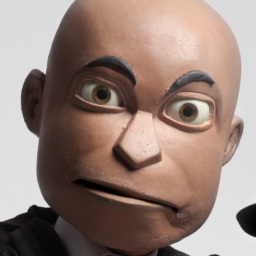
0d3e82a33a17e75f79fd2ef6c1caf5cfOver at Africa is a country, T.O. Molefe has written a very interesting post on whether Chester Missing is blackface. If you don’t know Chester Missing, he’s a puppet controlled by political satirist Conrad Koch. Read Molefe’s column if you’re at all interested in South African racial politics, as much of it is generally relevant, even for those unfamiliar with Missing. A key point can be found in the conclusion, where Molefe points out that the choice of Missing’s race (which is ambiguous, but probably black) can’t be trivial or accidental. Someone as thoughtful as Koch appears to be made a deliberate choice to use a black puppet (or one who is definitely not white), and

At the very least Chester Missing is an embodiment of the fear, unwillingness or inability of liberal-minded whites to use their own voices, faces and words to talk publicly about this country’s racialised privilege.

Deep Fried Man (another South African comedian) left a comment to Molefe’s piece that I thought astute, in which he pointed out that it’s easier for a black comedian to get away with saying certain things than it is for a white comedian to say those things. Molefe was sceptical of this claim. My response is perhaps of interest to the people who read Synapses, so I’ve copied and pasted it below.

I’m not a comedian, but Deep Fried Man’s comment rings true to me as someone who does comment on South African racial politics by other means. T.O. – you ask: “What makes it easier for Loyiso Gola and other black comedians to satirise SA’s political landscape and harder for you or Koch or other white comedians to do the same? I’m not convinced it makes sense in the same way that, say, gravity makes sense.”

So, from the perspective of a columnist & blogger who is a) white and b) critical of various elements of SA’s political landscape, including both ‘whiteness’ and ‘the idea of whiteness’, it certainly seems easier for black columnists than it is for me, on some topics. This is a simple matter of self-preservation and the increasing volume (in both senses) of online trollery and insult.

Take the perennial “is Cape Town racist” discussion. A black columnist can claim that it is, and they will (mostly) just get shouted down by white racists. As the (to my knowledge) only white columnist who argued that Cape Town is in fact racist, I got shouted down by white racists as well as by some who style themselves as Biko-ites or somesuch, telling me I was being patronising and so forth, and that I don’t really have any right to make those claims. And then there are others like Vice who also provide reasons for me to shut up, even though I don’t find those reasons compelling.

So, even if you think a cause important & worth advocating, there might be less second-guessing and potential pitfalls for those who are falling into the stereotype of speaking about issues they “own” (such as black comedians talking about a “black political party”). The risks are more easy to identify and combat.

The broad point is that there are various constraints on public commentators of various sorts. Being thought a troublemaker is one, being thought a traitor another, being thought irrelevant yet another, etc. So it’s at least possible that in the complicated intersections of race & class and all that, black comics/columnists could experience different pressures than white ones do. Of course it won’t make sense in the way gravity does, but that’s a rather high bar to set.

President Zuma: dogging South Africans with stereotypes about culture

Originally published in the Daily Maverick

sad-dogCulture is restrictive and oppressive, and it is used to generate further oppression. Not simply because you’re told what to believe in the name of culture, but because what you are told to believe can be oppressive or restrictive. Perhaps, that you’re not the equal of a man. Perhaps, that as a man, you are necessarily responsible for the oppression of women.

Culture is also a reference point for where we’ve come from, and how we ended up here. It’s what binds us in times of strife, or when others tell us that we’re somehow inferior or unworthy of survival or happiness. Culture is what gives us beautiful art – music, paintings, books – and it is what renews our creativity through the wellspring of ideas it provides.

Culture is a handy card to play when trying to rally political support, especially if you can appeal to a version of culture that speaks of a struggle against oppression, and therefore a historical debt that is owed to that struggle. Without the comfort and strength provided by culture, we would never have survived. Or so the narrative might go, if you thought that culture comes with chains.

Culture can be all these things. But most importantly, it can be what you want it to be, including nothing of any significance at all. And you can mix and match not only elements of culture, but also the respect with which you regard various elements of various cultures. But when the idea of culture is used as a straightjacket, as a way to enforce loyalty or groupthink, it is only and always restrictive and oppressive.

When a President says that black South Africans should stop adopting the customs of other cultures, such as appearing to care more for their animals than they do for their fellow South Africans, he ends up transgressing various aspects of logic as well as of decency. Decency, because one unspoken implication of that speech last December was that white dog-owning folk had no humanity, and that black folk who loved their dog were somehow less black.

Logic, simply because of the obvious contradictions immediately pointed out on Twitter and elsewhere, via photographs of Mandela, Vavi and others being friendly with various furry animals. Zuma’s speech clearly contained some foot-in-mouth, though, and it’s uncharitable to read reports of a speech like this literally. He was (at least, as far as I can tell) referring to the fact that it sometimes seems that people care more for (relative) frivolities than for their fellow human beings.

If this is accurate, it’s of course still deeply problematic to square the humanitarian Zuma with the one who appears in our headlines most days for some allegation of corruption, or the construction of multi-million Rand homesteads. Let’s leave that aside, as I have no trouble believing that he at least believes he cares, and was speaking sincerely.

What I want to highlight here is culture. Because what Zuma is saying in a speech like this is an insult to culture, or to the sort of culture I describe above as an affirming and sometimes inspirational one. Because Zuma could be accused of telling black South Africans to take direction from his repressive stereotypes, rather than the repressive stereotypes that the white man brought to Africa. He’s saying that black South Africans are free, but only up until the point where they butt up against the boundaries of culture that he is prescribing.

The point of freedom is to be free to choose. Zuma is correct that some people seem to care more for their pets than for humans, and I’d agree with him that it’s wrong to do so. Not because of culture, or at least not because of “black” culture or “white” culture – rather something like a “sentient” or “compassionate” culture. And perhaps, a culture that eschews opportunism, preferring to work towards the long-term benefit of all South Africans.

This means, at least in part, eliminating the race-baiting that has become such a reliable part of his rhetoric. I understand that many of us white South Africans appear (and often are) insensitive to culture and its manifestation, especially now that “our” culture blankets most of the world we get to hear about. But this doesn’t justify adding to the caricatures of what white and black people do and believe – and it certainly doesn’t justify telling people what they should believe.

Culture changes, and anyone who won’t allow it to is an oppressor. If you choose to hold on to some cultural elements and customs that are significant and not harmful to others, I shouldn’t judge you for that. When you use culture as a weapon to abuse common sense, and to guilt people into loyalty, I will judge you for that, as should we all.

And some of us will judge you even more harshly when you make it clear that you’re just making things up as you go along. Or is Mac Maharaj actually just trying to embarrass you, by protesting that you were simply trying to “decolonise the African mind” while you made noises about a national cleansing ceremony, to be hosted by none other than Archbishop Emeritus Desmond Tutu – a representative of a faith that exists here largely thanks to colonialism?

Assuming that the vote of no confidence fails, Mr President – and assuming that you actually give more of a damn about your country than you’ve ever appeared to – why not spend 2013 and onwards focusing on speeches (and decisions, naturally) that help us to find common purpose, instead of on ones that deepen or even create divisions?

You have your second term, after all, and the threats you personally face during that term will come from people and institutions like the Public Prosecutor and Parliament. The threats to your party, on the other hand, seem to come mainly from people like you. To put it simply – if you don’t stop being such an embarrassment, South African voters may soon begin to consider having a cleansing ceremony of their own.

COSAS is hamster number one

cosaslogoThere is never any reason to expect a new year to be any different from the previous one. The arbitrary shift from December to January is good for a few days off, and for many of us, too much indulgence – but changing minds and attitudes takes longer than that, and isn’t responsive to fireworks and Auld Lang Syne in any case.

So, it’s no surprise to find that – after a mere 5 days of 2013 – we already have (at least) 2 depressing examples of the hamster wheel that is discourse around race in South Africa. Much effort is put into keeping it spinning, but to little effect. And if one hamster dies, another – often indistinguishable from the last – takes its place.

COSAS is hamster number 1. This Black Consciousness movement was formed in the late 70’s to represent black pupils, following the Soweto uprisings. They have many proud moments in their history, regardless of whether you agree with their politics or not. You can read about their history here if you care to. The salient detail for my purposes is that the “organization’s principle aims were the conscientising of students and the wider community to the repressive nature of education in South Africa” (sic).

If you think the construction of that sentence poor, consider this, the first sentence of the recent COSAS statement on the 2012 Matric (Grade 12, the final year of secondary school) results:

The congress of South African students would like to unreservedly welcome the metric result of the class of 2012, this class is the class that reactionary forces anticipated negative outcomes from, as a way to put substance onto their argument which suggest that there is a severe collapse of order in the government that is lead by the ANC, the 2012 result beyond any other thing they are specially recognized by COSAS because they Are a reflection of a narrowing gap in terms of the quality of education between the model c schools and the township and the rural school, and such was made more than visible by the performance of a number of students who scored outstanding result from the lowest quintiles of our schools.

As a friend pointed out, this is a telling example, and “a massive indictment, of what mass education has done for born-free South Africans”. Not to mention proof-positive that COSAS’s work (as quoted above) is not yet done, in that the organisation’s Secretary General is still a clear victim of that repressive education himself.

The statement carries on in that vein (here’s the pdf), and in some respects gets worse when Tshiamo Tsotetsi (the Secretary General) expresses concern that publishing student names and results in newspapers is ill-advised because pupils are then targets for witchcraft: “All of these bad things can come to an end only if these results are no longer published. We would no longer loose our young people through depression or witchcraft.”

One of the leaders of an organisation devoted to improving school education, in other words, believes that children are being lost through witchcraft (and therefore, that witchcraft even exists). And of course, he’s right to some extent, seeing as pupils no doubt believe this too and are therefore victims of something people call “witchcraft”, despite their being nothing supernatural about it at all. But the tragedy is that 12 years of school isn’t sufficient to dispel these superstitions. Or, that nothing in the curriculum teaches skills and principles of reasoning that would help to do so. Worst of all, it’s probable that many teachers believe in witchcraft themselves.

The education system, the Matric results, and the gloating of the Ministry of Basic Education – even in the face of a reality where less than 1 in 3 pupils complete high school – could be the subject of an extended rant. As could hamster number 2, Gillian Schutte, with her recent prescriptive self-flagellation entitled  “Dear White People“. I’ll get to that in a separate post, and for now simply reiterate what I said on first reading her column (with apologies for misspelling Schutte’s last name):

Regardless of all else, Christmas is still a holiday

And for that, we can give a little bit of thanks. Thanks, to the conventions of calendars, and ostensibly secular states who continue to pay their respects to religious traditions. I don’t mind – as I’ve said before, this atheist thinks it entirely justified that our public holidays are mostly on religious holy days. But mostly, I can’t mind times like this, because the holiday offers a most welcome break not only from work, but also from the never-ending human stupidity that is reported in the news.

The stupidity goes on, of course – it’s just that less of it is reported. Here’s a lovely example, from IOL (today), explaining how the police in Swaziland are making victim-blaming in cases of rape their official policy. Yep, it’s true – police spokesperson Wendy Hleta

said the use of the 19th century law would be applied to anyone wearing revealing and indecent clothes. Women wearing revealing clothes were responsible for assaults or rapes committed against them.

“We do not encourage that women should be harmed, but at the same time people should note acceptable conduct of behaviour,” she said. The act of the rapist is made easy because it would be easy to remove the half-cloth worn by the women. I have read from the social networks that men and even other women have a tendency of ‘undressing people with their eyes’. That becomes easier when the clothes are hugging or are more revealing.”

2012 had good bits too, of course. Plenty of good company, good food and wine, and an exciting and productive year of work, both at the university and on the Daily Maverick (which you should of course be reading, if you aren’t already doing so). And on the secular activism/atheist etc. front, the unremitting infighting, misunderstanding and so forth shouldn’t be allowed to obscure the fact that it seems we are making progress. The 2011 UK census results, released earlier this month, contain some quite interesting data. You can read the key stats here, but the piece of information that leapt out for me was this:

Between 2001 and 2011 there has been a decrease in people who identify as Christian (from 71.7 per cent to 59.3 per cent) and an increase in those reporting no religion (from 14.8 per cent to 25.1 per cent).

Also, remember that even among those who self-identify as Christian, being a Christian no longer seems to mean much of significance – at least in terms of where you get moral guidance, which metaphysics you subscribe to, and so forth. The Richard Dawkins Foundation data, released earlier this year, revealed that (for Christians in England):

  • 15% of them have never read the Bible
  • 32% believe in the physical resurrection of Jesus
  • 24% say that the Bible is inferior to other sources of moral guidance
  • 54% look to their own “inner moral sense” for guidance on morality, and only
  • 10% seek moral guidance from “religious teachings and beliefs”
  • 50% do not consider themselves to be religious

So that’s good. Here at home, I’d be lying if I reported that there seems to be any decrease in irrational beliefs. The churches seem to be going along strongly, and we’ve got a possible 7 more years of the buffoonish Jacob Zuma – a strong ally of theirs – as President. Besides religious belief, the continued dearth of good science journalism (with the occasional and honourable exception of the Mail & Guardian) isn’t helping to limit the growth of quackery, of late most prominently visible in the form of the formerly respectable scientist, Tim Noakes.

Yep, I’m also tired of all the medical journals banging on about the Bible. And Louis Agassiz himself still seems to be waiting for people to agree with his purported “great scientific truths” of a) the falsity of the theory of evolution, and b) scientific racism. I don’t know about you, but I’d be a little more wary of citing someone like that as an authority on how hypotheses gain acceptance. I guess that’s mostly because I eat too many carbs, though. I should be careful, in case I end up developing homicidal urges:

Anyway – merry Christmas to you all, whatever Christmas might mean to you. See you next year. And if you don’t know Tim Minchin, take a listen to his Christmas song, below.

A free market in false choices

Originally published in the Daily Maverick

Leon Louw, Exec Director of the Free Market FoundationEarlier this month, Business Day published a quite peculiar column by Leon Louw, executive director of the Free Market Foundation. It’s peculiar in a number of ways, ranging from its poorly motivated hostility towards “most journalists”, academics and the Right2Know Campaign; its engagement with a straw-man version of arguments against the Protection of State Information Bill (PoSIB); some failures of logic; and finally, the apparent assumption that because he’s a libertarian, the rest of us must also be.

The column starts with a non sequitur: because “most journalists salivate with glee at every state intervention”, they should be delighted that the National Council of Provinces (NCOP) have passed the Bill. Instead, they are “squealing like stuck pigs”. But it doesn’t require the sort of special pleading Louw alleges for journalists to be particularly concerned about PoSIB by comparison to other threats to freedom (if they even are – Louw provides no evidence for the journalistic bias he alleges). Their jobs hinge on being able to disseminate information, and it thus stands to reason that state intervention in that domain is objectively more important to them than state intervention in other domains.

Louw thinks it a problem that some journalists, academics and the folk at R2K repeat the mantra that “people have the right to know” as if it settles the matter. That is true – any mantra that isn’t backed up by some argument is a problem, which is why it’s useful that the R2K campaign have provided this guide as to how the Bill still fails their “freedom test”.

Personally, I find some of the R2K arguments overly scaremongering, and have on occasion taken issue with their strategic choices (the timing and implementation of vigils, sit-ins and the like). But their role is precisely to be the flag-bearer of freedom as it pertains to PoSIB, and it makes little sense to criticise them for not being concerned with other freedoms.

Louw also accuses “the media” of being inconsistent, saying: “But people also have the right to food, clothes, healthcare, insurance, liquor, banking, jobs, cigarettes, energy and much more. By logical extension, the media should demand unregulated retailing, medical schemes, insurance, alcohol, banking, labour, tobacco and electricity with comparable conviction. But they don’t.”

I don’t need to find my copy of the Constitution to establish that Louw is (hopefully) engaging in hyperbole with regard to some of those rights, such as to cigarettes or liquor. I’d imagine that Louw and I might even be in agreement that positive rights are in general best avoided – and we have enough difficulty providing the more sensible ones (education) to start to try to provide cigarettes for all.

So let’s assume he’s talking about our “rights” to smoke where we like, when we like. I’ve written before about how our current legislation consists of a gross violation of liberty, but that doesn’t mean that all restrictions on where smokers can smoke are equally unreasonable. “Logical extension” does not require that “the media” should demand unregulated freedoms in other areas, for two simple reasons: those other areas might not be analogous; and Louw’s “logical extension” is a blatant straw- man.

“They” (the media) don’t demand unregulated freedom of information, but rather, more sensibly regulated freedom of information. What they (whomever they might be) consider sensible or not can of course be debated, but I’ve seen few in the media, few academics, and nobody in R2K demanding that we all get to be Julian Assange.

Louw seems to regard PoSIB as far less threatening than many others do, describing it as “comparatively benign”. This is of course a matter of interpretation and of our varying appetites for trusting the judgement of state bureaucrats. I agree with Louw that it’s not as threatening as some seem to think – especially in my main area of concern, academic freedom.

And Louw is certainly correct in pointing out that similar sorts of legislation exist most elsewhere in the world, where they typically haven’t led to some form of police state. But just because the R2K campaign and others argue that the Bill gets various things wrong does not mean that they have to subscribe to the same general philosophy with regard to freedom that Louw does. In other words, they are not being inconsistent when arguing against PoSIB while remaining silent on other intrusions on freedom.

This is most obviously the case for the reason I state above – they were formed in opposition to PoSIB. As for the media, information is a necessary good, so it makes perfect sense that they be more concerned about restrictions on that than any other restrictions. And, for both these groups, excessive rhetoric can be expected (and, can be effective) in trying to rally a largely apathetic public to support their causes.

But there’s also no obligation on the media or R2K to defend the same freedoms that Mr Louw and his organisation do. They are not being inconsistent through not taking a libertarian stance on freedom in general. Sure, they might be wrong to not do so, but that’s a separate matter. Louw needs to judge them on their own ideological stances, and not on his (while trying to change their ideologies, if he so chooses).

“Unlike people who espouse self-serving freedoms, lovers of liberty espouse freedom for all”, says Louw, followed by the hopeful observation that the debate might serve as a “wake-up call for those journalists who have never internalised the immortal observation that freedom is indivisible”.

Freedom is indeed indivisible. But that doesn’t mean we can’t disagree on how to define freedom, or on how to campaign towards those definitions of freedom that we find most coherent and pragmatically feasible to attain. In the unlikely event that we ever do reach agreement on those matters, it will still be possible for different people and different groups to campaign for various aspects of that freedom. Louw, by contrast, seems to be arguing that those who want to save the rhinos must simultaneously want to nuke the rest of the environment and its residents.

But if Louw is indeed correct in his definitions of what freedom is and how best we can protect it, it is his job to make that case. But he shouldn’t be surprised to find that those who are “squealing like stuck pigs” over PoSIB might not be all that receptive to hearing someone, ostensibly campaigning for freedom, telling them that this means becoming a “praise singer for government intervention against everyone else”.

In this season of gifting, I can’t help but think that for the Free Market Foundation, free markets seem to mean that each shelf should be stocked with the same false choice as the next one.