Russell Brand, celebrity and imputed authority

As you no doubt know, Russell Brand has recently been calling for revolution. The revolution will most likely be televised (younger readers, that’s a reference to a Gil Scott-Heron song/poem that’s worth listening to, regardless of how you feel about Brand or revolutions), but that’s pretty much all we know about it. Things are broken, politics doesn’t matter, and you shouldn’t vote.

You can read Nick Cohen or even another comedian, Robert Webb, for arguments as to why Brand’s comments – even if well-intended – are wrong-headed. What I’m interested in adding to the conversation is the observation (not a unique one, of course) that while Brand’s interview on Paxman and subsequent columns have certainly been entertaining, and certainly deal with important issues, that doesn’t make them interesting or worthwhile as political commentary.

UCT Admissions policy – race and redress

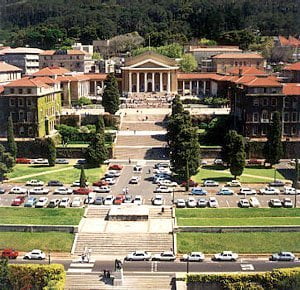
uctThe various Faculty Boards at the University of Cape Town are currently considering alternative models for UCT student admissions. These models arise from a debate the University has been having for some time now, regarding whether “race” is still the most effective identifier of likely disadvantage available to us. Some participants in this debate argue that race has become an increasingly crude proxy for disadvantage, resulting in a large number of false positives (which in turn has the effect of shrinking the number of places available for people who are actually disadvantaged, whatever their race might be).

That line of argument is also frequently accompanied by the observation that the racial categories we use in South Africa (and elsewhere, but South Africa has a particular history in this regard) are innately odious, and should be eliminated from legislation, policy and discourse wherever we can.

Some critics of that position argue that to eliminate recognition of race as a special category for attention simply perpetuates racism, and that any policy shift in this regard would be regressive. Others argue for the more moderate position that while race should be eliminated from policy in principle, it is too soon to do so – and that even though race is mostly a proxy for disadvantage, it remains the best one we have available to us in the present moment.

The contribution to the debate offered below merits wide distribution, and is shared here with the permission of the author, Professor Anton Fagan of the Law Faculty. For what it’s worth, I agree with his position, and find the paragraph below to be a strikingly crisp articulation of the obvious wrongness of including race as a criterion for disadvantage in perpetuity:

to make an applicant’s preferential admission conditional upon her having identified herself as ‘black’, ‘coloured’, ‘Indian’ or ‘Chinese’ is to make the receipt of something that is deserved, unconditionally, conditional upon a Faustian bargain. To get what she deserves, as a matter of justice, an applicant is compelled to validate one of the foundational principles of the racist apartheid order – the principle that everyone falls, naturally and in a way that can be read off one’s biologically-determined features in a mirror, or can be determined by inspecting one’s nails or one’s genitals, into one of the following groups: black, coloured, Indian, Chinese, and white.

___________________________________

UCT’S NEW ADMISSION POLICY

ANTON FAGAN

UCT’s new admission policy has much to recommend it. In so far as it seeks to undo inequality, by looking at home and educational circumstances, it represents a major step forward. However, the criteria by which the ‘Faculty Discretion’ is to be exercised, especially ‘racial diversity’, are troubling.

In 1987, I was an LLB student here at UCT. In an evidence class, the lecturer discussed a 1957 Appellate Division decision called R v Vilbro. It concerned the admissibility of a witness’s opinion as to whether the accused were ‘white’ or ‘coloured’ for the purposes of the Group Areas Act. The Court held that such an opinion was admissible. For, it said:

‘There may be people who have had a reason to apply their minds specially to the question of distinguishing the races. Such a witness was, in the present case, the Chief Inspector of Indian and Coloured Education . . . .’

‘[T]here may be people who, in respect of the persons whose race is in issue, may have had more opportunities of observing them than the magistrate. The latter only sees them in court, dressed up for the occasion, a woman probably with make-up . . . Other people may have seen them more frequently and in different circumstances, and have had more opportunities and more time of forming a definite impression about them.’

Upon hearing these passages, a student in the class, Zehir Omar, shouted out angrily: ‘Who was the judge?’ I sat forward expectantly, like everyone else, keen to hear who this racist was. The lecturer answered: ‘Fagan CJ.’

The effect of this view of admissibility was that the accused’s conviction under the Act was upheld. But that was not the main reason for Mr Omar’s outrage and my shame. Indeed, I am not sure that the lecturer even mentioned this outcome. Our outrage and shame were grounded, primarily, on something that Mr Omar, and I, and many others in the class took for granted: racial classification, in itself, is morally repugnant. We knew that the division of persons into ‘coloureds’, ‘whites’ and ‘natives’ had no biological basis. We knew that this division was not merely a social, but a political and ideological, construct. We knew that it took its life from, and was inextricably linked to, the practice of racism under apartheid.

You may know the book Racecraft, written by Karen Fields and Barbara Fields, and published last year. The Fields are sisters. One is Professor of History at Columbia University. The other is a sociologist, based at the Center for African and African American Research at Duke University. They have written a great deal on slavery, witch craft, and racism. The following extracts from their book show some of its key ideas:

‘Anyone who continues to believe in race as a physical attribute of individuals, despite the now commonplace disclaimers of biologists and geneticists, might as well also believe that Santa Claus, the Easter Bunny and the tooth fairy are real, and that the earth stands still while the sun moves.’

‘Race is not an element of human biology . . . nor is it even an idea that can be plausibly imagined to live an eternal life of its own. Race is not an idea but an ideology. It came into existence at a discernible historical moment for rationally understandable historical reasons . . . Thus we ought to begin by restoring to race . . . its proper history.’

‘[R]ace is neither biology nor an idea absorbed into biology . . . It is ideology, and ideologies do not have lives of their own. . . . If race lives on today, it [is] because we continue to create it today.’

‘[T]he first principle of racism is belief in race, even if the believer does not deduce from that belief that the member of the race should be enslaved or disfranchised or shot on sight by trigger-happy police officers . . .’

‘[W]hat “race” is’ ‘is a neutral-sounding word with racism hidden inside’.

The current UCT application form requires applicants to identify their ‘population group’, the choice being between ‘black’, ‘coloured’, ‘Indian’, ‘Chinese’ or ‘white’. An applicant may refuse to choose any of these, in which case he or she will be assigned to the open category. It is fair to assume that UCT’s new admission policy will be implemented with an application form that requires more or less the same.

The effect of this will be a continued naturalisation of race. The division of persons into ‘black’, ‘coloured’, ‘Indian’, ‘Chinese’ or ‘white’ is presented as part of the natural ordering of the world, rather than as what it really is, namely an historically-contingent, politically-constructed and ideologically-driven ordering. The historical, political and ideological connection between these categories and the racism of the apartheid state is simply swept from view. Rather than that categorisation being presented as being deeply-embedded in a particular history, politics and ideology, it is presented as a free-floating categorisation with a logic and reality all of its own.

Worse than that, the categorisation into ‘black’, ‘coloured’, ‘Indian’, ‘Chinese’ or ‘white’ is supposed to be insensitive to distinctions of social standing or class. Being the son of a billionaire entrepreneur, or the daughter of an unemployed domestic worker, will neither qualify nor disqualify an applicant for any of the categories. It follows that the primary basis for categorisation must be biological difference. The effect, therefore, is not merely to continue the naturalisation of race. It is to entrench a form of bio-racism.

The Fields sisters gave their book the title Racecraft, because they see the idea that a person has a particular race as analogous to the idea that a person is a witch. Just as there are not really witches, and never have been, so there are not really races, and never have been. Neither ‘witch’ nor ‘race’ has, as they put it, ‘material existence’. Both the idea that a person is of some race and the idea that a person is a witch are merely ‘illusions’ or ‘fictions’ created and sustained by social practices. Now imagine that a university has decided to provide redress for those who were victimised on the ground that they were witches. It would be odd for the university to pursue that redress by asking every applicant to the university this question: ‘Are you a witch or are you not?’, and then to make the provision of the redress conditional upon the person answering: ‘Yes, I am a witch.’

There undoubtedly are many applicants to UCT who, because of inequality, deserve preferential admission. However, to make an applicant’s preferential admission conditional upon her having identified herself as ‘black’, ‘coloured’, ‘Indian’ or ‘Chinese’ is to make the receipt of something that is deserved, unconditionally, conditional upon a Faustian bargain. To get what she deserves, as a matter of justice, an applicant is compelled to validate one of the foundational principles of the racist apartheid order – the principle that everyone falls, naturally and in a way that can be read off one’s biologically-determined features in a mirror, or can be determined by inspecting one’s nails or one’s genitals, into one of the following groups: black, coloured, Indian, Chinese, and white.

Getting what one unconditionally deserves is made conditional upon one’s willingness to treat as real, as essential, as natural, and as morally-neutral, an ordering of the world created by the apartheid state in order to pursue its racist objectives. If you do not admit to being a witch, you will get no justice. If you do not admit to being what D F Malan and H F Verwoerd decided you are, namely a coloured, a black, a member of the other, you will not get the justice you are entitled to. Writing about the American context, the Fields sisters make a similar point:

‘Like a criminal suspect required to confess guilt before receiving probation, or a drunk required to intone “I am an alcoholic” as a prerequisite to obtaining help, persons of African descent must accept race, the badge that racism assigns to them, to earn remission of the attendant penalties. Not justice or equality but racial justice or racial equality must be their portion.’

The continued requirement of racial identification in UCT’s application form reveals a failure of imagination on our part. Damaged as we are by the experience of apartheid, we find it hard to envisage a future in which South Africans do not see each other through the spectacles which Dr Malan and Dr Verwoerd welded onto our noses. And because we find it so hard to envisage this future, we do not recognise that one of the first steps we must take to secure it is to remove the distorting lenses of our racist apartheid past. We must refuse, collectively, to continue seeing the world, and each other, in the way which the racist apartheid project required.

It is possible to do so. We have a policy in my family that none of us refers to race. As a result, my six year old, Lihle, does not see race – at any rate, not yet. Of course he sees skin colour, and hair colour, and so on. But he does not see race. A few months back, my daughter’s boyfriend was having supper with us. Lihle turned to him and said: ‘Rahul, you and I are both brown.’ But that was not a case of Lihle seeing race, and certainly not race as constructed by the racist apartheid state. For then he would have said: ‘Rahul, you are Indian but I am black.’ – which he did not say.

Were I an idealist, I would now propose that all reference to race or population groups, as well as any requirement of racial classification, be removed from UCT’s application forms. Like the Fields sisters, I would argue that what matters is not racial inequality and racial injustice, but inequality and injustice full stop. And I would argue, as they do, that a continued focus on race, on the one hand, is not necessary to achieve equality and justice and, on the other, is likely to blind us to, and therefore also to leave uncorrected, many of the inequalities and injustices that plague our society.

But I am enough of a realist to curb my ambition a little. I therefore propose, as a compromise, the following:

No applicant should be asked to state whether he or she actually is ‘black’, ‘coloured’, ‘Indian’, ‘Chinese’ or ‘white’, or is a member of a population group so described. Instead, applicants should be asked to which of these groups the racist apartheid state most probably would have assigned them.

This way of posing the question makes visible the historical contingency of this racial classification and its connection with the racist programme of the apartheid state. It therefore helps to guard against the naturalisation of these racial categories, and against the entrenchment of the belief that they are an inevitable biological or cultural fact. It also avoids the Faustian compact spoken of earlier: an applicant entitled to redress would not be required, as the price for getting it, to treat as true one of the racist apartheid state’s great falsehoods, namely the claim that there are black persons, and coloured persons, and Indian persons, and Chinese persons, and white persons, and that each of these are a kind of person essentially different from every other.

The Afrikaner Broederbond – a legacy of racial nationalism

BroederbondLiberalism – liberal ideas, or self-identified liberal parties – has caused its fair share of trouble in South African politics over the years since Alan Paton’s formation of the Liberal Party in 1953. But for all the argument liberal ideas can provoke, an argument can be made that an ideology premised on individual freedom is never provocative of necessity.

In other words, there is no reason to assume that there is a logical inevitability of  liberalism leading to distrust, anger or violence, particularly of the physical rather than verbal sort. By contrast, nationalism – and particularly racial nationalism – is rooted in and reinforces conflict. This is because it sets up a necessary opposition between them, and us, however those groups are defined.

With this in mind, I regard the formation and trajectory of the Afrikaner Broederbond in 1920 as a key element in recent South African history. This is thanks to the way in which it set a tone and laid the foundations of racial nationalism, leading not only to very fertile ground for National Party dominance and the normalisation of apartheid in white culture, but also in setting a precedent for the racial nationalism of today’s African National Congress.

The AB grew out of an organisation called Jong Suid Afrika (Young South Africa), formed in 1918 (O’Meara, 1977). But understanding why it was formed and had the influence it did requires looking back to the South African War of 1899 to 1902, where the Afrikaners were defeated by the British (Encyclopedia Brittanica, 2013).

The “scorched earth” policy of the British during the war devastated farmlands, particularly in rural areas. Tens of thousands of Boer women and children died in British concentration camps. On top of this privation, there was gloating – Lord Milner’s policy of Anglicisation serving to rub salt into very open wounds.

Not only did this defeat leave the Afrikaners humiliated, but it also set the stage for what was to follow: the formation of the Broederbond, the National Party and also the rise of Afrikaner Nationalism in general.

While a class divide always existed amongst Afrikaners, the war helped to accentuate it. Some Afrikaners suffered financial as well as other forms of defeat in consequence of the war – poor conditions in agriculture, and deaths due to influenza, crippled families who had already suffered internment, or death in battle. Other families, especially in the Cape, enjoyed relative prosperity (O’Meara, 1977).

Responses to this crisis amongst Afrikaners varied, but the political consequences were undeniably profound. In 1913, the split in the South African Party was one consequence, with Louis Botha having dissolved his cabinet in the face of irreconcilable differences of opinion regarding how to deal with the competing interests of the Dutch and the English.

The National Party was a product of this split. It was founded in 1914 on a platform of “two stream” development, with Hertzog insisting on the Dutch and English pursuing their interests in parallel channels, by contrast to Botha’s ‘one stream’ policy whereby the two groups would converge as one people, in union (South African History Online, 2013).

There should however be no doubt that Hertzog and Botha were of similar mind when it came to black traditions and interests. While views differed on the two white groups in question, they agreed that black South Africans should be on an entirely different stream, totally segregated from whatever might occur with regard to white interests.

Except, of course, when white interests required black labour. As agriculture recovered and expanded, white interests were placated through measures such as the Native Land Act of 1913, that assisted in the recovery of the white farmers while crippling the interests of black South Africa.

Contemporaneously to these developments, 1912 saw the formation of the Native National Congress, later renamed the African National Congress. Despite the fact that some within the ANC championed the cause of non-racialism, the existence of such a strong climate of Afrikaner (and, white) nationalism cannot help but have informed the motivations and strategy of the ANC. When moderation, open debate and equal consideration of interests seem to be off the table, why waste ones’ time pursuing those goals?

Still smarting from the humiliating defeat suffered in the war, and still trying to rebuild their families, as well as their economic structures, the Afrikaner – or at least, some proportion of Afrikaners – now had to also contend with a growing voice of black dissent.

In one hypothetically possible version of history, the fact that Afrikaners knew full well what defeat and humiliation felt like might have inclined them to listen to the concerns of black South Africans, leading the country closer to the sort of equality we now enjoy (at least in law, if not entirely in reality).

But that sort of unselfish, forward-thinking attitude proved to be impossible, at least in those years. Much of this had to do with the formation and subsequent power – even if often behind the scenes – of the Broederbond.

As Schönteich and Boshoff put it in ‘Volk’ Faith and Fatherland. The Security Threat Posed by the White Right (2003), “the Afrikaner Broederbond was born out of the deep conviction that the Afrikaner volk has been planted in this country by the Hand of God, destined to survive as a separate volk with its own calling”. If God insisted on a separate destiny, one might think, who is man to quibble?

The origins of the Broederbond are in feelings of persecution – of being threatened by enemies known and unknown, but also of being proud, stubborn, and resilient. Even though the enemy might have been the British at the time the organisation was formed, that was only tangentially the point. The point, instead, was that whatever adverse circumstances were encountered, the Afrikaner would prevail.

Prevail they did, as all South African born before the 1980’s knows full well. The Broederbond was a key part of their success, in that not only did the Broederbond launch several cultural organisations as breeding grounds and reinforcements of Afrikaner values and culture (gathered under the umbrella Federasie van Afrikaanse Kultuurvereniginge, or Federation of Afrikaans Cultural Societies), but they also ensured linguistic and cultural – and thus, racial – “purity” in positions of influence in education, commerce and politics.

It was in the 1920’s that the Broederbond became properly organised, and began being properly influential. In 1921, they started campaigning for Afrikaans schools and the preservation of Afrikaans culture in schools, which led to a rapid surge in membership. In 1927, this (now secret) society resolved “to take an active part in the life of the community, leaving no avenue neglected” (O’Meara, 1977).

The extent to which the Broederbond reinforced cultural and racial myopia is clear from its selection and membership criteria. Only “financially sound, white, Afrikaans-speaking, Protestant males, over age 25, of ‘unimpeachable character’, who actively accepted South Africa as their sole homeland, containing a separate Afrikaner nation with its own language and culture” qualified to be members (O’Meara, 1977).

Some highly-combustible elements were therefore being thrown into one pot – a group of pious Calvinists with persecution complexes (thanks to the British and the war), armed with a sense of religious predestination (or more crucially, entitlement), were setting up a structure that ensured that no heterodox thinking would be allowed to penetrate into their structures.

Psychologists and behavioural economists speak of confirmation bias (Wason, 1960) and concepts like the “filter bubble” (Pariser, 2011). Confirmation bias refers to our predisposition to ignore evidence that counts against (or, disconfirms) existing beliefs or hypotheses, and also to over-emphasise the relevance of evidence that confirms what we already believe.

The term “filter bubble” was coined to describe the results of Internet search personalisation, whereby we tend to get search results that play into our confirmation biases – if you tend to read liberal media, Fox News will tend to not show up in your Google results.

Even though the Broederbond didn’t have Google, what they did have was a trusted community of leaders and influencers who would tell them – and you, if you wanted to succeed – exactly what you needed to believe, and usually, exactly what you wanted to hear.

Little surprise, then, that Afrikaner politics was far more concerned with internal power-struggles than with the continued alienation and disempowerment of the majority of South African residents (“citizens” being too generous a term, if we are to be accurate). This incestuous dominance of power structures would enable and buttress decades of apartheid rule, and also allowed for the arrogance that led many within the National Party (in its 1948 – 1994 guise) to never question their divine right to rule, even as the country burned at Sharpeville and elsewhere.

This messianistic, Calvinistic and conservative Afrikaner nationalism, promoted by the Afrikaner Broederbond, was tremendously successful. “Every prime minister and state president in South Africa from 1948 to the end of Apartheid in 1994 was a member of the Afrikaner Broederbond” (Boddy-Evans, 2013), and its members occupied positions of power throughout other areas of South African society also.

The legacy this leaves us is not only racial distrust and tension, as exemplified in the modern-day Broederbond-lite of a Dan Roodt or Steve Hofmeyr, but also in the fact that nationalism, and perhaps tribalism, comes naturally in South African politics. We are attuned to that discourse, which makes the discourse of liberty outside of tribe, language group or race difficult for some South Africans to hear.

Afrikaner nationalism was premised on victimhood, and a commitment to never be victims again. It is perhaps little wonder that some Afrikaners felt – and continue to feel – threatened by the African nationalism sometimes apparent in the South Africa of today, and that the rhetoric of difference continues to prove so successful in South African politics.

This is a trap from which the country needs to escape in order to leave the divisive politics of identity and race behind. Only when African nationalism can mean, simply, a nation of Africans, can we truly say that apartheid has been defeated.

References:

  1. Boddy-Evans, A. 2013. Afrikaner Broederbond. [Online]. Available: http://africanhistory.about.com/od/glossarya2/a/def_AfrikanerBroederbond.htm [8 July 2013]
  2. Encyclopedia Brittanica. 2013. Afrikaner-Broederbond. [Online]. Available: http://www.britannica.com/EBchecked/topic/8470/Afrikaner-Broederbond [8 July 2013]
  3. O’Meara, D. 1977. The Afrikaner Broederbond 1927-1948: Class Vanguard of Afrikaner Nationalism. Journal of Southern African Studies. Vol. 3, No. 2, pp. 156-186
  4. Pariser, E. 2011. The Filter Bubble: What the Internet Is Hiding from You, Penguin Press.
  5. Schönteich, M; Boshoff, H. 2003.’Volk’ Faith and Fatherland. The Security Threat Posed by the White Right, Institute of Security Studies. Monograph. No 81
  6. South African History Online. 2013. Louis Botha. [Online]. Available: http://www.sahistory.org.za/people/louis-botha [8 July 2013]
  7. Wason, Peter C. 1960. On the failure to eliminate hypotheses in a conceptual task, Quarterly Journal of Experimental Psychology (Psychology Press) 12 (3): 129–140.

Jacob Zuma, wives, and the wrath of God

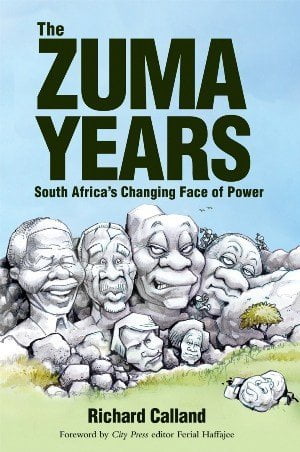
JZOver the weekend, I had a chat with a man from Nkandla (who will remain anonymous). As you no doubt know, that’s where Jacob Zuma is building his palace private residence, and it’s also the place that his own spokesperson (Mac Maharaj) didn’t want to visit because he feared he’d be unable to defend it once he had (at least, if you trust the interview recorded in Richard Calland’s book, The Zuma Years).

We didn’t talk about the residence, but I suspect that this man from Nkandla would be opposed to the deception surrounding the expenses incurred there, as well as the quantum of the expenses. Another point of agreement between us was with regard to the irrelevance of the number of wives Zuma has, both in terms of his political credibility, as well as to negative judgements regarding what Zuma costs the people of South Africa.

The political credibility part is less controversial, and unless you insist on monogamy for whatever reason, I imagine you agree that this shouldn’t impact on our judgments regarding Zuma (assuming, of course, full volition on the part of the wives and so forth). As for the costs incurred on the public purse, my interlocutor and I agreed that if the law allowed for polygamy, and for public support of the President’s wives, then it’s the law that needs to change, rather than Zuma that needs to change.

One could argue that Zuma should set the example, and defer the marrying of anyone other than who he was already married to (when taking office) until after leaving the position. But this would mean a less than full acceptance of Zuma’s cultural values, and would to my mind run contrary to the cultural inclusivity our Constitution demands. It would be an assertion that norms other than Zuma’s were standard, and that he’s allowed to contravene those – and practice his own, (implied) aberrant or inferior culture, so long as it’s done in a way that’s convenient to the rest of us.

It may be that we don’t want to be as culturally inclusive as the Constitution demands. But that’s not the argument here – instead, this would be an instance of insisting on the primacy of a particular set of norms under the guise of financial concerns. Instead, we should say that financial concerns disallow one set of cultural norms from being as well supported as others (if we wanted to be honest about the matter). Or even more honestly, we could say that culture X is somehow inferior to Y.

But until we do either of those things, the point is that it’s not Zuma’s problem that his wives cost more to support than Mbeki’s did. He could act in a supererogatory fashion, and choose to save us all some money, but he’s under no obligation to, and we shouldn’t judge him more harshly if he doesn’t choose to save us that money. That, at least, is what the man from Nkandla and I agreed over the weekend.

We didn’t talk about Zuma’s frequent insertion of religious rhetoric into political discourse, and I suspect that on that point, we would probably have disagreed. As he’s done in the past, when asserting that the ANC will rule until Jesus comes back, or claiming that “humanity has vanished” without fear of God, Zuma again inserted God into the National Elections in an address to the 33rd Presbyterian Synod in Giyani, Limpopo, on Sunday. Zuma is quoted as saying:

If you don’t respect those in leadership, if you don’t respect authority then you are bordering on a curse. Whether we like it or not, God has made a connection between the government and the church. That’s why he says you, as a church, should pray for it.

It’s easy to say that he’s appealing to a lowest common denominator here, in that an estimated 80% of South Africans are Christians. But this goes further than simply drawing on the support of like-minded people in claiming that he is “doing God’s work”, for example. This is divisive and judgemental (on spurious, metaphysical grounds, rather than principled ones), in that he’s threatening voters who might be tempted to vote for someone other than the ANC with being cursed.

Contrary to the entire point of the democratic process, whereby we freely choose our representatives based on their positions and performance in delivering what they promised us, here your mortal soul is in danger if you don’t vote ANC – regardless of positions or performance. Even if Zuma believes this to be true, threats that would be more suited to Medieval times are surely unbecoming of the President of a nation?

Furthermore, the opportunism of the rhetoric is perhaps even more clear in the next sentence, where he asserts that God has made a connection between “the government and the church”. By this, he has to mean that this government is looked upon with favour by a particular (his) god. He can’t mean God smiles on “governments” in general, because then God must also have approved of PW Botha’s government; and he can’t mean that God is only “connected” in some non-judgemental way to governments, because if so, what’s the point of highlighting an arbitrary connection, even as you say voters should pray for the government?

In today’s Business Day, Peter Bruce wonders “how much more can the ANC take“. While Bruce mostly addresses the political processes by which Zuma could be ousted as the ANC leader, this question can also be raised with respect to those who vote ANC. As he did in 2011, he’s blackmailing voters into supporting him through claiming that it’s only through him, and his party, that their souls will be safe.

Shame on him.

Does Zuma read? Does it matter?

JZIt’s slightly amusing that it wasn’t his book, The Zuma Years, but rather Richard Calland’s comments to the Cape Town Press Club last week that drew fire from Mac Maharaj, President Zuma’s spokesperson. Maharaj says that Calland claiming Zuma “doesn’t read” is “incorrect, unfortunate, and misleading”, and also “serves to perpetuate stereotypes”.

Amusing, because when I read Calland’s book on August 17 and 18 this year, I noticed that chapter 3 opens with one of Zuma’s cabinet ministers being quoted as saying “Zuma doesn’t read”. So, I suppose we can conclude that regardless of how much Zuma or Maharaj might read, they at least hadn’t read this book. Or, they didn’t feel it necessary to comment on this outrage until they had heard it reported by the press, rather than having seen it in its original printed form – attributed not to Calland, but to Zuma’s anonymous minister.

So, you might say that this becomes further evidence for Calland’s claim, in that the details of a case like this matter, and the details can’t be conveyed by selective quotes from a Sapa newsfeed. Calland could be accused of fabricating the quote if you like – but that’s a different matter to chastising him as if he had made the claim himself.

Also, the claim crops up in chapter 3, after Calland begins the book with Mbeki. Mbeki is fairly uncontroversially known as an intellectual (whether pseudo or legit is up to your definitions, but he was certainly bookish). The detail regarding Zuma not being a reader is inserted by way of contrast, and by way of presenting Zuma as an entirely different sort of political operator to Mbeki (specifically, one who engages mostly with practical details rather than philosophical nuances).

Accusing Calland of making an “incorrect, unfortunate and misleading” statement is, therefore, an instance of a non-intellectual engagement (which isn’t necessarily meant to mean an incompetent, or incorrect engagement) with the situation, akin to what Calland describes as being the “house style” in the chapter on Zuma.

However, discussion about the Calland speech at the Press Club and Maharaj’s reaction have raised the question of whether it matters if Zuma reads or not, and if it does, whether it matters what he reads.

When Brooks Spector, Associate Editor of the Daily Maverick (disclosure in case you didn’t know: I wrote for them for three years) asked for recommendations for JZ’s reading list, I was quick to suggest Kahneman’s Thinking Fast and Slow. Not because I thought Zuma in particular needed to read it, but because I think most people would benefit from reading it (someone who I won’t name here can confirm that I also suggested it as a gift to all the members of the Western Cape Provincial Cabinet).

So that makes my bias quite clear, I suspect – I would like for our political leadership to be readers, and to be thinkers. If I were an American, I’d be one of those Americans wishing I could have the West Wing’s Jed Bartlet as my President. But I’d also like to resist insisting on being a reader as a requirement, because it’s a) not too surprising that someone who has been in a university for 22 years would like an intellectual president, and people like me are hardly representative; and b) because being an intellectual force is only one way of leading, and not necessarily the best one in all circumstances.

Don’t get me wrong: if you’re not an intellectual president/leader yourself, you sure as hell should be smart enough to surround yourself with people who are. Decisions need to be made regarding allocation of scarce resources, managing crises and the like, and you can only get so far with a smile and a handshake, or even with some backroom-backstabbing. But so long as you inspire confidence in those you are charged with leading, and meet some basic standard of competence (while stocking your cabinet with people who can do the things you can’t do), it would be inappropriate for us to demand that JZ, or any president, be a thinker themselves.

Zuma’s life didn’t allow for decades in a university. It didn’t allow for a day at a university, and if I recall correctly, he didn’t finish secondary school. But there are different ways of being smart, or capable, or inspirational. When we criticise Zuma, or anyone else, we should be careful to not assume the priority of any one of those particular ways, leading us to reject someone’s efforts simply because they don’t fit our template of one sort of ideal leader.

In Zuma’s case, my lack of confidence in his leadership is not because he doesn’t read. It’s mostly thanks to the fact that he doesn’t seem to have stocked his cabinet (or elsewhere) with people who make up for the skills and knowledge he lacks. Instead, he appears to stock the relevant bodies with whomever will serve to keep him in place and out of prison, all the while displaying the sort of superficiality and vanity more akin to a 3rd-world dictator (think Zapiro, Daryl Peense, or Brett Murray, or Chumani Maxwele) than to a credible and respect-worthy statesman.

In short, it’s not that he doesn’t read, but that he doesn’t lead.

Homosexuality is more African than Christianity

PinkWeekLater today, I’ll be taking part in a panel discussion on the topic “Homosexuality is more African than Christianity”, as part of UCT’s Pink Week. Seeing as no less an authority than Errol Naidoo has previously described me as a “homosexual activist“, I guess I’m qualified, and the topic should make for a fun discussion.

Even though I tend to never stick to the remarks I’ve prepared, here are some thoughts on the topic for those of you who weren’t (or aren’t, depending on when I publish this) able to attend.

First, of course the topic is meant to be provocative – in fact, it seems pretty clear that this is its primary purpose, seeing as it’s incoherent on a number of levels. Off top of head, you’d ask what “African” means; how it’s measured (how can one thing be more “African” than another?); whether Christianity or homosexuality are plausibly or potentially “African” at all (rather than human, animal, natural, unnatural, good, bad, etc.) – i.e. is that the correct category for the thing you’re describing.

And of course, you can ask whether any of this matters.

The sorts of things I intend to address are:

  • Homosexuality predates any established, mainstream religion. It must do so, because it predates language, in that we find homosexuality all around in the animal kingdom, never mind only in humans. Cats, dogs, rats, foxes, bears, dragonflies… just some of the species in which homosexuality has been observed.
  • We also know that Christianity only gets to Africa (Egypt, in particular) in the middle of the 1st Century. So, unless we want to claim that for all the centuries before that, Africans weren’t really African, you’re left with a bit of a dilemma if you want to deny the question as posed. Of course – in terms of when they started, at least – homosexuality has to be more “African” than Christianity.
  • What does it mean to be “African”? As I argue in the first link in the opening paragraph, I’m not at all keen on identity politics of this sort. If we want to define “more African” as “observed first”, then (as described above), homosexuality beats Jesus. But if we want to define African as having a certain character or attributes, then it’s of course possible (very hypothetically) for someone to make a case that homosexuality is some sort of aberration, and Christianity the more “natural”, or “normal” way of being.
  • But then, you simply sound like someone who wants to use religion as a vehicle to prescribe sexually permissible and impermissible behaviour – and in this case, to justify your homophobia. The burden of proof would then be on you to demonstrate why those religions, and those rules, are the ones we need to subscribe to.
  • In doing so, you’re of course forbidden from arguing that your religion shows that homosexuality is “immoral” because God says so. Because that’s circular, in that it’s exactly the identity and authority of your alleged God that is in dispute here, and it’s your God that tells you it’s immoral.
  • Lastly, some might want to say that there’s something normal or “natural” about seeking god(s), and that homosexuality is “unnatural” in some sense that makes Christianity more fitting for Africans. But what does is mean for something to be unnatural in any event? Do you mean:
    1. statistically rare? If so, then left-handedness is inappropriate/immoral also.
    2. not conducive to procreation? Then, no sex with contraceptives, after menopause, etc.
    3. not using your body as God intended (i.e. “the Lego doesn’t fit” argument) – well then, wearing spectacles is inappropriate, seeing as your nose wasn’t designed to hold up spectacles.

And of course, as highlighted above, homosexuality exists in nature long before any religion – never mind Christianity – does.

As a last consideration – whether something is African or not, and whether something is natural or not (regardless of how we define those terms) – so what? What relevance does that have to right/wrong? That case still has to be made, even if we are able to make a case that something is “unnatural” or “un-African” in some coherent sense.

To raise a related, but a different issue: There is one thing that’s quite likely to be both more African, and more Christian, than homosexuality is – at least in terms of prevalence. That thing, unfortunately, is homophobia.

In summary, stop telling people how they need to live, and let them live as they like, so long as they aren’t harming each other. The known harmful thing, in the meanwhile, is the judgement and prejudice of homophobes.

Atheist religiphobia, or, what to call yourself?

Dan Finke has posted a long and interesting piece titled Atheist Religiphobia #1: Fear of Believing Anything At All About Gods, which I’d encourage anyone interested in the different interpretation of “atheist” and “agnostic” to read. It also looks like it will be part of a series (judging by the #1), and I’ll certainly be keeping an eye on where he takes the series from here.

One thing I hope he’ll address is a concern I’ve had for some time, and one that has led me to (since a couple of years ago) to move from calling myself an “atheist” to calling myself an “agnostic”. It’s not because I’m any less convinced of the non-existence of gods that I’ve done so, but more because of the signalling, or the political role, of those words.

Those of you who’ve been reading this blog for a while would know that the politics of these engagements (between faiths, between faithless and faith, etc.) are of great concern to me, because I’m firmly of the view that there’s too little listening going on, at a severe cost to the possibility of anyone persuading anyone else. We stack our caricatures up against each other, and then start the yelling (in serious cases, the fighting).

Yelling is sometimes effective, and sometimes necessary, and I’ve got no principled beef with those who do the yelling. I simply think that there are too many of them, and too few who carefully unpick the nuances of these debates, and attempt to persuade via slower, more deliberate dialogue, where people are inclined to listen due to the fact that you are.

Dan’s concern in his post is that unbelievers are so concerned about appearing to be fundamentalists regarding their unbelief that they make a basic epistemological error, leading them to shy away from saying that they “know” that there is no god (and by extension, saying that they are atheists rather than agnostics).

He correctly points out that this error can be traced back to a confusion around how knowledge in general, including scientific knowledge, actually works. When we say that “we know that smoking causes cancer” we aren’t claiming 100% certainty. We’re claiming a sufficient degree of justification in the proposition that smoking causes cancer that we have a warrant to use the word “know”. It’s still possible, in a very theoretical sense, that some third cause, perhaps even one strongly correlated with smoking, causes cancer. Possible, but unlikely enough that we don’t bother thinking about it.

In other words, knowledge doesn’t entail certainty, or logical necessity.

And on that epistemological level, I agree with Dan entirely. And if these conversation were only ever held between fellow philosophers, I’d be quite happy to say “I know that there is no god, and I am an atheist”. But people who are theists, or who are genuinely unsure of what to believe, also enter these conversations, and read these blogs – and my goal is to persuade them, rather than to talk to the choir. So here, as ever, I’m again concerned by the political dimensions of these words, regardless of their epistemological connotations.

I don’t think it’s the case that the typical person on the street thinks that knowledge means something like “justified to such an extent that it’s irrational to believe something else”. Instead, I think that they think it means “we are sure, or certain, that X is the case”. And here’s my key concern – regardless of the god discussion, I care about getting people to believe that all knowledge is, to some extent, provisional, contingent, or consisting in a high degree of justification, rather than certainty.

I care about this because to my mind, it focuses the conversation on the evidence and the reasoning, rather than the conclusion. It focuses our attention on epistemic humility, and on how it’s less important what we believe than how we believe. And when I say “I’m an atheist”, it sounds (to believe who believe that “know” means “certain”) like I’m expressing an attitude or disposition towards knowledge that allows for certainty, and I think that’s a bad signal to send (again, regardless of the god question).

My disbelief in gods is exactly like my belief in some scientific proposition being true or false, in other words. I’m as convinced that there is no god as I am that it isn’t something other than smoking that is responsible for apparently smoking-related cancer. But in both those cases, know does not mean certain. So I call myself an agnostic atheist to make the political point that I reject a dogmatic assertion of certainty, and to nudge the conversation towards the reasoning and evidence, and away from the conclusion – just like I would do in matters of science.

I see value in this approach not only because I’ve found that it tends to draw theists in to the conversation more than would otherwise be the case, but also because – especially among the many young unbelievers I talk to – I sometimes get the sense that some who call themselves “atheists” seem to fully understand the contingent, probabilistic nature of scientific beliefs, yet speak as if they can be more certain about the falsity of metaphysical beliefs. It’s this attitude that the idea of agnosticism serves as a corrective to, at least in my vocabulary.

Crooked criticism and apartheid revisionism

LeonTony Leon caused was indirectly responsible for much outrage on Twitter today, thanks to his Business Day column titled “When crooked politicians were not tolerated”. In this column, Leon offers some examples of corrupt politicians during apartheid being imprisoned due to their crookedness, and compares this to modern-day examples in ANC governments, particularly Tony Yengeni (who returned from a brief prison spell, only to resume employment in the ANC) and Dina Pule (who has not been prosecuted, and probably will never be).

The responses I saw on Twitter included:

https://twitter.com/TOMolefe/status/369762839717625856

https://twitter.com/lpolgreen/status/369764618370940928

One paragraph of Leon’s piece reads as follows:

The NP promoted and prosecuted a political system which oppressed and disfigured this country, and its security apparatus did far worse. But it was not so forgiving of its own members who looted public office for personal ends. And to the extent that it turned a blind eye, it did not interfere when the departments of justice and correctional services indicted and processed its members, some of them very prominent indeed.

Is he wrong about that? Many – including some of those people I quote above – say that he is, and linked to this paper on OpenSecrets.co.za as evidence. But the paragraph I quote there is notable in that the first sentence of it surely gives the lie to all three of the responses quoted above.

This is because the tone of these responses paint Leon as denying the corruption inherent in apartheid, and thus, comfortably fit with an established narrative (regardless of it’s truth) going back to Leon’s leadership of the DP that painted him as a enemy of racial redress. Well, to put it more plainly, the criticism in those days painted him as a racist, and sometimes made little apology for doing so.

For the record, I didn’t like either the “Fight back” or the “Stop Zuma” campaigns – in fact, the last line of a post I wrote at the time of the latter read

It comes as a great surprise to me, but I can’t say with any confidence that I’ll be voting DA tomorrow.

But Leon is not denying the corruption inherent in apartheid at all. He’s doing something we’re quite familiar with when it comes to liberals, including myself – he’s stating a (contestable, yes) fact in a tone-deaf sort of way, or in a way that doesn’t do enough genuflecting in the direction of his critics’ sensibilities. Perhaps something like this:

Strategically, this might or might not be a mistake, as I recently wrote with regard to Richard Dawkins. But to present Leon as having rose-tinted spectacles in a general sense with regard to the apartheid era is disingenuous to the point of causing me to distrust whether these critics are even interested in debate, rather than “winning” by simply caricaturing an opponent.

They are more incompetent than uncharitable readings, because they simply ignore the fact that Leon could well agree that corruption was rife under apartheid, but that nevertheless, there were more apparent penalties for violating the (corrupt) rules under that corrupt system than there are today. Honour among thieves, and all that. He’s not excusing the system – he’s saying that despite the overall horror of that system, here’s one element that functioned (relatively) well.

It’s also true that we don’t know know how selectively people were prosecuted by the system, and how much of a blind eye the government turned to corruption – but we don’t know that today, either. What we do know – and this is Leon’s point – is that Zuma has paid no penalty for a “generally corrupt” relationship with a businessman, and that the businessman himself served a rather small proportion of his 15 year sentence. We know of Pule, and Yengeni. We know that corruption is the leading topic on far too many news reports, and we know that little is done about it.

An occasional sacrifice or scapegoat (assuming that’s all the National Party’s victims as described by Leon amounted to) isn’t necessarily proof of moral rectitude. But it’s nevertheless a signal that there can be consequences to corrupt behaviour, and it thus helps – even if imperfectly – to rein that behaviour in. And this is what Leon’s column says. It concludes:

But in celebrating the democracy which replaced [apartheid], we should not avert our gaze from the undertow that came in its wake: the rapaciousness of public life and the lack of consequences for leading transgressors. Unaddressed, these might soon capsize the ship of state itself.

[EDIT] It has already become apparent via Twitter and T.O. Molefe’s comment below that the “things were better under apartheid” zombie-‘fact’ is being assumed in both Leon’s column, and this blog post of mine. No – Leon claims (at least on my reading) that more public representatives cared about their jobs then, and that a larger proportion of public representatives were punished for corruption under that government. Not that there was less corruption, nor any other “exceptionalism” claim related to apartheid. The best articulation of why that “exceptionalism” stuff is false, and why I don’t want support in comments from people who believe it, that I can recall is in this Ivo Vegter column in the Daily Maverick.[/EDIT]

Dawkins, Muslims and trolling on Twitter

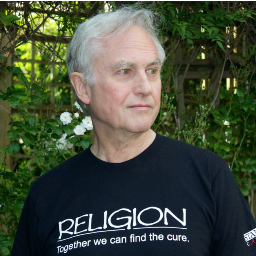
I had intended to write a post on Richard Dawkins’ most recent provocations on Twitter, which he kicked off with

RDbut a couple of people have gotten there before me – particularly Nelson Jones, who seems to have read my mind. As Jones points out, Trinity College has more Nobels than the Chinese, or than women, or any number of groups you might care to name (regardless of how carefully or accurately those groups were defined).

Yes, what he said was “a fact”, and in fact true. On Twitter, a few people have reminded me of this when I accused Dawkins of dickishness in the Tweet embedded above. I know that it’s a fact – but there are two ways of making the point that this isn’t the only relevant thing in this case. The one way is to say that facts aren’t all that matter – that there is a world of politics, and emotion, and strategy that might mean it’s sensible to point out certain facts at certain times, in certain contexts.

The other way of making the point is to agree that facts are all that matter, and to say that therefore, Dawkins should be wary of letting utterly predictable reactions get in the way of people seeing the facts that he’s attempting to highlight. As Jones writes, something in Islam (and this could easily be true for any other religion too) has gotten in the way of there being proportional representation of Muslims amongst Nobel Prize winners (and a number of other equally arbitrary metrics).

What that something is, is an interesting question – as is the question of whether atheists are disproportionately well-represented. But you can ask that question in less or more abrasive ways, and asking them in the way that Dawkins did will almost certainly result in making fewer, not more, people think about what the answer might be.

I’m not making the claim that it’s always wrong to ask questions abrasively – I’m making the claim that it’s disingenuous to say “I’m simply pointing out a fact”, or “everyone is over-reacting” when you have various options for how to express something, and you choose the one which a) doesn’t do any better a job of making the point and b) is likely to provoke more than alternatives would.

Twitter is not the place for nuanced debate. We (in general) broadcast, entertain, and often provoke. Dawkins is doing all of those, and he surely knows it. I don’t object, as I’ve said many times – it’s not a strategy that I want to employ for myself, but we need people to act as the lightning-rods. But that doesn’t mean it’s impermissible to ever say hold on, even on your strategy, that message is going to be lost in the quite predictable outrage. If people aren’t listening, you can’t do anything to budge their beliefs.

Read the Jones piece, as well as this one by Nesrine Malik. As Jones rightly points out, this is a pattern for Dawkins, and even (especially?) those of us who support his goals should be able to see how characteristic it is:

Dawkins’ well-honed technique (it often amounts to trolling) is to say something pointlessly provocative, wait for the inevitable backlash (the traditional response, playing on his well-known love of grammar, is “Your a dick”) and then express innocent bafflement that anyone could possibly object.

Another example from earlier this year compelled me to respond, because it seemed to indicate quite plainly how Dawkins’ Twitter behaviour is often more about provoking, than facilitating debate:

In case it’s not clear to you what’s going on there, Continental and Analytic (to use the traditional, and contested, definitions) are different approaches to academic philosophy. It’s a summary term of a style of philosophy practiced in those regions, like (as my tweet highlighted) French vs. Greek food. These are both different routes to getting fed, and the styles of philosophy are similarly both routes to understanding the world. There is no necessary distinction between them, though – and therefore, nothing to deride by asking “what sort of a search for truth is region-specific?”

But absurdly, social media are so intemperate that we only seem to have two options in response to Tweets like the one that the post begins with: either to denounce Dawkins as an Islamophobe, or to support him vociferously, telling anyone who criticises him that what he says “is a fact” and that everyone is “over-reacting”. The middle-ground is, as ever, squeezed out of the picture – because on social media, we’re all shouting, all the time.

And I suppose it’s quite reasonable to worry about who might hear you, if you’re saying something like “hold on, it’s not that simple”?

“World-views” and secular education

imagesFourth-year medical students at a local university were yesterday witness to a panel discussion on various world-views, with the intention of familiarising them with some of the different points of view that their patients might one day hold. I was invited to participate in this panel, which I gladly did, seeing as these sorts of public interventions are one of the values we can easily, and cheaply, give to “the cause”, as it were.

Joining me on the panel were an Imam, an Anglican priest, a Hindu doctor and the daughter of an African traditional healer (who was also a student in the class). The point of the panel wasn’t to debate who was right and who was wrong, but more to sensitise the students to the differences, and to prompt them to how they might approach sensitive topics of conversation with these various sorts of world-views.

It was an interesting experience, partly because it again brought to the fore just how normal, and just how abnormal, a largely materialist, or naturalist, point of view was – even in a room of about 200 people trained in the scientific method. The student who arranged to have me invited to participate reported that around 70% of his classmates were religious, and after yesterday, I fear that might be an under-estimate. One horror-story he told me is of a group of students training in psychiatry who decided to pray over someone that was clearly experiencing some sort of mental episode, rather than getting her to somewhere she could be diagnosed and treated.

But it’s not only the uncommonness of a naturalistic outlook that struck me – it’s also how alien it seemed to be to the audience. The tenor of some of the questions seemed to regard me as some sort of curiosity, or exhibit – a rare creature from a strange and distant land. Over and over, for example, I had to repeat the point that they should think of me as representing the “secular” world view, because religious folk can be secular too. Secular doesn’t mean lacking in belief, it means leaving your (metaphysical) beliefs at home when you go to work, especially in the public sector.

Then, the usual questions also came up: how can love just be in the brain (well, it is, but that doesn’t make it any less special); where do you get your morals from (the same place as you, the same place as the apes, etc.); what is your purpose in life (that question loads the dice – I reject the need for an “ultimate” purpose).

So, when I sat at the end of the panel to talk to the local atheist and agnostic society about how to grow their society and build capacity, I stressed something they could do, that I fear many smaller, community-based groups forget: education. Take your core membership, and have them learn about the history of skepticism/secularism/humanism/etc. – and not simply learn to recite cutting lines from Hitchens, or the names of a bunch of logical fallacies.

We need people to go out there are dispell myths and misconceptions, and that requires the knowledge to do so. If you’ve got some of it, and also have access to a younger group of people wanting to promote the secular, scientific, humanist world view, help them to learn how to educate others about what we believe and don’t, but more importantly, why we believe and disbelieve. Even when you don’t persuade, the conversations will nevertheless be far more interesting as a result.