When a muppet takes on a puppet – Steve Hofmeyr vs. @ChesterMissing

downloadForeign readers, if you want a snapshot of how weird and emotive racial politics in South Africa can get, here’s one for you: A man who thinks that “Blacks were the architects of apartheid” has now filed a harassment charge against a ventriloquist’s puppet.

Chester Missing (whose book I previously reviewed) is the puppet of ventriloquist, comedian, anthropologist (and friend), Conrad Koch. The puppet’s Twitter account has recently been quite vocal in denouncing the racist – and bewilderingly contrary-to-reality – statement captured above, in part because it was made by someone with a large audience (on Twitter, but more importantly as an award-winning musician who has sold truckloads of records to people who like Neil Diamond, but in Afrikaans).

Missing has also been asking Steve Hofmeyr’s sponsors whether they are concerned about the negative impact on their brands that might accrue from being associated with Hofmeyr. According to Hofmeyr and some of his followers (from what I’ve seen, mostly folks who are routinely associated with Afriforum and/or Praag, organisations that are overwhelmingly white and Afrikaans, and who are – charitably – tone-deaf and emotionally crippled when it comes to race), this amounts to harassment and defamation.

I don’t think it’s defamatory in principle, as you can see above. However, as I’ve argued in the past, I do think it’s possible for criticism to be sufficiently abusive or misdirected that it should be reined-in. (Having said that, the issue in the piece linked just above, on Mozilla and Eich, was for me more about picking the wrong target – Eich – rather than his religion and religious beliefs.)

In this case, though, I don’t see anything in Missing’s Twitter stream that crosses any kind of threshold into abuse, harassment or defamation. By contrast, I think that Hofmeyr needs to take responsibility for the statement he makes above, and others he’s made over the years, which give clear credence to an interpretation of racism, as commonly understood. (Conrad Koch has explained why he thinks the most recent statement is racist on his website, in case you’re Steve Hofmeyr or Dan Roodt, and need this explained to you.)

I’ll close with an example of a absurdly wrong-headed understanding of free speech and censorship, from the Institute of Race-Relations’ Frans Cronje (their name is misleading, in that you’d think they’re about improving race-relations, but I’ve rarely found that to be the case).

Why I say it’s wrong-headed is that obnoxious opinions need to be tolerated. He agrees with me on that, or so he says in the last (chronologically) of the three Tweets I’ll embed here.

But he gets there via chastising Chester (without naming the puppet) for trying to “silence” Hofmeyr.

Chester is doing exactly that, in challenging Hofmeyr’s idea that black South Africans are the architects of apartheid. If Hofmeyr chooses to fall silent in shame (or whatever), that’s his choice. The only entity that has the power to forcibly silence Hofmeyr are the courts, and guess what – only one of the two parties involved (Hofmeyr) has approached the courts.

Cronje’s argument works entirely contrary to his objectives here, in that this is precisely an argument against Hofmeyr approaching the police or courts to silence Missing.

To close the circle of absurdity with regard to South Africa’s racial politics, remember that Missing, in this case, is the puppet who is reminding others that Hofmeyr thinks blacks designed Apartheid, and Cronje is the CEO of the Institute of Race Relations.

And, he seems to want Missing to stop criticising Hofmeyr, while having no problem with Hofmeyr’s lawsuit. Go figure, indeed.
Affleck, Maher, Harris and Islamophia

sam_harris_200In 2011, I wrote a column defending Sam Harris against critics of his perceived “Islamophobia” (no scare-quotes from here on, but please assume that I consider the term problematic, for reasons including those I outline below).

I no longer agree with all that I had to say then. At the time, I thought that Islam was the subject of more critique from Harris than other religions were because he regarded Islam as the most dangerous in a range of religious beliefs. In other words, I was convinced that he had a pragmatic, rather than prejudiced, reason for focusing on it. As I said at the time:

Harris, and atheists in general, do have a problem with Islam, just as they have a problem with Christianity. If Zoroastrianism was still popular, we’d have a problem with that too. But this generalised antipathy stems from the fact that religion encourages people to believe things on the basis of poor or nonexistent evidence. If we think it a good thing that people tend to believe what is true and disbelieve what is false, believing things in this way would be a harmful trait that merits discouragement.

This discussion never really goes away, but it’s foregrounded at present thanks to the barbarism of ISIL, and – on a more prosaic level – a recent CNN interview with Reza Aslan, and then the Bill Maher segment featuring Ben Affleck and Sam Harris.

I’m not going to focus on those interviews in their specifics, but I encourage you to watch them if you care about the context. There are also numerous commentaries and critiques you could read – this one by Avicenna Last (on the Maher/Affleck/Harris segment) probably comes closest to capturing my response to Harris, and also includes a useful transcript of the show.

The purpose of this post is rather to make two points that are of general concern in this debate. First, on Islamophobia: Islam is of course not a “race”. However, there are other ways of being bigoted than simply being racist. And, when one responds to a charge that you’re prejudiced by (simply) asserting “I have nothing against Muslims, it’s their religion I hate”, you might forget that this can serve as an evasive gambit.

The religion is held by people – and held with great commitment and sincerity – so criticism of it might be difficult to separate from criticisms of them. Scott Atran is worth reading on the sociology and psychology of belief, and how wilfully obtuse the language of “I respect people, but not their ideas” can sound to people who hold the ideas you happen to disrespect.

Second, I do think that Harris (and others) don’t consistently make the point that it’s primarily the extremists that they think problematic. Their language (and sometimes tone, which I think important) can create the impression that their criticisms apply generically to Islam, especially (I’d suspect) to people of that faith.

The point that Affleck was trying to convey is that there is a tendency for critics of Islam to read or sound like fundamentalists themselves, in part because they assume that an audience is as capable of separating the context from the logic of argument as they are. Our discussions take place in a political context, and persuasion depends in part on recognising that.

It is relevant, as Affleck points out, that more than a billion Muslims are only similar to ISIL in the sense that they all pray five times a day. They’re not similar in the sense that they will kill for this right, and I’m also not persuaded by Harris’s claim in the End of Faith that moderates provide some sort of “cover” or “legitimacy” for extremists.

They all believe in the same god, sure, but from within a radically different value system – one which allows for beheading infidels and opponents, and the other not. The fact that these two sorts of Muslim are nominally on the same spectrum of belief doesn’t mean they should be conflated with each other.

Harris and other critics of Islam forget – or speak as if they have forgotten – that believers can have an interpretation of a holy text, rather than a set of dogmas related to it. Instead, critics take the most reactionary views and treat them as representative of the whole, or more broadly as the most authentic form of Islamic faith (with thanks to Kenan Malik for this insight).

What this move allows for is the invalidation of the beliefs and ways of living that are more typical or representative. If a Muslim were to say “well, I’m not offended by Danish cartoons”, you can retort with “but you’re not a typical (or even a ‘real’) Muslim, because you’re not being a literalist when it comes to interpreting your holy texts”.

But if the typical Muslim isn’t a literalist, why use that as the standard by which to criticise others? Isn’t it rather unusual to judge people by the standards of the most pure, or best, exponents of any skill, virtue of way of living? (“Son, I grant that you’re able to kick a ball, but you can’t be a real footballer until you’re as good as Cristiano Ronaldo.”)

How about if the anti-fundamentalists – like Harris – might be giving some cover or legitimacy for the extremists themselves, by making them seem more representative or relevant than they are?

Or, how about we make make an effort to keep those moderates on our side, by not speaking in ways that make it appear we see all Muslims as different only in degree, but not in kind – because when you say they are of the same kind, you’re telling your neighbour that she’s really just like the beheaders, when one dispenses with the tact.

Anti-fundamentalism can play into stereotypes, too – and maybe, in doing so, it can give some power to the extremists. Because if you cast them as martyrs, moderates will be surrounded with examples of their religious identities being questioned and attacked.

Would you think that makes them more, or less, less likely to join the secular battle against fundamentalism?

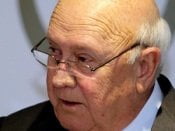
Should the City of Cape Town rename a street after FW de Klerk?

If you’re too busy to read the full post, my answer (as per Betteridge’s Law) is “no”.

And, in case you don’t know what I’m talking about at all, the issue is this:

FWFrom today and until the end of October, the public have been invited to participate in the City of Cape Town’s deliberations on whether to rename Table Bay Boulevard in honour of FW – so, it would become FW de Klerk Boulevard.

If you want to read the full request for input, it’s on the City’s “Have your say” website, along with a fillable form. You could also email naming@capetown.gov.za (or submit something by fax, and therefore presumably by carrier pigeon also).

We don’t get to see the full proposal – all we can read by way of motivation is the following:

The proposal for renaming Table Bay Boulevard (the first section of N1 from Cape Town), FW De Klerk Boulevard, is motivated by the role that Mr. De Klerk played in the transition to a new dispensation in South Africa. He is a Nobel Peace Laureate recipient who has not received any recognition for the role he has played in the recent history of South Africa.

“He is a Nobel Peace Laureate who has not received any recognition“? I’m guessing they left something out there, like “not received any recognition in the form of a road being named after him”.

And it’s not just the Nobel that he’s been awarded: there’s the Prix du Courage Internationale, the UNESCO Houphouet-Boigny Prize, the Prince of Asturias Prize, and the Philadelphia Peace Prize.

On top of those (and others I haven’t listed), I’ve found reference to 8 Honorary Doctorates, and then the Order of Mapungubwe (Gold) – South Africa’s highest honour – too. So, it’s really only the City of Cape Town who seem to have forgotten to give this man a token of their appreciation.

Here’s why this Capetonian (me) thinks that they should keep on forgetting to do so, and why I’d encourage you to express your disapproval of the plan too (assuming you do disapprove, of course).

First, an objection in principle: it’s irrational to name things after living people in general, especially when naming and renaming costs money. If you don’t already think FW de Klerk unworthy of having a road named after him, he’s still got time to demonstrate his unworthiness to you.

I have no reason to expect that we’re going to learn unsavoury things about him in his remaining years, but it’s certainly possible – so I’d at least want to wait until his full story has been written, in case we end up naming a road after someone who has been exposed as a [insert something unsavoury here].

And second, because it was always absurd that he was awarded the Nobel alongside Mandela. Sure, the 10%-ish percent of white South Africans had a disproportionate number of guns and Rands, so were perhaps taken more seriously than they might otherwise have been, but any of you who were in South Africa in the late 80’s would know that FW had two choices: blood in the streets, or handing power over.

You don’t get to play at magnanimity if you never deserved to be the boss, and also, it’s no great achievement to do what anyone in your position would have needed to do, in order to avoid further bombings, murders, international ostracisation and the like.

I’d perhaps feel differently about de Klerk if he had a history of being a democrat, and someone committed to a non-racial South Africa. But he was the leader of the National Party in our most conservative Province, the Transvaal, and served a succession of racist white Presidents loyally. As Minister of Education, he supported the continued racial segregation of our universities.

To quote from a Telegraph piece with the unassuming title of “The day I ended apartheid

Black Africans had basically lost nearly all of their human rights over that period [the second half of the 20th century].

Nothing in De Klerk’s Afrikaner background suggested he was about to reverse all that. He had been in the job just four months and was still an unknown quantity, but what was known about him suggested he was no reformer. After a lifetime in the National Party (he was 54), he was generally regarded as on the verkrampte, or unenlightened, side of the party, although he always saw himself around the middle, neither verkrampte or verligte (enlightened), but certainly conservative.

“Negative expectations hinged on the fear that FW, far from being an innovator, was a hidebound disciple of apartheid,” said his own brother, Willem, later. “He never formed any part of the enlightened movement in South Africa. It was even rumoured he had tried to put the brakes on all the reforms PW Botha had made.”

He’s not a great man. He’s a man who was in charge at a great moment in history. It would have made some sense to honour him at the time, as one of those reconciliation gestures South Africans seem to be fond of. But in de Klerk’s case, we’ve done that already, and there’s no constituency (that I’m aware of, at least) that’s clamouring for de Klerk to be given any more medals or prizes.

On the other hand, there are still scores of less celebrated but important South Africans who haven’t yet had a road named after them, never mind being awarded honorary doctorates or Nobel Peace Prizes.

You’d think we’ve simply run out of ideas, in proposing to name a road after de Klerk. But sadly, this might be another indication of Cape Town, the Western Cape, and (by extension) the DA’s obliviousness to aspects of political messaging.

When you’re constantly criticised (often unfairly) for being a racist City, renaming prominent roads offers an opportunity to subtly shift the character and reputation of the City either closer to or further from those perceptions. Why choose the former?

Some updates on God (and related matters)

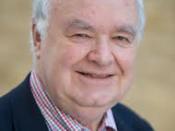
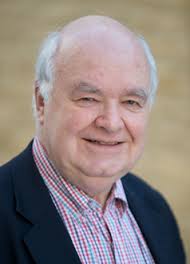
imagesJohn Lennox – mathematician and Christian apologist – is in town again, and giving talks at UCT, Stellenbosch and in Johannesburg. I’ve twice had the pleasure (or at least, experience) of chatting to him at length regarding his views on whether there is a necessary connection between religion and morality, and there’s no question that he’s a very smart and sincere man.

But he’s also wrong.

I’ve written many posts over the years dealing with meta-ethics and morality, and have debated a few Christian apologists on these topics over the years. There’s little point in doing so with the hope of changing their minds (and vice versa), but these conversations can still be very valuable to an audience, in that listeners or readers could certainly benefit from hearing how much moral behaviour we find in non-human animals, or about the clear lack of correlation between religious belief and “good” moral choices.

If you’re in Johannesburg this Thursday night (September 18), you might be interested to attend a debate between Lennox and Eusebius McKaiser on exactly this topic. It takes place at 7pm in the Great Hall of Wits University, and I’m looking forward to hearing what Eusebius has to say on the topic.

Eusebius is unlikely to say much that I’ll want to disagree with on this topic, but I do want to use the debate as a segue to briefly return to a topic he and I do disagree on, namely the question of whether we should call ourselves atheists or agnostics.

I’ve written about this at length too, so I’ll just summarise the disagreement here. All knowledge – excepting technical points like Descartes’ cogito – does not entail certainty. We can be overwhelmingly convinced of the truth or falsity of any given proposition, and for the sake of communicative efficiency, we call those propositions “true” or “false”.

Furthermore, we’ll in all likelihood often right to call many of those propositions true or false. In other words, they correspond to the way the world actually is.

What does it mean to say that you’re an atheist, as opposed to an agnostic? Here’s the problem: it can mean at least three things. First, you could mean that you’re sure that there is no God – that “God exists” is a false proposition. Second, you could mean that you are sure that there are no gods at all, or in general – that all god claims are false. Or third, you could be saying that you regard it as overwhelmingly likely that one of the two formulations above are correct, without claiming certainty.

The third formulation is consistent with the way in which I treat all other propositions, and I see no reason to treat propositions relating to God(s) differently. I don’t claim certainty for any other propositions, and wouldn’t want to claim one here, even if the chances of God(s) existing are vanishingly small.

Does that, then, make me an agnostic, as opposed to an atheist? Eusebius says yes, it does, and that it’s a more epistemically responsible choice to call myself an agnostic. And here’s where he’s not so much wrong, but perhaps reaching a slightly hasty and unsubtle conclusion.

We don’t need a qualifier like agnostic (in the sense that it qualifies that you’re not certain) when we speak about propositions like grass being green, or smoking causing cancer. Everyone from one interpretive community – the philosophically inclined one – will fill in the epistemic doubt for themselves, and know that you’re not making an absolute claim.

However, everyone from a different interpretive community – those who regard truth claims as being absolute – will simply assume you’re using language in the conventional sense (and to be honest, how most of us use it, most of the time), and that you are making a claim of absolute certainty.

And this, in turn, opens up the possibility of using these words – just like we use most words – to signal a certain stance or attitude towards the proposition in question, cognisant of who the audience is. If Eusebius and I are talking, we could both say we are atheists, and neither of us will assume the other is claiming certainty. Likewise, we could both say we are agnostics, and neither of us will assume that the other is in doubt about the overwhelming likelihood that we are correct in saying God(s) don’t exist.

But when talking to other people, especially ones we don’t know, we can be fairly confident that the common understanding of “agnostic” is “we’re not sure” – in other words, it signals that it’s an open question to us as to whether God(s) exist or not. And while it’s an open question in a strictly logical sense, it’s not an open question in any practically relevant sense, just like it’s not an open question whether grass is green or not.

So, using the word “atheist” – in situations where we don’t have the time to explain all this – might well both capture our position more accurately (in the mind of the audience), as well as serve a useful political function in reinforcing the notion that the proposition in question (that God exists) is one that we consider overwhelmingly likely to be false.

Having said that, I’ve come to prefer “agnostic atheist”, in that it seems a “best of both worlds” response, as well as one that tends to open up an interesting conversation, thanks both to not appearing to be dogmatic, and because it tends to discourage a dogmatic response (except in the case of some atheists, who think it a cop-out).

Before moving on to a different topic, I’d encourage you to take a look at Eusebius’s column this week. I agree with most of it, but would again want to disagree on some elements of politics and strategy, especially with regard to his example of Richard Dawkins, who has progressed from being a useful lightning rod to becoming somewhat of a troll.

In relation to the column, all I’ll say here – before this becomes far too long – is that while it’s of course true that the concept of God shouldn’t be treated with kid gloves, that logical point can be used as an excuse to be quite the bully (I don’t think Eusebius and I disagree on this point, though).

Moving on:

You might remember Andrew Selley, the chairperson of the Christian advocacy group FOR-SA, for his valiant (sarcasm font) efforts to secure parents the right to beat their children, because that’s apparently what Jesus would have wanted. He has written a more recent post arguing that the OGOD case against 6 schools entails “The Court … being asked to order that Christianity be removed and banned from the schools.”

That’s simply untrue – the point of the lawsuit is equality of representation, and obeying existing regulations that require schools to be essentially secular. He goes on to argue that the schools are welcoming to other faiths, but as I’ve said in the past, paying lip-service to inclusivity does not amount to inclusivity in practice. If a school advertises themselves as having a Christian character, that immediately a) decreases the likelihood of other faiths (and nonbelievers) getting a welcoming reception, and b) increases the likelihood that the school will remain Christian, because those of other faiths (and nonbelievers) will be less likely to apply to that school.

Lastly, I’m pleased to see the launch of an “Open Mosque” in Cape Town, where women will be treated equally, and where homophobia will not be tolerated. It should be noted that Sataar Parker, spokesperson for Cape Town’s biggest mosque, Masjid Ul Quds in Athlone, says this is “nothing new”, with their mosque having been “open” in these senses for 25 years. Whether that’s true or not I don’t know, but if it is, we can simply celebrate their now being two such mosques available to Cape Town Muslims.


The TB Davie Academic Freedom Lecture 2014 – Max du Preez

mdpEarlier today, I had the privilege of introducing Max du Preez to the audience gathered for the 2014 TB Davie Lecture at UCT. The lecture was recorded, and once the video and podcast are available, I’ll be sure to let you know. In the meanwhile, here are my introductory remarks.


Over the course of a 40-year career in journalism, Max du Preez has earned multiple local and international awards for fearless and principled reporting, including the Nat Nakasa Award for Courageous Journalism, as well as having been named the Yale Globalist International Journalist.

He is the author of numerous books that draw on his long history in South African culture and politics, most recently “A rumour of spring”, in which he reflects on whether South Africa can expect “a long winter or an early spring” in relation to the evolution of our democracy.

In 1992, UCT awarded Max du Preez an honorary Master of Social Science degree, and the citation is worth re-visiting. It speaks of:

his fearless exposition of power corruption in high places, in the face of all kinds of attempts at silencing him, from criminal and civil proceedings in the Courts to extrajudicial strong-arm methods.

Max Du Preez has consistently made it clear that he is not serving any sectional interest, but that of all the people of this country, and his cause is to promote the values that should operate in the new South Africa.

After graduating from Stellenbosch University, he joined Die Burger as a cub reporter, and the Editor sent him to cover the Parliamentary sessions. This proved to be an error of judgement. Max Du Preez’ overall impression of the Parliament was one of moral corruption and intellectual poverty, and he conveyed this in his reports; Die Burger’s impression of Max Du Preez was that they had a problem reporter on their hands.

He was hastily transferred to Die Beeld in Johannesburg. There he reported on the Mozambiquan independence, and the Soweto riots of June 16 1976, but caused so many problems for the Government-supporting Nationale Pers that he was banished to the Siberia of South Africa, the Namibian desk.

In Windhoek, he was quickly branded a Swapo ally, and Du Preez and Nationale Pers soon parted company. In 1980 he joined the Financial Mail in the post of political editor, the only Afrikaner on the staff, and in his own words, “their token boer.”

Later he transferred within the same media group as political correspondent to the Sunday Times and Business Day.

In 1987 Dr Van Zyl Slabbert invited Du Preez to join the delegation of Afrikaner personalities who attended that highly controversial and historic meeting with the then banned African National Congress in Dakar, Senegal.

It was there that the idea of starting an independent Afrikaans language weekly newspaper was born.

That newspaper, launched in 1988, was die Vrye Weekblad- the Independent Weekly. The newspaper was almost immediately in court, thanks to the first few editions having to appear on the street illegally after the Minister of Justice responded to the threat it posed by raising the cost of registering a newspaper from R10 to R30 000.

At this newspaper, it was du Preez and his colleague Jacques Pauw who led the exposure of apartheid-era murder squads at Vlakplaas when other publications wanted no part of the story – or simply denied its truthfulness. Without their hard work and courage, many of these details might well have remained a secret to this day.

The paper was forced to close in February 1994, thanks to the costs incurred in defending its charge that South African Police General Lothar Neethling had supplied poison to security police to kill activists.

Du Preez went on to be the founder and editor of the television programmes Special Report (documenting the Truth and Reconciliation Commission) and Special Assignment.  Du Preez ended up being dismissed from Special Assignment for “gross insubordination towards management”, after objecting to a management decision to bar the screening of a segment on witchcraft.

That same weekend, Special Assignment won six awards at a television prize-giving.

If a more recent sort of threat, by actor and economic freedom fighter Fana Mokoena to “seize his farm” is more typical these days, it’s not because du Preez has slowed down, or toned down, his challenges to political authority and the abuse of power. Nor could it be because he has a farm, as he has none – but accuracy is seldom a primary concern for bullies.

It might instead be exactly because – thanks in part to him and other courageous editors – newspapers in South Africa no longer need fear being bombed, as the Vrye Weekblad offices were in 1991.

To return to the 1992 citation,

Mr Chancellor, the sensational disclosures which struck at the malignant core of apartheid are only part of Max Du Preez’ achievements. He is clearly a non-conformist, an independent thinker, a maverick. Some would use stronger terms. The French noun might be a sansculotte-  ‘without breeches”. In Afrikaans, the expression is earthier – he is hardegat.

Ladies and Gentlemen: please welcome Max du Preez.

The Responsible Believer – my #TAM2014 talk

Earlier this year, I had the opportunity to present a paper at The Amaz!ng Meeting, held in Las Vegas. Here’s the YouTube video of my presentation, with the text pasted below that.

#Blackface, white noise

Blackface-Sheep-ScotlandSo you might have heard about two female students in Pretoria who recently painted their faces black, dressed up as domestic workers, and padded their behinds with pillows, just in case it wasn’t clear to anyone that they were trying to look like a certain stereotype of a black woman.

Thanks to the provocations of inane commentary on social media, a whole bunch of big names in atheism, humanism and the like now have too, and they’re consistently as bewildered as I am that people want to try and justify this idiocy.

They’re hearing about it because I’m at the World Humanist Congress in Oxford, and whenever someone asks me about South Africa, I’m currently telling them about this incident and what some responses to it tells us about how clueless some South Africans seem to be about race, and how simplistic views on free speech can end up (even if unintentionally) supporting racist attitudes.

The easy thing (for me) about the blackface case is this: I don’t think it should be illegal to be an idiot of this sort. I’m even reluctant to agree that “hate speech” is an easy enough category to recognise, and that – even if it can be recognised – that it should be illegal. This is because I’m broadly in support of J.S. Mill’s famous defence of free speech, and think that hearing hurtful things is often part of the price that individuals have to pay for society to flourish.

That’s no comfort to the person hearing the hurtful things, I know – and I also know that middle-class white males like me are seldom, if ever, the ones hearing the hurtful things. Which is why I want to remind those of you who think that “free speech” is sufficient to excuse, if not condone, the blackface incident of Isiah Berlin’s essay entitled “Two concepts of liberty”, with its reminder that negative liberties – in short, free speech as in your right to be free from my stopping you from speaking – should be contemplated alongside positive liberties.

Again, in summary, positive liberties amount to enabling conditions for being free at all – we can imagine having opportunities to speak: access to media, education, the requisite cultural capital and confidence, the absence of the fear of being mocked or derided for what one might have to say, or for how you’re dressed, or your skin colour, sex, sexual orientation and/or preferences, etc.

In other words, positive liberties amount to a bunch of the things that structural racism has compromised for the vast majority of the South African population (black South Africans), and enhanced for a small proportion of us, the white South Africans.

When someone suggests that white students wearing blackface does not impinge on anyone’s liberty, they aren’t taking the positive liberty aspect into account. They are instead relying on an understanding of rights that is technical, rather than one involving substantive rights.

Because even though we’d (well, at least I’d) like to live on a planet where we don’t have any uncontrolled or instinctive reactions to people based on arbitrary characteristics like race, we don’t live in that world yet – and black South Africans (not only South Africans – black humans) are victims of more discrimination than white ones are.

When you make a “joke” that references that discrimination, it’s likely to hurt. If you point out that “you should just get over it”, that’s likely to hurt too, because it’s callous, and because it ignores how difficult it is to just “get over” hurtful things. We all know this at least on some level, whether it’s the minor sort – perhaps being betrayed by a trusted friend – or something more significant like, say, generations of oppression alongside still living in a world that seems to ignore that oppression.

Freedom of speech isn’t the only thing that matters. It matters enough that I don’t want to ban your offensive speech – enough that I think it would be a very bad idea to do so. But it doesn’t matter enough that we can use it as a way to excuse that fact that some behaviour is inexcusable, even if it is legal.

Whether or not the women in question knew how offensive their actions were, this is no time to be making excuses for them.

Patriotism served as pabulum

Those of us who think about morality and the endless complexities of trying to get along – and progress – in a heterogenous country/world can take a breather for a moment, as Communications Minister Faith Muthambi has developed a strategy to “improve patriotism, social cohesion and moral regeneration” in South Africa.

Her plan is to start teaching basic moral philosophy in primary school, introducing children to ideas like the social contract and reciprocal altruism, so that they can begin to understand that morality isn’t about mindlessly applying some or other set of instructions but rather about thinking things through with a concern for human (and other) welfare.

The United Nations: perhaps irrelevant, but now also offensive

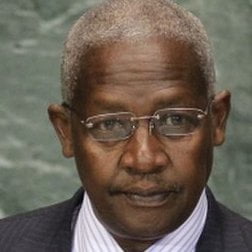
Foreign minister KutesaAlthough some of you might always have considered the United Nations an irrelevance, it would be an unfair critic who claimed that they do no good at all – their World Food Programme, for example, claims to provide food to 90 million people per year.

But they have their critics, ranging from those upset by the UN’s failure to endorse the 2003 invasion of Iraq, to claims that the arrival of UN peacekeeping troops tends to reliably correlate with an increase in child prostitution. As with any large political organisation, criticism can be partisan and ideologically-motivated, often forgetting that realpolitik comes with compromise.

Women are hard to animate, but they’re still a nice gift!

You’ve no doubt seen plenty of social media commentary on Ubisoft’s decision to drop the playable female character from the new Assassin’s Creed title, saying that keeping such a character would involve “double the animations, double the voices, double the visual assets… really a lot of extra production work”.

As is often the case, the blogosphere and Twitter could be accused of not allowing for the possibility that there’s any reasonable justification for Ubisoft’s decision, judging from the temper of the posts and tweets I’ve seen, few of which express any sympathy for the company (leaving aside the obviously sexist comments from people saying that “women can’t be assassins” and the like).