Faith healers and medical deceivers

On the last night of January, I participated in a rather interesting hour of radio, during which Hlomla Dandala hosted a interview with me and someone claiming to be a faith healer. The faith healer’s name is Pastor Louisa, and you can find some information on her ministry – which includes curing people of AIDS – on her website.

I do have a recording of the show, but haven’t yet found a way to convert it into something that plays outside of the TuneIn Radio app on my phone (informed advice on this is welcome) – if I do get it converted, I’ll be sure to post it here.

What became clear fairly on in the show is that Louisa is not a charlatan, in the sense that she’s knowingly exploiting others. She was desperately sincere, and also, unfortunately, sincerely confused. When invited to facilitate a miracle over the phone to someone who called in, she engaged in a few minutes of shouty, enthusiastic prayer and exhortations to be confident and inspired, after which she asked the caller  whether she “felt better”.

Yes, said the caller. I then asked – “so, does that get added to your list of miracles performed?”. Yes, said Pastor Louisa. On those weak standards, all of us perform dozens of miracles every day – just figure out what language people like to hear, or what buttons they like pushed, make them happy, and then claim to have performed a miracle!

Also, she made it clear that she never tells people to stop taking their medicine. Dandala asked her how she knows whether it’s the prayer or the medicine that heals… and the predictable answer that she gave was that she “just knows”. As far as I can determine, then, she gives her god the credit for the job performed by modern medicine.

You’ve heard how this (faith healing) works before, I imagine, or rather, how it doesn’t work. On the recommendation of Dan Dennett, I watched the documentary Marjoe a few years back, and it’s a wonderful expose of charismatic preachers and healers, involving Marjoe Gortner taking a documentary crew behind the scenes of his final revival tour, held after he had already lost his faith. Watch it if you can, but basically, if people want to believe something strongly enough, it’s difficult to stop them doing so.

The difficulty in talking to Louisa was in resisting the impulse to mock, but instead to feel sympathy for her confusion, and the desperation of those who take her seriously. I failed in this effort at least once, when she spoke about how she had to stop talking to us because she was out in the open, under a tree, and it was cold (this was late at night). I suggested that a miracle might sort this out – after all, if she could cure Aids, what’s the problem with a little heating?

Failures of good grace aside, these people can be dangerous, especially in communities we don’t often hear about, where faith healers and other quacks can do their thing without being exposed to scrutiny. Communities like the Amish are a similar problem. And the overarching problem we all have in a constitutional democracy is in striking the balance between objective application of the law and respecting the various freedoms we believe people are entitled to, like subscribing to and practicing a religion.

For adults, there’s less of a concern regarding people being free to harm themselves than there is for children, who can’t be expected to know any better. But desperation, and poor educations, mean that adults are also sometimes more gullible than one would like, which is why it’s incumbent on all of us to speak out against quackery where we find it, while still trying to avoid being gratuitously cruel to those we criticise.

And those of us in positions of authority should perhaps be most careful, because their trust is vested in us, and they spend money, time and attention on us.

Someone getting a lot of attention right now is Professor Tim Noakes, as he goes around the country giving talks and radio interviews to promote the book he’s recently co-authored, The Real Meal Revolution. During a recent interview with Redi Tlhabi, he informs listeners (at 38m40s) that there is “absolutely no risk” involved in cancer victims trying the ketogenic diet, because it’s proven that starving cancer of carbohydrates is an effective treatment.

Well, yes, it can be. But as he so often does, he’s cherry-picking, or simply believing in the version of “science” that suits his agenda. Because according to the Sanford-Burnham Medical Research Institute, and other sources,

Many scientists have tried killing tumors by taking away their favorite food, a sugar called glucose. Unfortunately, this treatment approach not only fails to work, it backfires–glucose-starved tumors get more aggressive.

This is only true for some glucose-starved tumours, to be sure, but it still means that saying “absolutely no risk” is absolutely untrue, and that Noakes is giving advice – to an audience of thousands – that stands a good chance of harming a listener who happens to have the sort of cancer that responds aggressively to a low carbohydrate diet.

As I’ve said many a time, this isn’t the approach of someone who is a responsible scientist. But, just like the faith-healer, I think he’s utterly sincere, and utterly committed to fostering our good health. More the pity, then, that he’s unable to see how his religious fervour might end up achieving the opposite goal, at least for some. And how – consistently – he’s wreaking havoc on basic principles of critical reasoning, and setting a terrible example for budding scientists everywhere.

Problems with evidence-based medicine aren’t a license to make stuff up

In the paper that brought the idea of evidence-based medicine (EBM) to prominence, Professor David Sackett et. al. wrote that

Evidence based medicine is the conscientious, explicit, and judicious use of current best evidence in making decisions about the care of individual patients. The practice of evidence based medicine means integrating individual clinical expertise with the best available external clinical evidence from systematic research. By individual clinical expertise we mean the proficiency and judgment that individual clinicians acquire through clinical experience and clinical practice. … By best available external clinical evidence we mean clinically relevant research, often from the basic sciences of medicine, but especially from patient centred clinical research into the accuracy and precision of diagnostic tests (including the clinical examination), the power of prognostic markers, and the efficacy and safety of therapeutic, rehabilitative, and preventive regimens.

In short, EBM is about integrating the best available research knowledge with the expertise of clinicians, who might – and often do – spot something that a model or a manual might not recognise as significant. As much of a naturalist as you might be – and I’m a very committed one – raw data exists in a context, and the context might often be a significant clue in telling you what data are relevant, and how they should be interpreted.

downloadSo I share some of Dr. Malcolm Kendrick’s concerns, when he writes that “EBM is now almost completely broken as a tool to help treat patients” thanks to the “evidence” being susceptible to corruption by vested interests, and pharmaceutical companies in particular. If you fund enough research, and suppress results that you don’t like, it’s certainly possible to end up with all the “evidence” pointing in a favourable direction. Favourable for you, that is, but not for the patient.

But the fact that something is funded by a pharmaceutical company doesn’t guarantee bias. There’s a difference between being cognisant of potential biases, and writing something off in advance, just because of whence it came. That sort of pre-emptive dismissal is a logical error called “the genetic fallacy“, and you can tell when it’s being committed if someone stops paying attention to the evidence at all, or starts claiming that they don’t need to even bother doing so. Like this, perhaps (from Kendrick’s post):

Some years ago I stated that I no longer believe in many research papers that I read. All I tend to do is look at the authors, look at the conflicts of interest, look at the companies who sponsored the study, and I know exactly what the research is going to say – before I have even read the paper.

I have also virtually given up on references. What is the point, when you can find a reference to support any point of view that you want to promote? Frankly, I do not know where the truth resides any more. I wish to use evidence, and the results of clinical studies, but I always fear that I am standing on quicksand when I do so.

We are at a crisis point. Medical research today (in areas where there is money to be made) is almost beyond redemption. If I had my way I would close down pubmed, burn all the journals, and start again, building up a solid database of facts that we can actually rely on – free from commercial bias. But this is never, ever, going to happen.

It’s rather alarming to see the person responsible for writing The Great Cholesterol Con – and for encouraging most of us to stop taking statins to lower cholesterol – professing “I do not know where the truth resides any more”. (If he really means that, a career in anthropology rather than medicine might suit him better, I’d suggest, in that he’s already learnt a key mantra of the field.)

Another peculiar thing you’ll find on his website represents quite a cunning stratagem. You see, he’s talked himself into a bit of a bind with this “don’t trust The Man” stuff – if he ever wants to sell you something like a drug, how could he offer you “evidence” in support of it’s efficacy, assuming that he or someone else with a vested interest was involved in that research?

Easy – by redefining what conflict of interest means. For him only, mind you – not for others, where it means that you can’t trust them, and don’t even have to read them to know that you can’t trust them. In his “Disclosure of Interest” page, he notes “I have become the medical director for a company making a heart health supplement called ProKardia”, for whom he does paid consultancy work. And here’s the cunning bit:

If I do write about ProKardia or any of the ingredients in ProKardia, in a positive light, you need to know that I have a financial interest. I did not use the word conflict of interest in this statement, as I do not believe I have a conflict. I have become involved in developing, and using, a product that I entirely believe to be a good thing.

Got that? He has a financial interest alone, but no conflict. Authors of papers with connections to something he doesn’t trust, or research sponsored by pharmaceutical companies, always represent a conflict – and you don’t even have to read the paper in question to know this. (Which, amusingly, means that even if they were to try to insert the same Humpty Dumpty clause into their papers, Kendrick would never read that either.)

I say “Humpty Dumpty clause”, because the book Alice in Wonderland contains this fabulous line: “‘When I use a word,’ Humpty Dumpty said in rather a scornful tone, ‘it means just what I choose it to mean — neither more nor less.'”

It’s the same causal relationship to what words – and evidence – means that allows for claims that sugar is addictive (as addictive as cocaine, according to some), or that Harvard have endorsed low-carb high-fat diets. They haven’t – they’ve just said that carbs can sometimes be worse than fats, particularly the “bad”, saturated fats – yet the LCHF proponents cherry-pick this as support, even though the same group are explicit that the type of fat matters, and that animal fats remain something to be cautious about.

Or, it’s this casual relationship that allows for claims that Sweden has officially adopted the LCHF diet, even though the report – now finally available in English (the summary, at least), though that didn’t stop English speakers like Tim Noakes from relying on blog sources as authoritative on what it said – actually says (my emphasis):

in the short term (six months), advice on strict or moderate low carbohydrate diets is a more effective means of achieving weight loss than advice on low fat diets. In the long term, there are no differences in the effect on weight loss between advice on strict and moderate low carbohydrate diets, low fat diets, high protein diets.

I realise that this is just one element of the debate, which includes diabetes, heart disease and so forth. But these are two examples of scientists cherry-picking data that happens to support something they want to argue for – or that can be made to appear to support it, so long as you whip up enough hysteria, or persuade them that there’s some conspiracy afoot.

As Mark Wallace points out in piece for The Guardian on “addictive” sugar, “if the issue is people failing to act responsibly, then it won’t be rectified by treating them like children”. To that, we can add “treating them like fools”.

And when the same people doing the cherry-picking are giving themselves licence to simply ignore research they don’t like, and to dismiss conflict of interest issues (in their case, but not for you) with a regal wave, they stop being scientists, and start becoming shills.

Why should anybody (secular) get married?

ban-marriage-bigOne of my final tasks for the year just ended was to write a test on the Civil Union Act, which regulates civil partnerships and marriages in South Africa. If I achieve over 80% on this test, an official-looking letter will arrive sometime in 2014, attesting to the fact that I am now a marriage officer, authorised to solemnise civil unions.

In light of deciding to take this test and become a marriage officer, I’d been planning to sketch an argument for why marriage is a reasonable state to enter into. That task has been made either slightly easier – or more difficult, perhaps – thanks to Tauriq Moosa having subsequently posted rebuttals to some common arguments for marriage at The Guardian‘s “Comment is Free” blog. Easier, in that half my job would be achieved through defeating his negative arguments, but also potentially more difficult in that if I can’t do so, my positive arguments would need to be all the stronger.

I’ll start with Tauriq’s post (the informality is explained by the fact that we know each other socially, and “Moosa” would thus be jarringly formal). To put it really crudely, I’m of the view that his post is open to charges of being somewhat disingenuous in how it represents marriage. I say this because while it purports to be a critical analysis of some alleged myths about marriage, the exploration of those myths seem to be little but a prologue to get to an expression of Tauriq’s own view, expressed in his conclusion as follows:

For myself, I can see no reason that sufficiently makes marriage, in general, a viable option worth wanting or supporting. I would much rather live in a society that had little interest in my relationship life, but protected me and everyone nevertheless. It’s not a black-and-white situation of total societal interest or disinterest. Keep marriage, if you so want, but it shouldn’t hamper or restrict others from benefits or equal treatment, especially when there appears so little reason for having it.

The reason why the “myths” are little but a prologue (in other words, serving little argumentative function) is because by Tauriq’s own evidence, they are no longer widely believed to be true. So, they are being trotted out as straw men, with Tauriq arguing against a minority position, in order that he can defeat those straw men on the way to (and as a motivation for) asserting his own view. Asserting your own view is of course the point (or part of the point) of an opinion column, but here, his view is granted extra (yet illusory) credence through the demolition of the straw man.

It’s an entirely separate issue whether the minority view in question is a good one or a bad one. The point I’m making so far is simply limited to the fact that my own view doesn’t get bolstered to any great extent through showing that a minority of people believe the opposite. Defeating a fringe position, in other words, is no cause for celebration.

I say that the myths no longer have any social currency, and that subscribing to the myths is a fringe position, because of exactly the evidence Tauriq himself cites – that increasingly, people aren’t bothering to get married. He cites data showing the US marriage rate to currently be at the lowest it has been in a century, with 31 marriages per 1,000 married women now, compared to 92.3/1000 in 1920.

The same decline in the rate of people getting married is evident across Europe (the graph below, note, is tabulated per 100 1000 people, not 1000 women)

 eurostat-marriage-rates

You can see plenty more data like this (including on how many women are getting married, and at what ages) on Philip N. Cohen’s website, where the post containing the table above asserts that “marriage decline is both worldwide and real”. So it doesn’t seem, contra Tauriq, that “we should thoroughly reassess the importance of marriage” – it seems like we already have. So do we still need to explode the “myth” that marriage is useful, virtuous, necessary and so forth? Or, is going through the motions of doing so just a pretext to express a (supposedly) contrarian view (yet, one that seems fairly widely held in the end)?

Furthermore, contrary to the perception endorsed in Tauriq’s post, it’s not clear that those who do chose to get married also get divorced in higher proportions (at least, not in the UK and USA). In the UK, the Office for National Statistics does record a step-change in divorce rates in the early 1970s, but notes (pdf) that this “rise is often attributed to changing legislation (the Divorce Reform Act 1969 and Matrimonial Causes Act 1973) and changing attitudes in society”. Leaving aside this step-change, they report that long-term divorce rates seem to have remained stable. This is apparently also true in the USA, though the data are apparently incomplete. I’ll not pin anything on the existence of a trend one way or the other though, as doing so incompetently will no doubt incur the wrath of the guild of demographers.

I’ll move on to the four “myths” that Tauriq lists, as it is here where I’ll interject thoughts regarding the positive argument for marriage (whether or not we think of marriage as a religious institution).

“Myth” 1 – It’s tradition

Here, Tauriq rightly points out that none of “tradition, religion, family and/or culture” are sufficient to justify marriage (“or any activity”). Sure, but so what? It’s true, as he points out, that arrangements that depend solely on those sorts of (often coercive) factors would often involve moral wrongs or adherence to archaic norms, but this is little but another straw man. What if a) a couple want to be married; and b) it happens to be the “right thing to do” according to their tradition, culture, family or religion? Should they refuse, or quell their desire to be married, simply because other people only get married because of (b)? For people who meet criterion (a), (b) is not a problem – it would arguably only make their marriage more meaningful, both to themselves and to other members of that community/culture/religion/etc.

“Myth” 2 – It’s a public declaration of love

Tauriq argues that marriage is

about “showing” we’re settled, our partners are “off the market”, and we’re in a position to build a family. Most of this, however, is a display for others. Plenty of monogamous couples maintain stable, healthy relationships without rings or certificates to “prove” loyalty

Sure, many do, but it’s entirely unclear how this adds up to the public declaration of love being a myth, or inconsequential, for those of us who do appreciate tokens of commitment such as rings, and symbolic events for attesting to that commitment, such as weddings. The view here seems a fairly misanthropic one, which simply rules out the possibility of others having a more charitable disposition to these sorts of rituals. Of course it’s true that for some people, marriages can be nothing but meaningless theatre – but then one can argue against those sorts of marriages, rather than dismiss the possibility of marriage always being theatre.

The loss of objectivity (cf. the misanthropy mentioned above) is found in passages like

who are we trying to prove our love to? Our proof should be our treatment of each other: anything else is addition, not basis. There is more to be worried about if we need to “secure” someone, like a raging animal, with a ring or certificate or other public stamp.

To which one can only say “of course, and the caricature doesn’t help make the case”. I don’t know many married couples, to be sure, but I’ve never met one – or even heard of one – that disagrees with the relationship being the important thing in the marriage, with the ring, certificate and so forth being mere legal or symbolic devices that attest to that relationship (for whatever, and various, reasons). Tauriq then says:

Furthermore, as high divorce rates show, being tied to one person doesn’t work out for many, especially for the rest of our lives. Compromises can be made. Couples now swing, maintain open marriages, and so on. But this should only make us question why we’re still devoted to the “one true love” ideal in the first place.

As suggested above, the divorce claim might not be an easy one to substantiate. But the fact that fewer people are getting married – and that the ones who do get married are increasingly open to the sorts of compromises or arrangements he mentions – indicates that we’re (in the majority, I mean) no longer “devoted to the “one true love” ideal in the first place”. To borrow a phrase, this should only make us question why anyone is still saying that we are.

Myth 3 – Married couples make better parents

One one level, of course this is a myth – as Tauriq points out, it’s good parents who make good parents, and being good at that job has nothing to do with your legal standing in relation to a partner or partners (if there are any partners at all, seeing as a single parent can be just as “good”).

Having said that – from a purely pragmatic point of view – if it is the case that a child will accrue certain advantages (or rather, avoid disadvantageous treatment) though her parents being married, married couples would as a side-effect “make [for] better parents”. So, if you know that you are living in a society in which these prejudices exist – and that you have no ability to overturn them in your lifetime – this would be an entirely rational reason to get married.

Myth 4 – You get better legal and financial benefits

I see no reason to disagree with this, in general (and here, Tauriq doesn’t mean that it’s an actual myth, but rather that while true, it’s not a reason to get married but instead a reason to overturn the laws in question). It’s true that in many jurisdictions, married couples accrue certain advantages, and it’s also true that some relevant and archaic laws need revision here, such as in cases where same-sex marriages aren’t recognised. But as I note above, for some people this presents an entirely rational reason for getting married, unless of course we can all be persuaded to boycott the institution until the relevant laws are changed.

To conclude

Why should anyone have to pass a government’s arbitrary, and usually archaic, notion of what constitutes a stable relationship to obtain benefits? If much can be done from a legal and contractual side without marriage, then marriage loses all credibility.

For some people, a legal relationship is what marriage is, though – again, the straw man comes to the fore, where Tauriq seems to think that most people are still living out some sort of fairytale when getting married. Any contract requires a legal definition, and any legal relationship – whether you call it marriage or not – will not differ what what Tauriq is railing against, except it usually won’t be accompanied by a fun party.

Besides, you can play this game with anything, and I hope the reductio will help make the case that singling marriage out is itself somewhat arbitrary. Why should you have to conform to some arbitrary mark on a calendar to have a birthday party? Why can’t you just trust me when I say I’ll repay my home loan, instead of us having to sign this piece of paper? Why can’t I just go in there and help myself from the buffet, without paying for my meal?

Part of what gives a game significance is that there are rules, and that the rules are commonly understood by all the players. Yes, rules can be bad (prohibiting same-sex marriage, for example), and we need to change those bad rules. We are however doing so in much of the world, and our pace in doing so is improving all the time. When people get married – or do anything – for bad reasons, we can criticise their choice. This bears little relation to whether that choice, when properly understood, is a good one or not. A final quote, before I wrap this up:

My point isn’t eradication of marriage, but rethinking marriage’s importance and assumptions. This could help open all people up to different kinds of sexual and romantic interactions they might otherwise never experience – or, at the very least, increase tolerance, since society isn’t rewarding only one kind of relationship. It could help lessen stigma and actually treat all citizens – single, in relationships or otherwise – with respect. Marriage’s benefits, of stability, legal ease and economic pay offs can still be met, without institutionalisation.

To a large extent, the post reads as rethinking entirely constructed, stereotyped, and mostly, uncharitable assumptions regarding the importance of marriage. Some people inside marriages are themselves already open to many different kinds of interaction than they might have been in a marriage 50 years ago, and already be getting married for non-stereotypical reasons. I’m concerned that Tauriq might need to “open up” to the possibility of those kinds of marriage existing too. If he did, “it could help lessen stigma”, and help him treat all married couples “with respect”.

Marriage’s benefits – at least the legal ones, and some of the economic ones – cannot be met without “institutionalisation”, as they would require some form of legal contract, whatever you end up calling that contract. But that’s not the reason I got married, and I don’t think it’s the reason most people get married (though I have no data here).

The analogy I’m fond of in explaining why secular folk still see value in marriage comes from Scott Atran’s work in the evolution of religion, but in particular the insights he integrates via Richard Sosis and Candace Alcorta. Public signalling of a commitment – especially where that signalling is expensive (not only or even necessarily in terms of money, but in terms of consequences) – creates strong incentives to not cheat the co-operative system. It increases co-operation, because the demonstration that you’re playing the same game, by the same rules, has been witnessed by people whose judgements you value, who can do you reputational harm, and who can assist you where necessary also. All of these relationships increase in strength through shared involvement and commitment to rituals that are in essence (but not in effect) arbitrary.

This is the same principle as lies behind behavioural psychology experiments like StickK.com. I wrote about StickK 6 years ago, wondering how long it would survive, and I’m pleased to see that it’s still going strong. Basically, it’s a vehicle for putting your reputation, or your wallet, on the line – you might commit R5000 to a bigot like Errol Naidoo, for example, if you fail to lose 5kg by March (or whatever), and the website’s public record (and enforcement) of this tends to increase compliance. Because you really don’t want to give him your money, you lose the weight.

Reliable signals of commitment tend to be more costly. Sometimes, like in the case of weddings, this can mean “more extravagant”. (For related interesting reading, investigate the “handicap principle“.) And I know that part of Tauriq’s concern here is that he wants us to be better humans, and to not need these sorts of tricks to make us respect each other, or honour our commitments. And perhaps one day we won’t need them at all.

But perhaps, many of us already don’t need them, and instead just enjoy them. Perhaps the ritual, and the state of being married, can actually have significance for us, rather than simply being ceremonial or arbitrary. Yes, some people chose this form of commitment unthinkingly, and marriage as a social convention is often accompanied by wrongs such as paternalism.

It doesn’t need to be, though, and criticisms like the one I deal with above admits to very little nuance, instead succumbing to as crude a set of generalisations as those it purports to critique.

Homeopathic anecdotes aren’t data either

When I tweeted the negative sentiment below, about the author of a book on how to ‘treat’ your toddler with homeopathy, little did I know that the irate replies would still be coming in 6 hours later.

homeopathyYes, my tweet was hyperbolic, and the answer to my question – in a direct sense at least – is most probably zero. But what the question hopes to provoke is reflection on the indirect consequences of recommending that parents treat one-year-old babies with homeopathic ‘remedies’ instead of medicine. Even if, as one person admonished me, the book claims to “aid basic ailments like constipation and insomnia. Hardly life-threatening.”

First, because the reply presumes that parents can diagnose a basic ailment in the first place. If a parent is told that her child’s constipation can be treated with homeopathy, she might persist with that course of treatment for long enough that the problem becomes more than “basic”, requiring proper medical attention. And the time wasted in seeking that, or in not giving the child proper medicine, could indeed be life-threatening. Ask Gloria Sam, the 9-month-old who died when her (perfectly treatable, and not life-threatening) eczema was ‘treated’ with homeopathy instead of a visit to a GP.

Second, because the book claims more than that, and my critic was cherry-picking examples. Other things that homeopathy can treat, only according to the Amazon blurb, are “breathing difficulties” and “vomiting”, both of which seem to be things that you’d hope concern parents more than simply inspiring the application of some sugar pills or water (in other words, a homeopathic “medicine”).

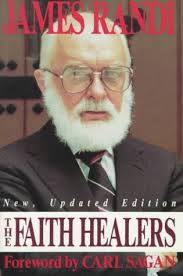
Because that is of course the third, and most important reason. Trial after trial has shown that there’s nothing to it beyond the placebo effect, something that a group of friends and I satirically demonstrated by joining the 10:23 protests a couple of years ago, where we each downed a bottle of a homeopathic ‘remedy’ (I think mine was arsenic). Here’s James Randi doing the same, taking a bottle of ‘sleeping pills’ as he often does to make this point (the clip also includes him making other arguments worth hearing).

[ted id=835]

And no, there’s no good evidence to suggest it has to be more than placebo, “because it works on animals” – we’ve got no reason to believe it works on animals any better than it does on humans (in fact, the perceived effect on animals seems to simply be an effect on humans, in terms of how they perceive the treatment and health of their pets).

But evidence isn’t what defenders of homeopathy are interested in. For them, anecdotal evidence is ‘argument’ enough, even though they would never stop to think about how they would reject similarly weak claims if they came in a version they don’t like. Kitten blood! It works for me! Crystals! Prayers to the Pink Unicorn! (Or, prayers to a ‘real’ god, just not one of the ones you happen to believe in.)

Racists defend their views with anecdotal evidence, as do sexists – reality is ignored in favour of confirmation bias. And we don’t think that doing so is a good, or a reasonable thing to do. Because the evidence is meant to matter, and the evidence isn’t “up to me”, and the experiences I might have had or not had. Part of the point of science is to provide us with resources that offer objective guidance, because we go into decisions knowing that – by and large – we’re too prone to various cognitive errors to be trusted.

The point is that a double-standard applies in people who are willing to defend their consumption and prescription of homeopathic ‘remedies’, in that they are willing to accept a very low standard of evidence on the grounds that the risks are low – “any responsible homeopath”, I’m told, “will advise their patients to take antibiotics where necessary, or to seek conventional treatment”.

But some homeopaths are less responsible than others. The coroners report was pretty clear in highlighting how Penelope Dingle would have suffered far less harm if not for her homeopath’s advice, and more generally, as Ben Goldacre makes clear in the Lancet, homeopaths simply get in the way of effective treatment:

Homoeopaths can undermine public-health campaigns; leave their patients exposed to fatal diseases; and, in the extreme, miss or disregard fatal diagnoses. There have also been cases of patients who died after medically trained homoeopaths advised them to stop medical treatments for serious medical conditions.

More prosaically, you’re simply wasting money if you spend it on homeopathy. This is one of the most annoying #middleclassproblems for me – alongside things like anti-vaccination sentiments, or obsessions with angels, or The Secret – in that it’s only the middle and upper classes who have the luxury of glamorising their anecdotal evidence in such a fashion. If homeopathy worked so well – given that it’s possible to produce it so cheaply – why would Bill Gates (etc.) not simply distribute it to those dying of malaria instead?

Of course “Western” or allopathic, or “chemical” (pick your favourite pejorative term) can’t cure everything. Nothing can. But homeopathy doesn’t outperform a straight placebo, meaning that any good effect you observe after taking a homeopathic remedy can’t have anything to do with that remedy. And much of ‘regular’ (by which I mean, real) medicine does. Furthermore, the stuff that doesn’t work – and the doctors that are quacks – tend to get driven out of the market over time.

Except for homeopaths, partly because of this almost religious devotion to “alternative” medicine (and the associated conspiracies around mainstream medicine), and partly because what homeopaths say, and prescribe, involves completely unfalsifiable claims. And that’s a bad thing – not only in general, but particularly when lives are at stake.

Check out What’s the Harm for a partial catalogue of homeopathy’s victims.

Should Muslims handle pork and wine?

halal signOn hearing that Muslim staff at the UK supermarket chain Marks & Spencer could now refuse to sell pork and wine, the decision seemed to be an instance of making too great a concession to religious sensibilities. I’ve shied away from gratuitously offending those with religious beliefs for some time now, but being opposed to Blasphemy Day, for example, doesn’t mean that you need to commit to respecting every demand made in the name of some or other god.

There are various reasons to think that Muslims should not be able to opt-out of handling wrapped and sealed pork, or alcohol in bottles. On a broad political or legislative level, allowing them to do so would result in a private choice incurring a very public cost. In a secular society like the UK, USA or South Africa, my decision to adhere to a particular belief system that comes with costs doesn’t commit anyone else to bearing those costs – and here, all (pork- and alchohol-buying) shoppers would encounter the inefficiency of not having all cashiers available to them.

We’d also need to determine which sorts of beliefs allowed for these sorts of concessions, as there’s in theory no end to the number of religious demands that could be made of employers. This point was made in amusing fashion by MoDawah (@kingofdawah) – ‘expert on everything’ and ‘media Muslim’ on Twitter, who said things like:

  • Just heard that Hindu employees of Aldi don’t have to sell any goods that they fear may be a reincarnated ancestor of theirs #diversity
  • Tesco just announced Atheists don’t have to sell anything that they don’t believe exists #diversity
  • Waitrose announces that Nihilist members of staff don’t have to sell anything that negates one or more putatively meaningful aspects of life

As to whether this concession is even demanded by the Muslim faith (as opposed to certain Muslims just feeling uncomfortable selling these goods), I was alerted to an analysis of the issue by an apparently authoritative Shaykh, who makes it quite clear that Muslims can sell pork and alcohol (though, not in their own supermarkets):

It would be permitted to work on the check out of a supermarket that sells things Muslims consider impermissible (such as pork, alcohol, wine, or food items with haram ingredients). One’s earnings will be lawful (halal).

One could also point out that it would hardly come as a surprise to an employee at Marks & Spencer that these products are on sale there, and that you’d therefore encounter someone wishing to buy them on a regular basis. Reasonable accommodation can be made, certainly – I can understand an employee talking to a supervisor, saying “I would like to be excused from X”, but X can’t be some core competency of the job, like a cashier being asked to sell things to customers.

The long and short of it might be something like: “why did you take the job, if you knew you couldn’t perform it for religious reasons?

Even though the concession in question doesn’t seem required by Islam, and even though it also introduced inefficiencies, my initial reaction to reject it was nevertheless tempered on reflection, when I considered whether it was possible to accommodate this sensitivity (because it’s not a legal requirement of Islam) without introducing those inefficiencies, and of course without putting us on a slippery slope which commits us to respecting all sensitivities (which would be impossible).

For example, monitoring the demand for halal checkout lines (where pork, alcohol, etc. would not be sold) could allow us to designate the required number of lines as such, then clearly signpost them as such so that someone wanting to buy pork or alcohol doesn’t get turned away when they reach the front of the line.

But this idea wouldn’t be simple to implement at all, and would introduce inefficiencies of its own. Employing people to work on the halal checkout lines leaves you with the problem of what to do with them when demand drops, or when you calculate it wrong. While you might have assumed that you need to bring in three “halal cashiers” on a particular day, you might find you only need one. Don’t send two of them home, though – first because you might not be allowed to, given their conditions of employment and relevant laws, and second because there might be a sudden rush of Muslim customers. The HR complications, in other words, might be significant.

Lastly, there’s a general issue raised here that is rather tricky, in that there are a number of historical concessions to religion that were made before religion and secularism became so politicized and public, and in a time where we were far more willing to politely live and let live, rather than taking to Twitter to shout about nobody respecting what we feel entitled to (there is of course the other side of that coin, where we’ve learnt more about what our rights are, and are now expressing legitimate grievances more often too).

Conscientious objection is one, but dis-analogous because it seems self evident that it’s asking a lot more to put a gun in someone’s hand and ask them to kill, versus putting a scanner in someone’s hand, and asking them to ring up some pork chops. Likewise, it seems a clearer violation of someone’s sensibilities to ask them to perform abortions if they have a religious objection to doing so.

But here in South Africa, marriage officers can lodge an objection to performing gay marriages, and become legally exempt from having to officiate under those circumstances. Even though I’d never want a homophobe to officiate my wedding – regardless of whether or not I was gay – should he or she get to have the option of refusing? I think not. Those of you in other parts of the world will no doubt know of similar concessions already made, and that you might ideally want to revise.

Not all preferences can be accommodated. Regardless of whether it’s a religious issue (as in this case) or not (imagine an environmentalist cashier, and how he or she could develop a principled objection to selling some item, or a vegan, or a Pollan-ite), the answer can’t simply be to accede to any demand, because as I’ve argued before, that means those who complain the loudest winning a disproportionate number of battles.

And the answer which seems in principle correct – namely operating as a secular organization, and only making these concessions on an ad hoc basis – is certain to offend some religious sensibilities, some of the time. What this seems to mean is that it’s the religious sensibilities that need to change, rather than the rest of us needing to feel their impact on our secular lives.

[Edit: today, Marks & Spencer are saying that allowing Muslims to refuse to sell these things was never their policy.]

IHEU Freedom of Thought Report 2013

iheu-logo-2013On International Human Rights Day in 2012, the International Humanist and Ethical Union (IHEU) published their inaugural “Freedom of Thought Report”, which highlighted parts of the world in which being an atheist was at least sometimes inconvenient (thanks to legislation that privileged religion, for example), and often dangerous.  For the 2013 version of the report, coverage has been expanded to include every country on the planet, making this an invaluable resource for those who are seeking data on religious freedom, and in particular the freedom to not be religious.

There are some frightening places to be “found out” as an atheist. The report highlights that

  •  Atheists can face death sentences for apostasy in twelve states
  • In 39 countries the law mandates a prison sentence for blasphemy, including six western countries
  • The non-religious are discriminated against, or outright persecuted, in most countries of the world

For a snapshot view of where things are particularly bad, the IHEU has created an interactive map that offers a quick-read indicator of the situation in each country, but if you want to read how the indicators are justified, you’d need to download and read the full report. For South Africa, the IHEU reports that while we do have significant built-in safeguards for religious freedom, there is nevertheless “systemic discrimination” against the non-religious. As regular readers would know, I’ve often highlighted a lack of respect for the National Policy on Religion in Education (meant to keep public schools secular), as well as other more bizarre instances of religion being afforded too much respect, such as with the South African Police Service’s “Occult” investigative unit,

While there might be room to dispute the interpretations given in particular instances, what is of concern is the extent to which this sort of discrimination can be observed, and also the fact that it can be found in some parts of the world you might not expect. Four western countries earn a rating of “Severe”, thanks to legislation that allows for jailing people for blaspheming or disrespecting religion. To quote from the IHEU’s press release,

Those countries are Iceland (a sentence of jail for up to 3 months), Denmark (up to 4 months), New Zealand (up to a year), Poland (up to two years), Germany (up to three years) and Greece (up to three years). Jail time could be handed to someone who simply “blasphemes God” in the case of Greece, or “insults the content of other’s religious faith” in the case of Germany.

As the editor of the report, Bob Churchill, comments:

It may seem strange to see some of these countries up there with Uzbekistan or Ethiopia (also rated “Severe”) but as Kacem and Alber say in the preface, these laws set a trend.  Failure to abolish them in one place means they’re more likely to stay on the books in another place, where they can be disastrous. And even in the western countries with blasphemy-type laws there is evidence that they chill free expression, and in some countries, like Greece and Germany, people are actually prosecuted and convicted and do jail time under these laws.

I’ve remarked on many occasions that the freedom to blaspheme or to cause offence to those with strongly held religious sentiments is not a good reason for doing so. To have this freedom is important, yes, but we also say something about ourselves when we abuse freedoms such as these to cause gratuitous harm. Not all such harms are gratuitous – there is certainly room for causing religious offence, to remind the most sanctimonious adherents that nobody else is under an obligation to treat their god with any respect.

Yet, if we want to be treated with respect ourselves, these freedoms should be used responsibly. If a point can be made without blasphemy, for example, we should perhaps consider whether including the blasphemy adds enough value to make it worth the risk that you’ll not only be dismissed by your intended audience, but that you’ll also be contributing to bad public relations for atheists in general, but especially in your part of the world.

Blasphemy is only one issue, of course. Arguably of greater importance is the sort of discrimination that goes unnoticed, because it doesn’t attract the same kind of ire, and thus the same attention in the media. It’s evidence of systemic discrimination when your school, or your child’s school, has “a Christian character”, when your university textbook is overly religious, or when your public representatives in government seem more interested in pleasing gods than in doing right by the voters.

The IHEU highlights these and other issues worldwide, and offer us a great resource in this catalogue of discrimination against the non-religious, and something by which to measure progress, year-on-year. For comment from the IHEU, please see the contact details below. South African media are welcome to contact me for a local angle, if you plan on writing something about this.

FOR IHEU COMMENT:

Bob Churchill

Communications Officer
International Humanist and Ethical Union (IHEU)

Office: +44 207 490 8468 | Mobile: +44 7743 97 1937
Skype: bob.churchill | Twitter: @bobchurchill

Thinking Things Through (report-back)

For the interest of those of you who couldn’t attend the FSI conference last weekend, here’s a brief report-back on how the day unfolded. If you were able to attend, feel free to share your thoughts on how it went in comments.

FSI_confThe Free Society Institute (FSI) hopes to avoid the pitfalls of restrictive labels such as “atheist”, “freethinker”, “skeptic” and the like. Not only can those labels be politically problematic, in that they might cause otherwise sympathetic people to ignore what you might say, even before hearing it, but they are also ideologically loaded – people already have a sense of what they mean, and we don’t necessarily mean the same things by them.

Instead, the value proposition of the FSI is captured in the phrase “Thinking Things Through”, where the commitment to doing so will be expressed in thinking not only about religion (as with many atheist and agnostic organisations), but also about science, and social justice, and any other aspect of our lives that might benefit from discarding lazy stereotypes and instead, taking the time to think things (including our own beliefs) through.

This theme is what we intended to emphasise at the FSI’s third national conference (the previous two were held in 2009 and 2010, in Cape Town), held with the support of the International Ethical and Humanist Union (IHEU). This conference also served in part as a re-launch of the FSI, with the value proposition described above.

Our members are of course free to describe themselves as atheists, agnostics or some related term, but the FSI hopes to be an umbrella body for a broad coalition of people who care mostly for minimising the damage we can do to ourselves and society at large through believing things on the basis of poor evidence, whatever the content of those beliefs happens to be.

In short, the FSI is a South African non-profit organisation dedicated to promoting free speech, free thought and scientific reasoning. We are advocates for the values of secular humanism. The FSI hopes to help create a community, both virtual and physical, that collaborates in developing and distributing the knowledge and skills required to foster a free society.

A free society involves not only freedom from false beliefs, but also an environment in which it is easier to recognise and discard false beliefs, thanks to education, the free flow of information, the promotion of scientific literacy, and where possible, eliminating barriers to human flourishing (from the mundane examples such as misleading advertising, to the severe, such as oppressive laws).

2013 Conference: Thinking Things Through
The conference hoped to highlight the value that can be found in careful consideration of issues, and to highlight the costs associated with ignorance, for example in basic reasoning skills. In pursuit of this goal, we made sure to include presentations that spoke more broadly about these and related issues, rather than focusing on hackneyed debates regarding religion and its proper place in society. In fact, the only talk that dealt explicitly with religion was perhaps far more sympathetic to religion than many attendees would have preferred.

The speakers, in order of appearance

Conrad Koch (and occasionally, Chester Missing) was our MC for the day. Koch is a comedian and an anthropologist, while Missing is the star of the Emmy-nominated show, Late Night News, and the world’s most revolutionary puppet. The combination of these speakers and talents provided not only for raucous laughter, but also inspired some serious self-reflection among those present.

It was Koch (or Missing, I can’t recall) who asked some of the more pertinent questions of the day, including why so many of us in the audience were white, male, or both – and why secular humanism seemed to have such a demographically unrepresentative face in a country such as South Africa. International readers will know that this is a problem for all such organisations in just about every part of the world, but unless we’re made to think about it, our chances of remedying it are non-existent.

You can find Missing on Twitter at https://twitter.com/chestermissing

Cecilia Haak was the opening speaker, and offered a presentation titled “The Square Kilometre Array Telescope: Looking back in time”. Haak is eminently qualified to speak on this topic, given that she is currently an infrastructure engineer on the SKA project, working with the team that is building MeerKAT, precursor to the SKA, and the SKA radio telescope — which will be the world’s biggest. Haak was one of the contributors to the submission that secured South Africa the bulk of the hosting rights for the SKA.

Haak explained the significance and scope of the SKA project to a fascinated audience, describing what it is we hope the project will reveal to us in time. The implications for scientific research in South Africa were discussed in a very engaged question and answer session, where it became clear that the audience – even though arguably more informed on these matters than most – might have agreed with the sentiment that we could do with more (and, better) scientific journalism in South Africa. Later in the day, we would hear a presentation from Sarah Wild on exactly this issue.

You can find Haak on Twitter at https://twitter.com/ceciliahaak

David Spurrett, Professor of Philosophy at the University of KwaZulu-Natal, then presented a talk titled “Showing your working: Science, and the collaborative nature of good reasoning”. Spurrett is an active researcher in cognitive science (especially addiction and decision making), philosophy of cognitive science, and philosophy of science.

Spurrett described the method and value of scientific reasoning, emphasising that “it’s like common sense, but better”. In a highly engaging presentation, he used notable figures from the philosophy of science to make it clear how good scientific reasoning was within the average person’s ambit, and to illustrate various principles and strategies for improving our reasoning.

You can find Spurrett on Twitter at https://twitter.com/DoctorSpurt

Eusebius McKaiser, author, TV show host, and currently the host of Power Talk on PowerFM 98.7 was our next speaker. McKaiser is a widely published social commentator and political analyst, who previously studied law and philosophy at both Rhodes and Oxford. McKaiser’s talk was titled “The power of sloppy thinking: turns out Dawkins isn’t an atheist!”

The talk focused on the distinction between the labels “atheist” and “agnostic”, using Dawkins and “The God Delusion” as a springboard into that topic, rather than explicitly focusing on Dawkins himself. McKaiser’s ambition was to inspire the assembled atheists, in particular, to reflect on whether they were guilty of a similar sort of thoughtlessness as they sometimes accuse theists of, in claiming certainty in respect of things they could not be certain of.

You can find McKaiser on Twitter at https://twitter.com/eusebius

Sarah Wild, Science Editor at the Mail & Guardian, spoke next on “Spreading bad science”. The Mail & Guardian appointed Wild as Science Editor in 2013, making her one of only two dedicated science editors in the country (and lamentably, one of only 6 dedicated science journalists). Wild is the 2013 overall winner for the Pan-African Siemens Profile Awards for excellence in science journalism, and also the author of a book titled “Searching African Skies: The Square Kilometre Array and South Africa’s Quest to Hear the Songs of the Stars.”

Given her position at the Mail & Guardian, Wild was perfectly situated to inform this very receptive audience of the difficulties inherent in balancing what the public seem interested in (rather than “the public interest”) with comprehensive and informative communication about scientific research. As she pointed out, any political development always stands a good chance of bumping a science story out of that week’s newspaper, even though the political story might have far more fleeting significance.

You can find Wild on Twitter at https://twitter.com/sarahemilywild

Gareth Cliff, morning host on 5FM, judge on IdolsSA, City Press columnist, and the author of “Gareth Cliff on Everything” spoke to us next on “Sacred or profane: religion and the politics of offence”. Cliff is one of a small group of South Africans who reliably gets people talking, whether or not they agree with what he’s saying, and his presentation at Thinking Things Through was no exception.

Cliff’s presentation was very personal and honest, discussing his relationship with his radio listeners, the regulatory authorities, and generally, the sensitivities of audiences and how much they should be respected. Cliff did make it clear while the truth should never be the handmaiden of political correctness, there was nevertheless a strategic and emotional dimension to communication that could not be ignored.

You can find Cliff on Twitter at https://twitter.com/garethcliff

Jacques Rousseau, founder and chairperson of the Free Society Institute, gave the last presentation of the day, titled “Towards a Free Society: What do we do next?”. Rousseau lectures critical thinking and ethics at the University of Cape Town, South Africa. In 2009, he founded the FSI to promote secular humanism and scientific reasoning in South Africa.

Rousseau’s presentation sought to make the audience think about the large overlap in motivations and desires between religious and non-religious folk, and to ask them to consider whether we spend enough time thinking about similarities, rather than differences. Rousseau argued that the caricatured view many atheists seem to hold regarding religious folk was getting in the way of our recognising that it’s not usually religion that’s the problem, but rather poverty, in both an economic and an educational sense.

You can find Rousseau on Twitter at https://twitter.com/JacquesR

The day’s proceedings concluded with a panel discussion involving all the speakers except for Sarah Wild, who unfortunately had to leave before then. Barry Bateman, Pretoria correspondent for Eyewitness News, hosted the panel discussion, and the conversations he elicited from the speakers offered a very suitable end to an intellectually stimulating day.

You can find Bateman on Twitter at https://twitter.com/barrybateman

All the presentations were recorded, and will be uploaded to YouTube once editing has been completed and permissions obtained from the speakers. To be informed as to when the videos are released, keep an eye on the FSI homepage and/or the Twitter feed of the FSI Chairperson, @JacquesR .

Many thanks all the speakers, and to Anneleigh Jacobsen, Greg Andrews, @Dr_Rousseau and @Jonathan_Witt for some invaluable help behind the scenes. Thanks also to the @IHEU, for their financial support. If you attended, thanks for your support too!

Moral hysteria as substitute for thought

Moral hysteria, and a culture of soundbites and headlines, can get in the way of seeing the merits of an alternative point of view, and perhaps changing our minds on an issue. The whole point of intellectual discourse, reading and writing is to discover where we might be wrong, and to change our minds (including sometimes turning to agnosticism) on particular issues where we seem to be wrong.

Instead, we mostly look for evidence that reinforces our existing view, and alarmingly, sometimes allow criticism or contrary evidence to serve to reinforce our existing belief (this mechanism is known as the “backfire effect”).

The case is that of Melissa Bachman, who has recently been the subject of large helpings of social media vitriol, including petitions directed at the South African government asking for her to be barred from entering the country in perpetuity. Bachman, in case you didn’t know, is a so-called “trophy killer” who recently shot and killed the lion pictured below.

BYtsMTsxIARCodg-556x313-noPad

Now, whatever you might think of hunting – or even eating meat – there’s absolutely no reason to think that she had done anything illegal, and therefore, anything that merited a request to bar her from the country in perpetuity. But that’s not what the petition is based on. Instead, it asserts that she should be barred from the country for being

an absolute contradiction to the culture of conservation, this country prides itself on. Her latest Facebook post features her with a lion she has just executed and murdered in our country.

The problem, of course, is that the “culture of conservation” operates within a legal framework, and that legal framework currently permits hunting, so long as the necessary licences have been obtained. If you’ve crossed your legal t’s, you can “execute and murder” (in case the execution fails, it’s good to have a backup plan) as many of the creatures you’ve been given permission to execute and murder.

The fact that you are photographed with the non-human animal that you’ve killed should not be regarded as morally salient. Critics have used emotive language such as “bloodthirsty” to describe Bachman’s hunting, even though there’s nothing that’s objectively more bloodthirsty about her photographing the lion that she has killed than there is my photographing of a particularly juicy and tender steak. I could post a steak picture every day for a month, and not be the subject of such a petition – even if I were to not give a damn about how humanely the cows (or whatever) were hunted, a concern that Bachman and other hunters might have, but be unable to reflect in a photograph.

Ivo Vegter, a former colleague at that fine online newspaper, the Daily Maverick, puts it well in the conclusion of his column “In defence of a lion killer“:

South Africa officially considers Bachman a welcome and valued visitor, and rightly so. Even if you disagree, and you arrogantly think you have the moral authority to judge her arrogance, the real story is this. Your smug superiority risks depriving South Africa of tourism revenue and employment. It risks depriving the country of much-needed funding for conservation. It risks reducing the value of our wildlife, which reduces the incentive for private farm owners to breed and protect game. Hypocritical anger is a greater threat to conservation than Bachman’s rifle will ever be.

I’d urge you to read his column, and some of the many comments to it. But in short, whether or not you are opposed to hunting, issues such as these are rarely simple. The vast majority of issues are, in fact, quite complicated. If you care about your country’s economy, you might need to (pragmatically) allow for hunting under certain conditions, for a certain time. If you care about the fate of a particular species, you might need to (pragmatically) allow for hunting under certain conditions, for a certain time. And so on.

The danger, of course, is that a pragmatic concession towards some ultimate goal can sometimes be difficult to rewind, leaving us stuck with the pragmatic concession long after it’s needed. But insofar as that concern is legitimate – and it often is – it’s not the one we typically hear. Instead, we typically hear screaming and stamping of feet, and that inspires little but turning your back and walking away.

UCT Admissions policy – race and redress

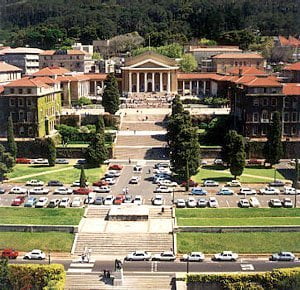
uctThe various Faculty Boards at the University of Cape Town are currently considering alternative models for UCT student admissions. These models arise from a debate the University has been having for some time now, regarding whether “race” is still the most effective identifier of likely disadvantage available to us. Some participants in this debate argue that race has become an increasingly crude proxy for disadvantage, resulting in a large number of false positives (which in turn has the effect of shrinking the number of places available for people who are actually disadvantaged, whatever their race might be).

That line of argument is also frequently accompanied by the observation that the racial categories we use in South Africa (and elsewhere, but South Africa has a particular history in this regard) are innately odious, and should be eliminated from legislation, policy and discourse wherever we can.

Some critics of that position argue that to eliminate recognition of race as a special category for attention simply perpetuates racism, and that any policy shift in this regard would be regressive. Others argue for the more moderate position that while race should be eliminated from policy in principle, it is too soon to do so – and that even though race is mostly a proxy for disadvantage, it remains the best one we have available to us in the present moment.

The contribution to the debate offered below merits wide distribution, and is shared here with the permission of the author, Professor Anton Fagan of the Law Faculty. For what it’s worth, I agree with his position, and find the paragraph below to be a strikingly crisp articulation of the obvious wrongness of including race as a criterion for disadvantage in perpetuity:

to make an applicant’s preferential admission conditional upon her having identified herself as ‘black’, ‘coloured’, ‘Indian’ or ‘Chinese’ is to make the receipt of something that is deserved, unconditionally, conditional upon a Faustian bargain. To get what she deserves, as a matter of justice, an applicant is compelled to validate one of the foundational principles of the racist apartheid order – the principle that everyone falls, naturally and in a way that can be read off one’s biologically-determined features in a mirror, or can be determined by inspecting one’s nails or one’s genitals, into one of the following groups: black, coloured, Indian, Chinese, and white.

___________________________________

UCT’S NEW ADMISSION POLICY

ANTON FAGAN

UCT’s new admission policy has much to recommend it. In so far as it seeks to undo inequality, by looking at home and educational circumstances, it represents a major step forward. However, the criteria by which the ‘Faculty Discretion’ is to be exercised, especially ‘racial diversity’, are troubling.

In 1987, I was an LLB student here at UCT. In an evidence class, the lecturer discussed a 1957 Appellate Division decision called R v Vilbro. It concerned the admissibility of a witness’s opinion as to whether the accused were ‘white’ or ‘coloured’ for the purposes of the Group Areas Act. The Court held that such an opinion was admissible. For, it said:

‘There may be people who have had a reason to apply their minds specially to the question of distinguishing the races. Such a witness was, in the present case, the Chief Inspector of Indian and Coloured Education . . . .’

‘[T]here may be people who, in respect of the persons whose race is in issue, may have had more opportunities of observing them than the magistrate. The latter only sees them in court, dressed up for the occasion, a woman probably with make-up . . . Other people may have seen them more frequently and in different circumstances, and have had more opportunities and more time of forming a definite impression about them.’

Upon hearing these passages, a student in the class, Zehir Omar, shouted out angrily: ‘Who was the judge?’ I sat forward expectantly, like everyone else, keen to hear who this racist was. The lecturer answered: ‘Fagan CJ.’

The effect of this view of admissibility was that the accused’s conviction under the Act was upheld. But that was not the main reason for Mr Omar’s outrage and my shame. Indeed, I am not sure that the lecturer even mentioned this outcome. Our outrage and shame were grounded, primarily, on something that Mr Omar, and I, and many others in the class took for granted: racial classification, in itself, is morally repugnant. We knew that the division of persons into ‘coloureds’, ‘whites’ and ‘natives’ had no biological basis. We knew that this division was not merely a social, but a political and ideological, construct. We knew that it took its life from, and was inextricably linked to, the practice of racism under apartheid.

You may know the book Racecraft, written by Karen Fields and Barbara Fields, and published last year. The Fields are sisters. One is Professor of History at Columbia University. The other is a sociologist, based at the Center for African and African American Research at Duke University. They have written a great deal on slavery, witch craft, and racism. The following extracts from their book show some of its key ideas:

‘Anyone who continues to believe in race as a physical attribute of individuals, despite the now commonplace disclaimers of biologists and geneticists, might as well also believe that Santa Claus, the Easter Bunny and the tooth fairy are real, and that the earth stands still while the sun moves.’

‘Race is not an element of human biology . . . nor is it even an idea that can be plausibly imagined to live an eternal life of its own. Race is not an idea but an ideology. It came into existence at a discernible historical moment for rationally understandable historical reasons . . . Thus we ought to begin by restoring to race . . . its proper history.’

‘[R]ace is neither biology nor an idea absorbed into biology . . . It is ideology, and ideologies do not have lives of their own. . . . If race lives on today, it [is] because we continue to create it today.’

‘[T]he first principle of racism is belief in race, even if the believer does not deduce from that belief that the member of the race should be enslaved or disfranchised or shot on sight by trigger-happy police officers . . .’

‘[W]hat “race” is’ ‘is a neutral-sounding word with racism hidden inside’.

The current UCT application form requires applicants to identify their ‘population group’, the choice being between ‘black’, ‘coloured’, ‘Indian’, ‘Chinese’ or ‘white’. An applicant may refuse to choose any of these, in which case he or she will be assigned to the open category. It is fair to assume that UCT’s new admission policy will be implemented with an application form that requires more or less the same.

The effect of this will be a continued naturalisation of race. The division of persons into ‘black’, ‘coloured’, ‘Indian’, ‘Chinese’ or ‘white’ is presented as part of the natural ordering of the world, rather than as what it really is, namely an historically-contingent, politically-constructed and ideologically-driven ordering. The historical, political and ideological connection between these categories and the racism of the apartheid state is simply swept from view. Rather than that categorisation being presented as being deeply-embedded in a particular history, politics and ideology, it is presented as a free-floating categorisation with a logic and reality all of its own.

Worse than that, the categorisation into ‘black’, ‘coloured’, ‘Indian’, ‘Chinese’ or ‘white’ is supposed to be insensitive to distinctions of social standing or class. Being the son of a billionaire entrepreneur, or the daughter of an unemployed domestic worker, will neither qualify nor disqualify an applicant for any of the categories. It follows that the primary basis for categorisation must be biological difference. The effect, therefore, is not merely to continue the naturalisation of race. It is to entrench a form of bio-racism.

The Fields sisters gave their book the title Racecraft, because they see the idea that a person has a particular race as analogous to the idea that a person is a witch. Just as there are not really witches, and never have been, so there are not really races, and never have been. Neither ‘witch’ nor ‘race’ has, as they put it, ‘material existence’. Both the idea that a person is of some race and the idea that a person is a witch are merely ‘illusions’ or ‘fictions’ created and sustained by social practices. Now imagine that a university has decided to provide redress for those who were victimised on the ground that they were witches. It would be odd for the university to pursue that redress by asking every applicant to the university this question: ‘Are you a witch or are you not?’, and then to make the provision of the redress conditional upon the person answering: ‘Yes, I am a witch.’

There undoubtedly are many applicants to UCT who, because of inequality, deserve preferential admission. However, to make an applicant’s preferential admission conditional upon her having identified herself as ‘black’, ‘coloured’, ‘Indian’ or ‘Chinese’ is to make the receipt of something that is deserved, unconditionally, conditional upon a Faustian bargain. To get what she deserves, as a matter of justice, an applicant is compelled to validate one of the foundational principles of the racist apartheid order – the principle that everyone falls, naturally and in a way that can be read off one’s biologically-determined features in a mirror, or can be determined by inspecting one’s nails or one’s genitals, into one of the following groups: black, coloured, Indian, Chinese, and white.

Getting what one unconditionally deserves is made conditional upon one’s willingness to treat as real, as essential, as natural, and as morally-neutral, an ordering of the world created by the apartheid state in order to pursue its racist objectives. If you do not admit to being a witch, you will get no justice. If you do not admit to being what D F Malan and H F Verwoerd decided you are, namely a coloured, a black, a member of the other, you will not get the justice you are entitled to. Writing about the American context, the Fields sisters make a similar point:

‘Like a criminal suspect required to confess guilt before receiving probation, or a drunk required to intone “I am an alcoholic” as a prerequisite to obtaining help, persons of African descent must accept race, the badge that racism assigns to them, to earn remission of the attendant penalties. Not justice or equality but racial justice or racial equality must be their portion.’

The continued requirement of racial identification in UCT’s application form reveals a failure of imagination on our part. Damaged as we are by the experience of apartheid, we find it hard to envisage a future in which South Africans do not see each other through the spectacles which Dr Malan and Dr Verwoerd welded onto our noses. And because we find it so hard to envisage this future, we do not recognise that one of the first steps we must take to secure it is to remove the distorting lenses of our racist apartheid past. We must refuse, collectively, to continue seeing the world, and each other, in the way which the racist apartheid project required.

It is possible to do so. We have a policy in my family that none of us refers to race. As a result, my six year old, Lihle, does not see race – at any rate, not yet. Of course he sees skin colour, and hair colour, and so on. But he does not see race. A few months back, my daughter’s boyfriend was having supper with us. Lihle turned to him and said: ‘Rahul, you and I are both brown.’ But that was not a case of Lihle seeing race, and certainly not race as constructed by the racist apartheid state. For then he would have said: ‘Rahul, you are Indian but I am black.’ – which he did not say.

Were I an idealist, I would now propose that all reference to race or population groups, as well as any requirement of racial classification, be removed from UCT’s application forms. Like the Fields sisters, I would argue that what matters is not racial inequality and racial injustice, but inequality and injustice full stop. And I would argue, as they do, that a continued focus on race, on the one hand, is not necessary to achieve equality and justice and, on the other, is likely to blind us to, and therefore also to leave uncorrected, many of the inequalities and injustices that plague our society.

But I am enough of a realist to curb my ambition a little. I therefore propose, as a compromise, the following:

No applicant should be asked to state whether he or she actually is ‘black’, ‘coloured’, ‘Indian’, ‘Chinese’ or ‘white’, or is a member of a population group so described. Instead, applicants should be asked to which of these groups the racist apartheid state most probably would have assigned them.

This way of posing the question makes visible the historical contingency of this racial classification and its connection with the racist programme of the apartheid state. It therefore helps to guard against the naturalisation of these racial categories, and against the entrenchment of the belief that they are an inevitable biological or cultural fact. It also avoids the Faustian compact spoken of earlier: an applicant entitled to redress would not be required, as the price for getting it, to treat as true one of the racist apartheid state’s great falsehoods, namely the claim that there are black persons, and coloured persons, and Indian persons, and Chinese persons, and white persons, and that each of these are a kind of person essentially different from every other.

More lessons in bad science (and reasoning) from Noakes

In case you missed it, there’s a 1400 word comment from Prof. Tim Noakes on my previous blog post. Seeing as the bulk of his comment is entirely unrelated to the subject of that blog post, I thought it offered a handy opportunity to provide an additional example of reasoning gone wrong, this time both in basic logic, and again in science. (Also, I’d need another 800 or so words to match his word-count.) So, below you’ll find block-quotes of his full comment, and an explanation of the errors committed. If you want to see his quote in context, please visit the original piece, Lessons in bad science – Tim Noakes and the SAMJ.

Apologies, but this will be somewhat lengthy. I’ll try to keep each unit of quote and response comprehensible on its own, though. Those of you who get bored, please do scroll down and read the bit headed (in bold) “A very important bit” before you leave.

And a reminder – my post the other day wasn’t about the diet itself. This post isn’t about the diet either. It would be fantastic if Noakes/Taubes and the rest were correct in this instance, in that they would have re-discovered or popularised a highly cost-effective way to treat an a highly significant public health problem. Or, various problems, including obesity and diabetes. That would be something to be celebrated, and I’ll be one of those celebrating.

However, if we can arrive at that outcome while supporting (and reinforcing) the scientific method and basic logic, surely that’s an even better outcome?

Noakes begins by re-stating a powerful anecdote:

What is really so funny is that this is a report of how 127 people felt their lives had been dramatically improved by following a particular diet. Included were 14 who claimed they had been “cured” of Type 2 diabetes – confirmed in 3 cases I investigated further. To my knowledge the SAMJ has never before carried a report in which patients with an “incurable” condition (type 2 diabetes) were cured of that condition. One doctor who had told his wife he would be dead in 7 years because he had 5 “incurable” conditions, was completely healed of all conditions (no more medications required) when he restricted his carbohydrate intake.

Everything else he had ever tried (according to his conventional medical training) including treatment by the best medical specialists in Cape Town had done little for his health. Naturally this medical practitioner who had never in 57 years been exposed to this information (why not?), concluded that the dietary advice I gave him had produced a “miracle”. He now includes this method in his treatment options for his patients with obesity/diabetes/metabolic syndrome. He now informs me at least monthly of how much success he is having with this dietary treatment for these patients.

After the words “felt”, “claimed” and then the quotation marks around “cured” in the first two sentences, the thing you’ll note about this anecdote is that it uses language that is entirely inappropriate to the level of evidence available. Imagine yourself to be someone who has Type 2 diabetes, or who is overweight, and who then reads the two paragraphs above. If your level of scientific literacy was that of the average person, you’d come away thinking that there’s something akin to certainty that this diet is effective.

If you’re a marketer, this tactic is completely understandable, and appropriate. But science should be a domain of reason and evidence, not of hyperbole, and not of presenting contested evidence as if it obviously demonstrates something that it is not known to demonstrate. Second, as I’ve said in my original piece, if the evidence exists, you wouldn’t need the anecdotes. Unless, of course, Noakes has so little confidence in the acumen of his peers that he thinks that they would be equally persuaded by either.

Paragraph two contains the quite typical injection of conspiracy theory, with its suggestion that something must be afoot for this medical practitioner to not have heard this dietary advice before. And yes, it’s possible that something was and is afoot – that there is a systematic bias against this approach to diet. If so, that’s a problem that should be remedied. But it has no bearing on whether the advice is in fact good or bad advice. It can have a bearing on how much evidence we have, in that research might have been stymied or inappropriately directed. (Noakes, however, keeps insisting that the evidence is clear, so it seems that this problem is surmountable.)

I wrote the article to alert my colleagues to the fact that there is a simple dietary option that might be able to reverse the very conditions that our profession finds so difficult to treat – obesity, type 2 diabetes, metabolic syndrome. I also referred to the extensive scientific literature showing why and how this dietary intervention does and should work for people with these conditions. The explanations are simple, obvious and proven.

But then perhaps you need a training in the medical sciences to understand those mechanisms, Without some understanding of biochemistry, it is not possible to follow that argument. What one cannot understand, one naturally dismisses as irrelevant.

As I’ve asked before, if the “extensive scientific literature” makes the case, why do we need the anecdotes? As above, the use of the word “proven” massively overstates the case, and again indicates a failure to understand why he comes across as pseudoscientific in these regards. If it were “proven”, there would be far less disagreement in the medical profession than there seems to be about this sort of diet’s efficacy.

In general, though, to quote from a comment I made on the previous post, “the issue is that if non-anecdotal evidence for the same conclusion exists (as he asserts), that evidence would be sufficient by itself. So, either it doesn’t exist, and he needs to rely on the anecdotal evidence (which teaches a bad lesson regarding scientific reasoning), or it does exist, but he thinks that the anecdotal evidence adds weight to the conclusion (which it doesn’t, as he should know)”.

The last paragraph contains another fairly typical tactic for Noakes, namely an attempt to discredit an opponent through focusing on something irrelevant or personal, as we saw in the “fat-shaming” comment in the previous post. Because there are two possibilities here: first, that he’s right that we need medical training to understand this. If so, I’m mystified as to why Noakes does all this public speaking to laypeople, and also that he writes on these matters in (almost exclusively) lay publications and books as much as he does, seeing as he knows none of those audience-members can understand what he’s saying.

Alternatively, he’s subtly suggesting I’m too thick to “get it”. But again, seeing as my post was not about the diet, but about what evidence and arguments look like, I’d have to protest and tell him that I “get that” very well, and that of all the medical practitioners who have commented or Tweeted about the post in question, everyone except Noakes thinks I’m on to something. Not, I again remind you, about whether the diet is good or bad, seeing as I don’t express a view on that, but simply that this sort of “research” or “study” sets a very low standard in terms of what we should aspire to as scientists.

At no point in the article is the claim ever made that this is an attempt at a scientific proof of a particular diet. That is why the title includes the words – Occasional Survey. It is simply a group of case reports showing that some patients achieve remarkable cures for their intractable medical conditions simply by following advice, the key point of which is that it normalises hunger. For the truth is that these patients are not dying of obesity etc, so much as they are dying of hunger. Once their hunger is controlled by simple dietary advice, they can start to cure the conditions caused by the overconsumption of addictive, highly processed, carbohydrate-rich foods (made worse by their insulin-resistant state).

I have been in science long enough to understand how people try to divert attention from the message. I wrote about this extensively in Challenging Beliefs. First they always question the methods. The methods I used in this study are entirely appropriate for the extremely limited goals of this paper. That simple goal was to show that some people benefit dramatically and in some cases miraculously from this simple advice. Whether or not they would have benefitted equally from other advice is utterly irrelevant since I am not trying to prove (in this article) that one treatment is better than another. Of course I would guess that 100% of the 127 had all tried the conventional advice and it had failed for them. But I only made that claim if I it was supported by the information I had.

A group of “case reports”? I don’t know about you, but that seems an awfully strong description for a series of self-reported and completely uncontrolled and in most cases unverified narratives. But it’s nevertheless a legitimate description, with a track record in medical literature.

However, because a large group of case reports, as in this case, can create an impression of generalisability or significance where there might be none, we find Johns Hopkins, for example, requiring IRB (institutional review board) clearance for any case studies (or a case series, in this instance) involving more than three participants. No clearance is mentioned in this case.

Again, I remind you that I’m simply saying that the study offers little of scientific merit, and that the SAMJ erred in accepting it for publication – not that the anecdotes are false. (It’s that we can’t know whether they are false or not that is part of the problem.)

As for “I have been in science long enough to know” – I refer you to the point about deflection and conspiracy mentioned earlier. The fact that methods are questioned isn’t evidence that the scientist is a martyr for the truth, as Noakes seems to want to imagine himself here. As Occam’s Razor suggests, it might also be because the methods are questionable.

It’s entirely relevant to question whether the participants would have benefited equally from other advice, precisely because 127 cases offers an impression of significance or generalisability. The goal was “to show that some people benefit dramatically and in some cases miraculously from this simple advice” (my emphasis) – and how do you show that through 127 unverified self-reported anecdotes? If the science already shows this, then it can stand alone, with the anecdotes as illustrations if one so desires. Noakes says (in the paper) that this “data” is “of value” and “challenges current conventional wisdom” – and yes, it would, if we had reason to believe it was replicable. It might well be replicable, but the anecdotes are not evidence for that conclusion.

A key point about South African medical ethics is that if there is more than one treatment options it is ethically unacceptable for a South African practitioner to prescribe only one. My ethical responsibility as an educator and scientist is to bring the attention of my colleagues to the established fact that there is more than one option for the treatment of obesity, diabetes and metabolic syndrome and that the scientific evidence for this is well established in the literature (as recently accepted by the highest Swedish medical authorities).

Having been involved in high-level research ethics myself, of course I’d agree in the main. Except, Noakes is leaving something crucial out of the summary: it’s not only when there is simply “more than one treatment option”. Instead, it’s when there is “more than one effective/proven/viable/etc. treatment option”. This might well become known to be one of those options, perhaps even the best one. But it isn’t known to be that as yet, which is a reality Noakes again evades in the above quotation.

A very important bit

Above, Noakes says “as recently accepted by the highest Swedish medical authorities”. This, in a nutshell, demonstrates his rather casual relationship with reality when it comes to promoting the conclusion he wishes to. You’ll note, as a starting point, that the language is unambiguous – a trusting reader will be left utterly convinced that the Swedes have accepted LCHF as obviously the recommended diet. So, let’s look at the evidence. The quote from his paper reads as follows:

The Swedish National Board of Health and Welfare has concluded that ‘low carb diets can today be seen as compatible with scientific evidence and best practice for weight reduction for patients with overweight or diabetes type 2, as a number of studies have shown effect in the short term and no evidence of harm has emerged … ’

It’s a direct quote, so you’d expect a reference (and quotation marks, which might look a little alien to some potential readers). We have both in this case, and the reference given is to the Swedish Board in question…. oops. No, sorry, my mistake – the reference is to a blog post titled Low-carb for You. The Swedes are eating more butter! In another interesting development, the full quote reads (my emphasis):

Professor Christian Berne, one of Sweden’s leading diabetes experts, had carefully investigated the case against Dr. Dahlqvist and presented his findings to the Swedish National Board of Health and Welfare. He said, “…a low-carbohydrate diet can today be said to be in accordance with science and well-tried experience for reducing [obesity] and type 2 diabetes…a number of trials has shown no effects in the shorter run and that no evidence for it being harmful has emerged in systematic literature researches performed so far. [There is] no scientific support yet for treatments in excess of 1 year. A thorough evaluation of long time treatment results is therefore an important demand on the practitioner.”

So what we learn here is:

  • In the source Noakes refers to in order to support a very strong claim, we find Berne reporting findings to the Board
  • But that quote is presented by Noakes as a resolution of the Board, rather than an opinion expressed to the Board
  • An important bit of the quote is left out, because it’s inconvenient (namely, that there is no scientific support for treatments “in excess of one year“)
  • Notice that this question – around long-term efficacy – was a central theme of my previous blog post that inspired this Noakes essay in response – and his own source makes the same point
  • Lastly, we learn that quotation marks don’t mean the same thing for Noakes as they might to you, in that a sentence like “a low-carbohydrate diet can today be said to be in accordance with science and well-tried experience for reducing [obesity] and type 2 diabetes” morphs, in Noakes’ version, into “low carb diets can today be seen as compatible with scientific evidence and best practice for weight reduction for patients with overweight or diabetes type 2” (I’m not asserting here that he changed the meaning – it’s just odd to quote-and-not-quote at the same time).

The SBU (Swedish Council on Health Technology Assessment) have however published guidelines on diet and obesity – but unfortunately, they’re not yet available in English, so Noakes couldn’t easily have quoted from them in an English-language journal. But let’s see what Google translate can do for us, seeing as we’re able to take such liberties on a blog post.

“SBU has previously addressed food for people with diabetes [link to English pdf]. The results for people with obesity and diabetes, pointing at large in the same direction.”

That direction, according to the English diabetes report, includes bits like this (my emphasis):

  • Scientific evidence is not available to evaluate the long-term safety of moderate and extreme low-carbohydrate diets. This includes cardiovascular morbidity and other complications of diabetes.
  • There is strong scientific evidence that lifestyle intervention, combining a low-fat diet with high fiber intake and increased physical activity, prevents diabetes in people that would otherwise be at high risk for the disease

Back to the Google translate version of the obesity report, which also says (my emphasis):

  • In the short term (six months) is advice on strict or moderate carbohydrate diet more effective for weight loss than low-fat diets advice. In the long run there are no differences in efficacy between weight loss tips on strict and moderate carbohydrate diet, low-fat diets, högproteinkost, Mediterranean diet, diet focuses on low-glycemic load diet or a high proportion of monounsaturated fats.
  • After that obese people have lost weight they can maintain their weight better with advice on low-fat diets with low glycemic index and / or high protein content than with low-fat diets with high glycemic index and / or low protein content. There is no basis for assessing whether even advice, eg, low-carbohydrate diet and the Mediterranean diet is effective in preventing weight gain after weight loss

Once again, it might one day be common knowlege that Noakes et. al. are right. But that day doesn’t seem to have arrived yet, and in the meanwhile, it certainly looks as if support is being appropriated where it doesn’t quite (as yet) exist. This, again, is bad science, if not simply dishonest.

Back to the Noakes comment

The reasons why this information is not taught more widely across the world is not material to this article and whether or not there is a conspiracy is not relevant. The point is that students in South Africa (as in most other countries) are currently taught only one side of a two-sided story. As far as patient care is concerned, that is unethical.

Sentence one, and then two and three seem somewhat contradictory. If students are being misled into providing unethical patient care, surely that must be relevant? But in any case, my point was that if something was obvious, and as evidence-based as Noakes keeps asserting, it would be taught all over the world. He constantly refers to conspiratorial reasons why that isn’t the case, rather than considering the possibility that others don’t think the evidence is as clear as he thinks it is.

Three years ago I decided that it my ethical responsibility to acknowledge publicly that my advice on high carbohydrate diets for runners, widely read in Lore or Running, was wrong for those with insulin resistance/type 2 diabetes/metabolic syndrome since it would contribute to their ill-health in the long term as it has to mine. This article is one outcome of that admission.

I could have kept quiet and hidden my error but I chose not to. Now that this article has been published in the SAMJ (and I have spoken about it at the most recent SAMA conference), South African medical practitioners, perhaps for the first time, have been exposed to the evidence that there is an alternative option that they might like to consider in future for the treatment of these conditions.

The result is that if the 127 patients reported here are any indication, many patients in South Africa with these conditions will be offered another treatment option that before they would not have been offered. I suspect that many will do much better on that therapy than if they continue to follow advice that does not work (for them).

Nothing to add here, except to repeat that the point is precisely that we have no reason to believe that the 127 patients reported here in fact are any indication.

So this focus of this discussion should not be about whether or not I am a good scientist who understands what is and what is not good science.

Erm, no. I choose what the focus of the discussion is on my own website, thanks.

Fortunately in science, there are simple markers of our standing as scientists that are based on hard measureables and not on the opinions of others. These are the h-Index and the number of citations. Anyone who wishes to determine my status as a scientist is welcome to find those numbers and what they mean. Those are measures of scientific influence over a life-time, not as the result of one single good or bad article.

Yes, they are indeed “simple” markers. “Crude” might be another appropriate word, as Prof. Noakes knows full well. They offer a valuable heuristic in making snap judgments, but they aren’t any sort of guarantee of sense or quality in perpetuity. I don’t dispute, and have no reason to dispute, that Noakes has done tremendous work in the past. But that tells us nothing about the present topic, except to make it statistically more probable that he’s worth paying attention to here than many others might be, because of that track record. This doesn’t mean that – once you look at a particular case – you need to grant extra authority to that person if they present weak arguments.

To do so would be to commit the informal fallacy of making (or rather, falling for) an appeal to authority. It’s particularly disappointing when the authority him or herself makes the appeal on their own behalves.

It is sad that this article which should be a celebration of how simple dietary advice may be able to reverse intractable medical conditions in some people (it would have been valuable even if it had reported just a single “cure”) has been used by some to argue what a dreadful scientist I am, who is trying to push some sort of devious agenda that has no scientific basis.

It’s arguably more sad when eminent scientists start practicing bad science, and then doubly so when they defend it as weakly as this. “This article”, meaning my blog post, is about that topic, not about the diet. Readers, or subjects of a post, don’t get to say what a post “should be” about. Furthermore, nobody is being described as being “devious”, or having an “agenda”. Someone is being described as making poor arguments for a conclusion.

My agenda is clear. I want my profession to teach more than one option for the management of obesity/diabetes/metabolic syndrome and to understand that our current dietary advice is in my opinion the cause of so much of our ill-health.

My agenda is also clear. I teach critical thinking, and the Noakes paper, and his responses to criticisms of it (and, general criticisms on social media) provide great classroom examples of how reputations are no guarantee of good sense.

I have spent 3 years researching this topic and am happy that the scientific evidence supporting this position is as powerful as any evidence I have touted in the past (see Challenging Beliefs). However the topic is much more important that anything I have ever tackled since it is the single most important medical problem in the world and is currently out of control and getting worse by the day.

Agreed entirely, which is why I want the science supporting it to be beyond reproach, especially on such obvious grounds.

What this paper shows it that there may be simple answers for what seem to be intractable conditions. That is why the final sentence of the article calls for a properly funded and designed study to test the hypothesis (not proof) advanced by the finding of this Occasional Survey.

As argued above, the occasional survey doesn’t present a case for doing so, because of the quality of the data. Furthermore, we are told by Noakes that non-anecdotal evidence exists – and if this is the case, the anecdotes are superfluous. This was the topic of my last post, so I won’t repeat the argument here.

I would be only too happy if that trial disproves me. But if it shows that a carbohydrate-restricted diet can reverse intractable obesity and some cases of Type 2 diabetes, then we will have shown that the causes of the obesity and diabetes epidemics are much simpler than we believe and that we might be able to do something to protect our future generations from these diseases. Of course, it there is a conspiracy, then it will do all it can to insure that we do not ever make that finding.

Agreed entirely. And of course a scientist should be happy to be corrected (even if it’s sometimes difficult to swallow).

Perhaps we can move the debate forward by focusing on what this paper actually found and how that might be of value in trying to understand what is causing the obesity and diabetes epidemics globally. Then we will be making a positive contribution to the future health of the world.

No, there are different debates. Noakes, and his peers, can move that debate forward. My focus is critical thinking, logical fallacies, the standard of education and so forth. That’s the debate I’m going to “move forward”, and these sorts of examples are great resources for doing so. In fact, they allow for us to make a positive contribution to the current – and future – health of the world too, by helping to inculcate and reinforce clear and cogent reasoning, without which medical science is doomed.

Thanks for the opportunity to express myself more fully and I look forward to your contribution to that agenda should you think it sufficiently important.

It’s vital. But also, that agenda is not my field. This one is.