Elitism and the university

As submitted to The Daily Maverick

In Business Day last week, Jacob Dlamini argued that “universities should not be doing the work of high schools. Universities should not be in the business of remedial education”. TO Molefe has responded to Dlamini’s column, making the case that academic excellence is not the only imperative at universities, and that they do have a role to play in reshaping society through ‘remedial’ education.

Cilla Webster takes issue

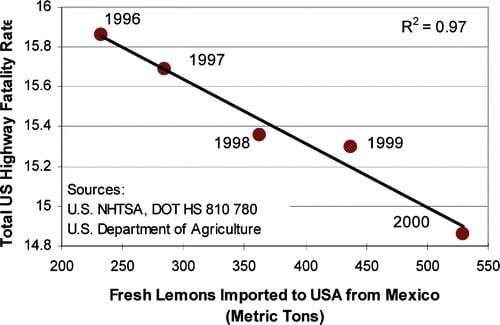
In the Sunday Times letters page today (not available online, sorry), Cilla Webster takes issue with Ben Trovato’s open letter to Errol Naidoo regarding E-Tv’s screening the Naked News. That’s fine – she can have her view, as can Naidoo, regardless of how stupid those views might be. But Webster’s letter does allow for a quick and easy demonstration of the ‘false cause’, or ‘correlation, not cause’ fallacy. Webster writes:

A few years ago a 12-year-old boy in a township nearby me was sitting in his grandfather’s chair, watching the e.tv late porn movie. There was a hit out on the grandfather and the child was killed instead because he was watching porn. It was a tragedy for the parents.

I’m sure it was a tragedy for the parents, and the boy was no doubt somewhat alarmed when the gunmen (or whatever) came in for the hit. But the story – or at least this account of it – is a tragedy for reason also, in that it picks an arbitrary detail of the story as being the ’cause’ of the boys death. He was killed because:

  • He was at home.
  • He was sitting in his grandfather’s chair.
  • The killers were mistaken as to where the grandfather was.
  • The chair was in a particular position, which perhaps didn’t allow the killers to spot that the grandfather looked mysteriously small, and young, before pulling the trigger.
  • The child was watching TV.
  • etc.

To say that porn caused the boy’s death is laughable, and trivialises a sad story. His death was correlated with watching porn, but there is no causal connection. For there to be one, it would have to be the case that it is impossible for the child to not have been in that chair, at that time, under any other circumstance. Watching the news, for example. Or even, watching some gospel programming.

These are the sorts of reasons why we can’t take people like Naidoo seriously – not because their conclusions are obviously nonsense (porn could be bad for gender relations, or contribute to some harms), but because their arguments, and their evidence, show few signs of having ever given the matter a moment’s thought.

Carry on (mocking) Camping

Originally published in The Daily Maverick

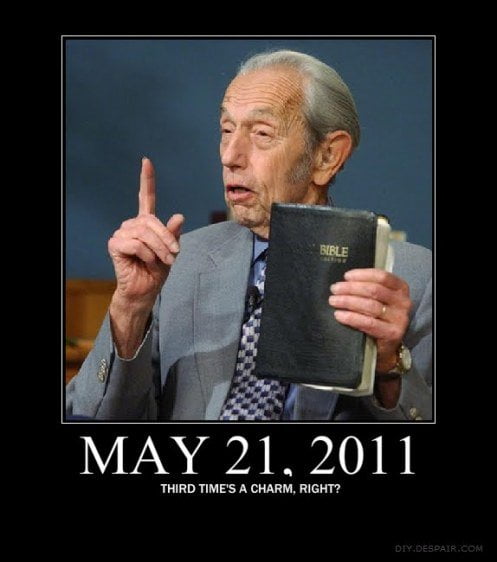
The day after the world didn’t end, Kevin Bloom suggested “the time for cheap shots has passed”. It’s certainly true that some cheap shots would be in poor taste, such as in cases where children suffered as a result of the delusions of their parents. But where people hold laughably confused – and potentially dangerous – views, surely we can and should make those views appear as unattractive as we can, in any way we can? If so, surely the more pressing issue is whether ridicule is effective, rather than whether it’s rude or not?

On respect, and whether Errol Naidoo is a fool

I’ve previously argued that people deserve respect, rather than the ideas that they might hold. Intuitively, this seems relatively uncontroversial, in that there seems no reason to respect the point of view that the Earth is 600 years old, or that the folk wisdom of superstitious folk from centuries ago should guide our lives in the 21st-Century. But note that to say people rather than ideas deserve respect doesn’t necessarily mean that all people deserve respect. It’s entirely possible that the totality of what you know about a person indicates that their confusions or malice run so deep that it’s difficult to find anything good to say about them.

This still wouldn’t preclude certain forms of respect for that person. You would still want to hear what they had to say, and attempt to judge it objectively – not only do people change, but they could also surprise you by revealing things you didn’t know, or hadn’t thought important. As much as efficiency demands that we apply a discount to the expected value of what certain people say, to blindly assume that they are always wrong, and not worth paying attention to, is an arrogance that might lead us into complacency and error.

However, this does not stop certain people from (generally) making little sense. How do we describe these people? In the case of Errol Naidoo, I described him as a ‘fool’ when Tweeting a link to a Sunday Times interview with him regarding his call to boycott e-TV for their screenings of Naked News. Regular readers of Synapses would be aware of Naidoo’s homophobia, his knee-jerk moral hysteria founded on (very) selective evidence, his contribution to the threats directed at students involved in the 2009 Sax Appeal controversy, and so forth. Read the Sunday Times interview for yourself: does he appear to be someone who is weighing evidence objectively, and looking for the root causes of social ills? Or does he appear to be a myopic moral reactionary, guided by missionary zeal to always allow his values to determine what the rest of the country is allowed to watch, and do?

I’m happy to call him a fool, because that’s a useful summary of a person who generally holds foolish views. Yes, according to me – and of course I might be wrong. And a commitment to treating people with respect would mean that I should be open to contrary evidence, whereby he might indicate that he is someone worth listening to on some subjects. I have not seen any such evidence to date, and this is why I’m comfortable calling him a fool.

Other self-identified skeptics disagree, though, apparently of the view that everyone merits respect, even those “whose actions and beliefs disgust me”. What would “respect” mean in a statement like that, beyond what I’ve conceded (being open to contrary evidence)? Not calling them names like “fool”? Tolerance has its bounds, and some of those bounds are perfectly legitimate. Consider Mengistu – should we simply critique his arguments, or are we allowed to call him a callous thug, or a madman? There are plenty of examples of characters like him, where some sort of summary term – which could well be abusive – fits their characters and motivations perfectly. Does “respect” entail never using these terms?

Of course, one can misuse terms of abuse. That is a separate argument, which would require my being corrected regarding the evidence that I think merits describing Naidoo as a fool. The possibility of mis-applying such terms does not mean it’s impermissible to ever use them, though. The appeal for such restraint is motivated by tolerance and openness to correction, and these are often good things. But they are also often the sorts of motivations underlying claims to refrain from judgement. But we need to make judgements, so as to be able to say that racism, sexism, genocide, female genital mutilation and so forth are wrong.

The real question is whether our judgements are sound or not. Determining whether they are requires us to subject them to scrutiny – not to avoid making them. A version of “tolerance” or “respect” that forbids us from saying that illiberal and homophobic men – camouflaged by the piety of religion – are fools is one that puts us on a slippery slope to not being able to make any judgements at all – and this is a version of respect that we should have no part of.

Racist Cape Town (redux)

Note: Those who have already read my earlier post on this subject might want to skip this column, as there is a significant overlap in content (around 90%). The text below represents an attempt to make my key concerns more evident, and is the version submitted to The Daily Maverick for my column this week.

A few weeks ago, my (occasional) fellow Opinionista Victor Dlamini Tweeted a link to an IOL report describing an instance of apparent racial profiling at the V&A Waterfront in Cape Town. The conversation which resulted should surprise no one at all, in that it consisted of the usual mix of protestation from Capetonians eager to refute the notion of Cape Town being a racist city, alongside various endorsements and examples of such racism.

Now that the local government elections campaigns are behind us, it is perhaps possible to discuss this issue more productively. Whether Cape Town fits the stereotype or not, it’s useful for the ANC to perpetuate the stereotype of Capetonian racism, as they enthusiastically did in the matter of Makhaza, as well as on several other occasions, however slight the opportunity to do so actually was. Well, they at least thought it useful – the election results could well indicate a greater agnosticism on this issue. But the politicisation of the issue tends to polarise opinion, rather than clarify the issue.

So, one could start by pointing out that to say that Cape Town is a racist city does not mean that everyone in Cape Town is racist. It certainly does not mean, as ANC spokesperson Jackson Mthembu alleges, that the governing party of Cape Town and the Western Cape is racist. I don’t believe that they are, and I also don’t agree with interpretations of events like the Makhaza toilet case which are used to support this claim.

Furthermore, it’s also perfectly understandable that the DA would protest claims that Cape Town is inherently racist – pointing to the diversity in the party, service-delivery successes, and Cape Town’s relatively low (compared to the other metro’s) Gini coefficient. Lastly, it could be expected that many white liberal sorts (such as myself) would feel offence as a result of such claims. But as I’ve frequently argued, offence is no guide to the truth, and also shouldn’t be used to drown out noises you don’t like hearing.

While it is of course true that there are racists everywhere, this doesn’t preclude the possibility of Cape Town containing a higher proportion of them, or for some Capetonians to be in denial as to how enlightened they actually are. If so, then it would make sense to say that Cape Town is ‘a racist city’, by comparison to other relevant South African cities.

And of course there are cities that are more racist than Cape Town – Orania would be a possible example. But despite all these disclaimers and qualifications, when compared with our other capitals or other major cities in South Africa, we certainly hear more stories about racist encounters or instances of perceived racism emanating from Cape Town.

Perceptions are not always true. Stereotypes can be perpetuated, sometimes through evidence, and sometimes through prejudice. It’s possible, for example, that the trope of a racist Cape Town is a simple consequence of jealousy, in that Northerners (and the ANC) want to find fault in what seems – on the surface at least, and also to many of those who live here – to be the best place in South Africa to call home.

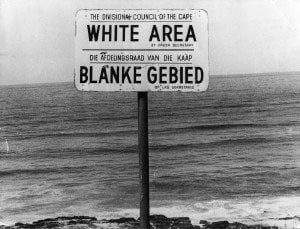
I can understand the anger of those who claim the stereotype of a racist Cape Town to be founded on prejudice, but I’m afraid I’m reluctant to agree with them. We shouldn’t forget that Cape Town’s urban planning was intentionally premised on the maintenance of social order, which in those days meant segregation of the races. Numerous books and papers detail the history of the City as divided on racial lines, such as this paper from Charlotte Spinks at the London School of Economics (pdf). In addition to academic texts, we have semi-regular accounts of discrimination at certain bars and clubs, and first-hand experiences of racism like those described in Xhanti Payi’s column, published last year in The Daily Maverick.

Anecdotal accounts of racism in Cape Town abound, but anecdotes are of course not data. The problem, though, is that we hear far fewer such anecdotes from other cities. And more than anecdotes, existing research such as the Surtee and Hall report (pdf) also appear to corroborate claims regarding racism in Cape Town.

And while some critics (including the DA) reject the findings of that report, one could argue that Helen Zille’s response doesn’t properly address the possibility of racism directed at black South Africans, in that it’s largely focused on the facts of integration and equity in the coloured population (I use this term as per Employment Equity legislation, rather than because I think they are sensible).

Two entirely separate issues could be co-existing here, and should not be conflated: First, it’s entirely possible – even probable – that the ANC uses the ‘racist Cape Town’ card as a political weapon against the DA, and in doing so might exaggerate the extent to which racism is prevalent in Cape Town. But second, it is also possible that black visitors to (and residents of) Cape Town experience racist treatment exceeding the levels found in other parts of the country. We shouldn’t pretend that this possibility doesn’t exist, simply because we don’t like it.

Cape Town does have a higher proportion of whites and coloureds than the other metros. And if racists are everywhere, we could well have more of them here than, for example, in Johannesburg. The facts of this matter could easily be established via a proper survey of attitudes and behaviours across the country, if we cared to do so. Until we do, anecdotes and perceptions are all we have – and the perceptions are real, and no doubt hurtful, to those who have them.

In other words, if it is the case that Cape Town is perceived as being racist, this perception is a problem in itself, regardless of the truth of the allegations themselves. And my opinion – right or wrong – is that this perception is grounded in reality. But whether it’s mere perception or not, we’re not going to fix whatever problems do exist – whether racism or the perception thereof – by being offended, or by insulting those who make such claims.

Defensive reactions such as these forestall debate. And whether prejudice exists equally everywhere or not, we know it at least exists everywhere. Perhaps, then, the real lesson lies in what Sipho Hlongwane Tweeted at the time, “CPT and JHB are often equally prejudiced. Only one city is honest & confronts this”.

Let’s start by making that two cities, and then not stop there.

Train your Muslamic rayguns on the alien overlords

As submitted to The Daily Maverick

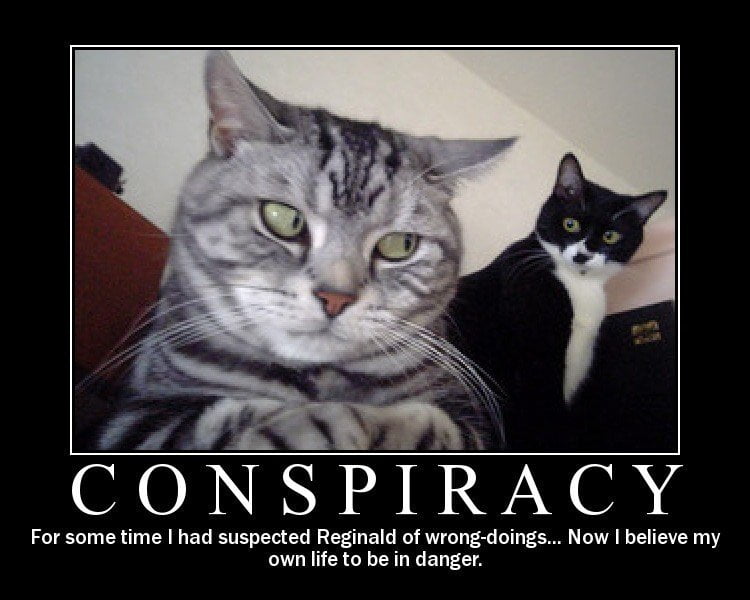
There is no doubt that conspiracies exist. Richard Nixon, for example, seems certain to have attempted to cover up his involvement in the Watergate burglary. But the fact that genuine conspiracies exist is no warrant to believe that they are widespread or to suspend reason in favour of making the implausible appear to be plausible.

As Sipho Hlogwane pointed out last week, the death of Osama bin Laden has resulted in all sorts of theorising regarding potential conspiracies. The common threads linking these conspiracies are firstly doubts as to when and how (and if) Osama bin Laden was actually killed, and second, the fact that most of those claiming conspiracy have as much information about the events as your average newspaper reader does. In other words, very little.

Because conspiracies have existed, and will no doubt do so in the future, we should be wary considering all claims to conspiracy as obviously insane, deluded, or simply the result of a poor analysis of the known facts. We’d be committing the fallacy of guilt by association if we were to treat all proponents of such theories as if they were in the same camp as David Icke, who famously believes that a group of reptilian humanoids (including Dubya and Kris Kristofferson) called the Babylonian Brotherhood rule the world.

Instead, we should treat conspiracy theories just like we treat any other theory, by considering whether they are plausible. Christopher Hitchens is said to have described conspiracy theories as ‘the exhaust fumes of democracy’, which neatly summarises the first problem we encounter in attempting to ascertain their plausibility. Thanks largely to the Internet, vast amounts of information currently circulates between equally vast numbers of people, all of whom feel entitled to an opinion on anything.

While these feelings of entitlement have no bearing on the quality of the opinions held, they do tend to exacerbate a problem presented by the widespread availability of information, whereby if you look hard enough, you can find ‘evidence’ to support whatever claim it is you’re trying to make. Fringe views can appear just as robust as mainstream ones, thanks to the democratisation of knowledge and the attention economy.

But the first problem with conspiracy theories, and what separates them from many more sober accounts of events, is that they are almost always unfalsifiable. Evidence that contradicts the conspiracy can be explained away through assertions that it’s been fabricated or planted, while evidence for the conspiracy can be treated as reliable, leaving sceptics powerless to debunk the theory in question.

A related problem is confirmation bias, which leads proponents to weigh this evidence in a subjective manner, favouring that which supports their hypotheses. In other words, the alleged facts of the matter make it impossible to refute conspiracy theories, while at the same time the psychological dispositions of conspiracy theorists lead them to give undue credence to one side of the story. To put it simply, a conspiracy theorist often sifts clumsily through the data while importing pre-existing prejudices into their analysis.

Confirmation bias is not the only heuristic at play. Consider also the fundamental attribution error, which is frequently observed in our attempts to explain the behavior of others. We tend to give excessive weight to explanations involving dispositions or motivations, while discounting the explanatory role of situational factors. As Micheal Meadon succinctly observed in a comment to the Hlongwane column linked above, ‘Cock-up before conspiracy’.

More broadly, the point is that there are often quite pragmatic – and prosaic – reasons or explanations for what might appear to be a conspiracy. In the Osama bin Laden case, these could include the ‘fog of war’, and they almost certainly include over-enthusiastic attempts to trumpet a perceived success, before making sure that the various spokespersons are in possession of the same facts.

And the facts are vital when assessing whether a conspiracy is likely or not. Those who subscribe to conspiracy theories seldom stop to think about just how difficult it would be to persuade people of a lie. Again, because we all have access to so much information, your chances of being caught out are very high – and that’s even before considering those who are motivated to uncover your darkest secrets, like Julian Assange.

The number of people who would need to be involved in a large-scale conspiracy should also make us sceptical. There is the possibility of an errant word by a conspirator, and where your conspirators would have to include soldiers, or contractors planting explosives in the World Trade Centre, the risks of exposure seem rather high.

It is also in the interests of each conspirator to defect if there is any chance of a conspiracy being uncovered. Not only because she might fear legal punishment, but also because she can become a tabloid millionaire, and an instant hero. Game theory would also imply that the more conspirators there are, the larger each individual conspirator’s incentive is to defect, because somebody is likely to defect, and the rewards for doing so would decrease the further down the line you were.

In the bin Laden case, it is difficult to think of any combination of circumstances that would make a conspiracy a worthwhile gamble for Obama’s administration to take. If bin Laden were alive, we would have heard from him the day after he was ‘killed’, and the chances of Obama being a one-term President would skyrocket. And if Obama did want to fake the assassination of bin Laden, surely he would choose to do so closer to an election, instead of squandering the earned currency at a time of no extraordinary political significance to him?

Occam’s Razor reminds us to make the fewest new or superfluous assumptions when trying to explain events. In this case, explanations involving conspiracy require not only assuming a grand conspiracy, but also an assumption that Obama and his team are unable to compute a quite simple cost/benefit equation. Under the circumstances, there seems very little reason to suppose events didn’t transpire in roughly the way we are told it did.

No matter how unlikely, it remains possible that we are being lied to. But David Hume’s words on miracles might well apply to conspiracy theories also, where he pointed out that

the passion of surprise and wonder, arising from miracles, being an agreeable emotion, gives a sensible tendency towards the belief of those events, from which it is derived. And this goes so far, that even those who cannot enjoy this pleasure immediately, nor can believe those miraculous events, of which they are informed, yet love to partake of the satisfaction at second-hand or by rebound, and place a pride and delight in exciting the admiration of others

So yes, conspiracy theories are cool. And yes, perhaps we’re all gullible fools, and some of you have access to information we don’t, or are simply smarter. But probably not. And as David Mitchell pointed out in his column for The Observer over the weekend, ‘if the lizards can get their shit together to that extent, they probably deserve to be in charge of everything’.

P.S. If you have no idea what the ‘Muslamic rayguns’ of the title refers to, this post by 6000 will enlighten you.

The Erasmus judgement on Makhaza

As submitted to The Daily Maverick

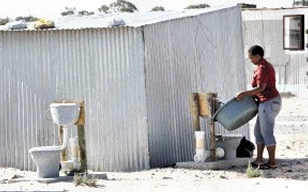
The Erasmus judgement in the Makhaza toilet case, handed down on Friday last week, makes for depressing reading, as would the details of the lives and conditions of most poor South Africans. The judgement itself contains a hint of this, where (in section 136), an affidavit related to the City of Cape Town’s counter application is excerpted, in which Thembisa Princess Sokabo tells us that:

The toilets we have in Nkanini (i.e. the one to five households toilets) are generally in an appalling state, notwithstanding the City’s attempt to maintain same, to the extent that members of the community generally do not use them. They are always blocked and filthy, and are not appropriate for human use. Due to the fact that they are communally owned, people do not take responsibility and personal pride in them. Not only are the toilets filthy and unsafe, but they are a health hazard to people in general and to children in particular as they have burst pipes which are overflowing with faeces.

Despite the fact that many South Africans are forced to live in sub-optimal, unhygienic, and sometimes even degrading conditions, Makhaza has become one of the focal points of debate around service delivery in the Cape. By extension, Erasmus’s Makhaza judgement has rapidly become a stick that Tony Ehrenreich is using to argue that the ANC would do a better job than the DA of defending the interests of the poor.

This could well be true, although we should remember that the ANC has already had a chance to champion the interests of the poor in the Cape. But while the ANC’s return of 45% of the vote in 2004, along with the 11% of votes garnered by their partners (the New National Party) in that election, brought them to power in the Province, their support dwindled to 32% in the 2009 election. If we are to take the notion of democracy seriously, this indicates that voters wanted to give someone else a chance to govern, and exercised their right to vote correspondingly.

That was of course a different time, and the fact that the ANC lost control of the Cape can’t demonstrate that an ANC government in 2011, and Ehrenreich as Mayor of Cape Town, won’t do better than previous incumbents. The chaotic nature of ANC politics in the Western Cape, along with floor-crossing and the death (and now, zombified re-animation) of the NNP – not to mention the short history of democracy in South Africa – make trends difficult to pin down.

None of these complications should however obscure the fact that there is a difference between fact and fiction – and in particular the kind of fiction that emerges in the run-up to elections, when selective factual details are plucked out of context and presented as damning evidence for a fiction. In this case, the fiction in question is that the DA government in the Western Cape is somehow at war with the poor, based on the ‘fact’ that they constructed unenclosed toilets in Makhaza.

Except, they didn’t – or at least didn’t intend to. What they did try to do was to collaborate with the residents of Silvertown to ensure that they all had enclosed toilets, by spending their budget on providing the toilets and plumbing connections, while trusting the assurances of the community that they would build their own enclosures where necessary. This plan failed, and cynics could argue that it was always likely to fail, or that the demands of dignity for the residents required that this detail not be left in the residents’ hands in the first instance.

Of course, we can never know whether the residents would have built their own enclosures, because the City of Cape Town eventually resolved to provide these for the 3% of residents who had not built them for themselves. And then, as we should also remember, they were prevented from doing so by the repeated destruction of the enclosures by the ANC Youth League.

You could argue that the DA has been somewhat naïve in their approach to this issue, as they undoubtedly were in the case involving the delisting of the Sowetan journalist, Anna Majavu. There is evidence of such naïveté, in that this was a relatively predictable PR disaster.

In the context of the South African sensitivity to class divisions and poverty, an approach which involved a relative absence of paternalism (here, in which services are provided in partnership with the community) was clearly risky. Any failure, at any link in the chain leading to enclosed toilets for all, would always have been spun as a failure on the part of the DA, with the roles of other agents ignored or elided. Worse yet, any protestations of good will on the part of the DA can immediately be spun as further evidence of callous neglect.

Sadly, the safest strategy may well be to do the bare minimum – and also to do it in a way which minimises the chances of failure, by swooping in and delivering from on high rather than by attempting to involve communities in their own upliftment. If this is the lesson that Ehrenreich or the ANC want the DA to learn, they might well have succeeded.

But in doing so, they could well have simultaneously built a rod for their own backs, because the inflamed rhetoric surrounding the Makhaza judgement makes it appear no less than a capital crime to leave toilets unenclosed, regardless of the circumstances leading to that eventuality. According to Jackson Mthembu, the unenclosed toilets show a “total disrespect for black dignity”, and demonstrate that the DA “is a racist political party”. In fact, the “Makhaza judgment remains a chilling reminder showing on whose side Zille and his [sic] bunch of racist lackeys are on”.

In light of this strong reaction, as well as the claim from Cooperative Governance and Traditional Affairs Minister Sicelo Shiceka that unenclosed toilets would never be tolerated under ANC governance, what are we to make of the unenclosed toilets in the informal settlement of Rammulotsi, in the ANC-run Moqhaka municipality – some of which have been unenclosed since 2001? Or those in Kwadabeka, outside Pinetown in the eThekwini municipality, where the ANC garnered 67.52% of the vote in 2009?

Perhaps the real lesson here is the reminder that in politics – and especially, in the weeks running up to an election – facts sometimes simply stop mattering. But perhaps it doesn’t need to be this way, and perhaps increasing numbers of citizens are starting to realise that the truth doesn’t always correspond to the claims made in political speeches, especially when those speeches concern the actions of competing political parties.

Let’s hope so, because as with all decisions, those made while voting should be informed by the facts, rather than by faith. And Makhaza is one settlement, in one Province, in one (mostly poor) country. We should ideally cast our votes for who we think will do the best for that country in the long-term, and not simply based on caricature, and misrepresentation of those facts.

Racist Cape Town?

Tempers are flaring on Twitter, as people gradually wake up (it’s a Public Holiday) to the news that Osama bin Laden is dead, and then quickly find the seeds of various conspiracy theories being planted. Was Osama buried at sea? How long has he been dead for? Etc. But alongside this latest development in what must surely be one of the most news-filled years in quite some time, Victor Dlamini tweeted a link to this story of racial profiling at the V&A Waterfront in Cape Town, and immediately attracted plenty of protestation from Capetonians, eager to refute his claim that the latest incident is indicative of generalised racism in Cape Town.
Kill the Boer: Afriforum vs. Malema

As submitted to The Daily Maverick.

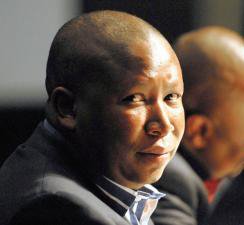
It’s easy to demonise those who disagree with us when discussing emotive topics like hydraulic fracturing, or the ongoing Equality Court case involving Afriforum and Julius Malema. But while it is sometimes true that sincerity takes a back seat to ideology or fanaticism – or even kickbacks from corporate lobbyists – it’s far more often the case that demonising an opposing point of view serves merely to reinforce your own confidence that you’re right and everyone else wrong.
Hateful speech, hateful characters (but good TV)

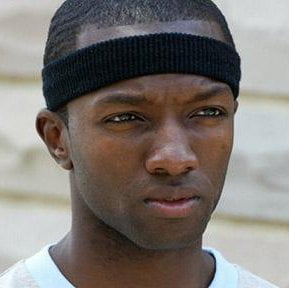
In the course of writing a column (see The Daily Maverick, next Wednesday) on Julius Malema and whether ‘Kill the Boer’ should be banned, I was wondering whether there was anyone I hated. Think on it for a moment – “hating” someone is appealing to quite a strong emotion, and I wonder how often it’s true. We might use that word fairly frequently to mean something like “have contempt for”, or “be very angry at”, or somesuch, but what does “hate” add to the picture? Does it mean you want them dead? I did come up with one example of a person I hated, but unfortunately, that person was on my television screen – Marlo Stanfield from The Wire. I certainly want him dead, preferably with some torture and great suffering thrown in beforehand. A great character, certainly, but one that should suffer.

In case you haven’t see The Wire, I’ll say no more. Except that you should see watch the series, which I came to very late for some reason. But now that I have watched it, there’s no question that it fits into the category of the best television shows ever, at least in my estimation (even though I might not be able to help this – it’s listed on Stuff White People Like, after all). To further expose myself to potential ridicule or potential accusations of a deficit in aesthetic judgement, here’s my list, rank-ordered for bestest-ever TV:

  1. The Wire
  2. Deadwood
  3. The West Wing
  4. Battlestar Galactica (the 2004 version)

While I was intending to tell you why, there are lectures to be written, and a Sunday to enjoy. But if there are any of these four that you haven’t watched, they are all worth checking out. And seeing as it’s soon to be Winter, you surely need to think about what to do on those days and nights where leaving the house is unthinkable. Unlike today.