Let them have EPO!

Originally published in the Daily Maverick. Sports scientist Ross Tucker and I had a brief debate/exchange of views on this topic on CapeTalk567 on the day of publication, and you can listen to that here.
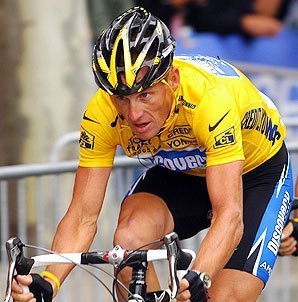
120824060051-lance-armstrong-2-single-image-cut

Lance Armstrong certainly lied, and by most people’s standards, acted unethically in doing so. We’ll also find broad agreement that it was an moral failing for him to retaliate against whistle-blowers, attempting to destroy credibility and careers in an effort to keep his multiple deceptions a secret.

It is likewise true that he broke the rules in taking performance-enhancing substances, and in that sense deserves whatever punishment is laid down for those rule-violations. But the rules in question are inconsistent or even incoherent, and Armstrong’s fall from grace will hopefully lead to their revision.

The problem is this: for those of us who can only admire sporting prowess from afar rather than exhibit it ourselves, the narrative of purity is a compelling one. There we see a beautifully sculpted physique, capable of feats we can only imagine, that has been nurtured and honed in order to perform those feats. Or sometimes, someone more ordinary has perfected a skill through years of dedicated effort.

In both cases, though, we can imagine the sacrifices and dedication – the purity of purpose, and the fact that they achieved these goals through natural ability, exploiting the gifts bestowed on them by nature.

The immediate problem with this, though, is that it’s a complete fabrication. Some of us will always be advantaged in some respect and others disadvantaged, and anyone’s “natural” state will already include those asymmetries. You could fill a library with books on the philosophical concept of “moral luck”, Bernard Williams’ phrase for the inconsistent ways in which we attribute praise and blame for things that might or might not be in the agent’s control.

It’s not only that you might be born into a family that has the material means to buy you a bicycle or some running shoes, or send you to training camps. Your natural advantages might rest in the fact that you grew up at high altitude, or near a beach so that you built strength by running in the sand. For every Mfuneko Ngam, whose international cricket career was (arguably) curtailed by the dietary deficiencies he experienced growing up, and which later led to frequent injuries, you could point to someone whose body developed to be stronger or faster thanks to environmental factors.

And what are performance-enhancing drugs but simply one more factor like these, available to some and not to others by virtue of nothing more than simple luck? Once we discard the illusion of the Athenian athlete, running naked save for a loincloth (perhaps alongside Bambi), it should become clear that drawing the line at drugs is as arbitrary as drawing it at any other point, and that the issue of whether or not someone broke the rules is an entirely separate one to whether the rules are sensible.

In the case of professional sport and drugs, the line-drawing currently seems to rest on a version of the naturalistic fallacy, namely the mistake of thinking that natural is good and unnatural bad. In morality, people (mistakenly) use this fallacy against homosexuality, and in medicine perhaps in support of homeopathy instead of chemotherapy (if you’ll forgive that very loose usage of the word “medicine”).

But these examples are cherry-picked, and easily refuted by pointing to cancer (natural) or the wearing of spectacles (unnatural, in that the nose and ears were not evolved for the purpose of supporting spectacles). So our moral judgements – including our attributions of praise and blame – should not rest on a conception of the natural.

What about fairness? If we are to allow drugs in professional sport, some argue, then it will be doctors who win races, rather than athletes. As I point out above, though, this is already the case – not only for doctors, who might prescribe better drugs to some of us than others while growing up, leading to healthier starts to life, but also to parents who have unequal means to support us. It’s already parents who win races, not athletes, so why not let doctors also win a few medals?

Yes, there will be some who can exploit the chemical resources better than others can, but we need a good reason to treat this sort of resource differently to any other. Currently, our reason seems to be an interpretation of the “spirit” of sport that allows for the manipulation of all sorts of parameters (diet, lifestyle, training regimen) excepting one, namely your drug intake.

Even this exception is applied inconsistently, in that it seems entirely arbitrary to say that paracetamol is permitted (as it is for Olympic athletes) and another drug not, seeing as a splitting headache would surely impact on performance in something like a game of tennis. These are matters of degree, not of kind, and operate on a spectrum ranging from whether you were breast-fed to whether you take EPO.

I would offer a similar response to those who are concerned about pressures on young athletes, who might do themselves long-term health damage through taking drugs from an early age. Again, this sort of objection doesn’t seem to operate in the real world, where professional athletes already do themselves significant damage through obsessive training at a young age. We need to account for the possibility that taking drugs would allow for fewer, not more, cases of retired 35 year-olds’ with various permanent aches and pains thanks to aptitude for some professional sport.

The drugs will only get better the more we are allowed to take them. They will also get cheaper, and safer, if the user-base is expanded. And just as technologies at the high end of motorsport make our road cards safer, perhaps the non-athlete will also benefit from improved medication at the end of the day.

But first, we need to recognise that professional sport is not pure, and never has been. More importantly, we need to recognise that one sort of corrupting influence might not be as easily distinguishable from another as we might think, or hope. Within the lifetimes of most of us, biological enhancements will most likely be the norm, and it will be even clearer that our obsession with some sort of pastoral narrative in sport is increasingly naïve.

Tiger Woods is allowed to compete after having laser surgery that by some accounts left his eyesight at 20/15, compared to the normal 20/20, which would mean that he could see at 20 feet what a normal person could see at 15 feet. Golf returns to the Olympics in 2016, and I’ve heard nothing suggesting that he (and many others) will be disqualified, even though this would surely advantage him on the golf course.

Thinking ahead: if corrective eye surgery of this sort is permitted, as is the wearing of contact lenses to make your vision 20/15 or even 20/10, as for baseball’s Mark McGwire, what will we do when our poor vision can be corrected through the replacement of the eye with something off a robotics assembly line? Or would we just claim that that’s somehow “different”, and ignore all the ways in which sport is already not the pure contest we imagine it to be?

Read more:

Maiming, killing and dying for “culture”

Originally published on SkepticInk

Parts of a 17-year-old boy’s feet from Bonita Park, in Hartswater had to be amputated, after he ran away from an initiation school in Pampierstad in search of food.

After he was tracked down, he was thrashed with a sjambok, while his feet were burnt with fire. He was later abandoned along the side of the road, where he was left for dead, naked and bleeding, until a passing motorist noticed him and alerted the police.

Due to extensive nerve and muscle damage, his toes had to be surgically removed.

667532_612441This boy, and thousands like him, are sent (and often willingly go) to initiation schools to mark the transition between boyhood and manhood, “through ritual circumcision and cultural instruction regarding their social responsibilities and their conduct”. Ever year, children die in the course of “becoming men” – and in South African society, being a man correlates quite positively with thinking you can dictate the course of the lives of women.

Part of the reason for the continued survival of poorly regulated initiation schools, with poor hygiene and cultural instruction from previous centuries, is that they provide a narrative to life – a structure, and a community. If the average adolescent knew that they had a decent prospect of a good education, a good job and so forth, they’d probably be joining protests against such schools – opting for medical circumcision at the very least, if not entirely rejecting cultural indoctrination.

But it’s been – and will continue to be – a long wait for more people to have a better shot at a good life through adequate healthcare, education, and those goods many of us take for granted. And what we put in place as substitutes to give meaning to life – namely cultural practices such as these – result in initiation schools, genital mutilation, corrective rape, culturally embedded homophobia, sexism and so forth.

“Culture” is used as an excuse of all sorts of things (in South Africa, often as a simple vote-getter). But it’s only when you get to choose what your “culture” is – and not have it forced upon you – that it becomes remotely respectable. And even then, it should never be an explanation or justification for doing or believing something. As I tell students, appeals to culture, tradition and the like get the causality entirely backwards: things could become cultural norms because they are good norms; but the fact that something is a cultural norm has no bearing on whether it’s a good or respectable one or not.

Jansen “ashamed of South Africa”. Or not.

jansen_40379bSo here’s a neat example of how bad South African media can be, or perhaps the negative consequences of treating it as a reliable source. The problem is in large measure due to a reliance on the South African Press Association (Sapa) for copy. And yes, Sapa is a real and quasi-respectable thing, unlike the National Press Club. The NPC is only real, and not at all respectable, following their award of “Newsmaker of the year” to “the rhino”. And that’s without even mentioning Yu(suf Abramjee) know who, chairperson of the NPC.

Sapa copy accounts for the vast majority of what people in South Africa read in their newspapers. So, when Beeld reports that Jonathan Jansen, the Vice-Chancellor of the University of the Free State, said he was ashamed of South Africa (that link takes you to an Afrikaans page), it is unsurprising that the copy in question comes from Sapa. But what the copy coming from Sapa also means is that you’re likely to find the same copy in a bunch of other newspapers.

Jansen said that the Beeld report was inaccurate, and is quoted in the Times as saying:

This is not what I said in my opening remarks to first year students. I did not say I am ashamed of South Africa; that is impossible. I did not say I would expel students for being angry. No, this is an irresponsible recollection of what I said by people who were not there i.e. the Beeld. The Volksblad is more accurate.

Alright, then – let’s look at what the Volksblad’s report said. Jansen is quoted as saying “Ek skaam my vel van my gesig af vir Suid-Afrika. Dit is ’n algehele skande dat jy matriek met ’n punt van 30% kan slaag” – the exact words he’s quoted as using in the “irresponsible” report from the Beeld, and words which mean … yes, that he’s ashamed of South Africa. Even if you don’t understand Afrikaans, you can verify for yourself that those words look the same, and in the same order, as these from the Beeld: “Ek skaam my vel van my gesig af vir Suid-Afrika. Dis ’n absolute skande dat jy matriek kan slaag met ’n punt van 30%”.

Of course this might still be a misquote. But you’d expect that Jansen would look at a source that he’s claiming is “more accurate” before doing so – especially when it’s effectively the same source, namely Sapa (Here’s an English version). And it’s annoying that he has to climb down from such a statement in any case – our basic education system is something that merits shame, and a university Vice-Chancellor is well placed to comment on the scandalous failure on the part of government to give kids a fighting chance at university success (or, to give universities a fighting chance at maintaining standards while also avoiding huge class rifts).

It’s annoying that he had to climb down from that statement because he really did say something offensive (assuming the report is true) during this welcoming address to first-year students. He said (in both Afrikaans versions quoted above, and in the English):

“I always make time for students, but before you make an appointment, my secretary looks at your academic record. If you’ve failed a subject, I’m not going to waste my time with you,” he told 4 000 first-year students.

However, he invited students to contact him on Facebook and Twitter if they have problems.

So long as you’re on Facebook or Twitter, Prof. Jansen would be happy to hear about the difficult circumstances you might be encountering, and that you fear might lead to you failing a course. Good news for those with smartphones, airtime, computers and the like. But don’t bother, say, waiting outside his office on crutches or something, to explain how (e.g.) a car accident caused you to miss an exam and fail a course.]

Talking to you would be a waste of time, you see.

I’m not known as a very friendly person with students. In fact, I know I’m perceived as fairly unwelcoming. And it’s true that there are students with whom it is a waste of time to speak. I can understand Jansen’s “tough love” rhetoric. But if you’re – as a Vice-Chancellor – going to speak off the cuff, you shouldn’t be surprised if you put your foot in it every now and then.

But being apologetic for the one remark, about being ashamed of South Africa, seems to be an attempt to recover some lost ground with patriotic minded (of a sensitive sort) South Africans, with the Department of Basic Education, and with Government more generally. From my vantage point, as a teacher of roughly 1400 first-year students of the sort Jansen was addressing, it’s the students that deserve the apology.

Blood deferrals – too important to take personally

Originally published in the Daily Maverick

14983260-blood-donation-medical-buttonOne of the things that allowed this species to survive into the 21st century is our ability to detect patterns, and to make predictions based on those patterns. If you were a hunter, you’d have needed to be able to predict the movement of the beasts you hunt with some degree of accuracy. If you were a farmer, some rough understanding of seasons would have been rather useful, lest you waste all your seed, your water, and all your effort.

We’re here and it’s 2013, which means that our forebears got these sorts of things right with reasonable regularity. Sufficient numbers of them managed to feed themselves, and avoided walking off the edges of cliffs or getting eaten by carnivores. But all of that pattern-recognition and the accompanying storytelling can be a liability, in that it gets in the way of our realising that we are simply one data point, usually interesting only to ourselves and our immediate circle.

And, it gets in the way of seeing other potential stories. Not just the stories of others (helping us to escape our subjectivities), but also the story the data tells by itself, without our fears, hopes, and histories being allowed to corrupt it.

You know your own examples, but the sorts of corruption I mean would include our thinking that problem gambling is significantly prevalent in South Africa just because Aunt Sally has a problem. It’s not, at least not by international standards. Or, when your cold goes away a couple of days after taking some homeopathic remedy, when your confirmation bias allows you to ignore the fact that a cold typically only lasts for a couple of days in any case.

The storytelling I speak of is not just in ascribing patterns to potentially unconnected events, but also in finding intentionality or causality where none might exist. Intentionality, such as that we imagine when describing a tragedy as part of “God’s plan”, because doing so helps to shield us from the fact that we are meaningless. Causality, of the sort we might think we’ve found when some sort of “lucky” token or behaviour correlates with a random moment of good fortune.

The cognitive rules of thumb (or heuristics) that we use in developing these responses served a purpose in allowing us to get this far, and still serve a purpose today. But we no longer need to be as reliant on them, and are increasingly irrational when we do so, because the volume of data available to us is mostly far better suited to analysis by machines than by humans.

The South African National Blood Service illustrates the problem well, introducing all sorts of moral complications at the same time. As reported in the Cape Argus, a gay couple recently had their blood donation deferred (or rejected), thanks to the SANBS policy of deferring donations from men who have had sex with other men in the last six months.

One narrative that fits this policy is that the SANBS is homophobic, and this narrative has enjoyed strong support on social media for the last few days. But as I wrote in a 2011 column, deferring blood from this category of donor isn’t atypical, and South Africa’s blood service is in fact fairly liberal in this regard. In the UK, the deferral period is one year, while in the US a lifetime restriction applies for men who have had any sexual encounter with another man at any time since 1977.

Now, there’s no principled reason why we should think the US or UK a good guide to policy in this or any other instance. But there’s also no reason to be guided by the perception of discrimination based on moral judgement, where the discrimination might instead be based on cold, impersonal data.

As I note above, this is exactly the problem: we struggle to think of ourselves as mere data points, and instead wish for the world to bend to shape our anecdotal experiences (or anecdata). I have little reason to doubt the statistics reported – across various international jurisdictions – on the Centers for Disease Control website, or the FDA’s reasoning for why they defer blood donations from men who have sex with other men.

The statistics show that this group are “at increased risk for HIV, hepatitis B and certain other infections that can be transmitted by transfusion”. This claim is either true or false, and whether it is true or false is not a matter of morality or preference – just like it’s either true or false that tattoos and body piercings lead to increased risk of hepatitis C (the current motivation for a 6-month deferral period in Canada).

So, we can either contest the claim on empirical grounds, and refute the claim of increased risk from blood donations from men who have sex with other men, or we can claim inconsistency, saying that if this is true, that there is also increased risk from heterosexual couples who have anal sex.

In a recent interview on CapeTalk567, a representative of the SANBS seemed to concede the possibility of this sort of inconsistency, saying that they would be considering this in the upcoming revisions to their donation forms.

But even if this inconsistency is borne out by the data – in other words, if other categories of donor exist whose blood donations are, in general, at least as (or more) dangerous than this category is – this wouldn’t mean that more gay men should donate blood. It would mean that they still shouldn’t, and that neither should some other people. So the complaints to the SANBS regarding discrimination are never likely to bear the fruit that some potential gay donors are hoping it does, unless it’s empirically false that this category of donated blood is more risky.

My use of the word “shouldn’t” (as opposed to couldn’t) in the previous paragraph alludes to an important point. As much as we’d all like to give blood, another aspect of treating ourselves as a data point – at least when thinking about public policy – is that we’ve got very strong reasons for wanting to be able to trust that we could receive donated blood safely. So the issue of which deferrals are legitimate, and which are not, is important enough to merit resolution by careful reflection and analysis, rather than to simply be the subject of this week’s bout of righteous indignation.

Chester Missing and the authority of race

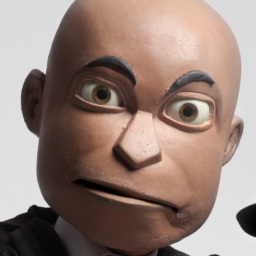
0d3e82a33a17e75f79fd2ef6c1caf5cfOver at Africa is a country, T.O. Molefe has written a very interesting post on whether Chester Missing is blackface. If you don’t know Chester Missing, he’s a puppet controlled by political satirist Conrad Koch. Read Molefe’s column if you’re at all interested in South African racial politics, as much of it is generally relevant, even for those unfamiliar with Missing. A key point can be found in the conclusion, where Molefe points out that the choice of Missing’s race (which is ambiguous, but probably black) can’t be trivial or accidental. Someone as thoughtful as Koch appears to be made a deliberate choice to use a black puppet (or one who is definitely not white), and

At the very least Chester Missing is an embodiment of the fear, unwillingness or inability of liberal-minded whites to use their own voices, faces and words to talk publicly about this country’s racialised privilege.

Deep Fried Man (another South African comedian) left a comment to Molefe’s piece that I thought astute, in which he pointed out that it’s easier for a black comedian to get away with saying certain things than it is for a white comedian to say those things. Molefe was sceptical of this claim. My response is perhaps of interest to the people who read Synapses, so I’ve copied and pasted it below.

I’m not a comedian, but Deep Fried Man’s comment rings true to me as someone who does comment on South African racial politics by other means. T.O. – you ask: “What makes it easier for Loyiso Gola and other black comedians to satirise SA’s political landscape and harder for you or Koch or other white comedians to do the same? I’m not convinced it makes sense in the same way that, say, gravity makes sense.”

So, from the perspective of a columnist & blogger who is a) white and b) critical of various elements of SA’s political landscape, including both ‘whiteness’ and ‘the idea of whiteness’, it certainly seems easier for black columnists than it is for me, on some topics. This is a simple matter of self-preservation and the increasing volume (in both senses) of online trollery and insult.

Take the perennial “is Cape Town racist” discussion. A black columnist can claim that it is, and they will (mostly) just get shouted down by white racists. As the (to my knowledge) only white columnist who argued that Cape Town is in fact racist, I got shouted down by white racists as well as by some who style themselves as Biko-ites or somesuch, telling me I was being patronising and so forth, and that I don’t really have any right to make those claims. And then there are others like Vice who also provide reasons for me to shut up, even though I don’t find those reasons compelling.

So, even if you think a cause important & worth advocating, there might be less second-guessing and potential pitfalls for those who are falling into the stereotype of speaking about issues they “own” (such as black comedians talking about a “black political party”). The risks are more easy to identify and combat.

The broad point is that there are various constraints on public commentators of various sorts. Being thought a troublemaker is one, being thought a traitor another, being thought irrelevant yet another, etc. So it’s at least possible that in the complicated intersections of race & class and all that, black comics/columnists could experience different pressures than white ones do. Of course it won’t make sense in the way gravity does, but that’s a rather high bar to set.

I get (real) mail

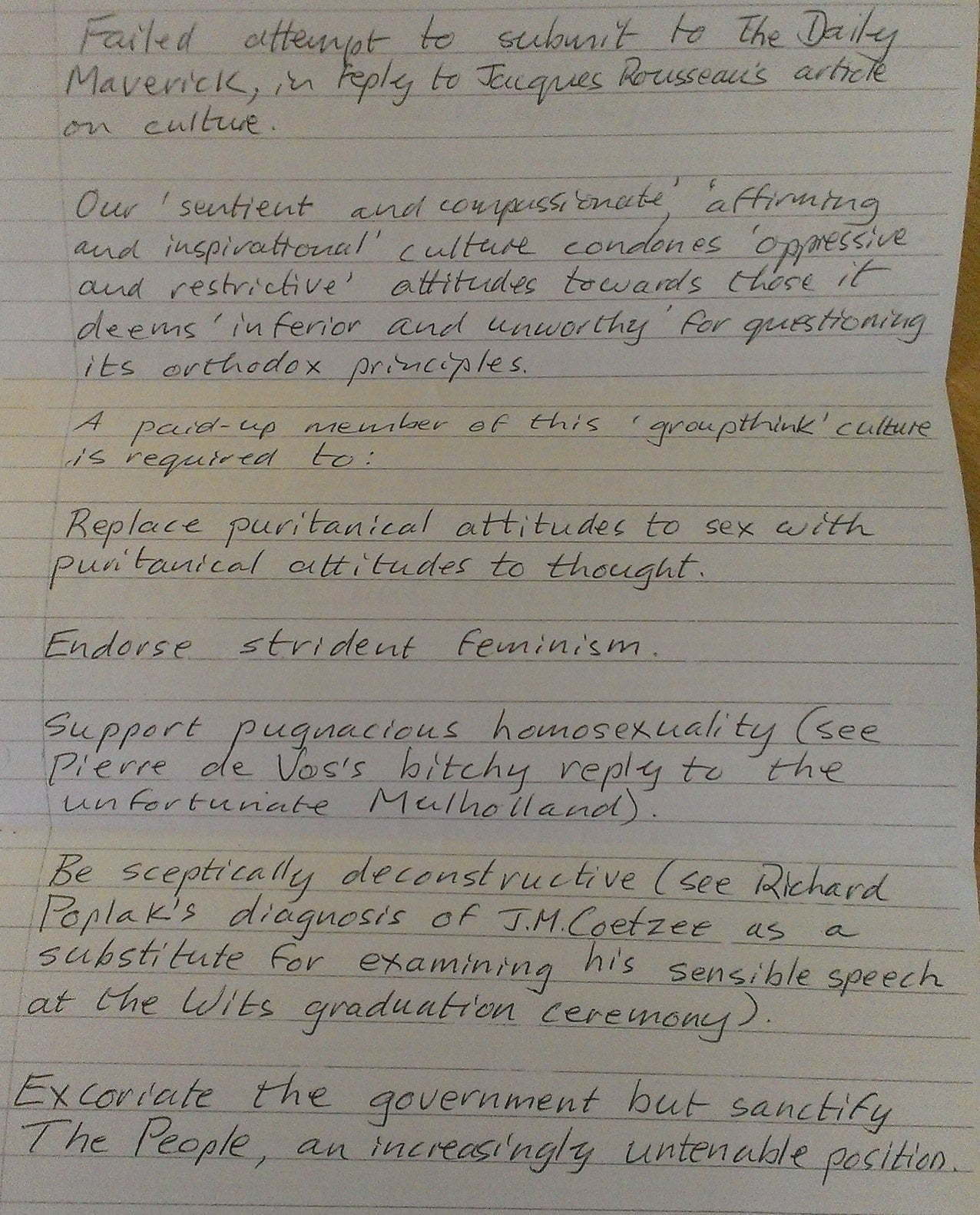
It’s been very many years since I’ve received a handwritten letter in the mail (not counting letters from the UCT Registrar, who sometimes prefers to record official business on paper, with pen. I’m afraid I have little idea as to his heuristic for deciding when email is sufficient and when pen and paper are necessary, and in realising this, resolve to ask him that question soonest.) It’s probably been at least 10 years since any other correspondence has arrived in this format, though, so I was quite surprised to find this in my postbox at work today.

Seeing as the Daily Maverick has a real names comment policy, and this was intended as a comment to my column last week, I’ll presume that it’s okay to post it here, before briefly responding. I’ve shrunk the images, so in case you can’t read them, the covering letter includes the question:

If you could single out what distresses you most about life in South Africa, what would it be? For me, it is the Aztec-like acceptance of violent death in civil society.

This gave me little indication of what was to come, considering that the question is sensible even if (to my mind) put somewhat hyperbolically. The letter itself reads:

Failed attempt to submit to the Daily Maverick, in reply to Jacques Rousseau’s article on culture.

Our ‘sentient and compassionate’, ‘affirming and inspirational’ culture condones ‘oppressive and restrictive’ attitudes towards those it deems ‘inferior and unworthy’ for questioning its orthodox principles.

A paid-up member of this ‘groupthink’ culture is required to:

  • Replace puritanical attitudes to sex with puritanical attitudes to thought.
  • Endorse strident feminism.
  • Support pugnacious homosexuality (see Pierre de Vos’s bitchy reply to the unfortunate Mulholland).
  • Be sceptically deconstructive (see Richard Poplak’s diagnosis of J.M. Coetzee as a substitute for examining his sensible speech at the Wits graduation ceremony).
  • Excoriate the government but sanctify The People, and increasingly untenable position.
  • Curse colonialism, Christianity, apartheid and big business (modish apocalyptic horsemen, past).
  • Lament racism, poverty, inequality, and unemployment (modish apocalyptic horsemen, present).
  • Embrace multiculturalism while proselytising his own.
  • Hound the carriers of our plagues, usually conservative, white, heterosexual men or black men who understand the efficacy of patronage within their own culture.

A tall order, but then virtue was never easy.

To be honest, I have no idea what to make of this. I was hoping that typing it out would make it more clear, but I still have little idea whether Ms Vorster thinks I am either a member of this ‘groupthink’ culture, or a campaigner against it, or neither.

It seems that her first paragraph introduces a dissatisfaction with political correctness and groupthink, and that her letter is concerned with some negative effects this culture could have in allowing for unfair judgements against ‘outsiders’. The quoted bits describing culture are plucked from various paragraphs of my original column, though, where some were descriptive, some aspirational, and some facetious. She seems to have read me as describing an actual and extant culture, which I certainly wasn’t. The major point of my column was that we normally can’t be prescriptive about culture, and that it’s as meaningless or meaningful as you’d like it to be. We can be prescriptive about behaviour, though, and if your culture involves harming unwilling participants, I’ve got no problem with saying that aspect x of culture y is reprehensible, and must change.

If it wasn’t for her covering letter, where she refers to reading my columns “with pleasure”, I’d have no problem interpreting this letter as a rant against lefties, and an appeal for less wishy-washy tolerance of various cultural norms. Because this seems to imply that she thinks me an ally. Fair enough, I might say as a general response to many lefties, in that I hate the soft relativism of not making judgements as much as some of you might do. But then, this doesn’t need to be accompanied by an endorsement of bigotry, as Ms Vorster seems to be demanding when referring to my colleague Pierre de Vos’s “pugnacious homosexuality” and his “bitchy reply to the unfortunate Mulholland”.

Mulholland deserved all he got from de Vos, and more (though I preferred Rebecca Davis’s response myself). To pick up on a few of the other points Ms Vorster makes, I’ve got complicated responses to feminism, in that we’d first need to agree on what the term means. If “strident feminism” entails pointing out the pervasive privilege afforded to men in society, and campaigning to eliminate it, then I’m a strident feminist myself – even though the need for feminism as a special cause can be interrogated, seeing as this particular inequality could be captured in a general assault on discrimination. But if strident feminism means thinking that “The Rule of Men” informs any potential experience, then we speak very different languages (and, live on different planets).

If Poplak’s critique was flawed, Coetzee would – from the little I know of him – be concerned with the flaws, but nevertheless applaud the attempt at a challenging and interesting reading. As for excoriation, I’m happy to excoriate both or either of the government or the people, depending on which of them do or say the most stupid things while I’m trying to come up with a column idea. Of all the horsemen listed, I don’t like any besides big business, which can be good or bad depending on what it does and how it spends its profits (if any). If groupthink means it’s bad to not like apartheid, poverty and so forth, I really hope that Ms Vorster thinks I’m a victim of it.

I don’t embrace multiculturalism. I embrace the idea that people should leave each other the hell alone, regardless of culture, that arguments should be judged on their merits (with cultural longevity or popularity certainly not counting as a merit), and that if we end up agreeing (“groupthink”) it should ideally be because we’ve all considered the issue, and come to the same reasoned conclusion. Maligning our general agreement on something like anti-sexism as “groupthink” obscures the fact that reasonable people tend to agree on what’s reasonable, for good reasons.

As for the “carriers of our plagues, usually conservative, white, heterosexual men or black men who understand the efficacy of patronage within their own culture” – it’s little surprise that these categories are responsible for most of our social ills. For much of white South Africa, those conservative, white, heterosexual men wrote the rules, and the rules are bad ones (because they are aimed at inequality and perpetuating privilege). For much of South Africa, the same is true for powerful black men, who dominate through similar networks of patronage. Are we supposed to be blaming the poor for our misery, or the otherwise disenfranchised?

Back to the covering letter:

If you could single out what distresses you most about life in South Africa, what would it be? For me, it is the Aztec-like acceptance of violent death in civil society.

That too many people seem to think that complaining, signing a petition, or Tweeting furiously is going to make any difference to anything. If you have a skill, you could donate some of it to a civil society movement. If you can teach, do so. If you have time, give some of that. If you have money, find a worthwhile charity. That’s the high-minded answer. The more banal answer is that it’s distressing to have the same debates, each and every year/month/day, where (sometimes) it seems that nobody is doing any listening at all.

Covering note Page1 Page2

Doing Reiki in your sleep

newvoiceOne of the many benefits of believing utter bulls**t is that your claims need to be limited by nothing other than your imagination. I was alerted to a goldmine of quackery today via an Andy Lewis tweet about Siri for homeopaths. Not simply the sort of Siri that can answer questions like “where can I buy 10 000 sugar pills” – a Siri that can actually make “medicine” for you.

It’s true (at least, the fact that someone makes this claim is true). The picture at top-left is is a “voice-programmed remedy maker“, which is a marvel of efficiency and simplicity.

In use, the device is held close to the mouth, a button on the side of the Remedy Maker is pressed in, and you speak the name of a Remedy you want immediately followed by the Potency (if any). The button is then released and a “beep” sound is heard confirming that a remedy has been recorded and stored. Then the device is placed on a table or flat surface and a small bottle of tablets, or even just one or two tablets can be placed in the small 30.3mm ( 1. 3/16″ ) diameter Stainless Steel Well that is fitted in the device. A switch next to the Well is operated and held down for about 3 seconds, and then released, and the device again beeps to confirm that your remedy has been made.

What’s that? You’ve run out of tablets? That’s no problem at all – simply place your finger in that metal well, operate the switch, and marvel as the device transfers “the vibrations directly into the body. This makes the device ideal to use as an emergancy first aid device, for example it could be used to make Apis Mellifica, which is a powerful Bee Sting Treatment, or one could give a dose of Malaria Officinalis, which is considered by many to be useful in Malaria prevention.”

At a bargain price of 395USD, this is Profitus Maximus (seeing as we’re talking sciencey).

The makers have thought of everything. It matters not if you have a thick accent or speak in a strange dialect, because “Words are used to represent a thing or situation. Many different words (even different in language) can be used to represent the same thing.” The device understands abbreviations. If you’re speaking in a loud, crowded environment, no matter – it only listens to your voice.

And you don’t even need to know which “medicine” you need! “The special beauty of this device is that within seconds you can be making vibrational remedies from literally anything you can think of, … even the illness itself. “My Throat problem”, for example, or “The pain in my leg” etc.”

If you feel like some light entertainment, spend a few minutes browsing the site. If you ever wished you could do Reiki while sleeping, or talking on the phone, go find out about the White Mountain Energy Copier, which makes this possible. Worried about the end of the world? There’s info on that, as well as a handy (for Muslims) description of why and how the Kabbah needs fixing.

For skeptics, Randi “and other closed-minded behaviour”, there’s a message for you too, which concludes with:

We don’t feel we need to prove or justify anything, our products work and we have thousands of satisfied customers, many of which are busy using our devices to save lives right now, or using these devices to improve their own wellbeing.

If you are one of the skeptics, all I can say is I am very sorry for you, and I hope one day that you will choose to open your eyes. In the meantime don’t bother to email me with your abusive and childish comments as your emails will not be opened and read.

Then there’s a link to a website called Coping with Disbelief – but the URL currently redirects to a website advertising a “Fiber One” breakfast bars and cereals. Handy, for those who are full of s**t. (This might be intended as a joke on the part of White Mountain, which would certainly offer reassurance that they’re not completely crazy).

By the way, if you don’t know Andy’s site The Quackometer – dedicated to debunking quack medicine, be sure to check it out, especially his detailed work on Steiner-Waldorf racism, mysticism and other reasons for parents to run a mile.

President Zuma: dogging South Africans with stereotypes about culture

Originally published in the Daily Maverick

sad-dogCulture is restrictive and oppressive, and it is used to generate further oppression. Not simply because you’re told what to believe in the name of culture, but because what you are told to believe can be oppressive or restrictive. Perhaps, that you’re not the equal of a man. Perhaps, that as a man, you are necessarily responsible for the oppression of women.

Culture is also a reference point for where we’ve come from, and how we ended up here. It’s what binds us in times of strife, or when others tell us that we’re somehow inferior or unworthy of survival or happiness. Culture is what gives us beautiful art – music, paintings, books – and it is what renews our creativity through the wellspring of ideas it provides.

Culture is a handy card to play when trying to rally political support, especially if you can appeal to a version of culture that speaks of a struggle against oppression, and therefore a historical debt that is owed to that struggle. Without the comfort and strength provided by culture, we would never have survived. Or so the narrative might go, if you thought that culture comes with chains.

Culture can be all these things. But most importantly, it can be what you want it to be, including nothing of any significance at all. And you can mix and match not only elements of culture, but also the respect with which you regard various elements of various cultures. But when the idea of culture is used as a straightjacket, as a way to enforce loyalty or groupthink, it is only and always restrictive and oppressive.

When a President says that black South Africans should stop adopting the customs of other cultures, such as appearing to care more for their animals than they do for their fellow South Africans, he ends up transgressing various aspects of logic as well as of decency. Decency, because one unspoken implication of that speech last December was that white dog-owning folk had no humanity, and that black folk who loved their dog were somehow less black.

Logic, simply because of the obvious contradictions immediately pointed out on Twitter and elsewhere, via photographs of Mandela, Vavi and others being friendly with various furry animals. Zuma’s speech clearly contained some foot-in-mouth, though, and it’s uncharitable to read reports of a speech like this literally. He was (at least, as far as I can tell) referring to the fact that it sometimes seems that people care more for (relative) frivolities than for their fellow human beings.

If this is accurate, it’s of course still deeply problematic to square the humanitarian Zuma with the one who appears in our headlines most days for some allegation of corruption, or the construction of multi-million Rand homesteads. Let’s leave that aside, as I have no trouble believing that he at least believes he cares, and was speaking sincerely.

What I want to highlight here is culture. Because what Zuma is saying in a speech like this is an insult to culture, or to the sort of culture I describe above as an affirming and sometimes inspirational one. Because Zuma could be accused of telling black South Africans to take direction from his repressive stereotypes, rather than the repressive stereotypes that the white man brought to Africa. He’s saying that black South Africans are free, but only up until the point where they butt up against the boundaries of culture that he is prescribing.

The point of freedom is to be free to choose. Zuma is correct that some people seem to care more for their pets than for humans, and I’d agree with him that it’s wrong to do so. Not because of culture, or at least not because of “black” culture or “white” culture – rather something like a “sentient” or “compassionate” culture. And perhaps, a culture that eschews opportunism, preferring to work towards the long-term benefit of all South Africans.

This means, at least in part, eliminating the race-baiting that has become such a reliable part of his rhetoric. I understand that many of us white South Africans appear (and often are) insensitive to culture and its manifestation, especially now that “our” culture blankets most of the world we get to hear about. But this doesn’t justify adding to the caricatures of what white and black people do and believe – and it certainly doesn’t justify telling people what they should believe.

Culture changes, and anyone who won’t allow it to is an oppressor. If you choose to hold on to some cultural elements and customs that are significant and not harmful to others, I shouldn’t judge you for that. When you use culture as a weapon to abuse common sense, and to guilt people into loyalty, I will judge you for that, as should we all.

And some of us will judge you even more harshly when you make it clear that you’re just making things up as you go along. Or is Mac Maharaj actually just trying to embarrass you, by protesting that you were simply trying to “decolonise the African mind” while you made noises about a national cleansing ceremony, to be hosted by none other than Archbishop Emeritus Desmond Tutu – a representative of a faith that exists here largely thanks to colonialism?

Assuming that the vote of no confidence fails, Mr President – and assuming that you actually give more of a damn about your country than you’ve ever appeared to – why not spend 2013 and onwards focusing on speeches (and decisions, naturally) that help us to find common purpose, instead of on ones that deepen or even create divisions?

You have your second term, after all, and the threats you personally face during that term will come from people and institutions like the Public Prosecutor and Parliament. The threats to your party, on the other hand, seem to come mainly from people like you. To put it simply – if you don’t stop being such an embarrassment, South African voters may soon begin to consider having a cleansing ceremony of their own.

COSAS is hamster number one

cosaslogoThere is never any reason to expect a new year to be any different from the previous one. The arbitrary shift from December to January is good for a few days off, and for many of us, too much indulgence – but changing minds and attitudes takes longer than that, and isn’t responsive to fireworks and Auld Lang Syne in any case.

So, it’s no surprise to find that – after a mere 5 days of 2013 – we already have (at least) 2 depressing examples of the hamster wheel that is discourse around race in South Africa. Much effort is put into keeping it spinning, but to little effect. And if one hamster dies, another – often indistinguishable from the last – takes its place.

COSAS is hamster number 1. This Black Consciousness movement was formed in the late 70’s to represent black pupils, following the Soweto uprisings. They have many proud moments in their history, regardless of whether you agree with their politics or not. You can read about their history here if you care to. The salient detail for my purposes is that the “organization’s principle aims were the conscientising of students and the wider community to the repressive nature of education in South Africa” (sic).

If you think the construction of that sentence poor, consider this, the first sentence of the recent COSAS statement on the 2012 Matric (Grade 12, the final year of secondary school) results:

The congress of South African students would like to unreservedly welcome the metric result of the class of 2012, this class is the class that reactionary forces anticipated negative outcomes from, as a way to put substance onto their argument which suggest that there is a severe collapse of order in the government that is lead by the ANC, the 2012 result beyond any other thing they are specially recognized by COSAS because they Are a reflection of a narrowing gap in terms of the quality of education between the model c schools and the township and the rural school, and such was made more than visible by the performance of a number of students who scored outstanding result from the lowest quintiles of our schools.

As a friend pointed out, this is a telling example, and “a massive indictment, of what mass education has done for born-free South Africans”. Not to mention proof-positive that COSAS’s work (as quoted above) is not yet done, in that the organisation’s Secretary General is still a clear victim of that repressive education himself.

The statement carries on in that vein (here’s the pdf), and in some respects gets worse when Tshiamo Tsotetsi (the Secretary General) expresses concern that publishing student names and results in newspapers is ill-advised because pupils are then targets for witchcraft: “All of these bad things can come to an end only if these results are no longer published. We would no longer loose our young people through depression or witchcraft.”

One of the leaders of an organisation devoted to improving school education, in other words, believes that children are being lost through witchcraft (and therefore, that witchcraft even exists). And of course, he’s right to some extent, seeing as pupils no doubt believe this too and are therefore victims of something people call “witchcraft”, despite their being nothing supernatural about it at all. But the tragedy is that 12 years of school isn’t sufficient to dispel these superstitions. Or, that nothing in the curriculum teaches skills and principles of reasoning that would help to do so. Worst of all, it’s probable that many teachers believe in witchcraft themselves.

The education system, the Matric results, and the gloating of the Ministry of Basic Education – even in the face of a reality where less than 1 in 3 pupils complete high school – could be the subject of an extended rant. As could hamster number 2, Gillian Schutte, with her recent prescriptive self-flagellation entitled  “Dear White People“. I’ll get to that in a separate post, and for now simply reiterate what I said on first reading her column (with apologies for misspelling Schutte’s last name):

Peter Higgs on the “fundamentalism” of Richard Dawkins

Originally published on SkepticInk.

Don't try this one: Professor Peter Higgs with a description of the Higgs model.Alok Jha, a science correspondent at The Guardian, has a column in which he reports that celebrated theoretical physicist Peter Higgs agrees with those who find Dawkins’ approach to criticising religion “embarrassing”. But in what should be embarrassing to a publication of The Guardian‘s reputation, Jha seems to simply swallow the fake controversy generated by the Daily Mail in the course of describing Higgs’ views.

Jha refers to the recent Al Jazeera interview with Dawkins, in which he’s (again) asked to clarify his remarks on the relative harms to children of sexual abuse versus the mental trauma of being led to believe in hell, eternal damnation and all that stuff. Well, Dawkins has posted the relevant extract from The God Delusion on his website, and anyone interested in the facts of the matter (rather than merely supporting their prejudices), can confirm that he uses an example to make the case that “it is at least possible for psychological abuse of children to outclass physical” abuse.

Now you might think even this insensitive or overstated. But it’s simply not true that he ever claimed that being taught about hell was always worse than all child abuse. As is often the case for all of us, he could have been clearer about what he meant and didn’t mean. At a time when the principle of charity seems forbidden to us, he probably should have been. But Jha demonstrates his prejudice in simply reporting the child abuse canard as fact in this column, and it’s thus little surprise to me that he doesn’t seem to bother to enquire as to whether Higgs backs his “fundamentalism” charge up with any evidence.

Higgs is quoted as saying:

What Dawkins does too often is to concentrate his attack on fundamentalists. But there are many believers who are just not fundamentalists. Fundamentalism is another problem. I mean, Dawkins in a way is almost a fundamentalist himself, of another kind.

In what way, and of what sort of kind? We aren’t told, but I imagine that this is simply an instance of the propaganda campaign against so-called new atheism having met with another success. The claim that Dawkins is strident, shrill and so forth has become axiomatic through simple repetition, with few people bothering to make the distinction between “being discomfited by robust challenge” on the one hand and “those strident new atheists” on the other.

I do sometimes find the direct and robust challenge, as favoured by Dawkins, to sometimes be less effective than other approaches. As I argued in my review of Chris Stedman’s Faitheist, my preference is for the more subtle approach. But this doesn’t mean that Dawkins is doing anything wrong in being more assertive with his criticism of religion – and it certainly doesn’t make him a fundamentalist for doing so.

What Higgs gets right in the quote above is that those of us who criticise religion should be careful not to confuse the typical believer with fundamentalists. As Dawkins’ own research shows, the typical believer is nothing like a fundamentalist – in fact, she isn’t even much of a believer. But, until these believers who are not fundamentalists actually raise their voices to start saying “not in my name” to the nutjobs like Fred Phelps, can we really blame a Dawkins or whomever for stepping in to say what needs to be said?