Day 2 at #TAM2014

10522439_10204090633403483_1996658285948963115_nAs was the case last year, the second day of TAM is rather brutal – there was a complete day of programming, running from 09:00 until around 18:30, followed by various dinners and then concluding (for some, of course) with Penn & Teller’s Bacon and Donut party.

We left the bacon madness at 01:00 or so, meaning that the phone call at 07:00 was rather unwelcome. It was also rather pointless, seeing as it was from some Spanish person who has been calling us since the early days of July, even though our Spanish has not improved one iota since the first of her 8 or so attempts to share her thoughts with us.

Day 1 at #TAM2014

Yesterday was the first day of official programming at TAM (see yesterday’s post for my Day 0 experiences), and it was as much fun, and as stimulating, as expected. The problem is: with such a packed schedule (well, to be honest, with every night involving a few cocktails at the bar until late in the night), it’s going to be difficult to post updates that are as comprehensive as I’d like. I’ll try to do better tomorrow (if circumstances – those being Penn & Teller’s Bacon and Donut party – end up allowing for a post at all).

Day 0 at #TAM2014

The Amaz!ng Meeting (TAM) is an annual science, skepticism and critical reasoning conference held in Las Vegas, happening this year from tomorrow through Sunday at the South Point Casino in Las Vegas. You can find the full schedule on Lanyrd if you’re interested in knowing what’s going to be happening, and you can follow proceedings on Twitter with the hashtag #TAM2014.

Patriotism served as pabulum

Those of us who think about morality and the endless complexities of trying to get along – and progress – in a heterogenous country/world can take a breather for a moment, as Communications Minister Faith Muthambi has developed a strategy to “improve patriotism, social cohesion and moral regeneration” in South Africa.

Her plan is to start teaching basic moral philosophy in primary school, introducing children to ideas like the social contract and reciprocal altruism, so that they can begin to understand that morality isn’t about mindlessly applying some or other set of instructions but rather about thinking things through with a concern for human (and other) welfare.

Suarez, and inconsistent vs disproportionate responses

Those of you who watch football might have heard of Luis Suarez, and in particular of his habit (if three instances counts as a habit) of occasionally biting opponents in the heat of battle. I want to briefly offer a distinction for your consideration, because – as is so often the case on social media – the reactions to his most recent offence have tended towards the hysterical.

The most recent offence occurred in a World Cup game where Uruguay beat (and in consequence, eliminated) Italy. Suarez. The video below clearly shows Suarez lining himself up for a chomp at Chiellini’s shoulder, and Fifa are currently discussing how long Suarez should be banned for (6000 has the scoop on that, by the way).

There’s no question that Suarez deserves sanctions of some sort. And this is where the distinction comes in: one can – and should – separate the issue of what a proportionate punishment would be from the issue of whether we’re treating this case as we treat similar (or worse) offences.

Just like in the last World Cup, when Suarez handballed against Ghana, some folk seem to want him hung, drawn and quartered. The reaction was disproportionate then, especially in South Africa, perhaps thanks to our bizarre adoption of Ghana as our surrogate team. Suarez is a nasty piece of work, as far as I can tell – there’s the three instances of biting, the racism, and the fact that he’s rather good yet plays for Liverpool.

But despite this, we shouldn’t let the fact that biting someone seems particularly strange – animalistic – obscure the fact that biting someone is a far less serious offence than repeated violent play, of the sort that can break legs and end careers. Our reactions to Suarez are inconsistent with our reactions to other serial offenders, who offend in ways other than biting.

Take Pepe as example, with reference to the video below:

https://www.youtube.com/watch?v=CFSMICJxZ-Y

Pepe attracts cards fairly frequently – 42 yellow cards and 5 red cards over the years 2008 to 2012 – as one might expect after watching that clip. Yet while the intensity and regularity of his violence attract comment from football fans along the lines of “he’s a dirty bastard” or what have you, I don’t see many people calling for a lifetime ban or many months of suspension.

But tell me: would you rather play against Suarez, with the possibility that he might take a bite of your arm or shoulder, or against Pepe, who might kick you in the head while you’re lying on the turf? As disreputable as Suarez might be – and this fantastic ESPN profile is worth a read, to see his history in this regard, as well as the lengths people go to to defend him – his offences are more notable for their sheer oddity than for their brutality, and we should keep this in mind when calling for his head.

CAM regulations “draconian, misleading and insulting”, says Leon Louw

The South African Department of Health (DoH) published regulations related to complementary medicines in 2013, and these regulations have left Leon Louw, executive director of the Free Market Foundation, somewhat displeased. In the opening paragraph, he tells us:

In the name of science, they might promote rather than curb scams and pseudoscience. Instead of protecting consumers, they erode access to products and information. They subject supposedly unscientific Cams to supposedly scientific allopathic standards. Notwithstanding the regulations and the pretentious explanatory memorandum, the difference between the two is smaller than protagonists of science assume.

Those “supposedly”‘s – along with scare-quotes around words like “unscientific” and “scientific proof” at other points in the column – seem to signal that Louw thinks the DoH has fallen prey to some sort of biased “scientism”, whereby they expect that CAMs should satisfy criteria that (according to Louw) even allopathic medicine cannot.

The United Nations: perhaps irrelevant, but now also offensive

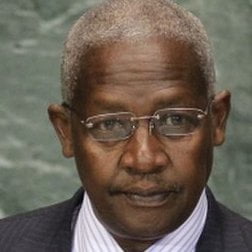
Foreign minister KutesaAlthough some of you might always have considered the United Nations an irrelevance, it would be an unfair critic who claimed that they do no good at all – their World Food Programme, for example, claims to provide food to 90 million people per year.

But they have their critics, ranging from those upset by the UN’s failure to endorse the 2003 invasion of Iraq, to claims that the arrival of UN peacekeeping troops tends to reliably correlate with an increase in child prostitution. As with any large political organisation, criticism can be partisan and ideologically-motivated, often forgetting that realpolitik comes with compromise.

Women are hard to animate, but they’re still a nice gift!

You’ve no doubt seen plenty of social media commentary on Ubisoft’s decision to drop the playable female character from the new Assassin’s Creed title, saying that keeping such a character would involve “double the animations, double the voices, double the visual assets… really a lot of extra production work”.

As is often the case, the blogosphere and Twitter could be accused of not allowing for the possibility that there’s any reasonable justification for Ubisoft’s decision, judging from the temper of the posts and tweets I’ve seen, few of which express any sympathy for the company (leaving aside the obviously sexist comments from people saying that “women can’t be assassins” and the like).

Chief Justice Mogoeng, religion and the law

In September of 2011, I was one of those to express concerns regarding Mogoeng Mogoeng’s suitability for the position of Chief Justice. At the time, I noted that “there is a distinct danger that he would be unable to separate his faith from his duties as a jurist”, and also remarked on how his appointment would occur in a context of apparent tolerance for homophobia on the part of the President himself, as well as in the appointment of someone like Jon Qwelane as ambassador to Uganda.

However, there has been no reason (that I’m aware of, at least) to fear that the worst has in fact come to pass. Morally conservative he may be, and also homophobic, but I’ve seen nothing to indicate that Mogoeng has been anything other than the loyal servant of the Constitution that he swore to be when appointed.

Pseudoscience Friday – Sweden abandons “diet dogma” (not), and sugar addiction

There are some pieces of information that one could call “zombie facts”, for two reasons – first, they are compromised in terms of their mere existence (zombies don’t exist, and these aren’t facts) and second because they are very difficult to kill.

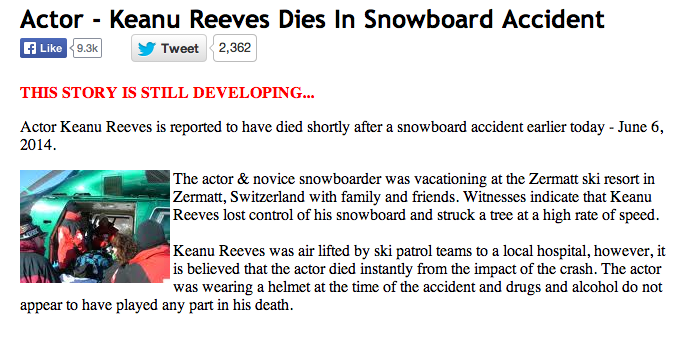
In February 2012, we learnt that Keanu Reeves had died in a snowboarding accident, and it took myself and a few others most of the day before we managed to get South African Twitter to stop circulating this zombie fact.

When pointing out that the website in question has a footnote attesting to being 100% fake made no difference, I started tweeting that I – and many others – had died also. Go ahead and die for yourself, if you like, by editing this URL.

Screen Shot 2014-06-06 at 12.13.12