Pseudoscience Friday – The DA swallows Food Babe’s babble

downloadIt’s taken less than a week for dedicated time-wasting to begin, for some members of the Democratic Alliance in the Eastern Cape. Soon, they’ll bring this time-wasting to Parliament, if we are to trust this DA statement telling us that MP Annette Steyn will take questions on the issue of Sasko (and others) adding ADA to their bread to the relevant Minister.

Briefly, for context: ADA (Azodicarbonamide) is a chemical used in bread production (as well as in the production of yoga mats, among other things), and ADA is legal for use in quantities smaller than 45 parts per million. It helps with both bleaching of bread, and giving it a lighter and fluffier texture.

And, says the Eastern Cape DA,

according to the World Health Organisation ADA is known to cause respiratory problems such as asthma, allergies and skin problems. Scientists are of the opinion that ADA has the potential of causing cancer.

Furthermore, the

people most affected by this potential health risk are the poor people of the Eastern Cape who do not have access to information about ADA. They are the very people who need the most protection from questionable foodstuffs that could compromise their already precarious health status.

The fact that something is a legal additive doesn’t mean it’s safe, of course. However, the fact that a chemical can be dangerous under certain circumstances does not mean that it’s unsafe under other conditions – for example, in the production of bread. As this superb Guardian article reminds us, it’s the dose that makes the poison.

And, the fact that Australia, the UK and some countries in Europe have banned ADA in bread does also not demonstrate that it’s harmful either – it might just be that they have succumbed to the fearmongering propagated by the likes of Vani Hari (the self-styled Food Babe), who is so dedicated to over-reacting to the mention of any chemical in food that I’d not be surprised to see her falling for the Dihydrogen Monoxide panic next.

Vani Hari started a petition that was instrumental in getting Subway to remove ADA from their bread, where she cited the same World Health Organisation (WHO) information quoted above. However, she either didn’t read what the WHO said, or she’s happy to lie in service of fearmongering. The DA also don’t seem to have read the WHO report, which says (my emphasis):

Case reports and epidemiological studies in humans have produced abundant evidence that azodicarbonamide can induce asthma, other respiratory symptoms, and skin sensitization in exposed workers.

In other words, factory workers – working with large quantities of ADA – could be at risk. This has zero relevance to 45 parts per million (or less) in bread. Steve Novella addresses this misrepresentation of scientific evidence, alongside other examples, in a superb blog post on Vani Hari’s Subway petition. (Here’s another by him, on Hari’s concerns regarding DoubleTree Hotels adding “antifreeze” to their cookies.)

Then, as David Gorski points out, there might not be any ADA left in finished bread in any case:

Moreover, azodicarbonamide arguably not even in the final product. According to this article, once flour is wetted with water, reaction with azodicarbonamide with the constituents of flour is rapid. In the experiments described, it only took 30 minutes for all the azodicarbonamide to disappear, with trace amounts left. By 45 minutes, there weren’t even trace amounts left.

In other words, what we have here might be worse than simple “chemicals are bad” panic – we’ve might have a homeopathic version of that panic!

Also on the topic of the naturalistic fallacy and pseudoscience, you might want to take a look at this open letter to Woolworths, which manages to combine a moral panic around GMOs with the more sensible point that food should be adequately labelled.

As a friend pointed out on Twitter, it didn’t take long for the food version of Godwin’s Law – namely the invocation of demon Monsanto – to crop up in the comments. But emotion doesn’t resolve scientific queries, and if you want to read a more sober account of what we know and don’t know about GMOs, I’d recommend Grist’s “20 questions” roundup to you.

(Pun fully intended.)

On Elliot Rodger, #YesAllWomen and #NotAllMen

As news of Elliot Rodger having killed 6 people, then himself, spread across the Internet this past weekend, the Twitter hashtag #YesAllWomen started to trend. On the surface, the reason for the widespread uptake of this hashtag is easy to comprehend, given that Rodger had announced his intention to

“enter the hottest sorority house of [the University of California–Santa Barbara], and … slaughter every single spoiled, stuck-up blond slut I see inside there.”  To “all those girls I’ve desired so much,” he says, “you will finally see that I am the superior one, the true alpha male.”

elliot-rodger-fusillade-santa-barbara-islaTo those women (and men) who were using the hashtag sincerely (as usual, there was some satire, some trolling, etc.), Rodger’s actions and the apparent motivation for them provided a useful opportunity to note that sexism and misogyny – whether of the extreme sort that leads to things like beating and rape, or the more widespread sort that is documented on sites like Everyday Sexism – is something that is far too common.

It doesn’t matter that you might be able to cite an instance, or a handful of instances, of a woman who doesn’t appear to be the target of sexist attitudes. It also doesn’t matter that you might be able to cite an instance, or a handful of instances, of men who are the target of sexist attitudes.

Of course it’s true that men are also discriminated against. That is a problem, and one that isn’t given its due attention. But it’s a separate problem, and one that doesn’t diminish the fact that women are, in general, discriminated against more pervasively and acutely than men are.

As with race – particularly in a country like South Africa, but also more generally – a history of discrimination doesn’t get obliterated when legal equality arrives. Social attitudes are sometimes slower to change than jurisprudence is, meaning that you have a larger and more receptive audience for misogynous sexism than you do for misandrous sexism. This could manifest in advertising that objectifies women, or in unequal pay, or in the possibility that you get promoted more slowly as a woman than you would as a man.

Exceptions to this pattern say little about whether the rule is still accurate, until we reach a point where the exceptions start becoming, well, unexceptional. Nevertheless, it should be permissible to question whether this case – Elliot Rodger – is one of somebody acting out of a misogynistic mindset. It might be, for example, that he was simply disturbed in some more general fashion, and that the sexism aspect is a distraction from that more general motivation.

As is typical, a case like this turns the majority of columnists, tweeters and bloggers into psychologists, all offering their non-expert diagnoses of what Roger’s problem was. I’ll try to resist that, because I think it’s irrelevant to the message and the motivation of #YesAllWomen, and also irrelevant to how a competing hashtag #NotAllMen, missed the point about the role a hashtag like #YesAllWomen can play in raising awareness of a genuine social problem, as well as reinforcing solidarity amongst those who experience the discrimination the hashtag catalogued.

An exact diagnosis of Rodger is irrelevant because it’s a pretty safe bet that that misogyny was a large part of his motive, both because it’s a regular feature of his manifesto (which, incidentally, also offers an explanation of why he killed men as well as women. He hated them because they were more successful at attracting women than he was, and this seems to amplify, rather than detract from, a characterisation in which women are objects of conquest), and because of the everyday sexism that I’d suggest any honest observer would agree is real.

#YesAllWomen was noting, and bemoaning, this most recent and tragic expression of these sorts of attitudes. Twitter is a place where we broadcast in 140 characters or less, and a place where rhetoric counts greatly in terms of political effect. #TheVastMajorityOfWomen dilutes the message, regardless of whether it’s more accurate or not (I don’t think it’s more accurate, myself.) The hashtag was a rallying cry that summarised something that is indisputably real, regardless of whether there are details to be nitpicked over or not.

Also, it was a political moment. To accuse those who deployed the hashtag of opportunism or grandstanding misses the point that it wouldn’t matter if it happened to be the case, after detailed analysis, that the Rodger case was not a perfect fit for this broader protest. Yes, all women (leaving aside the nitpicking, as I say above) experience the effects of a patriarchal attitudes, and those attitudes can sometimes lead to tragedy just like this – regardless of whether this (Rodger) is the best way of making that point.

So, it’s in this context that the #NotAllMen hashtag lands, with (some) men rushing to defend themselves against the notion that they are responsible for the sexism that women are subjected to. But unless someone had said that you – Jacques Rousseau, or Keyser Soze, or whomever – are responsible for this sexism, #YesAllWomen isn’t aimed at you, and there’s no need to defend yourself. There’s no reason to take it personally, except as an opportunity for a self-assessment regarding whether you might in fact be complicit, and to what extent. Your actions thereafter, if any, should follow from that self-assessment.

Any sensible person already knows that #NotAllMen are like Rodger, or a diluted version of him. Objecting in the general sense that #NotAllMen does can only serve to give the impression of disagreement with the general point that sexism against women is prevalent, and that this sexism can be part of the reason that men like Rodger end up doing what he did.

It is a pity that conversations about discrimination need to start with qualifications and mea culpas – I would prefer to operate in a world in which any idea can be discussed without running the risk of being misinterpreted through assumptions of bad faith and so forth. But that’s not how politics works – discussions like these happen in a context, where the reception of a message is influenced by that context.

Regardless of what you might be intending to indicate by using #NotAllMen, you’re either saying something so obvious that it perhaps doesn’t need to be said, or saying something that takes attention away from a far more important issue – the issue captured by #YesAllWomen. The hashtag bemoans a real social malady, and our responses should take care to acknowledge that, rather than use it as an opportunity for nitpicking.

Epistemic prudence, Noakes, and the limits of authority

Wittgenstein said “Whereof one cannot speak, thereof one must be silent”, and that quote seems as good a place as any to kick off a post on appeals to authority, the death of expertise, and the boundaries of disciplines. As I argued in a 2012 column, agnosticism is often the most reasonable position on any issue that you’re not an expert in (with “agnosticism” here meaning the absence of conviction, not necessarily the absence of an opinion).

Neil deGrasse Tyson, and the usefulness (or not) of philosophy

abou-tyson2Neil deGrasse Tyson has provoked some debate on the value of philosophy and its role in relation to science, following comments that he made on the Nerdist podcast in March this year. He’s not the first scientist to question the value of philosophy, and the most recent high-profile case was Lawrence Krauss, who (in a 2012 interview) said:

Philosophy used to be a field that had content, but then “natural philosophy” became physics, and physics has only continued to make inroads. Every time there’s a leap in physics, it encroaches on these areas that philosophers have carefully sequestered away to themselves, and so then you have this natural resentment on the part of philosophers.

In short, he’s saying that the space remaining in which philosophy might make an important contribution to physics shrinks all the time. I agree with that, but

South Africa’s 2014 National Elections, in brief

I’ll be brief, simply because other people have written, or are writing, data-driven analyses that will end up being more valuable than these few fragments.

First, it is, or should be, a source of great head-scratching for some as to how the ANC didn’t lose more support than it did. My predictions had them achieving 62%, but even so, I think they should ideally have lost more ground than they did.

The short version of why I think they didn’t lose more is simply because there is a vast difference between the media I consume, and the people I talk to, compared with what the average South African consumes and who they talk to.

ELECTIONS-2014-01-709x700Those of us on Twitter, in academia and (occasionally, as I am of late) in the media themselves can, just as everyone else, mistake their personal filter bubbles for popular sentiment. And as much as one might wish it were different, it really doesn’t seem as if the scandals of Nkandla and Waterkloof, or the obscenity of Marikana, made as much of a difference as we thought it would.

This doesn’t necessarily mean, as some seem to want us to believe, that we have an unsophisticated electorate. Voters the world over vote on what they experience, and what they know – and the task before us is to understand the motivations for those who vote ANC despite these scandals, not think them defective because they don’t vote otherwise in protest. To be frank, in countries like ours (with the class divisions so closely correlated with race), arguments around “unsophisticated electorates” seem to frequently be little but cover for racist sentiments.

For example, note that in KwaZulu-Natal, the ANC won a larger number of votes than in 2009, and that even though the turnout there was lower than in 2009, the percentage drop in turnout was less than the national average. If Zuma was the problem (or rather, if Zuma was perceived to be the problem), KZN would be a likely place to observe a significant decrease in ANC support, or increasing apathy at the ballot box – neither of which seem to be the case.

So, why did the ANC not lose more support, in as adverse circumstances as one can imagine? One suggestion would be that the competition – besides the EFF, which grew from nothing to attracting 6.35% of the vote – isn’t offering a compelling alternative. The DA, as Stanley Greenberg put it a week before the election, might in retrospect have wanted to spend more time punting its successes than the ANC’s failures, one presumes because people are more interested in what you can do for them, rather than what the other party is failing to do for you.

This is perhaps related to the issue that I’ve mentioned before in my review of Eusebius McKaiser’s “Could I vote DA?“, namely that of the DA’s occasional tone-deafness, in this case arguably manifested in a focus on negative commentary on the failures of others, which – if you’re (wrongly, but nevertheless) identified as a white party – easily conforms to a race-based caricature whereby you’re the party of white privilege telling the (black) liberation party that they aren’t up to the job.

Even if people don’t think this way (and I don’t think many do), they might feel this way, and emotional factors also influence voting behaviour. This has been a concern for some in the DA for going back at least as far as Ryan Coetzee’s 2006 document detailing a strategy for becoming a “party for all”, and I’m not convinced that the lesson of separating the rational and emotional has ever completely been learnt in the party.

Which brings me, in conclusion, to today’s Business Day column by Gareth van Onselen, in which he discusses Lindiwe Mazibuko’s decision to take a sabbatical year, in order to study at the Kennedy School at Harvard.  First, congratulations and best wishes to Lindiwe, whom I’m friendly with. Regardless of anything else, it’s a great opportunity, and she’ll (and we’ll, if she returns to active politics) benefit from her choice.

But second, if his account is correct, it does point to significant tension within the Democratic Alliance around leadership and strategic direction. Some tension isn’t at all unusual in any large organisation, but the extent of it, as detailed in the column, should be very troubling to anyone who – like me – is committed to the liberal tradition in South Africa, and who has hopes for the DA to be flag-bearers for that tradition.

Not, to be clear, because I don’t think they’re capable of doing that. But more because internal squabbles, and their public airing, don’t create the impression of a coherent policy direction, or of broad agreement with a particular policy direction. As I’ve said many times over the years, I’d prefer to evidence to trump impressions, but it’s all too clear that they often don’t.

The ANC, with its established advantage in the electoral market, can get away with bad optics. The DA, less so.

[Edit]The DA’s current Director of Communications, Gavin Davis, has now responded to the van Onselen column linked above (my link is to his blog, but the piece was also carried as a letter in the Business Day.[/edit]

Should you give to people on the street?

A guest post by Greg Andrews, following my asking him for his thoughts on this article in Cape Town Magazine. Greg has worked with vulnerable people in South Africa for the past 20 years. He is currently the Operations Manager of The Service Dining Rooms and Convenor of the Street People’s Forum in Cape Town.

Should you give to people on the street? In general I would discourage giving, but a simple “no” cannot do justice to the complexities inherent in this issue. Here’s why:

Euthanasia and the permissibility of moral debate

One should, in general, be able to discuss controversial moral topics without it being assumed that you support the worst possible consequences of the topic under debate. I add the “in general” because it’s rather difficult to imagine someone arguing in good faith when they ask that we debate whether one race is superior to the next, or some similarly prejudiced proposition.

And, there’s a distinction worth retaining between stating that something is right or wrong, and having sympathy for someone who is placed in the position of having to make a difficult or controversial moral choice – whether or not that person ends up making the choice that you’d make, or hope that they would have made.

@ChesterMissing’s Guide to the Elections ’14

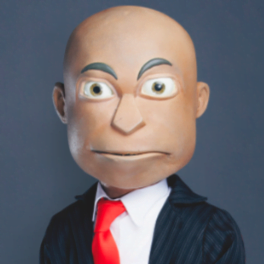
ChesterMissingChester Missing held his Cape Town book launch last night, and he was as entertaining/discomfort-inducing as ever (the latter, at least for middle-class white liberal types, whom he specialises in discomfiting). For those of you who don’t know Chester, he’s a puppet that routinely delivers fine political analysis, served up with plenty of satirical humour.

Conrad Koch is the man who stuffs Chester into a suitcase when traveling, and also the man who books Chester’s gigs, including – presumably – the deal for the book they launched last night, Chester Missing’s Guide to the Elections ’14. I’ve just finished reading it, and while anyone looking to learn anything about who to they should vote for on May 7 might end up disappointed (Chester being an equal-opportunity abuser of all the contenders), those looking for a simple collection of gags at the expense of those contenders may well also feel short-changed – but only because they might be asked to think through some uncomfortable issues, rather than simply chuckle along.
Gags there are aplenty, some of which are rather amusing, supported by some classic Zapiro cartoons. But a key purpose of the book – at least in my reading of it – is as a vehicle for Koch to explore the complexities of racial identity and class in our 20 year-old democracy, and to highlight the ahistorical and apolitical ways in which some of the likely audience for the book (and his shows) might be inclined to interpret South African political theatre.

As befits his training in social anthropology, Koch intends for the book “to explain why we should learn to understand voters’ motivations on their own terms”, rather than according to assumptions about what those motivations might be – whether those assumptions are the result of propaganda or our own prejudices. The book is, in this sense, a useful complement to Eusebius McKaiser’s Could I vote DA?, which (although more narrowly focused on one party) also highlighted the centrality of understanding the historical and psychological context in which political messaging is interpreted.

The second section of the book offers a potted history of South Africa, and the 10 pages dealing with South Africa pre-democracy are as effective a rebuttal to white folk who think apartheid a thing of the past as one could imagine reading in a comedic book. The point of the section is not to invoke lashings of white guilt, but to remind readers that if they don’t acknowledge the ongoing effects of racial discrimination, they can’t understand apartheid.

As I said in a previous column,

I did benefit from apartheid, as (on aggregate) all whites did. But I still benefit, because of the cultural capital, the confidence, and from the fact that the vast majority of people in power at my institution are white liberal males, just like me. How could I not have benefited and continue to benefit? After all, isn’t that what apartheid was designed for?

However you end up voting – if you vote at all – it’s useful to be reminded, as this book reminds us, that it’s not only our political leadership we’ve got to keep an eye on. We should also keep an eye on each other, and on ourselves, to make sure we engage with each other fairly and honestly, rather than according to well-rehearsed stereotypes.

Here’s Chester Missing at the EFF manifesto launch:

#FreedomDay, and 20 years of democracy in South Africa

My first experience of voting was on March 17, 1992, in the referendum that asked

Do you support continuation of the reform process which the State President began on 2 February 1990 and which is aimed at a new Constitution through negotiation?

That reform process, and the desire to be part of it, was one of the reasons that I returned from the USA, where I had been living during 1990 and 1991. I watched Mandela’s release in February 1990 from a small apartment in Rockville, Maryland, and even though sad I couldn’t be there, I was nevertheless optimistic about South Africa’s future, and the prospect of a fully democratic election.

On Pew’s Global report on morality (including South Africa)

PG_14.04.11_MoralityHomePage_260x2601The Pew Research Center recently released their 2013 Global Attitudes Survey, summarising responses from 40 117 respondents in 40 countries to various moral issues. A local journalist called me for comment this morning, but as usual, only soundbites will survive and besides, many readers of Synapses might never spot the resulting article in any event. So, here are some thoughts on the Pew results as they relate to South Africa.