Ched Evans, rape and rehabilitation

Ched Evans playing for Sheffield UnitedTwo high-profile cases of men who have been convicted of rape, but who are now up for (or in) plum jobs, have been in the news recently. One is Ched Evans, a footballer who formerly played for Sheffield United (and who they are considering letting play for them again), the other is David Mason, who raped a 12 year-old when he was 19, and who is now a 24 year-old apprentice at Jamie Oliver’s “Fifteen” restaurant.

Both were convicted, and both have served some time in prison. You or I might think that they served too short a prison sentence – and maybe some readers might even think one or both of them innocent – but most of us have little option but to trust the court findings, both in respect of the conviction and the sentence. That’s what one needs to do, in cases of relative ignorance, because others have access to more information than we do.

The interesting issues now are the non-legal ones: should Jamie Oliver give Mason this prestigious job, or rather give it to some other person, found guilty of another crime (“Fifteen” was established on the premise of being a rehabilitative opportunity for people with troubled pasts)? Should a prestigious club, in a sport known for its laddish culture, involving countless instances of misogyny and fair numbers of rapes, allow Evans to represent them again?

I don’t believe that any crime is, in principle, something that one should be punished for for the rest of one’s days. This doesn’t mean forgiveness is necessarily merited, but simply that the punishment can be disproportionate to the crime if you end up never being able to ply your trade or hold a prestigious job.

Mason was 19 when he committed the act of child-abuse. He should have known better. But we also know that before the late 20’s, male brains are impulsive, and don’t assess risk well. I say this not to excuse him, but simply to make the point that I’m not sure how good a predictor a single act of child-abuse by a 19 year-old is of his future behaviour.

Because if we are not going to punish someone forever, and we reach some sort of agreement on how long they should be punished for, the most important issue seems to be whether he’s a continuing threat, or someone who regrets what he has done, and appears to be rehabilitated. If he does, then I can understand Oliver making the decision to employ him.

If we’re not going to allow people to resume normal lives after serving an appropriate sentence, we shouldn’t let them out of jail. There’s no comfort here for their victims, to be sure, but I don’t think that we should encourage victims, and society at large, to understand perpetual retribution as “comfort” either.

Evans is more problematic. According to The Telegraph, the “woman said throughout the trial that she had no memory of the incident. Evans maintains his innocence, claiming that the sex was consensual.” Yet, the court found him guilty, so as I say above, that’s the basis on which we need to proceed.

That’s also the basis on which Evans, his family, and Sheffield United need to proceed. And unfortunately, friends and one family member of Evans were among those to name the woman he raped, on social media, resulting in such abuse by supporters of Evans that she had to move home and change her identity.

In light of this, Evans certainly has something to apologise for, even if he thinks he’s innocent of rape. He should apologise for his role in having caused the abuse, and he should certainly urge his supporters to stop abusing the woman in question, who was certainly harmed after being outed, regardless of how much she was harmed on the night in question.

Yet Evans has apparently not apologised for anything, nor shown any remorse. Hadley Freeman tells us that he’s due to release a “profound and personal” statement next week – but even if this does amount to an apology, I’d imagine that many of us will consider it somewhat forced by circumstance and opportunity, rather than sincere.

Sheffield United are perhaps waiting to see what he says. But in the case of Evans, with the absence of any contrition, and in the context of football’s apparent misogyny (or at least its trivialising of a culture of fairly crude masculinity), I do think it’s inappropriate for him to resume business as usual, and that neither the club, nor the Football Association, should be perceived as supporting him in doing so.

We do need to hear what he says next week, though – and as I said at the top, I do think that we can’t justify punishing someone for ever.
On Ebola, death rates, misunderstanding and fear

The current Ebola outbreak has a personal element for me, seeing as a dear friend is working as an epidemiologist in Sierra Leone. You can read her account of what she’s doing there on the GroundUp website, and I’d encourage you to do so – as bad as this outbreak is, it would be far worse without the courageous work of people like her, and the least we can do is to become informed about the magnitude of the problem and the sacrifices people are making to address it.

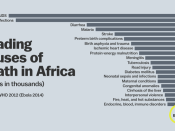
Apparently, the Congo outbreak of Ebola in 2003 is the most virulent to date, but comparisons between various terrifying things provide little comfort for anyone impacted by any one of those things. Also, comparisons can be grossly misleading. Take this chart published by Vox as an example:

causes_of_death_africa.0

As 6000 rightly points out, context matters, and it’s obscene that so many people are dying of things that are relatively easily preventable. But even though there’s nothing false (that I know of) in the graphic above, it’s rather misleading.

Ebola outbreaks are relatively rare, and the chart above compares only 2014 deaths from Ebola with total estimated deaths over some (unknown) timespan. Represented this way, HIV/AIDS deaths dwarf Ebola deaths – but what if we compared HIV/AIDS deaths in 2013 (for Guinea, Sierra Leone and Liberia only) with the 4 000 Ebola deaths represented above?

2013.001

Then we have an image that looks something like the one above, which makes it plain that if Ebola were a constant (like many of the causes of death in the Vox image), it would be sitting five or 6 positions from the top in that Vox image, rather than being something you need a magnifying glass to find.

What’s more, the total number of cases currently numbers over 8000, and the fatality rate of Ebola is around 70%. So another 5600 might die, meaning that Ebola is likely to kill just as many people in 2014 as HIV/AIDS did in 2013.

The comparison also obscures the fact that not everyone with HIV/AIDS passes it on to someone else, whereas the reproductive number (the average number of cases that each infected person causes) for Ebola is sitting at an estimated 1.4 – 1.8. On average, every case of Ebola is currently creating at least another case.

africa_trends

The epidemic will slow down and later end as epidemiologists get the reproductive rate to drop below 1, and that’s why people like Kathryn (the epidemiologist linked at the top) are doing what they are doing. And what they are doing isn’t easy – read this piece by a Hazmat-trained hospital worker to see how difficult it is to even wear the protective clothing one has to wear, never mind dealing with the paranoia of not trusting that you can touch anything or anyone, or fearing that your food might kill you (to make matters worse, Lassa fever, spread by rats via the food supply, is currently on the increase too).

We have no cases in South Africa.

Thank you to all those who are helping to keep it so.

Consensus guidelines are anti-science, says Noakes

Here’s an elegant lesson in salesmanship at the expense of principled communication about science. It’s from Professor Noakes™, as so many of my recent examples have been – the popularity of his lifestyle/diet message means that here in South Africa, source material is unlikely to run dry anytime soon.

Earlier this year, Noakes™ addressed a conference in Australia on the “Medical aspects of the low carbohydrate lifestyle”. Those interested in his arguments around health should watch the video below – it’s one of the better ones of his that I’ve watched, in that it’s clear, succinct, and mostly free of conspiracy and ad hominem argument.

The bit I want to focus on starts at 10:17, where he says:

And you must never trust consensus guidelines, because they are anti-science. Science is not about consensus, it’s about disproof, disbelief and skepticism. It’s not about consensus. When you’ve got consensus, you’ve got trouble.

This conflates two very different stories into one, to serve the rhetorical purpose of granting credence to the underdog-story. The two stories are first, that yes, dogma is antithetical to science. The second is that if a preponderance of evidence points in a consistent direction, consensus guidelines could be well-justified, and it would only be irrational or inattentive people who would not believe in that consensus.

In the second story, you’d have been rational to believe in the consensus account even if it later turns out to be false. I spend a lot of time talking about this at TAM2014 as well as in the paper I gave at a recent nutrition conference, so won’t repeat all that here, but the point is that denying a well-justified consensus doesn’t make you a better scientist – it makes you a conspiracy theorist (or simply wrong).

In other words, consensus guidelines that emerge out of honest engagement with the evidence, and that are open to correction, are not anti-science at all. They are the product of good science, and their later overturning (if that happens) in favour of a new consensus is also the product of good science.

You don’t measure or identify good science from its conclusions – because we don’t know that those will survive future data – but by method, and by openness to correction in light of evidence. The first kind of story mentioned above, involving dogma, is of course an example of bad science. That doesn’t mean that consensus is by definition bad.

Science is indeed about “disproof, disbelief and skepticism” – but all of these serve to challenge any existing view and replace it with a better one. They are tools, or methods, for reaching a better consensus, not for rejecting consensus in general.

The simplest way of putting the point is this: Noakes™ would like it to be the case that medical practitioners and educational programmes see the light, and teach the same message he professes. In other words, he’d like his own views to be the basis of a new consensus, because he believes that the existing consensus is wrong.

When you’ve got dogma, you’ve got trouble. And when you’ve got consensus, you might have dogma. But you might also have a bunch of responsible people agreeing that yes, that’s what the data imply, and until we learn something to overturn our view, the evidence leads us – as rational, responsible scientists – to a certain consensus.

In short, while the quote above can play as a sexy soundbite for undercutting received wisdom, it’s another instance of Noakes™ playing scorched earth with understanding of the scientific method.

Affleck, Maher, Harris and Islamophia

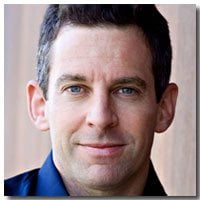
sam_harris_200In 2011, I wrote a column defending Sam Harris against critics of his perceived “Islamophobia” (no scare-quotes from here on, but please assume that I consider the term problematic, for reasons including those I outline below).

I no longer agree with all that I had to say then. At the time, I thought that Islam was the subject of more critique from Harris than other religions were because he regarded Islam as the most dangerous in a range of religious beliefs. In other words, I was convinced that he had a pragmatic, rather than prejudiced, reason for focusing on it. As I said at the time:

Harris, and atheists in general, do have a problem with Islam, just as they have a problem with Christianity. If Zoroastrianism was still popular, we’d have a problem with that too. But this generalised antipathy stems from the fact that religion encourages people to believe things on the basis of poor or nonexistent evidence. If we think it a good thing that people tend to believe what is true and disbelieve what is false, believing things in this way would be a harmful trait that merits discouragement.

This discussion never really goes away, but it’s foregrounded at present thanks to the barbarism of ISIL, and – on a more prosaic level – a recent CNN interview with Reza Aslan, and then the Bill Maher segment featuring Ben Affleck and Sam Harris.

I’m not going to focus on those interviews in their specifics, but I encourage you to watch them if you care about the context. There are also numerous commentaries and critiques you could read – this one by Avicenna Last (on the Maher/Affleck/Harris segment) probably comes closest to capturing my response to Harris, and also includes a useful transcript of the show.

The purpose of this post is rather to make two points that are of general concern in this debate. First, on Islamophobia: Islam is of course not a “race”. However, there are other ways of being bigoted than simply being racist. And, when one responds to a charge that you’re prejudiced by (simply) asserting “I have nothing against Muslims, it’s their religion I hate”, you might forget that this can serve as an evasive gambit.

The religion is held by people – and held with great commitment and sincerity – so criticism of it might be difficult to separate from criticisms of them. Scott Atran is worth reading on the sociology and psychology of belief, and how wilfully obtuse the language of “I respect people, but not their ideas” can sound to people who hold the ideas you happen to disrespect.

Second, I do think that Harris (and others) don’t consistently make the point that it’s primarily the extremists that they think problematic. Their language (and sometimes tone, which I think important) can create the impression that their criticisms apply generically to Islam, especially (I’d suspect) to people of that faith.

The point that Affleck was trying to convey is that there is a tendency for critics of Islam to read or sound like fundamentalists themselves, in part because they assume that an audience is as capable of separating the context from the logic of argument as they are. Our discussions take place in a political context, and persuasion depends in part on recognising that.

It is relevant, as Affleck points out, that more than a billion Muslims are only similar to ISIL in the sense that they all pray five times a day. They’re not similar in the sense that they will kill for this right, and I’m also not persuaded by Harris’s claim in the End of Faith that moderates provide some sort of “cover” or “legitimacy” for extremists.

They all believe in the same god, sure, but from within a radically different value system – one which allows for beheading infidels and opponents, and the other not. The fact that these two sorts of Muslim are nominally on the same spectrum of belief doesn’t mean they should be conflated with each other.

Harris and other critics of Islam forget – or speak as if they have forgotten – that believers can have an interpretation of a holy text, rather than a set of dogmas related to it. Instead, critics take the most reactionary views and treat them as representative of the whole, or more broadly as the most authentic form of Islamic faith (with thanks to Kenan Malik for this insight).

What this move allows for is the invalidation of the beliefs and ways of living that are more typical or representative. If a Muslim were to say “well, I’m not offended by Danish cartoons”, you can retort with “but you’re not a typical (or even a ‘real’) Muslim, because you’re not being a literalist when it comes to interpreting your holy texts”.

But if the typical Muslim isn’t a literalist, why use that as the standard by which to criticise others? Isn’t it rather unusual to judge people by the standards of the most pure, or best, exponents of any skill, virtue of way of living? (“Son, I grant that you’re able to kick a ball, but you can’t be a real footballer until you’re as good as Cristiano Ronaldo.”)

How about if the anti-fundamentalists – like Harris – might be giving some cover or legitimacy for the extremists themselves, by making them seem more representative or relevant than they are?

Or, how about we make make an effort to keep those moderates on our side, by not speaking in ways that make it appear we see all Muslims as different only in degree, but not in kind – because when you say they are of the same kind, you’re telling your neighbour that she’s really just like the beheaders, when one dispenses with the tact.

Anti-fundamentalism can play into stereotypes, too – and maybe, in doing so, it can give some power to the extremists. Because if you cast them as martyrs, moderates will be surrounded with examples of their religious identities being questioned and attacked.

Would you think that makes them more, or less, less likely to join the secular battle against fundamentalism?

Should the City of Cape Town rename a street after FW de Klerk?

If you’re too busy to read the full post, my answer (as per Betteridge’s Law) is “no”.

And, in case you don’t know what I’m talking about at all, the issue is this:

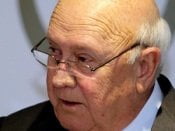
FWFrom today and until the end of October, the public have been invited to participate in the City of Cape Town’s deliberations on whether to rename Table Bay Boulevard in honour of FW – so, it would become FW de Klerk Boulevard.

If you want to read the full request for input, it’s on the City’s “Have your say” website, along with a fillable form. You could also email naming@capetown.gov.za (or submit something by fax, and therefore presumably by carrier pigeon also).

We don’t get to see the full proposal – all we can read by way of motivation is the following:

The proposal for renaming Table Bay Boulevard (the first section of N1 from Cape Town), FW De Klerk Boulevard, is motivated by the role that Mr. De Klerk played in the transition to a new dispensation in South Africa. He is a Nobel Peace Laureate recipient who has not received any recognition for the role he has played in the recent history of South Africa.

“He is a Nobel Peace Laureate who has not received any recognition“? I’m guessing they left something out there, like “not received any recognition in the form of a road being named after him”.

And it’s not just the Nobel that he’s been awarded: there’s the Prix du Courage Internationale, the UNESCO Houphouet-Boigny Prize, the Prince of Asturias Prize, and the Philadelphia Peace Prize.

On top of those (and others I haven’t listed), I’ve found reference to 8 Honorary Doctorates, and then the Order of Mapungubwe (Gold) – South Africa’s highest honour – too. So, it’s really only the City of Cape Town who seem to have forgotten to give this man a token of their appreciation.

Here’s why this Capetonian (me) thinks that they should keep on forgetting to do so, and why I’d encourage you to express your disapproval of the plan too (assuming you do disapprove, of course).

First, an objection in principle: it’s irrational to name things after living people in general, especially when naming and renaming costs money. If you don’t already think FW de Klerk unworthy of having a road named after him, he’s still got time to demonstrate his unworthiness to you.

I have no reason to expect that we’re going to learn unsavoury things about him in his remaining years, but it’s certainly possible – so I’d at least want to wait until his full story has been written, in case we end up naming a road after someone who has been exposed as a [insert something unsavoury here].

And second, because it was always absurd that he was awarded the Nobel alongside Mandela. Sure, the 10%-ish percent of white South Africans had a disproportionate number of guns and Rands, so were perhaps taken more seriously than they might otherwise have been, but any of you who were in South Africa in the late 80’s would know that FW had two choices: blood in the streets, or handing power over.

You don’t get to play at magnanimity if you never deserved to be the boss, and also, it’s no great achievement to do what anyone in your position would have needed to do, in order to avoid further bombings, murders, international ostracisation and the like.

I’d perhaps feel differently about de Klerk if he had a history of being a democrat, and someone committed to a non-racial South Africa. But he was the leader of the National Party in our most conservative Province, the Transvaal, and served a succession of racist white Presidents loyally. As Minister of Education, he supported the continued racial segregation of our universities.

To quote from a Telegraph piece with the unassuming title of “The day I ended apartheid

Black Africans had basically lost nearly all of their human rights over that period [the second half of the 20th century].

Nothing in De Klerk’s Afrikaner background suggested he was about to reverse all that. He had been in the job just four months and was still an unknown quantity, but what was known about him suggested he was no reformer. After a lifetime in the National Party (he was 54), he was generally regarded as on the verkrampte, or unenlightened, side of the party, although he always saw himself around the middle, neither verkrampte or verligte (enlightened), but certainly conservative.

“Negative expectations hinged on the fear that FW, far from being an innovator, was a hidebound disciple of apartheid,” said his own brother, Willem, later. “He never formed any part of the enlightened movement in South Africa. It was even rumoured he had tried to put the brakes on all the reforms PW Botha had made.”

He’s not a great man. He’s a man who was in charge at a great moment in history. It would have made some sense to honour him at the time, as one of those reconciliation gestures South Africans seem to be fond of. But in de Klerk’s case, we’ve done that already, and there’s no constituency (that I’m aware of, at least) that’s clamouring for de Klerk to be given any more medals or prizes.

On the other hand, there are still scores of less celebrated but important South Africans who haven’t yet had a road named after them, never mind being awarded honorary doctorates or Nobel Peace Prizes.

You’d think we’ve simply run out of ideas, in proposing to name a road after de Klerk. But sadly, this might be another indication of Cape Town, the Western Cape, and (by extension) the DA’s obliviousness to aspects of political messaging.

When you’re constantly criticised (often unfairly) for being a racist City, renaming prominent roads offers an opportunity to subtly shift the character and reputation of the City either closer to or further from those perceptions. Why choose the former?

Big Food, Big Babies: moral panics and the business of eating

Earlier this year, Owen Frisby (the chairperson of SAAFoST) invited me to give a presentation at the 25th Congress of the Nutrition Society of South Africa. While the majority of speakers at the congress were dieticians and others working in medical science, my focus – as in previous posts and columns – was on poor critical reasoning and hyperbole in science writing, and the negative consequences this might have for public understanding of science. If you care to, you can read the text of my presentation below.

John Lennox and @Eusebius McKaiser debate: does morality need God?

eusebiusMckaisercroppedA trip to Johannesburg last week (for the unlikely purpose of presenting a paper at a nutrition conference!) was well-timed, in that I had the opportunity to both attend a debate between Christian apologist John Lennox and Eusebius McKaiser, as well as to join Eusebius in studio the next day for a chat on religion and its place in state-run schools.

You can find the embedded stream of my interview with Eusebius at the bottom of this post. But while it’s still relatively fresh in memory, I thought I should capture a few thoughts on the debate for those of you who could not attend. A recording of debate will appear on YouTube at some point too, I’m told.

The topic of the debate was “Morality and God: is there a connection?”, although the conversation also ended up touching on other issues including the role of God in generating significance in life, and whether atheists are at all handicapped with regard to understanding science.

In his opening remarks, Lennox made the claim that science and atheism were essentially in conflict, as atheism undermines rationality. This was the first of many occasions where I had the clear sense that Lennox was failing to extend himself beyond certain premises that he considered to be axiomatic.

For him, God generates meaning, in that God creates the syntax and grammar of science – the order of things, the directions in which they flow, how they fit together. So without grasping God, you’re handicapped in your capacity to understand science at all. (This is my analogy, but I think it captures what he was saying.)

This question of mine (above) was put to him later in the evening, and he responded by professing ignorance regarding the state of Islamic science. This evaded my question, in that the dilemma I tried to make him grapple with was the possibility that his religion was interchangeable with any other for the purposes of generating this scientific foundation.

If it was not, he’d have to argue that his was superior – an easy thing to assert, but not easy to make a case for, and one of those occasions where the fundamentalism of the axiomatic premises I spoke of above would be exposed.

Another moment of disappointment to me was when he described evolution as a “mindless unguided process”, which reveals a rather caricatured and false view of evolution. Evolution is strongly guided by natural selection – but if one equivocates around what “guided” means, or rather, stacks the deck in favour of only one sort of guided (by a conscious agent, like God), then Lennox can certainly win the day, but only at the expense of making a plainly circular argument.

And that’s the problem with these debates. I’ve debated a couple of apologists over the years also, and besides the opportunity these debates present for showing an audience how arguments work (or don’t work), there’s pretty much zero prospect of productive argument between the antagonists.

Even strong critiques have little impact, such as when McKaiser exposed the inconsistency of Lennox (and all religious folk, to an extent) happily living in the empirical world of cause and effect when it comes to their day to day lives, but then bringing what is (to an atheist) essentially magic into the conversation when speaking of the souls, free will, morality and so forth.

We have a number of compelling (and competing) accounts for how morality evolves or is generated in animals that demonstrate moral instincts – and many of these are more plausible than an account requiring the sort of leap of faith that religion does (and, never mind the difficulty of then making a principled choice between the various religious accounts).

Again, it would only be if you’re predisposed to be sympathetic to the religious (and Christian) account of these things that they have any chance of gaining traction. In a fair fight, as it were, the religious account would be dropped from the list of plausible hypotheses fairly early on.

Similar tactics (and results) were in evidence with questions around the significance of life – a question that only becomes interesting if you grant that life needs some grand metaphysical meaning. There’s no reason to grant that premise, though – it’s a challenge that only has any force because it’s the product of centuries of religious privilege.

The conversation was fair-minded for the most part, although there were a number of sly digs from each debater towards his opponent. I thought Lennox more guilty of this, but my count might be unreliable, thanks both to my epistemic framework and the fact that Eusebius is a friend.

I suspect that Eusebius and I don’t agree on the morality question, although that requires that I hear his view outside of a context in which he was mostly attempting to rebut Lennox, rather than offer his full explanation of how moral principles are generated.

From what I heard on Thursday, Eusebius is a moral realist, which I’m not, but then, at other times, he seemed to speak as if his account of the objectivity of moral truths was one grounded in something like rationality, reciprocal altruism and the social contract, which together make certain moral principles binding on any rational agent.

If that’s true, we’d agree in substance, but I’d object that this doesn’t mean objectivity or moral realism, but rather that we’d converge on the same principles for pragmatic and contingent reasons – certain moral principles would be akin to conclusions in science, in that they are the best-evidenced, rather than being true by necessity.

Were you there? If so, feel free to let me know what you thought, below.

[soundcloud url=”https://api.soundcloud.com/tracks/168418882″ params=”auto_play=false&hide_related=false&show_comments=true&show_user=true&show_reposts=false&visual=true” width=”100%” height=”450″ iframe=”true” /]

Some updates on God (and related matters)

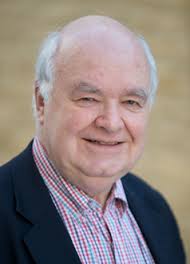
imagesJohn Lennox – mathematician and Christian apologist – is in town again, and giving talks at UCT, Stellenbosch and in Johannesburg. I’ve twice had the pleasure (or at least, experience) of chatting to him at length regarding his views on whether there is a necessary connection between religion and morality, and there’s no question that he’s a very smart and sincere man.

But he’s also wrong.

I’ve written many posts over the years dealing with meta-ethics and morality, and have debated a few Christian apologists on these topics over the years. There’s little point in doing so with the hope of changing their minds (and vice versa), but these conversations can still be very valuable to an audience, in that listeners or readers could certainly benefit from hearing how much moral behaviour we find in non-human animals, or about the clear lack of correlation between religious belief and “good” moral choices.

If you’re in Johannesburg this Thursday night (September 18), you might be interested to attend a debate between Lennox and Eusebius McKaiser on exactly this topic. It takes place at 7pm in the Great Hall of Wits University, and I’m looking forward to hearing what Eusebius has to say on the topic.

Eusebius is unlikely to say much that I’ll want to disagree with on this topic, but I do want to use the debate as a segue to briefly return to a topic he and I do disagree on, namely the question of whether we should call ourselves atheists or agnostics.

I’ve written about this at length too, so I’ll just summarise the disagreement here. All knowledge – excepting technical points like Descartes’ cogito – does not entail certainty. We can be overwhelmingly convinced of the truth or falsity of any given proposition, and for the sake of communicative efficiency, we call those propositions “true” or “false”.

Furthermore, we’ll in all likelihood often right to call many of those propositions true or false. In other words, they correspond to the way the world actually is.

What does it mean to say that you’re an atheist, as opposed to an agnostic? Here’s the problem: it can mean at least three things. First, you could mean that you’re sure that there is no God – that “God exists” is a false proposition. Second, you could mean that you are sure that there are no gods at all, or in general – that all god claims are false. Or third, you could be saying that you regard it as overwhelmingly likely that one of the two formulations above are correct, without claiming certainty.

The third formulation is consistent with the way in which I treat all other propositions, and I see no reason to treat propositions relating to God(s) differently. I don’t claim certainty for any other propositions, and wouldn’t want to claim one here, even if the chances of God(s) existing are vanishingly small.

Does that, then, make me an agnostic, as opposed to an atheist? Eusebius says yes, it does, and that it’s a more epistemically responsible choice to call myself an agnostic. And here’s where he’s not so much wrong, but perhaps reaching a slightly hasty and unsubtle conclusion.

We don’t need a qualifier like agnostic (in the sense that it qualifies that you’re not certain) when we speak about propositions like grass being green, or smoking causing cancer. Everyone from one interpretive community – the philosophically inclined one – will fill in the epistemic doubt for themselves, and know that you’re not making an absolute claim.

However, everyone from a different interpretive community – those who regard truth claims as being absolute – will simply assume you’re using language in the conventional sense (and to be honest, how most of us use it, most of the time), and that you are making a claim of absolute certainty.

And this, in turn, opens up the possibility of using these words – just like we use most words – to signal a certain stance or attitude towards the proposition in question, cognisant of who the audience is. If Eusebius and I are talking, we could both say we are atheists, and neither of us will assume the other is claiming certainty. Likewise, we could both say we are agnostics, and neither of us will assume that the other is in doubt about the overwhelming likelihood that we are correct in saying God(s) don’t exist.

But when talking to other people, especially ones we don’t know, we can be fairly confident that the common understanding of “agnostic” is “we’re not sure” – in other words, it signals that it’s an open question to us as to whether God(s) exist or not. And while it’s an open question in a strictly logical sense, it’s not an open question in any practically relevant sense, just like it’s not an open question whether grass is green or not.

So, using the word “atheist” – in situations where we don’t have the time to explain all this – might well both capture our position more accurately (in the mind of the audience), as well as serve a useful political function in reinforcing the notion that the proposition in question (that God exists) is one that we consider overwhelmingly likely to be false.

Having said that, I’ve come to prefer “agnostic atheist”, in that it seems a “best of both worlds” response, as well as one that tends to open up an interesting conversation, thanks both to not appearing to be dogmatic, and because it tends to discourage a dogmatic response (except in the case of some atheists, who think it a cop-out).

Before moving on to a different topic, I’d encourage you to take a look at Eusebius’s column this week. I agree with most of it, but would again want to disagree on some elements of politics and strategy, especially with regard to his example of Richard Dawkins, who has progressed from being a useful lightning rod to becoming somewhat of a troll.

In relation to the column, all I’ll say here – before this becomes far too long – is that while it’s of course true that the concept of God shouldn’t be treated with kid gloves, that logical point can be used as an excuse to be quite the bully (I don’t think Eusebius and I disagree on this point, though).

Moving on:

You might remember Andrew Selley, the chairperson of the Christian advocacy group FOR-SA, for his valiant (sarcasm font) efforts to secure parents the right to beat their children, because that’s apparently what Jesus would have wanted. He has written a more recent post arguing that the OGOD case against 6 schools entails “The Court … being asked to order that Christianity be removed and banned from the schools.”

That’s simply untrue – the point of the lawsuit is equality of representation, and obeying existing regulations that require schools to be essentially secular. He goes on to argue that the schools are welcoming to other faiths, but as I’ve said in the past, paying lip-service to inclusivity does not amount to inclusivity in practice. If a school advertises themselves as having a Christian character, that immediately a) decreases the likelihood of other faiths (and nonbelievers) getting a welcoming reception, and b) increases the likelihood that the school will remain Christian, because those of other faiths (and nonbelievers) will be less likely to apply to that school.

Lastly, I’m pleased to see the launch of an “Open Mosque” in Cape Town, where women will be treated equally, and where homophobia will not be tolerated. It should be noted that Sataar Parker, spokesperson for Cape Town’s biggest mosque, Masjid Ul Quds in Athlone, says this is “nothing new”, with their mosque having been “open” in these senses for 25 years. Whether that’s true or not I don’t know, but if it is, we can simply celebrate their now being two such mosques available to Cape Town Muslims.


Man is free to reign as god!

downloadEven though Ivo Vegter might be slightly less than gruntled to be spoken of alongside Error Naidoo, the homophobic and very paranoid man of God, the title of this post (from Naidoo’s latest rant) happens to fit them both.

It fits Naidoo simply because it’s his line, verbatim, and follows his taking note of the “athiest groups [that] are growing bolder and more aggressive in their diabolical quest to eradicate Christianity from public life in South Africa”, in this case by trying to ensure that publicly-funded schools are secular.

It fits Vegter more loosely, mostly a) because it sounds like something Ayn Rand might have said; b) Vegter is an unapologetic libertarian; and c), because his most recent Daily Maverick column, on regulating complementary and alternative medicines (CAMs), rejects State oversight of CAMs in favour of people deciding for themselves which risks they would like to take and which not when it comes to their healthcare.

The above summary (in its brevity, rather than due to misrepresentation) doesn’t do his argument justice, so please do read his column. The one note that is essential for accuracy, though, is that he is open to other regulatory bodies stepping in, perhaps a “private, voluntary and competitive” scheme.

As is typical for Vegter, his argument is consistent and well laid-out, so even if you disagree with him, you’ll find much to ponder when reading the column.

As I noted in a comment to that column, my concern is that his perspective is either insufficiently agent-neutral, in that it privileges those of us who are more able to make informed healthcare choices, or that it indicates a moral stance I don’t support – namely that those who make poor healthcare choices will eventually learn to make better choices, but via their mistakes (which might well involve suffering, and death).

A private, voluntary and competitive regulator doesn’t reassure my concerns on the agent-neutrality point, in that if it’s voluntary, you need to know about it and sign up to it, which immediately leaves some folk out of the safety net, and allows for producers to opt-out also.

It also opens the door for competing regulatory bodies – and yes, while the market might eventually result in one being trusted above all others, the interregnum before that happens exposes people to risk. And at the end of the day, nobody is going to do this for free, so it’s not obvious that it will make medicines more affordable than a State-subsidised regulatory process does.

Private regulators cropping up to ensure that your food is Halal or Kosher are not good analogies, to my mind – nobody dies if they accidentally eat some pork. There’s more at stake with medicine, so our standards need to be higher. For me that means a central regulatory body, where the interesting questions become whether it’s good at its job, and if not, how to make it better.

Except, of course, if you think that people don’t need that sort of nannying, and that we will learn who to trust (in terms of medical providers) through taking bad or ineffective medicine, and suffering the consequences of our mistakes. Some of us will avoid misfortune through hearing through word of mouth, radio, newspaper and the like of what to avoid, but others- especially rural poor, with educational disadvantages – would be particularly vulnerable to snake-oil salespeople who care only for profit, not others’ health.

In cases like these, some easily-identifiable and consistent stamp of authority, that a central regulator provides, seems a useful thing to have. Rejecting such a body seems to involve an idealism about the market, and about human capacity for avoiding tragic errors, that aren’t borne out in history. Hence Vegter’s argument, while logical, involves a moral commitment that I shy away from.

But it’s still a far better column than Leon Louw’s, who seems to want the pseudoscientific stuff to stand on equal footing with medicine, and I do commend it to you.

Briefly, on to Error Naidoo, who is most agitated about OGODs lawsuit against 6 schools that speak of having a “Christian character”, hold regular Christian prayers and so forth. As I’ve written in the past, this might contravene existing policy, and more to the point, paying lip-service to secularism in schools can still leave many children ostracised (and indoctrinated).

Naidoo is in “good” company here, as Afriforum have offered to help cover court costs for the schools that are the subject of this lawsuit. I feel for all my sensible Christian friends, who must be cringing at the thought of white racists rushing to defend the Christian values of the schools in question. Anyway, here’s Naidoo, unplugged, unedited, and perhaps a little unhinged.

The obvious objective of the athiest group, “Organisasie vir Godsdienste-Onderrig en Demokrasie” is to eradicate all Christian activity at state run schools. Humanists want education all for themselves.

Although a small minority, athiest groups are growing bolder and more aggressive in their diabolical quest to eradicate Christianity from public life in South Africa. Man is then free to reign as god.

What you may not realise is that secular humanism is a religion! And what athiests are actually advocating is replacing Christianity with the godless and bankrupt ideology of secular humanism as the most dominant religion in SA. Incidentally, They already control politics, the media and academia.

A culture war is currently raging in SA society. Two conflicting worldviews are engaged in a life or death struggle for the hearts and minds of people. Victory is assured for the courageous and the committed.

On one side of the battlefield are advocates of the Biblical Christian Worldview with its message of service and submission to an all powerful God. On the other side are the secular humanists whose ultimate goal is to abolish all acknowledgement & recognition of God from the national psyche.

Significantly, apathy and disunity in the Christian Church has emboldened atheist groups, sexual rights activists and other anti-family radicals in South Africa. The Church’s silence amplifies their voice.

Somebody desperately needs to sound the alarm in the Christian Church in SA. The enemy is united, committed and well-resourced. And they have a cunning plan to control and dominate society.

Talking with Eusebius about argumentation

Power_FM_(South_Africa)Earlier today, Eusebius McKaiser invited me to join him in a half-hour conversation on critical thinking – how we should do it, and how we fail. Seeing as I happened to be in Johannesburg, I was able to join him at the PowerFM studios for the conversation that ensued, which proved to be far more interesting – for me, at least! – than the more typical interview by telephone. For those interested in the topic, the Soundcloud podcast is embedded below.

[soundcloud url=”https://api.soundcloud.com/tracks/166178402″ params=”auto_play=true&hide_related=false&show_comments=true&show_user=true&show_reposts=false&visual=true” width=”100%” height=”300″ iframe=”true” /]