du Preez, McKaiser, racism and loaded questions

I’ve been thinking about racism a fair bit recently – not only because it’s a national preoccupation, but also because of things you likely know about already: the ongoing student and worker protests at my university (among others), and the Paris attacks over the weekend and responses to that (yes, I know “Islam is not a race“).

Another reason for the personal preoccupation is that I’m toying with the idea of writing a book on the subject, or rather a book on the concept of “whiteness” and how it influences discussions on race in South Africa. So it was with great interest that I attended Eusebius McKaiser’s Johannesburg launch of Run Racist Run last week, in which some of these issues are explored.

20151110_183732-1

I haven’t had a chance to read the book yet, but I have been following two discussions of it and its author – one, a bunch of abusive ad hominem towards McKaiser on Twitter, from people who also haven’t read the book, but think they can dismiss it on the grounds of what they think they know of the author.

Two, in a lengthy Facebook post and discussion, Max du Preez expressed dissatisfaction at being (unfairly, in his view) singled out for criticism in one of the book’s chapters.

You need to read the thread yourself for a full view, but my summary of it is that du Preez is unhappy that McKaiser reads a certain newspaper interview as containing evidence that du Preez adopts a rhetorical strategy of pointing to obvious, and odious, racism to deflect from his own, more subtle racism.

11220930_10153588730640546_4454034221720839491_nAnother discussion of the case can be found on Jason van Niekerk’s public post, which helpfully also contains a page from the book in question, reproduced alongside. My concern with how this discussion is framed on Jason’s post, as well as by McKaiser, is that it’s easy to see this as an example of a loaded or complex question. For example, “have you stopped beating your wife?”.

These questions entail any answer simply implicating you further, making it impossible for du Preez to respond in any way except to say, “you got me – I’m sorry for my subliminal racism”. In these situations, the questioner holds both absolute authority over the framing of the question, as well as the acceptability of any answer – and I don’t think that’s fair.

I don’t think du Preez would disagree in the least with how McKaiser frames the false dichotomy in the closing sentence of the image above. I also don’t think du Preez would disagree that he – and all white folk – might sometimes have a reflexive thought that is attributable to a racially discriminatory upbringing or culture.

But that isn’t what he was being asked about in the interview McKaiser focuses on. He wasn’t saying that “because I reject the racism of Bullard/Roodt/Hofmeyr, I myself am immune to criticism”. If you want to criticise him for saying that you need an example of him saying that, rather than an example of an interview where he could be read as saying that, if we choose to be uncharitable.

Here’s what van Niekerk thinks faulty about du Preez’ response, with my response below:

du Preez doesn’t mention or address the three specific claims made against him. Instead, he suggests that we can know whether he’s a racist or not by looking at his history of written work.

2 things about that.
1. That response is begging the question posed in the chapter title. du Preez is, in his response, invoking exactly the conception of racism McKaiser is calling inadequate: racism as a fixed feature of character you either embody or don’t, rather than a vicious disposition the privileged can fall into without noticing.
2. Even if he weren’t begging the question, this isn’t an issue of representative sample sizes: McKaiser has picked that article as an exemplary demonstration of a specific rhetorical pivot. Other stuff du Preez has said or written that doesn’t do that wouldn’t be relevant to a discussion of that move.

It didn’t seem to me that du Preez was saying that his body of work immunises him from any accusations – rather, he’s saying that one article (which wasn’t even addressing the substantive charge being made against him by McKaiser and van Niekerk) is an unrepresentative data point.

It’s not question-begging, in other words, but (legitimately, in my view) rejecting the question as illegitimate. As I said above, I think du Preez would agree with “the conception of racism that McKaiser is calling inadequate” – he’s disagreeing that an interview of his manifests that kind of racism, because thinking it does so takes an interview given in one context (an Afrikaans newspaper, speaking mostly to a white community, where du Preez would be well aware of that and frame his responses accordingly), and interprets it as if it were offered in another context.

On the second point above, it seems to me that van Niekerk is doing the question-begging here. It’s only an “exemplary demonstration of a specific rhetorical pivot” if you assume McKaiser’s reading is correct, and I don’t think that’s obviously true at all.

More to the point, to use someone as an example of unconscious (or partly conscious) racism, when that person has neither the right of reply (pre-publication), nor the right to explain anything about how the context is relevant, seems unethical to me.

Again, if we put the simple question to du Preez, “do you think that condemning obvious and overt racists makes you, yourself immune from more disguised or subtle forms of racism, and that even you might sometimes slip into those?”, I’m pretty confident he’d say “yes”. Until you ask him that question, is it fair to read what he’s said – in another context, to a different audience, as proving a “no”?

(Disclaimer: all three of the people discussed above are (hopefully not “were”) friends of varying degrees of virtuality.)

Liberalism and its manifestations

If you ask 3 people what they understand “liberalism” to mean, you’ll likely get three different answers. Even after name-checking some canonical figure – Mill, Berlin, Rawls, Kymlicka, etc. – we’d still be left with confusion, thanks to now being able to argue about the how “classical” liberal tenets differ from “social democrat” ones.

So, I’m not going to try define liberalism in general at all, but rather offer a few remarks on what I understand it to be, or rather what I mean when I identify as a liberal. If you want to read a good summary of the theoretical debates alluded to above, I’d recommend the political philosophy page on the Internet Encyclopedia of Philosophy.

I’m by and large a “classical” liberal, who takes a utilitarian approach to resolving any inconsistencies that may arise, such as when trying to reconcile individual freedoms with the responsibilities of the state to care for everyone’s interests equally.

To pick a trivial example of such an inconsistency, I’m happy to be taxed higher than some other people as a way to cross-subsidise those with more material wants (which maximises equality overall), even though some might think it “unfair” to one person to pay a higher proportion of tax from their salaries than others do.

But there are more tricky examples than this, of course – liberals typically value freedom of speech, which raises the question of whether it’s consistent with liberalism (or a contradiction) for a (allegedly) liberal party such as the Democratic Alliance to eject a member for sharing positive sentiments about apartheid monsters.

I’d say it is consistent (whether or not it was the correct decision), because individual freedom to speak might sometimes be trumped by some broader conception of liberty (in other words, it’s not necessarily the case that freedom of speech be treated as an absolute, without exceptions), and for the pragmatic reasons offered in the first example.

You can be a liberal without being a free speech fundamentalist, in other words (at least on my definition – yours might differ).

A second, less controversial way of resolving this apparent contradiction would be to argue that if you voluntarily agree to a certain code of conduct, as was the case in the example in question, you can be held accountable for violations of that code even if there’s a general commitment to free speech. (Not to mention, it’s not a free speech restriction in the strict sense anyway, in that the person in question can say what she likes, just not in specific and pre-specified contexts.)

Enough preliminaries, except to note that I’m certainly not a libertarian, contrary to the impression I’d apparently inadvertently created for one student who asked me about it on Twitter the other day. I certainly think that there are occasions where freedom overall is certainly maximised by compromising individual freedoms.

Ensuring freedom from undue or unjustified interference is certainly constitutive of my understanding of liberalism – the difficulty, of course, is knowing when the interference is justified or not.

Being judged as an individual is also an essential element of liberalism. This means that a person shouldn’t be assumed to have certain views or a certain character by virtue of what race, sex, gender, nation and so forth they happen to belong to – you get to define yourself (including the freedom to define yourself into one or more of the groups I’ve just listed.)

As Mill put it in On Liberty, “the only freedom which deserves the name, is that of pursuing our own good in our own way” – and while I’d quibble with the “only” in that quote, I do think this one of the most accurate descriptions of what lies at the heart of liberalism.

But because others can get in the way of us pursuing our own good, we’re justified in implementing certain constraints on behaviour. Equality, for example, sees legal expression and reinforcement in concepts like the rule of law, and equality before the law.

And, even though the scope for governments explicitly telling us what to do needs to be very carefully limited, and justified by secular and universal concerns, rather than partisan ones, I’ve got no problem with governments “nudging” us (an idea I defended at length in a previous post).

While many of the points above need further defence, my objective here is to provide a starting point, laying out what strikes me as fundamental to my understanding of liberalism: freedom, equality and self-determination. I’ll hopefully unpack this more in future posts.

But to conclude, I’d like to reiterate that you’d rarely find me defending any given principle as an absolute. Instead, it seems more useful to have strong commitments to clear guiding principles, only violable with very good justification.

Dianne Kohler Barnard, social media and proportional punishment

As anyone with more than a passing interest in South African politics would know, the Democratic Alliance (DA) Federal Executive on Friday confirmed the expulsion (which is under appeal) of Dianne Kohler Barnard (DKB) from the party, following her Facebook share of the following post:

DKB

It’s easy to see why so many found this offensive – PW Botha presided over many of apartheid’s crimes against humanity, the positive elements listed above were largely to the benefit of white South Africans (8% of the population), and the police did plenty of murdering on behalf of “government toadies”.

PWBothaDKB removed the post fairly swiftly once it got noticed by Twitter, offered effusive apologies to all and sundry, and claimed that she had posted it in error, not noticing the PW Botha reference.

I find this difficult to believe. The post is 10 lines long, and PW Botha is mentioned right in the middle – even skimming the paragraph seems sufficient to notice his name. But at the same time, it’s fairly difficult to believe that she’d be stupid enough to post it intentionally.

The DA’s social media policy is posted on TimesLive, and it exhorts members to exercise extreme caution regarding what they publish, as it should. There’s no question that she violated that policy, and also brought the party into disrepute. The DA’s Federal Constitution lists the following sentences that a disciplinary committee can impose:

  • 11.7.1.1 the membership of that person be terminated;
  • 11.7.1.2 the membership of that person be suspended for a specified period;
  • 11.7.1.3 the member be suspended from any position in the Party or from holding any position in future, or for a specified period, or that all or any of the privileges of a member as stated in this Constitution be suspended;
  • 11.7.1.4 the member be admonished;
  • 11.7.1.5 the member be fined an amount not exceeding the amount determined by the Federal Council from time to time payable upon such terms and conditions as the committee may recommend;
  • 11.7.1.6 The member be ordered to render a period of service, including but not limited to, service to the community or to the Party.

Put yourselves in the minds of the disciplinary committee, and the Federal Executive who had to ratify the committee’s recommendation to terminate her party membership. If they had believed her account of posting this in error and ignorance, terminating her membership might seem a disproportionate sentence, motivated largely by their ongoing attempts to undermine accusations from some quarters that they are an “untransformed” party, or that they at least harbour far too many racists.

On the other hand, that sort of post is a spectacular example of bringing the party into disrepute, given those exact accusations regarding the party’s character, upcoming local government elections, and the evil of PW Botha. To have not punished her severely would have played right into the hands of critics, and would have given the ANC a hefty stick to beat them with in the elections.

It would have been a tough call, given that they would also have been aware that it would be perceived as vote-chasing opportunism by some, principled by others, and an over-reaction by yet another section of armchair analysts, few of whom would know much of the detail behind the deliberations.

I have a completely unfounded suspicion that her appeal will result in her membership being suspended for a year or so, rather than being terminated, in order that the matter not be an election issue. Unless, of course, the termination was because they actually believe – or know – that she does hold sentiments of the sort endorsed by that Facebook post, in which case termination seems entirely appropriate.

These things do expose amusing sub-narratives, such as this column by a media manager for the ANC telling us that DKB would not even be fired as Member of Parliament (never mind being kicked out of the party), because she was really just expressing a standard DA view (I’m paraphrasing, liberally). A month later, the ANC press release on DKB’s expulsion does a 180 degree turn, telling us

 The DA’s decision on Kohler-Barnard, far from being a positive move, is a serious indictment on the DA as a party that is still haunted by demons that characterised the nation’s darkest period prior to the dawn of democracy and non-racialism in 1994.

So, they’d be racist if they kept her, but terminating her membership does “little to cleanse itself of its twin demons of racism and apartheid rule”. Sure, the DA might be both opportunistic (and arguably inconsistent in not terminating various other memberships for sexual assault, or in other instances of racial abuse) – but it’s also rather opportunistic to beat them up for whatever decision they take.

These cases also offer cause for deep frustrations for the party, I’m sure, as they remind you that your supporters can be your worst enemies, as we’re now seeing with some of white Twitter bleating about how the ANC is much worse, because they harbour a corrupt, thieving President and various other disreputable folks.

Well, sure, but that’s got nothing to do with whether DKB is fit to be a public representative or member of the DA or not. Two (or more) wrongs can co-exist, and the existence of one might say nothing about how we should deal with the other.

“Whataboutery” in the form of saying “look over there, they’re worse!” mostly serves to signal that you’re more interested in scoring points than in political progress. Whether DKB was given the correct sentence or not, there’s no question that she did something either unforgivably stupid or indicative of inexcusable views, and that’s the important thing here, rather than what crimes someone else might or might not have committed.

Germaine Greer, universities and false dichotomies

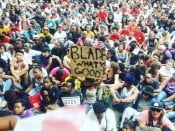
Student and worker protests continue, across South Africa, though it seems that we might be approaching a resolution at my university, at least. Getting back to (academic) work, including examinations and graduations, depends on whether protesting groups trust that they’ve received a good-faith commitment to addressing their demands, and I don’t know if we’re there yet.

But alongside discussion of (legitimate, as I’ve said before) demands, there are always elements on either side that hold things up, whether through acting unlawfully (for example burning books, at one university) or acting in bad faith, such as when academics, staff or other students disparage or insult what is, on aggregate, a coherent and disciplined group of disaffected students and workers.

Discussions get heated, and both the emotions and the urgency of the issues can lead discussions into attempts to make people choose between two extreme positions. Here are some examples:

Can police ever be allowed on campuses?

Answering this with a “no” is obviously correct for many of us, given the role police have historically played in the South African education system, and given the mistrust many South Africans have in the state in general, and the police in particular (thanks to events like the killings at Marikana).

Others would say “yes”, police should be allowed on campus, because they are the only way of dealing with people some of the “yes” group regard as hooligans, uncontrollable in no way besides the threat of legal censure. On this extreme end of the spectrum, the “yes” group is wrong, and is often just unwilling to challenge their own prejudices against those who disrupt the status quo.

Yet, treating the “no” answer as axiomatic would be a mistake also, in that it’s contingently the case that our police, in our circumstances, would be such an inflammatory presence. There’s no problem in principle with having police on campus, at least to my mind, although there’s certainly a problem with it now.

What counts as violence?

Various sides of these debates have cherry-picked examples of violence or non-violence to prove the point they want to make, but the fact of the matter is that the protests have been overwhelmingly non-violent, with the instances of violence I’ve seen mostly being perpetrated by police, or by students after provocation by police.

But focusing just on physical violence allows one to forget that simply not being physically violent does not yet mean that your actions might not be abusive in other ways. For instance, violations of rights are abusive. So, not being able to get to work, or to your car, or not being able to leave a meeting interferes with freedom of movement – and if an atmosphere is hostile enough that trying to assert those rights generates additional anger, we might have concerns even in the absence of physical violence.

Of course, forcing people into uncomfortable situations is one important way of making (or helping) them take your concerns as seriously as they should – so the tactical impulse is certainly understandable. My point is that the moral high-ground of being non-violent is at least complicated by these sorts of instances, and one should be able to discuss this also.

Demands for immediate action

It’s frequently been the case, during these university protests, that members of one or another group have demanded an answer to a complex problem immediately, even if the relevant decision-makers are not in the room. When this is said to not be possible, it’s taken as a sign of intransigence, so one is given the choice of appearing callous, or of capitulating.

Again, there is a middle-ground, because many decisions cannot be taken in the haste one or more parties might prefer. Adam Habib, Vice Chancellor of Wits, wanted time to investigate the economic implications of insourcing services at that university, but his request to have time to form a task-team to do so was mocked as evasive by students on social media.

Yes, asking for time to consider things can simply be a stalling tactic, but seeing as Wits had last considered the matter in depth over a decade ago, and seeing as it has enormous financial implications, it’s the sort of decision you don’t want to rush, and need to make with due care. (Because you might be able to insource some things now, others later, never mind coming up with creative schemes involving worker collectives and the like.)

And finally, is Germaine Greer transphobic?

GermainecropAccording to trans people and their allies, she certainly is. If you’ve been following the “no platforming” debate that has recently erupted around her being invited, then disinvited, and now again invited to speak at Cardiff University, you’d at the very least have been exposed to examples of her saying very dismissive things about trans people.

But as Rebecca Reilly-Cooper points out in this provocative but carefully-argued piece, the fact that someone doesn’t share your understanding of categories like race, gender, sex and so forth isn’t yet, and by itself conclusive of their either denying your humanity, thinking that your political claims aren’t worthy of consideration and so forth. It’s also not obviously hate speech in the legal sense, no matter whether some people find it offensive or not.

Reilly-Cooper presents examples and analysis of the excesses or extremes that identity politics can give rise to – and of course, it doesn’t necessarily give rise to those at all. Folks who want to dismiss her piece will say she’s caricaturing – and of course, a bunch of transphobes will claim her as a champion of their cause too.

You don’t have to make either of those choices, though. You can, as with all the examples I’ve given above and also others, say that our labels and analysis is often faulty, because we’re faulty reasoners with strong emotional commitments to various positions.

And, you can say that our best way of getting better at making good and clear distinctions is to let people speak, rather than demonising them or their views.

#FeesMustFall – the student protests at South African universities

While I’ve co-signed a (as yet unreleased) statement from the academic community on the current student protests, there are of course pieces of that statement that I’d support more strongly than others. I have, however, recently sent the text below out to members of the Free Society Institute, and I reproduce that below for your interest.

https://instagram.com/p/9GTkMnlnnM/

It would not have escaped your attention that students, nationwide, are currently engaged in protests regarding university fees as well as other causes such as the outsourcing of workers on university campuses. In fact, the protests have already spread beyond campuses, with workers and protesters gathering at a local Shoprite to campaign for #ThePriceOfBreadMustFall.

Of all the things that need to – or will – fall, one thing that shouldn’t fall is our deep sympathy for the struggles of those who are unable to gain access to things that some of us take for granted, and are no less deserving of those things than we are. Our understanding of the frustration should also not fall, in that the significant State subsidy cuts to universities are arguably “deliberately retrogressive measures” and also unconstitutional – and yet are also part of what has caused university fees to become a serious barrier to entry.

Despite our sympathy and understanding, there is of course another side to the story – my university, for example, makes the case that fees are set high precisely in order to (at least in part) run the most generous financial aid scheme for poorer students currently available in the country. In other words, a fee cut at UCT could plausibly be described as benefiting the rich rather than the poor, as argued in this related piece by a Stellenbosch academic.

We can also be sympathetic to students and staff – and even just members of the community – who are being inconvenienced in various ways, but some of them significant in that exams are currently being written. Some have felt intimidated, and some have even felt themselves to be victims of violence – but even if true, this would surely pale into insignificance by comparison to the violence of tear gas and rubber bullets.

This is not a time for facile judgments, often made outside of context or awareness of the complexities of how the universities have grappled – sincerely – with these issues. I’m frustrated with the protests myself, at times, because I know how seriously UCT takes the issues that are provoking the protests.

However, that has little impact on the legitimacy of the protests, and (in all but the most exceptional of circumstances) the legitimacy of how they have been carried out. From what I have seen in reaction to the protests – the aforementioned riot police, or racist abuse on social media – there’s no question in my mind that the reaction to the protests has been by far the least legitimate aspect of this situation.

Between 2011 and 2013, student protests in Chile demanded a new framework for education, one that would make it more egalitarian. This is a model of an economy closer to ours, when compared with wealthy countries that provide free education, such as Germany – and Chile has announced plans to do just that also. There are of course practical difficulties, and practical differences. And maybe you’d disagree that education should be a right at all, as it currently is in our Constitution.

These issues are by no means simple, and I am aware of instances in which the protests have overstepped various bounds, including practicality and even reason in the sense that some of the demands cannot possibly be implemented. It is also indisputable that universities should be institutions of elite learning, and that this costs money – money which can currently only come from student fees, at least in part, thanks to declining government subsidies. Yet, education is a right, and it’s one that we’re not fulfilling. No wonder students are angry.

Zuma, Obama and misreading intentions

You’re all familiar with that asshat driver who speeds up to close a gap you were about to merge into. Maybe you are that driver? If so, you’d also be aware of those occasions where you did so accidentally – perhaps you hadn’t noticed the other car trying to merge, or perhaps you suddenly realised you were late for an appointment, and sped up.

Of course, perhaps you’re just an asshat. But let’s assume not, and instead use this as an example of what is called the “fundamental attribution error” in social psychology. This error describes our habit of assuming intention or motive to explain behaviour, rather than considering external factors like the two listed above.

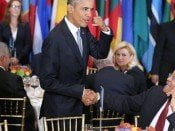
The same error has been in evidence in some reactions – especially in the intemperate world of social media, to this photograph of Presidents Zuma and Barack Obama.

zuma+phoneFor some who distrust or dislike Zuma, whether for good or bad reasons, the photograph is evidence of his arrogance, or simply an opportunity to mock or criticise him (because he was obviously talking to someone more important than Obama, like the Guptas).

But there’s no reason to assume anything sinister, or anything worth mockery or criticism here. A still image, taken out of a context, tells us nothing about what either man was thinking. Obama could have approached Zuma while the latter was already on the phone, as the former was on his way to another table and thought to just quickly say “hello”.

We don’t know. What we do know is that people can reveal their own attitudes, pretty clearly, in how they respond to images such as these. Criticism is good, and necessary – but let’s try to keep it evidence-based.

Choosing to be silent | Being barred from speaking

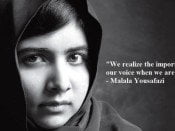
we-realizeDuring the question-and-answer session following a talk on identity politics at the UCT Philosophy Society earlier this month, a student asked me if I agreed that outsiders to a particular cause should remain silent, in order to let those who are proximate to the issue express themselves.

My answer was, in short, that it’s not that simple. The suggestion – or sometimes, demand – that “outsiders” remain silent is not only sometimes incoherent in terms of how it defines insiders and outsiders, but also incoherent in how it can apply a very peculiar standard to what’s worth listening to and what is not.

In any area of knowledge, we accept that some people know more than others, but it’s rare that we disallow those without expertise to contribute or ask questions. In fact, doing so is part of the way in which they learn, and perhaps become experts themselves.

It would be irrational to say to a philosophy student, for example, that you can’t discuss logic until you’ve learned symbolic notation. Yet, this sort of contraint is sometimes applied in discussions on things like race and gender, where questions from persons who are not-X are declared out of order, because of their not-X’ness.

As I repeatedly emphasised, this is a separate issue from another important issue, namely that the not-X person should often choose to remain silent, because they know that they have dominated a conversation for too long, have set the terms of debate, and have themselves ruled the concerns of the X’s as out of order for as long as the X’s can remember.

To put this crisply: I can imagine that there are times where, for the sake of trying to eliminate historical biases, not-X’s should often shut up, perhaps even for a long time. Or, they should be very selective in terms of how they contribute to conversations.

This is a separate issue from their independent epistemic authority, though, and the device of shutting up is a strategy for getting to a situation where words and arguments can one day matter, rather than who is speaking mattering most of all.

At my university, I’ve heard of a few instances where people have not been allowed to speak because they are not X. That’s usually wrong, even if it’s sometimes right that they choose not to speak. The distinction is important, and is largely forgotten in these emotive debates.

I choose not to speak (publicly) on many of the things that go on at UCT, especially during the current political debates.

And I would be very reluctant to speak on what’s happening at other universities such Rhodes, Stellenbosch, or Wits, exactly because I see how misinformed outsider comment on UCT is – a criticism extending even to some of the more thoughtful commentators in South Africa.

Choosing not to speak can also extend to being careful of what you say, of course – it’s far too often the case that a joke or idle observation gets taken up by people whose politics you don’t support, because they assume you’re on their side.

For example, when I tweeted about this story of Khoisan activists being arrested for smashing a bench, it was to highlight the fact that the bench should in all likelihood never have been built and that, more to the point, the aggrieved parties were probably never consulted on how best to honour the person the bench was meant to honour.

Just like the Rhodes statue at UCT, we now realise it should never have been there in the first place – and any condemnation of action/activism against it has to acknowledge that as the instigating harm, regardless of what follows.

Predictably, the tweet resulted in people whining about destruction of public property, lack of respect for the rule of law and so forth.

Of course it’s in general wrong to destroy public (or private) property, and of course it’s in general right to respect the law.

But sometimes, the failure to do so isn’t the most important part of the story, and you demonstrate your lack of sympathy and understanding for what is the most important part of the story by focusing on that.

As I say, you should be allowed to do so. But it’s an entirely separate issue whether you should or should not choose to do so, and more of us should pay attention to the second issue, more of the time.


(tw) Trigger warnings

As Libby Nelson recently observed, “There are probably more articles on the internet arguing about trigger warnings on college syllabuses than there are actual trigger warnings on college syllabuses”.

Even if their prevalence at universities is often overstated, they are frequently encountered on blogs, Facebook and other social media as a device for warning people that the ensuing discussion might contain distressing content.

fears-and-phobiasAs I’ve argued previously, trigger warnings can serve as a way to infantilise an audience, especially at universities where part of the point is to be exposed to challenging ideas. But they can equally serve a similar role to advisories on films, where an audience is forewarned that they might be exposed to violence, profanity, and so forth.

We’ve become accustomed to these warnings for films, and I’ve never heard of anyone finding them problematic. In fact, I suspect many more of us would be bemused – whether or not offended – to unwittingly purchase tickets for a movie featuring extreme violence without having been forewarned of this.

So one response to the issue of trigger warnings might be to say, why not include a simple (tw: violence) or somesuch before a discussion or link to an article describing the potentially “triggering” thing?

First, because there’s no consensus among psychologists* that this is the best way to handle the issue, even for people who might potentially be “triggered”. In fact, because “trigger warnings emphasize a victim rather than survivor role for the potential reader”, they “potentially increasing distress in the long-term via reinforcement of avoidance behaviors.”

And second, which is my focus here, they can treat us all as unable or unwilling to deal with stumbling upon content that might be distressing, and I worry that over-sensitivity of this sort might dampen expression of and debate on controversial topics.

Anything is potentially distressing for someone, so it’s difficult to see a logical (as in, necessary) end-point for trigger warnings, where there is some content that would never need a warning. And if everything gets a warning, that’s one less thing we need to think about – we don’t need to try and make certain judgments about who the speaker is and the context of the discussion, because that work has been done for us in advance.

The problems are at least two: what if that work has been done poorly, and we’re warned against things we don’t need protecting from? And second, making those judgements might well be a skill worth exercising and preserving.

Of course I’m aware that it’s easier for me to question the value of trigger warnings (to restate, given that I do think they have value: for me to question whether they are sometimes or often overused). And I’m well aware that much questioning of the value of trigger warnings comes from folk who have a profound insensitivity to the distress suffered by the people who often argue for trigger warnings.

But speaking from a position of relative sympathy for selective and thoughtful use of trigger warnings doesn’t mean I’m not concerned at what appears to be thoughtless use of them. To return to threat of over-sensitivity, mentioned above, we have to be able to tolerate occasional, accidental and/or marginal threats to our comfort, because any other world is practically impossible to arrange.

It would be impossible to arrange for even one person, never mind all of us. So the trigger warning conversation, and sensitivity to it, is a bi-directional negotiation: people who are speaking might need to try and avoid certain surprises (what? when? etc. are questions I’ll leave aside), but people who are listening also need to be as fair as possible in not placing undue responsibility or blame on a speaker.

As I say, I don’t know what we need to be sensitive of, or when. Well, that’s not quite true – I know as well as you do that we socially negotiate rules of conduct with the people we encounter, in a dynamic way. And the trigger warning debate does highlight that the game in question isn’t equitable, in that it privileges those of us who find little, if anything, sufficiently distressing to want to be forewarned of it.

But an equal and opposite overreaction isn’t desirable either. Here’s an example of what I mean, to finish this off. Last night, a friend Tweeted a link to an article in the guardian, headlined “Sudan’s security forces killed, raped and burned civilians alive, says rights group”.

He was criticised for not including a trigger warning, and his protestation that this was a headline that served as its own trigger warning for the article that followed didn’t satisfy the critic.

This is an overreaction first because, if the word rape appearing in a headline is triggering to you, it’s difficult to understand how you can survive on the Internet at all – there seems no way to arrange for an Internet that isn’t triggering in this way, and the requirement that we do so seems unduly onerous.

Second, and on another practical note, a Tweet is limited to 140 characters and at that sort of length, most of us would take in the Tweet at once, rather than parsing each word. In other words, there’s little or no time for a (tw) to do any substantive work in a headline like that – I don’t think it’s reasonable to think that anyone can see (tw) and then the word “rape” a few characters later, where that (tw) has had a chance to cause you to stop reading, or prepare yourself for that word in any way.

At this point, the trigger warning becomes less a thoughtful application of sensitivity to the interests of others, and more a thoughtless application of a disputed protocol. If we want our social justice concerns and interventions to be meaningful, I don’t think it sensible for us to turn them into clichés.

*Disclosure of potential bias, and a little shameless promo: the author of that post is a friend and my co-author of the forthcoming book Critical Thinking, Science, and Pseudoscience: Why We Can’t Trust Our Brains.

Virgin Active(ly) embracing incoherence

Virgin Active, the international chain of sports clubs, is in danger of having me boycott them by no longer swiping my card three times a month before walking out (in order to preserve my nearly-free membership).

This is thanks to my outrage bemusement (although outrage is far more fashionable) at their incoherent response to a recent controversy at their Old Eds branch in Johannesburg, where a certain Mr Desai was told that he was not permitted to wear a T-shirt supporting the South African chapter of the Boycott Divestment and Sanctions (BDS) against Israel.

A number of Tweets poked fun at Virgin Active for their stance on this, but what I want to focus on is their press statement, which tells us that they want their clubs to be both neutral spaces and also ones that “accommod[ate] the rights and freedoms of all members”.

One of our freedoms in South Africa is freedom of expression, with the exception of speech that constitutes “propaganda for war; incitement of imminent violence; or advocacy of hatred that is based on race, ethnicity, gender or religion, and that constitutes incitement to cause harm”.

Regardless of how strongly you as reader might feel about who the biggest baddie is between Israel and Palestine, Mr Desai identifying himself as a supporter of the BDS movement does not entail meeting any of the listed grounds for restricting his speech.

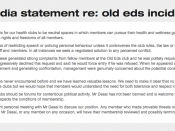
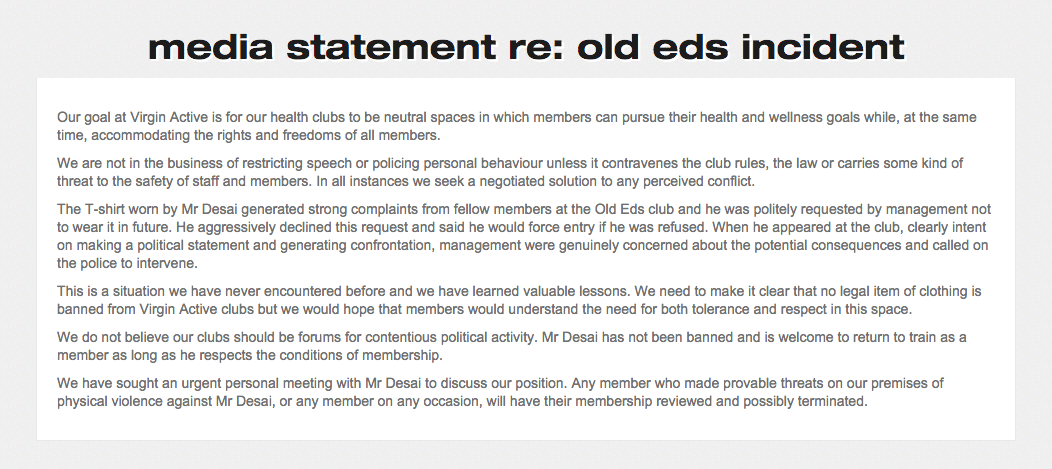
The Virgin Active media statement is screen-grabbed below, in case it gets taken down for some reason. But here are the bits I’d like to draw to your attention:

We are not in the business of restricting speech or policing personal behaviour unless it contravenes the club rules, the law or carries some kind of threat to the safety of staff and members. In all instances we seek a negotiated solution to any perceived conflict.

Lovely. So, as far as sentence one goes, why did you restrict Desai’s speech in this case? If you thought that there was an imminent threat to the “safety of staff and members”, that would surely only have come from people who decided to respond to Desai’s T-shirt with violence – and if they had done so, it would be the perpetrators of violence who should be ejected, seeing as that would presumably violate club rules.

The T-shirt worn by Mr Desai generated strong complaints from fellow members at the Old Eds club and he was politely requested by management not to wear it in future. He aggressively declined this request and said he would force entry if he was refused.

Sure, the complaints are understandable, and perhaps to be expected. And your response should be, “sorry, but he has a right to wear that T-shirt. You have the option of not looking in his direction, if you think that will help, but we have no grounds on which to refuse him permission to exercise.”

And, seeing as barring him from entry would surely be illegal, seeing as there are no club rules involving not wearing political T-shirts, I can understand Desai’s response regarding being barred entry in the future (although he’d of course likely be in trouble himself when “forcing entry”).

When he appeared at the club, clearly intent on making a political statement and generating confrontation, management were genuinely concerned about the potential consequences and called on the police to intervene.

Yes, a political statement that you in part initiated, by telling him that he had no freedom of speech in your club. And again, if confrontation was generated, it wouldn’t necessarily be him that was to blame – a price of admission to adult society is dealing with things that upset you without resorting to violence, and if someone attacked Desai, it’s the attacker who is at fault.

This is a situation we have never encountered before and we have learned valuable lessons. We need to make it clear that no legal item of clothing is banned from Virgin Active clubs but we would hope that members would understand the need for both tolerance and respect in this space.

Sure, it would be lovely if everyone played by your preferred (yet not legally proscribed) rules. But what if they don’t? In saying that no legal item of clothing is banned, you’re saying that Desai may wear the T-shirt. You might hope he doesn’t, but what if he doesn’t care about that hope?

We do not believe our clubs should be forums for contentious political activity. Mr Desai has not been banned and is welcome to return to train as a member as long as he respects the conditions of membership.

And the conditions of membership don’t involve not being able to wear a BDS T-shirt, right? So, what is it you’re saying? That he can wear it? In which case, why isn’t this press statement instead saying something like “we understand that Mr Desai’s T-shirt upset some of you. Sorry about that, but you’ll have to cope”.

We have sought an urgent personal meeting with Mr Desai to discuss our position. Any member who made provable threats on our premises of physical violence against Mr Desai, or any member on any occasion, will have their membership reviewed and possibly terminated.

Well, I hope that your position will emerge with a bit more clarity in that meeting than it does here. And I’m glad to hear you won’t let Mr Desai get beaten up in the meanwhile.

Postscript: Virgin Active have now conceded that they were in error to bar entry to Mr Desai.

Screen Shot 2015-08-14 at 11.24.44

Identity politics, authority and freedom of speech

Originally published in Daily Maverick.

The University of Cape Town’s Academic Freedom Committee (AFC) hosts an annual lecture that explores issues related to academic freedom – the TB Davie Memorial Academic Freedom Lecture. TB Davie led the university as Vice-Chancellor from 1948 until his death in 1955, and is remembered as a fearless defender of academic freedom, including the autonomy of the university.

TB Davie defined academic freedom as the university’s right to determine who shall be taught, who shall teach, what shall be taught and how it should be taught, without regard to any criterion except academic merit. This definition is not without its detractors, with some arguing that the concept of “academic merit” is itself prone to embedding and perpetuating certain biases, in particular biases related to class and race.