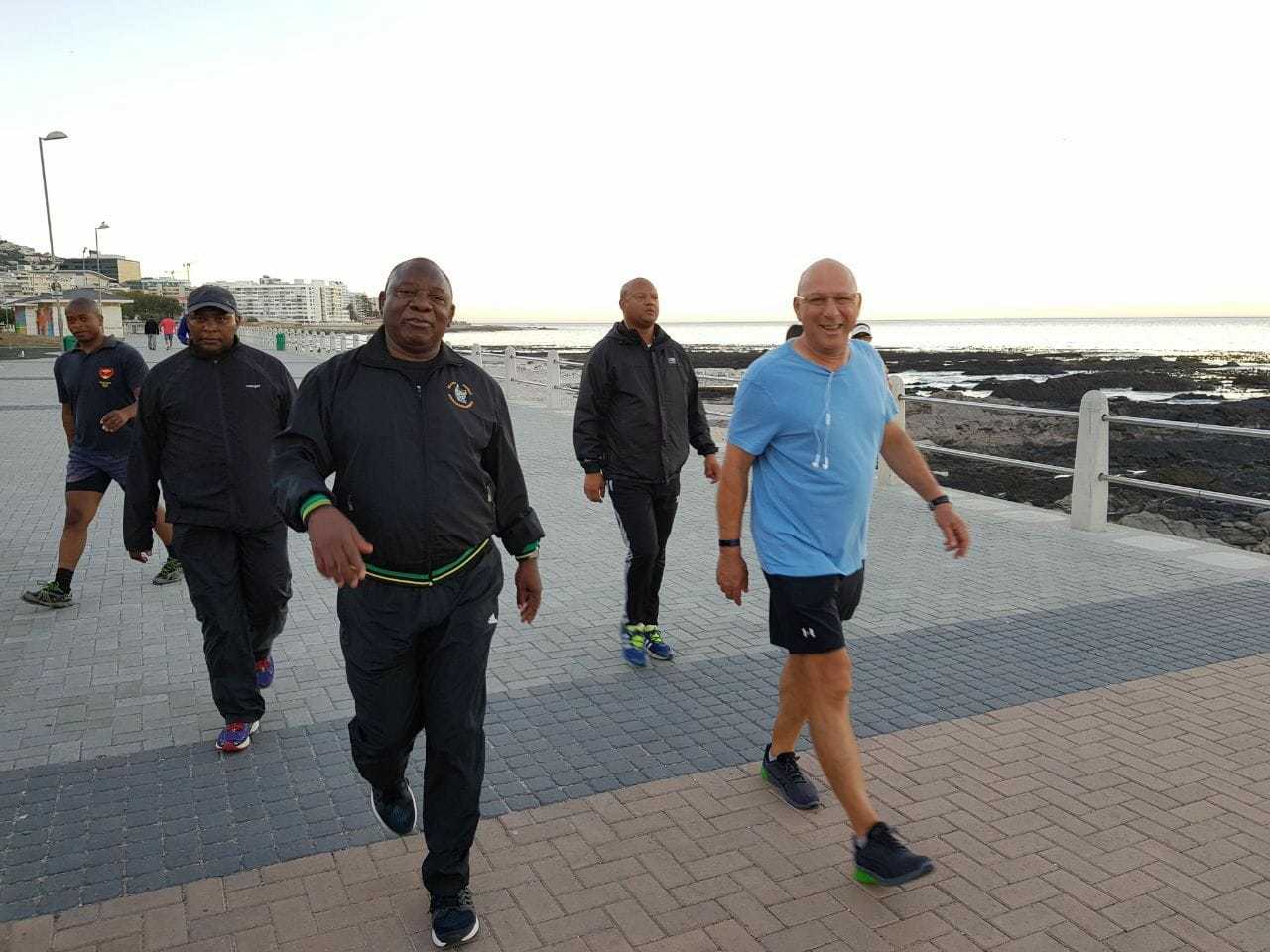
DignitySA and COPE to bring advance directives Bill to Parliament

I’ve written plenty about assisted dying (and DignitySA, an NGO dedicated to securing the right of South Africans to a good death) over the years. It’s a topic that is understandably emotive to most people, but also one that’s the source of great tension between secular and religious views on how states should be governed.

For example, South Africa’s Minister of Health, Aaron Motsoaledi, mistakenly believes that “only God can decide when a person dies“, which is a motivation that can only be taken as legally relevant if you are living in a theocracy. In a secular state, people should of course be free to exercise their religious commitments if those commitments don’t violate the law.

On Trump and bullshit

As part of a series of events celebrating what would have been Nelson Mandela’s 100th birthday, President Obama gave a speech in Johannesburg yesterday, in which he made reference to “the utter loss of shame among political leaders where they’re caught in a lie and they just double down and lie some more”.

While it seems clear that he was making a direct reference to President Trump, his remarks bring to mind broader issues such as the value of truth to democracy, and the difference between lies and liars on the one hand, and bullshitters on the other.

Social media, and productive discourse on Twitter

A friend of mine once remarked that we can either have democracy or the Internet, but not both. Even if the point is perhaps overstated, interactions on social media, and omnipresent clickbait, certainly contribute to the perception that there’s far more noise than signal on the Internet.

While it’s certainly possible to have productive conversations on social media, those seem – in my experience at least – to have become increasingly rare. Charlie Brooker once listed Twitter as his top pick in the category of video games (in the 2013 show How Videogames Changed the World), and it’s easy to see his point – the platform should perhaps simply be thought of as entertainment rather than as an opportunity for an exchange of ideas.

Ramaphosa, and the soft tyranny of low expectations

South African social media have been even more intemperate than usual since Cyril Ramaphosa was elected ANC leader – and yes, I realise how implausible that might sound.

It nevertheless strikes me as true in light of the volume of comment I read calling for President Zuma’s head (sometimes quite literally), now that he was effectively a lame duck,  alongside the counter-claims of JZ’s supporters (or even simply the supporters of codified procedure, rather than fictions like a “recall” having any legal force).

Free speech, Virgin Trains and the Daily Mail

An earlier version of me regarded free speech as not only an absolute value, but additionally as one that should be shoved to the front of just about every queue. A value, to put it another way, that trumps most others (but not all – for example, it wouldn’t trump the value of continuing to exist, for most people).

Goree Island

Since South African Airways dropped Dakar as their regular refueling stop, getting to Goree Island (a fifteen-minute ferry ride off Dakar’s coast) can be quite a journey. It took around 24 hours for me, flying from CPT to JNB-NBO-ABJ, then DKR.

Eighteen bloggers from Uganda, Zimbabwe, DRC, South Africa and elsewhere have gathered for an annual workshop, thanks to the generosity of the Konrad Adenauer Stiftung, who brought us together as AfricaBlogging around three years ago.

Free speech and freedom from consequence

Brendan O’Neill, editor of Spiked and hero to the sort of conservative who imagines that words and phrases like “libtard” or “social justice warrior” win arguments, recently posted a Facebook status arguing that “freedom of speech doesn’t mean freedom from consequences” actually means “Best not say it, eh”.

Cyril Ramaphosa and the irrelevance of adultery

Those who think that politicians should be held to a higher moral standard than other influential people seem guilty of an inconsistency. The primary clue as to what should be expected of you is in your job title or description – if you’re a teacher, you should be judged on your teaching, and if you’re a President, you should be judged on how well you preside.

I realise that this is a simplification, in that it is sometimes the case that other factors should influence our assessment of your suitability for a role. But we would typically require some clear link between your “crime” and the job you are employed to perform.

#Charlottesville – “I think a lot more people are going to die before we’re done here”

There is something to be said for the idea that anti-fascist protesters can resort to violence too quickly. But this idea can be debated without endorsing or excusing fascism, which you do when you describe these acts of violence as morally equivalent.

Anecdotes versus data in public discourse

“The plural of anecdote is not data” is a phrase well-loved by scientific sceptics. Often attributed to Dr Ben Goldacre, but probably originating with Raymond WoIfinger, the phrase cautions us against the mistake of thinking that what you experience – or what you and your granny or friends experience – might not actually be representative of any significant trend, or give you valuable evidence regarding the causal efficacy or role of something you might regard as significant.