Free speech issues: NECSS disinvites Dawkins; Gareth Cliff update

My title is intentionally misleading, as there are aspects of both the cases mentioned therein that are not a free speech issue at all.

As I pointed out in my previous post on the Gareth Cliff saga, M-Net are, to my mind, perfectly entitled to promote a certain brand image, and this entitlement is compatible with saying that Cliff doesn’t fit that image, and that they are therefore not renewing his contract.

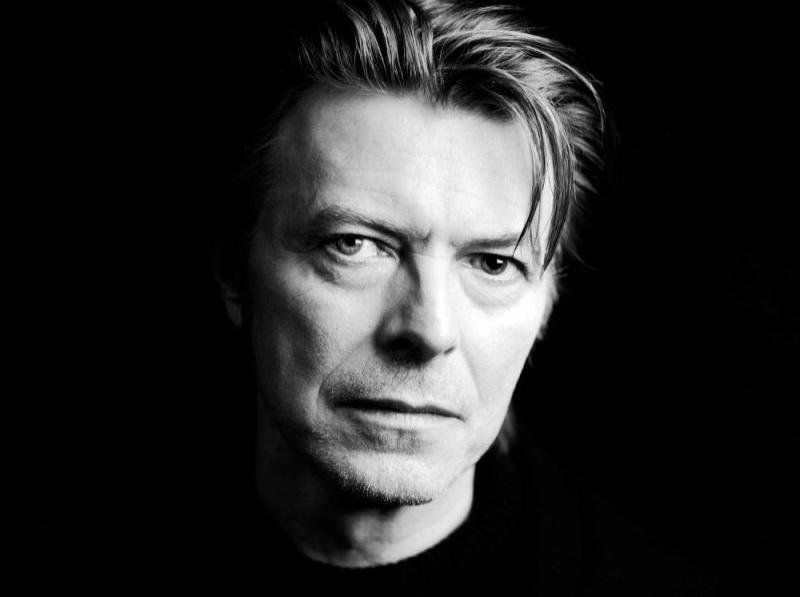
David Bowie – remembering a legend, forgetting an abuser?

I’ll not hide the fact that I am a fan of David Bowie’s music, and always have been. Impute whatever biases you will from that, but also try to objectively reflect on my remarks below, on the fact that he had sex with a 15-year-old girl sometime in the early 70s.

du Preez, McKaiser, racism and loaded questions

I’ve been thinking about racism a fair bit recently – not only because it’s a national preoccupation, but also because of things you likely know about already: the ongoing student and worker protests at my university (among others), and the Paris attacks over the weekend and responses to that (yes, I know “Islam is not a race“).

Another reason for the personal preoccupation is that I’m toying with the idea of writing a book on the subject, or rather a book on the concept of “whiteness” and how it influences discussions on race in South Africa. So it was with great interest that I attended Eusebius McKaiser’s Johannesburg launch of Run Racist Run last week, in which some of these issues are explored.

20151110_183732-1

I haven’t had a chance to read the book yet, but I have been following two discussions of it and its author – one, a bunch of abusive ad hominem towards McKaiser on Twitter, from people who also haven’t read the book, but think they can dismiss it on the grounds of what they think they know of the author.

Two, in a lengthy Facebook post and discussion, Max du Preez expressed dissatisfaction at being (unfairly, in his view) singled out for criticism in one of the book’s chapters.

You need to read the thread yourself for a full view, but my summary of it is that du Preez is unhappy that McKaiser reads a certain newspaper interview as containing evidence that du Preez adopts a rhetorical strategy of pointing to obvious, and odious, racism to deflect from his own, more subtle racism.

11220930_10153588730640546_4454034221720839491_nAnother discussion of the case can be found on Jason van Niekerk’s public post, which helpfully also contains a page from the book in question, reproduced alongside. My concern with how this discussion is framed on Jason’s post, as well as by McKaiser, is that it’s easy to see this as an example of a loaded or complex question. For example, “have you stopped beating your wife?”.

These questions entail any answer simply implicating you further, making it impossible for du Preez to respond in any way except to say, “you got me – I’m sorry for my subliminal racism”. In these situations, the questioner holds both absolute authority over the framing of the question, as well as the acceptability of any answer – and I don’t think that’s fair.

I don’t think du Preez would disagree in the least with how McKaiser frames the false dichotomy in the closing sentence of the image above. I also don’t think du Preez would disagree that he – and all white folk – might sometimes have a reflexive thought that is attributable to a racially discriminatory upbringing or culture.

But that isn’t what he was being asked about in the interview McKaiser focuses on. He wasn’t saying that “because I reject the racism of Bullard/Roodt/Hofmeyr, I myself am immune to criticism”. If you want to criticise him for saying that you need an example of him saying that, rather than an example of an interview where he could be read as saying that, if we choose to be uncharitable.

Here’s what van Niekerk thinks faulty about du Preez’ response, with my response below:

du Preez doesn’t mention or address the three specific claims made against him. Instead, he suggests that we can know whether he’s a racist or not by looking at his history of written work.

2 things about that.
1. That response is begging the question posed in the chapter title. du Preez is, in his response, invoking exactly the conception of racism McKaiser is calling inadequate: racism as a fixed feature of character you either embody or don’t, rather than a vicious disposition the privileged can fall into without noticing.
2. Even if he weren’t begging the question, this isn’t an issue of representative sample sizes: McKaiser has picked that article as an exemplary demonstration of a specific rhetorical pivot. Other stuff du Preez has said or written that doesn’t do that wouldn’t be relevant to a discussion of that move.

It didn’t seem to me that du Preez was saying that his body of work immunises him from any accusations – rather, he’s saying that one article (which wasn’t even addressing the substantive charge being made against him by McKaiser and van Niekerk) is an unrepresentative data point.

It’s not question-begging, in other words, but (legitimately, in my view) rejecting the question as illegitimate. As I said above, I think du Preez would agree with “the conception of racism that McKaiser is calling inadequate” – he’s disagreeing that an interview of his manifests that kind of racism, because thinking it does so takes an interview given in one context (an Afrikaans newspaper, speaking mostly to a white community, where du Preez would be well aware of that and frame his responses accordingly), and interprets it as if it were offered in another context.

On the second point above, it seems to me that van Niekerk is doing the question-begging here. It’s only an “exemplary demonstration of a specific rhetorical pivot” if you assume McKaiser’s reading is correct, and I don’t think that’s obviously true at all.

More to the point, to use someone as an example of unconscious (or partly conscious) racism, when that person has neither the right of reply (pre-publication), nor the right to explain anything about how the context is relevant, seems unethical to me.

Again, if we put the simple question to du Preez, “do you think that condemning obvious and overt racists makes you, yourself immune from more disguised or subtle forms of racism, and that even you might sometimes slip into those?”, I’m pretty confident he’d say “yes”. Until you ask him that question, is it fair to read what he’s said – in another context, to a different audience, as proving a “no”?

(Disclaimer: all three of the people discussed above are (hopefully not “were”) friends of varying degrees of virtuality.)

(tw) Trigger warnings

As Libby Nelson recently observed, “There are probably more articles on the internet arguing about trigger warnings on college syllabuses than there are actual trigger warnings on college syllabuses”.

Even if their prevalence at universities is often overstated, they are frequently encountered on blogs, Facebook and other social media as a device for warning people that the ensuing discussion might contain distressing content.

fears-and-phobiasAs I’ve argued previously, trigger warnings can serve as a way to infantilise an audience, especially at universities where part of the point is to be exposed to challenging ideas. But they can equally serve a similar role to advisories on films, where an audience is forewarned that they might be exposed to violence, profanity, and so forth.

We’ve become accustomed to these warnings for films, and I’ve never heard of anyone finding them problematic. In fact, I suspect many more of us would be bemused – whether or not offended – to unwittingly purchase tickets for a movie featuring extreme violence without having been forewarned of this.

So one response to the issue of trigger warnings might be to say, why not include a simple (tw: violence) or somesuch before a discussion or link to an article describing the potentially “triggering” thing?

First, because there’s no consensus among psychologists* that this is the best way to handle the issue, even for people who might potentially be “triggered”. In fact, because “trigger warnings emphasize a victim rather than survivor role for the potential reader”, they “potentially increasing distress in the long-term via reinforcement of avoidance behaviors.”

And second, which is my focus here, they can treat us all as unable or unwilling to deal with stumbling upon content that might be distressing, and I worry that over-sensitivity of this sort might dampen expression of and debate on controversial topics.

Anything is potentially distressing for someone, so it’s difficult to see a logical (as in, necessary) end-point for trigger warnings, where there is some content that would never need a warning. And if everything gets a warning, that’s one less thing we need to think about – we don’t need to try and make certain judgments about who the speaker is and the context of the discussion, because that work has been done for us in advance.

The problems are at least two: what if that work has been done poorly, and we’re warned against things we don’t need protecting from? And second, making those judgements might well be a skill worth exercising and preserving.

Of course I’m aware that it’s easier for me to question the value of trigger warnings (to restate, given that I do think they have value: for me to question whether they are sometimes or often overused). And I’m well aware that much questioning of the value of trigger warnings comes from folk who have a profound insensitivity to the distress suffered by the people who often argue for trigger warnings.

But speaking from a position of relative sympathy for selective and thoughtful use of trigger warnings doesn’t mean I’m not concerned at what appears to be thoughtless use of them. To return to threat of over-sensitivity, mentioned above, we have to be able to tolerate occasional, accidental and/or marginal threats to our comfort, because any other world is practically impossible to arrange.

It would be impossible to arrange for even one person, never mind all of us. So the trigger warning conversation, and sensitivity to it, is a bi-directional negotiation: people who are speaking might need to try and avoid certain surprises (what? when? etc. are questions I’ll leave aside), but people who are listening also need to be as fair as possible in not placing undue responsibility or blame on a speaker.

As I say, I don’t know what we need to be sensitive of, or when. Well, that’s not quite true – I know as well as you do that we socially negotiate rules of conduct with the people we encounter, in a dynamic way. And the trigger warning debate does highlight that the game in question isn’t equitable, in that it privileges those of us who find little, if anything, sufficiently distressing to want to be forewarned of it.

But an equal and opposite overreaction isn’t desirable either. Here’s an example of what I mean, to finish this off. Last night, a friend Tweeted a link to an article in the guardian, headlined “Sudan’s security forces killed, raped and burned civilians alive, says rights group”.

He was criticised for not including a trigger warning, and his protestation that this was a headline that served as its own trigger warning for the article that followed didn’t satisfy the critic.

This is an overreaction first because, if the word rape appearing in a headline is triggering to you, it’s difficult to understand how you can survive on the Internet at all – there seems no way to arrange for an Internet that isn’t triggering in this way, and the requirement that we do so seems unduly onerous.

Second, and on another practical note, a Tweet is limited to 140 characters and at that sort of length, most of us would take in the Tweet at once, rather than parsing each word. In other words, there’s little or no time for a (tw) to do any substantive work in a headline like that – I don’t think it’s reasonable to think that anyone can see (tw) and then the word “rape” a few characters later, where that (tw) has had a chance to cause you to stop reading, or prepare yourself for that word in any way.

At this point, the trigger warning becomes less a thoughtful application of sensitivity to the interests of others, and more a thoughtless application of a disputed protocol. If we want our social justice concerns and interventions to be meaningful, I don’t think it sensible for us to turn them into clichés.

*Disclosure of potential bias, and a little shameless promo: the author of that post is a friend and my co-author of the forthcoming book Critical Thinking, Science, and Pseudoscience: Why We Can’t Trust Our Brains.

Holy Cows – Gareth van Onselen on initiation, Zille and more

Earlier this week I was in conversation with Gareth van Onselen (GvO) at a launch event for his new book, Holy Cows: The ambiguities of being South African.

As far as I can tell, the event wasn’t recorded, which is a pity as I think we had an interesting dialogue on various contentious issues that are raised – either directly or by implication – in the book.

Two of the book’s themes seem to be of particular interest, judging by the conversation at the other launch event I attended, as well as social media and other comment.

Helen Zille is first up, if we address these themes in the sequence they appear in the book. GvO spends two chapters discussing Zille’s Twitter persona, in an exercise that one review (linked immediately above) called “a little creepy and obsessive”.

(There’s a chapter in the book on Pyramid, an obscure quiz show that ran on CCV-TV in 1995 and 1996, and I’d think that GvO having watched every episode of that a fair bit more obsessive.)

DSC_1066The chapters on Zille highlight various themes that recur throughout her Twitter output, and demonstrate that being as engaged as she is (it’s more accurate to say ‘was’, since stepping down as leader) allows us to establish a rather different view on her preoccupations and political dispositions than what you find in carefully-crafted newsletters and speeches.

One of the things that comes through rather strongly is Christian conservatism, in particular her negative attitude towards drugs, alcohol and sex. I’ve written on some of these things myself in the past, and also expressed views on her religious outlook in general, and think that cataloguing the Tweets in the manner than GvO does is useful for making the case.

Furthermore, the case is useful to make, for two related reasons – first, because even if Zille is committed to your liberty, in the sense that a roughly liberal party ought to be – the moralising tone of so many of the Tweets leave one feeling that her liberalism can be rather grudging.

Second (and I’m not attributing these observations to GvO), the hectoring and inflexible message that emerges from quite a few of the Tweets don’t provide enough of a counterpoint to the ANC’s political messaging.

Again, what I’d hope for from a liberal party is a tone and content that encourages critical reflection on issues. I wouldn’t expect that from a nationalist party like the ANC – but tonally, there’s little to pick between them, at least if you regard Zille as representative of the party.

In short, I think the wealth of data collected by GvO in these chapters give us interesting things to think about on the micro issue of a particular person’s political branding, as well as the macro issue of the various South African political brands in the market and how they are differentiated.

The second issue I’ll touch on is ritual circumcision, as discussed in chapter 7. Again, I’ve also written a column on this subject, but mine resulted in nowhere near the abuse that GvO’s shorter treatment (shorter than in his book, I mean) of the issue in his Business Day column did.

According to Xolela Mangcu, GvO’s column was “hate speech“. According to another correspondent, GvO was an “outsider” who also engages in inconsistent reasoning by not discussing all sorts of other cultural practices equally critically.

There’s one politically interesting issue here, and then another issue that is interesting mostly because it demonstrates a moral deficit on the part of these two critics.

The politically interesting issue is the question of who gets to comment on which issues – whether you need to be from a certain “culture” to criticise its practices. I think – and I know GvO does – that the arguments are what matter, not where they come from.

But tone can make people more or less receptive to a message, and this is (partly) why a column like mine led to less abuse, in that I foregrounded my outsider status (for pragmatic reasons only – not because I think it relevant to the argument).

GvO wrote in a certain style (and those of you who are actually interested in the arguments should read the book, not only the short column), and that style might or might not have been maximally productive to reader engagement. But again, that’s a separate point to whether the argument is sound or not.

The second issue is this: if there’s a cultural practice which does, on occasion, result in deaths and injuries, there’s a real problem to address – and it’s a far more significant problem than a “white” man having the temerity to criticise a cultural practice.

Yes, it’s true that this particular practice can be conducted harmlessly (using the word loosely, in that I’m ignoring the reinforcement of patriarchy, etc.). So if anyone says that deaths and maiming are always a necessary consequence of initiation, they are wrong and ignorant.

GvO doesn’t do that. And by all means, correct him or anyone else on particular facts they get wrong – but for as long as there exists a subset of traditional rituals that are open to the sorts of criticisms contained in the article and the book, there’s an argument to respond to.

Because if you don’t respond to the argument, then you’re telling us that according to you, the politics of identity – wherein a “white” man isn’t allowed to criticise something from “black” culture – is more important than deaths.

Or, you’re expressing a logical principle that only insiders can speak on whatever the insider topic is. And if this is the case, follow it to its logical conclusions – men can’t speak about something experienced by women, and vice-versa. The poor can’t talk about the rich. The Spanish can’t talk about the English, and so forth.

Most of the time, though, what it sounds like you’re saying is that this is something you’d simply like to have exempted from any outsider criticism, and that seems inexcusably lazy to me.

Bigotry, free speech and student politics at UCT

Zizipho Pae, current UCT Student Representative Council (SRC) Vice President, posted this Facebook status following the US Supreme Court decision to strike down same-sex marriage bans:

We are institutionalising and normalising sin. God have mercy on us.

pae4-592x400I wasn’t planning on saying anything about this, but the most recent rant from Error Errol Naidoo of the Family Policy Institute is mad enough to prompt a quick response, because he – like many others – are confusing the freedom to hold odious views with a (non-existent) obligation on others to not call them out on those views, and freedom from any consequences expressing those views might incur.

Ms. Pae is free to be a homophobe. She implies that she’s not a homophobe in the video embedded below, but the facts are clear: she labels gay people sinners, and suggests that we are “normalising” sin – in other words, that they are a threat to all of our moral welfares. She has a seriously negative disposition towards gay people, in that she doesn’t want them to have the same rights as straight people.

Dress that up in whatever religious sophistry you like, but any non-religious person would regard that as plainly homophobic. Also, any person, regardless of religious persuasion, should realise that Ms. Pae is instead endorsing an (unconstitutional) ban on gay marriage. So, wrong on the morals, wrong on the law.

She can have and express these views, regardless of the fact that we might prefer that she didn’t feel inclined to such prejudice. Her prejudices are also more common than I’d like, which is exactly why we don’t put basic rights to a referendum.

But holding those views does not protect her from criticism, whether or not she thinks she’s doing a bigoted god’s bidding. The university, and the SRC, have chosen to adopt a certain set of values, and homophobia is in contrast to those values.

She was relieved of her duties as Acting President by the SRC, as they are entitled to do. She has not been suspended or disciplined by the university administration, contrary to Mr. Naidoo’s claims.

Her rights to freedom of speech are not being violated – she chose a more demanding standard than “speech without consequences” when she ran for the SRC (before that, in fact, as simply registering as a student here involves committing to promoting certain values). So, free to speak, but then we don’t want you representing us.

So, there is no “anti-Christian discrimination” here, but rather a defending of what the country, and the university, have chosen as their moral foundation, namely non-discrimination on various grounds. She chose to be part of that community, so needs to follow its rules.

Where Naidoo and Pae do have a point is only with regard to the issue of her office being vandalised, and any threats being uttered against her. Those cases need to be investigated and the offenders sanctioned.

In the meanwhile, it would be absurd to think that the SRC should tolerate homophobia in its senior structures, and perfectly reasonable for them to suspend her, pending fuller discussion and investigation.

You don’t get to insult a large proportion of the students you’re meant to represent without consequence, whether you believe in a god or not.

Girl with cake – let them eat oversimplification

Marie Antoinette never said “let them eat cake”. At least, we have no reliable evidence that she did, and reason to think it unlikely. At the time (the other) Rousseau, Jean-Jacques, recorded the words, she would have been 14 years of age and not yet even resident in France.

Nevertheless, the words have come to stand for indifference to suffering, in that as the story goes, when the Queen was alerted to the fact that people were starving thanks to bread shortages, her response was “Then let them eat brioche.”

Given this widely believed historical anecdote, you’d perhaps think it an elaborate (and risky) joke if a privileged white woman were to travel the country giving cake to poor people. Or perhaps you’d assume that she’s not familiar with the anecdote.

I’m going with the latter option in the case of Girl with Cake, which involves a privileged white woman traveling the country giving cake to poor people, because “everyone deserves a cake made with love”.

Not only do they deserve it, the cake also “makes all the bad go away”. Given the Oprah-level powers of said cake, why is it that myself and some other grouches have concerns about this project – and why is it that expressing these concerns is so offensive to some?

poverty-porn

Starting with the first question: neither I, nor anyone I’ve encountered on the “concerned” side, have any objection to charitable giving. But something being charitable and perfectly well-intended does not make it immune to criticism.

In this instance, there’s a long historical context of romanticising poverty and of creating narratives of a white saviour rescuing black people from their miserable existences.

And it’s because of this context that when one engages in charitable giving, it’s usually a good idea to be somewhat discreet about it, rather than having a photographer in tow to capture your beaming white smile and the poor black people to whom you have provided the “joy of cake” (yes, that’s a quote from the website).

cake

The first photograph in this post comes from Robert Pijpers’ essay on stereotyping Africa and romanticising the poor, and I’d encourage you to read that for a fuller explanation of the point I’ve only briefly made here, that “depicting Africa as a place inhabited by helpless people that long for salvation” is a risk inherent in these sorts of endeavours.

The primary purpose of this post is rather to talk about reactions to criticism of Girl with Cake, which – in the case of one friend of mine – have made it clear that self-reflection is forbidden, nuanced discussions of poverty and charity are offensive, and that anyone who dares to do either must be evil.

Here are some quotes from Facebook:

  • All you’ve done is breakdown my faith in humanity – the lil bit that she restored
  • She should be giving them raw liver instead! #Banting (okay, that was me)
  • Because it’s so much more productive to write horrified Facebook posts? C’mon [X], at least she is making an effort and not at a distance, either.
  • Really disappointing that people get slammed for trying to uplift someone’s spirit.
  • What have you done for the poor lately?
  • you are really a sad human being
  • It is easy to sit back and be an acid queen about everything, but to take hand of your cock and stop wanking and start doing something for somebody else is something completely different.
  • do u have no humanity in u or are u just negative because ur life sucks?
  • The world doesn’t need people like you

There’s more, and it’s ongoing, but that’s enough. What these comments miss is that the problem isn’t the giving, but the apparent obliviousness to the impression of narcissism created by the manner in which the giving is promoted.

It’s irrelevant how much or how little the critic him or herself gives – all that could possibly indicate is hypocrisy, but it has no bearing on whether criticism of Girl with Cake is legitimate or not. And of course, it’s deeply ironic that defenders of charity can themselves be so lacking in charity, as demonstrated in these abusive responses.

Another friend asked me whether criticising Girl with Cake amounts to bullying, and I’ll close with a few thoughts on that. Of course it can be bullying, depending on what was said, and who it was said to.

In this case, the comment or criticism amounted to linking to her website, commenting “So here’s someone who literally thinks poor people should eat cake. And then she gives it to them while a poverty voyeur takes photos. AND THEN SHE PUTS IT ON THE INTERNET AND THANKS HER SPONSORS! I…you…WHAT?! WHAT THE FUCK?!”

The beaming white smile and the noble savage is a problematic image, and it’s one that she foregrounds on her website. Transpose her story and the cake with a missionary and a Bible, or somesuch, and we’ll have consensus that there’s an issue here.

Again, this isn’t to question her good intentions, but rather to point out that the optics are pretty unfortunate in how they give an impression of unthinking narcissism. That, albeit in more direct language, is what the Facebook post expresses.

That’s not “bullying”, but rather highlighting a problematic stance or behaviour. Doing so is not only permissible – it’s desirable, in that debate and argument is how we improve.

Assisted dying: not only God can decide – in fact, She can’t decide at all

It’s doubtful that you’d be able to find any medical school that still uses early translations of the Hippocratic oath, never mind the original Greek version. But if you read the unrevised English version, it would open with something like this:

I swear by Apollo the physician, and Asclepius, and Hygieia and Panacea and all the gods and goddesses as my witnesses, that, according to my ability and judgement, I will keep this Oath and this contract.

It will furthermore ask that physicians comport themselves in a “Godly manner”, and do so without “seeking reward”. The point, in short, is that it’s nothing like the modern understanding of the oath, where that understanding is typically summarised in the phrase “first do no harm”.

This, in turn, means that when you appeal to the Hippocratic Oath to justify (or to rule out) some course of action, you’re already appealing to an interpretation of that Oath – and you’ve already admitted that the Oath is therefore a guiding principle, rather than an absolute rule.

Which, in the context of a discussion about euthanasia, means that we are able to discuss further interpretations of that principle, including the question of whether more harm might be caused by keeping someone alive if they are in pain versus allowing them to die – or even hastening their death.

We are not obliged, in short, to think that a life ending is automatically and always a harm that trumps any other possible harm.

6f1216d4022843899161cdba9aeee7f0Not only because interpreting the oath as offering guiding principles rather than absolute rules allows for “avoiding harm” to (on balance) mean “cessation of life”, but also because physicians already don’t follow the oath to the letter anyway. I don’t know about you, but if I heard my surgeon swearing to Apollo, I’d try to find a new one before the anaesthetic kicked in.

Which brings me to Health Minister Aaron Motsoaledi, who seems to think Apollo is still relevant to modern medicine. Well, he talks about “God”, so it’s difficult to be sure that he’s talking about Apollo, but whichever God he means, he seems convinced of the fact that it’s God who gets to decide when you die. As quoted in the link above, he says:

“Doctors are human and make mistakes too. They can say a person has a few weeks left to live, based on medical observation, but only God can decide when a person dies,” Motsoaledi said.

He said as much as doctors played an important role in bringing life to this world, “they should not be given the right to end it because they did not create it in the first place”.

“When doctors begin their career, they take the Hippocratic Oath and pledge to do all they can to preserve life and not do anything that will intentionally harm or result in the death of a patient. Nowhere in the medical curriculum were doctors taught to kill,” he said.

This is all in response to the ruling on Robin Stransham-Ford, last week, in which Stransham-Ford was granted permission to seek assistance in dying, and the Judge furthermore ruled that the physician who so assisted him would not be prosecuted. Motsoaledi intends to make sure this does not set a precedent, for the reasons summarised in the quotes above.

Minister Motsoaledi has, on the whole, been a very competent, and even often an excellent, Health Minister. On this matter, however, he’s letting us down. Here’s why:

  • South Africa is a secular country. While the Health Minister can believe in whatever god(s) he likes, he has a responsibility to make laws that allow for secular justifications. When he speaks as Minister, he should not be suggesting that a certain policy should be motivated by anything to do with what a god might hypothetically want or not want.
  • He’s arguably wrong on the facts, and is relying on an uninformed gut feel rather than the evidence regarding the consequences of assisted dying being legal. He claims that we’ll soon see “families colluding with doctors to end the life of their loved ones because they wanted to cash in on insurance policies”, but as far as we can tell from the Netherlands and Belgium, you can eliminate much of this risk through devising legal safeguards for when assisted suicide is permitted and when not.
  • To that, he might say that safeguards are not enough – that risking even one death for this sort of profit motive is one death too many. And here is where our interpretations of “harm” are directly relevant – physicians are always or at least very often making decisions about treatment that might cause harm, but on balance are thought to stand the best chance of avoiding harm. Ending a life is one option in a range of interventions, for the purpose of serving that same goal.
  • And, ending a life can only be treated as uniquely forbidden as a form of “treatment” if we hold the view that life is somehow “sacred”, which we cannot do in a secular country.

As for the “playing God” sort of argument, Minister, it’s entirely spurious. We all play God when we walk across a street wearing our spectacles, because without them, the bus that God hypothetically sent to run us over would have succeeded in its mission. We play God when we take antibiotics, or when we fly to foreign countries in devices we’ve invented and constructed for that purpose.

With assisted dying, we get the chance to play God in a way that She doesn’t seem that interested in, and we should seize the chance to do so. In this case, we can – and should – play God through alleviating the pain of someone who is dying, and who wants their life to end.

It is to God’s discredit if she doesn’t want to permit or condone this course of action. And it is to our discredit also, if we instead choose to rely on self-serving interpretations of a centuries-old Oath, to evade the moral responsibility of eliminating suffering wherever we can.

On UCT, transformation and #Rhodesmustfall

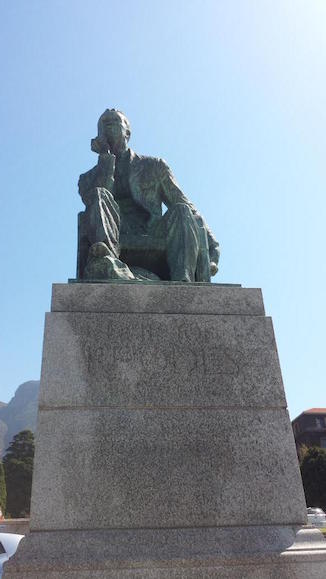
RhodesThe statue of Cecil John Rhodes you can see alongside these words stands on Madiba Circle at UCT, overlooking the sports fields. It’s there because UCT’s main campus is situated on land bequeathed by Rhodes in 1928 as “the site of a national university“.

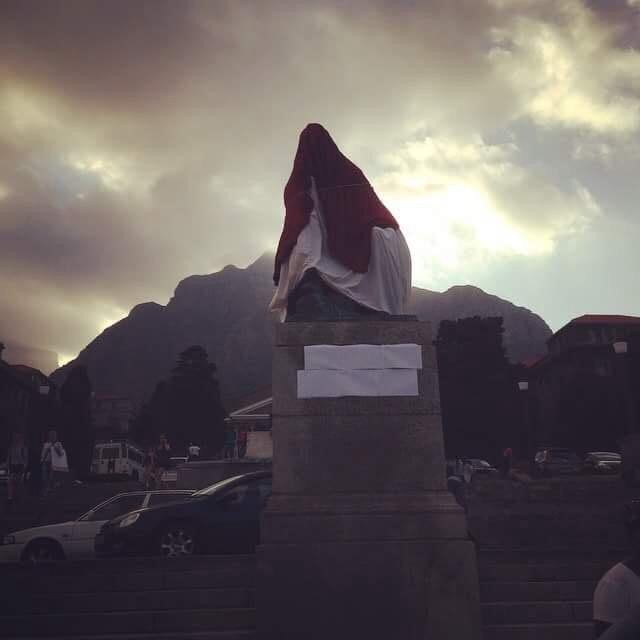
The fact that it’s currently there doesn’t mean it should stay there – and if an ongoing protest is successful, it won’t be there for long. The protest started last Monday, March 9, with Chumani Maxwele emptying the contents of a portable toilet on the statue, and continued with various ad hoc engagements as well as a rally on Jameson Plaza.

The protest is motivated by – and this is of course the nutshell version – students being aggrieved that a statue of an arch-colonialist, racist and sexist such as Rhodes occupies such a prominent place on our campus.

Pictures of the rally allowed for some wry smiles also, given that students who were facing the statue of Rhodes would also have had their backs to Jameson Hall – the building named after Leander Starr Jameson, Rhodes’ lifelong friend and ally in various racist land-grabs and other mad schemes like the Jameson Raid.

There are problematic names and symbols on UCT’s campus, to be sure – but there are also others that are less so, like Madiba Circle and the Steve Biko building. (Limiting the discussion to this one aspect, namely racism, apartheid and its corollaries.)

This doesn’t make the problematic ones okay. But it does speak to an awareness, on the part of UCT’s governing structures, of the need to make changes. And the fact that the current management of UCT is committed to building a campus that is welcoming to all is not, I think, something that a fair person can dispute.

You can dispute the pace of progress, or how things are prioritised, but I think the intentions are clear, and sincere. Furthermore, the last 5 years have been occupied by debates on exactly these issues, in the form of the admissions policy debate.

Before Maxwele’s protest, plans to have debates and consultative processes on signage, symbolism and naming had already been set in motion. The first such discussion (unless I’ve missed something) takes place tomorrow today.

What some critics don’t understand is that large organisations such as UCT can often not move at the pace that you’d prefer. Also, the headlines often obscure complexities – it’s quite possible, for example, that there are other stakeholders with regard to the statue, perhaps the City of Cape Town.

Second, and as a friend remarked, “removing a statue is easy” – but we don’t know if it’s the best option until more debate has been held. Perhaps you want to leave it there as a reminder of the past, adding a plaque explaining what a terrible man he was. Perhaps you want to build a statue of someone who serves as an “antidote” to Rhodes alongside him, symbolising the triumph of good over evil.

There are many options besides tearing it down, is the point – and while it’s true that the current mood is in favour of tearing it down, the university – and the SRC – should be acting in the best interests of the university as a whole, and most crucially, in the best interests of future students.

(As an aside, if the statue were to go, it’s not at all true that we’d have to start rejecting Rhodes scholarships and any other things called Rhodes. It’s entirely possible to make a logical and moral distinction between commemorative statues and bequests of land/money that serve some public interest.)

I’ve been at UCT since 1992, and it’s great to see significant student engagement with political issues after what has been quite a long slumber. But to some extent, there’s the possibility of a more highbrow version of Twitter slacktivism here.

The conversation shouldn’t only be about what will satisfy us now, but rather on what is the most principled and defensible choice to make. I fear that grandstanding is getting in the way of this to some extent. Second, I fear that the issue of the statue can obscure larger and more important problems – as I said above, it’s an easy win.

Will tearing down the statue help with throughput or graduation rates? Will it improve the comprehension of the first-year students I teach, many of whom struggle to engage with abstract ideas at all, after a decade of schooling that has taught them to be studiously literal?

I don’t think so. But having said that, my intuition is that the statue should go, if it can – although I’ll want to hear all the arguments for and against before committing to that intuition, because as I indicate above, its continued existence might serve the same purpose as the protesters desire.

More crucially, though, I hope that we can avoid letting this important debate end up being a distraction, or simply a vehicle for opportunism.

STATUE

Homophobia, private property and rights of admission – Oakfield Farm weddings

Screen Shot 2015-02-11 at 13.21.06Others have known about this for some time, I’m sure, but today was the first I’d heard of Oakfield Farm in Johannesburg, a wedding venue that would like to insist on only hosting heterosexual weddings due to the “religious convictions” of their shareholders.

They have been in trouble for this position since at least April 2014, when “the Commission for Gender Equality notified Oakfield Farm that it was investigating a complaint against it of unfair discrimination on the basis of sexual orientation.”

In the same article linked directly above, you can read that the chief executive of the South African Human Rights Commission, Kayum Ahmed, “said that service providers were not allowed to discriminate against gay and lesbian people because this is a violation of the Constitution and the Promotion of Equality and Prevention of Unfair Discrimination Act.”

Constitutional scholar Pierre de Vos agrees with this reading of the law, albeit with reference to a racial discrimination case, arguing that

section 9(4) must be read as placing an internal limitation on other rights such as the right to property and the right to freedom of association. This means the right to associate freely and the right to property is qualified by section 9(4) and these rights can only be exercised in conformity with the non-discrimination injunction contained in section 9(4) of the Bill of Rights.

Section 9.4 specifies that we can’t discriminate against others on various grounds, including race, sex, gender, sexual orientation, religion, belief or culture.

The key difference between the sort of discrimination you practice in refusing Scientologists access to your birthday party and the sort practiced by Oakfield farms is that they are offering a service to the public, whereas I am holding a private gathering. Once you offer a service to the public, you can’t discriminate on those specified grounds.

So it seems clear that what Oakfield do (or attempt to do) is (currently, and whether rightly or wrongly) illegal. A “right of admission reserved” sign has no legal standing when in competition with these non-discrimination laws.

But, and here’s where the trouble starts, that’s all a separate issue from whether the law, or the Constitution, should say other than what it does.

One thing one might want to argue is that it’s discriminatory against the religion in question to force them to host gay weddings (leaving aside the fact that it’s unlikely any gay folk would want to get married there, if that was the case).

These are tensions I’m not qualified to address in terms of the law – and it is a tension, because it might well be the case that there are more members of religion X (that doesn’t like gay marriage) than there are gay folk.

We don’t make laws via popularity contests, I know, but the point is that if the religious group is being discriminated against by being forced to host gay marriages, some argument is needed for why it’s them, rather than the prospective gay couple, who should be discriminated against.

One answer is that non-discrimination should be the default (and that’s certainly the position I’d take), but that begs my question, in that it seems plausible to describe the enforced-gay-weddings position as discriminatory against the religious. And this, in turn, means that gay folk are higher up the pecking order in some sense than religious folk.

There’s one way in which that ranking makes perfect sense, because you don’t (typically) choose your sexual orientation (or race), whereas you’re perfectly free to choose your religion. Is it as simple as that – in other words, that these forms of discrimination can be rank-ordered where necessary, but bundled together in law until that need arises?

A second sort of thing you might want to say in objection to the Constitution (as read here) is that – so long as everyone of whatever race, religion, sexual orientation etc. has equal access to facilities, any individual facility should be free to discriminate, and the market can discriminate in return, hopefully driving the bigots out of business.

To lay my cards very much on the table, I’d prefer the second option in theory. However, thanks to how easy it is to rig the game (or, perpetuate the rigging of the game) against people who have historically been subject to discrimination, this would in all likelihood end up perpetuating that discrimination – leaving us with the forced pragmatic (and morally sound) choice of enforcing non-discrimination.

(On a concluding note, in case any of my lawyer friends drop by, I don’t understand why S6 of the Civil Union Act passes muster on the reasoning of the de Vos piece linked above. Section 6 reads:

A marriage officer, other than a marriage officer referred to in section 5 [which refers to people who qualify as representatives of religions], may in writing inform the Minister that he or she objects on the ground of conscience, religion and belief to solemnising a civil union between persons of the same sex, whereupon that marriage officer shall not be compelled to solemnise such civil union.

I was happy to register under the Civil Union Act precisely because I wanted to be able to marry heathens, including gay ones, but how is it that I should be allowed to choose not to marry gay couples?)