Weinstein and the evolution of sexual abuse accusations

It’s rare to see social norms change as quickly as they currently are, as we seem to be seeing with respect to exposing alleged sexual predators. It appears to me that there’s at present a fairly widespread acceptance of the idea that not only do powerful men abuse that power in order to abuse women (typically), but also that this unspoken reality should become a spoken-of concern.

Woody Allen didn’t break the dam wall, Cosby didn’t, and neither did Trump. Going further back, folk like Polanski didn’t either, but something about the Weinstein revelations seems to have precipitated a  sea-change in the willingness of victims to come forward with their stories, and in a more general sense, the willingness of the public to recognise that this is a systemic and serious problem.

Free speech and freedom from consequence

Brendan O’Neill, editor of Spiked and hero to the sort of conservative who imagines that words and phrases like “libtard” or “social justice warrior” win arguments, recently posted a Facebook status arguing that “freedom of speech doesn’t mean freedom from consequences” actually means “Best not say it, eh”.

Cyril Ramaphosa and the irrelevance of adultery

Those who think that politicians should be held to a higher moral standard than other influential people seem guilty of an inconsistency. The primary clue as to what should be expected of you is in your job title or description – if you’re a teacher, you should be judged on your teaching, and if you’re a President, you should be judged on how well you preside.

I realise that this is a simplification, in that it is sometimes the case that other factors should influence our assessment of your suitability for a role. But we would typically require some clear link between your “crime” and the job you are employed to perform.

#Charlottesville – “I think a lot more people are going to die before we’re done here”

There is something to be said for the idea that anti-fascist protesters can resort to violence too quickly. But this idea can be debated without endorsing or excusing fascism, which you do when you describe these acts of violence as morally equivalent.

Anecdotes versus data in public discourse

“The plural of anecdote is not data” is a phrase well-loved by scientific sceptics. Often attributed to Dr Ben Goldacre, but probably originating with Raymond WoIfinger, the phrase cautions us against the mistake of thinking that what you experience – or what you and your granny or friends experience – might not actually be representative of any significant trend, or give you valuable evidence regarding the causal efficacy or role of something you might regard as significant.

#BlueWhale: a greater threat to journalistic reputations than to teens

Any suicide that isn’t preceded by careful deliberation, in full knowledge of its consequences, is undoubtedly a sad thing. Other suicides would often be tragic also, as much as I respect the freedom to make that choice, outside of the moralistic prescriptions of societal norms.

Teen suicide would often not be preceded by that deliberation. We’re more vulnerable then, and might be inclined to overestimate our misery, and underestimate our prospects for the future.

So that is indeed enough: Karel Schoeman and assisted dying

Karel Schoeman never wanted to be old. I don’t either, but maybe you do – or maybe you already are, by whatever metric you use to measure such things. Regardless of where you stand on that, I’m fairly confident that none of us want to die slowly and painfully.

Or even live, if it feels authentically pointless to do so, or if your thoughts routinely turn to how you can no longer add the value to others’ lives you once did. Or live, if you know that you are for the most part a constant burden to both yourself and to others.

Huffington Post, Shelley Garland and editorial responsibility

Edit (19/04): All the details of this saga have now been revealed. See Verashni Pillay’s post, and its linked interview with “Shelley Garland”.

Update (22/04): The Press Ombudsman’s ruling is out, and it’s pretty damning for HuffPo.

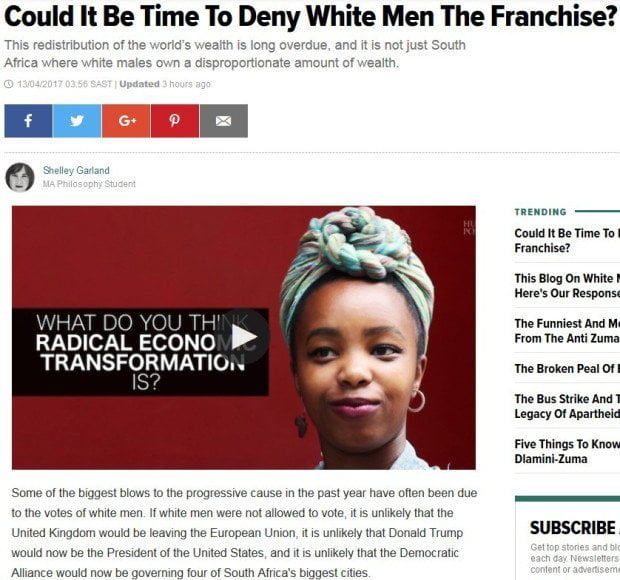
A quick recap for those of you who don’t know the story. On April 13, Huffington Post South Africa published an opinion piece, by someone identified as Shelley Garland, headlined “Could it be time to deny white men the franchise?“.

The consequences of publishing this piece were fairly predictable. For some, this was further confirmation that HuffPoSA has a political or ideological agenda – here, an anti-male and anti-white agenda.

Zapiro and the rape of South Africa

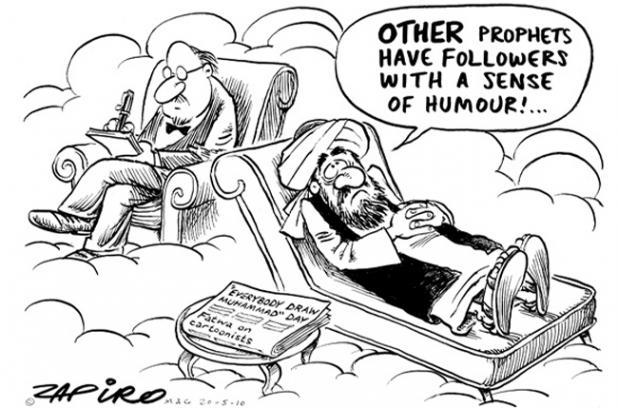
If you are reading this, then you have likely seen today’s Zapiro cartoon. If you haven’t, you can see it on Daily Maverick. I’m not going to reproduce it here, both because I haven’t asked for permission to do so, and because some folk who I hope to engage via this post might think it’s needlessly provocative to do so.

Basic Education in Demonology

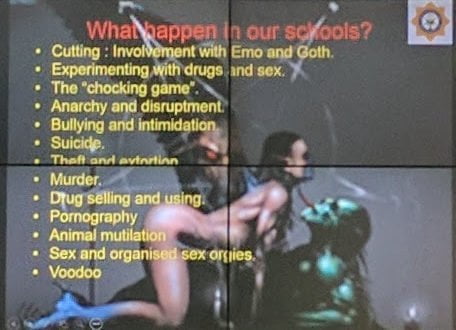
Well. Minister of Basic Education Angie Motshekga and I had a rather interesting morning. I was part of the group that drafted a charter on rights and responsibilities for religious conduct at schools, and today we (and other interested parties) gathered to discuss the charter, and to hear the Minister’s thoughts on “harmful religious practices” in schools.

Instead, what we mostly got was lessons in how many demons are out there, hungering for your kids’ brains souls, and how only Jesus can save them.