I benefit(ed) from apartheid

Originally published in the Daily Maverick

I certainly benefited from apartheid. And I’ve bought the t-shirt that says so – two of them, in fact – even though I might never wear them except in the company of other 40-something white liberals, with whom I share enough history that misinterpretation is unlikely.

Misinterpretation is unlikely, even as we agree on how many different things the t-shirt could be saying, and often also agree on what it should and should not be saying. It does not need to say that because I’m white, I should feel guilt. It should certainly not be saying that white people should withdraw from political comment, as Samantha Vice once argued.

But outside of the shared space of those of us who – to a lesser or greater degree – participated in some form of protest or activism in the 80s or earlier, this shirt’s message is perhaps a little too ambiguous, and too open to misinterpretation. Two reactions illustrate the problem, and even though these reactions are both far too simplistic, they nevertheless serve as useful examples of two possible extremes.

First, there’s the contribution that “Frank” made to MyNews24, headlined “I benefited from apartheid and other fairy tales”. Frank’s column discussed the “new liberal buzz concept that we as whites … have hugely benefited from a system that has been dead and buried for 18 odd years”. There’s no value in linking to this, as it starts out wrong-headed and quickly ramps up to triumphalist – but completely unreflective – smugness.

While the fact that he thinks this concept “new” might reveal that he’s only started thinking about this recently, more worrying is the fact that he’s bought into a premise that I can’t help but associate with someone who’s unwilling to engage with South Africa’s past (and therefore, present and future) in an honest way. As I’ve argued before, the first democratic elections didn’t somehow flip a magical switch, whereby after 1994 we could be sure that everyone succeeds or fails entirely on merit.

Now, I might like to wear the t-shirt in Frank’s company too, so that he can know he’s alone in wanting to bury his head in the sand, or to engage in acts of “whataboutery” wherein you boycott SAA, or self-righteously stalk the aisles of Pick ‘n Pay rather than Woolworths for a week or two, to say “what about this new-fangled form of racism, eh? Is this what ‘we’ struggled to achieve?”

But then, maybe Frank will think I’m wearing the t-shirt ironically, and never think about the message it’s intended to convey. Or maybe he’ll think, “well, perhaps you did, but my life was hard, and now my kids can’t get into UCT Medical School. And you call this justice?” In other words, maybe Frank will make the mistake we all (white, black, female, male, poor, rich) sometimes do, of thinking that anecdotes count as data.

And then, there’s the other sort of extreme reaction, this time a comment left at the Mail&Guardian (excerpted):

sickening…how self rightous some white south africans can be…so you think a sorry is good enough..a woolies t-shirt with those words is good enough. for me it simply shows the depth at which white people think black people are stupid. How lowly they regard black people’s pain. Will this t-shirt wipe away the memories of apatheid, will it give me the land they took away from my family. will it educate me, will it take away the shame and inferiority complex I have that was passes down to me due to the whites manipulating black people’s minds.

The fact that this reaction is a straw man of the worst order is besides the point, as is the fact that the author of this comment seems to believe that white people are in general insensitive, manipulative, and of the view that black people are stupid. To put it plainly, it’s besides the point that the author of the comment appears to have racist attitudes towards whites.

The reason it’s besides the point is that whether (many or most) whites are like that or not is a separate issue from whether a wearer of this t-shirt in fact benefited from apartheid (which, in general, they certainly would have), what they are trying to say in wearing it and most importantly, whether they think that wearing a t-shirt is all they need to do to wipe the slate clean.

My answers to those questions are not going to be the same as yours. But the key point here is that regardless of what my or your answers might be, those answers aren’t going to necessarily overlap at all with how the t-shirt is perceived by others, and what they think you mean. Intentions aren’t transparent to those who pass us on the street, and the performative role of this t-shirt is a fundamentally ambiguous thing – not to mention potentially a rather offensive thing.

And lastly, there are two quite general problems with this t-shirt, which further decrease the likelihood of my ever wearing one, despite now owning two. First, because as much as it’s true that whites benefited from apartheid, apartheid – or at least its legacy – is increasingly becoming the narrative by which some tenderpreneurs and politicians (even Presidents) enrich themselves at the expense of people who are currently, not previously, disadvantaged.

As much as the t-shirt would speak the truth if I were to wear it, would it be any less true if worn by President Zuma, even though the benefits might be of a very different form? If apartheid didn’t provide Zuma and the ANC with a narrative of being essential to the liberation from apartheid, would he and others not perhaps be in jail?

The other general problem is that what the t-shirt says is partly false. Yes, I did benefit from apartheid, as (on aggregate) all whites did. But I still benefit, because of the cultural capital, the confidence, and from the fact that the vast majority of people in power at my institution are white liberal males, just like me. How could I not have benefited and continue to benefit? After all, isn’t that what apartheid was designed for?

Body Worlds – a collision of materialism with dignity?

Originally published in Daily Maverick

Respect should not be granted unreservedly. Not to people, because they need to be reminded that they aren’t gods. Nor to ideas, because we stand little chance of discovering that we are wrong if we don’t ask questions. It can be impolite and for some, perhaps even offensive to talk ill of the dead. But even so, we’re less likely to cause offence when remembering the misdeeds of a Stalin and more so with a Mandela, because of the difference degrees to which they merit our respect.

Do liberals misrepresent Mourdock?

As submitted to Daily Maverick

It’s not easy to be objective. In fact, it’s close to impossible – and it might not even be desirable. But being objective is not the same thing as being fair to the evidence, which is something we should always strive for. No matter what perspective you think the evidence justifies, you’re not going to get anywhere in persuading someone else of that perspective if they discover that you’re wrong about the facts.

Being right about the facts is itself difficult. Not only because the data we have can sometimes be contradictory, but because our datasets are always incomplete. The facts that contradict any given interpretation might not be known, and worse still, might not even be knowable at a given point in time.

What we can do, though, is to try to acknowledge the biases we do know of, and try to not allow those biases to lead to misrepresentation. Unless you care more about persuasion than being fair, that is. And in politics being fair often seems to take a back seat, because the stakes are high and people might pay attention for just long enough for you to plant some impression in their minds, but rarely for long enough that you could actually engage them in debate.

So, you won’t try talking theology or in this case, theodicy, with regard to Richard Mourdock. Far better to simply assert that he thinks God intends for rape to happen, and for that rape to result in an unwanted pregnancy (which, by his lights, it’s naturally immoral to terminate). That assertion is of course one interpretation of what he said at a recent Indiana Senate debate (see video below), and it’s an interpretation that fits neatly with a stereotype of Mourdock belonging to some disreputable group (whether this means Republicans, men, Christians, or whatever).

But shouldn’t we expect more from ourselves, and from our media? It’s invigorating to have cartoon villains roaming about, to be sure, because it allows for those impassioned speeches at the dinner table, and for us to cast some opposing force as the one who will save us from the approaching menace.

There’s no question that many Republican candidates (most, if you only count the ones we’ve been hearing from) are intent on rolling back the current permissive legal framework around termination of pregnancy. They go further than that in what’s been called the “war on women”, with suggestions for mandating invasive procedures like transvaginal ultrasounds rather than allowing women to choose other ultrasound methods.

As I’ve argued in previous columns (on Obama’s rejection of the FDA recommendations on the morning-after pill, and the Republican ‘Personhood Pledge’), the conservative moral voice does seem to hold a significant influence in American politics, and this influence tends to be exerted to the detriment of reproductive rights. I’ve firmly stated that to my mind the Republican view on this is wrong, and that voters (especially female ones, of course) should oppose these attempts at curtailing their freedom.

But this is because I don’t think a foetus morally significant. If you do – and perhaps especially if you do for reasons such as the sanctity of life – it would be unsurprising for you to think that abortions are immoral. And if you did think they were, this attitude would have to be expressed at the cost of women, because women are the ones who bear the full burden of bringing a child to term. So yes, you could cast this as a “war on women”. Or, you could cast abortion rights as a “war on unborn children” – and both would be hyperbolic, false, and eliminate a whole lot of potentially interesting conversation in favour of being able to hurl epithets at each other.

Just in case this column is triggering anybody’s confirmation bias, I’ll repeat that reproductive freedoms should not be curtailed (in fact, I’d wish for us to be able to discuss extending those freedoms, whether we choose to or not). Regardless of this, it simplifies the conversation to an unfair extent when opponents of abortion, like Mourdock, are cast as claiming that God desired for a woman to be raped.

http://www.youtube.com/watch?v=626VKRScETI

Listen to the recording for yourselves. Most of you would disagree with him, just as I do. But what he says is that God intends for the life to happen, and he makes it clear that he’s struggled with this issue, and that rape is “terrible”. Sure, this doesn’t go as far as we might want it to. And yes, he wants to take away a women’s right to choose whether to terminate a pregnancy or not, except in situations where her life would be endangered by bringing the child to term (which, we should note, makes him more progressive than some of them).

If what you hear, though, is a Republican candidate saying “God wanted you to be raped”, then the villain you see in front of you is at least partly a projection of your own moral outrage. I believe he he’s wrong, yes – but that he’s wrong for exactly the same reason that millions of Christians around the world are, in believing that one value (the preservation of life) trumps another (the woman’s right to choose). And, in believing that he can pick and choose when to attribute something to God’s plan (the pregnancy yes, the rape no), while simultaneously asserting that God’s ways and plans are ineffable.

So, if you want to pick a fight here, give some thought to whether you’re picking the right one. The same people who complain about Mourdock and the Republican war on women don’t seem to picket traditional Christian churches, where this same message on abortion is conveyed every week. We don’t see op-eds lambasting the one survivor of a bus crash for saying it was God’s plan for everyone else to die.

The outrage regarding Mourdock, in other words, is selective, unprincipled, and born of exactly the same cherry-picking that allows Mourdock to say the sorts of things he does.

Rebecca Watson on Slate

Re-posted from SkepticInk for archival purposes.
 
I’ve now read the Rebecca Watson article that Slate published on October 24 five times. Not because I’m particularly dim-witted, but because I wanted to try to understand what was causing the fresh outpouring of ridicule towards her in the comments there, as well as on my Twitter and Facebook timelines. Was it just as simple as people rising to the same bait as always, or were there some fresh provocations to be discovered? And more importantly, when will this nonsense stop, and how can we collaborate in getting to that point?
 
In a post addressing one of WoolyBumblebee’s posts about Jen McCreight, I concluded by saying the following:

…we can sometimes be accused of placing too little or too much emphasis on history, and not enough on our own conduct. Too little, in the sense of the tweet I quote above where zero effort was made to see if an interpretation is the correct one. And then too much, in the sense that we sometimes expect new entrants to a conversation to know minute and technical historical details of that conversation – and then abuse them when they get a detail wrong. There’s sometimes too little patience for any kind of induction period, and so-called “newbies” need the thickest skins of all.
 
To remedy this problem, I offer one suggestion: that when a debate gets heated, we should try to remember that no matter what’s come before, we’re constantly at a new decision-point, where we – and only we – are responsible for what we say in response to something we find provocative. Sure, someone else has committed a wrong, and we can be inflamed by that. But essentially juvenile questions of “who started it”, while diverting, seldom help illuminate the question of how it can be ended. In other words, I’m suggesting that we learn (or remember) some manners.

What I think Watson gets wrong in the Slate post is that she doesn’t take into account that she’s addressing an audience who won’t necessarily know the minute and technical details involved in the various incidents since that morning in the elevator. So I think that she should have made a greater effort to point out the positive work that’s being done in addressing discrimination in “the community”. There are only two sentences that I can see that acknowledge that some organisations are aware and trying to address the problem. The article paints what I think is an uncharitably gloomy picture, and as such will provide fodder for both anti-Watsonites as well as anti-secular folk. People on the fence, tempted to get involved the secular or skeptical community, might well say “I’m not going near that – sounds like all they do is hate each other”.
 
So, in terms of outreach and the like, I think Watson could have made better use of the opportunity presented by such a public platform. But in terms of everything else she said, I have no complaints, and nor should I feel entitled to. She’s telling her story, and unless I had the temerity to accuse her of lying about her own story, the fact that other people have competing (or supplementary) stories isn’t necessarily relevant. She’s not your spokesperson, or a historian of the skeptical movement. She’s telling her story, and reporting threats and the like that she felt significant enough to bring to the community’s attention, along with reporting the lack of sympathy she experienced in reaction to that. If you want to call her a liar, that’s your prerogative – but I don’t see any good reason to join in that game.
 
Because even if she is exaggerating – and even if she, or people in her corner – have done their own bad things – that’s not the only thing that matters. If you want to keep a scorecard, and constantly remind others of who is “most bad”, knock yourself out. But this nonsense has got to end. And there’s no chance of a cease-fire until people see the possibility of saying something like “damn, that sounds awful, and I’m sorry that I didn’t support you when you experienced that” or whatever, without following up with a sentence like “but you did this other bad thing, so quit whining/looking for attention”. Yes, it’s true that you can find fault and over-reaction on all sides of this divide (and sorry folks, but it is possible to say this without claiming a false equivalence – without keeping a scorecard at all, in fact). If people treat each other like crap, of course we’ll retaliate in some fashion, some of the time.
 
All of us need to remember that we have another option, which is to not assume the worst of each other, and to focus a little more on what we have in common rather than our differences. Yes, some differences shouldn’t be tolerated. But in all the hysteria and hyperbole, it’s unclear to me how many folks have considered whether this really is one of those occasions.

The privilege of avoiding arguments?

Originally published in Daily Maverick

One of the chapters in Bertrand Russell’s “Unpopular Essays” (1950) is “The Superior Virtue of the Oppressed”. In the essay, Russell criticises the tendency of those who marched with him in support of various social justice issues to not simply stand against oppression, but also to insist that the oppressed are somehow epistemically privileged. They were wiser, more experienced, perhaps even more objective than those who were not oppressed. An uncharitable reading (Russell’s) would be that it’s actually good for you to be oppressed.

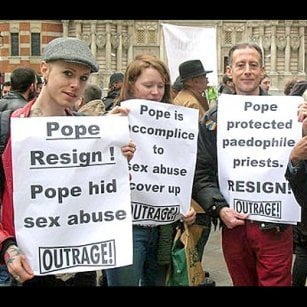
Paedophilia is not (yet) child abuse

Originally published in Daily Maverick

When you hear reports concerning an “alleged paedophile” like Johannes Kleinhans, due back in court this week, it’s difficult to think of his possible crime as anything other than sexual abuse of a minor. But that’s not what paedophilia means. Furthermore, our instinctive horror at the possibility of children being sexually abused might sometimes be counterproductive, in that it leads us to scare potential abusers away from treatment.

Some think that “treatment” for paedophiles is impossible, and that they should simply be locked away for good. Still others think that locking them up is not enough, or that the prison time should come with a guarantee of experiencing some sexual abuse yourself. “Papa wag vir you” (Daddy is waiting for you) is one of the more polite comments to one report on a US Peace Corps volunteer, facing imprisonment for sexually abusing five KwaZulu-Natal girls.

These responses are understandable. I cannot imagine the terror that parents might feel when thinking about these threats to their children – or even the legislative responses to those threats, like when you find out that South Africa’s sexual offenders register lists only 40 names (thought to be a small fraction of the true number).

All paedophiles are attracted to young children, often sexually, but not all those who sexually abuse children are paedophiles, and not all paedophiles are child molesters. Paedophilia describes what you’re attracted to – not what you do with that attraction. For a celibate male priest, a hetero- or homosexual orientation  could be a problem, regardless of whether he’s attracted to adults or not. He remains celibate, though, until the attractions are acted on.

Of course these things are not the same in terms of the extent of damage that can be caused to the victims of sexual assault. Children are easier to victimise than adults are, regardless of your view on whether long-term trauma is more or less likely at any given age.

Nevertheless, it’s the sexual abuse of children that we want to criminalise, not  the fact that someone was unfortunate enough to be born with sexual desires they are unable to pursue  (or can only pursue  under threat of severe consequences). I’m not comparing adult sexual abuse to child sexual abuse, except to say that what sort of target an abuser would pick – if they were to abuse someone – is a separate matter from whether they are an abuser or not.

So, a paedophile is a potential abuser of children. It’s not a crime to be a potential anything, though – if it were, few of us would escape imprisonment thanks to our constant potential to break laws, whether the more trivial speeding while driving to the less trivial theft or murder. We don’t do these things for various reasons, including fear of punishment – but also because we don’t want to do them. We might not even want to have the desires we do.

This is the case for many paedophiles, such as Spencer Kaplan or the man who wrote to sex-advice columnist Dan Savage to say that he “walk[s] around every awful day of [his] life knowing that there is no one out there for me” – in other words, that his life can never contain any sexually fulfilling interactions with other humans, because he’s attracted to the wrong sort of humans. I remember listening to another paedophile (but this time, someone who was himself still in adolescence) calling in to Savage’s show, expressing bewilderment at what he should do. He knew his urges were wrong, and he knew that he shouldn’t act on them. He just didn’t know how he could be helped to live with this self-denial for the rest of his life.

We need to help potential child abusers to not become actual child abusers. And speaking of paedophiles as if they are already abusers isn’t helpful because it shames them, and because it runs the risk of driving underground exactly the sort of people we want in plain sight – and in treatment.

In the US, an organisation called B4U-ACT offers counselling for those they call minor-attracted people, and similar support mechanisms exist in Canada, Germany and elsewhere. In Greece, paedophilia is regarded as a disability (edit on 16 April 2022: this was only a proposal, which was in the end not adopted), with social support grants available to those who are willing to present themselves for diagnosis. But who would do such a thing as present with paedophilia, when everyone understands that to mean you rape children?

Dehumanising people can’t be a productive strategy for getting them to treat others as human, rather than as objects for sexual abuse. Some of the articles linked to above contain examples of sufficient verbal abuse, or a complete lack of sympathy, that we shouldn’t be surprised when potential offenders want nothing to do with treatment. We’re telling them we don’t care.

Yet, we remain surprised to hear of cases where some “monster”, “lacking all humanity”, and so forth, has committed some horrible crime. There’s no question that the sexual abuse of children is a horrible crime, and that we should do all we can to make sure it never happens. But making sure that it never happens might well include our own obligation to avoid the lesser crime of refusing someone the treatment they need, and that might protect your – or someone else’s – child.

More on dealing with trolls

As submitted to Daily Maverick

(Note to pedants: I realise that the previous post – and this one – uses the word “troll” atypically. This is both because I think the definition could usefully be broadened, and because it’s a useful, evocative word).

If you don’t believe that hostility (or sometimes, something more accurately describable as abuse) on Internet comment threads is a problem, then this post will be of no or little interest to you. I say this to let you know that you should cease reading, rather than skipping to the end to leave a hostile comment. You always have that option, even though people seem more and more reluctant to exercise it.

But if you do think this a topic worth discussing, you’d most likely recall that last week I discussed what appears to be a marked decrease in civility on the Internet. What used to be localised has arguably been generalised, and we’ve now got a significant chance of encountering a troll in the comments thread of Daily Maverick, never mind their ancestral homes of News24 and PoliticsWeb.

One thing that we can all do about this is to temper how we respond to provocation, whether perceived or otherwise. This is part of the remedy for situations in which we might be perceived to ourselves be the troll, or perhaps where we provide one of them with a useful provocation. The advice to not feed trolls remains sound, but it perhaps doesn’t go far enough.

This is because what I’ve always understood as not feeding a troll is simply not responding to their provocations. While mocking someone who seems deserving can provide pleasure – both to other commentators and to spectators – it’s mostly just a way of feeling superior. It usually won’t change anyone’s mind, and serves simply to affirm a group identity as one of the smart, sophisticated set (or so you might think of yourself), rather than the sort of person represented by the ingrate you’re now making fun of.

In other words, directing your scathing wit at a troll might be encouraging another sort of negative aspect of character, while doing nothing to modify the target’s behaviour – except for encouraging him (sadly, it usually is a him) to try harder. It’s perhaps these sorts of considerations, among others, that led Jean Kazez, a philosopher at Southern Methodist University in Dallas, to offer what I thought to be three quite useful prescriptions.

The first prescription she offers has already been addressed, above and last week, and calls for some reflection on appropriate uses of our time and energy – particularly for those of us who do act like trolls online. The second and third, however, call for a complete disassociation from those who do, rather than the more typical exhortation to not encourage them.

Kazez suggests that we should cease any participation in fora where significant bullying takes place, and also cease from interacting with people who do participate in those fora. In summary, both those who bully and those who enable the bullies need to discover that they will lose their “seat at the table” of adult debate.

In a local context, perhaps this could mean never even attempting to engage in a comment thread on certain sites, or promptly removing oneself once certain commentators arrive to hijack the discussion. If the chances are high enough (and sometimes they seem certain) that the usual race-baiting will ensue, what’s the point of yet another attempt to call for a nuanced consideration of how (for example) neo-liberalism is being used as a catch-all term meaning “an economic stance that I don’t agree with”, and is therefore not a useful contribution?

My primary concerns around the advice to disengage involve the potentially instructive role that more sober comments can play. Even if it’s true that engagement typically encourages, because trolls love being given attention, there are nevertheless some fence-sitters lurking who are potentially receptive to productive disagreement.

Withdrawing entirely from debate costs us those opportunities. Limiting or ceasing interaction with those who do participate is even more radical, and involves forsaking the opportunity to set an example, persuade or encourage others to be more reasonable. But perhaps this is the point – we are still too optimistic about how often such opportunities arise, and about how often there’s any reward from taking them.

As someone who has by now spent more than two decades at a university, it’s perhaps easy to accuse me of naiveté here – maybe this is just how people talk in the “real” world, and it’s the Socratic dialogue that was always the fantasy. If it is civilised conversation you want, in other words, have it with carefully selected friends or in a filter bubble you’ve created for that purpose.

Outside of those environments – which bring with them a limitation on our own capacity to learn from difference, and from debate – it sadly seems true that most of the time, our engagements with abusive elements of the Internet are doing nothing to stem the tide of anger and misunderstanding. In the meanwhile, though, they do give the trolls something else to scream about.

On dealing with trolls

As submitted to Daily Maverick

One of the things that the Internet has been good for is broadening the range of perspectives in any given conversation. Of course certain barriers need to be overcome: to participate, you need an Internet connection and a suitable gadget. Nevertheless, conversations have been democratised, thanks at least in part to being able to more easily discover who is interested in talking about the same things as you, and the fact that it’s relatively inexpensive to join in.

However, the filter-bubble remains a problem. Not only do the personalisation features of search engines like Google give you results that reinforce existing prejudices; we also like it that way – it’s called confirmation bias, and too few of us take active steps to combat its negative implications (if we’re even aware of the potential need to do so). There’s another concern though, one that I’ve mentioned in the past but would like to explore a little further today: the question of online abuse and the extent to which it might cause some voices to withdraw from the conversation entirely.

An example from a few minutes ago will serve to illustrate: “screw u, u doos, first of 90% of big business in S.A is owned by whites and top man is white, so cry me a river!!!” is what someone just told me on Twitter after I repeated an overheard joke about members of the UCT Senate’s prospects of employability at Woolworths.

Now, seeing as some folk have been calling me a racist for a few weeks now, thanks to my defending  Woolworths and SAA’s affirmative action policies, we can be sure that the grammar-impaired person who tweeted that at me is clearly unaware of this context. That’s fine – I’d expect most people to be. However, just in case there is some context, one might think a little tempering of the hostility is merited when (over)hearing something that offends you.

Not so for this person, it seems, and increasingly not so for those who comment in these pages and elsewhere. And then there’s the next layer of trouble, which is where the filter-bubble ends up resulting in a congregation of these hair-trigger folks into one “room”, as it were. At some point, all possibility for debate ceases to exist because of the mutually-assured idiocy of a collection of angry people, each paying less attention than the next.

Because there seems to be no chance of changing anyone’s mind, some of those who might otherwise try to do so eventually resort to measures like turning off comment functionality, stop engaging in comment threads, and eventually – stop engaging with certain pockets of the Internet at all. This has two consequences: the collection of trolls and angry folk are made more homogenous, and thus apparently stronger, and likewise, the collection of those who consider themselves “virtuous” is furnished with another example of why they are special, and right – and their homogeneity increases too.

So, one day we’ll end up with half the Internet grunting angrily at each other, while the other half recites passages from Plato. Unless we find some way to arrest this escalation of hostilities, or unless I’m wrong about the trend (and I hope I am). In a future column I hope to explore potential legal remedies for online bullying, such as those currently being considered in New Zealand and elsewhere. But because less regulation is always preferable to more, we should also consider what each of us could or should do, simply in our capacity as members of the Internet community.

First, I’d argue that we can sometimes be accused of placing too little or too much emphasis on history, and not enough on our own conduct. Too little, in the sense of the tweet I quote above where zero effort was made to see if an interpretation is the correct one. And then too much, in the sense that we sometimes expect new entrants to a conversation to know minute and technical historical details of that conversation – and then abuse them when they get a detail wrong. There’s sometimes too little patience for any kind of induction period, and so-called “newbies” need the thickest skins of all.

To remedy this problem, I offer one suggestion: that when a debate gets heated, we should try to remember that no matter what’s come before, we’re constantly at a new decision-point, where we – and only we – are responsible for what we say in response to something we find provocative. Sure, someone else has committed a wrong, and we can be inflamed by that. But essentially juvenile questions of “who started it”, while diverting, seldom help illuminate the question of how it can be ended. In other words, I’m suggesting that we learn (or remember) some manners.

Democracy doesn’t magic us into equality

As submitted to Daily Maverick

When you call for a boycott of Woolworth or SAA it’s not in my name, Solidarity. Not in those terms, where you misinterpret legislation, or at the very least stick your fingers in your ears and stamp your feet when you’re offered alternative interpretations. And not in the indignant tones of a group that wants to claim disadvantage in a country where the 10% of us who are white still seem to control just about everything except for the government.

I get that you are frustrated – judging from the comments on some recent Daily Maverick columns, many white folk are at least frustrated, if not angry. It’s even fair to say that you might have a point, because if it’s true that BBBEE is handicapping business and holding back otherwise qualified white employment candidates while only benefiting black tenderpreneurs, then BBEEE is broken. An unemployed black person might even be quick to agree with you, if it was that obviously broken.

Another way in which you certainly have a point is that we shouldn’t be reserving jobs, or positions at universities, according to race. As I argued last year during the crisis-talks around who was allowed to call themselves “African”, Patrice Motsepe and Anton Rupert have far more in common than Steve Hofmeyr and I do. Both black and white refer to something meaningless, or are shorthand for something else that is deeply meaningful.

That meaningful thing is privilege and power, and whether one has it or not. It is whose numbers you have on your cellphone, and whose you do not. It is how many books you read as a child, and therefore how ready you were for school and maybe university, and it is about whether your parents had time to spend weekends with you instead of go to work – or even sometimes about whether you knew your parents at all. It is about all these things, and many more that I can’t imagine.

That meaningful thing tends to correlate with race. We can perhaps summarise it by using the descriptor of “class”, even though that would need further definition. And no, melanin levels play no direct causal role in assigning you to a class. But they have played an indirect one for centuries, thanks to those of us with a lighter skin using race as a proxy for identifying those who stand ready to be exploited.

Not willing, of course, but ready. Sometimes ready thanks to not knowing any better, or through trusting the wrong people. Eventually, as you all know, the exploitation was codified in law, and it was ensured that the vast majority of our population would have less access to the privileges of good educations, safe neighbourhoods, running water and the like.

Those laws changed one generation ago. So it is true that many entering the job market today grew up in a racially neutral democracy. But very few of those job-seekers have parents who can advise on appropriate water-cooler conversation, or on which tie goes best with that suit, or on what to do when you’re the subject of sexist jokes in the workplace.

1994 – or whatever date you choose to identify the start of freedom – did not constitute an act of magic, despite the exuberant rhetoric we so long to believe in. Disadvantage can at some point in history be considered self-inflicted, or an instance of bad luck that has no systemic cause such as racial prejudice. But we’re not there yet, because it remains unreasonable to question the fact that a white kid – in general – enjoys advantages that a black kid does not.

Ideally, this conversation shouldn’t be about race. It should be about identifying which South Africans are underprivileged due to some or other injustice, and then providing redress where possible. If we could find a better way of detecting this lack of privilege than race we should use it, or at least open the discussion about using it – affirmative action based on something as meaningless as skin colour does need a sunset clause, or some sort of trigger condition for its demise.

And yes, it is also true that there are poor white folk, some very rich black folk, and therefore easy examples of inefficiencies and injustice you could point to as being caused by affirmative action. But when you do so, you sound like a racist. Because those exceptional cases don’t alter the fact that cultural capital – Pierre Bourdieu’s term for the knowledge, access and other advantages that allow white people, in general, to still enjoy a higher status in society – is not built over a single generation.

So by all means, Solidarity, question whether we should substitute class for race and explain to us how we should do so. Introduce the idea of a sunset clause – it would be improper for you to be accused of racism simply for doing that. As far as I’m concerned, you could even ask whether it’s appropriate for a job to be targeted at a certain race group, if it’s true that doing so would constitute unfair discrimination.

But as I tried to point out in my column on SAA’s cadet scheme, when one race – or one class – is under-represented in certain job categories, it’s pretty easy to guess what race and class they are, and why they are under-represented. And it’s perfectly justifiable to try to find qualified candidates from that group, before expanding your search to include looking for more people of the sort you already have.

We should all hope to one day not need affirmative action of any sort. But if you claim we don’t need it now, simply because no child was born into a South Africa where they were deprived of a vote thanks to their skin colour, you’re really missing the point that you can’t simply vote your way into a better life for all. Securing a better life involves education, employment and a host of other goods – all of which remain easier to access if your skin happens to be pale.

More on civil discourse and Jen McCreight

Every day seems to bring another example of someone trying to outdo the previous day’s example of spleen-venting on the Internet, especially (of late) in the skeptic/atheist/freethought community. One of the consequences of this was the emergence of atheism+, which I wrote about a few weeks ago.  The sentiment behind a+ is easy to understand – over the past few years, seemingly intractable differences of opinion have emerged inside what some like to call (even if the name is perhaps – and sadly – often merely aspirational) the community of reason, most notably around sexism and misogyny. Various examples of sexism and/or misogyny have been endlessly debated, and these debates have included whether the offences were genuine or perceived, how much that even matters, who the guilty parties are and who is on the side of angels.

Many folk, myself included, have felt compelled to pick sides – or have been assigned to a side, whether they feel like they’re on one or not. The assignation is sometimes made easy, as some commentators seem happy to let their hatred shine, whether towards a construction called “Richard Dawkins” or one called “Rebecca Watson” (for simplicity, I’m using the Adam and Eve characters – there are many further examples one could cite). But that ur-story, and all the subsequent ones, contain so much detail and he said/she said components that you’ll almost invariably offend someone if you wade in. My previous call for civility even invoked (a little, to be sure) offence from Stephanie Zvan, so it’s not even safe to say “play nice”.

Nor should it be safe – one can call for others to “play nice” in a way that is counter-productive through being smug, blind to privilege, one-sided and so forth. Most troubling, perhaps, is that you might make that sort of call in ignorance of the fact that you’re one of those causing the problem. And it’s this final point that I want to address here. Everybody – on both sides of the debate, and everywhere in between – should not be permitted to forget this simple principle: no matter what’s come before, you – and only you – are responsible for what you say in response to it.

I left a comment saying essentially that on a blog post titled “Daddy to the Rescue!” The comment was published, and then deleted a few hours later (and there are reports from others of comment deletion on the thread there). For those who don’t know the context of that blog post, it’s this: Jen McCreight posted something amounting to a retirement/resignation letter to her blog. In it, she cites hate mail and so forth, and also reminds us of her chronic depression. She had basically run out of energy or strength to remain active, as despite the support she continued to receive from some, it was too disheartening to be the subject of constant abuse.

One dimension to this is the details of who is right and wrong in these debates on misogyny and related matters. Another is the playground question of “who started it”. Quite another is the question of what any skeptic/atheist/freethinker thinks can ever be served by insulting others instead of trying to demonstrating their error(s). Causing gratuitous harm is something we criticise (some of) the religious for, remember – why are we doing it to each other? I realise that many of you have tried to reason with those you consider to be your opponents, and have only ended up resorting to insult when reason failed. That’s understandable, even if regrettable (well, I certainly regret it when I do it).

It’s the last question, of insult (in Jen McCreight’s case, sustained) and the effects it has on people that led her father to post the following:

People who call her whore, cunt, bitch, etc. need to learn some civility.  Some parents forgot to teach their children how to disagree without being disagreeable.

The Internet has allowed a lot of people to express their thoughts.  But, it has also allowed anonymous people to publish pure hate and filth without any accountability.  If someone has enough balls to call my daughter a slut to her face I would quickly introduce them to some accountability – a quick fist to the mouth.

What we need in our society is a multitude of free thought, not a multitude of foul mouths.

Yes, in the tinder-box climate we’re talking about, it was a mistake to threaten a “fist to the mouth”. But as for the rest, it seems uncontroversial to me that you can disagree without being disagreeable, that the anonymity of the Internet has lowered our standards of civility, and that it would be (was/is) abusive to call Jen McCreight “whore, cunt, bitch etc.”. But some people seem to think that the problem is something else entirely, namely “Wooly Bumblebee” and some of her commentators. Ms Bumblebee thinks that Mike McCreight’s call for people to stop abusing his daughter

has to be the most pathetic thing I have yet to see. A grown woman being rescued by her daddy. It’s a fucking joke, and speaks volumes as to why she can’t handle the slightest little bump in the road. She is completely incapable of functioning as an adult. I rather pity her, and that is not a good thing.

Congratulations daddy dearest, and thank you for proving once and for all how completely incapable your little Jen really is.aricatured misogynist . folk seem through whether that matters including

Really? The “most pathetic thing I have yet to see”? We should surely insert some qualifiers there, like “on the Internet”, but even then the claim seems rather hyperbolic. Yes, Mike is Jen McCreight’s father. And that does provide part (a large part, no doubt) of the explanation for why he felt compelled to intervene. But to discount an intervention because of it’s source – without considering its content – is a simple instance of ad hominem argument. Mike McCreight has unique insight into Jen McCreight’s response to the bullying she’s reported, and it’s no doubt hurtful to him also. In a case like this, the principle of charity could lead us to say something like “Mike McCreight is hurting too, seeing as he cares for his daughter – we’ll suppress our juvenile instinct to accuse her of rushing off to Daddy for protection”.

She didn’t do that in any case – he blogged without her knowledge. Also, accusing someone of running to their parent for protection isn’t persuasive in itself – even if it does speak to immaturity (which would need more work to justify), immaturity on the part of the person that you are bullying doesn’t make your bullying virtuous. Your bullying is never virtuous – bullying is not the sort of thing that admits to virtue, under any circumstances.

No matter how you assign blame for past actions, or what your character judgements are in relation to all the players in this soap opera, we should all remember to include ourselves in those character judgements also, and try to be objective when thinking of our roles in causing or facilitating harm to others. In this instance, Ms Bumblebee has no defence – in the knowledge that Jen McCreight has been jeered off the stage, and had a long-standing depression triggered, she doesn’t take the option of silence (never mind sympathy). Instead, she broadens the net of victims to members of Jen’s family (and of course carries on with ridiculing Jen while doing so). That’s all “on her”, as the Americans like to say, no matter what sins you think Jen might have committed in the past.

Related, but worthy of a separate post at some point, Ron Lindsay’s (good) post from yesterday on “Divisiveness within the secular movement“.