William Creasey and media responsibility, redux

This is an edited version of an op-ed originally published by the Cape Argus (October 21).

The recently revised South African Press Code confirms that the role of the press remains – at least from the point of view of the Code – pretty much what we’ve always understood it to be. To summarise, the press serves society by allowing us to make informed judgements regarding events of the day. In doing so, they should refrain from violating the dignity or privacy of others unless justified in doing so by a legitimate public interest.

Keeping Steve Jobs in perspective

As submitted to The Daily Maverick.

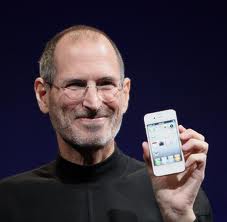
A few hours after hearing of Steve Jobs’ death, it started to seem as if Princess Diana would have reason to be jealous (if she could still be anything at all), such was the outpouring of praise directed at the CEO of Apple. “Praise” is of course the understated version of some of what we read, or witnessed at iStores across the world, where the behaviour often seemed more worshipful than what you’d imagine merited by the death of a man with no (ostensible) religious following.

But as Umberto Eco observed in 1994, the ongoing debates between supporters of the Mac and the PC has long been something like a holy war. PC users disparage the Mac faithful for embracing the paternalism of a world with prescribed choices, and Mac users sneer at the irrationality of us PC folk in making our digital lives so much more complicated than they could be. Eco said:

I am firmly of the opinion that the Macintosh is Catholic and that DOS is Protestant. Indeed, the Macintosh is counter-reformist and has been influenced by the ratio studiorum of the Jesuits. It is cheerful, friendly, conciliatory; it tells the faithful how they must proceed step by step to reach – if not the kingdom of Heaven – the moment in which their document is printed. It is catechistic: The essence of revelation is dealt with via simple formulae and sumptuous icons. Everyone has a right to salvation.

DOS is Protestant, or even Calvinistic. It allows free interpretation of scripture, demands difficult personal decisions, imposes a subtle hermeneutics upon the user, and takes for granted the idea that not all can achieve salvation. To make the system work you need to interpret the program yourself: Far away from the baroque community of revelers, the user is closed within the loneliness of his own inner torment.

As is the case with all cults, adherents tend to lose touch with reality. Something of a personality cult developed around Steve Jobs – partly because of the undeniable sexiness of the products he introduced each year, and more recently perhaps partly due to his well-publicised battle against pancreatic cancer.

Now we see Jobs lauded as the sort of innovator and business leader the world needs more of, despite the evidence suggesting that he was a somewhat abusive autocrat rather than the sort of consultative, politically-correct kind of leader that regularly gets held up as an example to follow in business as well as politics. There’s evidence of a double-standard here, and there is also a remarkable lack of balance in the range of responses to his death and his legacy.

Just as much of the reaction to the failure of South Africa to grant the Dalai Lama a visa prompted either overly flattering portraits of the man himself or character assassinations, Steve Jobs is now either deified or demeaned, depending on who you read. The truth is as always not that simple, and we do ourselves no favours by embracing these false dichotomies.

Of course Jobs changed the world, but he’s no Norman Borlaug, Rosa Parks, Thomas Edison or even Craig Venter. He refined and popularised various tools for making our digital lives more efficient, and more pleasurable. Apple, with Jobs at the helm, had mastered the art of making us believe that renaming and refining was the equal of invention – but it isn’t.

The iCloud is simply the cloud, as most of us knew before Jobs tried to get us there with fewer clicks of a button, and FaceTime is simply video-conferencing with a silly name. A mouse with one button, like Apple’s used to be, is simply a crippled input device. The most recent innovation, introduced at the launch of the iPhone 4S, is Siri – a voice-activated tool for performing various functions on your mobile phone. Siri no doubt has a lovely voice, but she’s doing the same job I’ve been able to do on my Android phones for the last three years.

An example of something actually invented by Jobs or Apple is difficult to find (just as it is for Microsoft). What they mostly do is package and resell the innovations of the real mavericks – those who truly “think different” (while perhaps respect [sic] grammar). What Jobs and Gates have historically done is encourage you to think the same – at least in terms of believing that their products, and their products alone, are the route to your digital salvation.

This is not necessarily or always a bad thing. Informed buyers can be aware of the costs and benefits of aligning themselves to one faction or the other, or mixing and matching if appropriate. I use iPods, but manage them with PC software because iTunes is horribly bloated and slow, at least on a PC. And I use PCs and Android devices because I want to tinker and customise, and I certainly don’t want to be told that Apple considers a phone app to violate standards of decency they have decided I should hold.

If you want things to just work, and don’t want to invest time and energy into learning how they work, there’s no question in my mind that Apple products can be superior. But as Andrew Orlowski points out, the problem is that claiming that they – or Steve Jobs – changed the world raises the question of how small that world – your world – started out being. A new way to do something we’ve always been able to do can be innovative, but it isn’t so by definition.

The endless queues around iStores on the release of a new Apple product, and the religious fervour accompanying the annual Apple product announcements, give the impression of a world of devotees that were letting Jobs do their thinking for them, rather than using the tools he introduced in order to do their own creating and innovating. This thinking is different, yes, but it’s perhaps not the kind of thinking that even Jobs would endorse, as much as he would have appreciated the resulting profits.

In an interview for Wired magazine in 1994, Jobs said that there is a “solution to our problems in education. Unfortunately, technology isn’t it. You’re not going to solve the problems by putting all knowledge onto CD-ROMs. We can put a Web site in every school – none of this is bad. It’s bad only if it lulls us into thinking we’re doing something to solve the problem with education. … What’s wrong with education cannot be fixed with technology. No amount of technology will make a dent.”

One thing that certainly helps in fixing education is to encourage critical thought, and to discourage the binary worldview which says that Steve Jobs is either a techno-Messiah or some sort of sweatshop-running magpie of digital innovation, taking and then rebranding other people’s ideas in furtherance of the cult of Apple.

But treating one person as so important and so meaningful to the world, when he was only doing the same thing as his competitors – sometimes years after them – seems rather hyperbolic. It’s true that he made computing easier for many, and has done the same thing for our smaller computers that also make phone calls. Whether this is a good thing or not is an open debate, because easier can often mean that there’s less for you to do, and less for you to think about.

Start saving for Norway

Not necessarily because you want to come here. It’s just that, if you do, you’d need to have started saving for it quite a while in advance. The pint of Heineken sitting alongside me, for example, cost around R80. The cheapest food at this pub is a margarita pizza for R170, and even your most basic Burger King combo meal will set you back around R110. Anyway – I’m here, and thus my complaints would most likely sound hollow. So just FYI, start saving.

Curiosities/Observations

  • The mad rush for duty-free as the sardines exited customs at the airport was a certain clue that you don’t want to buy booze or cigarettes in the city, unless you can help it. The queue there involved a far longer wait than customs itself, and the rationality of spending time in this queue was confirmed while browsing a wine shop. Not just a wine shop, mind you, but a “Wine Monopoly”. That is in fact its name. All wine and spirits are sold exclusively by the state, with prices partly determined by alcohol content, in a clear attempt to legislate morality. Which is of course fine if you’re a rich banker or lawyer, but not so good for the average geezer sunning himself in the park at 8pm. (These long summer nights are rather pleasant.)
  • Chatting to a local on the night I arrived, I was told something odd about schooling here. Basically, children are not evaluated in any substantive way before the age of 14 (or maybe 16 – he was plying me with drink). This is of course in service of their manic egalitarianism, which dictates that kids shouldn’t be made to feel special, or inferior, before adults believe they can deal with it. So instead of exams, tests and report cards, teachers can only offer nebulous advice such as “maybe you should take a look at that maths textbook sometime? I hear it has lots of cool pictures.” Or something – I haven’t spoken to a teacher to see how this plays out.
  • You need to be an active member of a church to become a gravedigger.
  • The most commonly-found food is the polser, which is a hot dog, and raisin buns (whose Scandiwegian name I cannot recall). The polser will set you back around R35, as will the buns, with 3 of them in a portion. But if it’s polser you’re after, rather go to Denmark, where they serve them with crispy fried onions and rémoulade. These Norwegian ones (at least the ones I’ve found), have neither, and are thus crap. Denmark wins, and I have no biases to disclose.

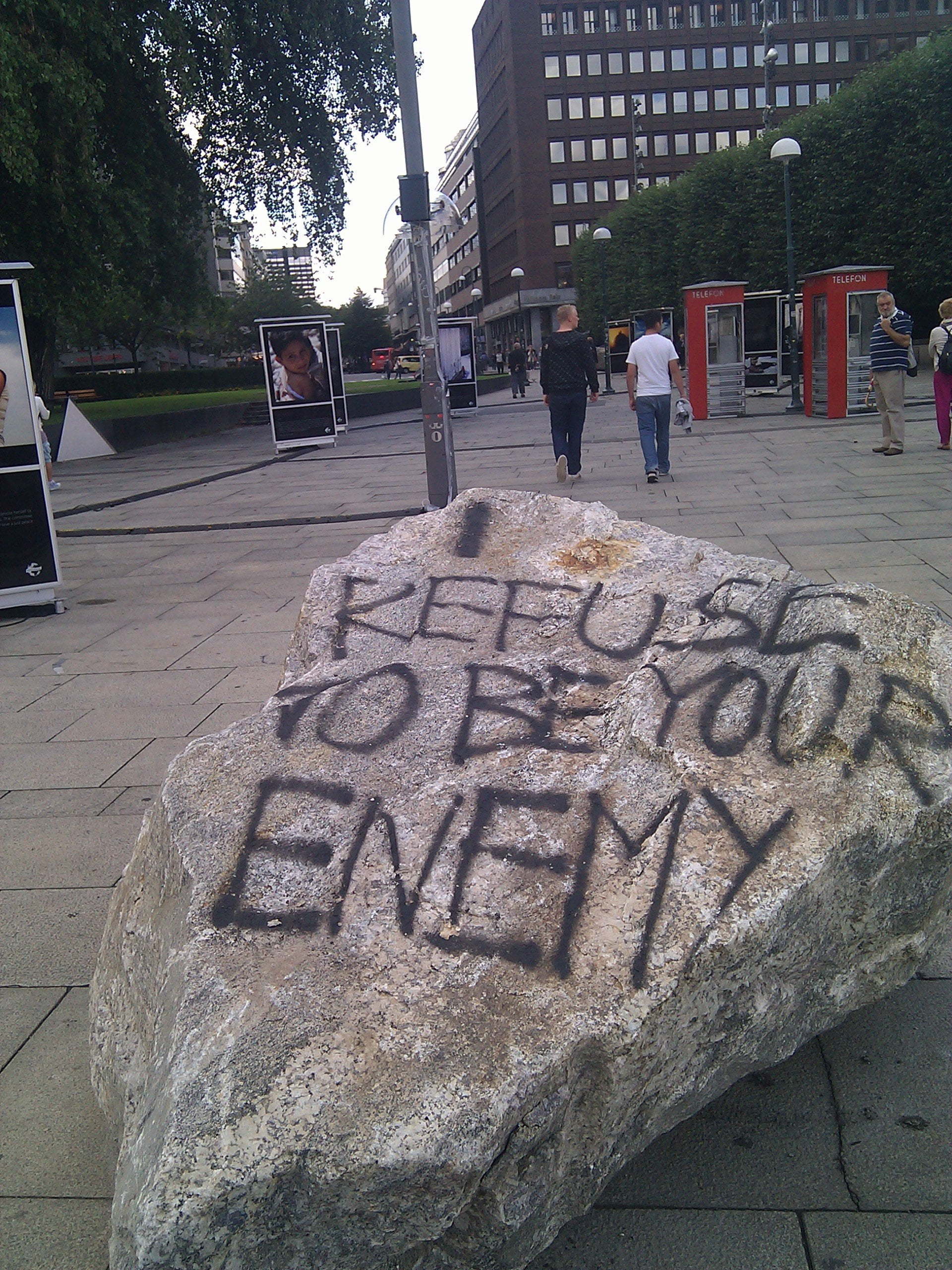
  • They are into peace, especially in the vicinity of the Nobel Center. I’m here for a humanist conference, and – recent events in Norway notwithstanding – it’s quite striking how the content and tone of dialogue with locals converges on trying to reconcile misunderstandings and resolve tensions. There is far less ego, or at least a different sort of ego. This congress of the International Humanist and Ethical Union is being hosted at a reception by the Crown Prince tomorrow night, and the Mayor is also making an appearance at the conference dinner on Saturday. There are flags advertising our conference in the streets. Basically, they take this stuff seriously.

And then, outside of observations on Norway, there’s an embarrassing and (hopefully) humorous anecdote, which involved the Irish. But before I get to that: South African readers, if you think you have a drinking problem, you probably don’t. Because you’re not Irish. The one Irish delegate (implicated in the story I’m getting to) told me about how she and her friends drank vodka all day at school at the age of 16, from their ‘water’ bottles. And this was a head girl, from a middle-upper class background.

Anyway, I was chatting to Annie and her partner Aaron about God, Roy Keane (is that tautologous?) and assorted matters. Aaron wandered off to scrounge for coins to buy another beer. And then, while talking to Annie, I’m pretty darn sure I saw her raise her hand to the side of her face, wiggle her fingers and say “I’m up here”. That sequence of gestures is difficult to interpret as something else, one would think, and also difficult to misinterpret – it usually means “stop objectifying me by staring at my cleavage, you sexist boor”. Except I wasn’t, and hadn’t been.

This freaked me out. If you’ve watched Curb your Enthusiasm (the new series is great, by the way), you might have a sense of how utterly strange, and socially awkward, the next half-hour or so was. Because Aaron had returned, and it was another half-hour before he left, and I finally had the opportunity to resolve whether I was going to live with this misunderstanding, or “put it out there”.

I chose the latter path, and asked her whether she had wiggled her fingers, saying “I’m up here”. She looked at me as if I was alien, insane or both. I repeated the question, mimicking the gesture. Now she seemed convinced I was insane, which I might have exacerbated by saying “look, I realise I probably sound creepy now, but this is quite awkward and needs clarifying”. But she had no idea what I was talking about. And now there was this enormous elephant in the room, and I felt compelled to explain, again, what I thought I had seen – and of course what I perceived it to mean (the thing I may or may not have seen).

But bless the Irish – her quite straightforward response was “Ah, no. If you’d been doing that, I would just have slapped you or stormed off.” So then we got on with talking about Roy Keane, potatoes and so forth, with the discomfort slowly dissipating.

And now it’s Thursday, and the first phase of the visit (leadership training for secular humanist groups, at the IHEU) is over, with the conference proper starting tomorrow. I’ll be sending occasional updates on proceedings through the FSI Twitter account, and the usual motley collection of links and provocations via my account. Be careful out there.

Tuning out (and in)

Since Sunday morning, the Doctor and I have slowly been making our way from the Chesapeake Bay to New Bern, North Carolina, in a boat ably piloted by the pater familias. I must confess that I was worried about sporadic Internet access – not only dreading a backlog of emails to digest and respond to, but also knowing that I would be missing out on all sorts of interesting chatter on Twitter.

But being away from the Internet – and perhaps especially from Twitter – can be a good thing. Now that I’m catching up on a few day’s worth of timeline in a few hours, I can see that I might have become involved in various wars, in ways that might later be regretted. The forced remove conduces to slower consideration.

It also starkly reveals how little there is worth paying attention to – among the gems of insightful links and stimulating conversations, there is still so much wasted time, and so many pointless moments of narcissism on a platform like Twitter. And of course, we can all be guilty of those, and I know I sometimes am – but we should try to make those funny, at least, so that some value can be extracted from them.

The one thing I regret having missed is the conversation around Business Day’s publishing the 2008 Sunday Times report, which occupied many SA Twitter timelines on June 15. If you know nothing about this story, read this (see links to earlier articles at the bottom), this and this (especially this last one, where the editor of Business Day, Peter Bruce, summarises why BD published the report, and his views on the controversy that resulted from doing so).

Sure, I can read all the virtual column-inches now, but the conversation has now slowed – the real-time exchanging of views between interested parties has concluded, and opinions are most likely entrenched. You get a chance to influence what people think, and have them influence what you think, on a platform such as Twitter, and this often happens before the columns, op-eds and articles are written. And we don’t often go back to revise our views, especially once we have committed them to ‘paper’. So these conversations are a pity to miss, and one clear advantage that the social web has over books and paper.

But despite having missed a few such conversations, it has been wonderful to get a chance to do some serious reading. If you’re interested in the conversation around what effects social media and the Internet are having on us, read Jaron Lanier’s wonderfully contrarian You are not a gadget. If you are interested in debates around personhood – what makes you you, and are you the same you as you were 20 years ago – Julian Baggini’s The Ego Trick is very good.

Both sorts of interacting (ie. the immediate and the traditional) with words, and with ideas, are valuable. We shouldn’t neglect or demonize either of them – but rather make sure we take full advantage of both. But having said that, until our small boating crew gets back to terra firma next weekend, I quite look forward to reading a few more books.

Hateful speech, hateful characters (but good TV)

In the course of writing a column (see The Daily Maverick, next Wednesday) on Julius Malema and whether ‘Kill the Boer’ should be banned, I was wondering whether there was anyone I hated. Think on it for a moment – “hating” someone is appealing to quite a strong emotion, and I wonder how often it’s true. We might use that word fairly frequently to mean something like “have contempt for”, or “be very angry at”, or somesuch, but what does “hate” add to the picture? Does it mean you want them dead? I did come up with one example of a person I hated, but unfortunately, that person was on my television screen – Marlo Stanfield from The Wire. I certainly want him dead, preferably with some torture and great suffering thrown in beforehand. A great character, certainly, but one that should suffer.

In case you haven’t see The Wire, I’ll say no more. Except that you should see watch the series, which I came to very late for some reason. But now that I have watched it, there’s no question that it fits into the category of the best television shows ever, at least in my estimation (even though I might not be able to help this – it’s listed on Stuff White People Like, after all). To further expose myself to potential ridicule or potential accusations of a deficit in aesthetic judgement, here’s my list, rank-ordered for bestest-ever TV:

  1. The Wire
  2. Deadwood
  3. The West Wing
  4. Battlestar Galactica (the 2004 version)

While I was intending to tell you why, there are lectures to be written, and a Sunday to enjoy. But if there are any of these four that you haven’t watched, they are all worth checking out. And seeing as it’s soon to be Winter, you surely need to think about what to do on those days and nights where leaving the house is unthinkable. Unlike today.

Stephen Watson, RIP.

Stephen Watson died yesterday morning, after a short battle with a very determined cancer. Tributes from some who knew and/or studied under him are being posted on the BookSA site, and more will be forthcoming as the news spreads, and as people realise what a loss this is – most obviously to his wife Tanya and their two children, but also to all of us who are interested in or part of the SA literary scene. In the mid-to-late 90’s, I completed my MA in Creative Writing, with Stephen acting as my supervisor. While he was never the best supervisor when it came to practical details like arranging meetings or signing forms, he more than made up for that in the quality of his insight, and his clear devotion to helping his students wring the best lines out of the loose thoughts and fragments they brought to him.

It was not only in his dedication to his students’ writing that his commitment proved invaluable, but also in the texts, and the ideas, that he exposed all of us to. He introduced me to Czeslaw Milosz, and to Bertold Brecht, and countless other writers who helped inform what I was trying to think, and say. Our shared appreciation of Leonard Cohen, and his attempts to find the numinous in the mundane, led to many a conversation which left a lasting impression on how I went about trying to find the lines I needed, or wanted, at the time.

He has left us with many books of poetry and essays, all of which have something to offer to most – and usually, quite a lot to offer to all willing to spend some time reading and thinking about the intersections between time, place and the person struggling to locate herself within the noise. For stripping down, and getting through, the noise was one of his most obvious talents – and one we could all benefit from spending some time trying to emulate.

One book that hasn’t been mentioned in the tributes I’ve seen to date is his 1997 book, a writer’s diary. Opening it now, I see that my bookmark is probably still where I left it 10 or so years ago, when I last re-read it, on a paragraph that sticks in the memory. Part of his entry for 16 March, 1996 reads:

The writer belongs to the world; but only by belonging to himself first of all. (In some cases, doubtless, last of all as well.) And this is, in good part, his ethical problem as a human being, as well as a writer.

Judging by the few times I’ve been in his company along with Tanya and the children, I don’t doubt that he resolved this ethical problem, as he seemed to belong to them, and them to him, in a way which made it clear that he’d found a place of peace, but also of inspiration, and of happiness. All sympathies to them, for what they have lost, and to all others who will miss him.

While I haven’t written any poetry for as long as I can remember, looking over those files now, I can remember how valuable his input was – and wish that I could show you a before-and-after version of the same poem in order to demonstrate my debt. While I can’t do that, there is one that I know was strongly influenced by his patient guidance, and it’s pasted below. Thank you, Stephen.

Nailed to our dreaming

Again we watch the sun climb
the tree to your window, and then again
we sleep, nailed to our dreaming
of something other than neglect,
the comfort of paralysis.

Again we shed our city skin,
and travel these parched roads
in search of a fragment of promise,
the quieting of fear. We know
that there is always more to say –

Other ways to define our solitude,
diverse shapes for our desires.
But the words are unkind, are lost
in your gaze, in my imagining
of a love that is liberty.

And though this may be filled
with the end of summer’s song,
over here is a smile.
Over there is my hate and moonlight,
my rainbow with sleep;
wishes from days slipped quietly past,

when I felt my lives begin to unravel,
but then gentled them all back;
for too many years have been lost
on these narrow streets,
edged by dirty snowbanks twice-melted,
of our wishing a poorer future than our past.

They say that all we can rely on
are those things we despise,
and that may be why
I have been frozen here so long,
a mute witness to my body.
Yet we somehow speak, finding new tongues,

until you wake me at dawn,
talk of the roads we must navigate
to find our way home. Still mute,
I wonder if you recognise me only now,
or if you even knew whose hand
you held in your sleep.

The Bill of Responsibilities for the youth of South Africa

If you tune in to Cape Talk or Radio702 right now, you can listen to the launch of the “Bill of Responsibilities for the youth of South Africa“, and hear the Minister of Basic Education and representatives from LeadSA explain why they think this is a great initiative.

They would think so, of course, seeing as the Bill is the creation of the Department of Education and LeadSA. It’s also sanctified by the National Religious Leaders Forum. But they are all wrong, and this is a counter-productive move.

Someone’s serious business, my frivolity

While the bulk of material on Synapses is rather serious in nature, I must confess that I sometimes engage in trivial pursuits. Like laughing at the way in which people sometimes take themselves far too seriously, and flying to London for 4 days, simply to watch a FA Cup Quarter-Final match between Manchester United and Arsenal. Below, I offer a brief account of these two activities, in the hope that readers will sometimes be less critical of the more serious things I have to say, now that they have confirmation that I’m just like them (well, sort of).

So, as to how people can take themselves far too seriously: Yesterday, after having pledged to make dinner for myself and The Doctor, a trip to Gardens Centre was required in order to procure ingredients. Walking past the MTN store, I remembered that I had had difficulty with roaming while in London, and I therefore walked in to make enquiries. While chatting to the clerk, a woman came in, and started addressing the customer in line behind me (the only one). She asked him how long he’d been waiting, emphasising that she was short on time.

Not long, he said, but this was insufficiently reassuring. “I don’t have time to twiddle my thumbs”, she said. She then asserted that she would get on with other business, and that this customer should ensure that her place in the queue was preserved. In a somewhat bemused fashion, he offered an ambiguous mumble, and she departed. Upon returning, and finding herself next in line, she forcefully dropped her phone on the counter, and started loudly complaining that it was misbehaving.

The staff tinkered, at one point plugging it in to check that it was charged. Big mistake. “I charged it this morning! Do you think I’m stupid?”, she yelled. But the problem had something to do with turning off/on, and they were unable to diagnose the fault right there. So they offered to take it in for repairs. No – “it’s not worth repairing. It only cost me R100”, she said. “Well, is it under guarantee? We can take it in for repairs, and offer you a loan phone in the meanwhile”, the staff offered.

“No! You must replace it”. She pointed to the MTN branding on the phone, and said, waving her arms around to gesture at the store walls, “all of this here made this phone, and is responsible for it!”. They then dared to ask if she had bought it there. But she had not – she had bought it at the Waterfront CNA. Well then, ma’am, we can’t help you – you must take it there, and I imagine if you have your receipt, they will be able to help. “Who keeps receipts!”, she yelled. “And do you mean I have to traipse all the way to the Waterfront? I don’t have time for that!”. “We can’t help you, ma’am – you didn’t buy it here, and even if you did, we’d need your receipt to be able to help”.

So she storms out. About ten minutes later (I was having a long geeky conversation with a clerk), she appeared in the doorway and announced: “I have bought a phone from Vodacom!”. Then, she steps in, throws the phone on the floor, and starts stomping on it and crushing it with her heel, shrieking things like “this is what I think of MTN!”. She kicks pieces of phone in the direction of the helpdesk, and storms out again. But – she had forgotten something. Seconds later, she re-appears, throws the charger into the store, and yells “and you can hang yourselves on THIS!”.

We all had a good laugh, and one store clerk had some good fortune, as it appears the phone, once reassembled, was now in better working order.

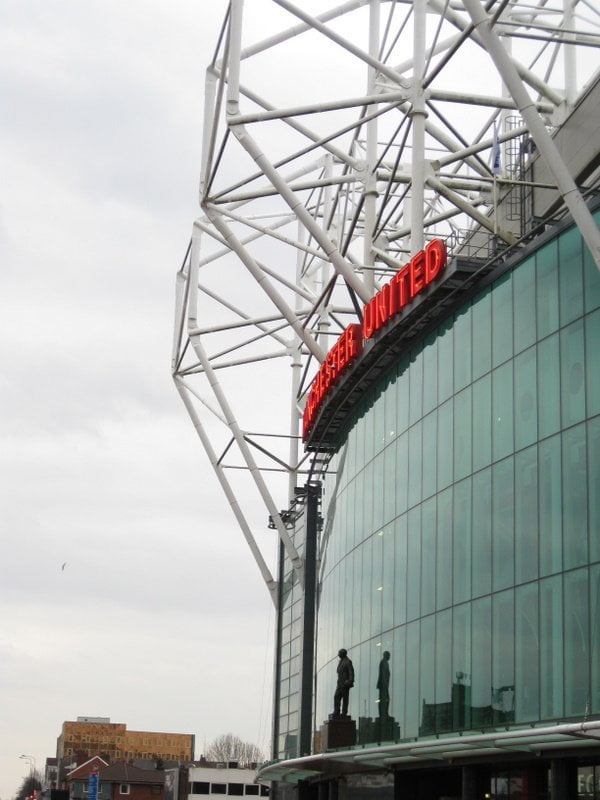
The other frivolity involved my friend, the occasional celebrity “After-dinner mint” (at least according to a P4 radio billboard that once bore his mugshot), calling me last Sunday to suggest the audacious plan of flying to London to watch football. So we did, because the game was at Old Trafford, home of the best football team (and the ugliest footballer). And seeing as he is an Arsenal fan, and they were “our” opposition, I could look forward to plenty of gloating at his expense once we secured our inevitable victory (2-0 to Manchester United was the eventual score. As the crowd kept reminding the MintMan, his team “is just a shit Barcelona”).

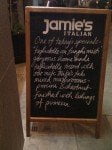
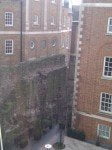
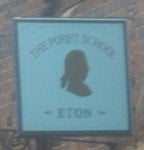
And London was fun. We went to pubs, ate at fat-lip Jamie’s Italian (and, with another friend, at Heston Blumenthal’s Hinds Head, where I enjoyed a 52-hour cooked pork belly). We hung with Simon Pegg at a bar in Covent Garden (no, not really, but he was there), and took lots of Tube rides and a train to Manchester. We learnt that orang-utans use tree bark for sexual pleasure (so the poster said – not empirically verified by us), and that strange fox-like creatures in London steal stuff from your car, if you’re not sufficiently watchful. We saw a famous (I imagine) mouldy wall outside our hotel room. It became known to us that the disabled have access to an “ability suite” at Old Trafford. And also, I discovered that Eton has a “Porny School”, which might be useful information to some of you.

U2, provincialism and our reluctance to criticise

An edited version of this column in The Daily Maverick

Following the Cape Town performance by U2 last weekend, I blogged a brief response (some content is duplicated here) in an attempt to articulate why the show was so disappointing. To be honest, I’d always been somewhat ambivalent about attending, and when tickets were made available, it was partly the review on these pages that persuaded me to brave the masses and the madness. Styli Charalambous reported that, at the Johannesburg leg a week before, U2 laid claim to being the “best band in the world”, and while that claim always appeared to be implausible, it nevertheless seemed likely that they would put on a good – or even great – evening’s entertainment.

U2 360° Tour, Cape Town

Last night, the Doctor and I braved the 100 000 (ish) strong crowd to attend the U2 concert at the Cape Town Stadium. And I wanted to enjoy it, despite the fact that I’m not really a fan. The concert would be a spectacle, I thought – impressive enough in execution to outweigh Bono’s predictable sermonising and his love of cliché (“Africa is the wealthiest country – your people have gold in them” being a recent example). And at times it was – the engineering feat that is “The Claw” was pretty impressive, and it was used to good effect particularly in songs like “Mysterious ways”, where they combined live action edits with some pre-recorded silhouettes of dancers, as well as another track (?) where some nostalgic footage of the band (perhaps in their Twenties, when names like “The Edge” could have sounded edge-y).

But while some aspects of the evening were impressive – notably the efficiency of the organisation and the security, the concert itself was somewhat disappointing. Mostly because the sound was very bad – muddy as hell, with a fair amount of distortion. Vocals were often inaudible, and when combined with the wall of sound approach they seem to have gone for, the tone was generally one of aural assault. Unless one was a die-hard fan, who knew all the songs in last night’s repertoire, there were plenty of opportunities for boredom – one frenetic and noisy track with bombastic (unintelligible) lyrics sounds pretty much like the next, and the previous one.

And then, of course, there was the cheese factor, and the sermonising. The predictable pictures of Mandela on the big screen, and the predictable cheers when Bono encouraged the audience to swallow the implausible assertions that they were in some mythical heart of Africa. Hello, Rainbow Nation, where it seems that 99% of the audience is white. “You have the big 5”, he says, before going on to introduce his “big 4”, ie. the members of the band, now all given animal names (Bono was a wildebees, at least according to The Edge). But we don’t have the big 5 in South Africa, do we, except where they might be trucked into some luxury game reserve, and you’re playing in a city which is oft-criticised for being as un-African as a city on this continent can be.

You know that I don’t buy into the Africa-thing, in general, but it’s clear that Bono does, or at least that he wants us to think he does. But his Africa-shtick is not dependent on time, nor on place, so I doubt that he’s given it much thought that Cape Town might be in a different universe to Accra, and various other spots that he name-checked during one of his attempts to pump up this section of the “Rainbow Nation”. And as formulaic as all that sort of thing was, it was matched by the rote nature of much of the show – he looked like he was pretending to be pumped up, all street-fighting quick-step on the stage, grabbing the microphone stand and violently swinging it to and fro, etc. It all seemed put on, like a cover band, comprised of old codgers, doing a set where they play the music of an Irish pub band from a few decades ago.

Some parts were great – I’m not intending to claim that it was comprehensively disappointing. The duet with Yvonne Chaka Chaka on “Stand by me” was good, “Miss Sarajevo” was outstanding, and I even enjoyed the brief gospel excursion with “Amazing Grace”. But note that those are all more restrained tracks – and of course this could be saying something about my musical preferences. I’d suggest, though, that it’s got more to do with the fact that, on those tracks, I was able to hear what was going on.

The Cape Town Stadium continues to look good, though. And if a messianic Irishman is what it takes to keep Billy Graham out, I’m all for it.