Last night, the Doctor and I braved the 100 000 (ish) strong crowd to attend the U2 concert at the Cape Town Stadium. And I wanted to enjoy it, despite the fact that I’m not really a fan. The concert would be a spectacle, I thought – impressive enough in execution to outweigh Bono’s predictable sermonising and his love of cliché (“Africa is the wealthiest country – your people have gold in them” being a recent example). And at times it was – the engineering feat that is “The Claw” was pretty impressive, and it was used to good effect particularly in songs like “Mysterious ways”, where they combined live action edits with some pre-recorded silhouettes of dancers, as well as another track (?) where some nostalgic footage of the band (perhaps in their Twenties, when names like “The Edge” could have sounded edge-y).

But while some aspects of the evening were impressive – notably the efficiency of the organisation and the security, the concert itself was somewhat disappointing. Mostly because the sound was very bad – muddy as hell, with a fair amount of distortion. Vocals were often inaudible, and when combined with the wall of sound approach they seem to have gone for, the tone was generally one of aural assault. Unless one was a die-hard fan, who knew all the songs in last night’s repertoire, there were plenty of opportunities for boredom – one frenetic and noisy track with bombastic (unintelligible) lyrics sounds pretty much like the next, and the previous one.
And then, of course, there was the cheese factor, and the sermonising. The predictable pictures of Mandela on the big screen, and the predictable cheers when Bono encouraged the audience to swallow the implausible assertions that they were in some mythical heart of Africa. Hello, Rainbow Nation, where it seems that 99% of the audience is white. “You have the big 5”, he says, before going on to introduce his “big 4”, ie. the members of the band, now all given animal names (Bono was a wildebees, at least according to The Edge). But we don’t have the big 5 in South Africa, do we, except where they might be trucked into some luxury game reserve, and you’re playing in a city which is oft-criticised for being as un-African as a city on this continent can be.
You know that I don’t buy into the Africa-thing, in general, but it’s clear that Bono does, or at least that he wants us to think he does. But his Africa-shtick is not dependent on time, nor on place, so I doubt that he’s given it much thought that Cape Town might be in a different universe to Accra, and various other spots that he name-checked during one of his attempts to pump up this section of the “Rainbow Nation”. And as formulaic as all that sort of thing was, it was matched by the rote nature of much of the show – he looked like he was pretending to be pumped up, all street-fighting quick-step on the stage, grabbing the microphone stand and violently swinging it to and fro, etc. It all seemed put on, like a cover band, comprised of old codgers, doing a set where they play the music of an Irish pub band from a few decades ago.
Some parts were great – I’m not intending to claim that it was comprehensively disappointing. The duet with Yvonne Chaka Chaka on “Stand by me” was good, “Miss Sarajevo” was outstanding, and I even enjoyed the brief gospel excursion with “Amazing Grace”. But note that those are all more restrained tracks – and of course this could be saying something about my musical preferences. I’d suggest, though, that it’s got more to do with the fact that, on those tracks, I was able to hear what was going on.
The Cape Town Stadium continues to look good, though. And if a messianic Irishman is what it takes to keep Billy Graham out, I’m all for it.



 Amongst the usual bundle of perceptive, contentious and misguided comments, tweets and columns on the Kuli Roberts issue, a response from Ferial Haffajee merits attention: “racism’s best antidote is anti-racism, not reconciliation”. Reconciliation and forgiveness involve a tolerance, and a sensitivity, the time for which has passed. We know that there are many racists, sexists and other types of bigot out there – and knowing who they are, and letting them have their say, is the only way we are able to track our progress in changing their minds.
 Following the Cape Town performance by U2 last weekend, I







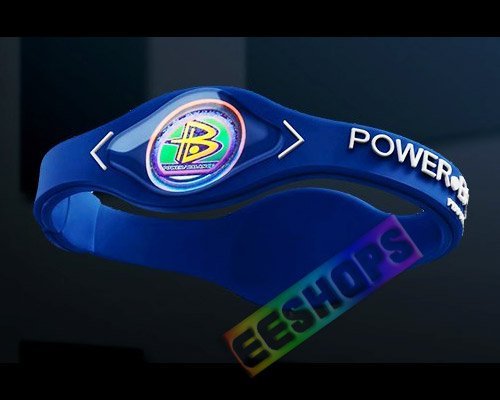
 There is a pestilence of woo sweeping the land. While some versions of pseudoscience, mysticism and general quackery are fairly constant insults to our sensibilities (

 The twentieth century, with its scores of millions of supernumerary dead, has been called the age of ideology. And the age of ideology, clearly, was a mere hiatus in the age of religion, which shows little sign of expiry. Since it is no longer permissible to disparage any single faith or creed, let us start disparaging all of them. To be clear: an ideology is a belief system with an inadequate basis in reality; a religion is a belief system with no basis in reality whatever. Religious belief is without reason and without dignity, and its record is near-universally dreadful. It is straightforward – and never mind, for now, about plagues and famines: if God existed, and if he cared for humankind, he would never have given us religion.