Does it matter if you’re black or white? #CensusSA2011

As submitted to The Daily Maverick

On October 10, be ready to stand up and be counted. Well, you’ll need to stand up at least for as long as it takes to let the enumerator into your home, for that day marks the start of South Africa’s first census since 2001. There’s no question that conducting a full census costs plenty of money – R3 billion is the current estimate – but they also provide valuable information.

Woo-woo fest comes to Wits

As published in Daily Maverick

Did you know that “millions of people in SA have had their own personal experience with ETs and UFOs”? If you didn’t, Michael Tellinger has arranged a conference just for you, this November in the Linder Auditorium at the University of the Witwatersrand. It must be true, seeing as one of South Africa’s most prestigious universities is hosting the conference.

Gendered epithets: Short-term battles vs. long-term wars

As submitted to The Daily Maverick

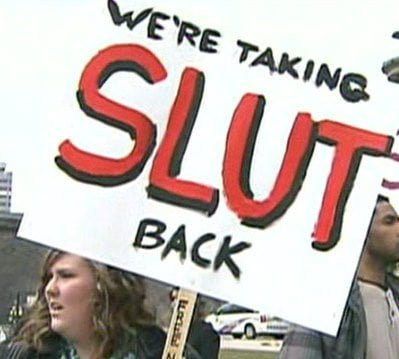
This Saturday, September 24, Slutwalk comes to Johannesburg, and thousands will participate to protest victim-blaming and to affirm the right of all women to wear what they want, and act as they please, without fear of being misunderstood as welcoming sexual assault.

Many will participate dressed in clothing that might be considered sluttish – in the traditional sense of the word – because part of the point of Slutwalk is to reclaim the word ‘slut’ and to say that others (rapists, as well as those who deny women agency in less violent ways) don’t have the authority to impute desire where none might exist.

As I’ve previously argued in the lead-up to the Cape Town Slutwalk, calling these protests Slutwalks runs the risk of alienating some supporters who see the word ‘slut’ as inescapably pejorative. It also runs the risk of creating tension between those sympathetic to the cause, but divided on the appropriateness of the name.

In fact, one unfortunate consequence has been that some who question the name are thereby assumed to be unsympathetic to the cause, despite their reasons for objecting to its branding. The equation has sometimes appeared quite simple: Object to the name, and thereby reveal yourself as (at best) only partially aware of the deep-seated patriarchy and resulting lack of understanding experienced by many (probably most) victims of rape.

Another example of this easy equation is highlighted by my previous sentence, where I use the word ‘victim’. Criminal agents have recently violated my home, three times in the space of a month. That makes me (and my family) a victim of their crimes. To call those who are victims of crimes ‘survivors’ instead of victims is a choice, not an obligation – it can signal a certain attitude or mindset, but we start playing very fast and loose with language when choosing not to use that signal is taken as indicating a lack of sympathy.

Words mean something, and they can have consequences. One way to be help being clear about potential consequences is to agree on definitions and to allow for the fact that increased miscommunication – and misattribution of motive – becomes increasingly likely if we can revise those definitions as we please. This particular slippery slope concludes with a world of Humpty Dumptys, all asserting that “When I use a word, it means just what I choose it to mean – neither more nor less.”

Slutwalks have such momentum, and have achieved such significant consciousness-raising and debate, that even those who oppose the name need to acknowledge that they probably do more good than harm. I’d therefore like to appeal to a post-Slutwalk consideration of how we engage with such issues and causes in future – and in particular a consideration of whether gendered epithets like ‘slut’ merit a place in our discourse around social activism.

Besides the debates around whether (ostensibly neutral) designators like ‘Chairman’, personal pronouns like ‘he’ or words like ‘mankind’ perpetuate a gender bias, gendered epithets constitute another class of words that reveal a bias in our language and behaviour. Apologies to sensitive readers, but there are quite simply far more negative words used to describe women than there are to describe men.

‘Bitch’ is a mild example – not only because it’s sometimes used in reference to men, but also because it has been stripped of much of its sexist content in usages such as ‘to bitch about Arsenal’s defence’. But ‘cunt’, ‘twat’ or ‘whore’ have a visceral impact and malice that ‘cock’ or ‘prick’ lack. And then there is the word ‘pussy’, which, while applied mostly to men, is intended to accuse that man of being weak – just like a woman.

The primary question is really this: Why do these words not get the same attention and attract the same outrage as the words ‘nigger’ or ‘kaffir’? While I do believe that it’s possible to use all these words for effect – in humour, or to make a point about racism or sexism – most usages of them are instead in anger, and intended to silence or demean the target.

These expressions of contempt or hostility use words that are linked to a race or a gender, and as I’ve suggested above, that race is often black and that gender is often female. But while the racist versions of these slurs are unquestionably considered unacceptable, the sexist versions operate in a context where misogyny is so deeply entrenched that it can escape notice.

As Phil Molé argues in ‘The Invisibility of Misogyny’:

It’s not just the fact that misogyny is invisible that we need to face – it’s also the fact that this invisibility is a large part of what makes it the enormous problem it is. We cannot begin to properly address misogyny and the harm it causes unless we start being able to see it.

One aspect of seeing misogyny is perhaps recognising that words can be used to harm, and that when those harmful words are linked to race or gender, existing stereotypes regarding those races and genders can also be reinforced. Even if you use these words without holding sexist and racist attitudes, you can have little control over how your target perceives them, and the hurt they might cause.

In the context of this weekends’ Slutwalk, these targets include those women who have been subjected to hostility through being called a slut, and who find themselves unable to see the word as anything other than demeaning.

Furthermore, we sometimes forget other audiences – the genuine racists and sexists, who could overhear casual uses of such epithets, and interpret this to mean that their position is more broadly supported than is actually the case.

So while I can believe that the Slutwalk does more good than harm – and while I fully understand the point of calling it Slutwalk in the first place – I worry about how to reconcile it with the broader issue of how language can be used to reinforce misogyny. I imagine that many self-described feminists agree with me on sexist epithets in general, understanding them to be a subtle way of reinforcing negative attitudes towards a particular sex.

And if, in a few months or years time, a campaign is launched and marches are held to get people thinking about whether it’s appropriate to call someone a cunt, might it perhaps be the case that we’ll have little answer to someone who retorts “you’re simply missing the point to find ‘cunt’ offensive – why not simply reclaim it, just like you did with ‘slut’?”

Also read this interesting exchange initiated by Ophelia Benson at Butterflies and Wheels, which prompted many of the thoughts expressed above.

John Gray’s accommodationist waffle

In a lengthy post for the BBC magazine, John Gray tells us that “what we believe doesn’t in the end matter very much. What matters is how we live”. The post is titled “A Point of View: Can religion tell us more than science?” – and while he certainly expresses a point of view, I don’t think it a particularly good one.

Opinions on opinions on opinions

First published on The Daily Maverick

Gareth Cliff’s opinion-piece on the nomination of Mogoeng Mogoeng to be South Africa’s next Chief Justice attracted a number of interesting comments. However, it also attracted comments which had little to do with any arguments advanced, but instead appeared to be attempts at disqualifying Cliff from holding any views at all.

“Stick to your day job” was a sentiment that appeared at least twice, alongside some less subtle ad hominem attacks. And yes, we can justifiably wonder about how easily a radio and television personality can rebrand themselves as a public intellectual. But finding such a transition implausible or believing it to be difficult does not make it any less possible to do so – and it is distinctly anti-intellectual to rule out the possibility that sensible noises and words can come from surprising sources.

This sort of reaction would be no surprise to Cliff himself. His open letter to President Zuma attracted 876 comments – many quite hostile – as well as a column by Andile Mngxitama asserting that Cliff was the face of ‘white supremacy’. Sadly, and predictably so, it proved impossible (at least for a white man such as myself) to argue that we could – and should – attempt to separate the arguments from the personalities and politics of racial identity in this case.

My reply to Mngxitama gave rise to the sort of reaction that makes one wonder whether the strategy that Samantha Vice argues for – that white South Africans should refrain from comment on racial matters – is simply a matter of self-protection rather than principle. I don’t mean that, of course – there’s no question that her viewpoint is sincere, regardless of the fact that I believe it to be wrong.

But there’s a limit to how many times you can hear a considered position being dismissed on grounds of your racial identity, or have people calling on you to be kicked out of your university, as SACP Provincial Secretary Khaya Magaxa did following my reply, before you start to wonder whether it’s really worth the bother.

Of course, if all of us who – rightly or wrongly – believe we have something to contribute to these conversations took the more abusive advice of our readers to heart, we’d simply stop trying to contribute. And while some might consider that a blessing, and move on to complaining about something else, others might think that the space for debate and reflection would narrow appreciably, leaving us all impoverished.

There are at least three broad issues of relevance here. The first is something I’ve previously discussed, namely the fact that Internet comment facilities seem to self-select for vitriol and abuse. People who want to express the viewpoint that ‘you suck’, or some more sophisticated variant of that, seem far more likely to jab their index fingers at their keyboards than those who are interested in communication and debate.

Second, it seems to my mind at least plausible that we’re living though an era in which ideas themselves are not that welcome. Where, as Neal Gabler recently put it in a column John Maytham was kind enough to alert me to, the “public intellectual in the general media [has been replaced] by the pundit who substitutes outrageousness for thoughtfulness”. Despite the demise of postmodernism in academic circles, it still lives and breathes in the popular viewpoint that everybody’s opinion is equally worthy of consideration, and that individuals are under no special obligation to set aside their opinions in favour of what the evidence points to.

And third, there’s the issue of the extent to which any person or collective of persons should be accountable to others in the first place. The triumph of democracy as a political system has perhaps led to a generalisation of the idea that the majority should be trusted – and when you combine this with the previous two points, the frightening reality dawns that “the people” are often revealed as short-sighted and shrill.

But it’s of course not always true that the majority are right, or are to be trusted. We can all get things wrong, and we can sometimes do so simultaneously. To go back to the actual content of the Cliff column last week (as well as mine, and to a lesser extent Ivo Vegter’s), the idea that something like profound religious faith is a concern when discussing the role of Chief Justice is a genuine issue, admitting of substantive debate, in that it is far from obvious that we can wall off certain states of mind and motivations from others.

Yet even if the majority are not always right, feedback from an audience – whether it be a readership or a population of voters – is an essential vehicle for correction in that you can gain significant insight into what you’re doing right and what you’re doing wrong. James Thorpe left an interesting comment on Cliff’s piece (timestamped Wed, 7 Sep 2011 at 09:41), in which this point was made.

He argued for some sort of reader-feedback mechanism here on The Daily Maverick. Apart from the comment wall, number of Tweets, Facebook ‘likes’ and Google ‘plusses’, the editorial staff obviously have access to figures indicating the number of times a page was loaded and which other Internet portals saw fit to link to it. Some may say that this is more than enough feedback – except, as Thorpe points out, we often don’t know what people liked and disliked about the column in question, and readers of course don’t have access to the hit rate and referrer data.

And then, of course, we can ask the question of whether this data is useful to readers at all. Or rather, whether it should be. Again, as mentioned above, does it matter whether a particular column is ranked well or poorly via some democratic process? It might well matter on the level of ego, for the writers themselves, but is providing this sort of facility plausibly an obligation on the part of the publication in question, and would it add value to readers?

While I was initially tempted to agree with Thorpe on this issue, it’s now not at all clear what anyone would gain. Publications themselves should have an editorial position, and publish what they think worthwhile, whether readers like it or not. There is of course a limit to this, in that it’s no good to sacrifice all your readers for the sake of principle. They can be guided in their decisions on what to publish through viewership figures, as well as through comments.

For readers, what you read – whether in the columns themselves or in the comments left – should itself be the reward. Asking for the decision about what to consider worth reading or not to be delegated to others via an additional mechanism could perhaps be an abrogation of the responsibility to form our own judgements, and then, to guide the judgements of the writers and editors, as well as other readers, through written feedback.

In short, I’d like to believe that it’s the case that the free market of ideas espoused by John Stuart Mill can still function in a world where we are encouraged to summarise complex preferences in the pressing of a button labelled “like”, or “+1”. We participate in that market, and contribute to its vibrancy and efficiency, through expressing our views. If they are persuasive, others will hopefully come to share them, and lesser content will be discarded for more substantial contributions.

Likewise, lesser publications might also themselves fall by the wayside if they persist in offering their readership sub-standard fare. It’s not at all clear to me that additional mechanisms for feedback would make this particular market more efficient. However, given the importance of the market in question, practical suggestions for doing so would certainly merit consideration.

The sheer volume of content generated on a website such as this – not to mention all the others we have access to – mean that interesting and potentially important ideas can get lost in the noise. This column, then, is an attempt to highlight that one idea, as expressed in Thorpe’s comment. Do we (humans, rather than The Daily Maverick) need to hear more opinions on opinions, and if so, what should the mechanism for allowing this look like?


The JSC hearings on Mogoeng Mogoeng

As submitted to The Daily Maverick

While I intended this column to be a follow-up on my thoughts on Slutwalk, dealing more generally with the topic of gendered epithets and why they are generally wrong, that will have to wait. Because as a colleague put it, I have ‘no infrastructure’ following a recent double-dip round of burglaries, and more than a tablet computer is required for the research needed to do that topic justice.

Redistribution of wealth

Apologies for the silence here – I didn’t get around to writing a column for the Daily Maverick this week, and also haven’t blogged, mosly because it’s quite difficult to do these things when bloody agents have entered your home – twice in the space of two weeks – and taken all your stuff.

There’s a lovely hashtag that you’ll often encounter on Twitter – #middleclassproblems – and this is certainly one of them. It’s a middle (and upper, or course) problem to have stuff worth stealing, and also to have a public platform to use in order to complain about it. So far, though, it’s only been stuff, and stuff can be replaced. People can’t (well, individual people – people in general are sadly far too easily replaced). So yes, it could have been far worse.

But it’s nevertheless rather annoying, especially due to the time lost. Time waiting for people to install more security, time taken to replace my passport (including the time waiting for that damn baby, whose parents were in the queue ahead of me, to keep her eyes open for the photograph), and now, the time lost due to not being able to do proper work without a laptop at home.

And worst of all, for me, is that for the first time, I would seriously consider devoting resources to getting out of here, into somewhere in the 1st world. It’s a difficult thing to say, or to discuss, but at some point one simply gets tired of the uncertainty, of the waiting to become a victim.

The problem is that poverty and desperation don’t know who you are. You can be as committed to social equality as you like, and have spend X hours trying to help built this country into what it could be – and it could all be for naught. And I can’t blame the housebreakers for that – if I was in their situation, I might well be resorting to the same choices.

And this is because choice, or choices, can be quite an alien concept if you’re living hand-to-mouth. It’s a middle class problem to even be able to talk about choices, and that’s a genuinely sad thing.

To add to the sadness, it’s difficult to escape the feeling that South Africa is on some sort of precipice. Not the Night of the Long Knives sort of thing, as someone hyperventilated on a friend’s Facebook wall, but one involving a significant shift away from the liberal and democratic values the post-94 South Africa is rightly proud of.

The Malema hearings, the Mogoeng confirmation (or hopefully not), and the vote on the POI Bill are all pretty big deals, and depending on how they go, could give rise to legitimate pessimism about our immediate future.

I’ll say more about Mogoeng next week in the Daily Maverick, but in the meanwhile, please don’t rest, or depend on others to sort these problems out. Civil society retains a significant voice, but far too often, we stand on the sidelines and wait to protest decisions already made. Sometimes you can see them coming, and the time to raise your voice is now.

#SlutWalk and the politics of re-appropriating words

As submitted to The Daily Maverick.

When a representative of the Toronto Police said that “women should avoid dressing like sluts in order not to be victimized”, it’s unlikely that he intended to foment extensive debate on the meaning of words, and which of these words could and could not be “reclaimed”. However, while people all across the globe are participating in SlutWalks in order to highlight and protest a culture of victim-blaming, others are choosing not to do so – exactly because they think the word “slut” cannot be reclaimed, and that the SlutWalk movement might be an obstacle to its own stated goals.

Allowing yourself to be wrong

As submitted to The Daily Maverick

Having a conversation requires all the participants to be listening, but having a fruitful conversation often requires something more: The possibility that someone will leave the exchange with their mind changed. If not that, at least with some doubt as to whether their convictions are justified. Or, perhaps more typically, the sort of conversation that simply makes you want to have more of them, just like that one.

Atheists and the politics of productive engagement

As submitted to The Daily Maverick

As I noted in last week’s column, prominent spokespersons for divisive views can make their arguments in more or less divisive ways. And while we shouldn’t confuse whatever offence is caused by antagonistic expressions of a viewpoint with the legitimacy of that viewpoint, I also don’t think we should ignore the fact that persuasion becomes more difficult when your audience is pissed off.