Installing Ice Cream Sandwich on your Samsung Galaxy S2

SOUTH AFRICAN READERS: The official firmwares are all out. So if you want them, you should be able to upgrade via Kies if you’re still on an official Gingerbread ROM. If you want to use the Odin method described here, go sign up for an account at SamFirmware, search for the i9100 (Galaxy S2), and download the appropriate firmware for your device. You’ll see three ICS ROM’s there – one labelled Vodafone (for Vodacom), one labelled XFM (for MTN) and one just called “South Africa” (for anyone else). The password to unzip all these should be “samfirmware.com”. Or, go download CheckFus and get the firmware using that (no password on those downloads). If you want the rooted kernel, here’s a download link. If that link stops working, search for the LP7 kernel on this thread.

Also see a more recent post on installing CyanogenMod9.

For South African S2 owners sick of waiting for MTN/CellC/Vodacom to release ICS, here’s a dummies guide to installing it on your S2 (and optionally, rooting). If you don’t understand the dummies guide, please don’t even consider attempting this. And if you do decide to install ICS, the risks are all your own – if you end up with a R7000 paperweight, tough luck. Having said that, hundreds of people have followed this procedure without complication, and I’ve been running ICS for months now, thanks to the folks at XDA-Developers (a forum Android geeks would benefit from immersing themselves in). The guide below is really just a simplified version of Intratech’s thread at XDA, so the credit is all his.

File download recommendations and links are current as of today, but new ROM’s get released all the time and I probably won’t be updating this post. If you get to this late, rummage around in Intratech’s thread for new firmware. I also don’t use official ICS ROM’s, so it’s no use asking me how to do stuff with them, what works and what doesn’t, etc.

The instructions here assume that you already have Samsung’s Kies installed. You won’t need that to install ICS, but Kies does come with the drivers you need to follow the steps below. So install Kies if you haven’t already. I’m using a Windows PC, and have no idea how different things might be on other OS’es.

Files to download:

  1. Odin
  2. 7Zip
  3. Ice Cream Sandwich (see top of post for official SA firmwares)
  4. If you intend to root, the rooted kernel (likewise)

The ICS version you’ll be installing does not wipe the phone, and if you don’t root, your warranty is intact. This is an official (UK) ICS release.

Install 7Zip, then use it to extract the ICS Rom. If there are errors extracting, the download is most likely corrupt, and you certainly shouldn’t proceed. Try downloading it again. Odin and the kernel should obviously also extract without error. Extract these files into a folder somewhere on your PC, where all that matters is that you are able to find them. This guide assumes that you’re coming from a stock Gingerbread ROM – if you’re not, weird things might happen (see this comment, for example).

  1. install Kies (if you don’t already have it). While you’re in Kies, de-activate the “Run Samsung KIES automatically when device is connected” option, seeing as you don’t want it to interfere with Odin flashes (the procedure outlined here).
  2. connect your phone with the USB cable, let the PC recognise it and install drivers (if necessary – if you’ve used Kies before, it won’t be).
  3. disconnect the phone, and close Kies (important – check the system tray etc. to make sure it’s closed, because it interferes with Odin).
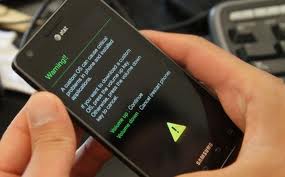
  4. Put the disconnected phone into ‘Download’ mode, which you do by a) powering down, then restarting by b) holding both volume down and the main button on front of phone in when pressing power. Hold all 3 until you see the screen pictured above. You’ll be asked whether you’re sure you want to go to download mode. You are.
  5. Launch Odin. Connect the phone with USB cable.
  6. A block of the Odin screen (ID:COM) should go yellow if everything is in order. If not, something is wrong, probably driver related – but you must not proceed with flashing anything.
  7. Click on the PDA button and browse to the ICS ROM .tar or .tar.md5 (the large extracted file, something over 500Mb) file that you extracted earlier
  8. Do not select any other options in Odin. And make sure you’ve used the PDA block, not one of the others.
  9. Click start to flash
  10. Don’t disconnect the cable or turn off the phone – it will reboot when it finishes.

You’re done, and running ICS. What you’ll have now is stock firmware. But your phone is not rooted yet. If you want to root, repeat steps 4-10 above, but this time using the kernel file instead of the ICS file (also in the PDA section of Odin).

Note: If you do root, you’ll now see a scary-looking yellow triangle on boot (similar to the picture above), which is Samsung’s way of saying you’ve been naughty. To get rid of that, install an app called TriangleAway, which is free for XDA forum members, or R15 in the Play Store. Or use a jig that you’ve bought from e-Bay.

If you do root, it’s now easy to go into Recovery mode (volume up+home+power) and make a full system backup. Once you’ve done that, you can install any ROM you like, and be able to flash your backup back in 5 minutes if you don’t like the result. Rooted users should certainly check out CyanogenMod, which is what I’ve been running for the past few months. Once you go ‘pure’ Android and dump Touchwiz, your life will be immeasurably improved…

Tim Noakes on carbohydrates

Originally published in the Daily Maverick.

In one of my first columns on Daily Maverick, Michael Pollan and his food rules (“the whiter the bread, the sooner you will be dead”) were used to illustrate the modern obsession with eating “healthy” food, or orthorexia. Pollan is an example of a celebrity nutritionist, who – while not necessarily offering harmful advice – could be accused of simplifying things to such an extent that what starts as sound advice mostly ends up being accepted on faith or as dogma.

Recently, South Africa’s sports-science guru Tim Noakes has been receiving plenty of media coverage following his about-turn on matters dietary. Many of you will recall Noakes as an advocate of carbo-loading, especially for athletes. But even those of us who aspired to complete a 10km shuffle had little to fear from the carbohydrate. Until now, where for many of us our fondness for carbohydrates “is an addiction that is at least as powerful as those associated with cigarette consumption and some recreational drugs like heroin”.

In general it’s a good thing to see scientists change their minds, because it’s evidence of the scientific method at work. When the evidence changes, so should our views. But such is the current fear of food, manifested in daily articles about epidemics of obesity and the various ways we’re killing ourselves through what we eat, that it’s sometimes a little easy to join the next dietary fashion without thinking enough about whether we’re convinced by the evidence rather than by the hysteria.

A form of cultural amnesia is apparent in most dietary programmes – they spawn books and instructional DVD’s, but are quite often simple revisions of advice we’ve heard before, packaged under a different name with a different guru’s face on the cover. But if the advice is good and presented in a way that doesn’t encourage mindless obedience, us non-specialists could certainly benefit from knowing about what – in this instance at least – appears to be somewhat of a breakthrough moment for dietary knowledge.

The breakthrough is not Noakes’s and he’s the first to admit that, citing William Harvey and William Banting, and more recently Robert Atkins and Gary Taubes as those who introduced him to the concept that most of us would apparently lose weight and live healthier lives on low-carbohydrate diets. I say “apparently” not only because I haven’t tried it myself, but also because the evidence for Noakes’s claim doesn’t seem nearly as convincing as he’d like us to believe.

While some philosophers of science (like Nancy Cartwright [pdf], for one) disagree, the gold-standard in science is generally held to be the RCT, or randomised controlled trial. In an RCT, subjects are randomly allocated to receive one or another of the different drugs or interventions being tested, and those subjects are then treated differently only in respect of differences that are intrinsic to the different treatments under comparison.

In the case of an RCT evaluating different diets, you’d therefore want to ensure that you control for factors like how much exercise subjects in each cohort do, and your randomised selection of subjects into those cohorts should have ensured a balance between other factors that could influence the outcome of the treatments being compared (whether you know about those factors or not).

For diet – and specifically, comparing diets with varying proportions of carbohydrates – two recent RCT’s are relevant here. In 2009, The New England Journal of Medicine (360,9) published a study by Frank Sacks (pdf) and others, in which four diets were tested on 811 overweight adults. The subjects were randomly assigned to one of four diets, where “the targeted percentages of energy derived from fat, protein, and carbohydrates in the four diets were 20, 15, and 65%; 20, 25, and 55%; 40, 15, and 45%; and 40, 25, and 35%”. The subjects were then monitored for two years to determine the short- and longer-term effect of these four diets.

Their results? “Any type of diet, when taught for the purpose of weight loss with enthusiasm and persistence, can be effective.” To put it more simply, “reduced-calorie diets result in clinically meaningful weight loss regardless of which macronutrients they emphasize”. So, if Sacks and his research collaborators are to be believed, eating less is the important thing rather than what you eat – at least when it comes to weight-loss.

Russell de Souza’s research (published this year in The American Journal of Clinical Nutrition) involved 424 subjects randomly allocated to diets involving 25% or 15% protein; 40% or 20% fat; and 65% or 35% carbohydrates. Again, the authors note that the subjects “lost more fat than lean mass after consumption of all diets, with no differences in changes in body composition, abdominal fat, or hepatic fat between assigned macronutrient amounts”.

Of course, Noakes might be different, and he’d know as well as anyone that a diet that works for one person might not work for all. He in fact claims that he is different (and suggests that many of us might be) in being “carbohydrate resistant”, which brings with it a predisposition to developing adult-onset diabetes. And again, this might be true – but we haven’t yet seen an RCT which compares the effects of various diets on only people who are carbohydrate resistant.

It therefore seems premature – even unjustified – to speak of this diet in such unequivocally positive terms, not to mention introducing the language of moral panics in the form of our hypothetical “addiction” to carbohydrates. As Ben Goldacre (and others, I’m sure) have pointed out, anecdotes are not data, and the bulk of the data available right now suggest that the main problem is simply that we eat too darn much.

Speaking of which, another concern with diets such as this presents itself. Much as you’ll usually find anti-vaccination idiocy represented in the middle-class but rarely by the poor, a diet like this seems quite out of reach to anyone struggling to find money to feed themselves and their families. We’re told to avoid bread, rice, pasta and potatoes in favour of eggs, fish, meat, dairy products and nuts (only some nuts – peanuts and cashews, among others, are evil nuts).

So, above and beyond wondering whether the Noakes diet is evidentially justified, rather than being yet another example of a celebrity-led fad, it’s also somewhat discomfiting on a political level. The increasingly obese poor might after all end up inheriting the earth, simply because there’s no space left on it for anyone else.

See the Daily Maverick link at the top for a range of comments on this column. One particularly worth highlighting, and pasted below, is a response from Prof. Noakes.

Jacques,

By focusing on the evidence or lack thereof that a low carbohydrate diet is an effective means of losing weight you miss a couple of important points. These points are more fully described in the most recent edition of my book, Challenging Beliefs. First, my personal interest in the low carbohydrate diet relates to my predisposition to develop diabetes; my substantial weight loss on this eating plan is an unexpected bonus but it is not the reason why I have committed to this eating plan. The scientific evidence is absolutely clear – it is the persistent consumption of a high carbohydrate diet by person like myself with a genetic predisposition to develop diabetes because we are carbohydrate-resistant that ultimately causes us to develop that disease. The prevention and correct treatment of the condition is also blindingly obvious and proven in the literature – it is a diet that restricts the total carbohydrate intake to as few grams a day as possible, preferably less than about 50 grams per day. Yet sadly this is not the advice that predisposed people like myself or indeed those who already have the disease are likely to receive. I wish someone had told me this 20 years ago. I do not want others not to know this information if it can save them from the disastrous consequences of this awful disease.

Thus my interest in publicizing this eating plan is not to be just another “celebrity fad diet”.

Second, for 33 years I ate the so-called heart healthy, low fat, high carbohydrate “prudent” diet – the same diet that did not prevent the development of all the complications of diabetes in my father. Yet in retrospect, all that diet did for me was to make me fat, lazy, increasingly closer to developing full blown diabetes whilst all the time destroying my running ability. When I finally discovered that these unpleasant symptoms were not caused by aging but by my high carbohydrate “healthy” diet, I was naturally somewhat surprised. Thus in advocating this alternate eating plan, I have been careful to stress that the key benefit is a dramatic increase in the quality of life – something that the scientists have not measured. So I am now able again to run as I did 20 years ago and for me this is very important. I also have a level of energy that I remember having 40 years ago. In addition I have delayed the progress of my pre-diabetes. Those are the benefits that I have enjoyed by restricting my carbohydrate intake. Whatismore, daily I receive a wad of emails from grateful South Africans indicating how much better they feel and how their quality of life and often their sporting performances have improved simply by reducing their carbohydrate intakes as have I. So you see, it is not just about weight loss.

Third you glibly say that “we simply eat too much”. I agree – but why? Lions don’t eat too much; nor do any other free-living mammal that I know (other than our cats and dogs whose health is unfortunately also being undermined by the provision of a so-called “science diets” that forces these carnivores to eat high carbohydrate diets – diets for which their evolution has not prepared them). Why is it then that lions know exactly how much too eat so that they do not become fat and lethargic and unable to hunt? Could it be because they have a perfect appetite control – something that humans have always had but have suddenly lost in the past 30-40 years as the global diabetes and obesity epidemic has increased exponentially?

You see what I have learned, as confirmed by all those who successfully adapt to this low carbohydrate eating plan, is that we rapidly lose our hunger and feel satiated all the time (since fat and protein satiate whereas carbohydrates drive hunger in many people). No longer do we spend our days hunting for addictive high carbohydrate meals that fail to satisfy hunger for more than a few hours. As a result we reduce our energy intakes by at least a third without ever feeling hungry. So we lose weight and return our body masses into the safe and healthy range without any effort. Nor do we need to exercise to maintain that weight loss (although because we now again have the energy we enjoyed at a younger age, we also become more active). The reality is that for many of us the only way to bring our appetites under control is completely to avoid carbohydrates and to return to our former evolutionary state as predatory carnivores.

Also not considered in your analysis are the health benefits of simply eating less – there is a large body of evidence showing that eating less increases life expectancy in a range of mammals. Thus eating too much of anything carries health consequences with it.

So as you personally assess whether or not you should be eating fewer or more carbohydrates, you can see that it is not simply a question of whether or not you want to lose weight. It is about quality of life and for how long you want to live. If those issues are important to you then you need to question whether or not you can improve what you eat, perhaps by eating a diet that is not as full of carbohydrates.

But if these issues are of no consequence to you – if you personally are happy to spend your life “shuffling through a 10km” – then be my guest. But don’t condemn your readers to what nearly happened to me simply because you failed to research the topic as exhaustively as this complex topic requires.

Timothy Noakes


Halaal cross buns and Christian hypersensitivity

That Sheffield-refugee 6000 has beaten me to the draw on this one (and also on Red Bull pulling their blasphemous ad) – both posts are worth a read. Errol Naidoo’s outraged newsletter regarding Woolworth’s latest offence against women, children, God, Naidoo, decency and family values hasn’t arrived yet, so we can’t be sure just how much offence Woolworths have caused, but it seems to be quite a lot. You see, they had the unfathomably insensitive idea of putting a Halaal certification on hot cross buns.

Yes, hot cross buns – those delicacies eaten over Easter, a religious festival that some Christians refuse to celebrate because of its pagan origins. But no matter how offensive it might be to have the obvious pointed out to you (and it often is), these buns have always been halaal. And kosher. And the relevant stamps have been on the packaging for years now. From next year, you’ll be able to buy the buns without the relevant stamps, but they will be the same buns as before – still kosher, still halaal. But the hypersensitive Christians among us will at least then be able to go back to burying their heads in the sand, and forget about this full-scale assault on all they hold dear.

But since when have hot cross buns been considered a religious food, in any case? For quite a while, at least according to Wikipedia, which tells us that they were “eaten by Saxons in honour of the goddess Eostre”. We should certainly boycott those blasphemous Saxons, then. And how is this worthy of a boycott threat to Woolworths in any case (not to mention a front-page story in The Mercury), when all Woolworths are doing is reminding a significant proportion of their client-base that these buns won’t result in whatever damnation the eating of something without a halaal stamp is supposed to cause?

There are more serious things to worry about. Not only genuinely outrageous things, like the occasional evils committed in the name of religion (like the girl who recently died during an attempted exorcism) , but also (less serious, of course) things like consistency. These buns are sold year-round, and again, have been for years (with the halaal stamp). If hot cross buns have special significance to Christians, I’d imagine that significance to be strongly linked to Easter. So, if you want an extra thing to hyperventilate about, dear Christians, consider boycotting Woolworths until they also agree to only sell hot cross buns between certain dates, specified by you (or God, if you can get her on the line).

The fact that Woolworths have capitulated to this hypersensitivity is absurd. The complainants should simply have been told to grow up and remember that they live in a multicultural society, where they can’t demand special respect for grievances such as these. Judging by the jokes and mockery from other Christians on Woolworth’s Facebook page and on Twitter, this threatened boycott would probably have resulted in approximately a dozen fewer hot cross buns being sold, and surely that’s a worthwhile price for Woolworths to pay to avoid lowering the bar on what counts as significant offence even further?

On a related (albeit tangential) note, consider this billboard I spotted in Camps Bay recently:

We probably won’t see any claims of copyright infringement emerging from Tiger Brands, because of the default respect that is afforded to religion. Perhaps if the Laugh it Off folk had used this logo on a t-shirt there would be some complaint from the copyright holders, but here it would no doubt simply be considered a light-hearted and excusable appropriation of their logo. They wouldn’t mind this usage, in other words, because the association with this church is by default a positive association. Well, seeing as I’m an anti-natalist as well as an atheist, I’ll henceforth boycott All Gold until they sue that damn church. Perhaps.

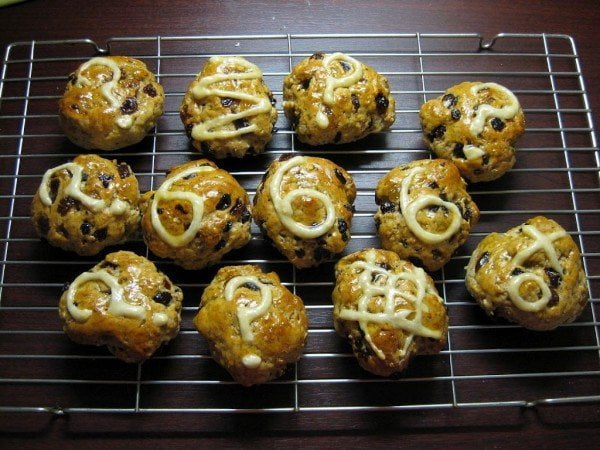
Of course I won’t, partly because I don’t care, and because I might have done the same thing if I were involved in the billboard’s planning, and the same (no-) thing if representing Tiger Brands. It’s not worth a fuss, and can only be considered offensive from a position of deep insecurity (and of course, the same sort of response can be found among atheists also). And if Christians want to boycott Woolworths over this, all they will achieve is diminishing their own credibility, as 6000 points out in the link above. As for me, this Easter I’ll hopefully be able to enjoy some hot question buns, as in previous years, thanks to my blasphemous wife:

Insha’Allah, of course.

Analysts, opinionistas and their (occasional) irrelevance

As submitted to the Daily Maverick

Over the past few weeks, I’ve been enjoying a round of correspondence and debate on some nebulous and easily abused topics including transformation and ubuntu. Every society has its grand narratives, especially in political discourse – and we can no doubt expect a significant increase in analysis and commentary on some of these narratives as we draw closer to Mangaung and the ANC’s policy conference.

While it sometimes seems a little too easy be recognised as a political analyst, the sort of instant and inexplicable authority that some commentators in that area have isn’t much different to other aspects of our intellectual lives. As I’ve previously argued, if you’re willing to throw your weight around on public fora, the mechanics of the attention economy can quickly elevate your ideas – no matter how anodyne – into a privileged position.

But the more worrying thought that came up in the correspondence on Ubuntu is whether any of this matters, in the sense that people’s minds are changed or the quality of debate improved. There is certainly lots of debate, but it’s unclear whether it has any effect outside of the filter-bubble inhabited by that (small) subsector of South African society who enjoy luxuries like advanced educations and material comforts.

The idea that “we” (namely the loosely-defined group above) are simply talking to ourselves – and going around in circles while doing so – is a depressing one. But perhaps it was ever thus and will always be so, and those of us who think the role of the social critic valuable should simply lower our expectations. In South Africa, it certainly seems the case to me that we can do little good until the basic education system has the opportunity to leave crisis mode.

Recognising this possibility doesn’t mean we should stop, of course. Much like lecturing to a class of first-year students also often seems futile, if an opinion or analysis has a success rate larger than zero in provoking thought, it could still be doing more good than harm. But perhaps some of this activity should stop, especially in areas such as political analysis, where it’s quite easy (I’d think) to recognise that you’re inflating a few banal observations to the status of commentary.

The issue here is one involving personal virtue, including the humility that makes it possible to realise you’re not adding any value and to then decide to stop adding to the noise. Newspapers, radio stations and online media need content, to be sure, but their needs (and the audience’s apparent need for distraction) do not have to entail saying things just for the sake of doing so.

There are millions of blogs that we ignore because they say so little, and more importantly, that we don’t write because we have little to say. The former is a less significant issue here, in that if you’re incapable of developing some filtering mechanism for worthwhile content, perhaps you deserve to be drowning in an overload of content.

But as for the latter, it seems to me that many contributors to the more formal media spaces forget to hold themselves to the same standards as they would when deciding whether or not to “set up shop” as an independent blogger on politics or morality (where the most egregious forms of waffling can be found).

For contributions to political debate to be useful, it should be the case that you have some unique insight or access to key players, or that you’re well versed in political theory or law. For morality, your opinion is – in itself – no more interesting than anyone else’s opinion, especially if it’s formed in complete ignorance of decades of debate on the issue in question. We’re certainly not the best judges of the value of our own opinions, but if you’ve been invited to opine in public, that’s hopefully evidence of at least some ability to recognise that opinions are only useful when (to put it quite crudely) you think everyone should find your opinion compelling, for good reason.

Outside of commenting on matters moral or political there is of course the strange space of opinion columns more generally, such as the one you’re reading now. Those of us who contribute in this space are of course easy targets, but often justifiably so due to how easy it is to sink into the comfortable narcissism of thinking you have something valuable to say. It’s rare to see the sort of courage displayed by Jacob Dlamini in his final Business Day column, where he admits that he feels “like a stuck record, saying the same thing over and over again”.

I sincerely hope that I’ll be able to follow that sort of precedent when the time comes. But in the meanwhile, on behalf of one minor contributor to all the noise, apologies for what we sometimes think you might find value in reading. And to my fellow noisemakers, let’s remember that we can set ourselves a higher standard, even if that means becoming redundant – or recognising that we’ve long been so.

Jackson Mthembu and the Twittering revolutionaries

While there’s a truckload of recent religious batshittery I had planned to note here (sick people dying at faith-healing rallies, and so forth), Jackson Mthembu and a couple of other idiots are presently too difficult to ignore. First, there was yesterday’s ruling by the Supreme Court of Appeal (SCA) that recognised the Democratic Alliance as a legal person, and one which furthermore has the right to call for a review of the decision to drop corruption charges against President Jacob Zuma.

Section 45 of the SCA judgement reads (excerpted):

It clearly is in the public interest that the issues raised in the review application be adjudicated and, in my view, on the papers before us, it cannot seriously be contended that the DA is not acting, genuinely and in good faith, in the public interest.

The ANC press release, penned by dear Jackson, wants

to highlight the following: The continued attempt by the DA to use the Courts to undermine and paralyse government

Significant respect for the judiciary there. And of course, no attempt at political point-scoring. Which is good, seeing as Mac Maharaj had also remarked on the ruling and was quoted as saying “anyone who wishes to use Zuma SCA judgment for party political point-scoring would be doing a disservice to our country”. Good thing Jackson didn’t do that, then.

The other idiots are those intent on seeing malice or racism in anything that Helen Zille, Western Cape Premier, might have to say on Twitter. And, of course, to accuse anyone who dares to defend her as some sort of mindless zombie. Zille is a loose cannon on Twitter, no doubt. And as I’ve argued before, I think she’s got some strange and silly ideas. Today, she caused her regular round of outrage as a result of a tweet from yesterday which spoke of the Western Cape accommodating “ECape education refugees”.

If you can’t see why this is racist, then apparently you are a racist. Or so goes logic on Twitter (and also for Jackson, but more on him in a moment). Perhaps we should start at the beginning, by consulting a dictionary. One definition of a refugee could be “one who flees in search of refuge, as in times of war, political oppression, or religious persecution”. Of course, usually refugees flee a country, not failing education systems in the Eastern Cape. But Helen Zille was presumably using the word metaphorically. As I said on Twitter, her usage could certainly be described as hyperbolic, but racist? How does that work?

The way it works is simply that the pupils fleeing the Eastern Cape happen to be black. Hence, describing them as refugees is racist. Now, many refugees everywhere in the world are black. And the cause of this involved a fair amount of racism, in economics, in politics, in every aspect of the way some countries have operated (and some continue to). In this country, with our demographics and our history of social inequality, it stands to reason that most people who have something to flee would be black. Note that Zille never referred to race – she described them as refugees, which seems to have been intended as a description (while hyperbolic, as I mentioned) of the situation they faced themselves in, and which they decided to flee.

It’s a contingent detail that they are black, and that’s not a detail that’s relevant here – the material circumstance of a bunch of pupils (who happen to be black) is the issue, and the one Zille was presumably referring to in describing them as refugees. That they came to be refugees would undoubtedly involve racism, yes – but that’s not the issue here. Once they experience conditions that are worth fleeing from, how they got into that position is a matter for historians – describing them as being in that position doesn’t endorse it, or make the claim that they are there because of their race.

And now, let’s welcome Jackson back into the conversation:

The ANC is vindicated by the statement made by Helen Zille. This is typical of the erstwhile apartheid government’s mentality that resorted to influx control measures to restrict black people from the so-called white areas. (eh? These “refugees” are coming into the Western Cape – Zille’s made no effort to keep them out. Bit of an apartheid-Godwin, methinks.)

Zille’s racist statement underpins the DA’s policy of exclusionism of blacks. She will never say the same thing about whites who relocate from one area of the country to the Western Cape or even those who relocate from other countries to the Western Cape. To reduce South Africans who have free movement in their own country as refugees is tantamount to… labelling them with a tag associated with foreigners.

Zille’s reference to the Eastern Cape pupils as refugees is motivated by political opportunism, to be sure – it’s a chance to highlight how much better the Western Cape primary education system seems to be when compared to that of the Eastern Cape. But it also indicates sympathy, or at least an awareness (back to the definition of the word) that they are fleeing from an unpleasant situation. Any other sort of relocation, such as the examples Jackson uses, would only be of relevance as counterexamples or evidence of Zille “reducing” these pupils to anything if the situations were comparable.

Typical migration – whether for economic reasons, or to get an education – is driven by preference, not by need. Or rather, the needs are less severe. A word like “refugee” makes sense in the context of a systemic failure of some market, not simply someone moving to Gauteng because they find it difficult to find a job in the Cape. The point is that these pupils have been “reduced” to leaving their home-towns because the Eastern Cape education system has failed them – not because of anything Helen Zille has done.

But as is sadly so often the case, outrage and race-baiting are winning the day, both on Twitter and in the hypothetical mind of Jackson Mthembu. I agree that Zille’s Tweet was poorly-considered, as many of them are. And I think she’s said many unfortunate (and in the case of HIV/AIDS, appalling) things. But in this case, all she’s been is hyperbolic – and the racism exists only in the minds of those who see it in her use of the word “refugee”.

P.S. From the Kieno Kammies show in CapeTalk567, a 10 minute conversation on this between Jackson Mthembu and Helen Zille.

Icasa’s poor reasons for TopTV decision

As submitted to the Daily Maverick.

In 1983, MacKinnon and Andrea Dworkin drafted an ordinance restricting pornography which was briefly adopted by the Indianapolis legislature before being declared unconstitutional. Much of the language defining pornography in this ordinance can also be found in ICASA’s “Reasons” document (pdf) explaining why On Digital Media (ODM, trading as Top TV) were refused permission to add three pornographic channels to their product line.

This ordinance defined pornography as the “graphic sexually explicit subordination of women through pictures and/or words”. The tests for whether or not a item was pornographic included “women are presented dehumanized as sexual object, things, or commodities”, “women are presented as sexual objects experiencing sexual pleasure in rape, incest, or other sexual assaults”, and women being presented in “positions of sexual submission, servility, or display”.

ICASA accept the MacKinnon definition uncritically, much like their entire argument accepts various normative moral claims uncritically. In fact, you might struggle to find a more clear example of a regulator having its work done for it by remote-control, whether via the selective retreating of contested arguments from the likes of MacKinnon or by the latter day moral hysteria of the Christian Action Network (who have previously accused the Cape Times and the Cape Argus of censorship when those papers refused to publish obituaries for the 900 000 South African babies killed by abortion).

Many of the problems with ICASA’s reasoning were skewered in Ivo Vegter’s column on this topic and also my previous column on Multichoice’s similar experience, so won’t be repeated here. Suffice it to say that their argument is still premised on every young person being an expert in both psychological manipulation of his parents, and perhaps also a master hacker of set-top boxes (but one who mysteriously seems to never have heard of the Internet and the pornography available there).

He’d need to be all these things to a) persuade an adult to subscribe, pay the monthly fees, and reveal the two independent pin codes and b) crack those two pin codes if necessary. I checked the sums with the mathematician John Allen Paulos, who confirmed that there are 10 000 possible combinations of one 4-digit pin code, and 100 000 000 combinations for two pin codes. Parents would in other words have to stay away for months, if not years, for children to be able to guess the pin numbers in question. To put it another way, you would be seven times more likely to guess the Lotto numbers than to guess these two pin codes.

The 17-page Reasons document concludes with a summary of its three reasons for refusing the application. First, “the right of women to equality and human dignity overrides the Applicant’s right to freedom of expression, as well as the rights of viewers to receive pornography on television in the home. The Authority holds this view because it regards the consumption of pornography as one contributing factor, amongst others, to the normalisation of violence against women in South Africa”.

While it’s true that the Authority holds this view, the document fails to explain why this is the case. The data they present on sexual offences certainly show a high incidence, but certainly not an increase in the period reported on (2003-2011) – if anything, they show a slight decrease. The data might of course be poor, but that’s the Authority’s problem to resolve if they want to make the connection between pornography and sexual violence.

Oddly, though, ICASA seems reluctant to make that connection despite using it in their conclusion. “The Authority is not saying that there is a direct causal relationship between the consumption of pornography and violent sexual crimes against women. … However, consumption of pornography may contribute to the incidence of rape by making it more likely that those who are already inclined to rape may feel validated by seeing women as sexual objects to actually rape, thereby increasing the overall incidence of rape”.

This thinking is utterly disingenuous, or entirely circular. I suspect the latter, as the document is riddled with phrases like “probable consequences” and “harmful effects” – the seeds of a moral panic are in other words widely planted. The point here is that either pornography does cause these effects, or it does not, or we don’t know. We’ve got some reason to suspect that it doesn’t (and, in fact, better evidence to suggest that it decreases sexual violence), but let’s assume – as ICASA does – that the “empirical evidence for this is not conclusive”.

In other words, we are being told that we should limit it just in case, on the precautionary principle. But unless we have reasons to suspect that pornography validates the perception of women as sexual objects more than Baywatch (for example) does, we also need to prevent the screening of Baywatch. Which is to say, the data needs to support the banning of pornography to prevent this decision from being based purely on an established moral conservatism.

This brings us to the second of the three reasons, namely that ODM “misconstrued the objections to its application as moral or religious grounds rather than as serious stakeholder engagement on constitutional or legal grounds”. The grounds referred, broadly speaking, are rights to equality and dignity. And again, if only consenting adults have access to this material and it cannot be shown to lead to increased sexual violence, the argument makes its case only by saying something to the effect of “pornography undermines equality and dignity because pornography undermines equality and dignity”.

As Margot St. James observed in response to the MacKinnon ordinance, “I’m against the censorship … [one] line that worried me tremendously was, `Pornography represents women as whores by nature.’ Well, what’s wrong with that? I’m a bad girl. I like being a bad girl. I like my whore status. I have control and power over men, in private certainly, and now also in my public life”.

Whether ICASA disapproves of these women or not, they feel empowered through pornography. And while we do have to balance the right to free expression against harms, evidence of such harms is necessary to override the presumption favouring freedom. (For those who want to retort that pornography isn’t a free speech issue, note that ICASA frames it as such, which legitimates a response on those same grounds.)

The second of the three reasons also includes an aside on ODM’s failure to participate in the public hearing. Earlier in the document, this is described as “inexplicable”, and ICASA laments how they “did not receive a courtesy” of being informed that ODM were planning on missing “such a golden opportunity”. The language, in other words, is fairly smug and not exactly impartial in tone. More relevant here though is that only the merit of the case should decide the issue. While ODM certainly erred in not being there to respond, this shouldn’t act as a reason for rejecting their application. Citing it as one seems to confuse making an impartial judgement on a case with teaching a moral lesson to ODM.

The final reason notes that the government has already “limited citizens’ rights to freedom of expression with regard to the consumption of pornography by law. Accordingly, the Authority sees no reason to expand access to pornography on the airwaves into the home”. For a regulatory body that proudly asserts that it is “regarded as pro-active rather than re-active”, this is an odd thing to cite as a reason. They had the opportunity – even if they ended up not taking it – to assert that current limitations are too severe. Instead, this appeal to precedent (and authority) seems to indicate the same intention to justify a foregone conclusion discussed in respect of the other two reasons.

Of course pornography can change the social landscape, and I’m even persuaded that it can do so negatively. Naomi Wolf is quite persuasive in arguing that pornography may be responsible for “deadening male libido in relation to real women, and leading men to see fewer and fewer women as ‘porn-worthy’”. If you agree, you should be free to choose to not subscribe to pornography channels. But you’re no longer free to make that choice – it’s been decided for you that you don’t have that option, and also that you’re not capable of keeping a pin number safe from your children.

P.S.: This FreakoStats post, crunching some porn-related numbers, is well worth reading.

Char Margolis back to astound SA audiences (apparently)

A Sandton community newspaper reports that this “World-respected intuitive medium” will be in town this weekend to take some money from gullible folk to talk to the dead and teach people “to connect with their own intuitive gifts”. The article reads like a straight copy-and-paste of something written by Margolis’s PR team, such is its breathless enthusiasm for everything she claims to do. It’s really quite amusing what counts as a virtue when it comes to promoting woo-woo like this. Like the equally exploitative John Edward, one of her gifts is talking to the spirit world. Like this:

But if those impressive skills don’t persuade you, Margolis is clearly something special seeing as she “is a frequent guest on Dr Phil. In fact Char recently appeared on an episode of Dr Phil along with her colleague John Edward”. Dr Phil? The problem with him is less that he temporarily lost his licence to practice psychology (1989 – 1990) after (certainly) employing one of his 19 year-old clients and (allegedly) having a sexual relationship with her – rather, it’s that he doesn’t seem to apply very high standards when it comes to what he’s prepared to endorse. (To avoid a Federal Trade Commission investigation into this product, Dr Phil pulled them from the market in 2004, and settled a class-action lawsuit from some disgruntled users for $10.5 million.)

Another of her claims to significance rests in the fact that she “not only works with everyday people but she also assists law enforcement with missing person cases and solving crimes”. Apparently – although her most widely publicised success in this regard (helping to locate a missing pilot) appears to have involved a dollop of common sense and obvious inferences, rather than anything mystical.

But it’s your R350. If you do decide to attend, there’s a final snippet of good news over and above getting the chance to have someone lie to you about getting messages from your dead relatives: the venue (a beauty salon!) “was selected by John Edward, International Psychic Medium as he felt the energy that owner, Shelene Shaer had created was excellent.”

Giubilini and Minerva on abortion and infanticide

As submitted to the Daily Maverick

To regard something as permissible does not necessarily entail that you’d like to see it encouraged, or to become a widespread practice. It’s also not necessarily the case that simply entertaining a possibility in thought or speech means that you are favourably inclined towards that possibility. But we seem to sometimes forget this, becoming nearly as offended by someone merely thinking or speaking about that which we find abhorrent as we would had they actually committed the act in question.

In the Journal of Medical Ethics, Alberto Giubilini and Francesca Minerva recently suggested that if abortion is permissible, infanticide (in certain cases) might also be. The public reaction – and also the reactions from other bio-ethicists – seemed to suggest that Giubilini and Minerva had been spotted introducing toxic feeding formula into the supply chain of their local maternity ward.

Their view, in short, is this: many of the existing instances in which we consider abortion justifiable hold equally for an infant, at least during a short period after birth. The authors don’t define the period in question, but this is irrelevant to the questions of principle and consistency that they raise. If, for example, an abnormality such as perinatal asphyxia is discovered only after birth, how is it that ending that life is now considered intolerable where the same severity of abnormality would have justified abortion six months earlier? I can’t do the article justice here, so please read it before assuming their position to be obviously wrong.

Of course many would find it shocking to imagine that compelling arguments for infanticide might exist. Some might even be shocked or horrified that people spend their time coming up with these arguments. For the most part, though, the arguments aren’t new – Michael Tooley and Peter Singer, among others, have said similar things in the past.

Tooley wrote “Abortion and infanticide” in 1972, though, so it’s mostly only those of us who studied philosophy who got to hear these arguments, because it was difficult for these sorts of texts to get widespread attention without the assistance of platforms like Twitter, Facebook and blogs. Consequently, it was also more difficult to foment the kind of moral outrage now being directed at the authors, including death threats and questions regarding when, if ever, it’s too late to consider (belated) infanticide for ethicists.

An increasingly common response to ideas we don’t like seems to be attempts at censorship, or the application of threats in pursuit of silencing, rather than debate. Debate and discussion should always be our preferred option though, because it can result in either the weakening of the viewpoint you’re contesting, or in giving us the opportunity to realise that we are wrong and should change our minds. If Giubilini and Minerva’s views are mistaken, in other words, we should be able to say why this is so.

Those who are opposed to abortion in general are obviously not challenged by their views, in that if abortion is impermissible, infanticide would clearly also be. (The authors use the term “post-birth abortion”, for reasons that are made clear in the paper, but this seems mostly to be in an attempt to avoid completely thoughtless outrage.) However, for those of us who think abortion in general permissible, the paper is usefully provocative in asking you to consider which features of the two cases make one permissible and the other not.

One feature which makes the cases very different is quite possibly simple human emotion, and the ability to make more dispassionate decisions with regard to a foetus than an infant. And while it’s common for philosophers to note this, and simply move on as if this human frailty is something to regret – certainly not a factor that should unduly influence our conceptions of right and wrong – I do think this is an important feature, and that Giubilini, Minerva and those that want to defend their views need to take it into account.

While I do think it’s true that we should aspire to being as rational as possible, this doesn’t mean that all non-rational or even irrational motivations are always flaws to be regretted and eliminated from our repertoire of responses. In this case, the disposition to value life (and especially life that is now exemplified in a fully-formed human rather than something more developmental) is in the majority of cases good for us and therefore perhaps a candidate for respect and encouragement rather than scorn.

Extending the range of beings that it’s permissible to kill, or the phases of development where they no longer count, serves as a signal to those of us who are living and aware of being so. The signal is one that lacks empathy for the majority of the population, who have the same fears as everyone else but often lack the resources to articulate those fears in the language of intellectuals. One could perhaps say that it would be ideal for us to be less sensitive and precious about killing and letting die, but this would only be on one model of the ideal human – the one that resembles a purely logical Spock more than it does any of the humans we actually know, and ourselves are.

The point is that both sides of debates like this are (at the margins at least) premised on caricatures of humanity. I do think it’s true that many cases of potential infanticide are no different from cases where we consider abortion justified. So to my mind, it’s true that we’re being inconsistent in being repelled by the former and not the latter. But to make this case in a way which presents both the foetus and the newborn as fleshy objects of logical analysis also misses something, namely the sorts of adult humans we’d like to be, and the sort of world that conduces to becoming that sort of adult.

We’re understandably reluctant to end lives, even though these are not the lives of persons. That reluctance is plausibly a virtue worth reinforcing, rather than trivialising. Yet we should be able to talk about these things without fear of death-threats, and without those discussions being hijacked by the likes of Glenn Beck as evidence of a “progressive” agenda to introduce eugenics.

Moral outrage is not a sufficient justification to shut people up, especially when those people could be pointing to an inconsistency in our reasoning we’d benefit from knowing about. We also don’t want the boundaries of debate to be set by those who are most strident, where death threats or accusations of eugenics become effective techniques in argument.

A level of despair at how quickly emotive topics such as this descend into that sort of name-calling is understandable and justified. But having these conversations is nevertheless important, and the reactionaries can’t be allowed to win through the rest of us simply not showing up to argue with them. So, Giubilini, Minerva, and others like them should keep asking these difficult questions. But even when the responses seem hysterical, let’s not forget that there might well be something to be said for remembering that we don’t only live in our heads, but in bodies, families and communities too.

Also see Keenan Malik and Peter Singer’s responses.

Being wrong (the value of agnosticism)

Originally published in the Daily Maverick.

During a lecture last week, the topic of September 11, 2001 was brought up to make a point about conspiracy-theorists and how frequently they employ confirmation bias to support their views. In short, confirmation bias is the disposition to prefer evidence that supports your existing view, while tending to ignore disconfirming evidence.

A student asked me which argument it was that convinced me the conspiracy theories are false. I replied that the world isn’t that simple: there often isn’t one knockdown argument against a position – especially a position involving so many complexities and confounding details. Instead, I said, it’s a matter of the arguments for one position being weaker than the other, when considered in overview.

But sometimes the situation is of course more uncertain than this, and it seems impossible to choose sides on particular topic. Yet we often do so anyway, despite the fact that we sometimes can’t support the view we’ve chosen to claim. When last have you heard someone say something like “I don’t know enough about that issue to have a position on it”?

Too many of us seem to despise doubt or uncertainty, even if that’s the position best supported by the evidence we have. And with the norm being to have and express a view, the space for being uncertain closes off just that little bit more. I try, for example, to be uncertain about aspects of the climate change debate, but often fail to succeed in doing so.

While I don’t know enough about anthropogenic global warming to be convinced of any particular point of view, the emotive fervour of the discussion pushes one to choose sides (and I then choose the orthodox side, simply because that gamble has usually been the correct one on matters of science).

Of course, I could do the research – but we don’t have time to research everything that everyone else would like us to be experts on. We need to specialise, and until we do it’s perfectly reasonable to say “I don’t know” – in other words, to be agnostic on any given issue. Of course, for some issues this position might be irresponsible, in that agnosticism might be a moral failing of some sort.

For global warming this might well be the case, but seeing as many of us conserve energy already thanks to Eskom’s unreliability in supplying their product and the prices they charge for it, it’s quite easy to be relatively “green”. Many might be flying less in any case thanks to recession, or driving less as a result of petrol prices. The point, in short, is that no matter how hysterical any given person is on this issue, it’s largely not us individuals, but instead corporations and governments, who could do much about the problem (assuming that human activity is part of the problem).

But despite being agnostic on this issue, it’s still possible to believe that one side of the argument is superior to the other. Doubt does not remove this possibility, but simply means that you don’t feel justified in claiming certainty. Agnosticism is the absence of conviction, not necessarily the absence of an opinion (whether informed or not). So to say that I am agnostic on climate change does not preclude me from saying that I believe, for example, that Ivo Vegter is wrong in his columns dedicated to refute climate change orthodoxy.

If he and I were to have that debate, though, most of what I’d be able to do would be to listen and ask questions when something sounded implausible or needed clarification. Occasionally, I might be able to say “what about this data here”, and he’d no doubt respond with a barrage of counterclaims. To be convinced by the arguments, though, I’d have to study both them and their competition. Until then, it’s largely an entertaining debate rather than an opportunity for conversion to another point of view, because I have the impression (sorry, Ivo) that there is a sufficient number of scholars who are both experts in this field, and engage with it full-time, who disagree with Ivo to make it more likely the case that they are right and he is wrong.

But I don’t know, and I also don’t believe I (at this point) need to know. This doesn’t make mine a position of faith, but rather one that is admittedly premised on not having sufficient information, and also on being aware of that lack of information. As long as there is some information rather than none, though, it’s a position that while agnostic still allows for one to choose sides in a non-dogmatic fashion.

Our considered views are always contingent on the information we have access to, and we are often in a position to confess in advance that this information is inadequate for conviction to be reasonable. The example of climate change here is simply a foil for making the more general point that we have options besides that of dogmatic, uninformed zeal – especially in matters that are fraught with political or emotive tension – and the option of being an expert on the topic in question.

We can say that we’re not sure, but despite this, we think it’s likely that some position is wrong or right. Doing so reminds us that it’s possible to change that contingent opinion when new evidence comes to light, and it sends a signal to others that it’s worth trying to change your mind on any given issue. Sometimes we might even think it’s highly likely that some position is wrong or right, and this is when we should feel most motivated to defend it against opposing views.

I suspect, though, that if we were to do an honest stock-take of our various points of view we might find that for most of them, the firm conviction we present is largely a fabrication. We might also find that this fabrication is in the service of ego, especially when we think that someone else is undermining our beliefs.

To treat all beliefs as equally justified – or to forget that we mostly speak from a position of qualified agnosticism – is unlikely to be good for debate and for the possibility of discovering that we are wrong. And if we care about being right, or rather, care about believing things that are true rather than false, we shouldn’t forget that getting to the truth is often only possible through allowing ourselves to be uncertain – or even wrong.

Some questions from a believer

When I linked to my most recent Daily Maverick column on Google+, Mike Smuts responded with a lengthy comment that included some interesting questions. I thought I’d respond to them here, seeing as not everyone who read the column might spot the conversation on Google+. Mike’s full comment is posted at the end, but because of it’s length I’ll start with only his questions, with my responses interspersed.

1) Can non-believers, especially atheists, be ‘fundamentalist’ in their views?

Of course, they certainly can. Being an atheist doesn’t guarantee that you’re sensible, fair or rational. In particular, it doesn’t guarantee that you are also skeptical of easy answers, or that you apply something like the scientific method to your own beliefs. So, for example, many atheists might be fundamentalist in their approach to various other emotive issue – perhaps climate change or fracking. They might also be fundamentalist in their blanket rejection of any possible good coming out of religion, which can lead them to be hostile and demeaning towards people who don’t share their views. They might believe in things which are (to my mind at least) as implausible as gods are, like a soul or free will.

Having said that, when atheists are fundamentalist, they cause offence and irritation. Religious folk who are fundamentalist cause death. And I do also think that fundamentalist is less likely with atheism than with religiosity, seeing as many (if not most) atheists are also skeptics.

2) I have come to view the bible not as a science or history handbook / manual (e.g. on the matter of evolution). I also accept that on those two subjects the bible is not a good source either. Also, many of the laws, etc. from the old testament, as well as the (indirect) acceptance of slavery in the new testament and other matters, I believe have to be viewed as having been crafted in an ancient world context and not applicable or at all acceptable, rightly so, in our time and age. Surely the God of the bible would also have known that the earth is actually round and circling around the sun, totally at odds with the bible’s description thereof. Yet he/she/it chooses not to point this out to the poor sods who are convinced otherwise (except for the Greek philosophers, et al).

Agreed. Not to mention the simple stuff like “women are not inferior to men” and “keeping slaves is a bad thing”.

As such, as a Christian, I’m potentially on a slippery slope. So I have the choice to reject the teachings of the bible out of hand (a completely logical choice), or to take a different approach to it. One where I approach it critically. I’ve chosen the latter. That’s why I referred to being more comfortable with ‘questions’ rather than ‘answers’ earlier on in this (very long) comment. If one for a moment ignore the ‘Christians’ for whom it is a purely nominal exercise, a cultural orientation if you like, would this not be a better route for Christians to pursue, as opposed to a fundamentalist literal interpretation of the bible? I’m directing this question to you in the context of your statement that “…it should be worrying for “believers” and “non-believers”, theists and atheists that the “Don’t Really Know” is so cluttered and so overwhelming”. Where the ‘don’t really know’ is a function of ignorance it is obviously problematic, but could it not be a function of acknowledging that in matters ‘spiritual’ we simply cannot ‘know’ in a scientific absolute manner? If so, is that not a good thing?

Yes, your route is a better route than the literal, fundamentalist one. But that doesn’t mean it’s the best route. Imagine a fresh world, without the centuries of privilege that religious viewpoints have enjoyed. Here, you have the choice between picking up a strange text that includes a bunch of weird injunctions, bad science and so forth, but which also contains passages that are inspirational. First, there are plenty of modern books like that around – Deepak Chopra and Rhonda Byrne come to mind. You’re using the book you are because it’s embedded in your culture, not because you’ve been able to make an objective choice that it’s the best book, despite it’s flaws.

Second, there are books that can serve these purposes without including a bunch of false/outdated claims. There are other sources of inspiration, awe, wonder and moral guidance. And all of these things speak to functions and events in your brain, not in your spirit. Your approach of thinking this sort of religious practice to be a “function of acknowledging that in matters ‘spiritual’ we simply cannot ‘know’ in a scientific absolute manner” not only gives extra credence to a particular way of “not knowing”, but is also somewhat circular in assuming that we can’t “know” in spiritual matters. We can’t “know” that leprechauns don’t exist in a scientifically absolute manner either – but we have no good reason to believe that they do. All that we do know about the brain gives not a shred of support to the existence of a soul. Yet, somehow this idea is still treated more seriously than the claim that leprechauns exist.

And it’s easy to see why. We would like to be immortal, we would like to be reunited with loved ones in the hereafter, and we might like to have a better life after death than the one we have now. I understand all that. But wishing for it to be so doesn’t make it the case. It’s far more plausible that we are born and then die, and if we apply the same level of critical thought to claims regarding souls as we do with regard to claims regarding leprechauns, we would all agree on this. But we can’t apply the same level of critical thought, because we’ve experienced centuries of brainwashing involving various metaphysical notions, where we now see them as innately plausible rather than implausible.

Lastly, I’m really not that bothered by believers like you. You’re unlikely to bomb abortion clinics or fly planes into buildings. But those that do that sort of thing count you among their number, and that number is used to buttress claims for teaching creationism in schools or other ways of making religion interfere with public life. That number is cited in censuses, and politicians can then say “we are a Christian country”, and act accordingly. And in general, these attitudes don’t contribute to fostering critical thought in terms of things like science, and might support truly dangerous beliefs involving prayer, homoeopathy or attachment therapy rather than medicine. They don’t contribute, in that they create a space for beliefs walled-off from the usual standards of critical enquiry.

3) I’m not bothered with defending Christianity, I believe it’s more than capable of surviving on its own. I’m more worried about increasing a more intellectual and critical approach amongst fellow ‘believers’ and (more negatively framed) opposing fundamentalism. I could however not fail to take notice of what I perceive to be a very aggressive movement amongst atheists in combating religion, which in the ‘West’ would mostly focus on Christianity. I accept that if atheists view religion as ‘evil’ (no pun intended) they would be very motivated to take it on. But why this, dare I call it ‘religious fervour’ in doing so? Am I simply connected via social media to a fringe group of atheists who try and nuke religion around every corner and on every subject or is this indicative of a larger atheist movement? I suppose being atheist rather than agnostic imply opposing something, opposing theist faith, but isn’t it getting a bit obsessive? In addition to statements such as ‘relax, there’s no God’, which has some indirect positive message, does the movement offer anything of real value – other than opposing religion? Is it not fundamentalist in this absolute approach it takes? Perhaps in the same way that anti-racism, while honourable in principle, may end up ignoring culture, class, etc. in an absolutist approach to the subject?

Some atheists are more angry than others. Some strategies to counter religious beliefs are more productive than others also. Being angry has worked to convince people of the flaws in religion, and being polite has also done so. It’s a strategic choice. Mine is (most of the time) to be polite, but I certainly don’t think there’s anything wrong with being hostile, by definition. The key problem here is, again, that your question comes from a position of religious privilege, in that there is plenty to be angry about. Organised religion protects child abusers, for example. It can encourage homophobia, and teaching nonsense to kids in schools. As I’ve argued on this blog on numerous occasions, it can infantilise us- particularly with regard to our ability to reason about moral judgements. Read Greta Christina on this – she’s got a litany of reasons why we’re angry.

This is the question where I strongly doubted your sincerity. It’s a very easy dismissal of atheist concerns to label us as angry or aggressive, because it allows for religious folk to appear to be the reasonable ones, who’d be willing to hear us out if only we behaved. Does the movement offer anything of real value? A bizzare question. First, because much of the good any person does is not because they’re religious, but because they are inclined to do good. Second, because you should ask whether religion, on balance, offers anything of real value that can’t come from elsewhere, at lower cost to the species (cf. why we’re angry). And third, isn’t encouraging rationality, and trying to eliminate unfounded beliefs “of real value”?

Try this thought experiment: Someone comes to you, and expresses views that you think are completely unfounded, and wrong, and are known to result in various forms of social ill. But the views comfort them, provide them with a framework by which to understand life and so forth. They might even have books, written by people they consider their spiritual leaders in these regards. You present them with all the evidence supporting your view, which obviously outweighs theirs. Their texts are pre-scientific, and their views are simply the result of ideological blindness as far as you can tell. But they have faith in their viewpoint, and are unpersuaded. Now imagine that this person is a racist, or a sexist, and that those are the views they are defending. And now, tell me how you’re different. And then, think about the double-standard – it’s not okay for them to hold the views they do, contrary to all available evidence, but it is for you?

Of course, religion can (in general) not cause the harms those beliefs do. But it also can do so. And until everyone who is religious is simply religious in the fuzzy way the Dakwins study revealed, it will keep doing so, and be allowed to get away with it because it’s been given immunity from the usual level of critical enquiry.

4) Is it not a sign of progress when Christians can’t be all bunched into the ‘evolution is evil’ corner, but actually start displaying less fundamentalist, even intellectualitst, tendencies?

Sure, and I suppose I’ve mostly answered this above. The point of the Dawkins data – as well as reported experience of people in the UK, Norway, Denmark, etc. is that religion is more and more a personal thing, or a social club, or something equally innocuous. So yes, it’s a sign of progress. But as I said in the column which prompted your comment, at one extreme this isn’t really religion in the typical sense anymore. And as I said above, these sorts of “believers” don’t really bother me, and they are going to keep increasing in number, which is great. But until it’s no longer the default that, for example, interfaith bodies are consulted by governments (with no secular representation), or that politicians can appeal to centuries-old texts to justify discrimination or bad educations, we’ve still got work to do.

The full comment:

I think I may actually lose a couple of followers with this comment. That’s because I’m actually a ‘believer’, but mostly interact with ‘non-believers’. This is not due to some secret mission to convert anyone, rather I enjoy a more philosophical and intellectual approach to life. Something sadly missing in discussions with many (not all) Christians.

Yet, in some ways I can identify fully with some of the results in the poll you mention. For me this is not so much a case of ignorance to the bible’s contents, but rather a more modern approach to my faith. A faith in which, ironically, I’m much more comfortable with questions than absolute answers.

I’ll try to explain and keep it short(ish). I think post-modernism, the information revolution and many other factors have presented a challenge to Christians. A very healthy and necessary challenge. Furthermore our history in South Africa of having had a ‘Christian-Nationalist’ system didn’t do Christianity any favours. The irony is that it substantially watered down discussions around faith, religion, etc.

While I fully realise the conflict in this statement, I can fully understand that based purely on logic one should reject faith of any kind in anything that cannot be either scientifically proven or logically argued. It’s also incredible how quickly the first natural philosophers, through reason only, were able to theorise the existence of atoms. More than a 1000 years before the first electron microscopes came into being. They were able to do this once they (mostly) rejected the idea that fables or myths were a viable avenue of understanding the physical world / cosmos.

I’m not going to try and justify faith or my believe here. It’s a personal choice for me. Suffice to say that with some exposure to non-believers I have long since dropped the idea of non-believers going to hell or facing some eternal punishment. I have gotten to realise that judging someone on their believe or non-believe alone is about as reliable as judging someone on skin colour, language or eye colour.

It’s in relation to the last paragraph that I’m actually engaging with you here. As a ‘progressive’, ‘liberal’ individual coming from a Christian background and ‘Christian-nationalist’ environment (the latter still exists in many South African’s heads) the fact that most of the people who were also ‘progressive’ and ‘liberal’ tended to be non-believers influenced my view of believers to a great degree. I’m obviously referring to Christian believers as that reflects the context I have experience of. Thus, without conscious contemplation of the matter, I started to accept that Christians were behind the curve, conservative and often fundamentalist.

Now, I’m not saying that the previous sentence doesn’t hold, at least, some truth. But, in the same way that many (not all) ANC politicians seem to believe that racism is the sole domain of whites, I made (what I believe to be) the paradigm error that fundamentalism and its lessor cousins of prejudice and others were the sole domain of Christians (or other believers).

At this point I should perhaps point out that many of the ‘non-believers’ I refer to above would have been agnostic rather than atheist. Then I moved away from the city to the platteland about ten years ago and my ideas of ‘non-believers’ got a bit shaken up. I was suddenly thrown into a very small pond. In such a small pond one can’t be very selective of who you make friends with. This is both a ‘good’ and a ‘bad’ thing. On the ‘good’ side you’re forced to befriend people with ideas you’d normally be isolated from. On the ‘bad’ side you have to stomach things that you personally may detest, in my case it means, amongst other things, to stomach racism and homophobia (of course I’m not saying ‘accept’ or ‘keep quiet’ about). You also discover that the very same people who have these (for me) ‘shady’ qualities also embody some other very exemplary qualities, from which you can learn and by which you can be enriched.

Basically my idea of non-believers got shaken up because here I was no confronted with non-believers, including atheists, who were not in all aspects (in my view) ‘progressive’, ‘liberal’ or the like. In fact, I found many to be, in relation to some matters, fundamentalist… That was a shocker to me.

What follows is not meant as trick questions, I’m genuinely curious to get your take thereon. If you actually read this far into my comment and are willing to spend some time on this somewhere in future I’d welcome slightly longer answers than a simple ‘yes’ or ‘no’.

1) Can non-believers, especially atheists, be ‘fundamentalist’ in their views?

2) I have come to view the bible not as a science or history handbook / manual (e.g. on the matter of evolution). I also accept that on those two subjects the bible is not a good source either. Also, many of the laws, etc. from the old testament, as well as the (indirect) acceptance of slavery in the new testament and other matters, I believe have to be viewed as having been crafted in an ancient world context and not applicable or at all acceptable, rightly so, in our time and age. Surely the God of the bible would also have known that the earth is actually round and circling around the sun, totally at odds with the bible’s description thereof. Yet he/she/it chooses not to point this out to the poor sods who are convinced otherwise (except for the Greek philosophers, et al).

As such, as a Christian, I’m potentially on a slippery slope. So I have the choice to reject the teachings of the bible out of hand (a completely logical choice), or to take a different approach to it. One where I approach it critically. I’ve chosen the latter. That’s why I referred to being more comfortable with ‘questions’ rather than ‘answers’ earlier on in this (very long) comment. If one for a moment ignore the ‘Christians’ for whom it is a purely nominal exercise, a cultural orientation if you like, would this not be a better route for Christians to pursue, as opposed to a fundamentalist literal interpretation of the bible? I’m directing this question to you in the context of your statement that “…it should be worrying for “believers” and “non-believers”, theists and atheists that the “Don’t Really Know” is so cluttered and so overwhelming”. Where the ‘don’t really know’ is a function of ignorance it is obviously problematic, but could it not be a function of acknowledging that in matters ‘spiritual’ we simply cannot ‘know’ in a scientific absolute manner? If so, is that not a good thing?

3) I’m not bothered with defending Christianity, I believe it’s more than capable of surviving on its own. I’m more worried about increasing a more intellectual and critical approach amongst fellow ‘believers’ and (more negatively framed) opposing fundamentalism. I could however not fail to take notice of what I perceive to be a very aggressive movement amongst atheists in combating religion, which in the ‘West’ would mostly focus on Christianity. I accept that if atheists view religion as ‘evil’ (no pun intended) they would be very motivated to take it on. But why this, dare I call it ‘religious fervour’ in doing so? Am I simply connected via social media to a fringe group of atheists who try and nuke religion around every corner and on every subject or is this indicative of a larger atheist movement? I suppose being atheist rather than agnostic imply opposing something, opposing theist faith, but isn’t it getting a bit obsessive? In addition to statements such as ‘relax, there’s no God’, which has some indirect positive message, does the movement offer anything of real value – other than opposing religion? Is it not fundamentalist in this absolute approach it takes? Perhaps in the same way that anti-racism, while honourable in principle, may end up ignoring culture, class, etc. in an absolutist approach to the subject?

4) Is it not a sign of progress when Christians can’t be all bunched into the ‘evolution is evil’ corner, but actually start displaying less fundamentalist, even intellectualitst, tendencies?

My sincere gratitude if you read all the way to this point! If we can have a constructive discussion on this I’ll appreciate it. I’m not looking for the shallow kind of to-and-fro one often encounter on the internet. I trust that my comment is above that