Secular World Podcast

One of the people I had the pleasure of meeting at the Global Atheist Convention earlier this year was Jake Farr-Wharton, one of the hosts of the Secular World podcast, produced by Atheist Alliance International. Jake kindly invited me to be on the podcast, and 6 or so months later we finally made it happen. In episode 113, Jake and Han Hills talk about how “no religious affiliation” rises to over 1/5th of people in the USA; How free birth control cuts abortion rates by 62%; Why liberals and atheists are more intelligent; Proof of heaven; Catholic church to have tax exemptions removed in Italy; and the interview with me, starting at  at 1h12m.

Topics we chatted about include atheism vs. humanism as social activist causes, atheism plus, religious circumcision, and the role of religion in shaping South African society.

Do liberals misrepresent Mourdock?

As submitted to Daily Maverick

It’s not easy to be objective. In fact, it’s close to impossible – and it might not even be desirable. But being objective is not the same thing as being fair to the evidence, which is something we should always strive for. No matter what perspective you think the evidence justifies, you’re not going to get anywhere in persuading someone else of that perspective if they discover that you’re wrong about the facts.

Being right about the facts is itself difficult. Not only because the data we have can sometimes be contradictory, but because our datasets are always incomplete. The facts that contradict any given interpretation might not be known, and worse still, might not even be knowable at a given point in time.

What we can do, though, is to try to acknowledge the biases we do know of, and try to not allow those biases to lead to misrepresentation. Unless you care more about persuasion than being fair, that is. And in politics being fair often seems to take a back seat, because the stakes are high and people might pay attention for just long enough for you to plant some impression in their minds, but rarely for long enough that you could actually engage them in debate.

So, you won’t try talking theology or in this case, theodicy, with regard to Richard Mourdock. Far better to simply assert that he thinks God intends for rape to happen, and for that rape to result in an unwanted pregnancy (which, by his lights, it’s naturally immoral to terminate). That assertion is of course one interpretation of what he said at a recent Indiana Senate debate (see video below), and it’s an interpretation that fits neatly with a stereotype of Mourdock belonging to some disreputable group (whether this means Republicans, men, Christians, or whatever).

But shouldn’t we expect more from ourselves, and from our media? It’s invigorating to have cartoon villains roaming about, to be sure, because it allows for those impassioned speeches at the dinner table, and for us to cast some opposing force as the one who will save us from the approaching menace.

There’s no question that many Republican candidates (most, if you only count the ones we’ve been hearing from) are intent on rolling back the current permissive legal framework around termination of pregnancy. They go further than that in what’s been called the “war on women”, with suggestions for mandating invasive procedures like transvaginal ultrasounds rather than allowing women to choose other ultrasound methods.

As I’ve argued in previous columns (on Obama’s rejection of the FDA recommendations on the morning-after pill, and the Republican ‘Personhood Pledge’), the conservative moral voice does seem to hold a significant influence in American politics, and this influence tends to be exerted to the detriment of reproductive rights. I’ve firmly stated that to my mind the Republican view on this is wrong, and that voters (especially female ones, of course) should oppose these attempts at curtailing their freedom.

But this is because I don’t think a foetus morally significant. If you do – and perhaps especially if you do for reasons such as the sanctity of life – it would be unsurprising for you to think that abortions are immoral. And if you did think they were, this attitude would have to be expressed at the cost of women, because women are the ones who bear the full burden of bringing a child to term. So yes, you could cast this as a “war on women”. Or, you could cast abortion rights as a “war on unborn children” – and both would be hyperbolic, false, and eliminate a whole lot of potentially interesting conversation in favour of being able to hurl epithets at each other.

Just in case this column is triggering anybody’s confirmation bias, I’ll repeat that reproductive freedoms should not be curtailed (in fact, I’d wish for us to be able to discuss extending those freedoms, whether we choose to or not). Regardless of this, it simplifies the conversation to an unfair extent when opponents of abortion, like Mourdock, are cast as claiming that God desired for a woman to be raped.

http://www.youtube.com/watch?v=626VKRScETI

Listen to the recording for yourselves. Most of you would disagree with him, just as I do. But what he says is that God intends for the life to happen, and he makes it clear that he’s struggled with this issue, and that rape is “terrible”. Sure, this doesn’t go as far as we might want it to. And yes, he wants to take away a women’s right to choose whether to terminate a pregnancy or not, except in situations where her life would be endangered by bringing the child to term (which, we should note, makes him more progressive than some of them).

If what you hear, though, is a Republican candidate saying “God wanted you to be raped”, then the villain you see in front of you is at least partly a projection of your own moral outrage. I believe he he’s wrong, yes – but that he’s wrong for exactly the same reason that millions of Christians around the world are, in believing that one value (the preservation of life) trumps another (the woman’s right to choose). And, in believing that he can pick and choose when to attribute something to God’s plan (the pregnancy yes, the rape no), while simultaneously asserting that God’s ways and plans are ineffable.

So, if you want to pick a fight here, give some thought to whether you’re picking the right one. The same people who complain about Mourdock and the Republican war on women don’t seem to picket traditional Christian churches, where this same message on abortion is conveyed every week. We don’t see op-eds lambasting the one survivor of a bus crash for saying it was God’s plan for everyone else to die.

The outrage regarding Mourdock, in other words, is selective, unprincipled, and born of exactly the same cherry-picking that allows Mourdock to say the sorts of things he does.

Rebecca Watson on Slate

Re-posted from SkepticInk for archival purposes.
 
I’ve now read the Rebecca Watson article that Slate published on October 24 five times. Not because I’m particularly dim-witted, but because I wanted to try to understand what was causing the fresh outpouring of ridicule towards her in the comments there, as well as on my Twitter and Facebook timelines. Was it just as simple as people rising to the same bait as always, or were there some fresh provocations to be discovered? And more importantly, when will this nonsense stop, and how can we collaborate in getting to that point?
 
In a post addressing one of WoolyBumblebee’s posts about Jen McCreight, I concluded by saying the following:

…we can sometimes be accused of placing too little or too much emphasis on history, and not enough on our own conduct. Too little, in the sense of the tweet I quote above where zero effort was made to see if an interpretation is the correct one. And then too much, in the sense that we sometimes expect new entrants to a conversation to know minute and technical historical details of that conversation – and then abuse them when they get a detail wrong. There’s sometimes too little patience for any kind of induction period, and so-called “newbies” need the thickest skins of all.
 
To remedy this problem, I offer one suggestion: that when a debate gets heated, we should try to remember that no matter what’s come before, we’re constantly at a new decision-point, where we – and only we – are responsible for what we say in response to something we find provocative. Sure, someone else has committed a wrong, and we can be inflamed by that. But essentially juvenile questions of “who started it”, while diverting, seldom help illuminate the question of how it can be ended. In other words, I’m suggesting that we learn (or remember) some manners.

What I think Watson gets wrong in the Slate post is that she doesn’t take into account that she’s addressing an audience who won’t necessarily know the minute and technical details involved in the various incidents since that morning in the elevator. So I think that she should have made a greater effort to point out the positive work that’s being done in addressing discrimination in “the community”. There are only two sentences that I can see that acknowledge that some organisations are aware and trying to address the problem. The article paints what I think is an uncharitably gloomy picture, and as such will provide fodder for both anti-Watsonites as well as anti-secular folk. People on the fence, tempted to get involved the secular or skeptical community, might well say “I’m not going near that – sounds like all they do is hate each other”.
 
So, in terms of outreach and the like, I think Watson could have made better use of the opportunity presented by such a public platform. But in terms of everything else she said, I have no complaints, and nor should I feel entitled to. She’s telling her story, and unless I had the temerity to accuse her of lying about her own story, the fact that other people have competing (or supplementary) stories isn’t necessarily relevant. She’s not your spokesperson, or a historian of the skeptical movement. She’s telling her story, and reporting threats and the like that she felt significant enough to bring to the community’s attention, along with reporting the lack of sympathy she experienced in reaction to that. If you want to call her a liar, that’s your prerogative – but I don’t see any good reason to join in that game.
 
Because even if she is exaggerating – and even if she, or people in her corner – have done their own bad things – that’s not the only thing that matters. If you want to keep a scorecard, and constantly remind others of who is “most bad”, knock yourself out. But this nonsense has got to end. And there’s no chance of a cease-fire until people see the possibility of saying something like “damn, that sounds awful, and I’m sorry that I didn’t support you when you experienced that” or whatever, without following up with a sentence like “but you did this other bad thing, so quit whining/looking for attention”. Yes, it’s true that you can find fault and over-reaction on all sides of this divide (and sorry folks, but it is possible to say this without claiming a false equivalence – without keeping a scorecard at all, in fact). If people treat each other like crap, of course we’ll retaliate in some fashion, some of the time.
 
All of us need to remember that we have another option, which is to not assume the worst of each other, and to focus a little more on what we have in common rather than our differences. Yes, some differences shouldn’t be tolerated. But in all the hysteria and hyperbole, it’s unclear to me how many folks have considered whether this really is one of those occasions.

Should identity politics dictate beliefs?

As published in Daily Maverick

Arguments with self-described liberals, feminists and various other sorts of people were part of the motivation for my column last week, in which I argued that it’s always illegitimate to dismiss an argument simply because it’s expressed by someone you regard as speaking from privilege. In summary, the person whose view you’re dismissing might be simultaneously privileged as well as correct.

Two “strange world” observations

First, as Beth Erickson has already noted elsewhere on the network, the Billy Graham Evangelistic Association has removed Mormonism from its list of cult organisations and offered a sort-of endorsement for Romney. From what I can recall of Mormon doctrine, this is quite plainly absurd, in that the Jesus that Christians think so significant is not at all the same Jesus that Mormons also think very significant. The Mormon Jesus is a man – the brother of Lucifer – who becomes a god through good works, instead of a child born of immaculate conception,  and divine from the get-go. For evangelicals, believing in Jesus is quite an important feature of salvation, but in order for this inclusion of Mormonism into the fold to work, the “Jesus” that you’re supposed to believe in would have to be quite a loosely-defined character.

So yes, as The Guardian puts it, this move by Billy Graham does “risk his legacy”. Of course, since the anti-Semitic diatribes on Nixon’s recordings were released, it’s a wonder that anyone can speak of his legacy at all without using scare-quotes. Leaving that aside, though, he risks his legacy not only for the faith-internal reasons that The Guardian’s columnist points out (that Graham risks alienating black liberal Christians, among other things), but also because whatever you think of the man (perhaps, that he’s overly materialistic), he’s at least been firm on representing a reasonably orthodox evangelical Christian line.

What I mean is that, while religion is increasingly being spoken of as being about values rather than literal beliefs in this or that aspect of the divine (as we saw, for example, in the recent RDFS survey on the beliefs of Christians in the UK), Graham has always appeared to be more of a traditionalist when it comes to beliefs. He’s resolutely anti-abortion and anti-gay marriage, which makes him a Republican favourite but also easy to square with conservative readings of the Bible. So in endorsing Romney, and being willing to recognise Mormons as roughly Christian, he’s actually sacrificing quite a firm political stance (in terms of the politics of religion, I mean), and siding with the more modern trends in religion (at least in the UK and US), where what you believe matters far less than some sort of nebulous concept of “being a nice person”.

Second, there’s something far stranger – a South African Labour Court has just ruled that being “badly tormented by [your] ancestors” is a legitimate reason to book time off work. When Johannah Mmelodi wanted to go to a course on traditional healing for a month instead of going to work, she was refused permission to do so by her employers. She attended anyway, and dropped off a note from a sangoma (witch-doctor/traditional healer) attesting to the torment-by-ancestors. The ancestors are, of course, dead. And yes, our Labour Court ruled that she couldn’t be fired, because “South Africa [is] a land of many cultures and that traditional Western culture could not be allowed to dominate the African culture of many of the country’s inhabitants”.

When your courts embrace cultural relativism to this degree, it’s cause for serious concern. The one glimmer of hope I’m holding on to is that the full judgement (which I haven’t yet had access to) makes some sense out of what seems a bizarre ruling. I’ll let you know once I do, but I can’t say I’m optimistic – we do take cultural sensitivity quite seriously here. And much of the time, we should – at least in civic life. The courts? I’m not so sure.

The privilege of avoiding arguments?

Originally published in Daily Maverick

One of the chapters in Bertrand Russell’s “Unpopular Essays” (1950) is “The Superior Virtue of the Oppressed”. In the essay, Russell criticises the tendency of those who marched with him in support of various social justice issues to not simply stand against oppression, but also to insist that the oppressed are somehow epistemically privileged. They were wiser, more experienced, perhaps even more objective than those who were not oppressed. An uncharitable reading (Russell’s) would be that it’s actually good for you to be oppressed.

On liberal bullying

The Guardian recently re-posted a column by Ariel Stallings (originally published in Offbeat Empire), under the title “Online bullying – a new and ugly sport for liberal commenters“. It’s a quite interesting read, and deals with a concern that I can relate to – namely another variant of an ad hominem dismissal of someone’s arguments, in this case on the grounds of their race, gender, privilege and so forth. But as with all difficult topics, and perhaps especially the emotive ones, it’s all to easy to read this piece as confirming whatever bias you started out with.

It would be a mistake to interpret Stallings as providing you with an excuse to dismiss criticisms based on secondary factors like privilege. As I’ve argued in a more lengthy piece on this topic (which pre-dates reading the Stallings piece), we can separate the epistemic issues from the political ones. With regard to the epistemic virtue of dismissing arguments about (for example) race and related oppression when those arguments are presented by a middle-class white male such as myself, it seems straightforward that it would be ludicrous to think my arguments false of necessity. Then, it would perhaps simply be uncharitable to think my arguments more likely to be false than those of someone who experiences oppression based on race.

Because ideally, we’d always judge arguments on their merits and nothing more. But because of limited time (and other elements of bounded rationality), the heuristics of assuming that group x has some authoritative view on topic y are attractive, and seem to easily take hold. And they almost certainly have merit – at least in the limited application of giving you a reason to think that (on average) a middle-class white male has less chance of understanding the context of a person oppressed on racial grounds.

Of course, you might want to counter by saying that there’s no reason to think that oppression brings objectivity with it, which is one of the points made in this Jeremy Stangroom post. This is where the political, rather than the epistemological, takes centre-stage: those of us who speak from positions of whatever privilege should be cognisant of the fact that – no matter the strength of our arguments – we’ll easily be interpreted as speaking from that position (in other words, be biased by that position), and that this might be one of the factors that results in miscommunication.

Sure, you can argue that it’s an unfair hurdle to jump over in order to be heard. But communication is full of these annoyances, and we don’t do it any favours by simply donning our superhero-logician outfits and insisting that the rest of the world sees things just as we do. Perhaps we’d like them to, and perhaps they even should. But it’s unlikely that you’ll successfully convince someone of that when you sound just like either a stereotype they hold dear, or a sort of person they are justifiably antipathetic to.

And most importantly: the fact that it’s always fallacious to dismiss your argument simply because of who you are does not mean that your argument isn’t fallacious via who you are – because who you are would be a product of education, circumstance, privilege, race, and so forth. Sometimes – even perhaps frequently – we can become blinded to various ways in which we see the world in a partisan fashion. When someone reminds you of that, take the reminder seriously. Because it might well be true.

On a different note, if you’ve perhaps not heard the sad news of Greta Christina’s endometrial cancer diagnosis, go and read what she has to say. And if you’re willing and able to help, she has a few suggestions there as to how you can do so.

Drama free? I guess we’ll see.

In one of the early posts here, John Loftus pledged that Skeptic Ink would be a “drama free network“, and I certainly hope that this proves to be the case. Or at least, that certain sorts of drama can be avoided, because having no drama at all seems the wrong ambition (if you’re not offending or challenging anyone at all, then you’re probably not worth reading). Of late – as you all know – we’ve had drama of a different, sustained, and harmful sort. I’m not getting into that (again), except to say that one can regret what various people (on all sides of the antagonism) have thought it necessary to say and do without being guilty of asserting a false equivalence.

Others can chronicle the history if they choose to. Those of us who aren’t interested in that project should at least ensure that we don’t (intentionally) add to the catalogue of harms, and I’d suggest that the Skeptic Ink mission statement is on relatively safe ground – even if only as a minimal commitment. But just as in any other networks, some breadth and interpretive wiggle-room is useful in allowing for different voices to emerge – and just as in other networks, those who contribute here can’t be assumed to agree with each other unless we say we do.

Arguments should ideally always be judged on their merits, rather than through the lens of history or personality. However, the merits of an argument (or the bona fides of an interlocutor) are sometimes difficult to see when people are yelling at each other, or making no effort to see beyond any stereotypes or prejudicial judgements they might have entered the conversation with. And history is relevant to whether one can be judged as sincere. For my part, I’ll be trying to be consistently fair to the evidence no matter who that involves disagreeing with, and I’d hope that readers would do the same. Please read my comment policy (and of course, feel free to make suggestions in terms of edits) to get a sense of what I believe that to entail.

Towards a Free Society was named thus for two reasons, but where one is really just a marker on the road to the primary reason. The Free Society Institute (FSI) is a non-profit organisation that I founded, and am currently chairperson of, which promotes secularism, social equality and scientific interests in South Africa. So, calling this site something related seemed a obvious thing to do from the viewpoint of consolidating the expressions of “the brand”. But of course, both the organisation and the site are so named for a more substantive reason.

South Africa is a deeply religious (mostly Christian) country, and also a deeply conservative one in terms of things like social justice. Yes, I realise that foreigners might have believed the hype of a liberated and transformed society, but sadly, things like “corrective rapes” for lesbians occur here, and our Chief Justice is a man who believes you can pray the gay away.

So, the FSI has been an advocate for free speech, free thought, gender and racial equality and so forth. We’re also emphatically secular, and almost all of us are atheists. For me, atheism is a simple by-product of critical thought – the inescapable conclusion which follows from the available evidence. This annoys some folk, I realise, but I don’t think atheism all that interesting in itself. More interesting are the thoughts, confusions, biases, cultural forces etc. that lead to religious belief, and the negative consequences that can follow from those factors.

It is these causes of belief – and the ways in which they manifest in society – that will be the primary focus of Towards a Free Society. Because identifying and eliminating these causes is surely part of the strategy for freeing us from dogma, superstition, and also – perhaps especially – prejudice.

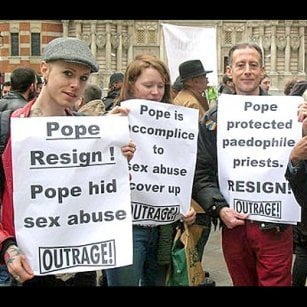
Paedophilia is not (yet) child abuse

Originally published in Daily Maverick

When you hear reports concerning an “alleged paedophile” like Johannes Kleinhans, due back in court this week, it’s difficult to think of his possible crime as anything other than sexual abuse of a minor. But that’s not what paedophilia means. Furthermore, our instinctive horror at the possibility of children being sexually abused might sometimes be counterproductive, in that it leads us to scare potential abusers away from treatment.

Some think that “treatment” for paedophiles is impossible, and that they should simply be locked away for good. Still others think that locking them up is not enough, or that the prison time should come with a guarantee of experiencing some sexual abuse yourself. “Papa wag vir you” (Daddy is waiting for you) is one of the more polite comments to one report on a US Peace Corps volunteer, facing imprisonment for sexually abusing five KwaZulu-Natal girls.

These responses are understandable. I cannot imagine the terror that parents might feel when thinking about these threats to their children – or even the legislative responses to those threats, like when you find out that South Africa’s sexual offenders register lists only 40 names (thought to be a small fraction of the true number).

All paedophiles are attracted to young children, often sexually, but not all those who sexually abuse children are paedophiles, and not all paedophiles are child molesters. Paedophilia describes what you’re attracted to – not what you do with that attraction. For a celibate male priest, a hetero- or homosexual orientation  could be a problem, regardless of whether he’s attracted to adults or not. He remains celibate, though, until the attractions are acted on.

Of course these things are not the same in terms of the extent of damage that can be caused to the victims of sexual assault. Children are easier to victimise than adults are, regardless of your view on whether long-term trauma is more or less likely at any given age.

Nevertheless, it’s the sexual abuse of children that we want to criminalise, not  the fact that someone was unfortunate enough to be born with sexual desires they are unable to pursue  (or can only pursue  under threat of severe consequences). I’m not comparing adult sexual abuse to child sexual abuse, except to say that what sort of target an abuser would pick – if they were to abuse someone – is a separate matter from whether they are an abuser or not.

So, a paedophile is a potential abuser of children. It’s not a crime to be a potential anything, though – if it were, few of us would escape imprisonment thanks to our constant potential to break laws, whether the more trivial speeding while driving to the less trivial theft or murder. We don’t do these things for various reasons, including fear of punishment – but also because we don’t want to do them. We might not even want to have the desires we do.

This is the case for many paedophiles, such as Spencer Kaplan or the man who wrote to sex-advice columnist Dan Savage to say that he “walk[s] around every awful day of [his] life knowing that there is no one out there for me” – in other words, that his life can never contain any sexually fulfilling interactions with other humans, because he’s attracted to the wrong sort of humans. I remember listening to another paedophile (but this time, someone who was himself still in adolescence) calling in to Savage’s show, expressing bewilderment at what he should do. He knew his urges were wrong, and he knew that he shouldn’t act on them. He just didn’t know how he could be helped to live with this self-denial for the rest of his life.

We need to help potential child abusers to not become actual child abusers. And speaking of paedophiles as if they are already abusers isn’t helpful because it shames them, and because it runs the risk of driving underground exactly the sort of people we want in plain sight – and in treatment.

In the US, an organisation called B4U-ACT offers counselling for those they call minor-attracted people, and similar support mechanisms exist in Canada, Germany and elsewhere. In Greece, paedophilia is regarded as a disability (edit on 16 April 2022: this was only a proposal, which was in the end not adopted), with social support grants available to those who are willing to present themselves for diagnosis. But who would do such a thing as present with paedophilia, when everyone understands that to mean you rape children?

Dehumanising people can’t be a productive strategy for getting them to treat others as human, rather than as objects for sexual abuse. Some of the articles linked to above contain examples of sufficient verbal abuse, or a complete lack of sympathy, that we shouldn’t be surprised when potential offenders want nothing to do with treatment. We’re telling them we don’t care.

Yet, we remain surprised to hear of cases where some “monster”, “lacking all humanity”, and so forth, has committed some horrible crime. There’s no question that the sexual abuse of children is a horrible crime, and that we should do all we can to make sure it never happens. But making sure that it never happens might well include our own obligation to avoid the lesser crime of refusing someone the treatment they need, and that might protect your – or someone else’s – child.

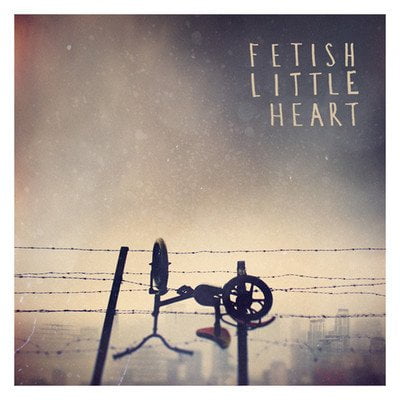
Fetish – Little Heart (an album review of sorts)

Various disclaimers are in order here. Well, two, really. First, I’m not a music journalist. You’ll find one restaurant review on this site, and one review of a godawful U2 concert, but usually I stick to talking about politics, philosophy and religion. All of which are topics that could be said to feature on the new Fetish album, Little Heart – which you can listen to (and buy!) here – depending on how you define the topics, of course. But talking about that would be more philosophical rambling, and today we’re talking about rock. Not just any rock – rock that was born in the mid-90’s, then excited pretty much every South African I knew (sure, they were 95% white liberals) for 7 or so years, and then disappeared.

A few weeks ago, I watched Searching for Sugarman, the documentary on Rodriguez, a musician that international readers might not have heard of. As I remarked to the Doctor at the time, it was okay, except for the soundtrack. And the segue to Fetish here is that some folk also wondered what happened to them since they disbanded in 2004. They were too interesting to disband. At least, that’s what I thought, and therefore what I assumed all right-thinking people were thinking. But not only are they back, but they also have stories to tell. And you don’t need to be a dope-addled hippie to enjoy this soundtrack.

If I were a music journalist, I’d probably model myself on Charles Bukowski, who wrote this review of a Rolling Stones concert without seeing much of the show at all. Because music – for non-professionals like me at least – is far more about the mood and the time. This is true for Rodriguez (not in the mood, at any time) as well as for Fetish, and this is perhaps the right time to introduce the second disclaimer, which is that I’m in no way impartial here. Dominic Forrest (guitar) is a good and long-standing friend, and Jeremy Daniel (keyboard) is a more recent friend. In a archetypal-rock-star anecdote, I could tell you about that night that Dominic…

Look, as I say, I’m far from impartial here. But all right-thinking people trust me.

So, the new album. It’s certainly an evolution of their sound, which I think a good thing. First, because the time for 90’s rock was the 90’s, and second because artists should demonstrate growth (as should audiences – so if you still want only 90’s rock, the problem is you. And then, you’re incentivising people to make more of it, which makes your problem everyone else’s problem). The tracks are far more layered than the stuff you’d remember off previous albums, and that’s not only because of superb sound engineering – there are some quite delicate and compelling interplays between instruments, and tonal and rhythm shifts. So, it’s a more sophisticated album, certainly their most mature in lacking much of the bombast that was evident in early work.

But it’s still there – and this is something that many fans will like, even though I don’t. The first single, “All Time Low” is in parts quite the aural assault, which is what I imagine it’s intended to be. But it’s also the track which exemplifies, to me, one of the weaker elements of the album – the dynamic range of the vocalist, Michelle Breeze. I think she does certain sorts of vocal very, very well. I’ve just re-listened to “Malice”, off “So Many Prophets” – the Fetish track that is a constant on my iPod portable media player – and when you get to 2:10 or so on that track, she starts sounding really good for the duration of the chorus. It’s that angst-filled energy that thrilled us all on one of their first hits, “Blue Blanket” off the first album. But when Breeze is not in that mode (and that mode can’t – or shouldn’t – be sustained over an entire album), the vocals are sometimes rather monotone, in that it sounds like there’s a complaint but you’re not quite sure what it is, or why you should care.

The songs on Little Heart weren’t rehearsed at all before being recorded – the entire session time was a manic 10 days (if I recall correctly) which brought together musicians who hadn’t been in the same room together for years. In light of that, it’s a pretty impressive piece of work. But you can hear that unfamiliarity in the album too:  sometimes it reminds you of the band you knew in the 90’s, and sometimes it sounds like something different – as I say above, more evolved and layered. But you can hear that it’s not integrated – that the familiarity with each other, and with the material, is not wholly present. You can hear the sounds of what could/should have been, if life had worked out differently.

I say this mostly because there’s always an element of each song that stands out as superb – but the parts are often better than the whole. There are sections of superb vocalisation, or instrumentation, or lyrics – but then you’ll sometimes also be sometimes be listening to a beautiful bit of keyboard or guitar work and be struck by a jarringly banal lyric. These are things that I’d think would have been ironed out – at least in part – if Fetish had the luxury of months of rehearsal. Or, if they’d been writing and playing together for all these years between this album and the last.

In this age of digital music, it’s odd to remark that the second side of the album is markedly better than the first. But for me the album closes far stronger than it begins. So it leaves one with a good impression – not just of what could have been, but also of some genuinely interesting tracks which bear repeat listening. “Over the edge” is one of the strongest Fetish tracks ever, for example, and people who like things heavy will (I suspect) love “Paper skies”.

And as a concluding note – what is perhaps most notable here is how talent shines through. These folk haven’t been playing together in years, and then they put together something in little more than a week which should easily win the SAMA (do they still exist?) for local rock. Not that you want to aim to sound like the best local, of course – but listening to this does, once again, make me think that South Africa once boasted one of the most promising acts I’d heard in the 90’s, anywhere. And it’s good to have them back, for as long as they’ll stick around.

P.S. It’s been suggested that it’s not quite clear whether this review is positive or not, and that maybe a rating would be in order. I’m not sure I’m in favour of ratings, because the baselines seem too arbitrary unless someone has a history of reviews you can benchmark against, relative to your own tastes. For this sort of impression, the only rating that seems justified is a “‘worth buying/watching/listening to” or ‘not’. This album is certainly in the former category for me.