A culture of dying

Originally published in the Daily Maverick

623156_314164Kabelo Mokgweetse ran away from his initiation school in Pampierstad in November last year, to look for food. He was tracked down and thrashed with a sjambok, before having his feet burnt as further punishment. Then, he was left for dead at the side of the road, where a passing motorist happened to spot him.

Initially only his toes were amputated, but the nerve damage eventually required further surgery, where his right foot was removed in its entirety, along with most of the left. The question that’s difficult to ask – never mind answer – is whether he might prefer to instead be one of the 23 youth who recently died as a result of initiation ceremonies in Mpumalanga.

Mokgweetse and thousands of boys like him are sent (and often willingly go) to initiation schools to mark the transition between boyhood and manhood, undergoing ritual circumcision and being instructed about their social responsibilities. And in most years, children die in the course of “becoming men”. It’s so typical, in fact, that a government news agency can use a headline like “Traditional leaders welcome no initiation deaths”.

That headline was for a story about Limpopo in particular, and dealt with the 2010 season, where attendance at initiation schools was reportedly down by 75% thanks to the World Cup. Limpopo does seem to be a province that has taken the health of initiates particularly seriously, with deaths in the low single-figures for the past few years.

The key question that arises for outsiders like myself is this: do the children who go to initiation schools, the parents who send them there, and the Ramophato (initiation school owner) think that this is a fair price for preserving these cultural practices? And if one death is a fair price, how many would be too costly?

Part of the reason for the continued survival of poorly regulated initiation schools is surely that they provide a narrative to life – a structure, and a reinforcement of community and communal values. But if those goods can be acquired at a lower price – and they undoubtedly can be – then the dozens of deaths we’ve seen so far this year are surely not only too many, but also reason for widespread outrage as well as legal action against those responsible.

Because this is a matter of culture, though, people prefer to tread lightly, tempering their criticisms with politically correct noises about tolerance and respect. But isn’t this in itself condescending, perhaps even racist? Could we instead wonder whether, if the average adolescent in Mpumalanga knew that they had a decent prospect of a good education, a good job and so forth, they’d rather be joining protests against such schools – opting for medical circumcision at the very least, if not entirely rejecting cultural instruction of this sort?

But it’s been – and will continue to be – a long wait for more people to have a better shot at a good life through adequate healthcare, education, and those goods many of us take for granted. And what we put in place as substitutes to give meaning to life – namely cultural practices such as these – result in initiation schools, genital mutilation, corrective rape, culturally embedded homophobia, sexism and so forth.

“Culture” is used as an excuse for all sorts of things (in South Africa, often as a simple vote-getter). But it’s only when you get to choose what your “culture” is – and not have it forced upon you – that it stands a chance of being respectable. And even then, it should never be a stand-alone justification for doing or believing something.

Culture can explain why we do things, even if they appear to be irrational to outsiders. Justification is a different matter, though – if not, how could we complain if a Eugene Terre’Blanche, for example, cites culture as a reason to keep black slaves? Culture cannot serve alone as a reason for doing something.

Equally, culture should not serve as a reason to avoid intervening when needless deaths can be avoided. Last week, a caller to Radio702 recounted his experience of an initiation school (where a close friend of his happened to have died). The caller, Sam, explained that deaths were common thanks to initiates being deprived of water until the last week of proceedings, and also poorly fed – meaning that they had few physical reserves to cope with the gruelling nature of the rituals.

Furthermore, they would also be less able to fight off infection, more common as a result of the lack of qualifications of many who perform the circumcisions. All of these factors can be managed, and to some extent have been managed in Limpopo. This is clearly not the case in Mpumalanga.

Interviewed on eNCA, the MEC for Health in Mpumalanga said that, as a woman, she couldn’t get involved. Her precise words were: “This is a tradition. This is a tradition. So in other tradition whether there are deaths or what but a woman can’t come closer to that”. A competing tradition here involves avoiding needless death, and doing your job. Someone who chooses the tradition of turning a blind eye to death deserves to lose her job, at the very least, and seems at least partly responsible for any future deaths.

Appeals to culture, tradition and the like have causality entirely back-to-front: things could become cultural norms because they are good norms; but the fact that something is a cultural norm has no bearing on whether it’s a good or respectable norm or not. And a cultural practice in which there is no age of consent, poor or no medical oversight, and wilful ignorance on the part of government officials is problematic, to say the least.

“Only God knows who’s going to die, when” was Msebenzi Masombuka’s (a representative of King Mabhoko) comment following the deaths in Mpumalanga. Even if one does believe that, we’d still present ourselves as candidates for earlier or later deaths, through our actions or inactions.

Or sometimes, it’s others we present as candidates for an earlier death. And we sacrifice them on the altar of “culture”. In May 2013, culture killed at least 23 boys – yet we should respect it, just … because.

Dennett’s ‘seven tools for thinking’

In 2009, I had the great pleasure of sharing a number of meals and pub-sessions with Dan Dennett, when he visited South Africa for a series of lectures. The picture captures his first encounter with something called a “bunny chow” – a hollowed-out section of bread, filled with curry. Since meeting him then, he’s always been exceedingly generous with his time and thoughtful input when requested, as I’m sure any of you who have dealt with him would concur.

In case you hadn’t noticed, he has a new book out which looks well-worth our time and attention. It’s titled “Intuition pumps and other tools for thinking“, and is certainly next in line for consumption on my Kindle.

The Guardian recently carried an excerpt detailing “seven tools for thinking”. Number two on that list is certainly one I wish more of our “community” would take to heart, and deals with the tendency to caricature our opponent’s positions. I’ll paste a snippet below, but please go and read the rest – we could do with a reminder in many of these respects.

Dennett notes that “the best antidote I know for this tendency to caricature one’s opponent is a list of rules promulgated many years ago by social psychologist and game theorist Anatol Rapoport”, and then proceeds to list the rules:

1. Attempt to re-express your target’s position so clearly, vividly and fairly that your target says: “Thanks, I wish I’d thought of putting it that way.”

2. List any points of agreement (especially if they are not matters of general or widespread agreement).

3. Mention anything you have learned from your target.

4. Only then are you permitted to say so much as a word of rebuttal or criticism.

One immediate effect of following these rules is that your targets will be a receptive audience for your criticism: you have already shown that you understand their positions as well as they do, and have demonstrated good judgment (you agree with them on some important matters and have even been persuaded by something they said).

Deciding when to die

Originally published in Daily Maverick

There are at least two ways of maintaining or enhancing the significance of death. First, you could attend to death, in the manner that many of us have – sharing the final days, months or years with someone you love. Second, you could remember to take life seriously. So seriously, that when it’s time for the life to end, we can make that decision carry all the significance typically found in protracted, often painful dying.

Minds are what brains do

Originally published in the Daily Maverick

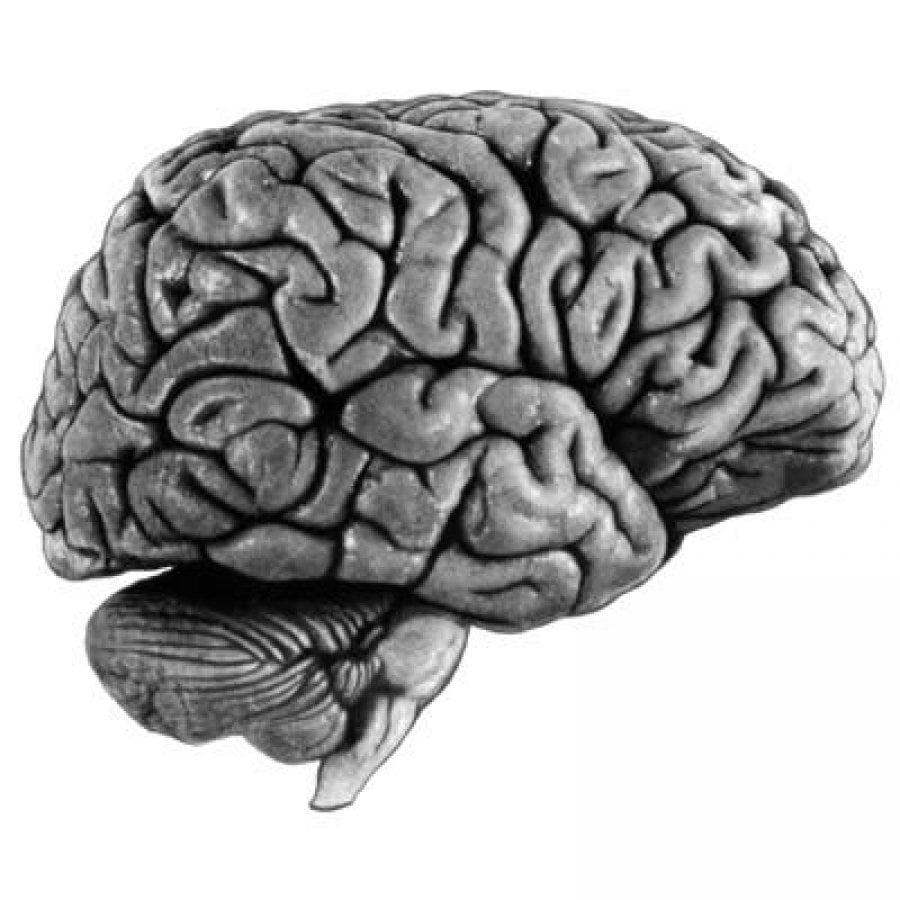
brainzAt the time when I was most uncharitable towards psychology, it struck me as obviously absurd that we’d devote centuries of scholarship towards treating something grounded in fiction. Our devotion wasn’t limited to time spent in study, but also included resources such as the time and money of those who sought out and were treated by what seemed little more than modern equivalents of physicians curing anything and everything via bloodletting with leeches.

The fiction I refer to is the idea that there’s anything to treat besides the brain. A related fiction would then be that there was any room for academics, clinicians, couches and so forth, all dedicated to addressing exhaust fumes of neurological processes – the perceived “mind” rather than the brain. In short, I argued that while the mind might want conversation, the brain would benefit most from medication.

While I’m still fully committed to the stance best captured in Minksy’s phrase “minds are what brains do”, my lack of charity was nevertheless misguided and simple-minded. Even if the best way of treating most things might one day be a pill, that doesn’t mean that there’s never any value in stopgap approaches, nor that there aren’t a variety of things that are best treated through other means.

The concern, though, was that psychology begins with an essentially dualist philosophy of mind, where there is a body and also a mind – rather than “simply” a body that includes a brain, which somehow produces minded-ness. The dualist assumption leads to research and treatment premised in treating something that doesn’t exist – or so I smugly asserted.

Leaving aside the sort of over-reaching I describe above, though, it remains true that knowing what sort of an entity you’re attempting to treat (is it merely a worried human being, or it is a human being with a neurological disorder?), and then accurately diagnosing its ailment, are essential to being able to provide relief or a cure.

Doing either of those things is difficult. But that can’t excuse us from the reality that we might sometimes get one – or both – of the identification and then the diagnosis horribly wrong, simply because we’re relying on an out-dated model of what the organism is, or of what might be wrong with it.

The same problem occurs in psychiatry. One of those books that I (for a time) tried to persuade everyone to read is Dominic Murphy’s “Psychiatry in the scientific image” (2006), in which he argued for a scientific (rather than medical) approach to understanding mental illness, much like the research program we’ve seen blossom in the cognitive neurosciences over the last 5 or so years.

Murphy argued that our concepts and language for describing mental illness depend far too much on observed symptoms, and are frequently also historical artefacts that have not been revised in light of more recent knowledge. A scientific approach would look for causal explanations, sometimes involving neuroscience at the molecular level, sometimes genes or biochemisty (to mention only a few possibilities).

He’s wary of reducing explanations to the lowest, or fully reductionist, level. In Murphy’s view, what we’re aiming for is a level of “robustness”, where an explanation accounts for a disorder across a variety of contexts, and eliminates much of the subjectivity involved in assessing disorders through interpreting symptoms.

In his concluding chapters, Murphy applies these ideas in criticising the Diagnostic and Statistical Manual of Mental Disorders, or DSM, which at the time stood at revision IV. The DSM, put simply, is the authority when it comes to mental disorders. If it’s in the DSM, it’s real, and if it’s not, your chances of claiming from medical aid immediately plummet to vanishingly small.

While a disorder being “real” means that it can now be diagnosed, it remains debatable whether some disorders are in fact “real” in the typical sense of the word – in other words something like fidgeting versus ADHD. While the latter is probably real, it’s also a useful catchall for describing the average child, who might not have been diagnosed with anything more worrisome than “causes annoyance to adults” in the years before we developed medication for ADHD.

The DSM V, due to be released later this month, has attracted significant criticism for both what it has removed (things that are no longer real, in the diagnostic sense) as well as what is now considered disordered, and therefore suddenly real. The class of “behavioural addictions”, for example, has been accused of making a “mental disorder of everything we like to do a lot”.

In arguing that the DSM should classify based on causal explanations, Murphy was fully aware that a causal taxonomy of various disorders would be very difficult to develop, but he nevertheless thought that the work should start, because some progress was possible even in the absence of all the relevant data.

That progress would most likely include – even at this relatively early stage of knowledge in fields like neuroscience – not listing first-time drug users alongside addicts (as the DSM V is apparently set to do), because the explanation for dabbling with a drug will quite often not be the same as the explanation for why someone becomes addicted to that drug.

It’s therefore pleasing to be able to report that progress towards a scientific psychiatry has recently taken a sharp upwards turn, with the National Institutes of Mental Health (NIMH) announcement in April that they will no longer be conducting research in accordance with the DSM V categories.

Instead, they have launched a 10-year Research Domain Criteria project “to transform diagnosis by incorporating genetics, imaging, cognitive science, and other levels of information to lay the foundation for a new classification system”, where that system will be based “on the emerging research data, not on the current symptom-based categories”.

This decision is sure to attract criticism, but we should save the strongest criticism for fields of research, scientists and medical professionals that have access to new data, but choose to ignore or downplay that data in favour of avoiding revolution. As the NIMH statement concludes: “At the end of the 19th century, it was logical to use a simple diagnostic approach that offered reasonable prognostic validity. At the beginning of the 21st century, we must set our sights higher”.

Since writing this, I’ve been alerted to Gary Greenberg’s blog which discusses this and related issues, and is well-worth spending some time exploring.

So what are universities for?

Originally published in the Daily Maverick

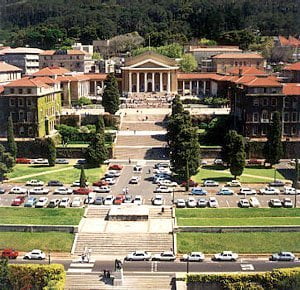
uctLast week was Academic Activism week at the University of Cape Town, although you might not have suspected that judging from the session I participated in. The activism was all in a nearby room, where Minister Malusi Gigaba somehow kept a hundred or so students chanting and singing, despite not yet having arrived at the venue himself.

So, the panel discussion on the balance between research and teaching was poorly attended, and perhaps that’s as good a snapshot of reality as any: Gigaba is likeable and apparently fairly popular, connecting with a young demographic via a strong social media presence. However, he’s also responsible for at least one regulatory proposal that’s seriously lacking in intellectual rigour (the Internet and Cell Phone Pornography Bill, at this stage apparently stillborn).

This sometimes seems to be the choice we have, even in academia. Either embrace populism (in the case of the Bill, the easy win of a moral panic; and in academia, not making your students work too hard) or run the risk of losing goodwill, students or even elections through taking unpopular stances on issues, or even through researching unpopular topics.

As I remarked at the time, I don’t doubt that the two Deputy Vice-Chancellors who completed the panel – nor the rest of the executive team – are at all uncommitted to both quality research and quality teaching. However, we should be wary of talking as if – or believing – that there isn’t sometimes a clear tension between the two, especially when we consider who the student body is.

I arrived at UCT in 1991, and had the luxury of assembling a degree for myself, with my Faculty being assigned purely by the major subjects chosen. There was significant scope for taking subjects for the sake of interest, and also for changing your mind about your specialisation, in that you’d sometimes be able to discover your mistake after completing just one semester of accountancy, rather than having completed a suite of related courses.

By contrast, that sort of flexibility is rare today. The universities are also playing a different role, in that we’re educating more future town planners, engineers, lawyers and doctors than we are philosophers. There’s nothing wrong with a university contributing to addressing the developmental challenges of society. It would be wrong if it didn’t do so (with the caveat that it would be equally wrong to assume that philosophers can’t play a part in that enterprise).

The issue is to what extent the increasing focus on professional qualifications, alongside the challenges of teaching effectively to 21st century South African students, can’t help but compromise on high-level research (at least, in the absence of unlimited resources).

Students are somewhat different in the sense that a greater proportion of them arrive at a university looking to prepare for a career, rather than to get an education. Or more accurately, a greater proportion of their interest is directed at the former goal than was the case in the past. Yet, all students – at least at undergraduate level – are supporting an enterprise that intends to produce cutting-edge research, and bearing some of the costs of keeping that enterprise running.

Some students who are at a university for a 3-year vocational degree might appreciate the prestige that graduating from a research-leading university gives that degree, and willingly pay the premium. But I wonder if that number is as large as we hope it is, and whether many students might prefer to be paying middling fees to get an average education instead, and to what extent this question should inform what, and how, we teach them.

The competencies of university entrants are of course relevant also. A recent World Economic Forum survey lists South Africa’s maths and science education as being the 2nd worst in the world (we beat Yemen), and our education system as a whole was ranked 140 out of 144 surveyed countries. Yet, our Grade 12 pass rate is 74%, and 27% of school pupils achieve University Exemption.

Leaving aside any thoughts of policy, or the future of universities, it’s very difficult for me – having taught large 1st year classes for 15 years now – to see how this intake could do anything but change the way we teach, and often what we teach, thanks to the need to undo some of the harm caused by a dysfunctional primary and secondary education system.

With regard to research, a key concern is that if publicly funded institutions like universities were not studying the subtle and complex problems that could have a significant impact on society, who would do so? We do need to incentivise research, and we also need to play a very long-term game in terms of assessing the potential value of that research.

Academic researchers need support and time for working to complex problems, even if many of those problems might end up being insoluble. Making determinations of what’s worth investigating in advance would defeat the purpose of intellectual enquiry.

Both of these complex and demanding tasks, namely producing quality research and also quality graduates, come at a cost – yet both are vital to a flourishing society. We speak as if they naturally feed off one another, and that is to a large extent true.

Perhaps it’s only true up to a point, though. Mass education of those who have been denied competent secondary schooling is quite a different enterprise to honing the intellectual talents of those who had a privileged start, thereby producing innovative and productive researchers.

Doing both of these jobs well, and for the long-term, is the commitment we seem to be making to the country. I hope we don’t let you – and ourselves – down.

Mantashe wants to help you “Know your DA”

Originally published in the Daily Maverick

130418daThe headline “DA’s campaign a desperate propaganda” left me quite sure that the text was going to be one of those overwrought reader-contributed op-eds, or at worst a product of Jackson Mthembu’s excitable pen. The content did little to challenge that assumption, leaving me quite surprised to see the name of ANC Secretary General, Gwede Mantashe, adorning the foot of the column in question.

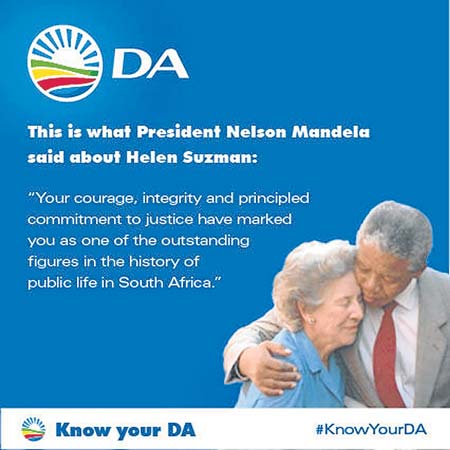
The campaign he refers to is of course “Know your DA”, the first of the Democratic Alliance’s campaigns for the 2014 elections. The campaign attracted criticism right from the start, when Helen Zille’s launch speech neglected to mention Tony Leon, who led the party throughout most of its growth from 1.7% to 12.3% of the national vote.

I’d be annoyed by this if I were Leon (though not as annoyed as Rhoda Kadalie apparently was, in comparing Zille’s “airbrushing of history” to that of Stalin (she’s since deleted the tweet), but I think I’d nevertheless understand the reasoning behind leaving him out of the launch speech. The man who was the face of the 1999 “Fight back” election campaign – at the time, derided as the “fight black” campaign – would be quite a hard sell in a 2014 campaign that centres on the DA’s role in fighting apartheid.

Not because Leon played no role, of course, but rather because election campaigns are often about attention spans and caricatures rather than facts. In the case of Leon, we have “Fight back”, the merger with the New National Party, and support for the death penalty. In the case of Helen Suzman, we have the sole consistent voice against apartheid in Parliament for the 13 years from 1961 to 1974.

Suzman was a national treasure, and it strikes me rather bizarre that FW de Klerk has a Nobel Peace Prize while she (twice nominated) does not. But it was her principled contribution to ending apartheid that led Nelson Mandela to speak of the courage and integrity that marks her out as “one of the outstanding figures in the history of public life in South Africa”.

It’s that association the DA is aiming for by showing the image of Mandela hugging Suzman, rather than the image being an attempt to appropriate Mandela as a DA supporter. For better or worse, most South Africans regard Mandela as a moral authority. His endorsement of someone’s character therefore carries significant weight, as the ANC – never shy of invoking the Mandela brand – seems to realise.

Mantashe claims that this is propaganda. On one level, of course it is, just as all electioneering is propaganda of a sort. Expecting the “Know your DA” campaign to talk about “all its history and not just the struggle parts”, as an anonymous “PR and marketing expert who has done political campaigns before” did in this weekend’s City Press, is absurd – we always try to present ourselves in the best possible light.

Not only because nobody has the time to hear or present a comprehensive history lesson in each speech, but also because the alternative is unreasonable. While electioneering, we don’t expect Jacob Zuma to remind us that he was charged with rape, or took a shower to avoid HIV infection. It’s not propagandistic to highlight the things one is proudest of, and if it is true that the DA of today still represents those values Mandela recognised in Suzman, it’s legitimate to point this out.

My view is that they represent fewer of those values than I’d prefer, yet enough of them to make a poster and campaign like this one risky, but nevertheless legitimate. It’s somewhat opportunistic to highlight Mandela’s recognition of Suzman, but it’s not dishonest.

If we understand propaganda to mean a selective presentation of facts to inappropriately or dishonestly influence someone’s beliefs, then I’d suggest that Mantashe himself has a few questions to answer following Sunday’s column. In it, he asserts that what has remained throughout the “evolution of whatever trend among the white minority … has been either brazen advocacy for white domination and privilege or some elaborate schemes for its retention in the guise of liberal policies”.

That’s Mantashe’s interpretation of DA policy, and some of you might share the interpretation. And while he and you are of course free to do so, there is of course another side to the story, and Mantashe knows it. That story involves not only those mentioned in Zille’s launch speech, such as Seremane, Balindlela and de Lille – but also a large group of emerging leaders from the youth structures, many of whom are not white liberals.

Mantashe speaks of the “disdain with which the DA treats transformation” as if it becomes true in uttering it, or perhaps through repeated refrain – and what would that be, if not propaganda? Again, the DA might be wrong in how it approaches transformation, but that’s an entirely separate question to whether they are sincerely wrong, or whether they are lying about their intentions to buttress white privilege.

As Mantashe points out, the “combination of desperation and dishonesty is a lethal one”, and if the DA’s “Know your history” will be perceived as an exploitation of struggle history, we’ll know about it once the ballots are counted. But 20 years after our first democratic election, it’s certainly possible to question whether the ANC are the sole – or more importantly, the best – custodians of our freedom and our future.

And yes, it is also an interesting and legitimate question whether Suzman would support the DA of today. Just as interesting and legitimate, in fact, as the question of whether or not Mandela would support the ANC of today.

Icasa approves TopTV porn channels

As regular readers would know, I’ve written quite a few columns regarding TopTV (and previously, Multichoice’s) attempts to be given permission to screen adult content on their subscription channels. TopTV have finally succeeded, on their second attempt, and as one of those who presented at the public hearings in support of their application, I’m pleased to hear it.

Not because I think porn is necessarily good, or always unproblematic – but because it’s not my (or Icasa’s) decision as to whether you should be allowed to watch it or not.

For those new to the story, here is a list of my contributions to the debate, also the Icasa press release (pdf) announcing their decision to allow TopTV to go ahead. Icasa’s full explanation of the reasons behind its decision will be released on or before June 28.

The most recent columns are listed first:

The naked truth about porn in television
Not even Madiba can turn anecdotes into data
Pornography is coming to eat your children!
Icasa’s poor reason for TopTV decision
TopTV plans to “release a flood of filth into our communities”
Freedom of (Multi)choice

Hey, teacher, leave them kids alone!

Originally published in the Daily Maverick

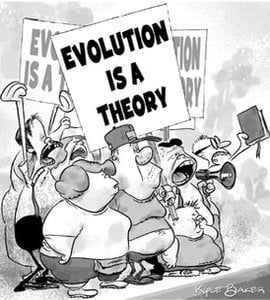
evolutionisatheoryIt’s important for all of us – whether religious or not – to defend the secular viewpoint in public institutions, law and policy. For one, because secularism means that you will never be forced to attend or participate in the ceremonies or practices of religions other than your own.

Defenders of religious expression sometimes forget the fact that often, it’s only contingently the case that you’re defending the expression of a religion you happen to belong to, and that this coincidence can’t be guaranteed. If your neighbourhood school were over time to evolve into one of a different faith, you might suddenly wish for the school to be stubbornly secular.

A second reason to defend secularity, at least in my view, is because a secular environment is well suited to fostering free and rational choice and taking responsibility for our choices, as I argued in this column defending the rights of children to wear religious headgear at public schools. It’s clearer to see the relationship between our beliefs and our actions if we aren’t forced – not matter how implicitly – to perform certain actions.

Secular does not need to mean (in fact, ideally would not mean) hostility towards religious expression. It would mean neutrality, while allowing for the free expression of religious belief so long as that expression accorded with the Constitution and any other relevant law.

South Africa has a mostly superb framework ensuring secularism in our public schools. I’ve written about aspects of this before, but a recent email correspondence with a friend regarding the school her son attends offers an opportunity to highlight what I have reason to believe is a fairly common occurrence – namely, public schools ignoring the explicitly secular (but tolerant) National Policy on Religion in Education.

The case in point is Glenstantia Primary, who approved a new policy on religion in September 2012 (citing the Constitution, the National Policy on Religion and Education and other documents as references). Despite name-checking the National Policy, the “Governing Body of this school decided that Glenstantia Primary shall be a Christian based school” – which can’t avoid but create an impression of bias rather than neutrality towards not only religion, but more importantly, a specific religion.

Pierre de Vos has previously argued that statements like “this school has a Christian character” might well be contraventions of Section 15 of the Constitution, as well as the Schools Act, both of which allow for religious expression, but only on an “equitable basis”. As de Vos points out, our Constitutional Court has shied away from ruffling any feathers in judgements on this issue, partly because some wiggle-room is afforded them through the limitations clause.

However, if a group of parents were to ask the Department of Basic Education to account for their numerous failures to enforce the Policy, I’d expect a similar outcome to the one achieved by Vashti McCollum in 1948, when the US Supreme Court agreed that calling religious observances “voluntary” could cover up a multitude of sins.

As the majority opinion in that case states, “both religion and government can best work to achieve their lofty aims if each is left free from the other within its respective sphere”. At Glenstantia, calling the school “Christian” already makes someone who believes in something else, or nothing, feels like an outsider. But the violations of the policy don’t stop there.

Clause 3.3 insists that the Bible is read at all “assemblies and school gatherings”, and then 3.4 insists that all pupils have to attend these events where hymns are sung and prayers said. You need not participate – but then you need a letter from your parents excusing you.

There are two clear problems in this: first that there’s nothing “equitable” about how religions are treated here, and second, a non-religious child in a religious family is either forced to lie (through participating in a charade) or forced into a very difficult confession of non-faith to a potentially hostile family.

In this sort of situation, who would blame the scholar for not simply taking the easy route, succumbing to peer, school and family pressure through pretending to be religious? For institutions like schools that are meant to teach the ability to think, be independent and so forth, this doesn’t seem a good start. Neither is it a good start in a life of Christian virtue, if you’re attracted to the faith via a subtle form of bullying.

The school has an obligation to support the National Policy, rather than make pupils and parents jump through hoops to ensure that they are not discriminated against. Clause 3.5 says that “other persuasions will be respected”, but when “every school day begins with a prayer and/or a reading of a portion of the Bible” (3.6), it’s difficult to take that pledge of respect seriously.

There is more, but the point is by now clear – one can speak of tolerance and equitable treatment of religions (and the non-religious), but get away with nothing more than paying lip-service to that equitable treatment. This is not only the grouching of an atheist, but a concern that should be shared by every Muslim, or Jewish, or whatever, parent that has a child at a school like Glenstantia.

The point of secular provisions such as the National Policy is that they protect us all from undue influence to toe a particular line, allowing for free expression of whatever beliefs you have, regardless of how fashionable, popular, or government-endorsed they are. We’re all free to believe what we like, and to engage in whatever religious practices we like – or not to, as the case may be.

Either way, it doesn’t have to be anyone else’s business other than yours. If you want to start and end your day with a prayer, go ahead. But why should doing so be forced on other people’s children, or made everyone (anyone) else’s business?

UCT, race, and the seductive moral outrage machine

Originally published in Daily Maverick

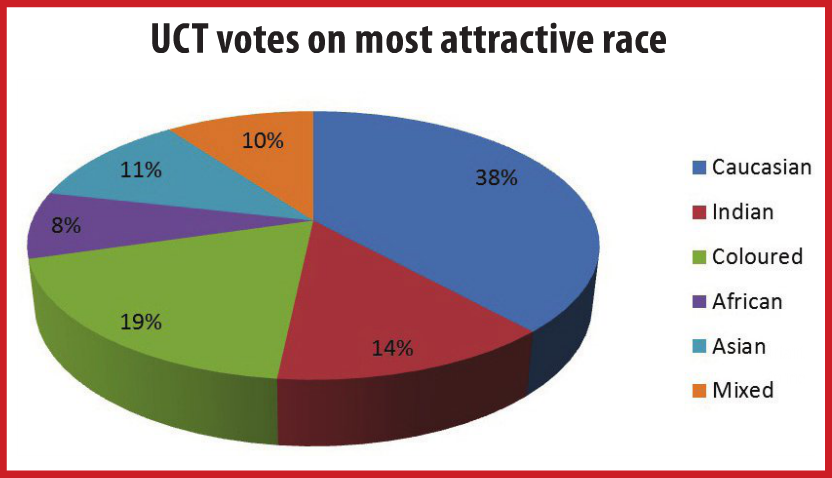
Despite the many columns I’ve written on the dangers of jumping to easy conclusions, the UCT student survey ranking how attractive various “races” are provided a reminder of how difficult it can be to follow one’s own advice. Especially with regard to emotive topics, the moral outrage machine can be quite seductive.

The sound and fury of sanctimony

Originally published in the Daily Maverick

imagesThe Easter holidays got me thinking – again – about what each of us could do to increase the odds of having a conversation on the Internet, thereby potentially changing our minds about something. In particular, changing our minds about how we perceive each other’s views on faith and religion. After all, changing our minds is what reading and writing should be about: discovering how we are wrong, rather than reinforcing to ourselves the ways in which we are right.

Easter brought these thoughts back because of the predictable squabbles that flared up between religious believers (well, Christians in this case) and those of us who don’t believe. Both of these groups can take themselves far too seriously: the non-religious through going out of their way to also be anti-religious, and the religious through taking offence at any slight, no matter how minor.

Some people did seem to go out of their way to be blasphemous, especially on Twitter, but jokes like the one that got me into brief trouble when I re-tweeted it (say Jesus backwards. Now say God backwards. Now say them together), or Barry Bateman’s quip about this being a day all about “caramel centered chocolate eggs” (which attracted a full day of judgement) are surely of the sort that can (and should) simply be laughed off as a difference of opinion.

Most of the time, a commitment to secular values would allow for both “sides” to leave each other alone, because their actions and beliefs, kept private, have no impact on others. But for both of these groups, the nuances of how (and why) people believe or disbelieve can get lost in convenient caricatures. In fact, sometimes even the truth is hostage to the will to (dis)believe. Two brief examples aren’t conclusive, but hopefully serve to make the point.

On the Christian side, the Church of England did themselves no favours through being caught out in what appears to be a blatant lie. In the run-up to Easter, they released the results of a poll indicating that 4 out of 5 people believe in the power of prayer – and gratifyingly for them, that belief in the power of prayer seemed to be on the rise in the youth.

The only problem is that the poll shows nothing of the sort. The 4 out of 5 figure is derived from the fact that when asked the question “Irrespective of whether you currently pray or not, if you were to pray for something at the moment, what would it be for?”, 80% of people gave a response instead of saying “I don’t know” or “I would never pray for anything”.

The desire to have a good-news story about the church, especially in the run-up to Easter, is understandable. And in light of 2011’s Dawkins’ foundation research indicating that fewer people seem to believe in the power of prayer than ever, this particular good-news story would no doubt be particularly welcome. But when your brand is built on virtue, and is in competition with others that claim you’re simply making stuff up, it does no good to make stuff up.

On the atheist side, I’m rather grateful to the majority of religious folk who are either disinterested enough or kind enough to not make more of an issue out of the continued civil wars around the role of social justice causes inside atheism, in particular the widespread allegations of misogyny. Instead, the focus continues to be on some of the more prominent voices for non-belief, and in particular, Dawkins himself.

And he seldom fails to disappoint those looking for a soundbite purportedly demonstrating the tone-deafness and hostility of atheists. While I do think most of the examples chosen to make this case are cherry-picked or misinterpreted, it remains true that doing our own cherry-picking or misinterpretation in response is no evidence of virtue.

Furthermore, he really does put his foot in it sometimes, like last week when he told his 660 000 Twitter followers:

He’s right on the logic, sure – but it would have been easy to be right while simultaneously not being maximally offensive.

I’ve addressed questions of strategy before, for example in relation to someone who does actually try to be the lightning-rod that Dawkins is perceived as being – David Silverman of American Atheists. While I haven’t changed my mind that we need people like him to expand the polarities of the debate, and perhaps to stretch the middle-ground for more moderate strategies, they do sometimes make the PR job difficult for those of us who think of religious people as mostly harmless, most of the time.

Likewise, the overly sanctimonious believers who seem to have sacrificed their sense of humour do the majority of believers no favours. Nor, of course, do those who argue against equal rights for gay couples or availability of contraceptives; or those who condone (through inaction, at least) child abuse or the stoning of adulterers and rape victims.

In short, there are all sorts of obstacles to being understood and to having a dialogue. Eliminating some of these require getting our own houses in order, rather than looking outward. But when we do look outward, let’s try to look at what’s in front of us, rather than being distracted by the convenient fiction of the stereotype.