Ideology, interpolation and artistic intent

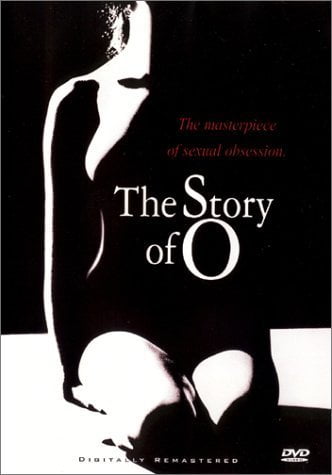
41M7ZMFHYMLThe Story of O is commonly considered to be a pornographic novel. As with any artwork that challenges moral sensibilities, a “pornographic” novel expose us to things that are morally abhorrent to us, while simultaneously leaving us uncompelled to condone what is described.

The interesting thing about The Story of O, for the purposes of this post, is that the brutality and abuse that O is subjected to seem to actually be morally acceptable in the fictional world of the story.

And herein lies my focus: is The Story of O, or any work of literature that has an implicit moral stance which we find unacceptable, to be valued less as a work of literature because of its unacceptable moral stance?

Second, should the fact that one or more of us feel outrage at something in an artwork mean that the artwork should not be shown, produced or performed?

The contemporary example that made me want to air these issues is the Estonian composer Jonas Tarm, who had intended to play “Marsh u Nebuttya” (“March to Oblivion”) at Carnegie Hall a few weeks ago.

The Carnegie performance was cancelled, after

it was brought to the administrators’ attention, in a letter of complaint signed “a Nazi survivor,” that the piece incorporates about 45 seconds of the “Horst Wessel” song, the Nazi anthem.

This, despite the fact that that the “Horst Wessel” song has been used in various compositions for many years, often as negative commentary on Nazism, and was in this piece framed negatively also (via the manner in which Mr. Tarm introduces the segment).

It seems that it was precisely his intention to get people to think about that historical period critically, and perhaps to feel some discomfort while doing so – but political and emotional sensitivities have made that impossible in the Carnegie Hall case.

This is not a judgement on those sensitivities themselves, but more on (as a friend put it) the apparent decline in our ability to interpolate between texts.

The failure of our ability to interpolate, in other words, is our failure to see things in a context, and to play off various texts (including, in the case of “O”, the moral text), off against each other.

More worrying, perhaps, is our conceding to that decline, in setting standards of offence, and what offence legitimises, that cater to serve the interests of those who are most offended (or who can claim to be so).

Victory goes to the most sensitive, which simply serves to incentivise people to be hypersensitive.

The same set of questions arise in terms of the genesis of art – for example, when (if ever) questions about the moral character of the artist matter, regardless of the quality of the art. For example, can (and should) one enjoy art produced by a child abuser, murderer, rapist, etc.?

This issue is, I feel, intrinsically connected to the question of what we value works of art for. It is true that we “possess a capacity to entertain a thought without accepting it”, to quote Malcolm Budd’s paper “Belief and sincerity in poetry”, and to my mind, this capacity is an essential component of enjoying art.

But Budd points out that a reader can enjoy a text “also on account of the poem’s expressing a philosophy that he believes”. If I subscribe to Christian values, I might enjoy Bunyan’s A Pilgrim’s Progress because of the way that text glorifies those values, just as Hitler would probably have derived great pleasure from watching Reifenstahl’s Triumph of the Will.

But works that can be described as propagandistic, in the sense that they exist primarily for the purpose of convincing the audience of the worthiness of a certain moral stance, are not, I feel germane to this discussion. The reason for this is the categorial intentions of the author.

It seems fair to say that most texts (and here I mean text in a broad sense, to include things like movies), while containing an implicit moral stance, do not exist primarily for the purpose of converting others to that stance. Works that do exist for this purpose may be considered as manifestos, but not as literary texts (for the purposes of this discussion).

So a movie such as Triumph of the Will may be viewed with distaste in the same way as we might view a swastika with distaste, while a text that can be more broadly conceived as containing a moral stance which we may find offensive, without actually having been conceived for the purpose of promoting it, should not be viewed with distaste for the same reasons. To do so would be, I feel, a type of category error.

If we set the bar at “someone could find this morally offensive”, the problem would be that is becomes impossible to find a text that has any objective (or at least, non-partisan) artistic value.

And that some texts have value, considered solely as literary texts, is a thesis which seems intuitively correct – they can make us feel, or make us think, as independent virtues regardless of their (for example) propagandistic value.

While it’s true that the moral or political stance of the audience often precludes the possibility of reading the art “on its own merits”, those merits have to include more than simply those stances.

And while there are contexts in which things are clearly simply abusive towards an audience, or only intended to provoke without additional artistic intent, the fact that we – or some of us – can’t read art in a context, outside of our subjective sensitivities, seems to be a deficiency of and in the audience, rather than in the art.

Speaking on related issues to these, the author of the New York Times piece linked above says (in relation to Mr Tarm’s composition):

I’d like a chance to think about [these issues] for myself. The New York Youth Symphony should program “Marsh u Nebuttya” on its next Carnegie program and give me, and the rest of the audience, that opportunity.

Precisely. These questions are sometimes not easy, but we get no closer to answering them by refusing to allow them to be asked.

Blast from the past

calvinia1File this one under “random weirdness”. A few weeks ago, the editor of an anthology of poems, intended for South African high school students, asked for me to renew permission for them to include this poem of mine.

I’d forgotten that I was in this anthology – in fact, I’d pretty much forgotten that I used to write poetry. Anyway – for the interest of very few of you, here’s a free verse something about the death of my grandfather, from (I’d guess) 1993 or so.

Calvinia, 1976

Kicking pebbles along cracked pavements,
my brother and I strolled through this Karoo town.
Past pale houses, dusky streets, past the Saamstaan store
where we could always find a spinning top, stop
to listen for the sound of windmills, or watch
the trucks pass by with their smell of sheep;
their cargo destined for a place alongside potatoes
and an occasional vegetable on blue china plates.

In Calvinia, I slept in my Oupa’s bed, both of us tired
from mending farm fences, or from circling this small town
in the hours between the day’s labour, evening’s quiet.
We would wake at dawn, when he led me to the kitchen
to pour five spoons of sugar into my enamel coffee mug.
Strangely, the thermos was always full and waiting –
waiting to be emptied, along with the small jars of lard
that lined one pantry shelf; lard to spread on our toast,
or to fry the bacon and eggs of a Sunday feast.

My brother and I found a chest of drawers
in Oupa’s room one day – inside lay his store of treats:
Wilson’s toffees, the peppermint creams he placed
in our palms after dinner, or presented in small plastic bags
when he came to visit us in Cape Town. As he grew older,
and I grew older, I began to realise the purpose of these trips
to the Cape – not the gift of sweets, but a hospital bed,
transfusions, chemotherapy.

He began to visit once a week, but only to sit, drink tea,
smile weakly at my brother, me. Before long
he no longer visited, but became a regular shadow
on the living-room wall. It wasn’t too long
before the hospital became his home, and the hospital
was not his home for long.

Moderating or closing comment sections – the Independent Media Advisory Panel report

trollsWhile I would have wanted to submit comment to Independent Media’s panel on what to do about abusive speech on newspaper comment sections, I somehow missed the call for submissions.

Now that their report is out, and on the understanding that this is a continuing conversation, I’ve offered a few comments on the panel’s recommendations – and the underlying issues – below.

TheMediaOnline’s summary of the panel’s findings seems comprehensive and accurate enough to simply quote, instead of doing the work of summarising them myself:

  • In the interests of freedom of expression, it is desirable to host online comments
  • However, the constitutional rights of readers and members of the public should not be infringed by such comments
  • It would be preferable to moderate comments prior to their publication online
  • Online platforms should be staffed with suitably qualified personnel
  • If effective pre-moderation cannot be undertaken for any particular reason, Independent should consider closing its comments section
  • Independent Media should develop guidelines to define unacceptable speech, which take into account legal and ethical considerations, but should not amount to censorship of differing viewpoints

I’ll not be addressing those points sequentially, and might not even get around to addressing all of them. But the free speech issue is one that does have to be addressed, if only to emphasis an important distinction.

Free speech

A commitment to free expression makes it desirable, rather than necessary, to host online comments. In other words, even if you shut comments down entirely, you are not violating anyone’s right to free expression.

The right to free expression means that you’re not barred from saying something. It does not mean being required to provide you with the platform on which to say it. So, for as long as you can make your point on your own blog, Facebook, Twitter or wherever, your rights are not being violated.

Your opportunities are being circumscribed, yes, but a private entity like a media house has no legal or moral obligation to provide you with an opportunity to comment. In fact, an overall commitment to free expression might mean exactly barring some people from commenting, in the grounds that they provide a chilling effect on the comments of others.

A practical example: if you wanted to have a comment-section discussion on what it’s like to be black and poor in Cape Town, you’d naturally get fewer people who are black and poor commenting if you also allowed white racists to comment.

More problematically: you might also get fewer black and poor people commenting if you simply allowed rich people to comment, in that the target audience might feel some measure of alienation or of being typecast or misunderstood.

I use these examples not to recommend these sort of constraints on comment spaces, but in furtherance of the general point that specific restrictions on who can comment where might, in certain instances, enhance freedom overall. The point is that freedom of expression in the aggregate can sometimes be served by restricting limited instances of free expression.

Legality vs. tone/character

The right to free expression and the extent to which it is (or isn’t) violated is a separate matter from the tone or character of a website. As soon as you allow comments at all, you’re encouraging the formation of some sort of community, and with that comes goals as to what the character of that community should be.

What this means is that even if something is not legally proscribed, you might nevertheless want to prevent it from being said. The Independent report makes much play of the right to dignity in the Constitution, but I’d rather not rest on that, because even if you think the Constitution has it wrong on things like hate speech and dignity, you could still justify restrictions on some speech on your news portal.

You could justify them simply via wanting to have a certain level of discourse on your platform, where you hold characteristic X to be non-conducive to that. X could be excessive sarcasm, or whatever – for example, I didn’t publish a comment the other day simply because it was overly pedantic and argumentative, and added no value to the conversation.

What you choose to restrict and why will be a policy matter for each media house to decide on for themselves, and I make the points above to encourage them to be guided by more than just the law when they deliberate on these matters.

The value of comments

The high-minded rhetoric around why we have comments online (free expression, debate etc.) – at least when it comes from the media houses themselves – is only part of the story, and to my mind a very small part of it.

The value that comments have for them is that eyeballs return to their pages, either to watch the slow-motion car crash of someone being schooled or trolled in comments, or to join in the fun themselves. Either way, you’re on my page rather than a competitors, and ad revenue might increase as a result.

And (we need data here) I’m intuitively completely disbelieving of the idea that there will be a significant difference in traffic if you switch from live, unmoderated commenting to some system that involves comments being posted after a delay of some sort. Of course a delay of days might have an impact, but I doubt that 12 hours or less would.

What to do?

The panel’s report recommends pre-publication moderation, where a) the commenters identity is known to the publisher, even if the comment appears anonymously; b) word-filters flag any potentially offensive comments (for containing words likely to correlate with abusive comments); and c) editorial oversight, where “trained and qualified” editors check the comments before publication.

Step (c) is onerous, and unduly so in not taking advantage of existing mechanisms for knowing who is likely to abuse comment sections and who not. But before I get to the disagreement, let me say where I agree.

Identity: I’m a big fan of people “owning” their opinions, and taking responsibility for them. To put it simply, the fear of reputational harm is one of the ways we are kept in check, and keep each other in check.

So I’m supportive of using the “letter to the editor” sort of model where possible – use your real names, which need to be verified in some fashion, unless there’s some compelling reason why you can’t (where the editor must decide on the merits of that reason, remembering, as I said above, that you have no right to comment).

Word-filters: You’ll perhaps get lots of false-positives here, so sifting through the stuff that’s flagged might involve more work than is necessary. But besides this potentially adding unnecessary overhead, I have no principled issue with it.

Editorial oversight: Making this the norm will be far too expensive and time-consuming (of course related issues, but manifesting as two separate problems). It would also be unnecessary, as we already have ways to crowdsource information regarding who can (in general) be trusted to not abuse comment sections.

For example, here on Synapses I use Disqus, as does IOL, Daily Maverick and the Mail&Guardian. I’ve set each post up with fully moderated comments, but I do have the option of specifying that any given commenter be automatically published without going into moderation.

Any of us who dip our toes into comment spaces online know the names of some regulars. Those regulars who are not abusive can be approved pre-publication. Yes, it will take some time and work to determine who is given this privilege, but in the long-run, it would save having to look at their comments each time.

Of course, you’d want some sort of policy for granting this privilege – say, for example, 5 non-abusive comments gives you that status, and the understanding is that it gets stripped from you once you abuse it.

The level of moderation required to afford people the privilege described above is rudimentary – interns, student journalists in university courses, bored college kids etc. could all do it for a nominal fee, and at the same time flag potentially abusive comments for the attention of a “real” editor.

All of the benefits listed in section 7.2 (page 33) of the report can be enjoyed once you have established this sort of “database” of approved commenters. If you wanted to be more liberal about it, and save even more time, someone with a high reputation score on Disqus can automatically be green-lighted.

One could even consider database of trustworthy commenters, shared across media houses that use the same commenting platform.

And as I said above, if someone sins, you simply delete them – here again, the community can be of assistance, in flagging things for an editor’s attention.

Roundup – 2015 LCHF Summit #OMHealth #LCHF2015

In news that came as a surprise to some us who are here, myself included (thanks to the generosity of the organiser, Karen Thomson), critics of Noakes and the low carbohydrate, high fat diet are apparently “boycotting” the Old Mutual Health Convention, that wraps up today.

The convention took place over 4 days – the first 3 operating as a professional event, with healthcare practitioners earning continuing professional development (CPD) points for attending, and the last day defined as a public event.

Standards in science journalism – #LCHF, #Banting and @BiznewsCOM

If you only get your news from people and places that agree with your pre-existing view, then you are living in a filter-bubble. This is not a good thing, as it means that you’re (relatively) impervious to discovering any errors in your beliefs, while simultaneously getting constant affirmation that you’re “right”.

That’s true for individuals as consumers of news, but also presents an opportunity for producers of news to reflect on their responsibilities. If you purport to be an objective – or at least balanced, seeing as objectivity is impossible – purveyor of news, then you need to take care to publish fair representations of the current state of knowledge.

One South African site that constantly abrogates its responsibility to present a balanced view is Biznews.com, and the headlong rush towards partisan propaganda is led by Marika Sboros, who seems to have taken on the position of journalistic praise-singer for the low-carb, high-fat diet, and for Professor Tim Noakes in particular.

To be clear, I don’t have a problem with self-confessed fans – rather than people who present themselves as journalists – doing praise-singing. Whether they are right or wrong about the facts, individuals have no responsibility to be fair with regard to the totality of evidence, and/or how it’s interpreted, on their personal websites or Twitter feeds.

This doesn’t mean I’d encourage that sort of epistemic irresponsibility, in the least. As I say, they have no responsibility to us to be fair – I’d say that have that responsibility to themselves, but that’s not what’s at issue here. In this case, we’re talking about a news website that isn’t set up as a promotional vehicle for LCHF, and a “journalist” who presents herself as objective.

Sboros’ most recent piece of misrepresentation arises as a result of the USA’s Dietary Guidelines Advisory Committee announcing that they are set to reverse their cautionary stance on dietary cholesterol (so, the cautions against the cholesterol content of food, rather than the cholesterol content of your blood).

A second piece of new research is also described in the link above, namely a meta-analysis by Harcombe et. al. arguing that the dietary fat guidelines in 1977 and 1983 (cautioning against fat) were never justified by evidence from randomised controlled trials (RCTs).

The piece begins with nonsense, where Sboros’ italicised introductory text includes “In 2013, Sweden became the first country to ditch low-fat dietary guidelines, restoring cholesterol in eggs and bacon to its former glory”. That’s literally false, in that a Swedish advisory body, rather than “Sweden”, made certain recommendations. Second, that’s a gross misrepresentation of the recommendations they made, as even the advisory body themselves have noted.

Let’s take them one at a time, starting with the case of the USA. First, the headline Sboros chooses is “Science says Tim Noakes is right on cholesterol”. “Science” is rarely, if ever, dogmatic – pseudoscience is. Science – meaning what the totality of evidence suggests – points in one direction or another, and sometimes by very fine margins.

What I mean is, evidence in support of one particular point of view (Noakes’, for example) tips the scales in favour of their point of view, rather than “proving someone right”. And in this case, the misrepresentation is particularly bad, in that the only support for Noakes in these guidelines is for one leg of his argument, namely that cholesterol consumed has little impact on cholesterol in the blood.

As the Washington Post write-up makes clear,

The greater danger in this regard, these experts believe, lies not in products such as eggs, shrimp or lobster, which are high in cholesterol, but in too many servings of foods heavy with saturated fats, such as fatty meats, whole milk, and butter.

The new view on cholesterol in food does not reverse warnings about high levels of “bad” cholesterol in the blood, which have been linked to heart disease. Moreover, some experts warned that people with particular health problems, such as diabetes, should continue to avoid cholesterol-rich diets.

So, we see continued warnings about saturated fat, and continued warnings about blood cholesterol. Noakes says that saturated fat is fine, and that statins (to lower blood cholesterol) are bad, even toxic – he even uses the perjorative “statinators” for those who prescribe or recommend them. In other words, two key pegs of the Noakes argument are directly contradicted by this research.

Sboros, meanwhile, Tweeted a link to that same Washington Post piece, saying:

Well – if those doctors or dietitians actually read the linked piece, you’d imagine that they would carry on prescribing the statins, seeing as nothing in it recommends that they stop doing so.

Another interesting thing to note is that these guidelines seem to have been developed with the support of the Egg Nutrition Center and American Egg Board. Now, I don’t think that this automatically taints the research – as I’ve said before, “the fact that something is funded by a pharmaceutical company doesn’t guarantee bias. There’s a difference between being cognisant of potential biases, and writing something off in advance, just because of whence it came.”

I note it just to make the point that Sboros, Noakes and other LCHF supporters constantly use alleged taint via funding to dismiss research they don’t like – but then somehow seem to forget that principle when the research says things that they happen to agree with. For example:

Before moving on, read especially that second link for a contrasting view on what the revised guidelines mean, and on how they should be interpreted according to the holistic framework of knowledge related to diet. My concern here is about misrepresentation, rather than the science itself.

On the second issue (the Harcombe study), a key thing to note is that, as ever in the case of this “journalist”, only one view is being presented. The Harcombe study has already been subjected to a fair amount of criticism, some of which seems rather compelling. You might fall on either end of the contrasting views, or somewhere in the middle, but a piece of journalism, rather than praise-singing, would include relevant and plausible dissenting views at the same time.

To conclude, another recent Sboros post is worth highlighting, titled “Are you a vaccine zombie? Risks versus benefits of jabs debate goes on“. The piece expresses anti-vaccine fears, primarily the standard one amongst cranks, namely the risk of autism. The debate does not “go on”, except to the extent that those who hold fringe views pretend that it does – the scientific consensus on vaccines is clear, and long-settled.

This post embeds a video from (quoting Sboros) “one of my favourite sources of health information: Mike Adams, AKA the Health Ranger”. Mike Adams is the man behind “Natural News”, the site that argues that Microsoft are developing eugenics vaccines. And that HIV doesn’t cause Aids. It also publishes David Icke, the man who thinks the world is controlled by reptiles from outer space, who live in underground tunnels and take on human form.

This is a health journalist’s favourite source of health information?

To quote Ben Goldacre, speaking of Zoe Harcombe but with words that might apply equally well here, “you may disagree, but in a busy world, I’m not sure I see the point of a Zoe Harcombe”.

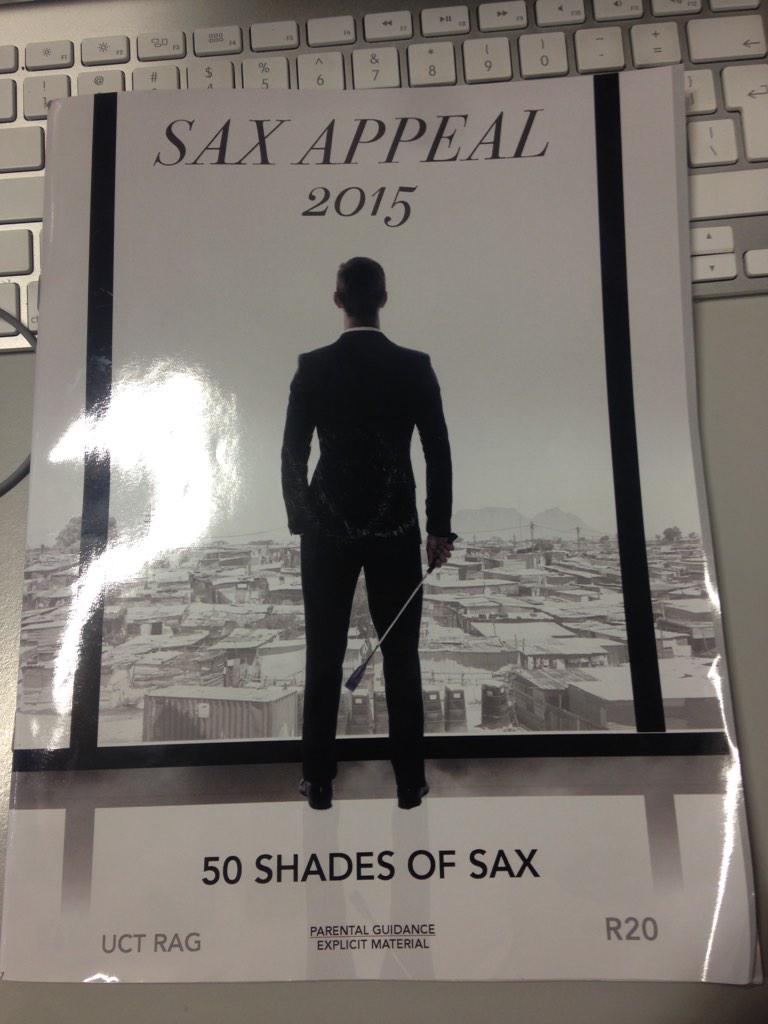
The 2015 #SaxAppeal cover

van_berger_2015-Feb-12
Credit: https://twitter.com/van_berger

This is not a “rage-blog”. I’m not indignant, offended or any of those things by the Sax Appeal 2015 cover that I saw via Twitter this morning. It depicts Christian Grey (a rich white guy who is into BDSM) looking out over shacks where poor black people live.

I do, however, think it was a poor choice of image, for the two reasons I’ll outline below. But first, a general point, which is the actual motivation for this post: there are usually intermediate options between the polarised sorts of shouting at each other that social media seems to encourage.

Criticism is quickly read as outrage, and in a case like this, can also lead to accusations of conservatism, fuddy-duddyishness and so forth. On the other end of the spectrum, those who support the image can overstate its virtues, and not recognise any value in concerns expressed by others.

There’s a gulf between those options, and that’s where I’m speaking from. I was shocked by the image, but I mean shocked in a descriptive sense, rather than as an index of moral outrage – it took me aback. So, that’s a plus for the “good satire” reading, in that being forced to take notice is a good start.

But the cover ultimately misses the mark, and was a poor choice. First, because risky satirical choices are only a smart move if you’ve got credibility as a satirist or satirical publication. Without that, you can appear to be simply echoing the reality you’re trying to critique, or appear oblivious to dimensions of it.

Simply being known as a satirical magazine one isn’t the same thing as people knowing you to be good at that job, and therefore interpreting you in that light – and sorry to say, but I don’t think Sax Appeal been good at it for a while.

Second, you significantly increase your chances of being read uncharitably by virtue of the targets that you pick. In this instance, there’s a context of:

  • 5 years of debate on admissions policy, race and transformation
  • public criticism from UCT academics on the perceived slow pace of transformation at UCT
  • a funding crisis at a national level, affecting the ability of poor students to enter universities
  • a rather public tantrum by a prominent media house owner on UCT’s transformation track-record
  • a university that is situated in a city that is perceived by some as racist

And so forth. In other words, this was a very risky issue on which to push the boat out. I certainly don’t think they were intending to be crude or offensive – in fact, I know some of the people involved, and trust them in this regard – but this was a poor decision.

(Sax Appeal has taken note of the reaction, and posted the statement quoted below to Facebook.)

STATEMENT ON SAX APPEAL COVER CONTROVERSY:

On behalf of the SAX Appeal Editorial Team, we regret the hurt caused by this year’s cover photo.

We understand the concern about what is perceived by some as racist or patronizing undertones of the image; but we would like to state unequivocally that our intention was not to make light of racism or to humiliate its victims.

Our intention was to open up discussion about the problematic power relations in South Africa. The legacy of apartheid has left a tragic divide between rich and poor, black and white, rural and urban – a divide that is still perpetuated daily.

Just as the themes of 50 Shades of Grey allude to power dynamics in sex, our hope with 50 Shades of SAX was to discuss the other power dynamics that still pervade our society. Even though the privileged no longer oppress the underprivileged daily with batons or whips, we hoped that the cover image would inspire discussion about the secretive, underhand ways in which the privileged still get their way.

These issues, including those within the magazine, such as the discussion around homophobia in Islam, the psychiatric profile of God and of golf being representational of white privilege, were included in the magazine to bring about such discussion.

In this way, SAX 2015 has taken a very different turn compared to previous editions. Sensitive topics were not written about to ridicule the marginalized or disadvantaged but to induce meaningful discussion about these topics. These are issues that we did not think we could avoid discussing, but if we missed the mark in our attempt at discussion, we regret the effect that this has caused.

We hope that this perspective might add to the debate that has been sparked on social media and that it might point it in a direction that is critical and constructive around issues of race and socioeconomics.

Homophobia, private property and rights of admission – Oakfield Farm weddings

Screen Shot 2015-02-11 at 13.21.06Others have known about this for some time, I’m sure, but today was the first I’d heard of Oakfield Farm in Johannesburg, a wedding venue that would like to insist on only hosting heterosexual weddings due to the “religious convictions” of their shareholders.

They have been in trouble for this position since at least April 2014, when “the Commission for Gender Equality notified Oakfield Farm that it was investigating a complaint against it of unfair discrimination on the basis of sexual orientation.”

In the same article linked directly above, you can read that the chief executive of the South African Human Rights Commission, Kayum Ahmed, “said that service providers were not allowed to discriminate against gay and lesbian people because this is a violation of the Constitution and the Promotion of Equality and Prevention of Unfair Discrimination Act.”

Constitutional scholar Pierre de Vos agrees with this reading of the law, albeit with reference to a racial discrimination case, arguing that

section 9(4) must be read as placing an internal limitation on other rights such as the right to property and the right to freedom of association. This means the right to associate freely and the right to property is qualified by section 9(4) and these rights can only be exercised in conformity with the non-discrimination injunction contained in section 9(4) of the Bill of Rights.

Section 9.4 specifies that we can’t discriminate against others on various grounds, including race, sex, gender, sexual orientation, religion, belief or culture.

The key difference between the sort of discrimination you practice in refusing Scientologists access to your birthday party and the sort practiced by Oakfield farms is that they are offering a service to the public, whereas I am holding a private gathering. Once you offer a service to the public, you can’t discriminate on those specified grounds.

So it seems clear that what Oakfield do (or attempt to do) is (currently, and whether rightly or wrongly) illegal. A “right of admission reserved” sign has no legal standing when in competition with these non-discrimination laws.

But, and here’s where the trouble starts, that’s all a separate issue from whether the law, or the Constitution, should say other than what it does.

One thing one might want to argue is that it’s discriminatory against the religion in question to force them to host gay weddings (leaving aside the fact that it’s unlikely any gay folk would want to get married there, if that was the case).

These are tensions I’m not qualified to address in terms of the law – and it is a tension, because it might well be the case that there are more members of religion X (that doesn’t like gay marriage) than there are gay folk.

We don’t make laws via popularity contests, I know, but the point is that if the religious group is being discriminated against by being forced to host gay marriages, some argument is needed for why it’s them, rather than the prospective gay couple, who should be discriminated against.

One answer is that non-discrimination should be the default (and that’s certainly the position I’d take), but that begs my question, in that it seems plausible to describe the enforced-gay-weddings position as discriminatory against the religious. And this, in turn, means that gay folk are higher up the pecking order in some sense than religious folk.

There’s one way in which that ranking makes perfect sense, because you don’t (typically) choose your sexual orientation (or race), whereas you’re perfectly free to choose your religion. Is it as simple as that – in other words, that these forms of discrimination can be rank-ordered where necessary, but bundled together in law until that need arises?

A second sort of thing you might want to say in objection to the Constitution (as read here) is that – so long as everyone of whatever race, religion, sexual orientation etc. has equal access to facilities, any individual facility should be free to discriminate, and the market can discriminate in return, hopefully driving the bigots out of business.

To lay my cards very much on the table, I’d prefer the second option in theory. However, thanks to how easy it is to rig the game (or, perpetuate the rigging of the game) against people who have historically been subject to discrimination, this would in all likelihood end up perpetuating that discrimination – leaving us with the forced pragmatic (and morally sound) choice of enforcing non-discrimination.

(On a concluding note, in case any of my lawyer friends drop by, I don’t understand why S6 of the Civil Union Act passes muster on the reasoning of the de Vos piece linked above. Section 6 reads:

A marriage officer, other than a marriage officer referred to in section 5 [which refers to people who qualify as representatives of religions], may in writing inform the Minister that he or she objects on the ground of conscience, religion and belief to solemnising a civil union between persons of the same sex, whereupon that marriage officer shall not be compelled to solemnise such civil union.

I was happy to register under the Civil Union Act precisely because I wanted to be able to marry heathens, including gay ones, but how is it that I should be allowed to choose not to marry gay couples?)

God bless you, Rest in Peace – on secular versus religious language

Andre P. BrinkWhen South African author Andre P. Brink died on February 6, I was one of the many who extended my condolences to his family and friends. I didn’t use the phrase “rest in peace” or its acronym “RIP”, because after death, there’s no agent capable of “resting”. That’s what death means, for those of us who subscribe to a naturalist ontology.

But that’s not all that “RIP” means – it’s a shorthand for extending commiserations, for demonstrating shared membership of a community of caring, and for marking the passing of someone who was considered valuable to that community.

To use – or exploit – the grief or sadness at the death of such a person to score political points for atheism is crude, unnecessary, and unfeeling.

Yet that’s exactly what I saw on some South African atheist online communities, and this is again an elegant example of why atheists need to be more concerned about their own PR, in that if you’re trying to argue – as we do – that gods aren’t necessary for being good people, it helps to behave like good people in the absence of gods.

The objections from atheists were the usual – focusing only on the fact that there’s no soul or spirit, they claimed that the words were meaningless, or even worse, that they demean the living by assuming that there’s more to life than just the here and now.

As I said above, there is more to the here and now, but in the limited sense of there being a social context in which words function, and what you signal when you reject that.

There is a time, and a value, to trying to get people to strip their language and their mental furniture of various metaphysical concepts. But that time – at least if you care about getting your point across, rather than scoring points – is when the matter can be considered in the abstract, rather than coming across as an insult to people who are grieving.

“Bless you” is a similar example, but different in a crucial way, in that you can easily poke fun at people who say “bless you” without poking at their open sores. The examples are different in degree, if not in kind.

“Merry Christmas” is another, and similar to “bless you” – it’s laughably precious to object to this in anything but the mildest of terms, and especially ridiculous to object so strongly that you get yourself thrown off a plane, as an American (presumably) atheist recently did.

Despite their religious origins, the point is that these phrases are now largely secular in usage. We know that they operate as shorthand for recognising a common humanity, and for reinforcing social bonds. No offence is intended by them, and our reactions need to be proportionate to the triviality of the “crime” committed.

Yes, I’d prefer for us to use alternatives. But for any alternatives to gain traction takes time. And motivating for them, and gaining consensus for their usage, won’t be easy if you approach that task by being an ass.

But for those of you who want to be offended, and treat any word or phrase with a religious origin as an insult, here’s your challenge: stop saying “goodbye” to people.

“Goodbye” is, after all, is a contraction of “God be with you”, and is thus surely pretty damn offensive.

Building a better society starts with recognising this one’s broken

Today’s horror is the rape of a Northern Cape high school boy, whose classmates tied him to a bed and raped him with a broom handle. “Today’s horror” is of course inaccurate, as there are no doubt many others. But this one stands out for me for various reasons:

The initial use of the word “sodomy” instead of the word “rape”, demonstrating an unconscious (and widespread) homophobia. It’s a mild form of homophobia in isolation – but to note that would really miss the point unless you follow it up with the observation that, for those who identify with marginalised and oppressed groups, all of these mild or micro cases add up to a environment of systemic discrimination.

The norm is white, male and heterosexual. This is not to say that it’s impossible for people to overplay their hand (whatever that hand might be) in terms of being part of some marginalised group – some people can be disingenuous, and excuse some personal failing by reference to a coincidental feature they happen to possess.

That’s an entirely separate issue from whether, on average, someone who is not white, male and heterosexual is likely to have a rougher deal than people like me. So, denying any person’s experience by reference to them “playing the x card” (x = race, gender, etc.) pretends that systemic disadvantage is nonexistent, and makes you sound like a heartless, uninformed and unreflective fool.

SASecond, on the rape case, is the fact that some seem to want to make this all about kids being kids at an initiation ritual, rather than it being a racially motivated attack. The bone I’ll throw at you is that of course we can’t know it was a racial attack. But it’s pretty likely to be, in South Africa, at least to the extent that certain inhibitions about not treating other human beings in a barbaric fashion are more present if the prospective target is white, male and heterosexual.

It doesn’t matter that the crowd of kids who were looking on, and (I’m told) cheering were modeling a united colours of Benetton poster, comprising people of various races. It’s possible to internalise racism against any group, even the group you belong to yourself.

And, as DA spokesperson Phumzile van Damme rightly notes in a statement on this attack

Under the cover of “traditions” such as initiations, children are given the platform to act on their racism and homophobia – sanctioned by the institution and often “protected” by just those who went through the same “rites of passage” themselves. Many of these kids are raised by racist, bigoted parents and then spend years and years in these situations where they barely have to disguise this. In fact, it often gets encouraged.

On Facebook, Max du Preez asked “Isn’t it time to consider legislation declaring racist acts (attacks and serious insults) hate crimes with harsh punishment?” I don’t want to get into hate crimes and hate speech at present, because there’s so much to talk about there, but one thing we do need is to at least recognise that they exist, and identify them for what they are.

We have too many folk who still believe the Rainbow Nation myth, and think we’re pretty much united, and too many who believe we’re still in some sort of (undeclared) race war, or at least socially (or otherwise) incompatible with each other. The truth is in the middle – we’re sorting things out, but that requires work, not mythologising.

For those of you who haven’t seen it, go read and play with the “parable of the polygons” to see an elegant demonstration of how (perceived) harmless choices can still add up to a harmful world. Also, read Oliver Burkeman’s recent Guardian piece, which argues that believing the world is intrinsically fair or just can lead to increased injustice, because we “blame the victim” instead of supporting remedial measures.

I don’t know for sure how we build better societies, but recognising our problems, instead of pretending we live in some alternate and superior universe would surely be a start.

Arguments, and assumptions of bad faith

I don’t know about you, but I’m finding that the news cycle – especially here in South Africa – is hitting fresh heights of bonkers-ness just about every day. And where scandalous news emerges, outrage on social media follows.

Outrage is oftentimes merited, and you should please not read this post as a complaint about people getting upset about things (although, as David Mitchell points out in a characteristically amusing column, it might be a problem that outrage has become our default setting).

More important than the outrage itself is the motivation for the outrage, in both senses of motivation – the originating argument or cause of it, and then the retrospective justification of it, where I think too many of us are operating in bad faith.

For those of you who aren’t familiar with the concept of the “principle of charity”, Wikipedia’s entry opens with: “In philosophy and rhetoric, the principle of charity requires interpreting a speaker’s statements to be rational and, in the case of any argument, considering its best, strongest possible interpretation.”

To put this into practice, one strategy might be to apply Rapoport’s Rules, summarised by Daniel Dennett as follows:

  1. Attempt to re-express your target’s position so clearly, vividly and fairly that your target says: “Thanks, I wish I’d thought of putting it that way.”
  2. List any points of agreement (especially if they are not matters of general or widespread agreement).
  3. Mention anything you have learned from your target.
  4. Only then are you permitted to say so much as a word of rebuttal or criticism.

But instead of taking this approach, much online commentary, whether in the short-form of Twitter or in blogs and columns, seems to be a frantic dash to demonstrate the evil of your opponent’s point of view.

There are important debates going on about left-wing politics, political correctness and what counts as fair and unfair criticism. It’s important that these debates aren’t won by those who claim that being offended is always a trump card, because that a) incentivises victimhood and b) is a race to the bottom for what entitles you to claim protection from offence.

It’s good to be challenged – we are often wrong (regarding science, for example), and need to be told so. But how we tell each other that we’re wrong is the problem, in the sense that if you criticise from a position of assumed certainty that you’re right, and your opponent wrong, nothing good is likely to come from the interaction.

I’ve so far stayed out of the Jonathan Chait debate that was occupying so many people in (the broad and very difficult to define) online political community I belong to. There are far too many triggers for hostility in the issues he raises, with a concomitant low probability of sober reflection on the issues.

But now that the fire of that debate has gone out, I do want to point you to his piece responding to his critics, in which he (rightly) reminds us that the fact that some people complain about political correctness simply as a way to excuse or mask their bigotry does not mean that others might also take offence too often, and for the wrong reasons (for example, the race or gender of the speaker, regardless of what the speaker is saying). To quote an important passage from that piece,

making distinctions is important and valuable. Voting may present us with limited and imperfect choices. But when we analyze the world, we don’t need to restrict ourselves to binary choices. We can oppose both racism and inappropriate responses to racism. Indeed, that kind of multifaceted thinking is a special responsibility for liberals.

imagesHaving begun this post with a vague allusion to issues in the South African political landscape, let me close with the specific case of the City of Cape Town having approved the renaming of a road in honour of the conservative apartheid-era president, FW de Klerk, who can among his achievements apparently count ordering the murder of 5 children (and a Nobel Prize).

I was one of the handful (around 250) that opposed the renaming during the consultative process, while around 1700 wrote in support of it. My reasons for opposing it were offered in a previous post, so I won’t rehash them here. But I do want to say something about last week’s council meeting, at which the City approved the renaming (initially proposed by this group of “prominent Capetonians“).

According to news reports, (at least) two quite disturbing things happened at this council meeting, to which I’d add one example of the language of politics gone utterly mad.

Disturbing thing number one is that our Mayor, Patricia de Lille, was apparently taunting ANC councillor Tony Ehrenreich by waving a red clown nose in his general direction whenever he spoke, and accusing him of engaging in “clown politics”. To my mind, if the Mayor engages in debate as if it’s happening on a school playground, there’s more than one person playing “clown politics”.

More disturbing, though, is this detail of how the council meeting proceeded (my emphasis):

The ANC then asked to caucus and, on their return to the chamber, found that the meeting had proceeded without their input. ANC councillors were outraged. The Speaker’s calls for order were drowned out by ANC councillors banging on desks while chants of “no” rang out. Smit then ordered the ANC to leave and the hall to be vacated.

The council sitting was moved to another room, with many DA councillors also shut out as metro police blocked ANC councillors from getting in. Chaos erupted when ANC members tried to force their way in, resulting in a tussle between some ANC councillors and metro police officers. There was continual shoving and pushing as ANC councillors tried to storm the room.

For the next two hours, ANC councillors tried to get in while remaining DA councillors were gradually escorted into the room, where ACDP and FF Plus councillors participated in the discussions.

I’m sympathetic to the DA and de Lille’s claim that the ANC might sometimes act in ways that are aimed at making the City “ungovernable”. But when you’re taking a decision regarding renaming a road after an apartheid president, in a city perceived by some as being racist, it’s quite mad – in terms of effect on public perception – for only the DA, ACDP and FF Plus to be debating the motion and making the decision (a separate issue to whether they were quorate, which they were).

Furthermore, if the meeting did proceed while the ANC was taking a break to caucus, that indicates serious bad faith on the part of the Democratic Alliance, in that they don’t give any impression of being interested in engaging with the ANC or Ehrenreich’s arguments.

In general, that’s the problem I’m highlighting in this post, in full awareness that doing so is hardly novel. But for those of us that care about debate, and its value in showing us where we’re wrong (which is essential to becoming more often right about things), the occasional reminder of why we do this, and how to do it, hopefully serves a purpose.

In our little corners of the Interwebs, or in meatspace, we can do better than simply yell at each other, or presume malice in others before we’ve even bothered to try and understand what they are saying. It’s difficult, to be sure, and I often fail at it myself. But not doing so, or giving up trying, simply cedes all public discussions to the idiots and the ideologues.

In closing, on the Humpty Dumpty language of politics, consider this quote from the Mayor of the City of Cape Town, on the ANC’s opposition to the above-mentioned street renaming:

[The ANC] are opposed to progressive politics and anything that is not backward-looking and embraced by the cold hands of racialised politics.

Renaming a road after an apartheid president is “progressive politics”? As a friend said on Facebook, “Yup, what self-respecting revolutionary could be against honouring a freedom fighter like FW? I want to cry.”