Blogs for free press

Bloggers For a Free Press

I’m sure you’re aware by now of the slander campaign launched by the ANC Youth League’s spokesperson Nyiko Floyd Shivambu against journalists they perceive to be against the Youth League. This campaign is especially directed against City Press journalist Dumisani Lubisi. You’ll remember that he was instrumental in exposing Julius Malema’s interests in various companies.

The move taken by the ANCYL is disturbing, especially their response to the letter written by 19 of the country’s most influential political journalists, asking the ANC to distance itself from the actions of the Youth League and Floyd Shivambu, where they basically told these journalists to sod off. More than that, Shivambu then threatened the journalists who refused to run his slanderous story.

This is a definite step towards dictatorial rule. I for one, am not willing to sit idly by as people in our ruling party flagrantly infringe on media freedom and other Constitutional rights.
I’ve invited a number of South African bloggers to publish a message to the ANC and the Youth League on Wednesday, condemning the actions of Shivambu and calling on them to distance themselves from such practices. We also reminds the ANC of the vital role played by the the press in the liberation struggle.

If you’re a South African blogger and are interested in joining, then drop me an email at sipho.hlongwane@gmail.com. Alternately, you can reach me on Twitter (@ComradeSipho). I’ll fill you in with
further details and put you on the SpeakZA mailing list.

If you’re on Twitter, the hashtag is #SpeakZA. Let’s get the word out there.
Sipho Hlongwane
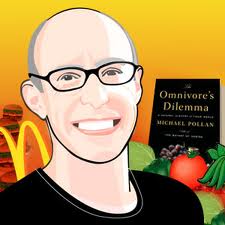
Orthorexia, Pollan and fear of food

Originally published in The Daily Maverick.

As that master epistemologist (and occasional US defence secretary) Donald Rumsfeld reminded us in 2002, “There are known knowns; there are things we know we know. We also know there are known unknowns; that is to say we know there are some things we do not know. But there are also unknown unknowns – the ones we don’t know we don’t know.”
Some of these unknown unknowns are probably harmful to us, but seeing as we don’t know what they are, there’s little we can do to safeguard ourselves against them. But as my earlier treatment of the moral panic relating to DStv and porn implied, a known unknown (in this case, the harmfulness of porn) can be treated in two entirely different ways.

Utter awesomeness from Rev. Peasboro

This is old news, but I just heard about it yesterday via The Doctor and Derren Brown: In a book published in 2000, Reverend Jim Peasboro alerts us to the frightening possibility that our PC’s (he doesn’t mention Mac’s, so you trendoids are perhaps safe) may be possessed by demons. Oh yes, “demons can possess anything with a brain, including a chicken, a human being, or a computer”, and “any PC built after 1985 has the storage capacity to house an evil spirit”.

I wonder if this has to do with the decreased costs of storage. Perhaps your average demon takes up 20 megabytes of hard drive space, and that limitation would have been crippling in 1985, when Commodore’s Amiga 1000 sold for $1,295 dollars (without monitor), and hard drive space maxed out at 40MB or so. Nowadays, of course, your PC could house thousands of demons, who could take advantage of the multiple CPU’s in your machine to get up to some serious mischief.

Antivirus manufacturers have been slow on the uptake here, unfortunately. I can find no mention of possession in the documentation for mine, but perhaps I’m using inferior software. One in 10 computers in the US is infected by a demon, but the South African rates are likely to be lower, seeing as I imagine the demons to transport themselves via ADSL, and our connections are much slower than those in the US – your demon might still be in transit, perhaps at a Telkom substation somewhere.

The good news is that “Technicians can replace the hard drive and reinstall the software, getting rid of the wicked spirit permanently”. While the snippets from the book aren’t clear on what stops your computer from being re-infected after this process, I imagine that the Rev. Peasboro answers this question in the book itself. My guess would be that he’s trained a select bunch of technicians in this process, who will guarantee inoculation for a small(ish) fee. I’ll look into the matter of accreditation, as us South Africans can’t be left exposed to these sorts of mortal dangers. We can’t be asked to take the risk of our PC’s suddenly uttering a “stream of obscenities written in a 2,800-year-old Mesopotamian dialect”, now can we?

Freedom of (Multi)choice

Originally published in The Daily Maverick.

A number of the self-appointed guardians of South Africa’s moral fabric have recently weighed in on DStv’s news that it is considering introducing a pay-per-view pornography channel. As previously reported by Kevin Bloom in The Daily Maverick, Taryn Hodgson of the Christian Action Network claims that the channel will fuel the “fires of sexual abuse and exploitation”, and that those who believe otherwise have “imbibed the lies of the porn industry”. Errol Naidoo of the Family Policy Institute cites sympathetic studies (including one from a right-wing Christian organisation, and another from a high-ranking Freemason’s address during the 1989 ‘Religious Alliance against Pornography’ conference) which purport to demonstrate a connection between pornography and sexual violence. The trade union Solidarity claims that “children’s rights will be violated” by this channel, based on their own research indicating that “77% of molesters of boys and 87% of molesters of girls used pornography”.

On JZ’s call for a national dialogue on “our moral code”

Originally published in The Daily Maverick.

Many South Africans would support the recent call by President Jacob Zuma for a national dialogue on our moral code. While quips about foxes guarding henhouses may be the first thing to come to mind, two serious and separate issues are raised by this call: the desirability of such a dialogue, and the practical issue of who should take part.

On the first issue, perhaps we should start by noting that the perceived moral failings of some influential South Africans and the public response to these have a feature in common, namely a tendency to pluck a ready-made moral viewpoint off a shelf and then present that as either defence or accusation. Neither of these responses demonstrates commitment to moral reasoning or sensitivity to the fact that some issues cannot be resolved by appeal to dogma. They are, nevertheless, often successful in that new South Africans have been bred to be tolerant of difference and reluctant to criticise things they may not understand.

Addicted to victimhood

Being married to someone who is obsessed with food has its upsides, in that the cooking of regular and delicious meals is something the Doctor enjoys doing (or so she claims, after years of doing so). I can apparently cook too, but this is a hypothesis that I’d rather not subject to much testing, in that I fear the loss of a potentially undeserved reputation. But it has its downsides too, in that her time spent thinking about food, and reading in the discipline of “Food Studies”, involves having to listen to and read an awful amount of utter tosh. Being a naturally inquisitive sort of fellow, I sometimes get caught in the crossfire, which led to us recently having a conversation about the evils of high-fructose corn syrup, which is apparently in everything.

Taryn Hodgson’s pornography problem

The Christian Action Network’s (CAN) “international coordinator”, Taryn Hodgson, seems to be on some sort of PR offensive. Last month, she was accusing the Cape Times and Argus of denying the “hidden holocaust” of abortion, and more recently, she took time out from being upset at things to offer an apology for the lies told by CAN around an aborted debate between Peter Hammond, myself and Tauriq Moosa.

More on Maxwele and freedom of speech

A follow-up article on the Chumani Maxwele incident, and the implications it has for free speech in South Africa, appeared in the Durban Mercury (22/02/10) and the Cape Times (23/02/10). My original text can be found here.

Giving Jacob Zuma the finger

February is turning out to be a rather uncomfortable month for South Africa’s President, Jacob Zuma. First we had Babygate, and now it appears that some of his goons have taken to abusing and arresting those whom they believe to not be showing sufficient respect to the Father of the Nation (or at least, a growing proportion of it).

Good without god

Over at Talking Philosophy, a post by Jeff Mason has generated a few interesting comments. The post itself is interesting (hence the comments, I suppose), but one comment (by Tom, a self-professed religious believer) is perhaps particularly interesting. Here’s an extract from the comment, followed by some general comments in response:

religion, particularly belief in a deity, is an incredibly useful concept the human mind uses to funnel its understanding of many issues into language which is not only powerfully symbolic, but also compact and economical. Finally, religion tightens the concept of duty due to the psychological implications (a la Pascal Boyer) of a personal god in relation to our intuitive psychology of each other.