In memoriam: Prince (June 7, 1958 – April 21, 2016)

There are already hundreds of tributes to Prince out there, with many more to come as people hear of his death, yesterday. I heard about it last night at dinner with friends, and was, for a long moment, rather inconsolable.

He was a musician that provided a fair chunk of the soundtrack to my life, and that of many others. I was a fan pretty much from the beginning – other Capetonians will remember those very expensive import LP’s we bought from that place in the Golden Acre whose name I can’t remember, and it was there that I found a copy of “Dirty Mind” in 1980, before Tipper Gore had an “explicit lyrics” warning pasted on to it.

I quickly filled the back-catalogue of his first two albums, and then bought everything else for a decade or two, until his output became too voluminous (and, to be honest, inconsistent) to keep up with.

In 1990, I was coaching tennis to bratty American kids (including one of GW Bush’s grandsons!) in upstate New York, and remember one night when some of the camp counselors and coaches were persuaded that it was a good idea to go and see Bryan Adams perform in Canada.

I stayed behind, because Bryan Adams, and because the rest of us had planned a party. We went to Forest Lake, smoked a joint, drank too much beer, and lay on the shore while a friend played Purple Rain at an absurd volume through his car speakers.

I did so last night also, but without the joint or the beer, although the whisky was good and plentiful. We played “Darling Nikki” too, at my wife’s suggestion, even though that’s the name of an adolescent crush that she doesn’t like being reminded of.

That’s a signal of how much his music means to many folk. And rightly so – younger readers and those who don’t know his music might not appreciate just how damn good he was.

All the early albums had liner notes that read “Produced, arranged, composed and performed by Prince”. He did everything, in other words. The legend had it that he could play 20 instruments by the time he was in his late teens.

He turned other people into stars too, or gave them some of their most memorable songs – Sinead O’Connor, with Prince’s song “Nothing Compares to U”, written for a band called The Family. The Bangles, with “Manic Monday”, Chaka Khan, with “I Feel For You”. “The Glamorous Life” for Sheila E. And there are plenty more.

Few other people would be able to maintain the falsetto he does in this performance of Purple Rain while simultaneously playing a ridiculously good guitar solo. Maybe it’s just me, or maybe it’s just today – but it feels like nobody else could.

We’ll miss you.

https://www.youtube.com/watch?v=F8BMm6Jn6oU

On using italics and “othering” other languages

The Mail&Guardian recently published an op-ed telling readers that the paper would no longer italicise words in South African languages other than English (for the benefit of foreign readers, we have 11 official languages here).

You can read the piece on the M&G website, but you’ll need to create a (free) account to do so. While I understand, and have great sympathy for, their motives, the reasoning is muddled, and the conclusion incoherent.

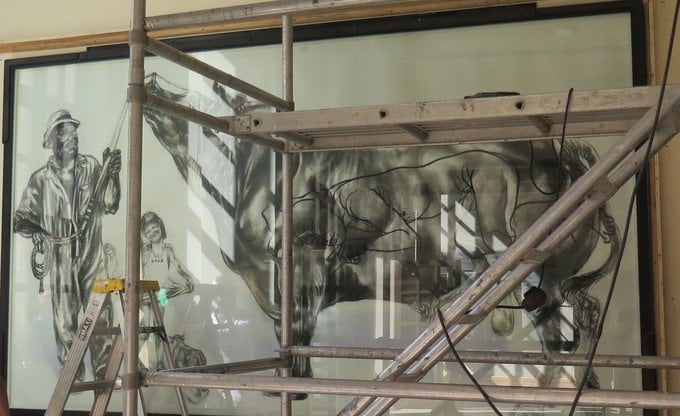
UCT, art, and the negotiation of transformation

It’s sometimes difficult to know when you’re making the right decision, or whether you’re rather not making a decision at all, so much as being pressured into doing what someone else thinks you should.

Or, perhaps, the right decision can be made in the wrong way – too hurriedly, and without enough deliberation. At UCT, we’ve been treading these fine lines for a year now, where even if you think – as I do – that many of our decisions are correct and long-overdue (for example, the renaming of buildings), you might simultaneously fear that the idea of a university as a place of open debate is at risk.

Of course, calls for debate can privilege the established point of view, and often do so. They can serve to slow things down, or to trivialise the concerns of those who demand urgent action.

It’s in cases like this where we need to be careful of embracing an entirely false dichotomy, though, whereby either you’re on the side of virtue and join the revolution, or you’re an obstacle to it, in appealing for more debate and reflection.

You might be on the side of virtue, yet also see value in being as sure as you can be that you’re making the right decision. Which brings me to UCT’s artwork, and the ongoing discussions around what should be done about it.

To quote myself, from this article in GroundUp:

There are a number of artworks in UCT’s collection that could legitimately be regarded as problematic. Even so, any piece of art is potentially offensive to someone, and the very point of art is to provoke reflection and sometimes, discomfort.

It is therefore crucial that any deliberations around the potential removal of art – while being sensitive to those who feel insulted by any given artwork – are also sensitive to the rights and creative intent of the artist concerned.

Where art is removed for the sake of prudence, in fear of it being destroyed or defaced, that removal must be provisional, and on the understanding that a full objective reassessment of the artwork concerned and what it signifies will follow.

Furthermore, artworks need to be understood in the context of their curation. It is both possible, and often desirable, for an artwork that might be offensive in isolation to serve as a valuable spur to debate, when placed in an appropriate context.

That curation is not a task for which everybody is equally qualified. I’m not qualified at all, having zero expertise in art or art history. So, if I were offended by a particular piece of art, I have an epistemic duty to listen to the views of experts, and to give them an opportunity to explain to me that my offense is misplaced.

My opinion, and my subjective feelings of offense, are less relevant data points, and can even be entirely irrelevant to the decision, because only the most benign or even meaningless pieces of art could ever offend nobody at all.

There’s a danger here of overcompensating, and conflating art that is productively offensive with art that is gratuitously so, in the sense that it uncritically reflects racial or other stereotypes. This is why the deliberations need to be conducted carefully, and by experts.

A recent UCT communique includes the following (my emphasis):

It is important to understand that we are not censoring any artworks. Much of the negative public comment fails to recognise that current removals are provisional. It is our belief that the artworks will all ultimately be on display once curatorial policies have been developed. The University remains committed to enabling scholars and the public to engage with the most difficult and challenging works, including those presently under discussion, and many others that may arrive in the future. What is currently at issue is not whether this should be done, but how.

I’m don’t share that belief. As you can read in the statement, a broad consultative process is going to take place, and “cultural, religious or political” sensibilities taken into account.

Any of you who have been part of these sorts of processes – especially in volatile times like those we’re experiencing now – know that the maximally safe or risk-averse strategy is typically followed, which means that subjective offense becomes a trump card, rather than simply a data point in the deliberations.

I hope I’m wrong. But assuming I’m not, some of you might nevertheless think that’s as it should be, and that those subjective feelings should be a trump card. We’ll have to wait and see, though, how this is going to work: is one offended party sufficient reason to consider an artwork problematic, or five? Will the distaste that one of my correspondents has for abstract art count as a “cultural” objection?

If you find these questions silly, I’d like to hear on what principled grounds you think these decisions can be made. There are no objective criteria for offense, and we’re operating in an environment where dialogue is in short-supply, and threats plentiful.

I’m not as animated by these developments as, say, Breyten Breytenbach is (here and here). And I think that Nazi/ISIS comparisons are false and unhelpful, because they trivialise the concerns of protesters and can also be uncharitable towards the institutional response which, while made under pressure, is well-intentioned.

But anyone who thinks, or argues, that these decisions will be made by those qualified to do so, in an environment that allows for them to do so on grounds of the best evidence and careful reasoning, is sorely mistaken.

Zuma – manifestly unfit for purpose

Originally published in The Star, April 4 2016

Moral debates are not settled in courts. The law can be profoundly immoral, if it is written and practised by those who want to defend immorality, or those who are not aware of what their moral responsibilities are. For one, it can defend things that are immoral (for example, by prohibiting gay marriage), and second, it can be silent on moral issues that should be prohibited by the law.

Humanity before religion

Originally published in the Mail&Guardian.

Religion matters as much today as it ever did. It matters to a slowly but steadily increasing proportion of the world’s population, even though it is in decline in Japan, the United States, Vietnam, Germany, France and the United Kingdom. Everywhere else, religious adherence is increasing, with Pew Research data identifying Islam as the fastest-growing religion, expected to catch up with Christianity in 2050.

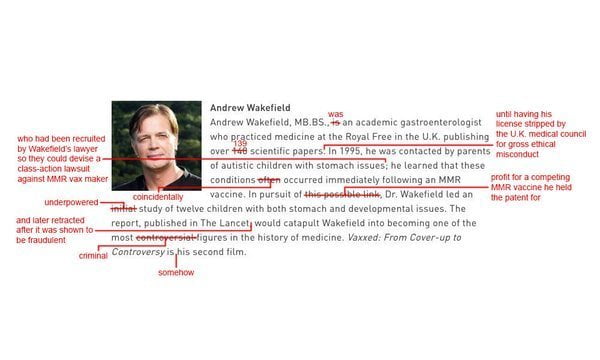
De Niro welcomes Wakefield to Tribeca

Update: De Niro has now pulled the film from Tribeca

In a statement posted to the Tribeca Film Festival’s Facebook page, Robert De Niro has defended the screening of Andrew Wakefield’s anti-vaccine conspiracy theory movie VAXXED, saying:

Concern for effective rhetoric versus tone-policing

This notion will hopefully strike most of you as obvious, but how we express ourselves matters, at least if you care for being heard. The examples you choose to make a point, and the style in which you deliver that point, can mark you out as either interested in discussion/persuasion, or as simply wanting to show your interlocutor that she is wrong.

Critical thinking, science and pseudoscience

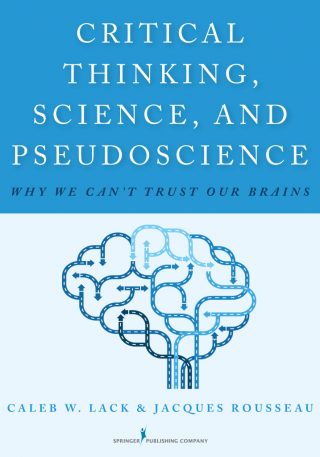
Monday 28 March sees the release of Critical Thinking, Science, & Pseudoscience: Why You Can’t Trust Your Brain, co-written by Caleb Lack and me. Caleb is an Associate Professor of Psychology at the University of Central Oklahoma, who I met at TAM 2013 in Las Vegas.

As Caleb notes in his announcement of the book (where much of the text below is copied and pasted from),

it is based largely around the critical thinking courses that Jacques and I have been teaching at our respective universities. The book is designed to teach the reader how to separate sense from nonsense, how to think critically about claims both large and small, and how to be a better consumer of information in general.

Although it’s being mostly advertised towards the academic market, we have purposefully written it to be highly readable, entertaining, and great for anyone wanting to sharpen (or build from scratch) their critical faculties.

South African readers will be alarmed at the price of the book, which is a factor of exactly the point Caleb makes above – that it’s been pitched at the textbook market by the publisher. We are hoping to arrange a local distributor, which should bring the price down substantially.

And if you’re planning to attend the Franschhoek Literary Festival this year, I’ll be in conversation with John Maytham about the book and its themes on Sunday, May 15 at 10am.

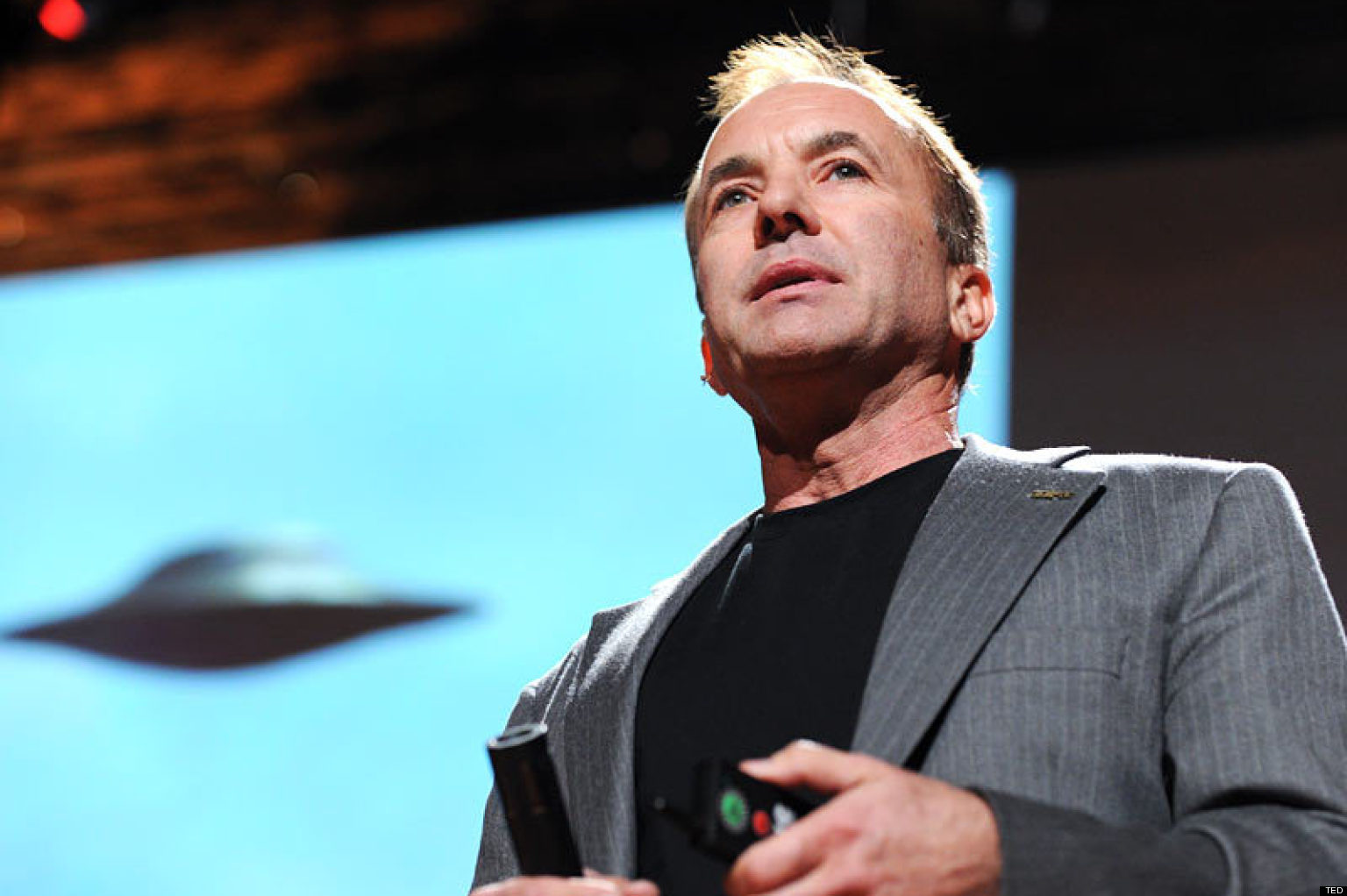
The early reviews we received are gratifyingly positive. Michael Shermer (Publisher of Skeptic magazine, monthly columnist for Scientific American, and Presidential Fellow at Chapman University) said:
Michael Shermer

This is the best collection of ideas on critical thinking and skepticism between two covers ever published.

Lack and Rousseau have put together the ideal textbook for students who need to learn how to think, which is to say every student in America.

I plan to assign the book to my Skepticism 101 course at Chapman University and recommend that every professor teaching critical thinking courses at all colleges and universities do the same. Well written, comprehensive, and engaging. Bravo!

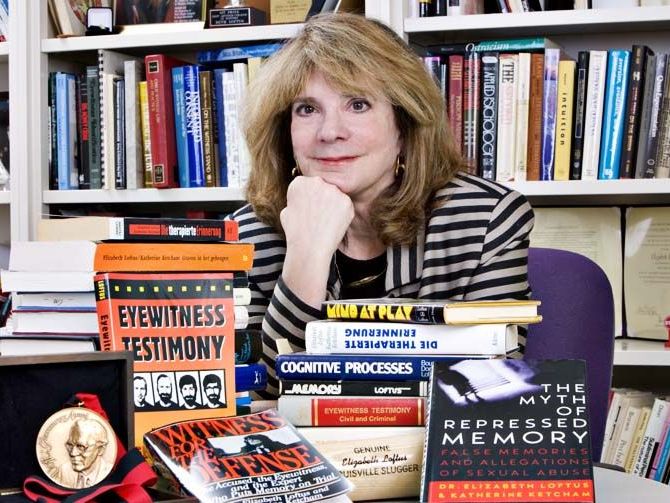
Elizabeth LoftusElizabeth Loftus, past president of the Association for Psychological Science, Distinguished Professor at the University of California – Irvine, and one of the foremost memory researchers in the world, wrote:

What’s wrong with believing in pseudoscientific claims and why do so many people do it? Lack & Rousseau take us on a fascinating excursion into these questions and convincingly show us how junk science harms our wallets and our health.

Importantly, they teach us tips for spotting true claims and false ones, good arguments and bad ones. They raise awareness about our “mental furniture” – a valuable contribution to any reader who cares about truth.

Carol Tavris is a social psychologist, and Fellow of the American Psychological Association, the Association for Psychological Science and the Committee for Skeptical Inquiry. She is the coauthor of the textbook Psychology and the (highly recommended) trade book Mistakes Were Made (But Not By Me). After reading our book she wrote that:

Teachers and students will find this comprehensive, well-written textbook to be a helpful resource that illuminates the principles and applications of critical thinking–a skill that is crucial in our world of bombast, hype, and misinformation.

Russell BlackfordFinally, we have Russell Blackford, noted (and prolific) author (most recently of The Mystery of Moral Authority and Humanity Enhanced) and philosopher.

He’s a Conjoint Lecturer in the School of Humanities and Social Science at the University of Newcastle, a Fellow of the Institute for Ethics and Emerging Technologies, editor-in-chief of The Journal of Evolution and Technology, a regular op.ed. columnist with Free Inquiry, and a Laureate of the International Academy of Humanism.

An entertaining introduction to clear thinking, science, and the lure of pseudoscience. Lack and Rousseau clearly explain the principles of logical reasoning, together with the human tendencies that all-too-often undermine it. They show how easily motivated reasoning can prevail over clarity and logic; better, they offer tools to think more critically, whether in science, policy, or our everyday choices.

For those instructors interested in using this in their class, we have also constructed full lecture slides for the book and an instructor’s guide with sample assignments, recommended videos, and more. Feel free to let our publishers know if you’d like to be considered for an adoption copy.

South African news media: hopefully not dead, just resting

Fridays are the day when – if I happen to walk into a store that sells newspapers – I’ll often cast a wistful gaze at the stack of Mail & Guardian papers delivered that morning, noting that my primary impulse would sooner be to straighten the stack rather than to buy a copy.

This isn’t because if you wait until Monday, the content becomes free to read online. It’s because I’ve lost my confidence in the odds of reading something worthwhile, that was so strong in the late 80’s (for its predecessor, the Weekly Mail), and continued for much of the time since then.

The politics of protest, and the (rightful?) death of nuance

It’s very odd to be re-tweeted by Steve Hofmeyr, because a person like me never imagines that something I say might seem agreeable to a racist Afrikaner nationalist, never mind one who once sued a puppet.

And just yesterday, I saw a tweet from the puppet in question that was so illogical, and morally questionable, that I had to have sympathy for the anti-PC (and often, libertarian-leaning) folk on SA Twitter who deride said puppet for having no political backbone, or for drinking too deeply from the well of some kind of cultural relativism.