A tale of two conspiracies from the Noakes hearings

Unfortunately, I was only able to attend half of one day of the reconvened HPCSA hearings regarding Prof. Tim Noakes and his alleged “professional misconduct”.

I missed what might have been the most interesting day, at least on a personal level, as apparently one of my tweets was read into evidence. This gave Prof. Noakes an opportunity to tell folks that I had a vendetta against him, that I “call myself” someone with philosophical expertise, and so forth.

Science vs soundbites and sensationalism #IFT16

Late last year, I had the pleasure of meeting outgoing IFT President, Colin Dennis, at a talk I gave at the 2015 SAAFoST conference in Durban. For those of you who are interested in food science and nutrition, and who don’t know of SAAFoST, I’d like to point you in the direction of their “Food Facts Advisory Service“, where you can find a number of informative pieces on food facts and fears.

In any event, Prof. Dennis suggested that he would be keen on inviting me to speak at a future IFT event. To my great surprise and pleasure, that invitation ended up being to give one of the keynote talks – alongside such luminaries as Dr Ben Goldacre – at the IFT  congress in Chicago, which has just concluded today.

Scientism and the limitations of logic

Slate recently published an interesting piece on “scientism”, which both perpetuates a caricature of science and rationality, and also points to a genuine problem with some folk who can’t see beyond science and reason as tools for addressing our political and social dilemmas.

“Scientism” is the belief that all we need to solve the world’s problems is, you guessed it, science. People sometimes sub in the phrase rational thinking, but it amounts to the same thing. If only people would drop religion and all their other prejudices, we could use logic to fix everything.

Last week, Neil deGrasse Tyson offered up the perfect example of scientism when he proposed a country of #Rationalia, in which “all policy shall be based on the weight of evidence.”

Tyson is a very smart man, but this is a very stupid tweet, and a very stupid idea. It is even, we might say, unreasonable and without sufficient evidence. Of course imagining a society in which all actors behave logically sounds appealing. But employing logic to consider the concept reveals that there could be no such thing.

There are two very different things being described here. To base all policy on the weight of evidence is a fundamentally different thing to desiring a society in which all actors are Mr. Spocks, all logic and no emotion. In conflating them, Jeffrey Guhin sets up the caricature I mentioned at the top.

Many pro-science and rationality folks, including myself and the vast majority of scientific skeptics I’ve been hanging out with at conferences for the last decade, would agree with Tyson’s tweet while rejecting the implication that it means we need to be all logic, all the time.

The reason for this is simple, and points to Guhin’s misunderstanding of the broader – and social – context to scientific reasoning. Emotions, intuitions, aesthetic preferences and what have you are all things that make us human, and social creatures, yes – but they are also data points in themselves.

In other words, policy that is based on the “weight of evidence” does not need to be blind to these human details, and is in fact compromised if it’s not sensitive to these details. We care, for example, about compliance with the law, so it would be irrational to enact a law that caused such a negative (emotional) reaction that compliance was impossible.

We also care about happiness, meaning that it would be irrational to treat each other solely as logical agents. Doing so would make marriages and friendships unbearable, and parent-child relations dysfunctional. Our relationships admit to – and even cherish – the idiosyncrasies of our various subjective points of view.

Guhin does go on to make various good points about scientific overconfidence, reminding us that “experts often get it wrong”. But this is again to rely on a misunderstanding of science – good science knows that it’s fallible, and this is in fact one of its key virtues when compared with pseudoscience.

The fact that scientific reasoning leads to errors (he mentions scientific racism, phrenology, eugenics and other examples) is only a crippling problem for science if there’s some better alternative for resolving empirical problems. Until we have one, the point is that science is self-correcting, and that we can discover and discard our mistakes.

More critically, the scientific method is of course vulnerable to exploitation by those who want to use it for odious reasons – but isn’t dogma (for example religious fundamentalism) more so? And, to note that people use the language of science to prop up eugenics doesn’t entail that they used good scientific reasoning to do so. Instead, we can now recognise it as an abuse of the scientific method, rather than a proper application of it.

Guhin has harsh words for Tyson, for the “I f***king love science crew”, and for Dawkins, as I also previously have for all three cases. But the problem with these evangelists for science is largely a political one, rather than them being wrong on the principle of the matter. If you communicate with others in ways which make it sound like you think they are stupid (Dawkins), people aren’t going to listen. If you communicate in ways which make it sound like you are stupid, for example in dismissing the value of philosophy (Tyson), you’ll also lose part of your audience. And if you just share (sometimes incorrect) memes on a Facebook group, nobody is going to believe you actually love science at all.

Guhin is right to remind us to not appear as evangelical as those we sometimes find ourselves arguing with. I’ve been watching folks on Twitter making the tone-deaf “the evidence must decide” sort of arguments with regard to various arguments about race and economics in South Africa, and they don’t get that even if that’s true, social progress also requires not being an ass.

But to conflate “rational thinking” with “scientism”, as Guhin does, is a mistake. Rational thinking can incorporate both following the evidence, and doing so in a way that is aware of one’s own biases, and all of our emotions, needs, wants and fears.

Those are all evidence too, yes. But – crucially – one of the ways we can get along better is knowing when to point that out, versus knowing when to take off our “Mr Logic” caps, and simply relate to each other as human beings.

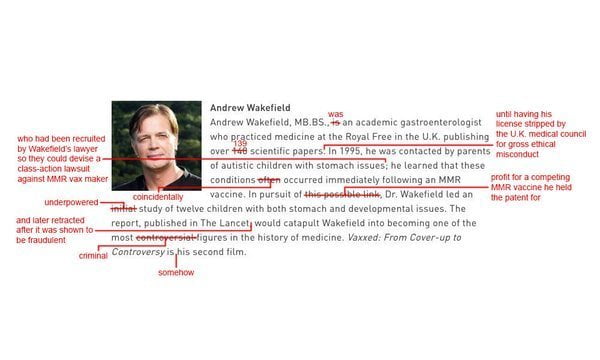
De Niro welcomes Wakefield to Tribeca

Update: De Niro has now pulled the film from Tribeca

In a statement posted to the Tribeca Film Festival’s Facebook page, Robert De Niro has defended the screening of Andrew Wakefield’s anti-vaccine conspiracy theory movie VAXXED, saying:

Critical thinking, science and pseudoscience

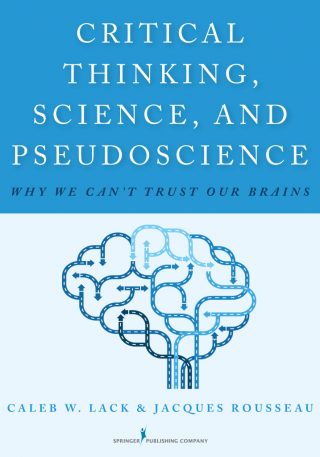
Monday 28 March sees the release of Critical Thinking, Science, & Pseudoscience: Why You Can’t Trust Your Brain, co-written by Caleb Lack and me. Caleb is an Associate Professor of Psychology at the University of Central Oklahoma, who I met at TAM 2013 in Las Vegas.

As Caleb notes in his announcement of the book (where much of the text below is copied and pasted from),

it is based largely around the critical thinking courses that Jacques and I have been teaching at our respective universities. The book is designed to teach the reader how to separate sense from nonsense, how to think critically about claims both large and small, and how to be a better consumer of information in general.

Although it’s being mostly advertised towards the academic market, we have purposefully written it to be highly readable, entertaining, and great for anyone wanting to sharpen (or build from scratch) their critical faculties.

South African readers will be alarmed at the price of the book, which is a factor of exactly the point Caleb makes above – that it’s been pitched at the textbook market by the publisher. We are hoping to arrange a local distributor, which should bring the price down substantially.

And if you’re planning to attend the Franschhoek Literary Festival this year, I’ll be in conversation with John Maytham about the book and its themes on Sunday, May 15 at 10am.

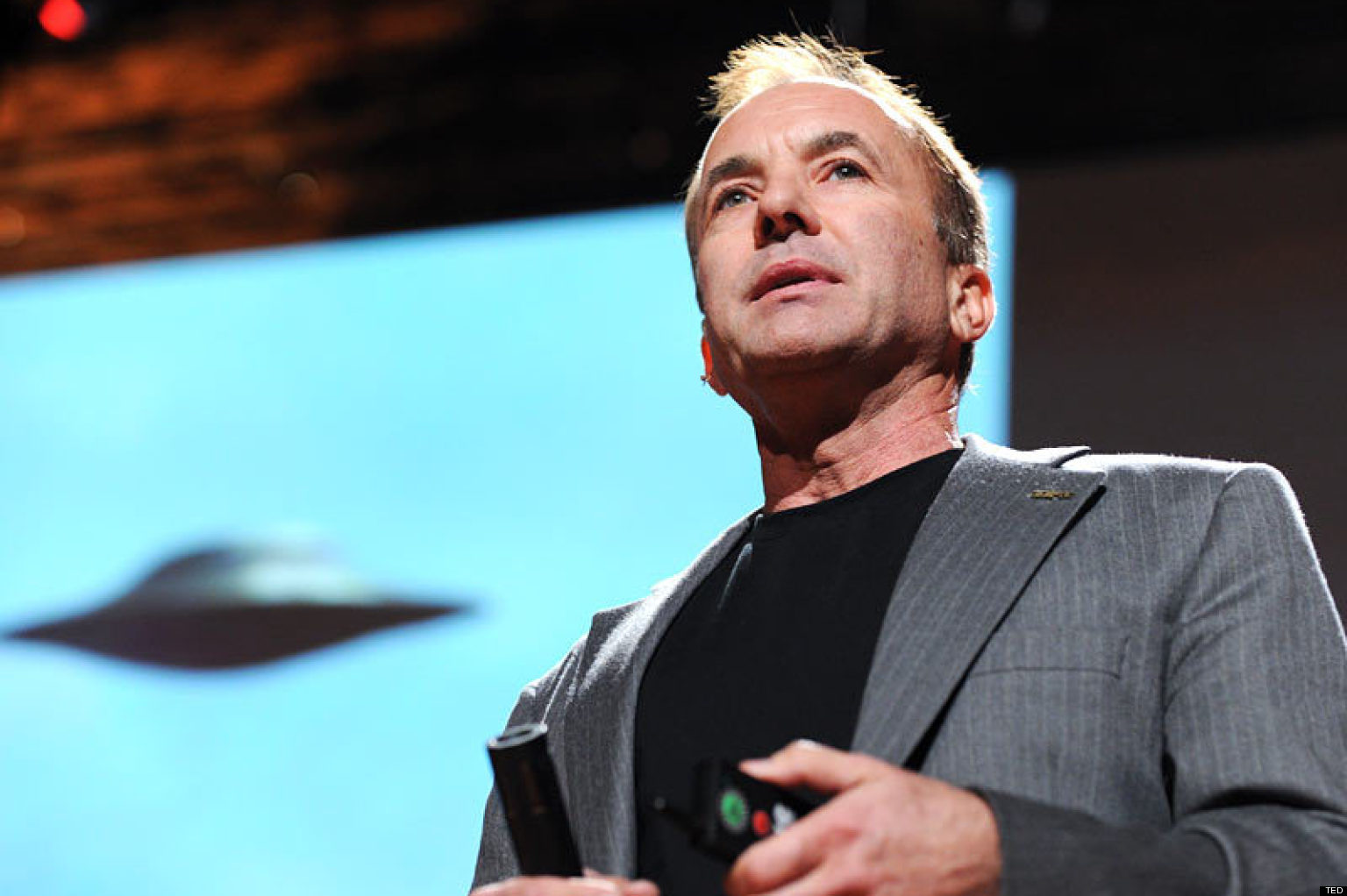
The early reviews we received are gratifyingly positive. Michael Shermer (Publisher of Skeptic magazine, monthly columnist for Scientific American, and Presidential Fellow at Chapman University) said:
Michael Shermer

This is the best collection of ideas on critical thinking and skepticism between two covers ever published.

Lack and Rousseau have put together the ideal textbook for students who need to learn how to think, which is to say every student in America.

I plan to assign the book to my Skepticism 101 course at Chapman University and recommend that every professor teaching critical thinking courses at all colleges and universities do the same. Well written, comprehensive, and engaging. Bravo!

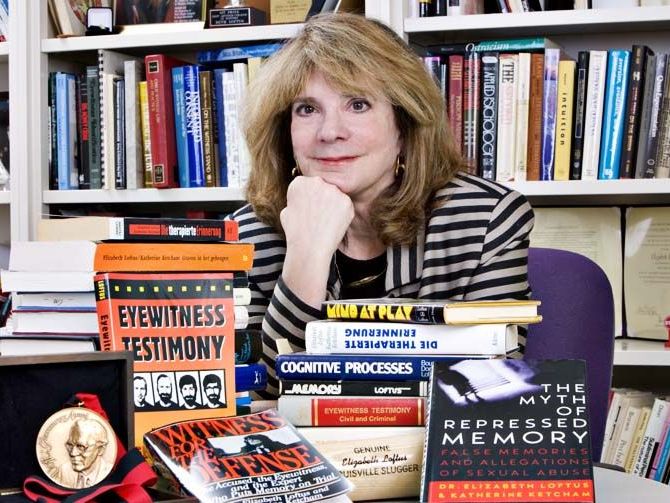
Elizabeth LoftusElizabeth Loftus, past president of the Association for Psychological Science, Distinguished Professor at the University of California – Irvine, and one of the foremost memory researchers in the world, wrote:

What’s wrong with believing in pseudoscientific claims and why do so many people do it? Lack & Rousseau take us on a fascinating excursion into these questions and convincingly show us how junk science harms our wallets and our health.

Importantly, they teach us tips for spotting true claims and false ones, good arguments and bad ones. They raise awareness about our “mental furniture” – a valuable contribution to any reader who cares about truth.

Carol Tavris is a social psychologist, and Fellow of the American Psychological Association, the Association for Psychological Science and the Committee for Skeptical Inquiry. She is the coauthor of the textbook Psychology and the (highly recommended) trade book Mistakes Were Made (But Not By Me). After reading our book she wrote that:

Teachers and students will find this comprehensive, well-written textbook to be a helpful resource that illuminates the principles and applications of critical thinking–a skill that is crucial in our world of bombast, hype, and misinformation.

Russell BlackfordFinally, we have Russell Blackford, noted (and prolific) author (most recently of The Mystery of Moral Authority and Humanity Enhanced) and philosopher.

He’s a Conjoint Lecturer in the School of Humanities and Social Science at the University of Newcastle, a Fellow of the Institute for Ethics and Emerging Technologies, editor-in-chief of The Journal of Evolution and Technology, a regular op.ed. columnist with Free Inquiry, and a Laureate of the International Academy of Humanism.

An entertaining introduction to clear thinking, science, and the lure of pseudoscience. Lack and Rousseau clearly explain the principles of logical reasoning, together with the human tendencies that all-too-often undermine it. They show how easily motivated reasoning can prevail over clarity and logic; better, they offer tools to think more critically, whether in science, policy, or our everyday choices.

For those instructors interested in using this in their class, we have also constructed full lecture slides for the book and an instructor’s guide with sample assignments, recommended videos, and more. Feel free to let our publishers know if you’d like to be considered for an adoption copy.

The #NoakesHearing, and social media ethics for (medical) professionals

Last Tuesday, I gave a talk at the UCT medical school on the ethics of social media for medical professionals, which focused in part on the Health Professions Council hearings with regard to the ‘unprofessional conduct’ of Prof. Tim Noakes.

While I’ve presented a half-dozen or so talks on the philosophy and ethics of science for dietitians in the last couple of years – usually for continuing professional development (CPD) points – this one attracted more than the usual amount of attention, thanks to the imminent resumption of the Noakes hearings.

HPCSA Hearings regarding Prof. Tim Noakes resume

As those of you who are following the discussions and arguments regarding “Banting” or the LCHF diet would know, the hearings with regard to Professor Tim Noakes’ giving “unconventional advice” on Twitter resumed (after convening for one day, in June) on Monday.

I attended much of the first day, and the morning of the second, and hope to return for much of the rest. At the bottom of this post, you’ll find a couple of embedded interviews I gave on Monday.

The full set of my posts on Prof. Noakes are here, and Banters coming here to proselytize should at least read my Quixotic note regarding Noakes, lest they end up missing the point of my interventions. For serious reporting from the hearings, read Rebecca Davis at the Daily Maverick, rather than cheerleader sites like BizNews.

So, in summary: Noakes is being characteristically savvy in leveraging these hearings into an opportunity to present the case for the LCHF diet (or “lifestyle”, if you’re a devotee). His legal team are ruthless and very well-prepared, in complete contrast to the floundering of the HPCSA team, who constantly need to be corrected on procedure and the like.

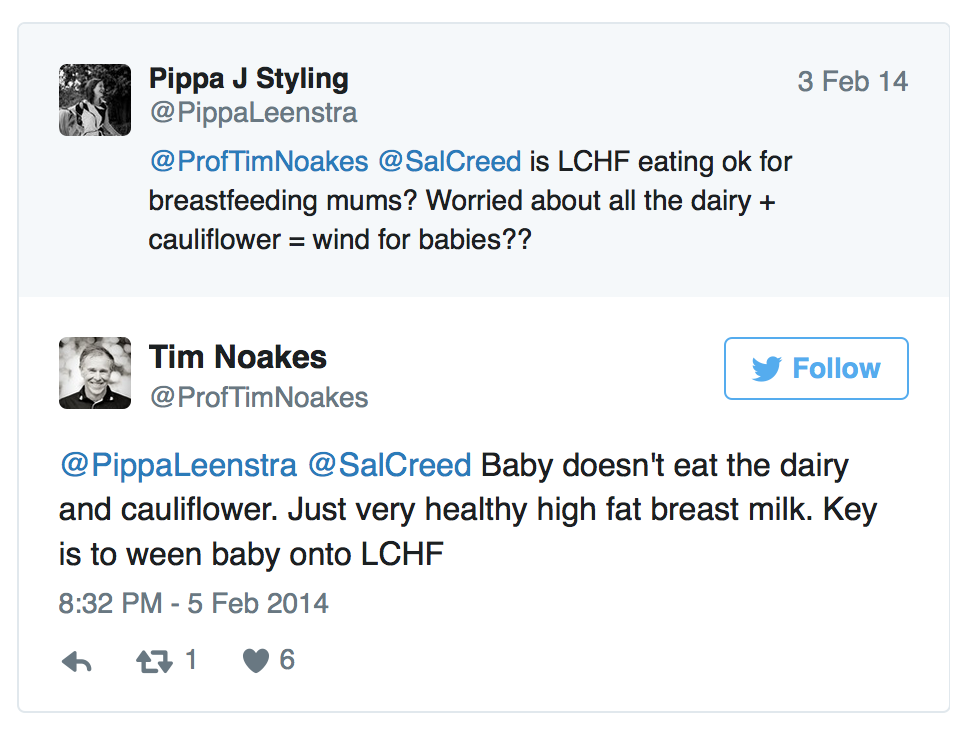
But that’s not what the hearings are meant to be about – they are meant to be about this tweet, and whether it constitutes unconventional or inappropriate advice:

As I said in my previous post on the hearings, while I think it’s unconventional, I don’t think it’s significantly problematic, in that it’s no different to the sort of advice we hear regularly on radio shows, or see suggested in other media.

I don’t think it’s reasonably interpreted as a “prescription” to a patient, and I think that it’s ambiguous enough to allow for a moderate interpretation, for example breast-feeding for 6 months before gradually converting your child to Banting (and perhaps introducing them to Jesus at the same time, while you’re at it).

So, the hearings are to my mind a huge waste of time and money, and will serve only as a PR opportunity for Noakes. The actual charge can be dispensed with in half an hour, and should be – the hearings are backfiring on the complainant in that Noakes is going to emerge stronger, in the sense that a win will validate his and his supporters feelings of martyrdom and being the victims of conspiracy.

All the worst aspects of the psychology of devout Banters have been on display – from the bullying and often condescending (arguably sexist) treatment of the initial complainant by one of Noakes’ legal team, to Marika Sboros following said complainant around to get photos of her in distress, others referring to her “falling apart”, and the ridiculously partisan nature of what’s being reported by those tweeting in support of Noakes.

As I was saying in a few of my occasional tweets from the hearings, if you want to play a game of fallacy-bingo, these hearings – and especially the input from van der Nest (acting for Noakes) were a goldmine. The conversations around medical ethics were absurdly superficial also – and if you add to that the manifestations of character I mention above, it’s really a frustrating thing to witness.

Arguments can be had here, and as objective readers (including some Banters) know, it’s those arguments I’ve been trying to air over the years. This isn’t a “trial” or a persecution, even though it might be a waste of time or even misguided, as I say in the interview with John Maytham below.

Just as Noakes is, in my view, utterly sincere about what he says (whether or not he’s right or wrong), the complainant in this case is sincere also, as the witnesses are in general, I imagine. For all talk of “science” the Banting crowd engage in, it’s a pity that their actions seldom manifest the careful, objective deliberations that science demands, preferring instead to perceive and/or provoke rather demeaning personal squabbles and character assassinations.

[soundcloud url=”https://api.soundcloud.com/tracks/234340800″ params=”auto_play=false&hide_related=false&show_comments=true&show_user=true&show_reposts=false&visual=true” width=”100%” height=”450″ iframe=”true” /]

A few quick bites (on Noakes, diet and celebrity science)

It’s been a few months since I last posted anything about diet and Prof. Tim Noakes, but being reminded of the hearing that’s set to resume next month led me to check in on his Twitter echo chamber, which in turn leads to my presenting these few morsels to you.

First up, Austin Bradford Hill, who (according to Noakes, at least) taught that association only provides evidence for causation when a study’s Hazard Ratio (HR) is above 2.0. With the assistance of this factoid, Noakes has been dismissing inconvenient results with quips about “Bradford Hill turning in his grave” and so forth.

The Hill paper that Noakes cites (the text of a speech in this case) is indeed very good. It cautions us that systematic errors are prevalent enough in our research that we should be wary of placing too much faith in statistical significance as a guarantee of anything, and that health-related interventions need to be thought about carefully, in light of potential costs and benefits (rather than only with reference to what the evidence tells us).

And then, there’s this:

None of my nine viewpoints can bring indisputable evidence for or against the cause-and-effect hypothesis and none can be required as a sine qua non.

In other words, Hill is explicit that he’s not offering a hard-and-fast rule, but rather some useful rules of thumb. Here’s a lovely application of those rules of thumb to chiropractic, for those who don’t want to read the Hill speech itself.

The point, of course, is that Hill is here being misrepresented as a dogmatist, in order to give Noakes another of his stock-phrase putdowns (“cognitive dissonance”, “The Anointed”, “follow the money”, “go ahead, make my day” and so forth).

The misrepresentation is significant also because in this particular case, Hill might not be on Noakes’s side of the argument at all. As argued in this Phillips and Goodman paper, one of Hill’s central points was that “we need to consider more than the degree of certainty that there is some health hazard, and act based on the expected gains and losses, with or without statistical certainty.”

So, if it’s still the consensus view that limiting saturated fat (or rather, replacing it with unsaturated fat or whole grains rather than refined grains) is a good idea to minimise cardiovascular disease risk, it seems to me that Hill would accept the “violation” of his (non) rule for the sake of prudence.

But that exact study linked above (the actual paper is open-access, so you can read it if you like) is one of those that we should “pay no attention to”, “as Bradford Hill taught”.

Don’t get me wrong – of course it’s true that it’s difficult to establish causation from association. But it’s also true that absence of evidence is not evidence of absence – and that we need to apply our standards consistently, and honestly.

Hill didn’t give us a rule (that’s the honesty bit), and even if he had done so, I’m pretty sure that a trawl through Noakes’s timeline would give us many examples of him uncritically linking to pro-Banting literature that violates the rule (that’s the consistency bit).

Speaking of consistency, and the Banting-brigade’s fondness for accusing critics of being in the pockets of Big Potato (or compromised by some nefarious interest), I wonder how they feel about Nina Teicholz, lobbyist extraordinaire, being bankrolled by a billionaire?

I don’t think it necessarily a problem at all – as I’ve said in previous posts, we need to separate the claims from the funding – but if conflict of interest is a problem (as Banters claim), you don’t get to ignore it just because you like what the person is saying.

To repeat a point I’ve now made many times over the years, the issue for me is not the science – that’s evolving, as it tends to do, and there are still many unanswered questions related to diet and its effect on health, weight and so forth. The issue I am concerned with is misrepresentation, cherry-picking, logic and the substitution of soundbites and celebrity for scientific rigour (on that, here’s a good piece by Sarah Wild).

And then, in conclusion: here’s a new systematic review of recent RCTs on low-carbohydrate diets and Type 2 diabetes, which concludes that

Recent studies suggest that low carbohydrate diets appear to be safe and effective over the short term, but show no statistical differences from control diets with higher carbohydrate content and cannot be recommended as the default treatment for people with type 2 diabetes.

The authors also note that “passion in science is an infallible marker of lack of evidence” – and while I think that overstates the matter somewhat, it’s again a useful rule of thumb.

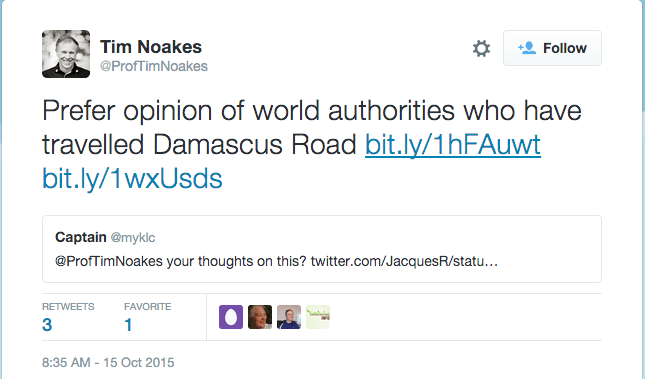
Someone linked my tweet of that study to Noakes earlier today. His response perfectly captures the problem, and that response is a) to ignore it in favour of cherry-picked alternatives; and b) to suggest malice or bias on the part of those who disagree with him.

Screen Shot 2015-10-15 at 10.00.03

Screen Shot 2015-10-15 at 10.00.21

To answer the “why” in that last tweet: because I’m linking to the review of RCTs mainly to demonstrate that the evidence is contested, and that there’s no room for dogmatism in this debate (or in any scientific debate that isn’t settled).

If there was as prominent and influential a scientist as Noakes arguing as dogmatically on another topic that I’m interested in, articles on that topic would attract a similar amount of attention, at least from me.

The “why” is of course not sincere at all, but instead simply an opportunity for disciples to dismiss contrary evidence as conspiracy. If you’re looking for a textbook example of motivated reasoning, the Noakes timeline is pure gold.

You can science too – it’s easy!

mouse-801843_1280If you’ve always wanted a career in science, but never got around to studying biology, physics or whatever it is that you’re interested in, don’t fear – being (treated as) an authority is easier than you might think.

First, find a conclusion you like. Let’s say, for example, the claim that sugar is addictive. Then, find a study that supports that conclusion, and publicise it:

In this study, conducted on rats, we are told that sugar is addictive – a line that Prof. Tim Noakes repeats with some regularity. It’s of course more complicated than that, but let’s not be negative – this is a post about how easy science is, after all.

Next, what you need is a way to discredit studies that say things that don’t support your conclusions. Don’t worry about being consistent at this point – it’s fine if you apply one standard to research that supports your conclusion, and another standard to research that doesn’t.

A mouse model shows that eating high-fat diets during pregnancy might ‘program’ your baby to be fat? Rubbish – mice are not women!

There’s a mouse study that shows high-carb diets lead to as long and healthy a life as any other diet? Rubbish – mice are not men!

(Some of you might, upon reading confounding studies, be tempted to think that science is complicated, and rarely – if ever – suitable for justifying dogmatism. Eliminate that negativity – there’s no place for it in sciencing!)

Now, what do you do when someone praises you as a lifesaver, but in doing so, also endorses avoiding conventional doctors, seeking out naturopaths, regarding “almost all” drugs as “toxic” and vaccines as “highly dangerous”?

natureboyrr_2015-Jul-15

Well, you retweet them, of course (while perhaps reciting your mantra that science is not religion). And if someone calls you out for endorsing vaccine quackery, do not fear – dismiss their question with an insult and an appeal to authority:

Like Ms. Child, I’m also not an expert on immunology. And no, I haven’t read the book, which apparently “needs to be read by everyone with an opinion on vaccination debate”.

But why would one read this book when a cursory Google search results in extensive, well-referenced accounts of (at least) 11 flat-out misrepresentations of data in that book?

Or, when you discover that the only places the author is taken seriously is sites like quack-central Mercola? If you’re still not convinced that you’d be wasting your time reading it, what if you learned that the author is sympathetic to homeopathy?

You’d think of her as a quack herself, I’d wager, and you’d certainly not endorse her as an authority. Unless, of course, you have a conspiracy story to tell about big pharma and the medical establishment colluding to sell you drugs, while hiding “the truth” from you.

But let’s imagine you ignore all that instead. Now, you know that the public are rather upset to hear anti-vaccine messages – after all, didn’t around 170 people get measles just this year (so far) in the USA, mostly thanks to being unvaccinated?

Also, you’ve been in trouble for appearing to endorse anti-vaxx messages before, when tweeting a link to a video featuring Andrew Wakefield on how the CDC arranged a cover-up of evidence relating to vaccines and autism.

(Maybe, you also think of that pesky HPCSA hearing coming up later this year, and how it might complicate things for you to appear to be supporting a viewpoint that is widely believed to indirectly kill people, especially babies.)

So, let’s just deny that the book is anti-vaccination, instead calling it something more grand, like a “unique historical analysis”.

Except, how do you square that with the publisher’s own description of the book, which tells us that the book argues that vaccines are not “responsible for the increase in lifespan and the decline in mortality from infectious diseases”, or accounts of her work like this one, from Dr. David Gorski?

I suppose you just hope that people take your word for it. While, perhaps, reciting your mantra that science is not religion, and calling anyone who disagrees with you a “troll”.

If you are happier and healthier on LCHF, great, I’m happy for you. But you can, and should, expect more from those who you take as your authorities on diet and more importantly, the scientific method.

As I’ve said before, I think the jury is out on the diet questions. It’s not out on vaccinations, and hasn’t been for quite some time now.

It’s shamefully irresponsible to suggest otherwise, and disingenuous to pretend that this isn’t what you’re doing in recommending books like those of Humphries.

Postscript

Noakes is asking “have you read the book?” to anyone challenging him on this on Twitter. You don’t need to read the book – there are many interviews with this author available online, including an outline of the arguments in the book on sites like Mercola’s.

Asking if you’ve read the book is mostly serving Noakes as a way to refuse to contemplate the dereliction of common-sense that is anti-vaccination endorsement on this scale. But even if he refuses to contemplate that, you nevertheless can.

Here’s something else that might interest you, on the author in question, linking to various other strange views she holds.

“Witch hunts”, Tim Hunt, and sexism in science

tim-huntAs with “shirtgate”, where Rosetta scientist Matt Taylor was in the news for wearing a shirt depicting naked scantily-clad women, the Tim Hunt case has prominently featured Richard Dawkins, telling us how to understand feminism and the issue of sexism in science.

In his letter to The Times (paywalled, so – sorry – I’m linking to the Daily Mail‘s quotes of the letter), Dawkins says:

Along with many others, I didn’t like Sir Tim Hunt’s joke, but “disproportionate” would be a huge underestimate of the baying witch-hunt that it unleashed among our academic thought police: nothing less than a feeding frenzy of mob-rule self-righteousness.

‘A writer in the Guardian even described it as “a moment to savour”. To “savour” a moment of human misery – to “savour” the hounding of one of our most distinguished scientists – goes beyond schadenfreude and spills over into cruelty.’

One might hope that Dawkins is demonstrating “disproportionateness” via example, but he’s no doubt serious in this one-sided portrayal of events. Not only that, he’s perpetuating a misunderstanding he found in the libertarian Reason.com in his “moment to savour” quote – the Guardian quote, in context, reads:

Yet this is a moment to savour. Hunt has at last made explicit the prejudice that undermines the prospects of everyone born with childbearing capabilities.

In other words, it’s not the Hunt resignation that the author is savouring, but rather the opportunity it provides for discussing the ingrained sexism that is still experienced by women in professional settings such as laboratories (not to mention elsewhere).

When the speaker of the offensive remarks has felt the need to apologise, fully acknowledging that the remarks were inappropriate, seeing a senior male scientist like Dawkins describing reaction to those as a “feeding frenzy of mob-rule self-righteousness” is unlikely to reassure anyone who has concerns regarding perceived or actual sexist treatment of women in the workplace.

Yes, it’s true that some on social media had strong words to say about and to Tim Hunt. I don’t think it clear that this forced his dismissal, though. As usual, one can find evidence to support the case you want to make – Hunt and his wife claim that he was “hung out to dry” by University College London, and UCL say that he resigned (from an honorary, not paid, position) before they had a chance to speak with him about the incident.

He says he was joking when he made the remarks. And it’s true that many of the quotes of his remarks have left out the “now seriously” he utters in the second paragraph below:

It’s strange that such a chauvinist monster like me has been asked to speak to women scientists. Let me tell you about my trouble with girls. Three things happen when they are in the lab: you fall in love with them, they fall in love with you, and when you criticise them they cry. Perhaps we should make separate labs for boys and girls?

Now seriously, I’m impressed by the economic development of Korea. And women scientists played, without doubt an important role in it. Science needs women and you should do science despite all the obstacles, and despite monsters like me.

But the issue is not whether he was joking or not. No reasonable person could doubt that he was intending to make a joke. The issue is what jokes you regard as appropriate or not, in which contexts. In a professional context such as this, addressing a room full of female scientists who have most likely encountered plenty of glass ceilings, this was a stupid and insensitive joke to make.

Furthermore, what Dawkins and others are perhaps not reading is the non-baying-mob part of the Internet, for example these tweets from someone who interviewed Hunt just after he made the remarks in question. Here’s one of the tweets:

Blum goes on to record that Hunt said “he was trying to be honest about the problems” – meaning he perhaps does have the sexist attitudes that the “joke” was purportedly ironising. If so, why should UCL want him in an honorary position?

I don’t know all the facts – very few of us do. And yes, I agree that social media can bring an unreasonable mob to your door. Another speaker at the same event (who confirms Blum’s account) Blum perhaps puts it best, though, in saying:

I do have sympathy for anyone caught in the leading edge of a media storm. But if we are ever to effect change, sometimes we need the winds to howl, to blow us out of our comfort zones. Because the real point here isn’t about individuals, isn’t about Tim Hunt or me.

The real point is our failure, so far, to make science a truly inclusive profession. The real point is that that telling a roomful of female scientists that they aren’t really welcome in a male-run laboratory is the sound of a slamming door. The real point is that to pry that door open means change. And change is hard, uncomfortable, and necessary.