Premier Zille is nudging people to Get Tested

As submitted to the Daily Maverick

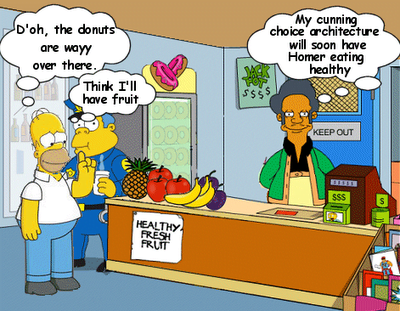
As T.O. Molefe pointed out in a column last week, we can legitimately question whether a campaign like Get Tested will have any long-term effect on the willingness of South Africans to get tested for HIV. Launched by Premier Helen Zille to coincide with 16 Days of Activism for No Violence Against Women and Children, Get Tested offers a financial incentive for knowing your HIV status. Anyone who volunteers for HIV testing between November 28 and December 9 stands a chance of winning a first prize of R50 000 or one of five R10 000 runner-up prizes.

You might recall that Zille attracted a significant amount of criticism for her stated intentions of criminalising HIV transmission. As was the case then, an apparent problem with Get Tested is that according to Molefe, it tries “to achieve individual thought and responsibility by taking away thought and usurping responsibility”. Furthermore, Molefe draws on the work of Daniel Pink in arguing that the effects of the incentive will only be short-term, falling away once the prizes are no longer available.

Both of these criticisms are to my mind at best not compelling, and at worst unfounded. While it’s true that behavioural economics is a contested science, the contestation more typically relates to whether findings in experimental conditions cross over into informing policy in the real world, and to whether the rise of “choice architects” – in other words, those who design the “nudges” – present an illiberal incursion into our freedom to choose.

Pink’s claim that carrots and sticks are less effective, and potentially harmful, in addressing complex 21st century problems raises questions relating to the design of these nudges. These questions don’t however rule out the potential usefulness of nudges. If the desired behavioural change depends on tweaking complex motivational forces, we might struggle to achieve it – but there seems little difference in kind from more simple behaviours. The question is one of degree only.

Of course, there might be problems too subtle to address via these sorts of nudges, but given that we’re talking about a science that arguably only came into existence in 1979, with Kahneman and Tversky’s “Prospect theory: An Analysis of Decision Under Risk”, it seems rather hasty to claim that the experimental work conducted by George Ainslie, Gary Becker and a host of others has been premised on problems already superseded by newer and more complex ones.

Despite this question, it remains true that our models of intertemporal choice behaviour and hyperbolic discounting (in this context, the choice habits that could result in people being tested now for the chance of winning money, instead of for their own long-term benefit) are imperfect. They could perhaps even be critically flawed, and as I mentioned earlier, applicable more to experimental conditions than to real-world policy.

But the successes of these sorts of interventions – at least on pragmatic criteria – seem to be far outweighing their failures. Long-term trials such as the 3-year J-PAL immunisation intervention in rural India have been tremendously successful. Offering parents 1kg of lentils and a set of metal meal plates upon completion of a course of immunisation for their child resulted in a more-than-doubled immunisation rate at half the cost, thanks to economies of scale resulting from increased uptake.

There are similar tales of success with HIV testing in South Africa. The 2008 intervention by the Men By the Side of the Road charity, which offered unemployed men R75 to test for HIV had a 100% uptake in the group it targeted, along with a waiting list in the thousands. The Discovery Health/Sunday Times Right to Know campaign (July 2008 to June 2009) attracted 55 000 volunteers for testing, thanks to the promise of one person per month becoming R100 000 richer.

But the question is of course sustainability, and whether these incentives have a long-term impact on behaviour. And here is where I’d urge Zille’s critics to a little more temperance, in that if relatively low incentives of one R50 000 prize and five R10 000 prizes end up resulting in significantly increased rates of testing, the R100 000 total spend could end up being a very worthwhile (and sustainable) investment, given that the Province currently spends a reported R661 million on its HIV/AIDS programmes per year.

What of the criticism that choice-architecture of this sort is somehow grossly illiberal, “taking away thought and usurping responsibility”? First, it’s perhaps worth noting that the liberal goal of securing freedoms is surely maximised by both good health, and by decreasing expenditure on preventable diseases so that the funds can be used elsewhere. The question is how we secure those goods, and whether we impinge on liberties excessively in doing so (as we would do by criminalising HIV).

While it’s true, as Molefe says, that HIV testing should be its own incentive, I’d suggest that those of us who know this already get tested. Offering people the chance of a cash prize for HIV testing can only increase the likelihood that any first-time testers can be exposed to that message, resulting in a probable net gain in terms of awareness. It’s not the case that the Get Tested campaign is replacing ordinary awareness campaigns – it’s a supplement to them, and one that seems worth trialling given its low cost.

Furthermore, it’s a supplemental sort of intervention that is widely accepted, rarely attracting the sort of criticisms Zille is confronting here. What, for example, do critics of choice architecture think of Discovery Health’s Vitality programme, which by Molefe’s reasoning “sends the unintentional message that [good health], something which is an incentive in itself, is so abnormal and exceptional a behaviour that those who get tested are entitled to a reward”?

While nudges like the Get Tested campaign are sometimes accused of violating human autonomy, it’s difficult to be sympathetic to these charges. South Africans retain their choice to be tested or not – and if some who would otherwise not be tested now come forward, they do so because they autonomously desire money. Their exercising that autonomy is potentially to all of our benefits, given the level of public expenditure on AIDS.

In short, the harms of Get Tested are unclear while the possible benefits are not. Given that it will cost us little in terms of money – and nothing, as far as I can tell, in terms of liberty – we should give it a chance. If it ends up working, some of those entitlement horses might eventually end up being able to find their own way to the watering-hole.
More on Foschini’s sexist T-shirts

As submitted to The Daily Maverick

Drawing a line between hypersensitivity and justified affront is sometimes rather difficult. Political correctness often helps to facilitate the former, because we become so used to not being offended that it seems increasingly outrageous when others dare to offend our sensibilities. And while outrage is easy to manufacture, and difficult to ignore, the fact that someone is offended doesn’t mean that they are justified.

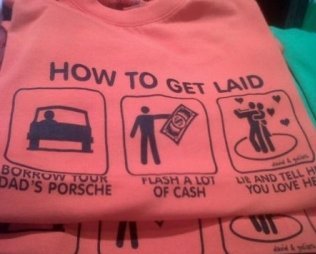
Eleven women, including the Daily Maverick’s Rebecca Davis, were recently offended by a selection of T-shirts they considered sexist being offered for sale by stores by stores in the Foschini stable. You can read the justification for this in Davis’s column, though I’d recommend only reading the ensuing comments if you’re feeling strong – or if you’re looking for further evidence in support of your application for asylum with some other species. Because what starts as a civilised and reasonable expression of disappointment by Davis and others that these T-shirts were put up for sale rapidly descends into quite unpleasant abuse of character and motive, especially targeted towards those commenters who dared to question whether the objections to the T-shirts were an overreaction.

The abuse came from all quarters, though – including from those whose apparent motivation was a call for greater respect for their viewpoint that the T-shirts were legitimately offensive. And here one can arguably see an interesting asymmetry, in that while the premise of the debate is that certain views aren’t being afforded enough respect (women’s rights and interests), the debate then proceeds as if alternative views aren’t worthy of any respect at all, and that people who express those alternative views aren’t entitled to do so.

It’s easy to forget that if we are campaigning on behalf of some interest, we become ambassadors or representatives of that interest. So, when someone dares to challenge your cause, we sometimes need to take care to not respond in such a way as to undermine the exact cause we’re fighting. If the issue is that certain interests or arguments are being sidelined, that issue can only win a hollow victory by sidelining dissent.

Now, of course some issues might take priority over others. Not only legal priority, as in the balancing of rights, but also moral priority in that it might sometimes be obvious that there is a genuine problem worthy of attention or redress. And sexism is such a problem in that we are perhaps less sensitive to it than to other forms of unfair discrimination. This is perhaps evidenced by our language, in that gendered epithets are given less attention than racist ones.

So on the surface of it, sexist T-shirts, or sexist jokes, are obviously a problem when they consistently target one sex rather than another. If sexism was an equal-opportunity offence we could accuse the offenders of crassness, but not of sexism. But hypersensitivity is also a problem, and we should take care to avoid undermining our causes through taking a fundamentalist approach to them, or through treating dissent as axiomatically reprehensible.

To try and avoid misinterpretation here, I did think that some (not all) of the T-shirts were sexist. Consumers are free to point that out, and you’d think that retailers are free to respond by withdrawing them from sale. The qualifier of “you’d think” hints at what some comments to the Davis column were perhaps trying to point out, in that it’s unclear that Foschini had any actual choice in the matter.

Because just as it’s difficult to imagine something like a sunset clause on affirmative action, it’s difficult to conceive of a point at which accusations of sexism can’t be levelled without being privileged. They are uttered from a position of not being privileged, but gain privilege in that they are impossible (or at least very difficult) to refute. Playing the “race card” already wins most of the battle, and making accusations of sexism can do the same – the sense of being offended can be justified merely by feeling that you are offended.

In these debates, we should be wary of words and attitudes that can act as silencing devices, and that can forestall or inhibit debate. Because viewpoints and attitudes can become immune to, and protected from, challenge. Immune because of their orthodoxy, and protected because of our fear of being labelled as racist, sexist or in some other way opposed to the orthodox view.

In the case of these T-shirts, there is a marked difference between the measured tone and argument of the original letter protesting these T-shirts and some of what came after, including on the comment thread to Davis’s column. Whether it’s true or not, it’s still legitimate to raise the question of whether the opposition to the T-shirts was a sense of humour failure (I don’t think it was). It’s also legitimate to ask whether calls for a boycott of Foschini are taking the matter too far (which I think it did).

To rule these questions as out of order, or to not engage with the questions without attacking the characters of those who raise them, forestalls any possible debate, and entrenches existing prejudices on both sides. We want Foschini to be able to withdraw the T-shirts, or not do so, through being able to make a decision – not through being subjected to what can easily become a form of moral blackmail.

The boundaries of what is acceptable and unacceptable offence (ie. merely risqué rather than legitimately problematic) are not only subjective, but also present a slippery slope problem. If T-shirts like the ones in question are withdrawn from sale without the possibility of debate – or with the polarisation of debate evidenced in the comments to the Davis column – a new level of what is acceptable and not can be set. And then, potentially, one less thing can be debated and one fewer thing can be a legitimate source of humour – because something is always potentially offensive to somebody.

One possible outcome of these sorts of (lack of) debate is simply a world in which those who shout the loudest get heard, or are taken more seriously than others. So even as we are fully entitled to object to things we find offensive and attempt to get others to see our point of view, we shouldn’t make the mistake of thinking that our own views are beyond challenge, or that we’re automatically justified in attributing some degeneracy to those who object to those views.

In this case, some of the offence was certainly justified, and I think the letter that Davis and the others wrote was not hyperbolic in the least. But some of the ensuing commentary raised the possibility of yet another issue where being offended is its own validation, and where it is unquestionable that others should bow to the demands of your offence.

We might be entitled to be offended at whatever we like, whether it’s justified or not. But with the exception of hate-speech (an exception which can itself be challenged), others are entitled to be offensive. While we can try and persuade them to stop, we should be careful to not do in a way that stops us talking – and listening – to each other.

Sensationalism, morality and the media

As submitted to The Daily Maverick

There is a difference between exposing hypocrisy for the sake of satisfying the public’s desire for scandal (thereby perhaps increasing newspaper sales), and doing so in a way that makes the hypocrisy part of a larger story. Much over the weekend coverage of Malema and Mbalula’s various indiscretions seemed to prefer the former, leaving at least this reader with the question: Why should I care?

It’s not obvious that we should expect moral virtue from political leaders – and even if we were to do so, we’d first need to agree on what those virtues are or should be. Who Mbalula has sex with is not my business, nor is it something that should be. Unless, of course, the Minister’s choice of sexual partner entails some direct impact on his credibility or on consistency between his words and deeds.

If we believe Mbalula himself, he was separated from his wife at the time of his liaison with Joyce Molamu, so it’s not even clear that he has contravened the standards he appeals for others to follow. Members of the public might nevertheless consider him a hypocrite, and this will no doubt complicate his attempts to position himself as the next ANC secretary-general.

But until Stephen Grootes discussed Malema and Mbalula in these pages, the liaison – rather than any of its potential implications – was the story. Likewise with Malema. It should be no surprise to any of us that he’s a far wealthier man than many of his supporters, and that he’s more likely to have friends who host R10m parties. Yet another example of the lack of consistency between his rhetoric and his actions is not, in itself, front-page news.

The timing of such a party and the way in which it dilutes the force of the Youth League march against poverty can be. But as was the case with the Mbalula story, the media focus was more on rubbing his nose in this apparent evidence of hypocrisy (notably also tainted evidence, in that the business class flights and accommodation were apparently sponsored by the groom).

Outrage and sensation might be effective ways to sell copy, but they do little good in fostering a society that welcomes debate, and is able to engage in it. There seems little reason to believe that these stories will do anything other than entrench existing positions, where either M&M are being victimised by some white media cabal, or are untrustworthy demagogues.

We get the society we deserve, in that we are that society and it takes on the forms we encourage. As someone said on Twitter over the weekend, what the public is interested in is not equivalent to the public interest – and it’s the latter that gives newspapers licence to broadcast what would otherwise be details of someone’s private life.

Where those details are not contextualised as part of a story that is in the public interest, such as succession battles in Manguang, the press is not only feeding our appetite for sensation, but also starts taking on the role of moral authority and watchdog. Feeding our appetite for sensation is the job of the tabloids – not of the few variably-respectable local newspapers we have access to.

And neither being a moral authority, nor policing whatever version of morality is concocted is their proper role. The line between reporting on the news and aiming for objectivity – or at least making your biases clear if you’re not interested in objectivity – and trying to regulate society has become increasingly blurred.

For this reason alone, the extensive overlap between LeadSA and some of our media is problematic. If we were to discover that a particular LeadSA campaign is founded on poor evidence, or that a representative of LeadSA was somehow corrupt, are the chances of reading about these matters in an Independent Group newspaper at all diminished by their affiliation with LeadSA? I’d guess the answer to be yes. But I’d also guess that if this sort of event were to come to pass, that we’d see much crowing from the competition, and very little analysis that tracks something we could describe as being in the public interest.

And where the media endorse this sensationalism by practising it, we cannot be surprised to find citizens thinking they should care. Not only care about details that are stripped of context and meaning, but also care so much for their own hyperventilations that they think their worldviews should be enforced on the rest of us. A recent example of this can be found in complaint laid against an advertisement for Axe deodorants, where a single viewer convinced the ASA that it was offensive enough to require being taken off the airwaves.

That the ASA were convinced by this complaint is mystifying, as Pierre de Vos has pointed out (http://constitutionallyspeaking.co.za/now-angels-cant-even-have-sexual-feelings/). What is perhaps more perplexing still is how they can proceed from here, having set the bar for offence so low. Every advertisement that includes images of an attractive man or woman could be described as sexist, and if we pretend to be offended enough (or sadly, actually feel offended enough), will the advertisement be pulled? Or how about those Fatti’s & Moni’s ads that so offend us Pastafarians, in subjecting us to images of our deity being boiled, over and over again?

If someone in the public eye has done something that weakens their case or exposes them as a fraud, this can certainly be in the public interest. But simply pointing out their indiscretions is not – we need to hear what this implies in terms of some larger issue. Without that context and analysis, the media is feeding a large and ugly beast. We know the public want sensation. And it’s likely that they’ll want more of it if we keep giving it to them. But perhaps, we should be encouraging them to want less of it.

You’re only 1% if you don’t Tweet

As submitted to The Daily Maverick

Perhaps – and only partly – as a consequence of the incredible volume of content generated on the Internet, it sometimes appears that we all have something to say. Not only through producing content such as opinion columns, but also in commenting on them and in passing them on to others via mediums like Twitter.

As I’ve argued before, this democratisation of knowledge – or at least opinion – comes with costs and benefits. Being able to participate in the conversation entails crossing a very low threshold, in that everyone with access to the Internet, even simply via their mobile phones, gets to have their say.

However, the noise can sometimes drown out any signal. More importantly, we can forget that while everyone is entitled to their opinion, nobody is obliged to treat an opinion with more respect than it merits – no matter how forcefully it is presented, or how much passion underlies its expression.

Twitter is beginning to present a problem in this regard. You might think it always has, and perhaps you’d be right. But I think it’s getting worse. The confluence of a 140 character limit, the attention economy, and our feelings of all being equally entitled to have our opinions creates endless fights, factions and frustration – at least for those listening in, trying to understand what the fuss is about.

Mostly, though, these factors can conduce to a bizarre sense of self-importance. Some Twitter users take delight in being inflammatory, with mini-revolutions started every hour and then forgotten when some new outrage comes along. The problem, however, is that these revolutions are usually against a caricature, a headline, or a set of assumptions about a person that might well be defamatory if they were spelled out in an op-ed.

But while they are underway, with hundreds or thousands of people endorsing your call to action, perhaps you can feel like you’re achieving something – even if that achievement later turns out to only be X more or fewer followers. And even if your call to action ends with a re-tweet, rather than with a portion of your audience changing their vote, changing their bank, or saving some endangered iguana.

Just as the weak and unprincipled parts of mass protest can drown out the voices of those who have something meaningful to say, social media allows one to get by with unsubstantiated rumour or even thinly-disguised character assassination. And when you get it wrong, it doesn’t matter. Nobody remembers, and nobody ever needs to apologise.

While these attempted revolutions are underway, they can seem significant enough to gain some traction. Last Sunday, for example, some Twitterers attempted to incite their audience to believe that the regular sarcasm emanating from Helen Zille’s Twitter feed somehow entailed a reason to never vote DA. Examples of her alleged lack of fitness for high office were Tweeted and re-Tweeted, all in an effort to justify inferences such as her having no respect for those less educated than herself.

Even if this inference were true, you’d still need to build a pretty impressive bridge to get from there to anything relevant to a rational voting strategy. The same people who, for example, argued that Mogoeng Mogoeng’s defensiveness or religious beliefs had no relevance to his suitability as Chief Justice were now claiming that a rude person (on their terms) could not govern well.

The fact is that these are separate issues. You don’t need to like someone to think they can do a good job – even if it’s indisputably true that our feelings regarding someone’s character do influence those judgements. So if you want to play it safe, it’s perhaps best to stick to bland, uninteresting contributions like those from Jacob Zuma’s Twitter feed. It’s impossible to find those objectionable – mostly because they rarely involve any substantive content.

The thing about Tweeting and politics, at least in a South African context, is not only that our memories are short but also that we’re mainly just talking to ourselves. It doesn’t seem plausible that any significant number of votes will be shifted, simply because the vast majority of voters aren’t on Twitter. This statement is not, I think, a result of selection bias as a consequence of only justified by the people I pay attention to – if you search for the hashtag of any emerging political story, the vast majority of Tweets are in 1st-language English.

We’re all still muddling our way along, trying to figure out how best to use resources such as Twitter. Now there is immediate access to people we’d previously have had to apply to meet in triplicate, and much of the time, they feel compelled to respond. And when they don’t, that’s another instant indictment of their characters.

But all of this is prone to over-reaction, and a sense that we and our Tweets are more important than they actually are. The space allows for conversation and for frivolity, and it can be enormously valuable in providing not only access, but also news at a faster pace than we’ve ever benefited from in the past.

We shouldn’t, however, mistake it for rigorous and reasoned debate. And we shouldn’t mistake people for activists, just because they can be shrill and condemnatory in 140 characters or less.

#Occupy doesn’t travel well

As submitted to The Daily Maverick

The latte revolution is now in full swing. On Saturday October 15, the dormant hippies inside many (though not that many) middle-class beneficiaries of global trade “occupied” various spaces across the globe, determined to express their discontent. This global occupation was organised on the Internet, often via expensive smartphones, and we got to see it all in the numerous Instamatic photographs captured using the protester’s iPhones.

Does it matter if you’re black or white? #CensusSA2011

As submitted to The Daily Maverick

On October 10, be ready to stand up and be counted. Well, you’ll need to stand up at least for as long as it takes to let the enumerator into your home, for that day marks the start of South Africa’s first census since 2001. There’s no question that conducting a full census costs plenty of money – R3 billion is the current estimate – but they also provide valuable information.

Gendered epithets: Short-term battles vs. long-term wars

As submitted to The Daily Maverick

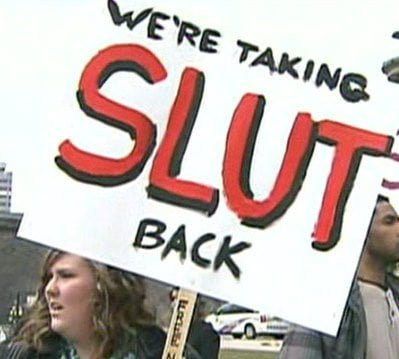
This Saturday, September 24, Slutwalk comes to Johannesburg, and thousands will participate to protest victim-blaming and to affirm the right of all women to wear what they want, and act as they please, without fear of being misunderstood as welcoming sexual assault.

Many will participate dressed in clothing that might be considered sluttish – in the traditional sense of the word – because part of the point of Slutwalk is to reclaim the word ‘slut’ and to say that others (rapists, as well as those who deny women agency in less violent ways) don’t have the authority to impute desire where none might exist.

As I’ve previously argued in the lead-up to the Cape Town Slutwalk, calling these protests Slutwalks runs the risk of alienating some supporters who see the word ‘slut’ as inescapably pejorative. It also runs the risk of creating tension between those sympathetic to the cause, but divided on the appropriateness of the name.

In fact, one unfortunate consequence has been that some who question the name are thereby assumed to be unsympathetic to the cause, despite their reasons for objecting to its branding. The equation has sometimes appeared quite simple: Object to the name, and thereby reveal yourself as (at best) only partially aware of the deep-seated patriarchy and resulting lack of understanding experienced by many (probably most) victims of rape.

Another example of this easy equation is highlighted by my previous sentence, where I use the word ‘victim’. Criminal agents have recently violated my home, three times in the space of a month. That makes me (and my family) a victim of their crimes. To call those who are victims of crimes ‘survivors’ instead of victims is a choice, not an obligation – it can signal a certain attitude or mindset, but we start playing very fast and loose with language when choosing not to use that signal is taken as indicating a lack of sympathy.

Words mean something, and they can have consequences. One way to be help being clear about potential consequences is to agree on definitions and to allow for the fact that increased miscommunication – and misattribution of motive – becomes increasingly likely if we can revise those definitions as we please. This particular slippery slope concludes with a world of Humpty Dumptys, all asserting that “When I use a word, it means just what I choose it to mean – neither more nor less.”

Slutwalks have such momentum, and have achieved such significant consciousness-raising and debate, that even those who oppose the name need to acknowledge that they probably do more good than harm. I’d therefore like to appeal to a post-Slutwalk consideration of how we engage with such issues and causes in future – and in particular a consideration of whether gendered epithets like ‘slut’ merit a place in our discourse around social activism.

Besides the debates around whether (ostensibly neutral) designators like ‘Chairman’, personal pronouns like ‘he’ or words like ‘mankind’ perpetuate a gender bias, gendered epithets constitute another class of words that reveal a bias in our language and behaviour. Apologies to sensitive readers, but there are quite simply far more negative words used to describe women than there are to describe men.

‘Bitch’ is a mild example – not only because it’s sometimes used in reference to men, but also because it has been stripped of much of its sexist content in usages such as ‘to bitch about Arsenal’s defence’. But ‘cunt’, ‘twat’ or ‘whore’ have a visceral impact and malice that ‘cock’ or ‘prick’ lack. And then there is the word ‘pussy’, which, while applied mostly to men, is intended to accuse that man of being weak – just like a woman.

The primary question is really this: Why do these words not get the same attention and attract the same outrage as the words ‘nigger’ or ‘kaffir’? While I do believe that it’s possible to use all these words for effect – in humour, or to make a point about racism or sexism – most usages of them are instead in anger, and intended to silence or demean the target.

These expressions of contempt or hostility use words that are linked to a race or a gender, and as I’ve suggested above, that race is often black and that gender is often female. But while the racist versions of these slurs are unquestionably considered unacceptable, the sexist versions operate in a context where misogyny is so deeply entrenched that it can escape notice.

As Phil Molé argues in ‘The Invisibility of Misogyny’:

It’s not just the fact that misogyny is invisible that we need to face – it’s also the fact that this invisibility is a large part of what makes it the enormous problem it is. We cannot begin to properly address misogyny and the harm it causes unless we start being able to see it.

One aspect of seeing misogyny is perhaps recognising that words can be used to harm, and that when those harmful words are linked to race or gender, existing stereotypes regarding those races and genders can also be reinforced. Even if you use these words without holding sexist and racist attitudes, you can have little control over how your target perceives them, and the hurt they might cause.

In the context of this weekends’ Slutwalk, these targets include those women who have been subjected to hostility through being called a slut, and who find themselves unable to see the word as anything other than demeaning.

Furthermore, we sometimes forget other audiences – the genuine racists and sexists, who could overhear casual uses of such epithets, and interpret this to mean that their position is more broadly supported than is actually the case.

So while I can believe that the Slutwalk does more good than harm – and while I fully understand the point of calling it Slutwalk in the first place – I worry about how to reconcile it with the broader issue of how language can be used to reinforce misogyny. I imagine that many self-described feminists agree with me on sexist epithets in general, understanding them to be a subtle way of reinforcing negative attitudes towards a particular sex.

And if, in a few months or years time, a campaign is launched and marches are held to get people thinking about whether it’s appropriate to call someone a cunt, might it perhaps be the case that we’ll have little answer to someone who retorts “you’re simply missing the point to find ‘cunt’ offensive – why not simply reclaim it, just like you did with ‘slut’?”

Also read this interesting exchange initiated by Ophelia Benson at Butterflies and Wheels, which prompted many of the thoughts expressed above.

The JSC hearings on Mogoeng Mogoeng

As submitted to The Daily Maverick

While I intended this column to be a follow-up on my thoughts on Slutwalk, dealing more generally with the topic of gendered epithets and why they are generally wrong, that will have to wait. Because as a colleague put it, I have ‘no infrastructure’ following a recent double-dip round of burglaries, and more than a tablet computer is required for the research needed to do that topic justice.

Redistribution of wealth

Apologies for the silence here – I didn’t get around to writing a column for the Daily Maverick this week, and also haven’t blogged, mosly because it’s quite difficult to do these things when bloody agents have entered your home – twice in the space of two weeks – and taken all your stuff.

There’s a lovely hashtag that you’ll often encounter on Twitter – #middleclassproblems – and this is certainly one of them. It’s a middle (and upper, or course) problem to have stuff worth stealing, and also to have a public platform to use in order to complain about it. So far, though, it’s only been stuff, and stuff can be replaced. People can’t (well, individual people – people in general are sadly far too easily replaced). So yes, it could have been far worse.

But it’s nevertheless rather annoying, especially due to the time lost. Time waiting for people to install more security, time taken to replace my passport (including the time waiting for that damn baby, whose parents were in the queue ahead of me, to keep her eyes open for the photograph), and now, the time lost due to not being able to do proper work without a laptop at home.

And worst of all, for me, is that for the first time, I would seriously consider devoting resources to getting out of here, into somewhere in the 1st world. It’s a difficult thing to say, or to discuss, but at some point one simply gets tired of the uncertainty, of the waiting to become a victim.

The problem is that poverty and desperation don’t know who you are. You can be as committed to social equality as you like, and have spend X hours trying to help built this country into what it could be – and it could all be for naught. And I can’t blame the housebreakers for that – if I was in their situation, I might well be resorting to the same choices.

And this is because choice, or choices, can be quite an alien concept if you’re living hand-to-mouth. It’s a middle class problem to even be able to talk about choices, and that’s a genuinely sad thing.

To add to the sadness, it’s difficult to escape the feeling that South Africa is on some sort of precipice. Not the Night of the Long Knives sort of thing, as someone hyperventilated on a friend’s Facebook wall, but one involving a significant shift away from the liberal and democratic values the post-94 South Africa is rightly proud of.

The Malema hearings, the Mogoeng confirmation (or hopefully not), and the vote on the POI Bill are all pretty big deals, and depending on how they go, could give rise to legitimate pessimism about our immediate future.

I’ll say more about Mogoeng next week in the Daily Maverick, but in the meanwhile, please don’t rest, or depend on others to sort these problems out. Civil society retains a significant voice, but far too often, we stand on the sidelines and wait to protest decisions already made. Sometimes you can see them coming, and the time to raise your voice is now.

#SlutWalk and the politics of re-appropriating words

As submitted to The Daily Maverick.

When a representative of the Toronto Police said that “women should avoid dressing like sluts in order not to be victimized”, it’s unlikely that he intended to foment extensive debate on the meaning of words, and which of these words could and could not be “reclaimed”. However, while people all across the globe are participating in SlutWalks in order to highlight and protest a culture of victim-blaming, others are choosing not to do so – exactly because they think the word “slut” cannot be reclaimed, and that the SlutWalk movement might be an obstacle to its own stated goals.