 Since the launch of the Bill of Responsibilities last week, debate on its merits and demerits has continued – mostly on Twitter, but also via two columns worth reading in the Daily Maverick (by Khadija Patel and Ivo Vegter). I’ve also written a follow-up to my previous post, which you can read in the Daily Maverick tomorrow (or here, a day or two later).
But some of you might not follow me or the other participants on Twitter, so might have missed this response from Yusuf Abramjee, published today in the Pretoria News. Mr Abramjee is the Head of News and Current Affairs at Primedia, Chairperson of the National Press Club, and a spokesperson for LeadSA. And he’s also apparently eager to embody the sentiments of the Bill of Responsibilities through allowing general hand-waving in the general direction of serious issues to replace critical and useful engagement.
And he’s not the only one. In a brief interview with John Maytham on CapeTalk567 last week, some of the questions directed at me also implied that there’s something wrong with criticising this Bill, which after all aims at something most consider good – moral regeneration and so forth. But there’s no reason to buy into this false dichotomy – I can be committed to moral regeneration, but think that it isn’t best served by a prescriptive, nanny-ish and illiberal document, which is what this Bill amounts to (see Ivo’s column, linked above).
Then, there are some on Twitter who also accuse the Bill’s critics of over-reacting. You can decide for yourself if that’s the case, but none of these critics are engaging with any of the arguments – they are simply asserting that we’re wrong, or at worst, not committed to a country in which people are aware that they have an impact on the lives of others, and on the country’s direction, and who therefore might want to think about rights and responsibilities in a non-superficial way. As Sipho Hlongwane pointed out, “there’s a whiff of ‘I was a prefect at school'” to their criticisms – and we’re all just being disobedient children.
As is the case with Yusuf Abramjee’s response (Facebook link), pasted below (without the stuff about our obligation to support SA cricket, and to switch our lights off for an hour every year):
Last week, Lead SA launched the Bill of Responsibilities for the Youth. We have a Bill of Rights in our Constitution. But with rights come responsibilities. This document is also aimed at moral regeneration.
The majority of people were positive about it. But some immediately started criticizing the Bill of Responsibilities and – without studying the contents properly -found fault with it.
We have to promote good morals and ethics. We have to address the many social ills, especially among our youth. But, the constant negativity from some quarters is worrying and it can become destructive.
Let’s not forget that with freedom of speech and expression comes responsibility. We must not open our mouths simply for the sake of it.
We have many problems in our country and if the culture of just finding fault and becoming armchair critics is going to continue, it is not going to hold our country in good stead.
We all have to work together and find solutions. We all have to roll up our sleeves. We all have to make a difference. It’s about you. It’s about our future and our country.
What a wonderful democracy we have. We are quick to point fingers but we are sometimes slow to find solutions. All South Africans need to take the negativity and turn into something positive. With every problem comes a solution.
Let’s not become a nation which embraces gloom and doom. As citizens we have rights, but that means responsibility, too.
Notice that the criticisms are simply a result of our “not reading the Bill properly”. Will we have read it properly only once we agree with it, I wonder? All the critical treatments of the Bill that I have read ask specific questions about it, and criticise clauses of it that demonstrate quite a thorough reading. It’s not a long document, after all, and seeing as it’s aimed at kids, it would be quite odd for it to present a comprehension challenge to the various smart people I read and follow on Twitter. Unless we’re all just thick, I suppose.
And besides ignoring any arguments and accusing us of not paying attention (where we actually engage with substance, rather than simply dismissing the opposing view), Abramjee also plays the negativity card in saying that the “constant negativity from some quarters is worrying and it can become destructive”. This linking of criticism with pessimism is an illegitimate way of privileging optimism – it makes critical enquiry morally coloured, and suggests that those who criticise are being unfair, or perhaps even unpatriotic.
And of course there can be criticism which is uncharitable, unfair, or motivated by an agenda other than reasoning our way to the most justified position. But if that’s the case, it needs to be demonstrated, not simply asserted. Critical enquiry – criticism – is our best resource for sorting sense from nonsense, and to discourage it is certainly not leading SA in any direction we should wish for it to go. As I’ve said before (and will expand on in tomorrow’s column), a key part of the freedoms that were secured in this country is the right to not accept someone else’s vision of life, or truth, as being compulsory for all of us. We have the right to think for ourselves, even though a consequence of that can sometimes be that we get things horribly wrong.
Finally, in a shameless finger-wagging moralising moment, Mr Abramjee tells us that “We have many problems in our country and if the culture of just finding fault and becoming armchair critics is going to continue, it is not going to hold our country in good stead”. Well, I’m not sure who he’s addressing here, but the majority of the people I’ve been engaging with on this issue get out of their armchairs all the time. They are teachers, critics, politicians, columnists and so forth, who spend the bulk of their lives engaging in various efforts to stimulate debate and thinking on the problems facing South Africa and the world in general.
Again, whether they do so well or not is not the issue. Whether they do it in the way Yusuf Abramjee or LeadSA would prefer or not is not the issue. But LeadSA and Yusuf Abramjee don’t get to decide that, and this is the point of the criticism. And we’d happily be proved wrong (speaking for myself, but a plausible assumption for the others). But proving us wrong would require engaging with the arguments – and that’s not something we’re seeing much of from some parties to this debate.

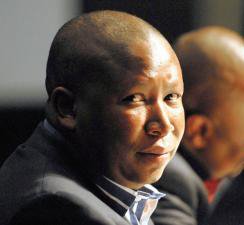
 It’s easy to demonise those who disagree with us when discussing emotive topics like hydraulic fracturing, or the ongoing Equality Court case involving Afriforum and Julius Malema. But while it is sometimes true that sincerity takes a back seat to ideology or fanaticism – or even kickbacks from corporate lobbyists – it’s far more often the case that demonising an opposing point of view serves merely to reinforce your own confidence that you’re right and everyone else wrong.





 Amongst the usual bundle of perceptive, contentious and misguided comments, tweets and columns on the Kuli Roberts issue, a response from Ferial Haffajee merits attention: “





 There is a pestilence of woo sweeping the land. While some versions of pseudoscience, mysticism and general quackery are fairly constant insults to our sensibilities (