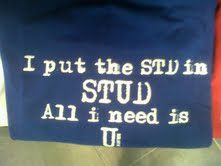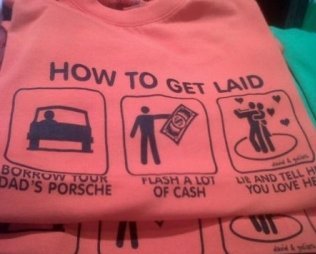
More on Foschini’s sexist T-shirts

As submitted to The Daily Maverick
Drawing a line between hypersensitivity and justified affront is sometimes rather difficult. Political correctness often helps to facilitate the former, because we become so used to not being offended that it seems increasingly outrageous when others dare to offend our sensibilities. And while outrage is easy to manufacture, and difficult to ignore, the fact that someone is offended doesn’t mean that they are justified.

Eleven women, including the Daily Maverick’s Rebecca Davis, were recently offended by a selection of T-shirts they considered sexist being offered for sale by stores by stores in the Foschini stable. You can read the justification for this in Davis’s column, though I’d recommend only reading the ensuing comments if you’re feeling strong – or if you’re looking for further evidence in support of your application for asylum with some other species. Because what starts as a civilised and reasonable expression of disappointment by Davis and others that these T-shirts were put up for sale rapidly descends into quite unpleasant abuse of character and motive, especially targeted towards those commenters who dared to question whether the objections to the T-shirts were an overreaction.

The abuse came from all quarters, though – including from those whose apparent motivation was a call for greater respect for their viewpoint that the T-shirts were legitimately offensive. And here one can arguably see an interesting asymmetry, in that while the premise of the debate is that certain views aren’t being afforded enough respect (women’s rights and interests), the debate then proceeds as if alternative views aren’t worthy of any respect at all, and that people who express those alternative views aren’t entitled to do so.

It’s easy to forget that if we are campaigning on behalf of some interest, we become ambassadors or representatives of that interest. So, when someone dares to challenge your cause, we sometimes need to take care to not respond in such a way as to undermine the exact cause we’re fighting. If the issue is that certain interests or arguments are being sidelined, that issue can only win a hollow victory by sidelining dissent.

Now, of course some issues might take priority over others. Not only legal priority, as in the balancing of rights, but also moral priority in that it might sometimes be obvious that there is a genuine problem worthy of attention or redress. And sexism is such a problem in that we are perhaps less sensitive to it than to other forms of unfair discrimination. This is perhaps evidenced by our language, in that gendered epithets are given less attention than racist ones.

So on the surface of it, sexist T-shirts, or sexist jokes, are obviously a problem when they consistently target one sex rather than another. If sexism was an equal-opportunity offence we could accuse the offenders of crassness, but not of sexism. But hypersensitivity is also a problem, and we should take care to avoid undermining our causes through taking a fundamentalist approach to them, or through treating dissent as axiomatically reprehensible.

To try and avoid misinterpretation here, I did think that some (not all) of the T-shirts were sexist. Consumers are free to point that out, and you’d think that retailers are free to respond by withdrawing them from sale. The qualifier of “you’d think” hints at what some comments to the Davis column were perhaps trying to point out, in that it’s unclear that Foschini had any actual choice in the matter.

Because just as it’s difficult to imagine something like a sunset clause on affirmative action, it’s difficult to conceive of a point at which accusations of sexism can’t be levelled without being privileged. They are uttered from a position of not being privileged, but gain privilege in that they are impossible (or at least very difficult) to refute. Playing the “race card” already wins most of the battle, and making accusations of sexism can do the same – the sense of being offended can be justified merely by feeling that you are offended.

In these debates, we should be wary of words and attitudes that can act as silencing devices, and that can forestall or inhibit debate. Because viewpoints and attitudes can become immune to, and protected from, challenge. Immune because of their orthodoxy, and protected because of our fear of being labelled as racist, sexist or in some other way opposed to the orthodox view.

In the case of these T-shirts, there is a marked difference between the measured tone and argument of the original letter protesting these T-shirts and some of what came after, including on the comment thread to Davis’s column. Whether it’s true or not, it’s still legitimate to raise the question of whether the opposition to the T-shirts was a sense of humour failure (I don’t think it was). It’s also legitimate to ask whether calls for a boycott of Foschini are taking the matter too far (which I think it did).

To rule these questions as out of order, or to not engage with the questions without attacking the characters of those who raise them, forestalls any possible debate, and entrenches existing prejudices on both sides. We want Foschini to be able to withdraw the T-shirts, or not do so, through being able to make a decision – not through being subjected to what can easily become a form of moral blackmail.

The boundaries of what is acceptable and unacceptable offence (ie. merely risqué rather than legitimately problematic) are not only subjective, but also present a slippery slope problem. If T-shirts like the ones in question are withdrawn from sale without the possibility of debate – or with the polarisation of debate evidenced in the comments to the Davis column – a new level of what is acceptable and not can be set. And then, potentially, one less thing can be debated and one fewer thing can be a legitimate source of humour – because something is always potentially offensive to somebody.

One possible outcome of these sorts of (lack of) debate is simply a world in which those who shout the loudest get heard, or are taken more seriously than others. So even as we are fully entitled to object to things we find offensive and attempt to get others to see our point of view, we shouldn’t make the mistake of thinking that our own views are beyond challenge, or that we’re automatically justified in attributing some degeneracy to those who object to those views.

In this case, some of the offence was certainly justified, and I think the letter that Davis and the others wrote was not hyperbolic in the least. But some of the ensuing commentary raised the possibility of yet another issue where being offended is its own validation, and where it is unquestionable that others should bow to the demands of your offence.

We might be entitled to be offended at whatever we like, whether it’s justified or not. But with the exception of hate-speech (an exception which can itself be challenged), others are entitled to be offensive. While we can try and persuade them to stop, we should be careful to not do in a way that stops us talking – and listening – to each other.

Sensationalism, morality and the media

As submitted to The Daily Maverick

There is a difference between exposing hypocrisy for the sake of satisfying the public’s desire for scandal (thereby perhaps increasing newspaper sales), and doing so in a way that makes the hypocrisy part of a larger story. Much over the weekend coverage of Malema and Mbalula’s various indiscretions seemed to prefer the former, leaving at least this reader with the question: Why should I care?

It’s not obvious that we should expect moral virtue from political leaders – and even if we were to do so, we’d first need to agree on what those virtues are or should be. Who Mbalula has sex with is not my business, nor is it something that should be. Unless, of course, the Minister’s choice of sexual partner entails some direct impact on his credibility or on consistency between his words and deeds.

If we believe Mbalula himself, he was separated from his wife at the time of his liaison with Joyce Molamu, so it’s not even clear that he has contravened the standards he appeals for others to follow. Members of the public might nevertheless consider him a hypocrite, and this will no doubt complicate his attempts to position himself as the next ANC secretary-general.

But until Stephen Grootes discussed Malema and Mbalula in these pages, the liaison – rather than any of its potential implications – was the story. Likewise with Malema. It should be no surprise to any of us that he’s a far wealthier man than many of his supporters, and that he’s more likely to have friends who host R10m parties. Yet another example of the lack of consistency between his rhetoric and his actions is not, in itself, front-page news.

The timing of such a party and the way in which it dilutes the force of the Youth League march against poverty can be. But as was the case with the Mbalula story, the media focus was more on rubbing his nose in this apparent evidence of hypocrisy (notably also tainted evidence, in that the business class flights and accommodation were apparently sponsored by the groom).

Outrage and sensation might be effective ways to sell copy, but they do little good in fostering a society that welcomes debate, and is able to engage in it. There seems little reason to believe that these stories will do anything other than entrench existing positions, where either M&M are being victimised by some white media cabal, or are untrustworthy demagogues.

We get the society we deserve, in that we are that society and it takes on the forms we encourage. As someone said on Twitter over the weekend, what the public is interested in is not equivalent to the public interest – and it’s the latter that gives newspapers licence to broadcast what would otherwise be details of someone’s private life.

Where those details are not contextualised as part of a story that is in the public interest, such as succession battles in Manguang, the press is not only feeding our appetite for sensation, but also starts taking on the role of moral authority and watchdog. Feeding our appetite for sensation is the job of the tabloids – not of the few variably-respectable local newspapers we have access to.

And neither being a moral authority, nor policing whatever version of morality is concocted is their proper role. The line between reporting on the news and aiming for objectivity – or at least making your biases clear if you’re not interested in objectivity – and trying to regulate society has become increasingly blurred.

For this reason alone, the extensive overlap between LeadSA and some of our media is problematic. If we were to discover that a particular LeadSA campaign is founded on poor evidence, or that a representative of LeadSA was somehow corrupt, are the chances of reading about these matters in an Independent Group newspaper at all diminished by their affiliation with LeadSA? I’d guess the answer to be yes. But I’d also guess that if this sort of event were to come to pass, that we’d see much crowing from the competition, and very little analysis that tracks something we could describe as being in the public interest.

And where the media endorse this sensationalism by practising it, we cannot be surprised to find citizens thinking they should care. Not only care about details that are stripped of context and meaning, but also care so much for their own hyperventilations that they think their worldviews should be enforced on the rest of us. A recent example of this can be found in complaint laid against an advertisement for Axe deodorants, where a single viewer convinced the ASA that it was offensive enough to require being taken off the airwaves.

That the ASA were convinced by this complaint is mystifying, as Pierre de Vos has pointed out (http://constitutionallyspeaking.co.za/now-angels-cant-even-have-sexual-feelings/). What is perhaps more perplexing still is how they can proceed from here, having set the bar for offence so low. Every advertisement that includes images of an attractive man or woman could be described as sexist, and if we pretend to be offended enough (or sadly, actually feel offended enough), will the advertisement be pulled? Or how about those Fatti’s & Moni’s ads that so offend us Pastafarians, in subjecting us to images of our deity being boiled, over and over again?

If someone in the public eye has done something that weakens their case or exposes them as a fraud, this can certainly be in the public interest. But simply pointing out their indiscretions is not – we need to hear what this implies in terms of some larger issue. Without that context and analysis, the media is feeding a large and ugly beast. We know the public want sensation. And it’s likely that they’ll want more of it if we keep giving it to them. But perhaps, we should be encouraging them to want less of it.

Feminism, sexism and Foschini T-Shirts

If you want further motivation for depression at the levels of debate H.Sapiens is capable of, take a look at the comment thread below this Rebecca Davis column on The Daily Maverick. The column dealt with some sexist T-shirts that were being sold by the Foschini group (see them here). Name-calling and missing-of-the-point-ing is the order of the day (well, of 3 days so far, and the pace hasn’t abated yet). One largely unexplored problem, though, is that the name-calling on this issue comes from all sides of the debate – it’s one of those emotive issues (like Slutwalk) where there’s something approaching a respectable, maybe even politically-correct view (neither term meant pejoratively), and then those who reject that for some reason or another (often, a bad reason). However, the mere fact that one doesn’t espouse the “respectable” view isn’t yet evidence that one holds reprehensible views – yet that’s the sort of reaction that dissent frequently attracts.

I’m not speaking for anyone other than myself here – the commenters on that thread who disagree with Rebecca might reject what I say here – but part of the problem with these sorts of debate is that they rule certain questions as out of order by establishing a normative principle. So, because sexism is bad (certainly), when I claim a sexist affront it immediately has a head-start in any argument. Furthermore, others are disincentivised from challenging my view, because it’s too easy to label those dissenters as sexist, and thus to silence them. We’ve seen the same thing, over and over, in the political sphere – words like “racist” or “coconut” are silencing devices.

What then could happen is that a viewpoint finds itself immune to, and protected from, challenge. Immune to because of its orthodoxy, and protected from because of our fear of being labelled as racist, sexist or whatever. This is why I try, where I can, to defend things like free speech both with reference to reprehensible views (like those of Kuli Roberts, perhaps) as well as more laudatory speech (Zapiro, for example). We do need to remember that even the well-intentioned can get things wrong. Those of us who defend free speech are often well-intentioned (at least in this regard), but there might nevertheless be better and worse ways of going about making your case.

For the record, this isn’t exactly a free speech issue at all – at least not in the standard sense. Nobody was being censored, and Rebecca and the other 10 were simply expressing their views on something they found offensive, and the Foschini group responded as they deemed appropriate (by withdrawing the T-shirts from sale). If you read the original letter of complaint, it’s measured and contains an argument for why the T-shirts were inappropriate. It wasn’t an emotive rant, or a call for immediate boycott (although we did see a few of those floating around, especially in the hyperbolic universe of Twitter).

The question here is whether Foschini had any choice. On this particular issue, perhaps they did – but at the expense of damage to the brand. Some of the T-shirts (I don’t think all, which weakened the objections somewhat) were genuinely offensive, but was there any room for Foschini to debate this? Could they have said: “We see your point with #1 and #2, but we’ll keep selling #3 because we think you’re being hypersensitive”. In other words, do these sorts of interventions even cross the line into a sort of moral blackmail, where your legitimised outrage can be leveraged without challenge?

The boundaries of what is acceptable and unacceptable offence (ie. merely risqué rather than legitimately problematic) are not only subjective, but also present a slippery slope problem. With the withdrawal of the T-shirts without any substantive engagement – and with the polarisation of the debate evidenced in the Davis column linked at the top – a new level of what is acceptable and not has been set. And potentially, one less thing can be debated, and one fewer thing can be a legitimate source of humour – because something is always potentially offensive to somebody.

As I argued following the decision by Pick ‘n Pay to withdraw the ‘blasphemous’ issue of Sax Appeal from the shelves, one possible outcome of these sorts of debate is simply a world in which those who shout the loudest get heard, or are taken more seriously than others. So even as we are fully entitled to object to things we find offensive, and attempt to get others to see our point of view, we shouldn’t make the mistake of thinking that our own views are beyond challenge or that we can assign some degenerate label to those who object to those views.

Something which might be worth thinking about, as we fumble our way forward, is that in terms of tone and attitude to opposing views, some of the responses to this T-shirt saga have operated from a rhetorical space quite similar to that occupied by the likes of Errol Naidoo, who is constantly outraged – and uncomprehending – at the world not bending to his will. In fact, it might surprise Rebecca and the other 10 authors that this victory was his also. As he pointed out in a newsletter received on October 26:

There Is Victory In Christian Unity!
Two articles in the news media caught my eye this week. The first, reports on the Advertising Standards Authority ruling that a TV advertisement that featured angels falling from heaven because they are attracted to the deodorant -must be withdrawn because it is offensive.

The second story involves the Forchini Group responding to customer complaints and immediately withdrawing t-shirts from Markhams stores with slogans that portray women as sex objects.

What both incidents highlight is the power of the consumer to oppose evil and advance righteousness in society. These victories may appear small but they are significant.

Since Family Policy Institute went fully operational in July 2008, I have seen many examples of ordinary Christian citizens standing together to stop injustice & wickedness in its tracks.

When a homophobe like Naidoo is in your corner, it exposes the fundamentalist nature that these debates so easily take on. As I’ve said above, there was nothing fundamentalist about the original letter of complaint, and I’m certainly not suggesting that the letter was motivated by the same reasoning as Naidoo’s. However, the path of being offended – and thinking that others need to take note of your offence – is a treacherous one that can lead to Naidoo-land. And we should be careful to avoid that, because it’s good to keep talking. And to keep listening.

William Creasey and media responsibility, redux

This is an edited version of an op-ed originally published by the Cape Argus (October 21).

The recently revised South African Press Code confirms that the role of the press remains – at least from the point of view of the Code – pretty much what we’ve always understood it to be. To summarise, the press serves society by allowing us to make informed judgements regarding events of the day. In doing so, they should refrain from violating the dignity or privacy of others unless justified in doing so by a legitimate public interest.

William Creasey: Sex-offenders and media responsibility

A friend alerted me to this front-page spread in Friday’s Cape Argus regarding William Creasey. For those unfamiliar with Creasey’s history, he was arrested in 2003 and later convicted for indecently assaulting minors. Following his release on parole in 2009, nothing (that I know of) has been heard of him – at least in relation to this sort of crime. What’s interesting about Friday’s story is that it details what essentially consists of a sting operation, exposing the fact that Creasey is using a pseudonym and expressed an interest in offering art classes to children. The police response was ‘that there was nothing they could do until they had proof that Creasey had committed an offence against a child’.

Why does the Argus feel that it has the responsibility to do more, and that their attempts to do so are front-page news? Of course sex with unwilling participants is illegal and immoral, and of course children often require a measure of paternalism to protect them against threats they might not fully understand. But one point of view would be that Creasey had done wrong, had served his time, and was currently doing nothing illegal – and nothing that justified this violation of his privacy and rights to trade his skills as an art teacher for money.

Those arguing in favour of exposing a man who is (to our knowledge) not guilty of any current crimes might argue as Paul Hoffman does,saying that the public does not need to wait for harm to be done and that we “are entitled to seek a suitable interdict if there is a reasonable apprehension of harm”. But my concern here is that any (or many) people are potential threats to some interest or other, and any subjective ranking of those threats or interests is open to abuse. So in principle, it seems preferable that we punish actual criminals rather than potential ones. Here, Creasey has been punished for actual crimes, and is now being further punished for potential crimes.

He did himself no favours by posting the Gumtree ad described in the story, and you can read his editing of that ad either as an acknowledgement that it was inappropriate for his to be teaching children, or as an attempt to not draw attention to the fact that he wanted to teach children. Likewise, the fact that he was using a pseudonym could be suspicious or not, depending on whether you believe him in saying that it’s a pseudonym he’s always used for his artistic endeavours. On the least sympathetic reading, he was engaging in what’s known as “grooming” – a term describing attempts by a sex offender to target and prepare children for sexual abuse. Or, he could simply be trying to get his life back on track, and doing what he loves (I mean teaching art, of course).

While South Africa does have a registry of sex offenders, it only went live last year and at this point only lists current convictions rather than historical ones. So Creasey would not appear on it, making it impossible for parents of children he might teach to check whether he (or anyone else) is on the registry. From what I can gather, the registry itself and the process for having a name checked on it is cumbersome and dysfunctional enough to make it pretty difficult to do so in any case.

But the larger question remains, despite these issues: Should our newspapers engage in this sort of pre-emptive strike against a possibly innocent man? Should your past always be available as a means by which to smear your reputation and limit your freedoms? It’s a sensitive and tricky subject, but we should guard against the tendency to allow ourselves to justify anything “for the children”. While sexual abuse is undoubtedly a threat to them (and to others), there are also threats for us all when the media becomes a vigilante.

Edit: Some people can’t read past their instinctive outrage, it seems. I’m addressing how complicated this balancing act is – I’m not coming down on the side of Creasey’s privacy. In general, though, I would defend someone against a known violation of their rights as opposed to protecting people from possible harms. If it’s true that paedophiles are irredeemable, as Mr Simpkins seems to believe, the balance shifts in favour of the exposure in the Argus.

Edit 2: The Argus has subsequently published this explanation for why they exposed Creasey.

Edit 3: The Argus then published this op-ed in which I make a fuller case for why it was inappropriate for them to expose Creasey in this way.

Gendered epithets: Short-term battles vs. long-term wars

As submitted to The Daily Maverick

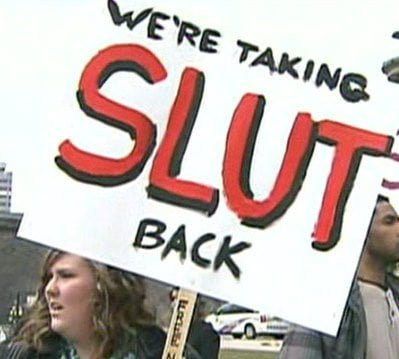
This Saturday, September 24, Slutwalk comes to Johannesburg, and thousands will participate to protest victim-blaming and to affirm the right of all women to wear what they want, and act as they please, without fear of being misunderstood as welcoming sexual assault.

Many will participate dressed in clothing that might be considered sluttish – in the traditional sense of the word – because part of the point of Slutwalk is to reclaim the word ‘slut’ and to say that others (rapists, as well as those who deny women agency in less violent ways) don’t have the authority to impute desire where none might exist.

As I’ve previously argued in the lead-up to the Cape Town Slutwalk, calling these protests Slutwalks runs the risk of alienating some supporters who see the word ‘slut’ as inescapably pejorative. It also runs the risk of creating tension between those sympathetic to the cause, but divided on the appropriateness of the name.

In fact, one unfortunate consequence has been that some who question the name are thereby assumed to be unsympathetic to the cause, despite their reasons for objecting to its branding. The equation has sometimes appeared quite simple: Object to the name, and thereby reveal yourself as (at best) only partially aware of the deep-seated patriarchy and resulting lack of understanding experienced by many (probably most) victims of rape.

Another example of this easy equation is highlighted by my previous sentence, where I use the word ‘victim’. Criminal agents have recently violated my home, three times in the space of a month. That makes me (and my family) a victim of their crimes. To call those who are victims of crimes ‘survivors’ instead of victims is a choice, not an obligation – it can signal a certain attitude or mindset, but we start playing very fast and loose with language when choosing not to use that signal is taken as indicating a lack of sympathy.

Words mean something, and they can have consequences. One way to be help being clear about potential consequences is to agree on definitions and to allow for the fact that increased miscommunication – and misattribution of motive – becomes increasingly likely if we can revise those definitions as we please. This particular slippery slope concludes with a world of Humpty Dumptys, all asserting that “When I use a word, it means just what I choose it to mean – neither more nor less.”

Slutwalks have such momentum, and have achieved such significant consciousness-raising and debate, that even those who oppose the name need to acknowledge that they probably do more good than harm. I’d therefore like to appeal to a post-Slutwalk consideration of how we engage with such issues and causes in future – and in particular a consideration of whether gendered epithets like ‘slut’ merit a place in our discourse around social activism.

Besides the debates around whether (ostensibly neutral) designators like ‘Chairman’, personal pronouns like ‘he’ or words like ‘mankind’ perpetuate a gender bias, gendered epithets constitute another class of words that reveal a bias in our language and behaviour. Apologies to sensitive readers, but there are quite simply far more negative words used to describe women than there are to describe men.

‘Bitch’ is a mild example – not only because it’s sometimes used in reference to men, but also because it has been stripped of much of its sexist content in usages such as ‘to bitch about Arsenal’s defence’. But ‘cunt’, ‘twat’ or ‘whore’ have a visceral impact and malice that ‘cock’ or ‘prick’ lack. And then there is the word ‘pussy’, which, while applied mostly to men, is intended to accuse that man of being weak – just like a woman.

The primary question is really this: Why do these words not get the same attention and attract the same outrage as the words ‘nigger’ or ‘kaffir’? While I do believe that it’s possible to use all these words for effect – in humour, or to make a point about racism or sexism – most usages of them are instead in anger, and intended to silence or demean the target.

These expressions of contempt or hostility use words that are linked to a race or a gender, and as I’ve suggested above, that race is often black and that gender is often female. But while the racist versions of these slurs are unquestionably considered unacceptable, the sexist versions operate in a context where misogyny is so deeply entrenched that it can escape notice.

As Phil Molé argues in ‘The Invisibility of Misogyny’:

It’s not just the fact that misogyny is invisible that we need to face – it’s also the fact that this invisibility is a large part of what makes it the enormous problem it is. We cannot begin to properly address misogyny and the harm it causes unless we start being able to see it.

One aspect of seeing misogyny is perhaps recognising that words can be used to harm, and that when those harmful words are linked to race or gender, existing stereotypes regarding those races and genders can also be reinforced. Even if you use these words without holding sexist and racist attitudes, you can have little control over how your target perceives them, and the hurt they might cause.

In the context of this weekends’ Slutwalk, these targets include those women who have been subjected to hostility through being called a slut, and who find themselves unable to see the word as anything other than demeaning.

Furthermore, we sometimes forget other audiences – the genuine racists and sexists, who could overhear casual uses of such epithets, and interpret this to mean that their position is more broadly supported than is actually the case.

So while I can believe that the Slutwalk does more good than harm – and while I fully understand the point of calling it Slutwalk in the first place – I worry about how to reconcile it with the broader issue of how language can be used to reinforce misogyny. I imagine that many self-described feminists agree with me on sexist epithets in general, understanding them to be a subtle way of reinforcing negative attitudes towards a particular sex.

And if, in a few months or years time, a campaign is launched and marches are held to get people thinking about whether it’s appropriate to call someone a cunt, might it perhaps be the case that we’ll have little answer to someone who retorts “you’re simply missing the point to find ‘cunt’ offensive – why not simply reclaim it, just like you did with ‘slut’?”

Also read this interesting exchange initiated by Ophelia Benson at Butterflies and Wheels, which prompted many of the thoughts expressed above.

The JSC hearings on Mogoeng Mogoeng

As submitted to The Daily Maverick

While I intended this column to be a follow-up on my thoughts on Slutwalk, dealing more generally with the topic of gendered epithets and why they are generally wrong, that will have to wait. Because as a colleague put it, I have ‘no infrastructure’ following a recent double-dip round of burglaries, and more than a tablet computer is required for the research needed to do that topic justice.

Redistribution of wealth

Apologies for the silence here – I didn’t get around to writing a column for the Daily Maverick this week, and also haven’t blogged, mosly because it’s quite difficult to do these things when bloody agents have entered your home – twice in the space of two weeks – and taken all your stuff.

There’s a lovely hashtag that you’ll often encounter on Twitter – #middleclassproblems – and this is certainly one of them. It’s a middle (and upper, or course) problem to have stuff worth stealing, and also to have a public platform to use in order to complain about it. So far, though, it’s only been stuff, and stuff can be replaced. People can’t (well, individual people – people in general are sadly far too easily replaced). So yes, it could have been far worse.

But it’s nevertheless rather annoying, especially due to the time lost. Time waiting for people to install more security, time taken to replace my passport (including the time waiting for that damn baby, whose parents were in the queue ahead of me, to keep her eyes open for the photograph), and now, the time lost due to not being able to do proper work without a laptop at home.

And worst of all, for me, is that for the first time, I would seriously consider devoting resources to getting out of here, into somewhere in the 1st world. It’s a difficult thing to say, or to discuss, but at some point one simply gets tired of the uncertainty, of the waiting to become a victim.

The problem is that poverty and desperation don’t know who you are. You can be as committed to social equality as you like, and have spend X hours trying to help built this country into what it could be – and it could all be for naught. And I can’t blame the housebreakers for that – if I was in their situation, I might well be resorting to the same choices.

And this is because choice, or choices, can be quite an alien concept if you’re living hand-to-mouth. It’s a middle class problem to even be able to talk about choices, and that’s a genuinely sad thing.

To add to the sadness, it’s difficult to escape the feeling that South Africa is on some sort of precipice. Not the Night of the Long Knives sort of thing, as someone hyperventilated on a friend’s Facebook wall, but one involving a significant shift away from the liberal and democratic values the post-94 South Africa is rightly proud of.

The Malema hearings, the Mogoeng confirmation (or hopefully not), and the vote on the POI Bill are all pretty big deals, and depending on how they go, could give rise to legitimate pessimism about our immediate future.

I’ll say more about Mogoeng next week in the Daily Maverick, but in the meanwhile, please don’t rest, or depend on others to sort these problems out. Civil society retains a significant voice, but far too often, we stand on the sidelines and wait to protest decisions already made. Sometimes you can see them coming, and the time to raise your voice is now.

#SlutWalk and the politics of re-appropriating words

As submitted to The Daily Maverick.

When a representative of the Toronto Police said that “women should avoid dressing like sluts in order not to be victimized”, it’s unlikely that he intended to foment extensive debate on the meaning of words, and which of these words could and could not be “reclaimed”. However, while people all across the globe are participating in SlutWalks in order to highlight and protest a culture of victim-blaming, others are choosing not to do so – exactly because they think the word “slut” cannot be reclaimed, and that the SlutWalk movement might be an obstacle to its own stated goals.

Allowing yourself to be wrong

As submitted to The Daily Maverick

Having a conversation requires all the participants to be listening, but having a fruitful conversation often requires something more: The possibility that someone will leave the exchange with their mind changed. If not that, at least with some doubt as to whether their convictions are justified. Or, perhaps more typically, the sort of conversation that simply makes you want to have more of them, just like that one.