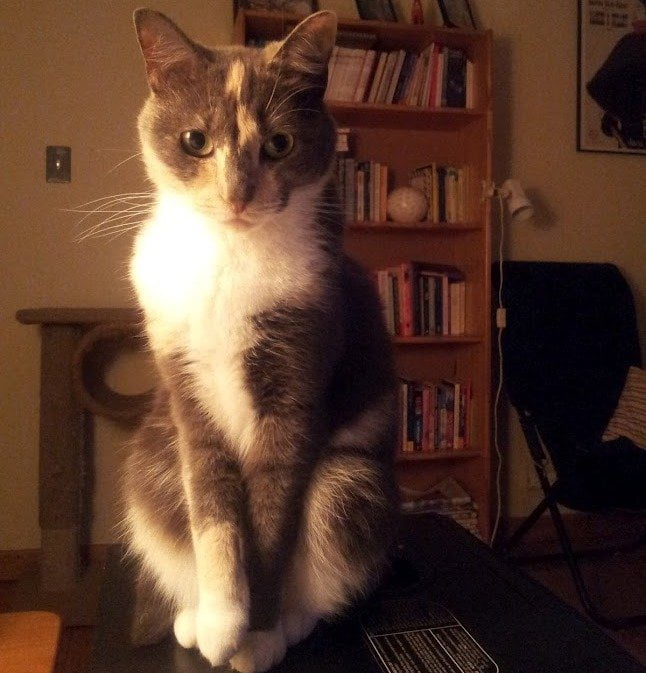
Finally: recognition as a ‘homosexual activist’

Thank you, thank you. I wouldn’t be here without the help and support of my cats, Mogwai (pictured), Mr Jones and Mot. I must of course also thank the Family Policy Institute, and particularly its leader, Errol Naidoo, for bestowing this honour on me. The reason for Errol bestowing this honour on me is at this stage slightly ambiguous, but for the sake of argument, let’s assume he means “homosexual activist” in both possible senses. Here’s an extract from his latest emailed newsletter:

Homosexual activist, Jacques Rosseau [sic] has slammed the Film & Publication Board for its association with Family Policy Institute. Apparently, my work to protect children from exposure to porn on TV and the internet is considered “censorship” a crime worse than the social degradation of children.

While I’m grateful, Errol, I do need to point out a couple of problems with the reasoning of your selection committee in bestowing this honour on me. First, it’s not quite true that I’m a “homosexual activist” – instead, I try to be an activist against idiocy of various forms, but particularly the sorts of idiocy that results in discrimination. Yours, for example. But also gender or racial discrimination, or giving one particular religious viewpoint undue attention when it comes to deciding on matters of public policy.

Second, the most important reason for mentioning you in that column was to say that the Film and Publications Board shouldn’t be endorsing homophobes. As a state body, you’d think they had a duty to respect the provisions related to equality in the Constitution. So, when some religious creep (not all religious folks count here) calls homosexual behaviour unnatural and immoral, and threatening to “the family” (the families that homosexuals are in don’t count, of course), you’d think they should distance themselves from you. But no – you’re listed as a “useful link” on their website (but without any text saying something along the lines of “This link is useful if you want to know what a bigot looks like”).

Third, I’m fully in support of protecting “the children” from undue harm. But you’ve never (and nor has anyone else) demonstrated that the children will crack the two pin codes required to view porn late at night, nor that there is good reason to swallow your doomsday-ism about the harms that result from pornography in any case. The evidence is inconclusive, and until you can get God to talk to us herself, rather than through folk like yourself, I’ll rather not base public policy decisions on your say-so, thanks.

The rest of the newsletter consists of the usual self-congratulatory detail related to how he’s saving civilization through setting up urgent meetings to discuss stuff. Or sometimes, waiting to see if people are willing to meet with him:

I am waiting on confirmation to meet with the DG of Communications, Ms Rosey Sekese and the CEO of ICASA who are currently in Cape Town to discuss the urgent need to amend legislation to specifically prohibit pornography on TV and to install filters on the internet to block online porn.

It’s a good thing that not even any Christians I know take him, or his organisation, seriously. Except, that’s not quite right: they do take him seriously to the extent that they see him as an embarrassment to their faith, and as very bad PR for Christianity in general. Replace “faith” with “species” in the previous sentence, and the Christians and I are in full agreement.

(A pdf of the full newsletter, in case you want to read more. But there’s no good reason to.)

The creeping nannyism of South African smoking regulations

Originally published in the Daily Maverick
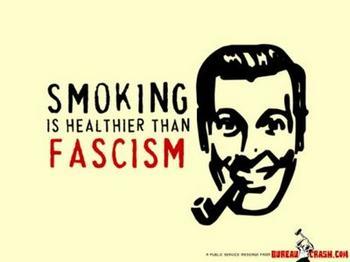
South Africa has some of the most stringent restrictions on the sale, advertising and consumption of tobacco in the developed world. In general, this is a good thing. It seems to me entirely appropriate for harmful substances to be reasonably difficult to get hold of, and that they shouldn’t be made to appear attractive to prospective users.

Did the #Zumaspear bullies win?

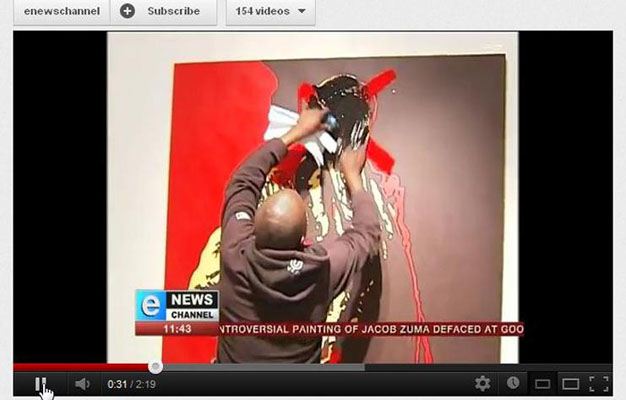
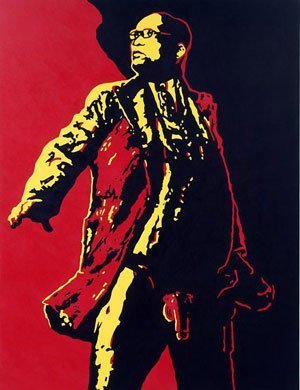
Here’s Ferial Haffajee explaining why she took the decision to remove images of Zuma’s Spear from the City Press website. Peter Bruce, editor of Business Day, said (on Twitter) that he would never have published it in the first place (on grounds of taste). That I can understand, and even agree with – an editor makes choices as to the character of their publication, and it would be a legitimate choice to never display this painting. (Today, Bruce argued that Haffajee should remove the painting.)

Zuma’s Spear is not obviously in the public interest, it reveals nothing we don’t already know, and it certainly always seemed likely to offend – perhaps for little gain. And causing offence just for the sake of doing so is not (to my mind, at least) a laudable action.

But Haffajee published a photograph of the painting in the course of covering the Murray exhibition – it was one of many paintings reproduced in the City Press. I’d imagine that she knew it would cause offence, even though she indicates (in the first link, above) that she had no idea the rage would be this extreme. She should be free to do so, just as Murray should be free to paint disrespectful images of the President. Having said that, I’d previously argued that the freedom to do something doesn’t necessarily mean that it’s the right thing to do.

Once one has “done it”, though, you’ve chosen to take a stand. In this case, a stand for free speech, and a stand that entails asserting that differences in cultural sensitivities and norms are subject to a Constitutional override which allows for us to offend each other through artworks such as Murray’s. And here’s the problem regarding the decision to take the painting down: it’s impossible, now that that choice has been made, to separate the possibility of it being premised on cultural sensitivity (which can often be a good thing, even though it’s sometimes not), or whether it’s simply another instance of allowing the hypersensitive to win the argument, simply because they shout louder than everyone else, or threaten you with violence.

City Press staff have received death threats. Religious idiots have called for the artist to be stoned. So now, as much as Haffajee was perhaps mistaken in ever choosing to run that image, her self-described “olive branch” is (in part, and perhaps in large part) a reaction to intimidation, and fear of reprisal. Some have asked about the apparent inconsistency of the Goodman Gallery (under different ownership, note) refusing to display an earlier Murray work (pictured above), and Haffajee’s previous decision to not run content that Muslims would find offensive. But  note what’s happened – the inconsistency has been resolved.

In the case of offending the religious, a pre-emptive decision was made that the situation was too volatile, and the physical threats too real, to ever run the offensive material. Haffajee and the Goodman Gallery made the mistake of thinking that our democracy could handle some robust debate around cultural norms, freedom of speech, and whether it’s okay to show disrespect for the President. The reactions to this (by those offended) ended up being entirely consistent, and have forced a consistency in response by those who caused the offence. I guess they’ve all learnt their lesson now – Haffajee and the Gallery now know of yet another topic that isn’t open to debate, and others have learned that it remains true that you can win arguments by threatening violence.

I realise that Haffajee had a difficult choice, both in running the painting and in retracting it. And I can understand why she chose to remove it from the website. An extract from her explanation reads as follows:

I hope we are not crafting a society where we consign artists to still life’s and the deep symbolism of repressed artists like China’s Ai Weiwei in China. A society where we consign journalism to a free expression constrained by the limits of fear. This week society began the path of setting its mores on how we treat presidents in art and journalism; what is acceptable and what is not.

This could be interpreted in various ways – let’s hope that in noting how we’ve begun to set these mores, she realises the role this explanation will play in doing so. I’m sure she does, and that she (and all of us) will continue to probe the boundaries of free expression in light of cultural (including religious) sensitivities – rather than allow the latter to gradually swallow the former. Removing the painting was motivated in large part by threats, and to some extent by wanting to make a contribution to nation-building. Those who issued the threats – including Zuma, Mthembu et al, should think carefully about the nation they’re helping to build through bullying others into silence.

Zuma’s Spear and egalitarian anti-racism

As submitted to Daily Maverick

On Sunday, Zama Ndlovu (@jozigoddess) tweeted “I do hope someone will write something about how whiteness should look at that piece of ‘art’. To be fair and stuff.” I’d hope that nobody does, just as nobody should write about how “blackness” should look at Brett Murray’s “The Spear”. Because both approaches would be prescriptive in dictating that it’s race which should determine one’s attitude to dignity, and which sorts of harms should be taken seriously by our courts.

It’s too late, of course – many pieces were published over the weekend by writers of various races, with some of the writers explicitly foregrounding their blackness or the putative blackness of their analysis. More important, perhaps, is that they foregrounded the whiteness of the artist – and the whiteness of thinking that it’s permissible to depict Jacob Zuma with his penis hanging out of his trousers.

This is the crux of the controversy. Not only freedom of artistic expression competing with a Constitutional right to dignity, but the clash of cultural norms that Murray’s painting has highlighted. As with Yiull Damaso’s painting of Mandela’s autopsy, those who think it inappropriate to depict Zuma’s penis talk about disrespect, and appeal to the communitarian perspective that holds that we are responsible for upholding each others’ dignity. Those who think the painting permissible tend towards the more liberal perspective, arguing that we don’t have the right to not be offended.

These responses are not reliably correlated with race – black columnists have been among those arguing that Zuma has presented himself as a philanderer, and therefore that he shouldn’t be surprised if we end up perceiving and depicting him as one. But I haven’t seen a white columnist arguing that The Spear is insensitive enough to merit an urgent interdict for its removal from the Goodman Gallery and the City Press.

The absence of this sort of critique from white writers feeds into the narrative of racism, whereby Murray’s painting becomes emblematic of a colonial gaze, where black men are savages, ruled by their passions rather than by intellect. That sort of reaction, though, is sometimes self-serving and inconsistent. I can’t dispute that it’s sometimes a justified reaction – there are surely instances of artists and writers who have the view that whiteness has some sort of monopoly on sophistication, with blackness representing some form of primitivism.

But the demand for us to respect cultural preference in these matters is self-serving in the sense that it forestalls any possible debate or reflection on the merits of the artwork. Not the merits in terms of quality and originality, which are a separate matter, but the merits in terms of the discomfort and self-reflection the artwork could inspire. The easiest way to justify poor arguments or mistaken ideas is to refuse to discuss them – and if it is a mistaken idea that presidents, parents, or people in general merit protection from these sorts of insults, playing the race card or the culture card serves to rule that discussion out of order.

Then, the reaction is inconsistent because it frequently expresses a prejudice of its own. Instead of defending the dignity of anyone, from an egalitarian anti-racist or anti-sexist perspective, we mostly hear silence when a Jackson Mthembu or Marius Fransman says abusive things about Helen Zille or Lindiwe Mazibuko. Or, for that matter, when Mazibuko is called a “housenigger”, or Zille is threatened with rape on Twitter – both of which occurred last week (but not for the first time) in social media chatter during the march on Cosatu House.

Is this because they can deal with it, where Zuma cannot? Or because they’ve earned it, where he has not? An answer to either question will expose deep prejudice on the part of those who think these things – so, better not to think about it. Or is it simply the case that because Zille and Mazibuko aren’t of a communitarian mindset themselves, this cultural norm of defending each other against insult doesn’t apply in their favour?

If the latter is the unconscious motivation for this inconsistency in what results in outrage and what doesn’t, we can ask a follow-up question: exactly which categories of human does identity politics grant special protection to, and on what grounds is this discrimination justified? I’m not talking about recognising that certain groups of people might have certain sorts of sensitivities – that they do, and sometimes for very good reason – but rather about whether we’re comfortable with certain sensitivities receiving preferential treatment in law or public opinion.

I don’t know how whiteness should look at Murray’s painting. But I do know that I could imagine a person being offended by a similar portrayal of their father. And I do know that a black person might not object in the slightest to Zuma being disrespected by this painting, because of the belief that Zuma has done little to merit that level of respect. Among this range of responses, though, it’s unclear whether we’re acting out of principle, out of prejudice, or out of reaction to prejudice – whether perceived or actual.

Zuma can by all means test, in court, whether Murray’s aesthetics and cultural norms should bow to his. For Zuma to win, though, would require demonstrating that his dignity has actually been impaired, and not just that his feelings were hurt. And I don’t know about you, but I already had the impression that Zuma was a rather sexual creature. Not because of some identity politics claptrap, but simply because he has “four wives, two exes and 22 children by ten different women”, as The Economist succinctly put it.

As for the painting itself, of course it’s disrespectful – I’d imagine that’s the point of the painting. You might think the painting in unacceptably bad taste, but your aesthetic preferences and cultural norms are of no more consequence than anyone else’s – at least in theory. In this case, where the ANC has joined Zuma’s case as second applicant, it seems that theory will soon (and, again) be tested – leaving us with one more reason to respect them both less.

Idiotic opinions on Zuma’s penis

There are of course plenty of examples to choose from, but here’s one instance of the sort of idiocy which has resulted from the Goodman Gallery’s display of the Brett Murray painting featuring Jacob Zuma’s penis (and the subsequent publication of the artwork by the City Press and others).

Ignoring the royal “we” of Qunta’s tweet below, as well as the (perhaps 140-character induced) spelling, there’s still enough here to ask why anyone would this an opinion worth expressing.


Legality isn’t the only thing that mediates art and speech. Legality is, though, the thing that ‘mediates’ (or rather, dictates) whether something is legally permissible or not. Beyond that, it’s a matter of taste whether you approve of something or not. But the point of a roughly free country is that your subjective preferences need have no bearing on what I’m allowed to see. Zuma, his daughters, his wives or whomever can say “we don’t like that” (the artwork, that is, rather than the penis. They could think that of the penis too, but that’s again a matter of taste. For the wives, at least) – but they can’t say “that’s not allowed”.

So, we have norms and values to inform (or mediate) the debate outside of law – to make the case for thinking something praiseworthy or blameworthy and so forth. But all this within a framework of recognising that it’s allowed, even if we don’t like it. And we have norms and values to guide us in areas that aren’t covered by law, and also to influence law via democratic processes, where you can vote according to those norms and values, and in doing so, hope to eventually influence the law.

But you can’t expect your norms and values to simply be the law. Because they are yours, not ours, and they’re not obviously the ones “we”should adopt. Because no matter how royal the “we” in your mind might be, it doesn’t include me – I see a portrait of a man who can’t be taken seriously for well-documented reasons, where that impaired moral standing is being highlighted through a certain form of artistic insult, and where the insult has been earned.

Of course this is insensitive to “culture”. But in this matter, where “culture” demands respect for a buffoon, or asks us to endorse the subjugation of women, it’s the culture that’s the problem rather than those who are disrespectful of it.

Errol Naidoo: remove religion as example of unfair discrimination from the Constitution

Errol Naidoo’s latest Family Policy Institute newsletter indicates quite a remarkable change of mind, at least if I’m correctly reading between the lines. In one section of it, he appears to be arguing that religion should not merit any special protection from discrimination under South Africa’s Bill of Rights. Here’s (part of) what he has to say:

There is a proposal to remove the ‘sexual orientation’ clause in the Constitution. This clause in the Bill of Rights serves only to provide homosexuals the power to demand special rights.

Homosexuals are protected as human beings in the Constitution like every other citizen. The sexual orientation clause provides special protections and privileges for their sexual preference and more importantly, provides legal sanction to penalise anyone who disagree with their lifestyle.

The clause in question (9.3) reads as follows:

The state may not unfairly discriminate directly or indirectly against anyone on one or more grounds, including race, gender, sex, pregnancy, marital status, ethnic or social origin, colour, sexual orientation, age, disability, religion, conscience, belief, culture, language and birth.

So, following Naidoo’s logic, if the “sexual orientation” clause only exists to “provide homosexuals the power to demand special rights”, it’s surely also the case that this is true for the “religion” clause (and all the others), and he’d have section 9.3 read something like “The state may not unfairly discriminate directly of indirectly against anyone”.

This might be the first, and only, time that I can say he’s on to something which isn’t completely crazy…

Racist models: apparently worse than homophobes in the legislature.

As submitted to Daily Maverick

In May 2011, a 13 year old lesbian was raped in Atteridgeville, Pretoria. We can’t say for sure whether this rape was an attempt to cure her of her lesbianism. But in June of that same year, Noxolo Nkosana was given a clear signal that her lesbianism was part of the motivation for her assault by two men, who reportedly taunted her with shouts of “Hey you lesbian, you tomboy, we’ll show you”. Then they did “show her”, stabbing her twice with a knife.

Nkosana was not raped, but Noxolo Nogwaza from KwaThema township near Johannesburg was less fortunate in being stoned, stabbed and raped by eight men in April 2011. She died as a result of these injuries. Many similar stories could be told, and have motivated increasing pressure on the government to consider recognising corrective rape as a hate crime.

Corrective rape is of course not the only threat faced by lesbian and gay people in South Africa. The Out LGBT Well-Being (Out) and UNISA Centre for Applied Psychology (UCAP) community survey (pdf) conducted in 2003 revealed widespread verbal and physical abuse motivated by homophobia, but also the finding that 62% of those who encountered such victimisation did not report their experience to the police.

In her 2004 paper Arranging Prejudice: Exploring Hate Crime in post-apartheid South Africa, Bronwyn Harris suggested that “Institutionalised heterosexism and homophobia, combined with negative social attitudes towards lesbian and gay people, create the conditions for hate crime and the reluctance to report it to the authorities. An important reason for this is the tendency towards the sensational, dramatic and exceptional, by the media. This selective bias in media coverage contributes to a tendency not to notice or report ordinary everyday experiences of hate victimisation”.

I doubt that the situation has changed much since then. After all, why would you think the police would care when those higher up the food chain include a homophobic Chief Justice, and a President who believes that “same-sex marriage is a disgrace to the nation and to God” – so much so that he’s willing to appoint a homophobic ambassador (Jon Qwelane) to a country (Uganda) that considered a bill legislating the imposition of the death penalty or life sentences on homosexuals?

Meanwhile, The House of Traditional Leaders have submitted a proposal to the Constitutional Review Committee, suggesting an amendment to section 9 (3) of the Constitution, which reads “The state may not unfairly discriminate directly or indirectly against anyone on one or more grounds, including race, gender, sex … colour, sexual orientation, age, disability, religion, conscience, belief, culture, language and birth”.

It might come as no surprise that The House of Traditional Leaders is well-stocked with members of the Congress of Traditional Leaders of South Africa (Contralesa). The Constitutional Review Committee of the National Assembly, who will consider the proposed amendment, is chaired by ANC MP Patekile Holomisa – president of Contralesa.

For a little insight into Holomisa’s attitude towards social justice issues, consider his response to the Traditional Courts Bill, currently the subject of a public participation process. The bill, he says “is being rammed down our throats by a government that is half-hearted on the issue of traditional leadership and a government that is half-hearted in its support of traditional authority”.

An assortment of 20 or so civil society groups and individual activists also don’t like the bill, and stand in support of the UCT Law, Race and Gender Research Unit’s submission to Parliament. As their submission makes clear, the proposed bill “overtly privileges the interests of traditional leaders over those of other rural residents, in particular rural women”.

The bill removes checks and balances on the power of traditional leaders, eliminates women from decision-making, and allows forced labour as punishment. You can never ask for legal representation in matters before a traditional court, and there is no mechanism for opting-out of the system. Clearly half-hearted in its support of traditional authority, then, in that it stops way short of the public floggings that one might imagine Holomisa to think a minimally acceptable power to be enjoyed by himself and his fellow Neanderthals.

Over the last 17 years, the Constitutional Review Committee has rejected every proposal made to it for amending the Constitution. This one – to remove sexual orientation as grounds for protection against discrimination – has somehow made it through to being put forward for deliberation in the National Assembly. Simultaneously, the protection offered by the Bill of Rights on the grounds of sex or gender would seemingly be ignored in traditional courts.

It is surely beyond the realms of possibility that either the Traditional Courts Bill or the Constitutional amendment in question will be passed. But the fact that it’s possible for anyone to think it reasonable to propose them, or to defend them, is cause for shame on the part of those that do, and anger in the rest of us.

And we do get angry – the people of Twitter, for example, spent an entire day being angry about a racist airhead, many going so far as to report her to the Human Rights Commission. Somehow, though, what’s trending on Twitter seldom gives one the impression that human rights are at stake when women, gays or lesbians are told they’re less human than the rest of us.

The ethics of eating meat

As submitted to the Daily Maverick

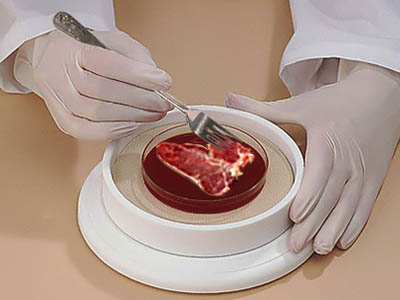
It goes without saying that industrial meat production entails harm to animals. While much of this harm might be avoidable, the costs of producing meat ethically (if such a thing is possible) in sufficient quantities to satisfy a hungry market could end up making meat unaffordable to most. But lay debates on whether it’s ethically permissible to eat meat often don’t touch on these economic factors, preferring the extreme positions of either asserting human dominion over other animals, or the essential wrongness of killing animals for food (where, for most of us, this food source is fully replaceable).

The argument for human dominion is of course largely a matter of cultural habit, and as Peter Singer has pointed out in talking about speciesism, it is by itself difficult to distinguish from racism or sexism. In his paper “Eating animals the nice way” (pdf), Jeff McMahan succinctly highlights our prejudices on this matter by pointing out that “human intuitions about the moral status of animals are so contaminated by self-interest and irrational religious belief as to be almost wholly unreliable”.

The position that it’s always wrong to kill for food also seems extreme, in that it’s surely possible to imagine meat without suffering, even if only on a small scale. So, the harm caused and whether it’s needless or not, compared to the benefits of meat production and consumption, need to be part of the debate for our vegetarianism or our meat-eating to be ethical.

I’m of course already taking a stand in the paragraph above in not giving significant attention to some vegan positions, where the treatment of animals as a commodity is universally regarded as ethically wrong. This is simply because I’m not persuaded that we have a duty to maximise the lifespans of (some) other animals, because “being alive” is not something they can value. For those animals that do have a theory of mind, I’d think we would have that duty. As for chickens and cows, though, the issue of suffering seems to be what would determine the ethical status of meat-eating.

The position I’m taking is that, for a practice to be ethically wrong, someone or something’s interests need to be harmed. The thing being harmed needs to be capable of experiencing harm (whether emotional, financial, or other) – this is what it means to be a moral agent. However, even harm is in itself not sufficient for ethical wrongness, as some cases could justify causing a certain amount of harm in order to prevent a larger amount of harm.

When considering whether it’s ethical to eat meat, utilitarian arguments are most commonly marshalled in defence of the view that meat-eating is ethically wrong, due to the harms caused to animals. But the harms cited are not convincing, or are at least not an argument against meat-eating per se, but rather against the particular conditions under which most animal meat is produced.

Non-human animals can suffer pain. If we assume that causing them unnecessary pain is wrong – as I do – what follows is that we need to produce and consume meat in ways that don’t cause unnecessary pain. It would only be ethically wrong to eat meat, in principle, if meat production necessarily caused harm to animals. But meat can be produced under non-harmful conditions, and animals can be slaughtered without distress to themselves or other animals in their immediate environment.

As I say above, farming of this sort would be more costly than factory-farming, and this approach would mean a significant increase in the price of animal meat. But here again, there is no necessary harm – those who cannot afford to eat meat will not suffer significant harms through being forced to eat less or no meat, and farmers who cannot compete under these conditions would have to develop alternative ways of making a living.

There would certainly be some harms resulting here – to the farmers – but these harms would on balance be less than animal suffering under factory-farming. Again, though, the key point is that meat-eating per se would not be ethically wrong, even if certain market-orientations in the production and consumption of meat could result in more harms than others.

Regarding the more general economic arguments around the production and consumption of meat, if meat was a significantly more wasteful sort of foodstuff to produce than alternatives, the argument could be made that eating meat is ethically wrong. But only if a) we grant that we have moral obligations to others and/or the environment; and b) if we have good reason to believe that meat production is indeed more resource-intensive.

Point (a) does stand in need of support, but I’d imagine that most of us would accept its truth. But even if true, it remains possible that a significant price-premium on meat – putting it only in the hands (or rather, mouths) of the wealthy – could result in a net benefit to those less fortunate. The farmers and others involved in meat production could receive greater profits, and potential taxation revenue could be directed explicitly at poverty-relief, or feeding programmes (whether involving meat or not). Much could go awry with this sort of scheme, of course, but the practical problems of allocating this revenue are again not an argument from principle.

On point (b), the argument is far less settled than many seem to believe. It’s often cited as a truism that meat-production is vastly more resource-intensive, but evidence cited in books such as Simon Fairlie’s Meat: A Benign Extravagance offers good reason to be suspicious of this truism (as is often the case with dogmatic utterances of any sort).

It might well be the case that 50 years from now, we’ll look back in disbelief at our current dietary practices, perhaps considering them a form of savagery and exploitation. Our cultural practices don’t always overlap with what’s ethically right, and it can take time for us to realise this. And I can’t deny that part of the reason I eat meat is simply because I assume that it’s okay to do so, and refrain from (potentially) burdening my conscience by thinking about it too much.

But if it’s true that ethical wrongness entails actual, necessary, harms rather than potential harms, then arguments against meat-eating that appeal to potential harms (under existing rather than immutable conditions) aren’t persuasive. The precautionary principle is a poor justification for restricting liberty – if harms cannot be demonstrated, we should be free to eat whatever we like.

The burden of proof should always fall on those who want to restrict liberty, and as things stand, it seems to me that the only justified restrictions on what we eat relate to some ways of producing and eating meat – but not meat-eating in general.

This column was prompted by The New York Times, and their call for submissions to the Put Your Ethics Where Your Mouth Is contest.

President Zuma on religion and “humanity”

As submitted to the Daily Maverick.

It’s always a surprise to find oneself agreeing with Floyd Shivambu, but if President Jacob Zuma really did say what he’s reported to have said at a church service on Sunday, he should certainly face his day in court. Not only a court involving advocates and charges of corruption, but also the court of public opinion, where he should be found guilty of a gross lack of judgement in using intolerant and divisive rhetoric to divert attention from the ANC Youth League’s criticism of him.

If a Helen Zille tweet speaking of “education refugees” can result in a week of widespread outrage, how is it the case that Zuma can effectively say that the non-religious have no humanity without (at least) equivalent levels of outrage? In fact, he should not only face criticism from the public and censure from the party, but if you support the hate speech provisions in our law, this should perhaps also be a matter for the courts.

“We need to build our nation because presently we have a nation of thugs. This is a task faced by the church. Fear of God has vanished and that means that humanity has vanished”, is what Zuma is reported to have said to the United Congregational Church of Southern Africa. We do indeed need to build our nation, but as I’ve previously argued, when it comes to moral leadership Zuma is hardly the man for the job.

The church can certainly play a part – a large and possibly effective part, seeing as the majority of South Africans are members of some church or another. And when the church focuses on respect, love, compassion and other sorts of virtuous qualities, I wish them all possible success. But when the church that our new Chief Justice belongs to endorses the view that homosexuality is a sickness that can be “cured”, it should be immediately clear that churches have no monopoly on morality.

My previous columns have frequently discussed the absence of a positive correlation between religious belief and moral virtue, but this is not the point here. Whether it’s true or not that religion can encourage those virtues, the fact remains that non-believers are in no way handicapped when it comes to discerning right from wrong. We use different standards to do so, yet mostly end up with the same conclusions as the religious do.

This is obviously so, because most of these conclusions are obvious ones that anyone living amongst others would reach. We all have an equal investment in social cohesion and freedom from fear, and shared rules make those goods possible, regardless of how we reason our way to them. In South Africa, as in many poor countries, humanity “vanishes” largely because people are materially insecure, and resort to opportunism to address those insecurities.

If your life is miserable, you’re less invested in the future, and more invested in seizing opportunities where you find them. The narrative of a harmonious “rainbow nation” only gains traction if you have reason to care for the welfare of others, and it’s not always the case that we do. The church can provide reasons of this sort, yes – but stronger and more universally respected reasons are secured when people have jobs and food, perhaps along with a government they can trust to not exploit them.

If it’s only fear of God that keeps religious people from breaking laws or harming others – or even from having humanity – then we should be seeing far worse moral crises in secular countries than we do in religious ones such as ours. And what does lacking humanity mean? Are secular folk simply lacking some moral property, or are we somehow not even human on Zuma’s reckoning? And what does it say about the moral character of the religious when the implicit claim is made that without religion, they’d suddenly discover or rediscover the impulse to rape, rob and murder?

Whether you call it “humanity” or not, President Zuma, many of us don’t do these immoral things due to the belief that it’s wrong to do them. As much as I’m willing to say that your religious beliefs are false, I’ll only start saying that you lack humanity when you act like you lack humanity – not only because you have a different worldview to mine.

Like perhaps now, where you essentially tell me and all other non-believers that we are qualitatively inferior to you and other believers. You – the man who hasn’t gone more than a couple of months without some press coverage on things like rape trials, dodgy arms-deal allegations, shady friends, financial mismanagement, corruption or reckless sexual behaviour.

I get that you need to defend yourself against the current round of attacks from Shivambu and others, and that you’re heading into a delicate situation in Mangaung later this year. You’re entitled, and would be expected to, defend yourself by rallying religious support. But you can do so without calling my humanity into question. Choosing to do so is divisive, inflammatory, and intolerant of any worldview that doesn’t accord with your belief in God.

And it certainly seems to lack humanity to me. But then, perhaps I lack the necessary qualifications to speak as a human at all.

What’s the harm? Well, homeopathy could (indirectly) kill you.

The letters Penelope Dingle sent to Francine Scrayen make for very sad reading. Scrayen was “treating” Dingle’s cancer, diagnosed in February 2003. Dingle’s sister is now suing Scrayen, and it’s easy to understand her motivations for this on reading not only the letters, but also the coroners report following Dingle’s death :

In my view the deceased’s rectal cancer was present and causing bleeding and other symptoms from at least 31 October 2001. During the period 31 October 2001 until at least the end of November 2002, the deceased regularly described the symptoms of her rectal cancer to a homeopath, Francine Scrayen. It was not until November 2002 that Mrs Scrayen and the deceased discussed the possibility of reporting her rectal bleeding to a medical practitioner and it was not until 5 December 2002 that she first reported those problems to a doctor.

I accept that Mrs Scrayen believed that the deceased had suffered from haemorrhoids years earlier and the bleeding and pain was “an old symptom coming back”, but a competent health professional would have been alarmed by the developing symptoms and would have strongly advised that appropriate medical investigations be conducted without delay.

As I’ve said before, pseudoscience doesn’t only cause the (relatively trivial) harm of lightening the wallets of the gullible. When it’s taken seriously, it can not only result in these sorts of tragic stories, but also helps to contribute to a general climate of unreason, where people become less discerning about what to believe and why to believe it. In fact, an increasing concern is the ways in which this climate of unreason can be leveraged in favour of political and economic interests. Conspiracies are attractive to many folk, because we sometimes prefer grand narratives to the conclusions reached via the application of Occam’s Razor (on this topic, Rosenberg’s new book The Atheists Guide to Reality makes for good reading).

Alternative medicine that works is simply called “medicine”, as Dara o’Briain reminds us here:

The Dingle story is now a few years old, but it’s back in the public eye thanks to the recent publication of the coroners report and Dan Buzzard’s highlighting of that report’s contents. And now, Scrayen has sent Buzzard a cease and desist letter, demanding that he retract his allegations regarding her complicity in Dingle’s suffering and her potentially avoidable death. You can read Buzzard’s two posts on Scrayen via that last link, and it’s difficult to see how Scrayen thinks he’s done anything wrong – except, of course, for exposing her as a dangerous quack.

It is ultimately the consumer’s fault if she makes choices which endanger her own life. The issue here, though, is that while Dingle (and most of us) live(d) in a society which protects us from all sorts of misrepresentation and fraud, that protection is absent in the case of things like homeopathy. The politically-correct, relativistic way in which opinions and evidence are treated make us afraid to tell people that what they believe is sometimes nonsense, and sometimes dangerous nonsense.

Medical aid schemes should of course not reimburse for homeopathic treatments. Pharmacies, who are associated with treatment and good health, should ideally not sell them, no matter how profitable exploiting the gullible can be. Pharmacies are of course free to sell anything legal, though – my point is more that it’s unfortunate that they often don’t take any proactive role in reminding consumers that what they’re buying is pure placebo, and shouldn’t take the place of medicine.

Most important, perhaps, is that in an age of manic labelling of everything consumable, down to the most minuscule ingredient, it’s an almost criminal neglect that legislation doesn’t exist to force producers of homeopathic remedies to spell out the simple fact that a glass of water will “treat” your ailment just as effectively as a homeopathic “remedy” will.

Also see Angela Meadon’s post on this, reminding Scrayen that she can’t bully Buzzard into silence, and that the Streisand effect might well result in her attempts to do so having the opposite effect to what she hopes.