(Reposted): Being Right Doesn’t Guarantee That You’re Not Wrong

Martin Pribble recently asked if I’d be willing to write a guest post for his site. I was, did, and have archived it below. Also of potential interest are two posts in reaction, first from Ophelia Benson, then from Stephanie Zvahn (thanks, both). Many of the comments on those posts are useful in helping to develop further thoughts on this, so thanks to many who weighed in. No thanks for comments like this, which seem generated by one of those PoMo paragraph generators. Sokal would be proud.

_______________________

It’s not always necessary to be polite. Sometimes, being abrasive or rejecting diplomatic niceties is exactly what’s needed to get a point across. And sometimes, getting a point across is preferable to pleasing the crowd, a subset of the crowd, or even the person you’re talking to. For every person who has been disabused of some fanciful metaphysics by a self-styled “friendly” atheist like Hemant Mehta, you’re likely to find one that’s been persuaded by a firebrand like PZ Myers.

Different approaches work on different audiences. And as so many of us have pointed out over and over again, atheism is not a religion, a cult, an organisation. We’re united in our disbelief in god(s), not in our politics or strategies. So whatever approach one of us takes – no matter how large their blog or Twitter following – it’s a mistake to think that they define atheism, whether old, new, Gnu or one that eschews these categories altogether.

But we (and there, the dangers begin to lurk, as soon as I speak of a “we”) pride ourselves on not believing in the same highly implausible proposition (that gods exist). This means, at the very least, that we share some minimal commitment to reason, in that we want to be guided by the evidence rather than superstition or dogma. And if that is the case, it doesn’t seem much of a stretch to suggest that we should apply the same critical mindset to propositions beyond merely the god hypothesis.

So, when we speak of social justice, equality, freedom of speech and so forth, it’s reasonable to expect some similarity in approach, even if not in conclusions reached. To put it plainly, an approach in which we listen to the evidence, in other words to each other, without pre-judging what someone is going to say, what they believe, or what ideological faction they belong to. Their arguments are assessed on their merits, rather than via knowing which websites they frequently comment on.

Nobody can deny that some participants in these conversations are not honest brokers. Some are simply unreconstructed trolls, others trolls of the sly sort, mimicking critical reflection while subtly distracting – and detracting – from the real issues that others are trying to address. Another set of “others” aren’t trolls at all – and it seems to me that the community of sceptical and/or atheist activists and bloggers sometimes have a difficult time of it in distinguishing between these sorts of contributor to the debate.

The trend on the Internet generally – at least according to my anecdata – is for increasing hyperbole and hysteria, perhaps especially so when we can comment anonymously, with no fear of reputational harm. Those who shout the loudest think that they can win, or end up thinking that they’ve won once they have drowned out the opposing view. And even though our community might (hopefully) be more rational than any randomly selected group, we’re not immune to the same trend.

On emotive issues, this can be particularly worrisome, and is also more likely to happen – simply because the stakes are higher. And here’s the thing: I think we forget that a concern for tone does not automatically mean that you are a tone-troll (broadly, someone who is attempting to shut down legitimate criticism on the grounds that it’s expressed in a rude or hostile fashion).

To put it another way: you can grant that Francis Collins (for example) has some pretty confused ideas about which propositions gain epistemic weight via waterfall observations, yet still think that it’s a bad idea to call him some abusive name. You might think it’s a bad idea because you think it rude, or you might think that (on balance) he does more good than harm for science, so let’s not alienate people who we might reach through discussing him politely.

When the space for saying that (“that” being something like “Collins is wrong, but it’s not helpful to call him a moron”) disappears, we’re not having a rational conversation anymore. Yes, I did use the phrase “not helpful” – sorry, but it fits. And what it means is “not helpful to a certain strategic goal”. You might not share that goal, or you might share it, but think it should be achieved through different means. All of which are questions that we can discuss, if we’re still listening to each other.

We’re not, though – at least not consistently. And right now, the debate on misogyny in the sceptical community has escalated to such an extent that there’s a lot that can’t be heard over the screaming. Yes, there is certainly plenty that doesn’t need to be heard because it genuinely is sexist, or excuses sexism. But simply labelling someone a “rape apologist”, for example, doesn’t magically transform someone into actually being a rape apologist.

A problem here is that we could mean different things by a phrase like “rape apologist”. Coming from a position of privilege, most men might well be unaware of how that privilege biases them against seeing various threats, insults or instances of being demeaned or trivialised that women experience. This blindness might make them too tolerant (in other words, at all tolerant) of sexist language, or stereotypes around what it means when a woman dresses in a particular way.

To be clear, this blindness is bad, and needs correction. It’s certainly bad if we create, endorse, or fail to combat a climate of hostility to any poorly defined (and heterogeneous) group like “women”. And the fact that some women believe that such a climate currently exists is a problem in itself, whether or not you’re complicit in creating that climate. In fact, it’s a problem whether or not such hostility even exists – unless you want to claim it’s a complete fabrication, the perception most likely finds inspiration in some forms of behaviour or speech that we could modify at little or no cost.

Furthermore (and obviously, one would hope), rape jokes and stereotypes about women (or about any hypothetical “group”) are bad things. But there’s still a significant difference of degree between a man who says that a woman who was raped was “asking for it” and someone who asks the question whether, empirically, there is any correlation between what women wear and whether that correlates with sexual violence in any way. That difference rests in part with their attitudes, and in part with how easy it might be to change their views.

The former sort of man can perhaps never be persuaded that he has Neanderthal attitudes. The latter one could perhaps be persuaded that that’s the wrong question to ask. But once he’s driven out of a comment thread by name-calling, we lose our chance to persuade. And this is a key thing: it’s not PZ (or whoever’s) job to control the people who comment on their posts. But we all need to be aware that we set the tone at our websites not only by what we write, but also by how we respond to those who leave comments.

So if someone doesn’t give someone else a chance to explain what might be an honest mistake, rather than an attempt at trolling or rape apologetics, before descending on them with abuse, that abusive reaction is also antithetical to the skeptical cause, and should also be called out by the blog owner or other commenters. If it’s not called out, we quickly become gangs who have chosen a side, and chosen our authorities or leaders, and who then defend our turf by whatever means necessary – whether principled or not.

This tribalism, and defending of a cause, comes naturally to most of us. What also comes naturally is to double-down when challenged, especially when others question your integrity or motives. This complicates the reactions that people have to being called out for language that appears – or is – sexist or insensitive to the pervasive misogyny debate. Being defensive in light of such accusations is normal, and it’s perhaps uncharitable to use this defensiveness as further evidence of the commenter’s ignorance, prejudice or malice.

Here in South Africa everyone will know what I’m talking about if I were to use the phrase “playing the race card”, and hopefully you do too. In case you don’t, it refers to a tactic that’s sadly common here, and is used for avoiding uncomfortable discussions and not allowing any facts to interfere with your prejudices. If a white man such as myself says something about South African culture or politics, it is often dismissed simply on the grounds that I can’t understand what it’s like to be black.

What this crude form of identity politics misses is that blackness or whiteness or whatever-ness is only one feature of identity. Sometimes a powerful one, to be sure, but nevertheless, I might have far more features in common with a randomly selected black South African than she does with another randomly selected black South African. The same principle applies with gender, and just as we shouldn’t use the race card, but instead look at the arguments and evidence, we should avoid using the gender card.

Yet, we have to make distinctions between well-meaning interlocutors and trolls, and we all want to keep our websites and blogs free of trollish pestilence. So patience cannot be infinite. But when the current tensions started escalating to the point of an apparent civil war, it started to appear as if – increasingly – some members of this community started making judgements before hearing any arguments.

If all we want is to feel self-righteous, and right, that’s fine. It is indeed good to know who the enemy is. But it’s also good to change the enemy’s mind, where possible, and it’s good to discover that someone you thought of as an enemy is actually simply a confused friend. Let’s be wary of making the latter two sorts of interaction impossible.

P.S. I apologise for the generality in this post. It’s a difficult thing to write about, for various reasons, and that accounts for the evasiveness. First, the vociferous responses to interventions in this area do play a censoring role (or did, in this post). Second, I have friends and “friends” (in the Facebook/Twitter sense) on both sides of the civil war, which serves an inhibiting role. Third, and most important, specifics might detract from the general and primary point I’m trying to make – that we should be careful to keep listening to each other, because the thing we (as skeptics) are arguably best at is remembering  that we can be wrong, and recognising when that’s the case.

Voracious and mostly dumb: Lehrer, Daly and the Internet audience

First published on The Daily Maverick

It’s somewhat of a cottage industry to point out yet another way in which something new in the world will transform our lives. Whether it be social structures, economic systems or modes of communication that are changing, it’s the stuff of pop-psychology, -science or -economics to point out what it is that we need to adapt to, and to make suggestions for how we should do so.

Some people make a living from making these suggestions. Or did make a living, until being discovered fabricating Bob Dylan quotes as Jonah Lehrer recently was. (If we’re lucky, a similar fate might soon befall Malcolm Gladwell, sparing us from “Slurp: What kitten’s tongues teach us about derivatives”.

Yes, of course I’m jealous. And also sympathetic, in the case of Lehrer, because it seems likely that he didn’t so much intend to deceive as simply to entertain. This isn’t to excuse him, because clear distinctions can be drawn between cleaning up quotations and simply making them up. The latter remains, and should remain, unacceptable in anything purporting to be non-fiction.

But one of the things that has transformed and requires adaptation is the relationship between writers and readers, on at least two fronts. Even in the market for pabulum, where the likes of Lehrer and Gladwell often trade, the attention economy conduces to style becoming as important as substance if you’re looking to sell your books.

In the latter decades of last century, you could perhaps count the popular science writers worth reading on ten fingers, and “popular” was still compatible with “rather challenging”, at least for laypersons. Now the bookshelves seem packed – frequently with books from the discipline dubbed “neuroscientism”, in which Gladwell and Lehrer arguably both work. To have your books sell, rather than a competitor’s, you need to become a brand.

The need to become a brand is not new. Perhaps, though, what it means to be a brand these days is new, because brands appear to no longer be built on who has the best ideas, but rather on ideas that spark the imagination and can be captured in headlines and slogans. The aversion to complexity that many of us in the audience seem to have incentivises the sort of shortcut-taking that Lehrer is guilty of.

The changing expectations we have for what our “experts” should deliver, and how they might adjust their output in response to those expectations, was one sort of adaptation that was widely discussed over the past week, mostly in response to the Lehrer case. A second sort of adaptation can be found in (and is necessitated by) the fact that many of us seem to have forgotten what free speech is for.

As I argued in last week’s column, we can be wrong about what we believe to be true. Our prejudices and biases might stop us from realising that we’re wrong, and worse still, they might cause us to silence those who disagree with us. So, free speech is largely good for protecting vulnerable (but often valuable) speech acts.

What it’s not for is claiming protection from ridicule or criticism for saying stupid, bigoted or hateful things. So, just in case anyone missed or misunderstood last week’s column, in it I argue that Americans have just as much right to ridicule Chick-fil-A’s president as he does to express his homophobia, because the morality of both of these actions is a separate issue from their permissibility.

This background is relevant to the second adaptation because of the size of the market for opinion – both the producers of it and those who respond to it, increasingly on platforms like Twitter. I’ve previously asked the question of whether comment facilities on the Internet help to turn decent folk into raving loons (temporarily, one hopes), so won’t revisit that territory here. Instead, the question I’d like to raise is what we’re supposed to do about it.

To put it simply, as an audience grows, so too does the number of trolls. As any of you reading this will know, the troll is frequently louder and more persistent than any other contributor to debate. A common refrain on comment threads has for years been “don’t feed the trolls” – in other words, ignore them and hopefully they’ll get bored and go somewhere else.

But this attitude is starting to seem somewhat naïve. Not only because groups like 4Chan and LulzSec have been known to express their views through damaging hacks, but also because the idea of what free speech is good for is perverted when we start using it to justify the level of abuse that Olympic swimmer Tom Daley was recently subjected to.

In his explanation of why Rileyy_69 (the Twitter user who taunted Daley) is no free speech hero, Graham Linehan makes a number of good points. These two paragraphs are particularly worth reading, and clearly illustrate why we somehow need to adapt our norms – and even perhaps our laws – to accommodate the different ways in which people can and do engage in a world of electronic media.

Being able to locate someone–even on the other side of the world–who has suffered a bereavement, and whisper in their ear words calculated to break their heart, is a new chapter in our development, and I think we can all agree that the arrival of hyper-empowered bullies is far from being the most positive aspect of our current connectivity.

And “don’t feed the trolls” won’t cut it as a solution. That’s just victim-blaming. Often it comes from people who have never had to deal with the level of abuse that many in the public eye receive, and never will. New rule: If you don’t experience it every day, you don’t get to tell anyone who does to suck it up.

There are many more adaptations than just these two that might be necessary, and the two I discuss here might not even be at the top of the list. The Lehrer case is arguably an example of what one might call the “shortcut culture”; and Rileyy_69 an example of what can happen in a world where everyone seems to think they’re entitled to just any opinion, and who have lost the internal censor which might otherwise have told them that a given opinion was not worth sharing.

Linehan says, “the question of how we protect free speech is no less important than the question of how we deal with abusive behaviour online”. While that might be putting the case too strongly, the latter is certainly an important question. It is also a complex one, and this is where the two adaptations intersect. Complex questions require careful deliberation, but fabricated Dylan quotes might sell more books.

An unstoppable tide of trolls

If you’re even occasionally dipping in to the skeptic/atheist/whatever blogosphere, you’d no doubt know that there’s plenty of lines in the sand being drawn. Much of it is rather embarrassing, in that some folk seem so desperate to cast their vote in favour of one camp or another that any pretence of looking at evidence, and making careful judgement, is completely out of the question. Because this round of infighting dates back to Elevatorgate (arguably before, in that elements of previous internal conflicts have also resurfaced), I’m not going to even try to get you up to speed if you haven’t been keeping up.

Here are some examples, though. After the Lehrer resignation, Sam Harris decided to give away free copies of Lying, seeing as that book expressed much of what he’d have otherwise liked to say. PZ Myers announced this on his blog. If you look at the comments on PZ’s blog, it’s only from comment 31 onwards that anyone tries to avoid caricature of Harris’s arguments (on issues unrelated to Lying, note – the fact that he said or didn’t say various things about torture and profiling are treated as relevant to lying).

Russell Blackford then tries to express a few thoughts in defence of Harris, which make it back to PZ’s post in the comments. The comment deals with appropriate and inappropriate uses of the word “racist”, and – whether wrong or right – is expressed in a measured tone. But the immediate response to the comment is: “Incidentally, citing the misogynist shitbag Russell Blackford isn’t going to impress many people here.” There’s a history there too, of course, which you can find out about if you choose to. The only reason I mention it here is to draw attention to the fact that commenter A, who linked to Russell’s post, might have had no idea what commenter B was referring to. Commenter A can’t be assumed to be a veteran of these “debates”, and was perhaps referring to Russell’s post in isolation.

But now, of course, commenter A might never read or comment on Pharyngula (PZ site’s) again. Or, s/he might forever be known as being part of camp X or faction Y. Perhaps, s/he is now a “rape apologist”, and will get shouted down the next time they try to say anything (if they ever do) on any site that is on PZ’s side of these squabbles. In other words, commenter A has perhaps been exiled from a certain community, on the basis of no good reason at all.

I’ll be saying more about tone and the slur of “tone-trolling” in a guest post at Martin’s place (on August 13), so won’t get into that much today either. Suffice it to say that when abuse and insult take the place of debate, nobody wins. I’ve dared to comment on Pharyngula three times, and twice been shouted down for reasons I couldn’t fully comprehend. That’s fine – perhaps I was being dim on those days. But sometimes you’d like to know why, and the problem is that a mob quickly forms, and it seems pointless to try and engage unless you’re already an insider. Clubs, cliques or orthodoxy are inimical to skepticism, and there’s certainly the feel of one there, and on other sites.

Sam Harris pointed this out last night, and PZ has subsequently responded. The comments are again what you’d expect, or have come to expect – you either mock Sam Harris, or you ask a question that’s critical of Harris-mockery. And then you get mocked. Those are by and large the only two options, and as far as I can tell, there’s little room for debate. If you instead want to read a comment thread that encourages debate, go back to the Blackford post in defence of Harris – there’s plenty of deliberate reasoning there, and also telling of people that they aren’t contributing usefully when they resort to insult. Now, both Blackford and Stangroom are philosophers, as am I, so of course I could be expected to have a bias in favour of a certain kind of discussion. The thing is, I’d think – and hope – that all of us in the skeptical community have a bias in favour of communication, and against caricature.

There was a post on Pharyngula a couple of days ago, billed as an open thread wherein people could speak openly to PZ, and make suggestions as to possible changes to the site, comment policies, and so forth. The thread was always going to be deleted after 24 hours (I think it was 24 hours). There were many thoughtful posts there, and one that I wanted to capture  for posterity is at the bottom of this post. You can guess for yourselves what happened to this commenter for daring to question the right of the horde to be abusive. And the thing is – why would the horde not feel they have the right (obligation?) to be abusive when a) PZ very seldom tells them to stop and b) sometimes creates threads where that sort of thing is encouraged.

My column in Daily Maverick today addresses some of these issues, in that it raises the question of how we can adapt to a word in which the immediacy of online communication amplifies the inanity, and makes it that much easier for a like-minded collective to protect their prejudices against any form of challenge. Besides the (very real) issues that have been rending the community (mostly around misogyny), it remains true that there are many thoughtful people on both “sides”, and there is still value in listening to each other. Instead, I suspect that more and more, people will feel compelled to pick sides, and also to stop listening – perhaps in part through measures like eliminating comments altogether.

I’m not ready to do that yet myself, though certainly understand the impulse. Instead, I mostly choose to not respond. But there’s very little reward in that option, both in that I still feel the frustration when an idiotic comment lands, and also because the dialogue can sometimes be very rewarding. Our online engagements with each other are unfortunately tending, at least as far as I can tell, to a victory for those who drown the others out by shouting. They get to stay prejudiced, self-righteous and so forth. And sometimes, perhaps, so do we.

Edit: I wrote a guest post for Martin Pribble’s site, dealing with related themes – read it here if interested.

When fried chickens become homophobic

As submitted to Daily Maverick

You’ve probably heard about the Washington, DC. chain of dry-cleaners who have been barred from opening a store on Dupont Circle after their CEO admitted that she favoured a qualified franchise. In an interview with the Washington Post last week, Kate Parker of GreenClean was reported as saying that “anyone should be allowed to vote, so long as their families have been in the US for at least 3 generations”.

You haven’t? Well, neither had I until I made it up a few minutes ago. But the story that has received a significant amount of coverage are the calls for boycotts and attempts to block the expansion of American fast food chain Chick-fil-A, after their president Dan Cathy was quoted as saying “We are very much supportive of the family – the biblical definition of the family unit. We are a family-owned business, a family-led business, and we are married to our first wives. We give God thanks for that.”

Conservative activists (including ex-presidential no-hopers Rick Santorum and Sarah Palin) have rallied to Cathy’s defence, while defenders of gay rights and marriage equality have been quick to denounce the company for offences including not only offensive remarks such as those quoted above, but also their financial support for anti-gay organisations and therapy groups that aim to “cure” gays.

But while companies that are anti-immigration attract only very occasional and fairly disorganised backlash, Chick-fil-A is experiencing a nationwide campaign calling not only for boycotts of their franchises, but also statements from lawmakers including Chicago Mayor Rahm Emanuel indicating support for Joe Moreno, the Chicago alderman who blocked Chick-fil-A’s expansion in that city following Cathy’s homophobic comments.

It’s been said before, but bears repeating: the only way free speech arguments can ever be taken seriously is if we apply them consistently, and especially to speech that offends us. If free speech is only about forcing people to listen to what you have to say, you’re missing the point. That sort of “free speech” typically only entrenches the privilege of those who already have something to say, and a platform from which to say it.

Meanwhile, the very views that are marginal and unpopular might be worth hearing, and protecting. Sometimes, because we learn that we are wrong through being exposed to them, and sometimes because we learn why we can consider ourselves right through hearing how weak the opposition’s point of view really is. But if we don’t allow for the possibility that we are offended, we can’t describe ourselves as campaigners for free speech.

Emanuel said that “Chick-fil-A’s values are not Chicago values. They’re not respectful of our residents, our neighbors and our family members. And if you’re gonna be part of the Chicago community, you should reflect Chicago values”. If it’s freedom that’s at issue – whether in the form of gay rights or freedom of speech – the question of whether Emanuel’s comment is as offensive as Cathy’s is not a trivial one, because Emanuel is giving a moral principle the same status as a legal one.

It matters not that I – and ideally all of you – share a commitment to the moral principle at issue, namely that heterosexuals don’t have a monopoly on “family”. What matters is that having the sorts of views that a Mogoeng Mogoeng or Jacob Zuma have can be condemned through the use of one’s own right to free speech, rather than effectively stripping that right from others by threatening to (illegally) discriminate against them in terms of where and how they can trade.

Following an outcry from liberal commentators in the US, both Emanuel and Boston Mayor Tom Menino have subsequently admitted that any such restraint on Chick-fil-A’s operations would violate the chain’s rights. If Chick-fil-A could be shown to discriminate against gay employees in terms of who they hire or what they pay, or perhaps in their treatment of gay customers, legal action is both permissible and proper. In the absence of that, much of the outrage has rested on a confused conflation of morality and legality.

Part of speech being free is that we can be outraged, whether for good reason or not. In this particular case, even the question of whether the outrage is merited is an open one. While there’s no question in my mind that homophobia is a bad thing, it isn’t clear that it’s a failing that trumps all other potential failings.

We know this one thing about Chick-fil-A and their values, and what we know obviously can’t be measured up against the attitudes of any other fast food chain, where presidents might hold more odious views and simply choose not to air them.

Then, we also know other things about Chick-fil-A, for example that the roughly $2 million they donated to anti-gay causes over each of the last two years is trivial in light of both their $4 billion annual sales, and also that they donate substantial amounts to non-homophobic organisations also (and, as a result of the same conservative Christian principles that motivate their homophobia).

Calling for a boycott might sometimes be exactly the right thing to do, although it remains unclear that we should feel compelled to mix every aspect of our lives (including our fast food choices) with moral debate. But seemingly knee-jerk moral outrage is something to be treated with suspicion, whether or not it happens to agree with your viewpoint. This is perhaps especially true if it’s a bandwagon that you can’t avoid joining, for fear of being labelled a homophobe.

The 2012 TB Davie lecture: Introductory remarks

On August 1, 2012, Ferial Haffajee delivered the 47th annual TB Davie Lecture at the University of Cape Town. As chair of the Academic Freedom Committee, I had the privilege of introducing her, and this is the text of my introductory remarks.

TB Davie led the university as Vice-Chancellor from 1948 until his death in 1955. He is remembered as a fearless defender of the principles of academic freedom. He championed this cause and the autonomy of the university, defining academic freedom as the university’s right to determine who shall be taught, who shall teach, what shall be taught and how it should be taught, without regard to any criterion except academic merit.

This legacy is honoured through the TB Davie memorial lecture series, beginning in 1959 with a lecture by former chief justice and UCT chancellor, Albert van de Sandt Centlivres, after whom a building adjacent to this one is named. In subsequent years, the lecture has been delivered by, among others, ZK Matthews, Walter Sisulu, Wole Soyinka, Kader Asmal and Frederik Van Zyl Slabbert.

When the Academic Freedom Committee invited Ferial Haffajee to deliver the 47th annual TB Davie Lecture, it was in the knowledge that we were inviting one of South Africa’s media luminaries. Her career started with an internship at what was then the Weekly Mail in 1991 – a publication at which she gained immediate exposure to the challenges of working in a medium where a desire to reveal and discuss matters in the public interest would frequently be met by powerful dissenting voices, requesting (and sometimes requiring) that you refrain from speaking.

After leaving the Weekly Mail, Ferial worked in radio as a producer and reporter at the SABC, before joining the Financial Mail as Political Editor, and later Managing Editor. In 2004, she rejoined what had by then become the Mail & Guardian, where she served as editor for 5 years. In 2009, she was appointed editor in chief at the City Press.

Throughout these 20-odd years, Ferial has been no stranger to controversy and having to fend off attempts at censorship. In 2005, the High Court barred the Mail & Guardian from publishing a story on the Oilgate scandal, detailing how the Imvume oil company had paid millions of taxpayers rands to the ANC. Just as the publication had done in the 1980’s, Ferial insisted on running the story, but with the banned segments blacked out.

In 2006, she published one of what became known as the Danish cartoons, to illustrate a story about the protests generated by the infamous depictions of the prophet Muhammad. Threats to both herself and her family resulted from this choice.

The committee knew all of this when inviting her to address us today. What we did not, and could not, have been aware of is just how appropriate a choice of speaker Ms Haffajee would end up being. I refer of course to the events of May this year, when Brett Murray’s painting The Spear was hung and then defaced at the Goodman Gallery, and published then later retracted by the City Press.

The Spear highlighted various fractures and absurdities in South African society. One absurdity, for me at least, was in hearing a sitting Minister of Education call for the destruction of an artwork. Another was the inconsistency between the near-complete silence from social media pundits as well as government spokespersons when members of the political opposition are racially slurred or crudely insulted, and the contrast between this and the outrage generated by the alleged lack of respect shown by this painting, and the publication of it. A morality that appears to be selective is difficult to fathom, and sometimes difficult to respect.

For some, it was of course always absurd that an act of satire could be this divisive, this inflammatory. For others, the lack of sympathy or understanding for the outrage was the real absurdity – and a real travesty of decency. In South Africa, these fractures are sometimes quite shallow beneath the surface. A key question is of course how to deal with them. Another key question is how one gets – and perhaps stays – in a position to be able to address them, and at what cost.

Academic freedom and media freedom are natural bedfellows, perhaps most obviously because of the symbiosis between a media revealing things that might benefit from academic study, and through academic activity frequently being newsworthy. But more crucial, perhaps, is media freedom simply as a barometer of a country’s freedom more generally.

In a 2009 interview, Ferial said “Until just over a year ago, I was singing that we enjoyed world-class media freedom, especially compared to some other African countries such as the Democratic Republic of Congo, where four radio journalists were murdered last year, or Ethiopia, where all independent journalists are in jail or exile. But the ratcheting up of rhetoric against journalists since Polokwane is very, very dangerous. There is a fundamental philosophical difference between how the ANC perceives media freedom and how we journalists see it.”

Explaining her decision to withdraw The Spear from the City Press website earlier this year, she remarked “I hope we are not crafting a society … where we consign journalism to a free expression constrained by the limits of fear. This week society began the path of setting its mores on how we treat presidents in art and journalism; what is acceptable and what is not.”

Expression is at most partly free when one is afraid to speak. Arguably, it’s not at all free. Demands for silence on the grounds of culture, tradition or offences to dignity can sometimes be self-serving in that they forestall much possible debate or reflection on the merits of an artwork or speech act. Not the merits in terms of quality and originality, which are a separate matter, but the merits in terms of the discomfort and self-reflection the artwork could inspire.

The easiest way to justify poor arguments or mistaken ideas is simply to refuse to discuss them – and if it is a mistaken idea that presidents, for example, merit special protection from these sorts of insults, playing the race card or the culture card serves to rule that discussion out of order, leaving us unable to discuss those ideas.

It’s easy to agree that a painting like The Spear is disrespectful – I’d imagine that’s part of the point. You might think the painting in unacceptably bad taste, but your aesthetic preferences and cultural norms are of no more consequence than anyone else’s – at least in theory.

Many of you might share my hope that we can learn to deal with insults without feeling the need for protection from the courts, or from a Film and Publications Board which exhibits a very dubious moral authority in listing a known homophobic organisation as a “useful link” on its website.

I have this hope because it remains true that any restrictions on free speech on the basis of offence or slights to dignity threaten to put us on an unprincipled and very slippery slope. These sorts of things are perhaps easier for some of us to believe, and say, than it is for others. But it’s also true that some of us have easier access to the courts than others do.

Absolute freedom, including the freedom to offend, is usually not the only value at issue in contestations such as these. It is sometimes the case that one might be free to speak, but chose not to exercise that freedom – or simply, to regret having done so because the harms seem to far be outweighing any possible benefits, making absolute principles difficult to defend. As someone who experienced these dilemmas at first hand, we look forward to hearing Ferial Haffajee’s thoughts on creeping censorship, and the spearing of freedom.

You can download the audio of Ferial’s talk via this UCT page.

Previous posts on The Spear:

The tragedy of absurdity – on Holmes and the Batman shootings

As submitted to Daily Maverick

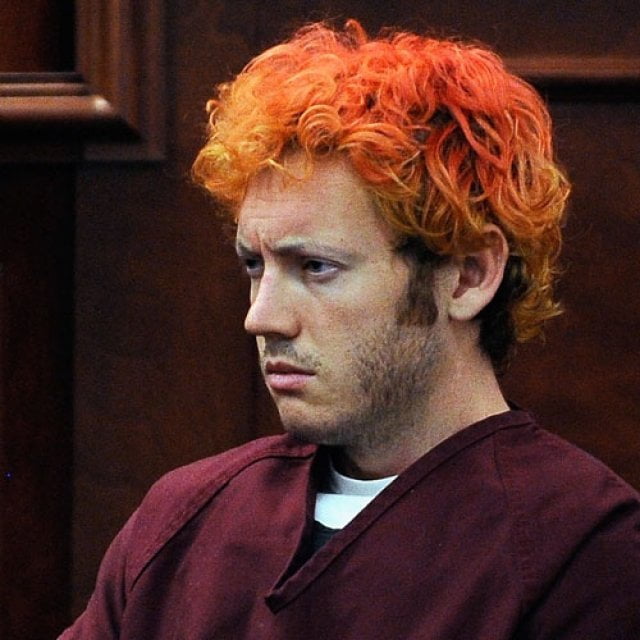
Last week’s shootings in Aurora, Colorado brought to mind the power of absurdity. Amid all the speculation regarding what motivated James Holmes to open fire on a crowd of moviegoers – killing 12 and injuring dozens – we can safely assume that there at least was a motivation or a reason. But it might not be something we can relate to, and in at least one sense, it will be absurd.

Much of the speculation as to Holmes’s potential motive is of course also absurd: from pastor Rick Warren’s claim (edit: he claims misinterpretation) that the teaching of evolution is somehow to blame, to the equally idiotic assertion that the killings are the result of the teachings of Christianity. Most if not all armchair psychologising about cases like this is little more than an opportunity for people on the sidelines to air their fears or prejudices.

Without speculating on his motives, then, we can still say that some set of deliberations led him to plan and execute this attack. And the narrative underpinning those deliberations would have been absurd, because whatever he thought the act would demonstrate, or whomever he thought it would punish, it would inevitably fall short of succeeding in its goals.

To wit: If he intended to kill people of a certain demographic or class, the quality of his targeting was clearly absurd, in that the victims were essentially chosen at random. If he meant to send a message, we’ve not yet been given to clue as to what it is, nor are we inclined to being persuaded by messages delivered in such a fashion.

The only long-term effect on the world from actions such as these is to inconvenience future cinemagoers, who will most likely soon have to pass through security checkpoints to get into the theatre. Minds won’t be changed, whether that of a lover or a god you intended to impress, or those of a set of politicians or bankers you wanted to chastise. In all these cases, the act and the motivation for it will be absurd.

And of course, a heavy price is paid for such a vanishingly small or nonexistent reward. This is the power of absurdity – we define the groups or ideologies we belong to abstractly, to the extent that our political or religious identities become unfalsifiable or irrefutable. Sometimes, we kill, fight and die for ideas, even those that we think will only manifest in an afterlife.

More broadly, communal commitment to the same set of beliefs, whether absurd or not, deepens trust and galvanises group solidarity. We demonstrate our commitment in our actions; and the more elaborate and apparently heartfelt those actions are the more convincing and persuasive they appear to an audience. This can in turn grow the audience or the community, in that they are attracted to the sincerity and solidarity they observe.

When the Pope washes the feet of worshippers, for example, the gesture is costly because it sacrifices power and ego. It’s intended to be a hard-to-fake symbol of commitment to higher powers, or to a shared set of beliefs – this is part of what makes those commitments or beliefs more likely to be adopted by an audience.

Holmes’s gesture was more costly. Clearly so in the case of those who were injured or lost their lives, as well as their families and friends, but also for Holmes himself, who faces certain loss of freedom in one form or another and even potential loss of life (capital punishment is legal in Colorado, even though the last death sentence was handed down in 1987, and then finally executed in 1997). It’s tempting, therefore, to speculate as to some grand motive, because the motive needs to be grand enough to allow us to reconcile these costs.

But perhaps the speculation is always more for our own comfort than anything else, given that you can’t explain the absurd. That is partly the point of these gestures and narratives – they are designed to be un-interpretable and outlandish, because that’s how they perform the task of separating “us” from “them”. We distinguish between cultures not only on the grounds of things like language, but also through ritual, and if the rituals are too easy to fake they become less useful tools for doing so.

To some extent, we now have what one might call universal religions or cultures – things like democracy, human rights and so forth – and various commitment devices that indicate our membership of these religions or cultures. As with all religions, costly gestures indicate greater commitment. If it is inconvenient for you to cast your vote, yet you still do so, you’ll appear to care more for democracy than someone who can’t be bothered to vote. If you spend 27 years in prison, you’ll appear to care even more.

We can’t yet know what religion, culture, or identity Holmes was demonstrating commitment to, and perhaps we never will. Perhaps he was doing nothing of the sort, and we’ll later discover that this (ex) PhD student in neuroscience should himself be a case-study of a certain sort of brain abnormality which predicts this behaviour better than any speculations as to his hypothetical beliefs could do.

Or, more worryingly for those who’d like to take comfort in a narrative – any narrative – that might bring something resembling sense to this tragedy, events like this could simply be a reminder that those universal religions many of us take for granted aren’t yet as firmly rooted in modern cultures as we’d like to believe, and that there’s still plenty of work to be done.

Mandela Day and sustainable charity

As submitted to Daily Maverick

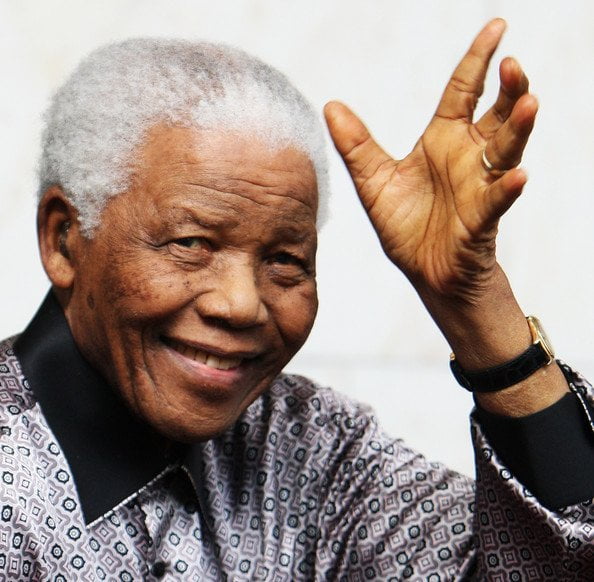
In November 2009, the United Nations General Assembly declared that 18 July should be commemorated as “Nelson Mandela International Day”, in recognition of his “struggle for democracy internationally and the promotion of a culture of peace”.

Though there are corners of the Internet that might dispute whether the honour is deserved, I’d imagine that most South Africans find it unimaginable that we’d be where we are today without his leadership.

Sadly, it’s nearly as easy to imagine Mandela himself looking on in dismay at where we are in 2012, and at the quality and character of those who now lead the democracy he helped to birth. And even though nation-building exercises like Mandela Day can frequently appear to be little more than an excuse for some warm and fuzzy sentimentality, my hope is that this year – and today, July 18 – can remind us that 67 minutes of our time, on one day of the year, will probably make no difference at all.

It’s perhaps not meant to make a difference in any case – at least not in isolation, and not because of any particular activity you might perform during the 67 minutes that we’re being encouraged to donate, in honour of Mandela’s 67 years of service to South Africa. The 67 minutes spent assisting some charity or another will be appreciated, but are unlikely to make a lasting difference unless we use the day as motivation to become more engaged in general.

The Nelson Mandela Centre reminds us that the campaign calls on us to “make every day a Mandela Day” rather than engaging in a box-ticking exercise on one day of the year, then thinking that you’ve done your bit. The latter sort of engagement is good for sentiment, and for giving middle-class folks an anecdote to tell over dinner, but not for much else.

The sort of sentimentalism that can result from encouraging (and engaging in) drive-by charity has more fundamental consequences than simply allowing us to imagine ourselves as humanitarians or philanthropists for a day. It might serve as a general mechanism for deferring responsibility for improving your environment, while being able to claim that it’s others that are negligent. What did they do on Mandela Day, after all?

It sometimes seems that we’re a nation of sentimentalists, who have learnt to wring our hands while (much of the time) also sitting on them. Furthermore, if Mazar and Zhong are correct, our occasional “virtuous acts can license subsequent asocial and unethical behaviours” due to the fact that we feel like we’ve paid our social dues and can now spend our credit selfishly.

Not that I’m intending to argue that you need to do something on Mandela Day, or any other day. The point is rather that if you do care, and want to do something inspired by Mandela or Mandela Day, it should perhaps be on your own initiative rather than prompted by Primedia or by our nostalgic memories of queuing to vote in 1994.

Any day can effectively be a Mandela Day, and that day can also simply be known as “Tuesday”, “Thursday” or “today”. I’m not disputing the symbolic value of standing together in an attempt to make a difference or show solidarity. However, symbols need to represent something to retain that value or force, and increasingly the representation seems to be entirely self-referential. We engage in symbolic gestures such as lighting a candle for Mandela (on the assigned “day”, of course), and then tomorrow, we go back to race-baiting in online newspaper comment threads. But long as your Facebook status mentions that candle, everyone will know that you’re Proudly South African.

There’s a simple thing that we can all try to do which costs no money and only a marginal increase (if any) in the investment of time. Many of the things that worked about the years after 1994 revolved around listening to and attempting to understand each other. I know that it’s less easy to build an advertising campaign around the subtleties of communication than around car headlights. But we didn’t need an advertising campaign then – let’s try to avoid assuming that we need one now.

Tony Nicklinson and assisted dying

Originally published in the Daily Maverick

Tony Nicklinson’s mind is trapped in a body that is useless to him. He has been unable to speak or walk for seven years – the voluntary muscles in his body are paralysed, with the exception of his eyes and a few facial muscles. His eyes are what he uses for communicating with his wife and family, as well as with the rest of the world via Twitter, slowly blinking to select letters and words using an alphabet board.

Nicklinson has what is known as “locked-in syndrome”, perhaps the most famous victim of which was Parisian journalist Jean-Dominique Bauby, author of “The Diving Bell and the Butterfly”. Recovery is extremely rare and can only occur spontaneously, as there is no cure for this condition. Two years after the 2005 stroke that left him in this condition, Nicklinson expressed the wish to be allowed to die. In 2012, the British High Court is deciding whether to grant him that wish.

While I take the point, made in a comment to my earlier column dealing with euthanasia and the Sean Davison case, that those who are suffering might not be the best judges of when life should end, some cases seem clear. Nicklinson has never wavered in his desire to die, and his family are fully in support of his freedom to choose when this should happen. The law, however, differs.

Assisted suicide is illegal in Britain, as it is in South Africa. So Nicklinson’s only option is to refuse food, starving himself to death. Pets are typically treated more humanely than this, and Nicklinson would also be justifiably appalled by this option, given the suffering it would cause his family. He therefore wants a doctor’s help in ending this life that neither he, nor anyone who knows him, wants to perpetuate.

Some sanctimonious folks on Twitter disagreed, telling him that “every life is a celebration. If not for yourself, do it for your children” and that “everything happens for a reason”. Well, no, many things don’t happen for any reason. But that doesn’t mean that we can’t generate some reason or motivation out of them. And here Nicklinson’s High Court case is happening for the reason of allowing for a re-examination of the law, in Britain and elsewhere.

The existing acceptance and decriminalisation – even if not legality – of passive euthanasia is of no use here. Nicklinson’s condition is not life-threatening, and the interventions he currently needs to survive are similar to those of every infant. Parents change nappies, and Jane Nicklinson presses a button to activate an electric hoist over her husband’s bed, which transports him to a toilet. Like those infants, Nicklinson also needs to be fed. And he may well live on for years in this condition, and needing these forms of assistance.

So, he needs help to die. The specific remedies he’s requesting the High Court to consider are firstly that, in the particular circumstances of his case and any other case where an application has been granted by a court in advance, a doctor would be permitted to assist someone to die. Second, he hopes that the court will rule that the current laws on euthanasia are incompatible with his right to autonomy and dignity.

I’d imagine that Dignity SA – the organisation launched locally by Sean Davison to campaign for the legality of assisted dying – would find both of these requests eminently reasonable and applicable in the South African context. If a satirical painting of Jacob Zuma violates his Constitutional right to dignity, I’d imagine that being forced to remain alive in such a compromised state should just about manage to meet even Mac Maharaj’s standards for violation of dignity.

As for the physicians, of course none of them should be forced to end their patients’ lives. But while it might never be an easy task, I don’t doubt that some – perhaps many – of them would agree that preserving life merely for the sake of doing so isn’t always compatible with non-maleficence, one of the fundamental principles of medical ethics. Harm can be caused by the perpetuation of suffering, and the ethical choice can sometimes be to end that suffering.

Paul Bowen, Nicklinson’s advocate, makes the point that making application for permission to end a life in advance “would provide the strongest possible safeguard against abuse”, and “would also provide a safeguard against the concern, often expressed by disabled opponents of legalisation, that a change in the law would lead to a change in people’s attitudes to disabled people, who they predict would come under subtle pressure to seek an assisted death through fear of being a ‘burden’.”

Furthermore, one could argue that allowing for active euthanasia in these limited instances could well lead to a decrease in suicides, with the counter-intuitive result that allowing for ending lives could extend life overall. This is because people can only commit suicide when they still feel capable of doing so, whereas if they knew that euthanasia was an option, they might arrange for the advance directive, and then trust their families and doctors to enforce it once they no longer could.

Nicklinson doesn’t want to die just yet – he’d first like to finish writing his memoirs. And he’s not requesting a law that might permit doctors, or the families of those with serious medical conditions, to make life-or-death decisions for exploitative or otherwise immoral reasons. He’s simply asking to be relieved of his suffering. The law can make distinctions in cases like these, even if it’s true that abuses can result from the general permissibility of active euthanasia.

Hopefully, the British High Court will recognise that they are able to make these distinctions. And, hopefully, the “End of Life Decisions Act” – a draft bill drawn up by the South African Law Commission in 1997 – will one day soon receive a mention in the South African Parliament, and thereby start the process towards allowing us the freedom to pursue the same choice Tony Nicklinson is seeking permission to make.

The disappeared ANCWL post on Zapiro

Earlier today, the ANC Women’s League released a rant about the latest Zapiro cartoon, which I won’t reproduce here for fear of being shot. But the rant has now disappeared from their website, although you can read Jackson Mthembu’s (typically reflective) opinion if you like. I happened to have a browser page open to the rant, so it’s posted below. I took the liberty of making a couple of corrections to it.

ANCWL condemns latest Zapiro excuse for satire

6 July 2012

The ANCWL condemns in the strongest possible terms the disgusting and completely distasteful depiction of the President in the latest Zapiro cartoon. David Jonathan Shapiro has taken his attempts at satire too far. He clearly does not understand the reasons for the public outcry over “The Spear” and why it was hurtful to so many people. The cartoon is an insult to those who suffered under the indignity of Aapartheid and a slap in the face to real efforts for advancing the social cohesion of our fragile society. Shapiro is showing his disregard for the healing process which is currently underway in South Africa after the divisive era before democracy.

The furore created by “The Spear” is a clear indication that we still have a long way to go. The Zapiro cartoons rely on their shock value to make an impact, but by calling the President of this great nation a “dick” is unacceptable and the WL would like to know who the we he is referring to in the cartoon actually is, as the majority of the population who voted for the PresidentANC clearly did not think this of Zuma. This cartoon is a clear attempt to fuel divisions in our society and should be condemned by all proud South Africans, regardless of race or political affiliation.

The right to freedom of expression is a right enshrined in the Cconstitution, a constitution pioneered by the Multi-party Negotiating Process and Constitutional AssemblyANC, however this right is not absolute and one must always remember a founding principale of our constitution is the right to human dignity, which was denied to so many during apartheid. The cartoon like the painting before it, is a violation of the President`s right to dignity and an insult to the people of South Africa. It serves no public interest whatsoever and was clearly just an attempt to insult and defame the President further.

Zapiro has gone from being a sometimes controversial, yet relevant satirist to a sensationalist arbiter of attentionseeking properagandaer released purely for its shock appeal, and serves absolutely no purpose in society. DavidJonathan Shapiro has declared a hatred for South Africans with this insult to the President, of not only the ANC but the entire country. This disturbing cartoon was released the day the President will be addressing a massive delegation of women from across all sectors of society who are deeply disgusted by this terrible portrayal of our country’ies President.

Issued By:
Troy Martens (on behalf of the ANCWL)
ANC Women`s League National Spokeswoman

Contact: 078 120 9880
e-mail: troymartens@gmail.com

Troy Martens
ANC Women`s League National Spokesperson
078 120 9880
011 376 1055
troymartens@gmail.com

P.S. A (somewhat) corrected version of the statement has now been released. ANCWL CONDEMNS LASTEST ZAPIRO EXCUSE FOR SATIRE

The Cologne ruling on religious circumcision

Originally published in Daily Maverick

In June this year, a court in the German city of Cologne heard a case involving a four-year-old child from a Muslim family who was admitted to hospital with bleeding following a circumcision. The doctor who performed the circumcision did so at the request of the boy’s parents, and was acquitted of the charge of grievous bodily harm for this reason.

While this particular doctor was acquitted, the court made the general observation that circumcision violated a child’s “fundamental right to bodily integrity”, and that this right outweighed the rights of parents. While leaving room for circumcision to be permissible on medical grounds, the court, in other words, ruled that ritual circumcision amounts to impermissible bodily harm and also constituted a violation of the rights of children.

Contrary to the predictable cries of anti-Semitism that have resulted (and how convenient it is for critics that a German court made the ruling), this is a victory for freedom of religion. Yes, one element of one ritual is outlawed, namely that parents can no longer choose to cut flesh from the penis of their non-consenting child. But why should they ever have had that “right”?

The argument that religion, custom and culture – in and of themselves – are insufficient justification for a practice applies across the board, not simply to examples of such practices that are more anachronistic, bizarre or unfashionable than the ones that happen to still be mainstream in modern societies. We wouldn’t endorse foot-binding on grounds of culture, and we certainly don’t endorse female genital cutting.

Foot-binding would of course not be possible at a later age, or it would at least be far less effective. But you can be circumcised at any age, once you determine that you independently desire to identify with a certain culture or religion. That should be a choice, and not the choice of the parents – this is surely what freedom of religion means. An infant might have Muslim or Jewish parents, but we should wait to hear from the child itself before performing irreversible surgery on them.

Informed consent is a fundamental principle of modern medicine. Exceptions do of course exist, such as when consent cannot be given for whatever reason, and an intervention is held to have significant benefits for the patient. But it’s only contingently the case that we happen to accept male circumcision as exempt from this principle – it has a weight of history and privilege (the privilege that is accorded to religion generally) behind it.

If we were to instead engage in the thought experiment of enquiring whether – in the absence of that history and privilege – male circumcision would be considered permissible, the conversation would revolve around costs and benefits, and whether any benefits could be accrued at lower costs.

In the case of female genital mutilation, the answer is clear – the costs far outweigh very dubious benefits. In general, it’s therefore not very useful or justified to compare that practice with male circumcision (except as examples of cultural artefacts, as I do above. Or, if we were to follow the Jewish scholar Maimonides, we might think them comparable in that both are aimed at a “decrease in sexual intercourse and a weakening of the organ in question, so that this activity be diminished and the organ be in as quiet a state as possible”).

For male circumcision, the fact that it comes at a small physical cost (relative to most instances of female circumcision) is presented as part of the justification for why it should be permissible. But any cost is too great, if it doesn’t come with benefits that can’t be accrued more cheaply. What we should not do is make the mistake of asking adult circumcised men whether they think harm was done to them. They’re not in a position to entertain any counterfactuals – both in terms of their physical state, and also because the majority of them would have grown up in a culture where male genital cutting was acceptable. It would be unsurprising that they found it unproblematic, as it would be just as normal as being uncircumcised would be to other men.

The point is that by that time, the opportunity for choice has passed. A non-religious child has had non-essential surgery performed on it by a religious parent, on the assumption that the child will eventually choose to belong to that religion. And of course, they are more likely to make that choice after having (non-volitionally) embraced the commitment-device of circumcision.

How much stronger would their commitment be, one wonders, if they instead choose to get circumcised as a teen or adult? If circumcision involves a sacred covenant with God, that covenant seems strengthened through being voluntary – and parents should not be free to make that covenant on behalf of their infant in cases where doing so involves cutting the infant’s flesh.

Religious parents in the 21st century are surely aware of these concerns, and do appear to struggle to justify what is at least a prima facie rights violation. So, they sometimes turn to information that wouldn’t have been available to Maimonides – the purported health benefits of circumcision. While it’s repeated so frequently as to seem axiomatic, the evidence that circumcision reduces HIV infection is not as clear-cut (pdf) as many think it is.

Likewise, the claim that circumcision reduces cervical cancer is also more suspect than many realise, as the reported headline findings give little indication as to the dearth of quality data underlying those findings. The key trial held to justify that conclusion is a meta-analysis of 7 different studies in 5 countries, where none of the individual studies found any correlation between circumcision and cervical cancer.

That’s not necessarily a problem, as meta-analyses can sometimes reveal data that isn’t clear in individual trials. In this case, though, the meta-analysis only revealed a correlation with human papillomavirus (HPV), a factor in the development of around 90% of cases of cervical cancer. But while HPV is almost always a factor in cervical cancer, it doesn’t necessarily lead to cervical cancer.

You can of course show that it tends to do so, but note that we’re talking about two degrees of separation from circumcision here, so establishing a sufficiently strong correlation (to even suspect that there might be causation) between circumcision and cervical cancer would require a mountain of data. Instead, what we have in this meta-analysis  is a relatively small sample (for the control group), a suspect methodology, and virtually no controlling for other cervical cancer risk-factors, such as smoking or poverty.

In other words, the evidence of benefits from circumcision is not entirely clear. And against these possible benefits, we also need to weigh costs – for example, the cost of reduced penile sensitivity. Or, perhaps the cost of increased rather than decreased HIV infection, seeing as the South African National Communication Survey on HIV/AIDS in 2009 found that 15% of adults thought that circumcision eliminated the need to use condoms.

I don’t necessarily think that all ethical dilemmas can be resolved by empirical evidence, even if many of them can be. But even if circumcision does come with the benefits of reducing HIV infection or instances of cervical cancer, there’s no obstacle to men of a sexually-active age choosing to be circumcised. If the data were clear I’d happily endorse their doing so, because it’s sensible to reduce risk where possible, and where the reduction comes at an acceptable cost.

But it should be a choice. And while surgical interventions can sometimes be approved by someone other than the patient, this should never be the case for non-essential surgery. So to my mind, the Cologne court made what is unquestionably the correct decision on health grounds, and one which also happens to protect freedom of religion. That is, the freedom of the infant to later choose a religion, or to choose to not have one.

Also worth reading:
Religion is no excuse for mutilating your baby’s penis, by Brian D. Earp

And here’s a lunatic rant from Brendan O’Neill:
The rebranding of circumcision as ‘child abuse’ echoes the ugly anti-Semitism of medieval Europe