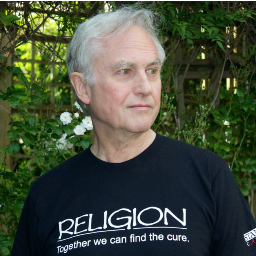
Dawkins, Muslims and trolling on Twitter

I had intended to write a post on Richard Dawkins’ most recent provocations on Twitter, which he kicked off with

RDbut a couple of people have gotten there before me – particularly Nelson Jones, who seems to have read my mind. As Jones points out, Trinity College has more Nobels than the Chinese, or than women, or any number of groups you might care to name (regardless of how carefully or accurately those groups were defined).

Yes, what he said was “a fact”, and in fact true. On Twitter, a few people have reminded me of this when I accused Dawkins of dickishness in the Tweet embedded above. I know that it’s a fact – but there are two ways of making the point that this isn’t the only relevant thing in this case. The one way is to say that facts aren’t all that matter – that there is a world of politics, and emotion, and strategy that might mean it’s sensible to point out certain facts at certain times, in certain contexts.

The other way of making the point is to agree that facts are all that matter, and to say that therefore, Dawkins should be wary of letting utterly predictable reactions get in the way of people seeing the facts that he’s attempting to highlight. As Jones writes, something in Islam (and this could easily be true for any other religion too) has gotten in the way of there being proportional representation of Muslims amongst Nobel Prize winners (and a number of other equally arbitrary metrics).

What that something is, is an interesting question – as is the question of whether atheists are disproportionately well-represented. But you can ask that question in less or more abrasive ways, and asking them in the way that Dawkins did will almost certainly result in making fewer, not more, people think about what the answer might be.

I’m not making the claim that it’s always wrong to ask questions abrasively – I’m making the claim that it’s disingenuous to say “I’m simply pointing out a fact”, or “everyone is over-reacting” when you have various options for how to express something, and you choose the one which a) doesn’t do any better a job of making the point and b) is likely to provoke more than alternatives would.

Twitter is not the place for nuanced debate. We (in general) broadcast, entertain, and often provoke. Dawkins is doing all of those, and he surely knows it. I don’t object, as I’ve said many times – it’s not a strategy that I want to employ for myself, but we need people to act as the lightning-rods. But that doesn’t mean it’s impermissible to ever say hold on, even on your strategy, that message is going to be lost in the quite predictable outrage. If people aren’t listening, you can’t do anything to budge their beliefs.

Read the Jones piece, as well as this one by Nesrine Malik. As Jones rightly points out, this is a pattern for Dawkins, and even (especially?) those of us who support his goals should be able to see how characteristic it is:

Dawkins’ well-honed technique (it often amounts to trolling) is to say something pointlessly provocative, wait for the inevitable backlash (the traditional response, playing on his well-known love of grammar, is “Your a dick”) and then express innocent bafflement that anyone could possibly object.

Another example from earlier this year compelled me to respond, because it seemed to indicate quite plainly how Dawkins’ Twitter behaviour is often more about provoking, than facilitating debate:

In case it’s not clear to you what’s going on there, Continental and Analytic (to use the traditional, and contested, definitions) are different approaches to academic philosophy. It’s a summary term of a style of philosophy practiced in those regions, like (as my tweet highlighted) French vs. Greek food. These are both different routes to getting fed, and the styles of philosophy are similarly both routes to understanding the world. There is no necessary distinction between them, though – and therefore, nothing to deride by asking “what sort of a search for truth is region-specific?”

But absurdly, social media are so intemperate that we only seem to have two options in response to Tweets like the one that the post begins with: either to denounce Dawkins as an Islamophobe, or to support him vociferously, telling anyone who criticises him that what he says “is a fact” and that everyone is “over-reacting”. The middle-ground is, as ever, squeezed out of the picture – because on social media, we’re all shouting, all the time.

And I suppose it’s quite reasonable to worry about who might hear you, if you’re saying something like “hold on, it’s not that simple”?


“World-views” and secular education

imagesFourth-year medical students at a local university were yesterday witness to a panel discussion on various world-views, with the intention of familiarising them with some of the different points of view that their patients might one day hold. I was invited to participate in this panel, which I gladly did, seeing as these sorts of public interventions are one of the values we can easily, and cheaply, give to “the cause”, as it were.

Joining me on the panel were an Imam, an Anglican priest, a Hindu doctor and the daughter of an African traditional healer (who was also a student in the class). The point of the panel wasn’t to debate who was right and who was wrong, but more to sensitise the students to the differences, and to prompt them to how they might approach sensitive topics of conversation with these various sorts of world-views.

It was an interesting experience, partly because it again brought to the fore just how normal, and just how abnormal, a largely materialist, or naturalist, point of view was – even in a room of about 200 people trained in the scientific method. The student who arranged to have me invited to participate reported that around 70% of his classmates were religious, and after yesterday, I fear that might be an under-estimate. One horror-story he told me is of a group of students training in psychiatry who decided to pray over someone that was clearly experiencing some sort of mental episode, rather than getting her to somewhere she could be diagnosed and treated.

But it’s not only the uncommonness of a naturalistic outlook that struck me – it’s also how alien it seemed to be to the audience. The tenor of some of the questions seemed to regard me as some sort of curiosity, or exhibit – a rare creature from a strange and distant land. Over and over, for example, I had to repeat the point that they should think of me as representing the “secular” world view, because religious folk can be secular too. Secular doesn’t mean lacking in belief, it means leaving your (metaphysical) beliefs at home when you go to work, especially in the public sector.

Then, the usual questions also came up: how can love just be in the brain (well, it is, but that doesn’t make it any less special); where do you get your morals from (the same place as you, the same place as the apes, etc.); what is your purpose in life (that question loads the dice – I reject the need for an “ultimate” purpose).

So, when I sat at the end of the panel to talk to the local atheist and agnostic society about how to grow their society and build capacity, I stressed something they could do, that I fear many smaller, community-based groups forget: education. Take your core membership, and have them learn about the history of skepticism/secularism/humanism/etc. – and not simply learn to recite cutting lines from Hitchens, or the names of a bunch of logical fallacies.

We need people to go out there are dispell myths and misconceptions, and that requires the knowledge to do so. If you’ve got some of it, and also have access to a younger group of people wanting to promote the secular, scientific, humanist world view, help them to learn how to educate others about what we believe and don’t, but more importantly, why we believe and disbelieve. Even when you don’t persuade, the conversations will nevertheless be far more interesting as a result.

Caroline Criado-Perez, #ReportAbuse and Twitter

In a 2010 column on abusive comments posted below online articles, I wrote:

As Theodore Dalrymple reminds us in his “Thank you for not expressing yourself”, “The immediacy of the response which the internet makes possible also means that people are able to vent their spleen in a way which was not possible, or likely, before. The putting of pen to paper, to say nothing of the act of posting the resultant letter, requires more deliberation than sitting at a computer and firing off an angry e-mail or posting on a website.”

This, I believe, captures the essence of when it is permissible rather than gratuitously offensive to resort to abuse: Would you have said the same things in an old-fashioned letter to the editor? Would you say the same thing to the columnist in person, if you were to meet him at a dinner party? If yes, I say go ahead. But if not, perhaps you should do yourself and all of us a favour, and simply shut up.

But there’s no chance, or a vanishingly small chance, that the trolls will do us that favour. After all, their purpose is to (at least) provoke and offend, and telling them to shut up will do little but invite them to send some abuse your way. So what can we do?

imagesThousands of people have now signed a petition for Twitter to introduce a “report abuse” button, where this petition was precipitated by the numerous rape threats that Caroline Criado-Perez received after her campaign to have more women feature on UK banknotes. Notung has highlighted some of the issues in a recent post on SkepticInk, and I agree with his skepticism regarding implementing such a reporting mechanism efficiently.

For all the properly abusive Tweets and Internet comments that people somehow think it appropriate to send, this reporting mechanism will surely be exploited by those who want to simply censor things/people they don’t like – or just for mischief (think 4Chan or similar). So whatever else happens, I’d hope for there to be a human or team of humans assessing reports of abuse – carefully – before implementing any bannings or account terminations.

But it’s not as simply as a mere free speech issue for me, because asking the victims of abuse to simply “deal with it” doesn’t acknowledge the fact that some of us are more equipped to deal with abuse than others are – and that those who are less equipped to deal with abuse tend to attract more of it (getting a reaction being, after all, part of the point of being a troll).

It’s also not as simple as saying “don’t feed the trolls”, partly because that smacks a little of victim-blaming, and also because – thanks to the ubiquity of the Internet and a postmodern rejection of authority – everyone thinks that they are an expert on everything, and aren’t afraid to express their views, no matter how ill-considered those views might be. There’s seems to be an intolerance of ambiguity and uncertainty, which results in a default stance of dogmatism and hostility on many corners of the Internet.

Furthermore, as Notung points out, an unintended consequence of a “report abuse” button might be that those who are calling for the button get reported for abuse themselves. Not only because some “social justice warriors” can be rather brutal (in terms of using abusive language) in response to anyone who questions their point of view, thus perhaps meriting being reported, but also simply in retribution for perceived slights. (I don’t mean to generalise about social justice warriors, by the way. I’m referring to the subset of those concerned with social justice issues that appear to be ideologues, brooking little or no dissent).

Like Notung, I don’t have any answers here. But my two suggestions are:

  1. That more jurisdictions think carefully about implementing legal frameworks that are updated for the digital age, where every abusive twit has access to the means to cause distress to people like Criado-Perez. New Zealand is currently investigating how to go about this, and I think it’s important to work from first principles here. Existing laws on libel, defamation and the like would usually not take 21st-Century communicative possibilities into account, but if we did so, it might well be possible to eliminate much of the abuse without threatening free speech unduly.
  2. That we continue playing what part we can in discouraging trolls. I’ve written extensively about this before, in these two columns as well as numerous others – and a persistent fear for me is that if we don’t continue actively trying to provide quality content and commentary, blocking and banning trolls on our respective websites, the environment will become unattractive enough that some folk won’t even bother to read, let alone comment. Yes, the Internet is a free-speech zone, and should remain so – but you don’t have an obligation to allow any content on your corner of it. Just like you’d kick an abusive ass out of your house, do so on your blog, or your Twitter feed.

Mugabe’s “thuggish, incompetent and corrupt” Zanu-PF

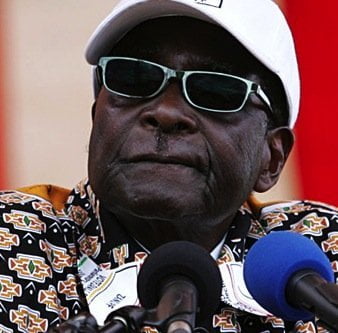
20130727_LDP004_0The title of this post quotes a leader in The Economist this week. It’s worth reading, as is a more substantial treatment of Zimbabwe’s state in the same newspaper. It’s good to see the international media focusing on Zimbabwe, because the South African government – in particular “Number 1”, or Jacob Zuma – seem quite reluctant to do so. For those of you who have forgotten, and for some foreign readers, bear in mind that the current president of Zimbabwe, Robert Mugabe (on the Iron Throne for 33 years now) comprehensively lost the first round of presidential elections in 2008. The opposition Movement for Democratic Change (MDC) also won the parliamentary poll.

But, the leader of the MDC, Morgan Tsvangirai, declined to compete in the second round of the presidential elections, because Zanu-PF supporters had in the meanwhile murdered around 200 MDC campaigners. And as The Economist reports, the army, the police, the media and the courts are all sympathetic to Mugabe (or perhaps, sympathetic to staying alive) – so little can be done to end these injustices.

On top of that, the electoral commission, and the registrar of the voters’ roll, also seem to be in cahoots with Mugabe, who has sprung a surprise by moving the election date forward, making it more difficult to police that voters’ roll, in order to remove the suspected thousands of dead people who are listed on it, and who will surely be ‘voting’ for Zanu-PF come July 31.

So, what is South Africa – the ‘Rainbow Nation’ and supposed exemplar of democratic best-practice doing about this? Well, as in 2008, the answer is … nothing. Or worse than nothing, in that even mild criticism of Zimbabwe’s readiness to hold elections has been suppressed by our President, the reliable embarrassment that is Jacob Zuma.

The South African Development Community (Sadc) is monitoring the elections, and the Sadc’s mediator in Zimbabwe is Zuma. Last time around, the Sadc declared the (obviously tainted) elections free and fair, and there seems little doubt they’ll do so again, at least with someone as morally flexible as Zuma at the helm. We must pity folk like Zuma’s foreign-policy adviser, Lindiwe Zulu, who last week raised concerns regarding the legitimacy of any election in Zimbabwe before the 2008 electoral reforms were implemented.

Mugabe responded by calling her a “stupid, idiotic woman” and a “street walker”. The South African Presidency’s response? A statement “distancing itself from Ms Zulu’s, ‘unauthorised’ and ‘regrettable’ remarks”, to quote a Business Day report. And today, I read that Tsvangirai’s election organiser has been arrested, just days before the election. Yes, regrettable indeed to point out election-rigging and corruption, Mr Zuma – after all, we don’t want people to think too hard about issues like the latter one, do we?

Outside of election-rigging, Mugabe is more generally an man who routinely says things like “Tutu should just step down, because he supports gays, something that is evil. We say no to gays” or “Obama is one of us – African – but his support for gays is very wrong. The Americans want us to embrace gays. I say go away with your money as long as you support gays”. Odious, in other words, and worthy of general condemnation.

But, after July 31, I have little doubt that the elections will be declared “substantially free and fair”; fear that Mugabe will most likely hold on to power; and am fairly certain that Jacob Zuma will never say a word about how his big man friend up North embodies the opposite of much of what South Africa’s Constitution holds dear. And why would he, when he’s appointed a Chief Justice who seems to hold similar views?

EDIT: Just spotted on Twitter – an account of documents allegedly detailing exactly how Mad Bob plans to steal next week’s elections.

Jonathan Glover: TB Davie Memorial Lecture on Academic Freedom, 2013

NYXThis year, the Academic Freedom Committee of the University of Cape Town (that I’m privileged to be chairperson of) welcomed Prof. Jonathan Glover to present the annual T.B. Davie Lecture Memorial Lecture. It’s been a pleasure spending time with him, and hearing him speak – not only earlier today, but also yesterday at a seminar on the boundaries of psychiatry. I’ll post links to video once UCT makes them available, but in the meanwhile, here are the opening remarks I delivered earlier today.

___________________________

In his book HUMANITY: A MORAL HISTORY OF THE TWENTIETH CENTURY, Jonathan Glover discusses the brutality of that century with reference to the declining authority of morality, and diminished faith in the possibility of moral progress.

We don’t need to agree on a framework for moral judgments, or any particular content produced by such frameworks, to be sympathetic to one of Glover’s premises – that “questions about people and what they are like” should be central to our ethical debates.

He argues that the 20th Century has brought some erosion of our moral identities, making it easier for us to treat each other as mere objects, rather than as equally valuable members of overlapping societies. Among the potential causes of this he discusses are the imposition of belief systems or ideologies by powerful actors, especially governments; the postmodern abandonment of the search for objective truth; confusing ends and means; and the physical distancing between agents, often enabled by technology.

A suggestion he offers for resisting this erosion is for us to focus on developing a vision beyond the given, the surface impression, or the merely pragmatic. We should cherish our imaginative awareness, and foster the democratic habits of tolerance, persuasion and compromise. Crucially, Glover argues, we should develop our abilities to resist dogmatism and to accept complexity or ambiguity.

These forms of engagement are perhaps becoming increasingly rare, but the place where they are traditionally exercised is the University. Despite the need to respond to aspects of what markets might desire, we cannot forget that we’re not only in the business of producing marketable students, or generating research outputs that are aimed at attracting funding rather than developing knowledge.

Learning is sometimes found in our mistakes – in being wrong – rather than in our successes. When we no longer provide the space and opportunity to make productive mistakes, instead focusing on being an efficient production line of graduates and research outputs, we run the risk of sacrificing some of the virtues that make universities, and UCT, such fruitful places in which to work and learn.

Given these considerations, I’m very pleased to welcome Prof. Jonathan Glover to UCT today. His 1977 book CAUSING DEATH AND SAVING LIVES was certainly one of the texts that helped me realise that I wanted to devote my academic attention to philosophy, and in particular, that highlighted the role practical ethics could play in bettering our lives.

Glover’s work has frequently focused on improving lives – HUMANITY, discussed earlier, is one example, and numerous others can be found in his writings on neuroscience, psychology, disability and genetic design, and in his teaching of ethics, for many years at Corpus Christi and New College, Oxford, and now at Kings College, London.

Towards the end of HUMANITY’s first chapter, Glover writes: “another aim of the book is to defend the Enlightenment hope of a world that is more peaceful and more humane, the hope that by understanding more about ourselves we can do something to create a world with less misery”.

Understanding more about ourselves is facilitated by spaces such as the one we are in today, hosted by universities such as ours. Threats to academic freedom could be said to run counter to that hope of understanding ourselves, and by extension, counter to reducing the amount of misery in the world.

It is these interests and insights of his, among others, that make it my great pleasure to welcome Professor Jonathan Glover to UCT to deliver the 2013 TB Davie Memorial Lecture, on the topic of “Universities, the market and academic freedom – how treating education and research as merely marketable commodities can threaten academic freedom”.

Censors, sex and the age of consent

imagesSouth African readers have most likely heard that Jahmil X.T. Qubeka’s “Of Good Report” could not be screened at the Durban International Film Festival, after the Film & Publication Board’s (FPB) refusal to classify it. Not giving the film an age-restriction means that the FPB has made it a criminal offence to show or watch the film, so a refusal to classify has the same effect as a ban. Their stated reason for this is that they believe the film to contain child pornography, in that it contains a scene of a woman receiving oral sex, closely followed by that woman being revealed as a 16 year-old schoolgirl.

I mentioned on Twitter that it was odd for us to have 16 as the legal age of consent, while sex acts could not be recorded or screened unless the participants were both 18. There are no doubt a lot of criminal 16 and 17 year-olds out there, thanks to the ubiquity of cellphone cameras and sexting. And this commend led to a rather fruitless exchange of views with the cartoonist Jerm (or, Jeremy Nell), on the appropriateness of age restrictions. You can read more about the movie ‘banning’ on Daily Maverick or Africa is a country. The rest of this post will focus on the general issue of age restrictions.

https://twitter.com/mynameisjerm/status/359230229773955072

In response to the Tweet posted above, I agreed that any particular age of consent was arbitrary, just as age limits on driving or drinking are, but said that there was no efficient and also principled way to do it without imposing an arbitrary age. In a future world where we can track capacity for factors like reason and consent in real-time, we’d perhaps not need these arbitrary limits, and particularly co-ordinated, willing and fearless 13 year-olds could get emancipated and go fight wars if they like.

But in the meanwhile, we need to work on expected or probable capacity to perform the function in question, whether it be drinking, driving, voting or consenting to sex. And yes, while it’s true that sex used to be legal at an earlier age (as Jerm points out), it’s partly because of predation that it was increased. An age of consent makes it easier to prosecute sex offenders, on the assumption that in general, people either aren’t consenting, or aren’t sure what they are consenting to (so, not consenting) below the age stipulated.

https://twitter.com/mynameisjerm/status/359231394045624320

While we can get these various ages wrong, and various jurisdictions disagree on where to set them (or so do inconsistently), I can’t see any merit in the suggestion that this should be a family matter, rather than a state matter. In fact, I find the suggestion even less principled than a state-imposed limit, because we have no reason to trust the family’s entirely subjective judgement in these matters more than we should trust the aggregate gaze that a state could apply.

https://twitter.com/mynameisjerm/status/359231995563765760

As I said above, the precise age is always going to be arbitrary, because there is no age that guarantees “full” maturity or competence. What we’re aiming for is “adequate” maturity or competence, such that we limit as little freedom as possible while protecting the largest proportion of various vulnerable populations that we can. And here’s the thing: it is possible to triangulate on the appropriate age in general, even if individuals might not fit the norm. But as I’ve previously argued, the exceptional cases should not be the basis for policy:

laws or insurance premiums can’t be tailored to individuals. As much as we are individuals to ourselves, interventions intended to work on aggregate have to treat us as belonging to a category – and the question then becomes how those categories are defined. And here, we need to start thinking about the least wrong way of doing this, and perhaps being more willing to tolerate principled ways of treating us simply as a number.

If we can find the approximately appropriate age, then we know that we’d be making fewer mistakes (in terms of restricting freedom) the closer someone is to that age, and doing more good (in terms of protecting more people from harm) the further away (younger) someone is from that age. Jerm seems to think that the law shouldn’t be about morality at all, though,

https://twitter.com/mynameisjerm/status/359234687882887168

which seems rather odd, seeing as we couldn’t have any laws against theft or torture if that were the case. But let’s assume he’s talking about only sexual morality – even then, I’d not be comfortable with the absence of a legal prohibition against incest with toddlers. The point is that laws shouldn’t impose arbitrary morality – that I agree with. Again, if we know that in general, consent is likely to be absent, we’re taking pragmatic steps to protect people from harm rather than imposing a moral standard when we say that it’s illegal to have sex with a 15 year-old.

So while we can debate what an appropriate age is, I don’t see room for discarding the concept of establishing and maintaining a guideline. And, as for how to set these guidelines in the least arbitrary way possible, we do have relevant knowledge. It would be a simple matter to track road accidents, for example, and do some analysis of factors like the age of drivers, and their levels of intoxication. (One might even suggest that insurance companies have cottoned on to these arcana.)

If it turns out that 16 year-old drivers look to be as safe as 20 year-old drivers, we know that we should either a) let 16 year-olds apply for licensing or b) not let 20 year-olds do so. And if a blood alcohol level of X gives you the same risk profile as a level of 0, we know that X is safe, etc. The fact that states might take shortcuts in figuring this stuff out and making the laws doesn’t mean there aren’t sound principles by which to do so, if we had the time and desire to.

Then, more generally – we know that it’s only at age 25 or so (for men) and 23 or so (for women) that the prefrontal cortex (PFC) reaches maturity. The PFC is the last part of the brain to develop, and (unfortunately for parents) is the part of the brain that governs impulse control, risk-seeking/aversion, and that encourages hyperbolic discounting (in short, we need a developed PFC to balance short-term rewards against long term goals). Putting that together, what we have is a brain that conduces to driving too fast, on too many drugs or too much booze, to get to a place where you’ll enjoy lots of sex with too many strangers and too few condoms.

In other words, it wouldn’t be at all arbitrary to say that 24 (to pick the mid-point) would be an efficient and justified way to limit all sorts of activities. But asking people to wait a third of their lives before driving or having a drink seems excessive, so we pick a younger age (exactly how young can vary, depending on the severity of risk in question) where most people are likely to be competent, even if some mistakes will be made. It’s a question of pragmatism, not of morality.

#TAM2013 wrap-up

Those of you who also attended The Amaz!ing Meeting last weekend were probably as overwhelmed by content as I felt, and continue to feel. Halfway through the first of three full days (8am – 6pm) of plenary sessions, I blogged some impressions – but that proved to be the last time I found the time to write anything about what was going on. Not only was the schedule very busy, but it was filled with content of sufficient quality that I could hardly bring myself to miss anything, despite the fact that evening entertainment, then drinks at the Del Mar and elsewhere, meant an average of 4 or so hours of sleep per night. TAM is worth not sleeping for, or at least 2013’s edition (my first) was.

photo
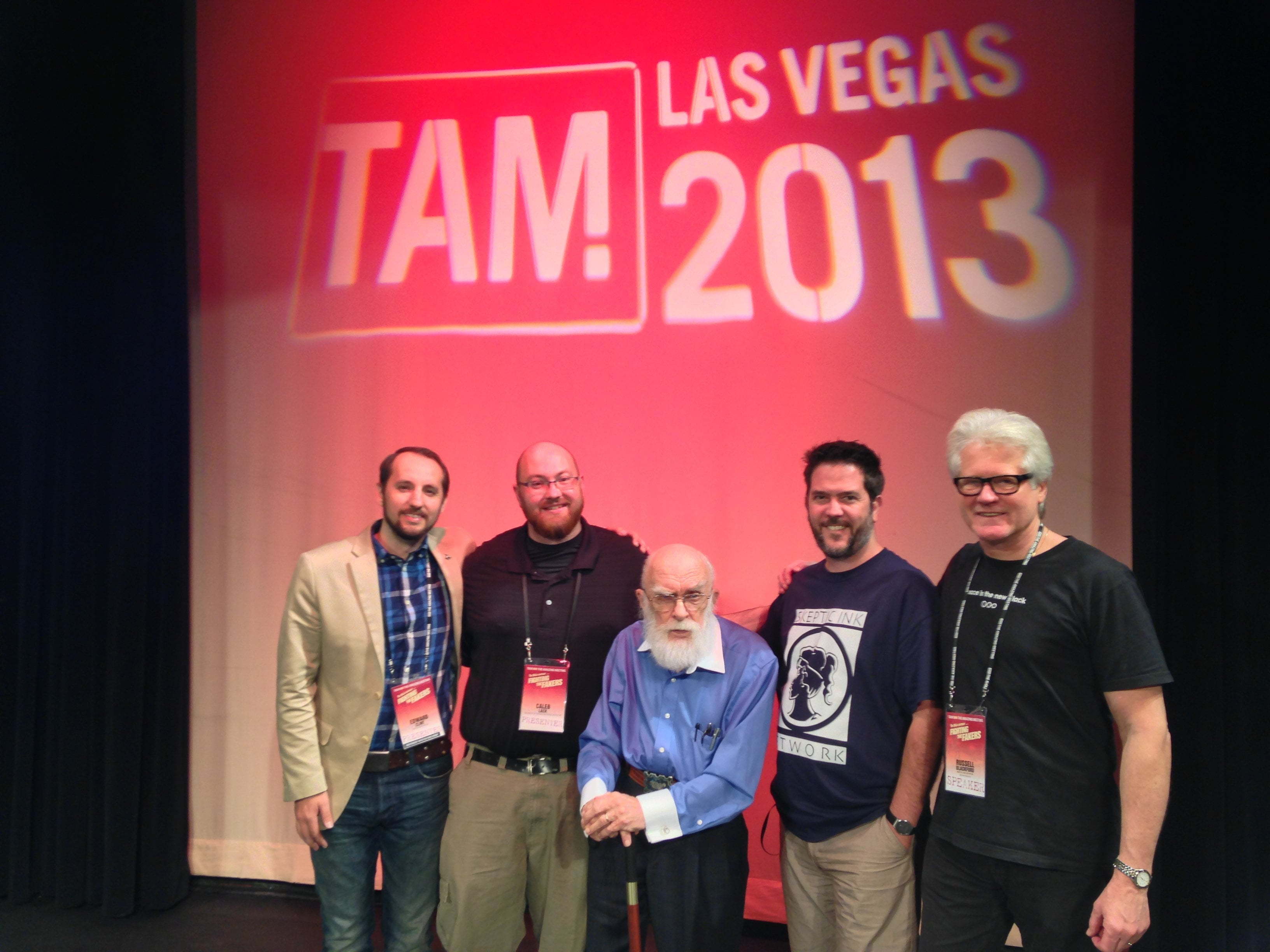
Some of the SiN writers (with me on Randi’s right).

To supplement what I’ve already said about the first morning, here’s some comment on (aspects of) the rest of the programme:

Cara Santa Maria: Perhaps the lowlight of the entire weekend for me. Beginning a talk by telling your audience that they might want to temper their expectations, in light of the speaker having played poker until the early hours, didn’t seem like the most effective route to audience engagement for me. When the talk that follows was mostly personal anecdote, my skepticism turned into downright annoyance.

The philosophers: One of the things that made TAM far more intellectually rewarding than most of the conferences (in related areas) I’ve been to in recent years was the strong representation of philosophers on the programme. Speaking as someone who studied, and has now taught philosophy for the past 15 or so years, having these creatures on the stage is by no means a guarantee of comprehensibility or enjoyment, as each can delight in being more obscure and technical than the other. Plus, philosophy is often home to needless obscurantism, or sometimes, simple bullshit. But Massimo Pigliucci, Peter Boghossian, Susan Haack and my SkepticInk colleague Russell Blackford all gave engaging and insightful talks. Watch them all when the videos appear on YouTube – I’ll certainly be re-watching them. Susan Haack was particularly good, I thought, speaking on credulity and its consequences.

Bacon & donuts: Penn’s party on Friday night was good fun. Ribald and loud, he ensured that all pretensions were checked at the door, and entertained us mightily in the process. Beginning with a rant regarding Dr. David Gorski’s (also on the programme) open letter to Penn regarding Penn & Teller’s appearing on Dr. Oz’s show, Penn basically told Gorski that if he was here, he wasn’t welcome and should simply f*** off. That effectively set the tone, whether or not you agree with Penn’s response to the letter – this was not a place for sacred cows. (Gorski was there for the first few minutes, but left shortly after this rant began.)

James Randi: What an inspiration to those of us who spend time “fighting the fakers” (the theme of this year’s TAM). The man is unfailingly generous with his time and his affection, and continues to set an example for the rest of us of how one can fight the fakers while retaining sympathy for their victims, who frequently merit our understanding rather than our condescension. His career has been guided by exposing the fakers in order to help the next (hypothetical) set of victims from becoming victims – and ridiculing those who fall for the tricks and promises of charlatans does nothing towards that worthwhile goal.

D.J. Grothe and the JREF in general: The event would not have been the success it was without meticulous planning and careful, attentive execution. Besides the occasional tech glitch with microphones or slides, everything went off smoothly. For an event this size – 4 days of content, with over 1000 people in attendance, this is no mean feat. So, thanks and congratulations to all of you who were involved in making TAM such a success.

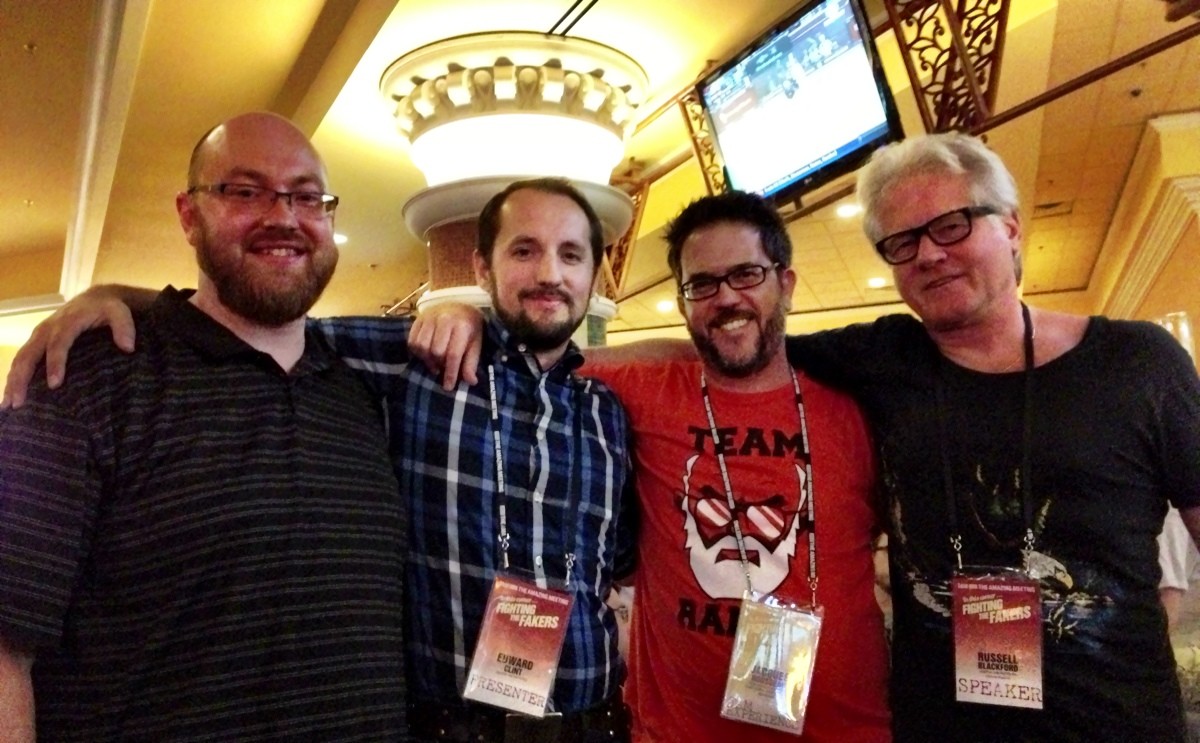
SkepticInk: It was great to meet, or in Russell’s case, re-acquaint myself with, my co-writers on the SkepticInk network. Russell Blackford, Caleb Lack, Ed Clint, Damion Reinhardt and John Loftus were all great fun to hang out with, and we made the most of TAM, attracting plenty of interest at the SiN table (selflessly manned for many an hour by Ed Clint in particular). We were able to have numerous fruitful discussions, which will hopefully result in the network growing from strength to strength.

To conclude, an index of how rewarding I found TAM2013 to be is simply this: even though getting there involves at least 24 hours of transit and a frightening impact on my bank balance (not because TAM is unduly costly, but because 1USD costs 10ZAR), I fully intend to go to every TAM after this. It was just too much fun – and too instructive – to miss out on again.

Here are a couple of other round-ups, from Bob Blaskiewicz and my SiN colleague Caleb Lack.

#TAM2013 in Las Vegas, Day one

Well, not even day one yet – just the first morning, but there’s already been plenty of things to report on – if only there was time to do so! I’m glad to be here, and to have had the opportunity to meet fellow SiNers Ed Clint, Caleb Lack, John Loftus, and to see Russell Blackford again.

SiNers

The SiN panel yesterday morning went pretty well. The five of us (John hadn’t arrived yet when that photo was taken) offered some tips on skeptical blogging, then took questions from an engaging audience that included Sharon Hill and EllenBeth Wachs.

Speaking of Sharon, her talk this morning is one of the highlights for me so far. She spoke of her website, Doubtfulnews, but what I appreciated most was the attitude she described with regard to skeptical blogging, which resonates strongly with mine.

Some of the issues she discussed were importance of fairness and balance in skeptical blogging (while avoiding false balance) – but crucially to not allow your objectivity to lead you to being so vacuous as to not add value at all. The audience needs to know what’s in it for them, as it were – it can’t all be about you.

And also, Sharon reminded us that it’s vital to try to get inside the heads of the people you’re trying to persuade. This is something I also addressed on the panel yesterday – the dangers of the filter-bubble and confirmation bias in allowing us to caricature or belittle our opponents. People are unlikely to believe downright odd or unlikely things for no reason at all, or because they are somehow irreparably defective, inferior, or what have you. People come to strange views because of a particular worldview – and unless we make an effort to understand that worldview, we’re unlikely to change anyone’s mind.

Other presentations this morning have included Michael Shermer on science and morality. I found this very unpersuasive, but I’d like to watch it again (or better yet, read the book when it comes out). While I agree with him that the arc of social progress has tended to conduce towards certain norms and away from others – and also that it’s right to regard our moral norms as “provisional” (contingent on evidence, just like other forms of knowledge) – the bit I didn’t like at all was the claim that we can get a strong indicator, most of the time, of what’s right and wrong just by asking the people affected.

The first problem here is that (especially interpersonally) their reasons for saying “X is right/wrong” might be entirely idiosyncratic, inconsistent and unprincipled. Even if moral norms end up being arbitrary, they become significant through being fairly consistent and reliable – their force is via consensus, which requires some form of reliability.

Which leads to the second problem: on a social level, if everyone believes the same weird thing (like, that men are superior to women), asking the question of what’s right and wrong is going to reliably result in getting the wrong answer. Democracy doesn’t determine truth. Shermer did stress that his rule-of-thumb was useful most of the time, for most cases, etc., but I’m suspicious that the truth is entirely opposite to that, and that the principle will only be useful in exceptional circumstances (where “the answer” will most likely be obvious for other reasons in any case).

Then, briefly, George Hrab is a great host, and his introductory monologue was fantastic. Karen Stollznow was entertaining in her talk on exorcisms, but I didn’t find much to chew on there. Marty Klein was very good, on moral panics, porn and sex. I look forward to talking to him later, as he’s a colleague of Dr. Eve, someone I worked with in South Africa to (successfully) prevent moral panics from blocking a local TV station from showing pornography.

Finally, it’s been great meeting or re-meeting DJ Grothe, Sharon Hill, (The Amazing) Randi, Michael Shermer, Miranda Hale, Steven Novella, Jerry Coyne and others. The programme for the rest of the weekend looks great, and I’m sure there will be plenty of value – so long as I get enough sleep to stay awake for it all. Vegas is a treacherous place, after all.

Does atheism entail anti-discrimination?

No_discrimination_signI recently discovered Betteridge’s Law, which is a rather cool adage that states “any headline which ends in a question mark can be answered by the word no“. And that’s the point of view many of you might have with regard to the headline I chose for this blog post. You might say, atheism is simply a lack of belief in god(s) – it entails no other propositions.

If we mean the strict logical sense of entail, i.e. that atheism necessarily leads to anti-sexism, anti-racism and so forth, you’re right. But you’re perhaps also evading a more important point, which is that if you’re an atheist who isn’t opposed to sexism, racism and so forth, the fact that you happen to be an atheist does little or nothing to combat the possibility that the viewpoints are at least in tension with each other, or even in direct opposition.

Two ideas don’t need to form a contradiction to be in opposition. And to my mind, atheism will (and, should) typically entail anti-sexism, anti-racism and so forth. And this is because prejudice of these forms is not only an manifestation of irrationality, but also more specifically a form of irrationality that is typically buttressed by moral codes that rank certain values or characteristics above others on largely arbitrary grounds.

Whether it be wearing a certain funny hat, belonging to a certain tribe, uttering certain sacred words, eating a particular food and not another – all of these are tokens that would normally be arbitrary, but are granted significance via a system of belief. They aren’t justified by evidence and reason, but rather become justified by the positive feedback loop of religious practice.

Without those forms of thinking, any idea that people with a certain level of melanin in their skin are superior or inferior to others, or that people with penises are better/worse than people without them, would struggle to get off the ground. We’d be far more inclined to say “that makes no sense – we’ve no reason to treat x worse than y”, because we’d have fewer psychological frameworks in place allowing for arbitrary discrimination.

So, while atheism might not necessarily lead to being anti-discrimination (of arbitrary sorts), I do think it’s not only compatible with anti-discrimination, but more than that – it’s more likely to lead to it than not. And for clarity, and to avoid needless argument, I am not making the claim that religion always, or necessarily, does lead to these forms of discrimination. I’m making the far more limited claim that it’s one way in which some people prop up their prejudices.

EU Guidelines on religion and belief

P010346001The EU Foreign Affairs Council recently adopted a report with 71 Guidelines on freedom of religion and belief. And while the guidelines don’t have legal force (EU guidelines that end up being legally enforceable are “regulations”), they nevertheless offer a clue as to the direction that particular councils are hoping for legislation to go. Furthermore, they send a strong political signal, especially with regard to emotive issues like religious freedom. In that context, these particular guidelines make for heartening reading.

There are 71 guidelines, and if you’ve got a moment to read them all, you’ll find plenty to applaud there. Some of the ones I’m most pleased to see are these (my emphasis):

  • “All persons have the right to manifest their religion or belief either individually or in community with others and in public or private in worship, observance, practice and teaching, without fear of intimidation, discrimination, violence or attack. Persons who change or leave their religion or belief, as well as persons holding non-theistic or atheistic beliefs should be equally protected, as well as people who do not profess any religion or belief.”
  • “The right to freedom of religion or belief, as enshrined in relevant international standards, does not include the right to have a religion or a belief that is free from criticism or ridicule.”
  • “The EU does not consider the merits of the different religions or beliefs, or the lack thereof, but ensures that the right to believe or not to believe is upheld. The EU is impartial and is not aligned with any specific religion or belief.”
  • “Coercion to change, recant or reveal one’s religion or belief is equally prohibited. Holding or not holding a religion or belief is an absolute right and may not be limited under any circumstances”.
  • “Freedom of religion or belief protects every human being’s right to believe or to hold an atheistic or non-theistic belief, and to change religion or belief. It does not protect a religion or belief as such. Freedom of religion or belief applies to individuals, as right-holders, who may exercise this right either individually or in community with others and in public or private. Its exercise may thus also have a collective aspect. This includes rights for communities to perform “acts integral to the conduct by religious groups of their basic affairs”. These rights include, but are not limited to, legal personality and non-interference in internal affairs, including the right to establish and maintain freely accessible places of worship or assembly, the freedom to select and train leaders or the right to carry out social, cultural, educational and charitable activities.”
  • Certain practices associated with the manifestation of a religion or belief, or perceived as such, may constitute violations of international human rights standards. The right to freedom of religion or belief is sometimes invoked to justify such violations. The EU firmly opposes such justification, whilst remaining fully committed to the robust protection and promotion of freedom of religion or belief in all parts of the world. Violations often affect women, members of religious minorities, as well as persons on the basis of their sexual orientation or gender identity. In dealing with possible violations, use will be made of existing EU human rights guidelines, notably the guidelines on the promotion and protection of rights of the child, on violence against woman and girls and combating all forms of discrimination against them, on human rights defenders, on torture and on the death penalty, as well as the forthcoming EU guidelines on the enjoyment of all human rights by LGBTI persons, and on freedom of expression on line and off line.”

To summarise a common thread in some of these guidelines, and a common-sense point: believe whatever the hell you like, and let others do the same. But your beliefs can never be used as an excuse to harm, oppress, impugn or otherwise malign someone who happens to not share that belief, or who has no religious beliefs at all. The EU Foreign Affairs Council should be applauded for this sober-minded and useful document, which will no doubt attract plenty of outrage from those who feel the grip of religion loosening its hold on the minds of increasing numbers of people all over the world.